Recioto Wine: Valpolicella's Sweet Red, Side by Side

By the Sommy Team — AI-assisted, human-edited.
Updated Nov 3, 2026
Contents (9)
- What Is Recioto Wine, in One Paragraph?
- Recioto, Amarone or Ripasso: Which One to Pick?
- How Is Recioto Made, and Why Is It Sweet?
- What Does Recioto Taste Like?
- What Should You Eat With Recioto?
- How Do You Serve and Store Recioto?
- Are Recioto di Soave and Recioto di Gambellara the Same Wine?
- Where Does the Name Recioto Come From?
- Is Recioto Worth Buying If You Do Not Like Sweet Wine?
TL;DR
Recioto della Valpolicella is a sweet red from the hills north of Verona. Its Corvina-led grapes dry for months, like Amarone's, but the fermentation stops with at least about 50 g/l of sugar left. Serve it cellar-cool in small pours with dark chocolate, blue cheese or dark-fruit desserts.
Recioto della Valpolicella is the sweet twin of Amarone. It comes from the same Corvina-led grapes, dried in the same lofts north of Verona, but its fermentation stops while at least about 50 grams of sugar per litre are still in the wine. The result is a sweet red that tastes of dried cherry and cocoa, made for dark chocolate and blue cheese.
What Is Recioto Wine, in One Paragraph?
Recioto della Valpolicella is a sweet red DOCG (Italy's top tier of protected wine names) from the Valpolicella hills in the province of Verona. The blend is 45 to 95% Corvina and Corvinone, 5 to 30% Rondinella, and up to 25% other approved red grapes.
The grapes go through appassimento (drying freshly picked bunches for months before pressing) until they reach at least 14% potential alcohol. Then the fermentation stops early, leaving residual sugar (grape sugar the yeast never turned into alcohol) of at least about 50 g/l. The law sets no minimum ageing, so most bottles reach shops young, often in half bottles.
Recioto, Amarone or Ripasso: Which One to Pick?
Pick by what happens to the sugar. In Valpolicella, Ripasso and Amarone the yeast eats it all; in Recioto it stays in the glass. The same few grape varieties make every wine in the table, so the label word is the only clue to the style.
| Wine | Grapes | What happens to the sugar | In the glass | Pick it if |
|---|---|---|---|---|
| Valpolicella | Fresh | Fermented dry | Light body, sour cherry | You want a light red for pizza or pasta |
| Valpolicella Ripasso | Fresh, then passed over dried-grape skins | Fermented dry, with a second short fermentation on the skins | Medium body, cherry and a little raisin | You want some dried-grape richness at a weeknight price |
| Amarone della Valpolicella | Dried for months | Fermented almost completely dry | Full body, 14% and up, dried fruit, dry finish | The dinner is braised meat or aged cheese |
| Recioto della Valpolicella | Dried for months | Fermentation stopped, at least about 50 g/l left | Sweet, full body, dried cherry and cocoa | Dessert, chocolate or blue cheese is next |
| Recioto di Soave | Dried white Garganega | Fermentation stopped, sugar left | Sweet white, honey and apricot | You want a sweet white for almond pastries |
If dessert is next, buy Recioto della Valpolicella. If the label says Recioto di Soave or Recioto di Gambellara, expect a white. "Classico" on a Recioto label means the grapes come from the historic core of the zone, and "Valpantena" names a valley just east of it. The full Amarone and Ripasso story, from yields to ageing law, sits in the Amarone wine guide.

Quick check
One question on what you just read
Recioto and Amarone come from the same dried grapes. Why is Recioto the sweet one?
Tap an answer to see how you did.
How Is Recioto Made, and Why Is It Sweet?
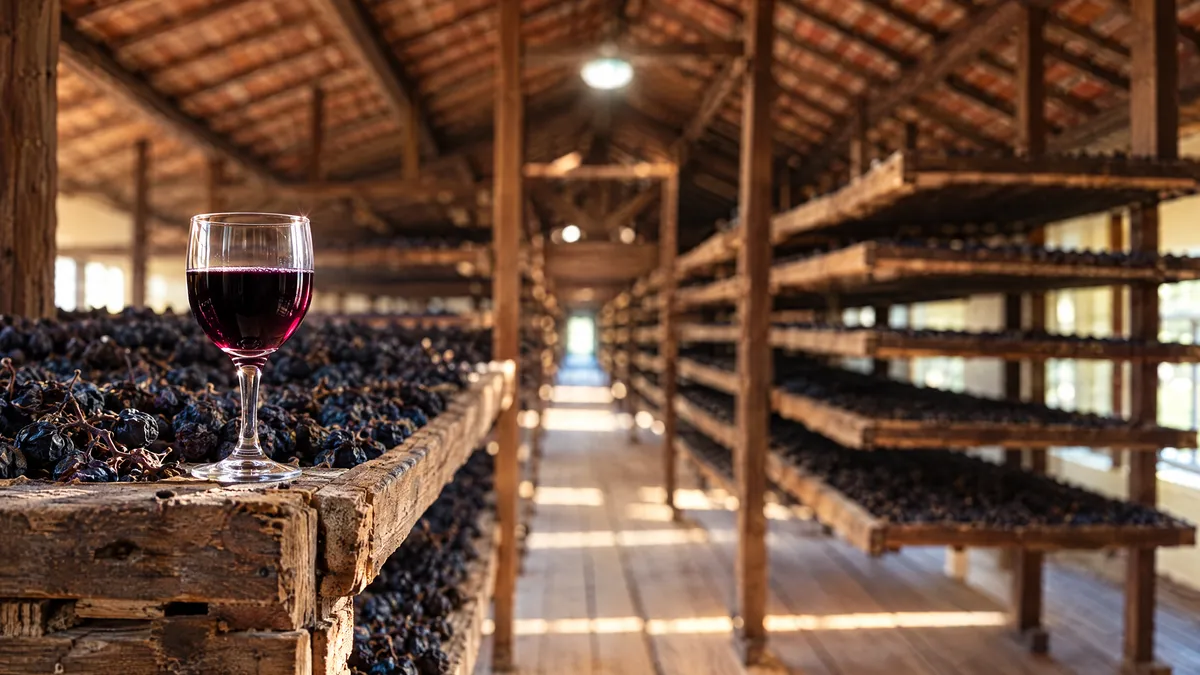
Drying concentrates the sugar, and the fermentation is stopped long before that sugar is gone. Sound, loose bunches are picked by hand and laid on racks or in shallow crates in a fruttaio (a ventilated loft for drying grapes). Over the following months the berries lose water and shrivel, while sugar, acid and colour stay behind.
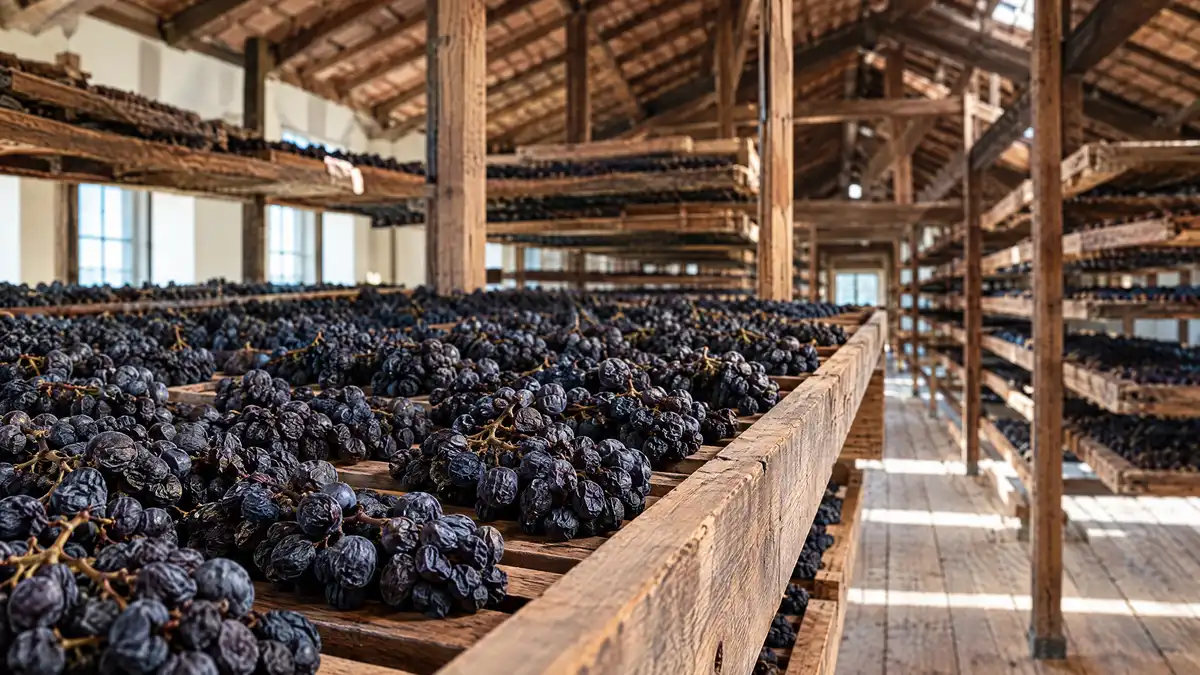
The rules ask for grapes dried to at least 14% potential alcohol (the strength the wine would reach if every gram of sugar fermented). The grapes usually cannot be pressed before 1 December, so fermentation runs through the cold winter. Dried-grape juice is so sweet that yeast works slowly in it.
For Amarone the winemaker waits until the yeast has eaten nearly all of the sugar. For Recioto the winemaker stops the fermentation while the wine is still sweet. Yeast also slows down by itself as the alcohol climbs.
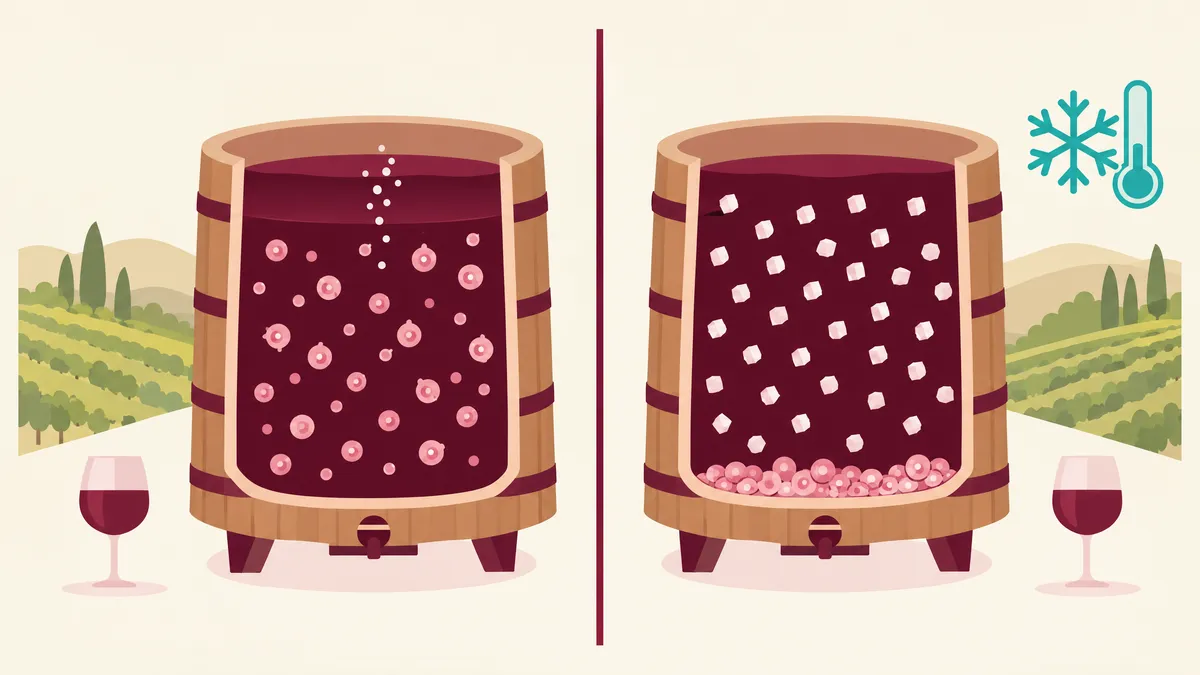
The law sets the sweetness as a number. The finished wine must keep at least 2.8% potential alcohol as unfermented sugar, which equals about 50 g/l, and many bottles carry more. The wine sweetness scale places that among the dessert wines.
A rare sparkling version, Recioto della Valpolicella Spumante, also exists under the same rules. The same drying idea runs through every passito and straw wine, from Vin Santo to the French vin de paille.
What Does Recioto Taste Like?
Sweet, full-bodied and grippy, with dried cherry, plum jam and cocoa. The sugar coats the tongue, but Corvina's acidity (the tartness that makes your mouth water) keeps the sweetness from feeling syrupy. Unlike most dessert wines, Recioto also has tannin (the drying grip on your gums) from the red skins, so the finish dries a little instead of turning sticky.
The aromas come from the drying loft. Fresh sour cherry turns into dried cherry and prune, because the berries slowly lose water and their fruit chemistry shifts over the weeks on the racks. Cocoa and a bitter-almond edge often appear on the finish, the same note that runs through Amarone. The Corvina grape guide traces where the cherry and almond come from.
Colour is a deep, opaque ruby, often with a purple rim when young. Compared with Ruby Port, the other famous sweet red, Recioto feels less hot, because no grape spirit is added: its strength comes only from fermentation. The Port wine guide shows how fortifying stops a fermentation the other way.
What Should You Eat With Recioto?
Anything as sweet as the wine, or salty enough to push back against it. Sugar in food makes a wine taste less sweet and more sour, so the dessert must never be sweeter than the glass. The wine and chocolate pairing guide builds its whole method on that rule.
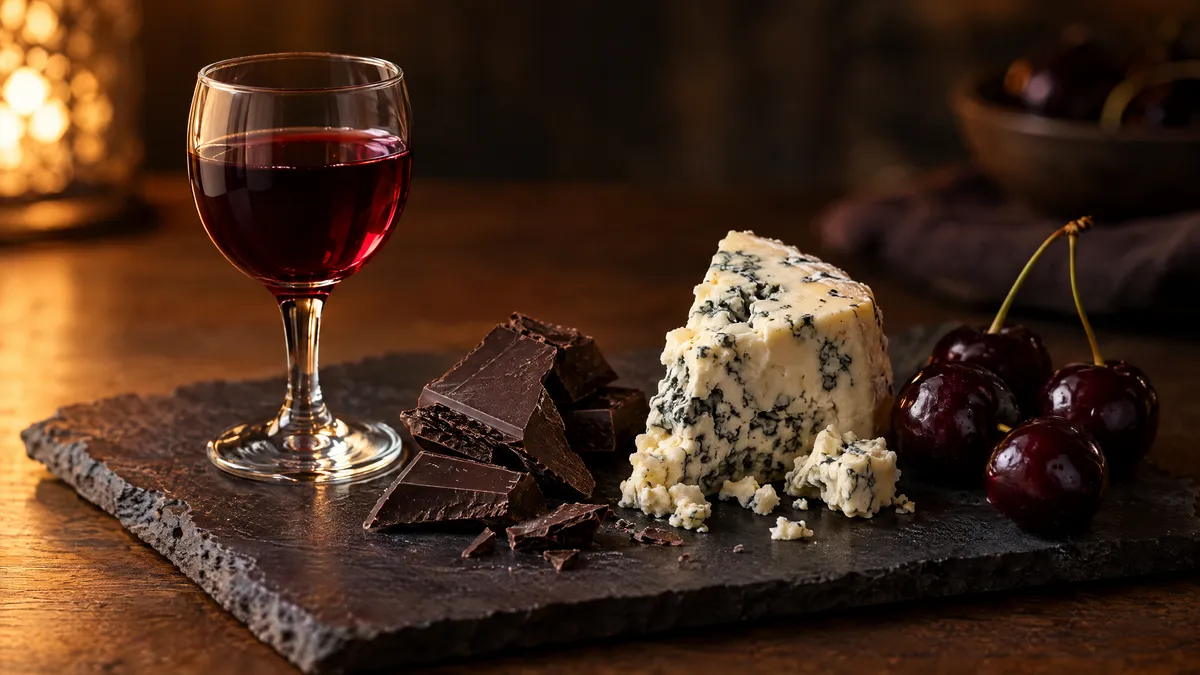
- Dark chocolate, 70% cocoa and up. The bitterness meets the wine's cocoa finish, and the wine's sugar outweighs the bar's.
- Gorgonzola piccante and other strong blue cheese. Salt and sharp mould make the sweet fruit taste juicier. The wine with blue cheese guide puts sweet Recioto beside Ruby Port for the firm, spicy blues.
- Cherry, plum or berry tarts. Cherries and plums in the pastry echo the dried cherry in the glass.
- Plain shortbread, almond biscuits or a simple sponge. Low-sugar bakes let the wine supply the sweetness.
- Aged hard cheese with walnuts. Salt and fat soften the tannin.
If the dessert is pale and very sugary, such as meringue or custard tart, choose a lighter sweet white instead: Recioto's tannin clashes with cream and the sugar overwhelms it. If the plan is a cheese board, put the blue cheese last and pour the Recioto with it.
How Do You Serve and Store Recioto?
Serve it cellar-cool, about 14 to 16°C, in small pours. That is colder than a living room, so if the bottle has been on a warm shelf, give it about 20 minutes in the fridge before opening. Warm Recioto feels heavy and the alcohol pushes forward; ice-cold Recioto loses its cherry and cocoa smell.
A white-wine glass or a small tulip glass works well. Pour around 75 ml, half a normal glass: sugar and body make a little go a long way, which is why half bottles are common. The wine serving temperature chart puts Tawny Port and oloroso Sherry in the same cool band.
Once open, a recorked bottle kept in the fridge stays good for longer than a dry red, because sugar, acidity and tannin all slow the effect of air. The guide to how long wine lasts after opening gives sweet wines about 7 to 14 days. If it smells of vinegar or flat stewed fruit, it has gone.
Unopened, keep it lying down, somewhere dark and cool. The rules set no minimum ageing, so most bottles are sold young and fruity. Sugar, acidity and tannin let good bottles develop for years, slowly trading fresh cherry for fig, leather and dried mushroom. If you like the fruit, drink it young; if you like those savoury notes, keep it a few years.
Are Recioto di Soave and Recioto di Gambellara the Same Wine?
No. Both are sweet whites from dried Garganega (the white grape behind Soave). Only Recioto della Valpolicella is red. The shared word names the method, a sweet wine from dried grapes, so the place name after "Recioto" is the part to read.
| Wine | Colour | Grape | Where | Tastes of |
|---|---|---|---|---|
| Recioto della Valpolicella | Red | Corvina, Corvinone, Rondinella | Hills north of Verona | Dried cherry, plum, cocoa |
| Recioto di Soave | White | Mostly Garganega | Hills east of Verona | Honey, apricot, almond |
| Recioto di Gambellara | White | 100% Garganega | Hills near Vicenza | Honey, dried apricot, nuts |
Recioto di Gambellara became its own DOCG in 2008, made only from Garganega dried to at least 14% potential alcohol. Recioto di Soave is the better known of the two whites; the Garganega wine guide follows it from the vineyard to the drying racks. The red and white Recioto wines sit on one map in the Veneto wine guide.
Where Does the Name Recioto Come From?
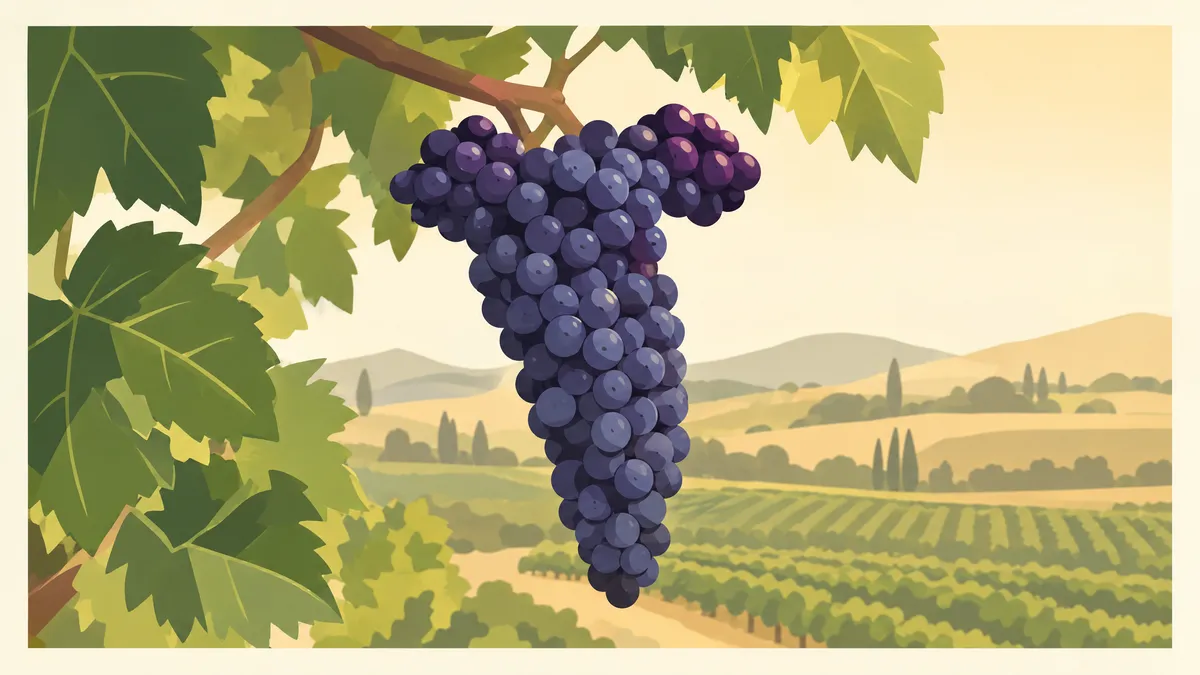
From recie, Veronese dialect for "ears". The word means the two small side wings at the top of a grape bunch. Those berries hang most in the sun and ripen first, so in the past growers picked them separately to make the sweetest wine. Today whole bunches go to the drying loft, but the name stuck.
Sweet wine from dried grapes is old in these hills. In the 6th century the Roman writer Cassiodorus noted that the sweet wines of the area were favourites at the court of the Ostrogothic kings. Nobody can say how close those wines were to Recioto as it is bottled today.
Recioto is not a sweet version of Amarone; Amarone is a dry version of Recioto. For centuries the dry style turned up only when a Recioto fermentation ran on until the sugar was gone. In the 1950s producers began making that dry wine on purpose, and it became Amarone.
The zone gained its DOC in 1968. Recioto della Valpolicella was promoted to its own DOCG in 2010, though some sources date the decision to December 2009, together with Amarone.
Is Recioto Worth Buying If You Do Not Like Sweet Wine?
Yes, if you start it with blue cheese rather than on its own. The salt and sharpness of a strong blue cut the sugar. If sweet wine on its own cloys for you, buy a half bottle and pour it only with the cheese course.
Corvina's acidity and tannin also make Recioto taste less sweet than its sugar figure suggests. The guide to tasting residual sugar explains how acid and tannin mask sugar on the tongue.
The other dessert styles, from noble rot to fortified, are lined up in the dessert wine guide, and the wine styles hub groups every wine made by drying, fortifying or ageing. The Sommy app at sommy.wine has a bite-sized Italy course and an AI-guided tasting mode. Buy a half bottle of Recioto tonight, open it with a wedge of Gorgonzola, and photograph the label before the first sip.
Sources
Frequently Asked Questions
Is Recioto sweet?
Yes. Recioto della Valpolicella is a sweet red. The grapes are dried until they could make a 14% wine, and the fermentation stops while plenty of sugar is still in the juice. The rules ask for at least about 50 grams of sugar per litre in the finished wine, which is clearly dessert-wine territory, balanced by Corvina's acidity and a firm grip of tannin.
What is the difference between Recioto and Amarone?
They start the same way: Corvina, Corvinone and Rondinella grapes dried for months in lofts. Amarone is fermented until almost all the sugar is gone, so it is a dry red of 14% alcohol or more. Recioto is stopped early and keeps its sugar, so it is a sweet red for dessert. Recioto is also the older wine; Amarone grew out of Recioto fermentations that ran dry.
What does recioto mean?
The word comes from recie, Veronese dialect for ears. It refers to the two small side wings at the top of a grape bunch. Those berries get the most sun and ripen first, and in the past they were picked separately for the sweetest wine. Today whole bunches are dried, but the name stuck to the sweet style.
What do you eat with Recioto della Valpolicella?
Dark chocolate around 70% cocoa, blue cheese such as Gorgonzola piccante, cherry or berry tarts and plain shortbread or almond biscuits all work. The wine should be at least as sweet as the dessert, or it tastes sour and thin. Very sugary white desserts such as meringue or custard tarts are the riskiest choice, so keep the dessert dark, fruity or salty.
What temperature should Recioto be served at?
Serve it cellar-cool, about 14 to 16°C. That is colder than a room and warmer than a fridge. If the bottle has been on a warm shelf, give it about 20 minutes in the fridge before opening. Too warm, the sugar and alcohol feel heavy; too cold, the cherry and cocoa smells shut down. Pour small glasses, around 75 ml.
Is Recioto di Soave the same as Recioto della Valpolicella?
No. Recioto di Soave and Recioto di Gambellara are sweet white wines from dried Garganega grapes, grown east of Verona and near Vicenza. They taste of honey, apricot and almond. Only Recioto della Valpolicella is red. The shared word recioto names the method, sweet wine from dried grapes, not one wine.
How long does Recioto last after opening?
Longer than a dry red. Sugar, acidity and tannin slow the damage air does, so a recorked bottle kept in the fridge usually tastes good for one to two weeks, in line with other sweet wines. Take it out about 20 minutes before pouring. If it starts to smell of vinegar or flat stewed fruit, it is past its best.
Sommy Team
LinkedInFounder & Wine Educator
The Sommy Team is building the world's most approachable wine education app, helping beginners develop real tasting skills through structured courses and AI-guided practice.