Wine and Chocolate Pairing: A Practical Guide

By the Sommy Team — AI-assisted, human-edited.
Updated Apr 29, 2026
Contents (15)
- Wine and Chocolate Pairing, in 90 Seconds
- The Honest Framing — Chocolate Is Hard to Pair
- The Fundamental Rule — Sweetness Drives Everything
- The Three Chocolate Categories and Their Wine Matches
- The Cocoa Percentage Rule — Your Quick Compass
- Fillings and Inclusions Change the Game
- The Science — Why Chocolate Is a Pairing Trap
- The Common Mistakes to Stop Making
- Service Notes — Get the Mechanics Right
- Easy Go-To Pairings for Entertaining
- What to Avoid When Buying
- The Rosé Question
- Sparkling Wine, Revisited
- The Three-Bottle Starter Pairing Flight
- The Closing Note
TL;DR
Chocolate is hard to pair, and the wine must be at least as sweet as the chocolate. Use cocoa percentage as your compass: under 50% wants Moscato, 60-70% calls for Tawny Port or Banyuls, 70-85% sings with Vintage Port or Pedro Ximenez. Match fillings, not just bars.
Wine and Chocolate Pairing, in 90 Seconds
Wine and chocolate pairing has a single non-negotiable rule: the wine must be at least as sweet as the chocolate. Break that, and even the most expensive bottle tastes thin and bitter the second the chocolate hits your tongue. Use cocoa percentage as your map — under 50% pairs with Moscato d'Asti or Asti, 60-70% calls for Tawny Port or Banyuls, and 70-85% sings with Vintage Port, Recioto, or Pedro Ximenez Sherry. Match fillings too — caramel wants Pedro Ximenez, hazelnut wants Tawny Port, berry wants Brachetto d'Acqui. Skip dry reds, skip Brut sparkling, and treat the whole thing as a dessert course, not a snack.
The Honest Framing — Chocolate Is Hard to Pair
Most food and wine pairings work because the wine adds something the food lacks — acidity to cut richness, tannin to scrub fat, fruit to lift salt. Chocolate flips that dynamic. It already has tannin (from fermented cocoa solids), it already has bitterness, it already has fat, and it already has enough sweetness to recalibrate your palate.
That means many wines that taste wonderful on their own collapse the moment chocolate enters. The pairing has to overcome the chocolate's defenses, not complement them. This is why the "red wine with chocolate" cliché disappoints so consistently — and why so many wine writers quietly admit the pairing is harder than it looks.
The good news is that once you understand the rules, the safe pairings become obvious. The same three or four bottles handle 90% of chocolate situations, and the rest is filling-specific fine-tuning.
The Fundamental Rule — Sweetness Drives Everything
The single rule that overrides everything else: wine sweetness must equal or exceed chocolate sweetness.
When the wine is drier than the chocolate, the chocolate's sugar resets your palate's sweetness baseline. Every sip after a bite of chocolate tastes more bitter, more acidic, and more astringent than it would on its own. Tannin reads as harsh. Fruit disappears. The wine feels hollow.
When the wine is at least as sweet as the chocolate, the two find equilibrium. The wine's fruit registers, the chocolate's bitterness gets balanced, and the pair tastes like a dessert course rather than a fight. Most people interpret a clashing pairing as a problem with the wine — it is almost always a sweetness mismatch.
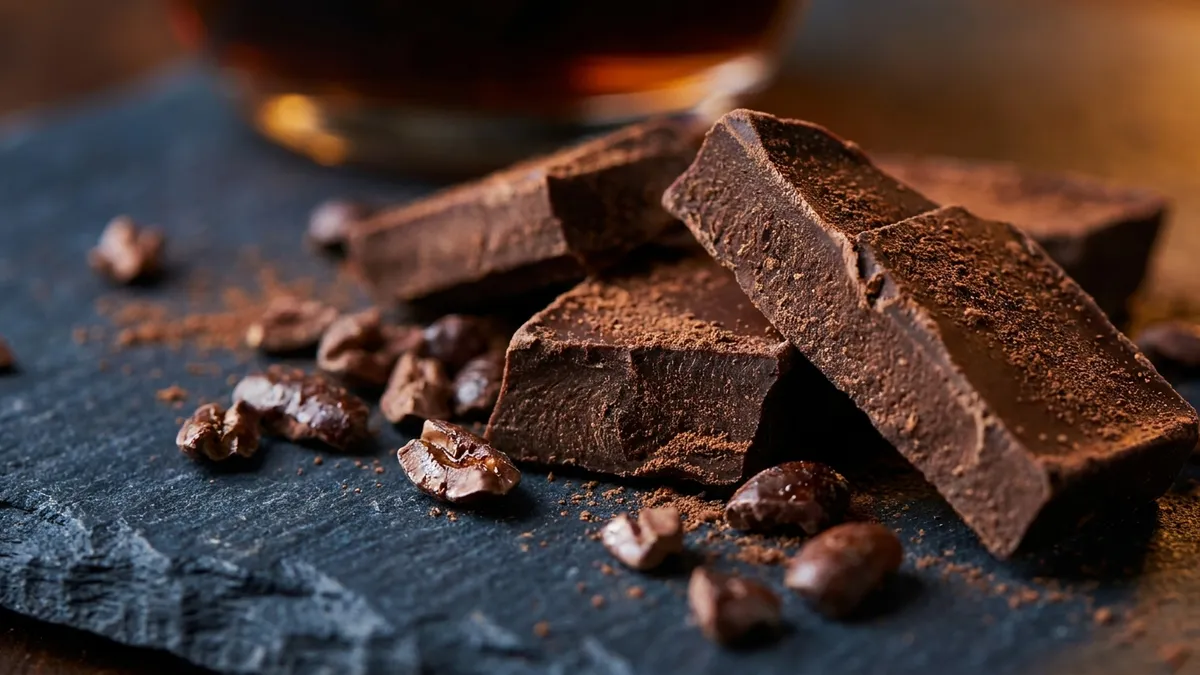
The Three Chocolate Categories and Their Wine Matches
Chocolate splits into three broad categories by cocoa solid content, and each category has a recognizable wine personality.
Dark Chocolate (60-100% Cacao)
Dark chocolate is bittersweet, tannic, and intense. The pairing needs concentrated fruit and matching bittersweetness — anything light or delicate gets steamrolled.
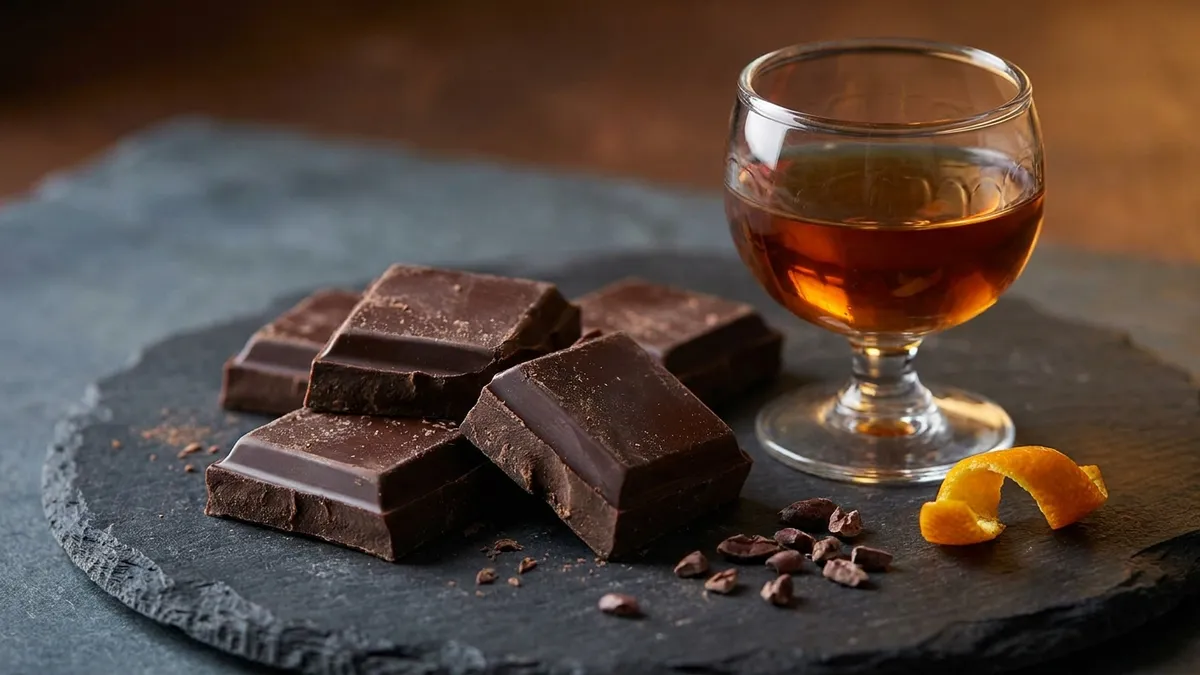
- Best matches: Tawny Port (10-30 year), Vintage Port, Banyuls, Maury
- Good matches: Amarone della Valpolicella, jammy Zinfandel, bold Argentine Malbec
- Avoid: dry Cabernet Sauvignon, dry Pinot Noir, Brut sparkling wine
The Banyuls and Maury wines from Roussillon deserve special attention here — they are made from Grenache and have natural cocoa, dried-fruit, and spice notes that mirror dark chocolate almost uncannily. If you have never tried Banyuls, this is the entry point.
For a deeper look at dark-fruit reds and their tannin profiles, our Cabernet Sauvignon vs Merlot comparison explains why even soft, ripe reds struggle against chocolate.
Milk Chocolate (30-50% Cacao)
Milk chocolate adds dairy fat and significant sugar. The pairing has to handle creaminess and sweetness in equal measure, which is why the wine list shifts toward caramel and dried-fruit profiles.
- Best matches: lighter Tawny Port, Cream Sherry, late-harvest Riesling
- Good matches: Recioto della Valpolicella, Banyuls, Brachetto d'Acqui
- The surprising win: Pedro Ximenez Sherry — its caramel and raisin echo milk chocolate's toffee notes almost note for note
Late-harvest Riesling deserves a closer look — the acidity cuts the dairy fat, and the residual sugar matches the chocolate. For more on this style, our Riesling wine guide covers the sweetness range in detail.
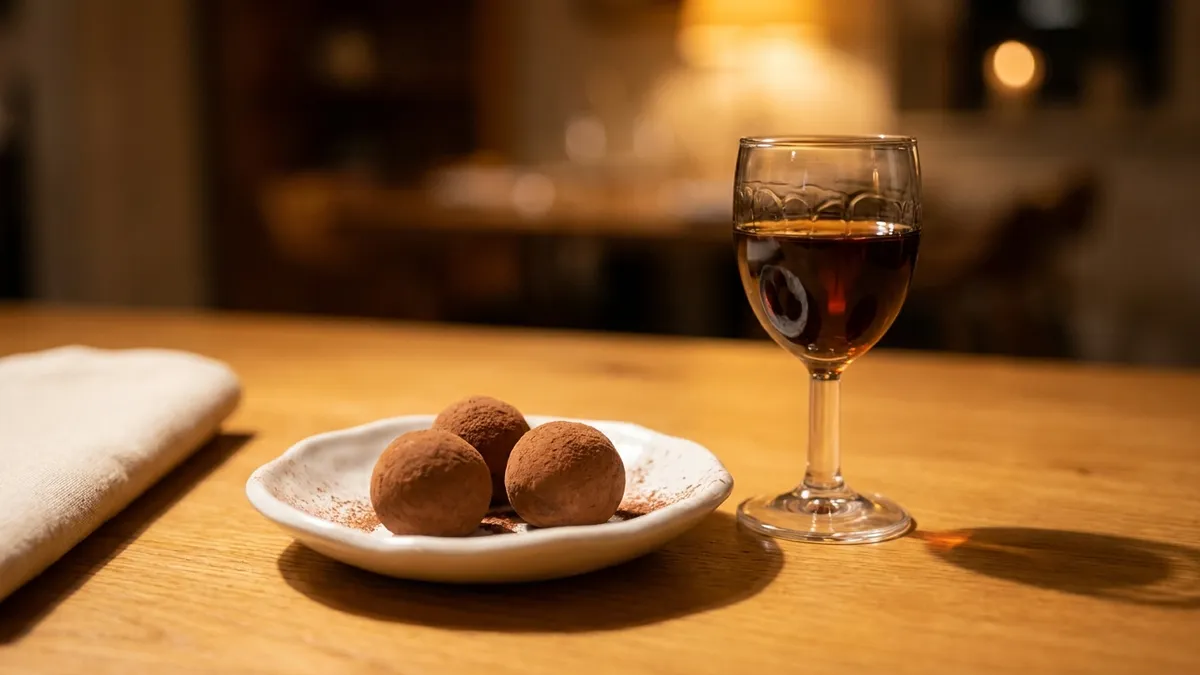
White Chocolate
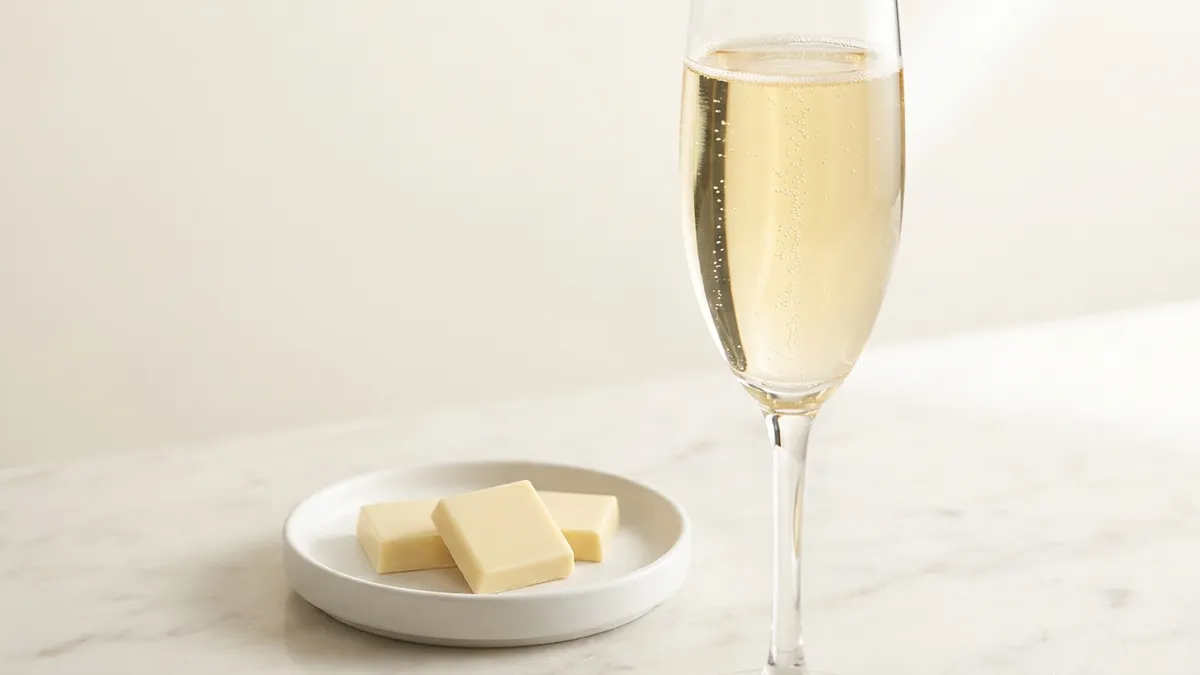
White chocolate has no cocoa solids — only cocoa butter, sugar, and milk solids. The flavor profile is butter, vanilla, and cream, with no tannin or bitterness to balance against. The wine list flips entirely toward aromatic whites.
- Best matches: Moscato d'Asti, Asti, Brachetto d'Acqui (sweet sparkling Italian red)
- Good matches: late-harvest Sauvignon Blanc, ice wine, Sauternes
- Avoid: red dessert wines, which overwhelm the cream and clash with the buttery texture
The acidity question matters most for white chocolate. Without it, the pairing turns cloying — two sweet things with nothing to refresh between bites. Moscato d'Asti's fizz and crisp peach acidity are the safest insurance against this.
The Cocoa Percentage Rule — Your Quick Compass
If you remember nothing else, remember this — the cocoa percentage on the chocolate wrapper tells you which wine to pour.
- Under 50% cocoa — sweet wines lead. Moscato d'Asti, Asti, Sauternes, late-harvest Riesling
- 60-70% cocoa — fortified and rich dessert wines. Tawny Port, late-harvest Zinfandel, Banyuls
- 70-85% cocoa — concentrated and intense. Vintage Port, Recioto della Valpolicella, Pedro Ximenez Sherry
- 85-100% cocoa — barely sweet at all. Very few wines work here — espresso or aged whiskey is honestly a better match
The pattern is intuitive once you see it. As cocoa percentage rises, the chocolate gets less sweet and more bitter, and the wine needs more weight, more dried-fruit concentration, and more residual sugar to keep up. A bar over 85% cocoa is more savory than sweet, and at that point the wine usually loses.
For a fuller picture of how dessert wines are made, our dessert wine guide breaks down the styles and the production methods behind them.
Fillings and Inclusions Change the Game
A solid bar of chocolate is one pairing question. A truffle filled with caramel, hazelnut, raspberry, or chili is a different question entirely — and the filling, not the chocolate shell, usually drives the wine choice.
| Filling or inclusion | Best wine pairing |
|---|---|
| Caramel or salted caramel | Pedro Ximenez Sherry — perfect echo |
| Hazelnut or praline | Tawny Port — hazelnut and Port is magic |
| Berry or raspberry | Brachetto d'Acqui or late-harvest Pinot Noir |
| Mint | Moscato d'Asti or sparkling — avoid red |
| Coffee | Tawny Port or Pedro Ximenez Sherry |
| Chili | Most wine clashes — espresso is safer |
| Sea salt | Pedro Ximenez or salty Cream Sherry |
Mint deserves a flag — it clashes badly with red wine, so even with a chocolate shell that would normally call for Port, the mint pulls the pairing toward sparkling or aromatic white. Chili is similar — capsaicin amplifies alcohol heat in fortified wine and ruins the balance.
The Science — Why Chocolate Is a Pairing Trap
Chocolate carries 30+ flavor compounds plus tannins from the fermented cocoa solids. Wine carries its own tannins from grape skins, seeds, and oak. When the two stack — dry red plus dark chocolate — the doubled tannin reads as bitter, drying, and slightly metallic on the palate.
Sweet wines work for two reasons. First, residual sugar balances the chocolate's bitterness through the same mechanism that lets sugar tame coffee or grapefruit. Second, fortified and dried-grape wines carry concentrated fruit and dried-fruit flavors — fig, raisin, plum, cherry — that complement the chocolate's complexity rather than compete with it.
This is why the pairing ladder runs from Moscato (light, fresh sweet) to Tawny Port (caramel, nutty, oxidative) to Pedro Ximenez (raisin, fig, treacle). As the chocolate gets more intense, the wine has to bring more concentration to the table.
If you want to train the palate calibration that makes pairing intuitive, our guide on how to develop your wine palate walks through the exercises sommeliers actually use.
The Common Mistakes to Stop Making
Three pairings get repeated constantly in wine marketing and almost always disappoint.
Cabernet Sauvignon with chocolate. The advertised "perfect pair" is actually a tannin and sweetness mismatch — the chocolate's sugar strips the wine's fruit, and the doubled tannin makes both taste bitter. If you want a dry red exception, look at Amarone with very dark (80%+) chocolate, where the wine's dried-grape concentration and the chocolate's reduced sweetness meet in the middle.
Brut Champagne with chocolate. The bubbles and high acidity get crushed by the chocolate's density and sugar. Demi-sec Champagne works because of the dosage — Brut does not. For more on the differences, our Champagne vs Prosecco vs Cava breakdown covers the sweetness levels of each style.
Red wine with white chocolate. Red dessert wines flatten white chocolate's delicate cream and butter notes. Stay aromatic, stay light — Moscato d'Asti, late-harvest Sauvignon Blanc, or Sauternes.
Service Notes — Get the Mechanics Right
Even the perfect pairing falls apart if the temperature and order are wrong.
- Wine temperature: sweet and fortified wines show best slightly chilled, around 60-65°F (15-18°C). Tawny Port, Banyuls, and Pedro Ximenez all benefit from being just below room temperature
- Chocolate temperature: room temperature, never refrigerated. Cold chocolate has a waxy mouthfeel that masks the cocoa flavor and makes pairing harder
- Order: taste the chocolate first, sip the wine second. The chocolate sets the sweetness baseline that the wine has to meet
- Quantity: small bites, small sips. Chocolate-and-wine pairing is a finishing course, not a session
- Timing: after the meal, not during. Cheese first, chocolate last
Easy Go-To Pairings for Entertaining
When you do not have time to think, three pairings cover almost any chocolate situation.
- Mixed dark chocolate plus Tawny Port — the universal winner, works for nearly every guest
- Pedro Ximenez Sherry shot plus bittersweet chocolate — pure indulgence and impossible to mess up
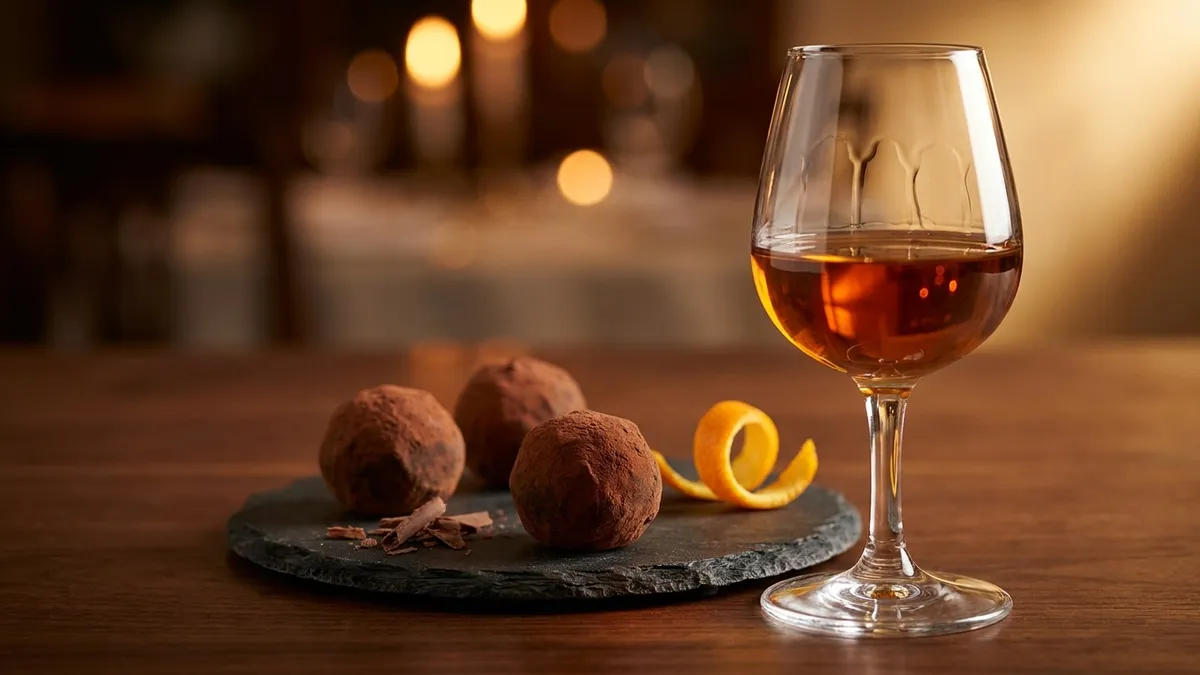
- Banyuls plus chocolate truffles — French romance, especially with hazelnut or coffee fillings
The Sommy app builds the palate calibration that makes choices like these intuitive — assessing a wine's sweetness, body, and intensity is the skill that powers every chocolate match. If you want to walk through the structured side of pairing, our Food and Pairing learning hub collects the pillar's articles in one place.
What to Avoid When Buying
The pairing fails before you open the bottle if the chocolate is wrong.
- Mass-market chocolate. Low cocoa percentages, vegetable fats instead of cocoa butter, and added sugar that dwarfs everything else. The wine does not have a chance.
- Cocoa-rich chocolate without origin information. Single-origin chocolates have cleaner flavor profiles that pair more predictably than generic blends.
- Pre-paired "wine and chocolate" gift boxes. These almost always mismatch sweetness — the most common error is a dry red paired with a milk chocolate truffle, which we now know is the worst combination on the spectrum.
For the wine side, the Pinot Noir guide is worth reading if you want to understand why even fruit-forward, low-tannin reds rarely make the grade with chocolate.
The Rosé Question
Dry rosé does not work with chocolate. It is too light, too dry, and gets stripped by the sugar. Off-dry pink Moscato or sweet rosé carries enough residual sugar to pair with white or milk chocolate, but it is rarely the best choice — Moscato d'Asti or Brachetto d'Acqui usually performs better at the same intensity.
If you genuinely want the visual of a pink wine on the dessert table, sweet sparkling rosé is the safest bet. Otherwise, do not let the color guide the pairing.
Sparkling Wine, Revisited
Most sparkling wine fails with chocolate, but two specific styles work.
Demi-sec Champagne carries enough dosage (residual sugar added before final corking) to handle milk and dark chocolate. The acidity and bubbles cut the richness without the dryness clash.
Brachetto d'Acqui is a sweet, lightly sparkling red from Piedmont. It has the sweetness to match chocolate and the low tannin to avoid bitterness. This is the closest the "red sparkling with chocolate" idea gets to actually working.
Brut Champagne, Brut Cava, dry Prosecco — none of these work. The bubbles are not the problem; the dryness is.
The Three-Bottle Starter Pairing Flight
Build a flight around three bottles, and you can host a chocolate dessert course any night of the week.
- Tawny Port plus 70% dark chocolate — the entry point that makes Port-chocolate believers out of skeptics
- Pedro Ximenez Sherry plus caramel chocolate — the indulgence pairing; everyone goes silent on the first sip
- Moscato d'Asti plus white chocolate — the lighter finish that works for guests who do not love fortified wine
These three bottles cost less than a single fine wine in many cases, and they cover the full chocolate spectrum. For a full take on the sister-piece wine and chocolate pairing, our companion article goes deeper on chocolate desserts and composed dishes.
For a broader pairing framework that applies beyond chocolate, our guide to wine pairing rules covers the full set of bridges, contrasts, and mismatches.
The Closing Note
Wine and chocolate pairing is for special occasions. Treat it that way — match the sweetness, match the intensity, match the flavor profile of the filling, and the pairing transforms from a clash into something that genuinely tastes like more than the sum of its parts.
The fundamental rule never changes: the wine must be sweeter than or equal to the chocolate. Everything else is fine-tuning. Pour a Tawny Port over a square of 70% chocolate tonight, and you will understand why this pairing has been a sommelier favorite for two centuries.
The Sommy app guides this exact kind of structured pairing thinking through interactive courses and AI-guided practice — if you want to build the palate skills that make pairing intuitive, start with Sommy and explore the food and pairing pillar at your own pace.
Frequently Asked Questions
What is the single most important rule for wine and chocolate pairing?
The wine must be sweeter than or equal to the chocolate. If the wine is drier, the chocolate's sugar will strip the fruit out of the wine and leave it tasting bitter, sour, and hollow. This rule overrides every other consideration — color, region, even flavor profile — and it is the reason most wine and chocolate pairings fail.
Why does Cabernet Sauvignon clash with chocolate?
Cabernet is dry and tannic, and chocolate is sweet and tannic — both at the same time. The chocolate's sugar makes the Cabernet taste astringent and stripped, and the double dose of tannin from cocoa solids and grape skins reads as bitter on the palate. Despite being marketed as a classic match, dry Cabernet with chocolate is a clash, not a pairing.
What wine pairs with dark chocolate at 70-85% cocoa?
At 70-85% cocoa, the chocolate is bittersweet and intense, so the wine needs concentration and residual sugar to keep up. Vintage Port, Recioto della Valpolicella, and Pedro Ximenez Sherry are the strongest matches. Tawny Port and Banyuls also work and lean a touch lighter and nuttier.
What wine should I pour with white chocolate?
White chocolate is delicate, sweet, and creamy without cocoa solids, so it wants aromatic, light-bodied sweet wines. Moscato d'Asti, Asti, and Brachetto d'Acqui are reliable. Late-harvest Sauvignon Blanc, ice wine, and Sauternes also work. Avoid red dessert wines — they overwhelm the cream and clash with the buttery texture.
Does sparkling wine work with chocolate?
Most dry sparkling wine — Brut Champagne, Brut Cava, dry Prosecco — does not work with chocolate because the bubbles and acidity fight the chocolate's density. The exceptions are demi-sec Champagne and Brachetto d'Acqui, both of which carry enough residual sugar to keep up. Sweetness is the deciding factor, not the bubbles.
What is the best wine for caramel or salted-caramel chocolates?
Pedro Ximenez Sherry is the standout pairing for caramel chocolates. Its raisin, fig, and toffee profile mirrors the caramel almost note for note, and its viscous texture matches the filling. For salted caramel specifically, the saltiness lifts Pedro Ximenez's sweetness and stops it from feeling cloying.
Can I pair rosé with chocolate?
Dry rosé does not work with chocolate — it is too light, too dry, and gets stripped by the sugar. Off-dry or sweet pink Moscato can pair with white or milk chocolate because it carries enough residual sugar. Treat rosé pairing the same way as any other wine and check sweetness first.
What is a safe three-bottle starter flight for entertaining?
Tawny Port with 70% dark chocolate, Pedro Ximenez Sherry with caramel chocolate, and Moscato d'Asti with white chocolate. These three wines cover the full spectrum of chocolate styles and fillings, and they are reliably good pairings without requiring guesswork. It is the easiest dessert course you can build.
Sommy Team
LinkedInFounder & Wine Educator
The Sommy Team is building the world's most approachable wine education app, helping beginners develop real tasting skills through structured courses and AI-guided practice.