Mourvèdre (Monastrell): The Dark, Meaty Mediterranean Grape

By the Sommy Team — AI-assisted, human-edited.
Updated Apr 29, 2026
Contents (13)
- What Is Mourvèdre Wine?
- What Is Mourvèdre, in 100 Words
- A Grape with Three Names
- Sensory Profile — How Mourvèdre Tastes
- Bandol — the Benchmark Mourvèdre
- Jumilla and the Spanish Old-Vine Heartland
- Mourvèdre's Role in GSM Blends
- Aging Trajectory — Why Patience Pays
- Food Pairings for Mourvèdre and Monastrell
- The "Meaty" Question — Praised in Bandol, Criticized Elsewhere
- Serving Mourvèdre — The Practical Details
- Mourvèdre Compared to Other Reds
- Building Your Mourvèdre Tasting Skills
TL;DR
Mourvèdre — Monastrell in Spain, Mataro in Australia and the US — is a thick-skinned, late-ripening red grape with deep color, savory game and leather notes, firm tannin, and 14 to 15 percent alcohol. Its purest expression is Bandol in Provence, while Spain's Jumilla delivers old-vine value. It also adds backbone to GSM blends.
What Is Mourvèdre Wine?
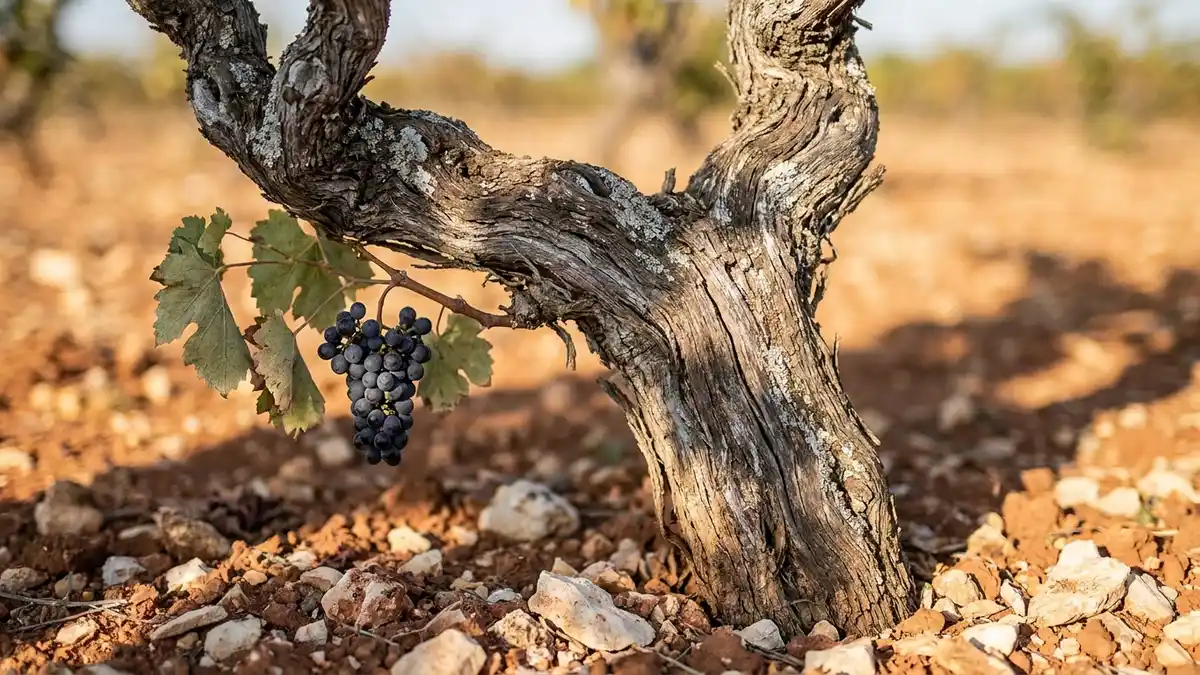
Mourvèdre is a dark, late-ripening red grape that produces some of the most savory and structured wines in the Mediterranean world. Mourvedre wine comes in many guises — under the name Monastrell in Spain, Mataro in Australia and the United States, and Mourvèdre in France — but the grape behind every label is the same thick-skinned, sun-loving variety that traces its origins to the eastern coast of Spain, likely near the town of Murviedro (now Sagunto), from which its French name is thought to derive.
What sets Mourvèdre apart is its character — dark, savory, almost reductive when young, and built around a backbone of firm tannin and 14 to 15 percent alcohol. This is not a grape for cool climates or impatient winemakers. It needs heat, time, and the right hand at the cellar to reveal its best self.
The reward for that patience is a wine of remarkable complexity. Leather, smoked meat, black pepper, forest floor, and dried herbs all appear in a glass of mature Mourvèdre, layered over a core of dark fruit and resolved tannin.
What Is Mourvèdre, in 100 Words
Mourvèdre — Monastrell in Spain, Mataro in Australia and the United States — is a thick-skinned, late-ripening red grape with deep color, a savory profile of game, leather, and pepper, firm tannin, and high alcohol around 14 to 15 percent. It is heat-loving, thriving only in Mediterranean climates where it can fully ripen. Its star regions are Bandol in Provence (its purest expression), Châteauneuf-du-Pape (often the M of GSM blends), and Spain's Jumilla and Yecla, where heavy old-vine concentration is the norm. Distinct meaty and animal funk young, the grape opens up beautifully with age — Bandol is ageworthy 10 to 15 or more years.
A Grape with Three Names
Few grapes carry as much regional identity baggage as Mourvèdre. Its three main names tell the story of how the variety travelled across the Mediterranean and then the world.
Monastrell — the Spanish original
The grape almost certainly originated in Spain. The name Monastrell is the older one, and Spain still grows the lion's share of the world's plantings — over 60,000 hectares, mostly in the southeast. In Jumilla, Yecla, Alicante, and Bullas, Monastrell is king. These hot, arid regions produce concentrated, fruit-forward wines from old, low-yielding bush vines, many of them ungrafted survivors of the phylloxera era.
Mourvèdre — the French refinement
The grape crossed the border into France centuries ago and put down roots along the Provençal coast. In the small appellation of Bandol, just east of Marseille, Mourvèdre found the soils, sea breezes, and slow-ripening sunshine it needed to express itself with elegance rather than power. The French name stuck for the more structured, ageworthy style — and travelled with the grape into the southern Rhône, where it became the M in GSM.
Mataro — the New World holdout
When phylloxera devastated European vineyards in the late 19th century, vine cuttings spread to Australia and California. There, the grape was planted under its older Spanish name, Mataro. Australian Mataro vines in the Barossa Valley are now among the oldest Mourvèdre vines on earth — some over 150 years old. Many California producers also use the Mataro label, especially for old-vine bottlings.
Sensory Profile — How Mourvèdre Tastes
Tasting Mourvèdre is a lesson in savory complexity. The grape is fruit-driven, but the fruit is rarely the headline. What you remember is the texture, the structure, and the meaty, almost wild edge.
Aromas
- Fruit — blackberry, black plum, dark cherry, dried fig
- Savory — smoked meat, game, leather, cured ham
- Spice — black pepper, clove, cinnamon, star anise
- Earth — forest floor, truffle, wet stone, garrigue (the Provençal blend of rosemary, thyme, lavender, and juniper)
- Floral — dried violets in cooler-climate bottlings
Palate
- Body — full
- Tannins — firm, sometimes grippy when young; for the texture vocabulary, see what does grippy mean in wine
- Acidity — medium
- Alcohol — high, usually 14 to 15 percent
- Finish — long, savory, with a meaty echo
The "funk" question
Many young Mourvèdres show a slightly reductive, gamey, or barnyard-like aroma on first pour. This is not a fault — it is part of the variety's signature. Thick skins and oxygen-resistant winemaking concentrate sulfur compounds that read as savory rather than fruity. With air or bottle age, those notes transform into leather, truffle, and roasted-meat complexity. To learn the difference between a charming reductive note and an actual fault, see how to identify wine faults by smell and the discussion of reduction in wine.
Bandol — the Benchmark Mourvèdre
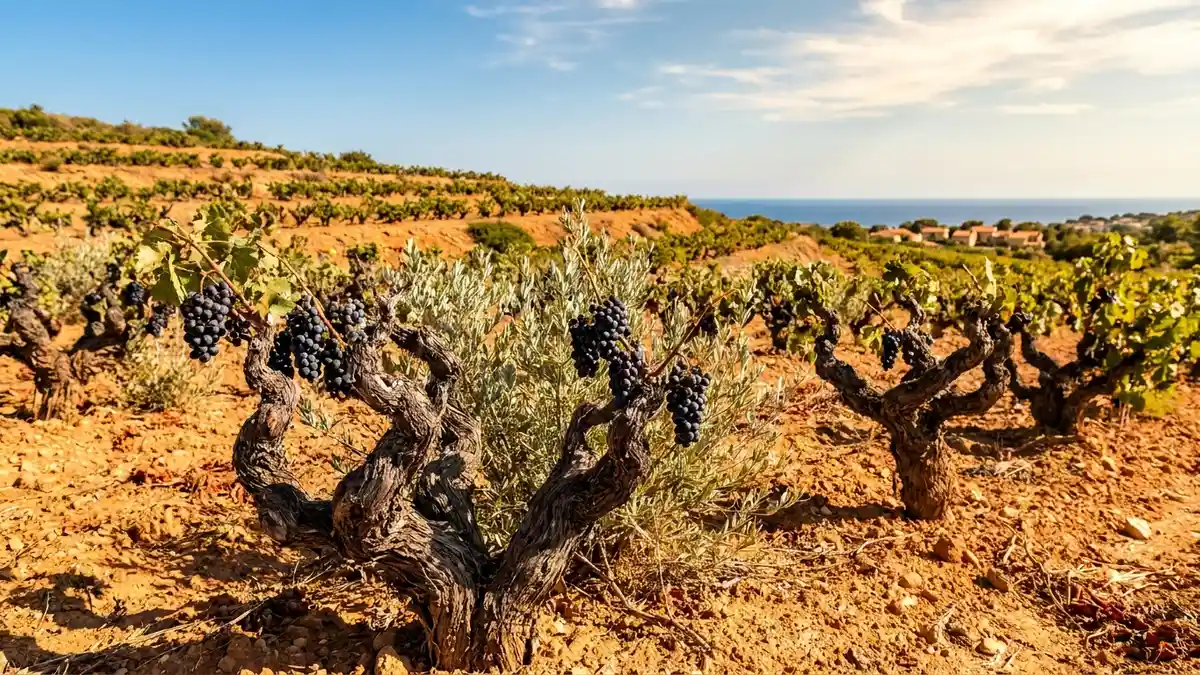
If you want to understand what Mourvèdre can be, the answer is Bandol. This small Provençal appellation, hugging the Mediterranean coast east of Marseille, has built its identity around the grape. By law, red Bandol must contain at least 50 percent Mourvèdre, and most serious producers push that figure to 80 or even 95 percent.
The terroir is exceptional. Hot, sun-drenched days are tempered by cooling sea breezes. The soils are limestone, clay, and the local restanques — terraced parcels carved into hillsides that catch the sun and drain swiftly after rain. Yields are tiny, vines are old, and the grapes ripen slowly enough to develop perfume alongside power.
Bandol is also one of the few European reds where extended cask aging is mandatory — at least 18 months in large oak foudres before release. The result is a wine of remarkable structure and longevity. Top vintages drink beautifully at 10 to 15 years, with the best examples holding their own at 20 or more, gradually trading their early animal funk for layers of leather, truffle, dried herbs, and tobacco.
Bandol is the appellation that taught the wine world to praise rather than apologize for Mourvèdre's wilder side.
Jumilla and the Spanish Old-Vine Heartland
While Bandol elevated Mourvèdre into a luxury wine, Spain has kept Monastrell's older identity alive — concentrated, generous, and refreshingly affordable.
Jumilla
Jumilla, in the arid hills of Murcia, is the most famous Spanish Monastrell appellation (see the full Jumilla wine guide). The climate is harsh — hot, dry summers and freezing winters — and the soils are limestone over chalk. Many vineyards still farm ungrafted, head-trained bush vines that survived phylloxera. These old vines produce tiny yields of intensely concentrated grapes.
Jumilla Monastrell tends to be riper and rounder than Bandol, with bold blackberry and plum fruit, sweet spice, and softer tannin. The best examples balance that richness with savory herb and leather notes inherited from the variety's nature.
Yecla, Alicante, and Bullas
Around Jumilla, smaller appellations like Yecla, Alicante, and Bullas also produce excellent Monastrell, often from old bush vines and at gentler price points. Together, this corner of southeastern Spain holds one of the world's deepest reserves of mature Mourvèdre vine stock — and some of its best value-per-bottle.
For more on the broader Spanish landscape, see the Spanish wine regions guide.
Mourvèdre's Role in GSM Blends
Outside Bandol and Jumilla, Mourvèdre's most important contribution is as a blending grape. In the southern Rhône Valley, Provence, and increasingly Australia, the GSM blend — Grenache, Syrah, Mourvèdre — is one of the most successful red wine recipes ever devised.
Each grape plays a role:
- Grenache — ripe red fruit, warmth, soft texture, the heart of the blend
- Syrah — black fruit, pepper, floral lift, the spice
- Mourvèdre — color, savory depth, firm tannin, and aging potential — the backbone
In Châteauneuf-du-Pape, Mourvèdre is one of 13 permitted varieties but typically plays a central supporting role behind Grenache. In Côtes du Rhône and Côtes du Rhône-Villages, smaller percentages still contribute crucial structure. To learn how Syrah differs in cool versus warm climates, see Syrah vs Shiraz.
Australian winemakers, particularly in McLaren Vale and the Barossa, have embraced GSM (sometimes labelled GMS or even just "Rhône blend") as a flagship style. The hot, sunny conditions are ideal for all three grapes — and the old Mataro vines provide structure that ripe Australian fruit alone cannot match. The grape sits comfortably alongside the country's other big reds; for context, see the Australian wine guide.
Aging Trajectory — Why Patience Pays
Few red grapes change as dramatically with bottle age as Mourvèdre. The young wine and the mature wine are almost different drinks.
Young (0–3 years)
Tight, dark, and slightly reductive. Black fruit dominates the nose, often with a meaty or barnyard edge. Tannins are grippy. Best enjoyed with food and aggressive decanting.
Middle age (4–10 years)
The funk recedes. Fruit darkens into dried plum and fig. Leather, tobacco, and forest floor emerge. Tannins integrate. This is the sweet spot for most quality Bandol and the upper tier of Jumilla.
Mature (10–20+ years)
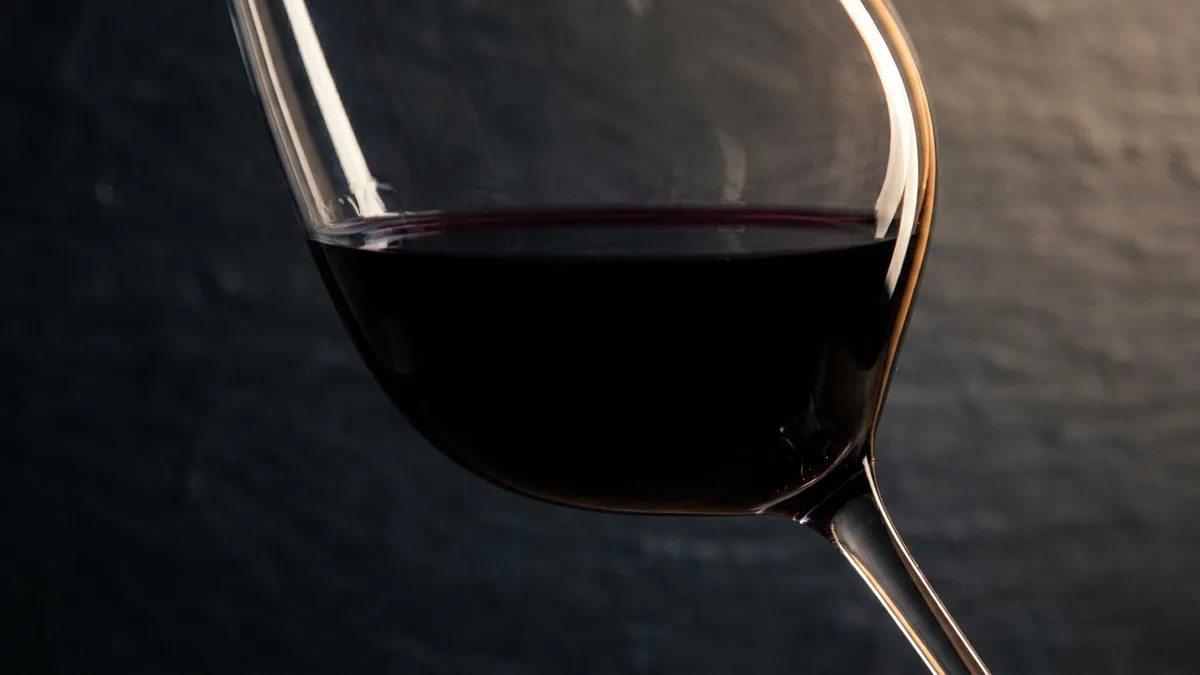
The wine becomes ethereal — truffle, roasted game, dried rose, and forest floor over a core of resolved tannin and lingering acidity. Color shifts from inky purple to garnet with brick edges. For more on how visual cues track with age, see wine color and age and the broader wine color meaning guide.
Sommelier tip: Decant young Mourvèdre aggressively — at least an hour, sometimes two. It rewards patience more than almost any red grape.
Food Pairings for Mourvèdre and Monastrell
Mourvèdre is a food wine. Its savory backbone and firm tannin can overwhelm light dishes but shine alongside rich, slow-cooked, or grilled fare.
Classic pairings
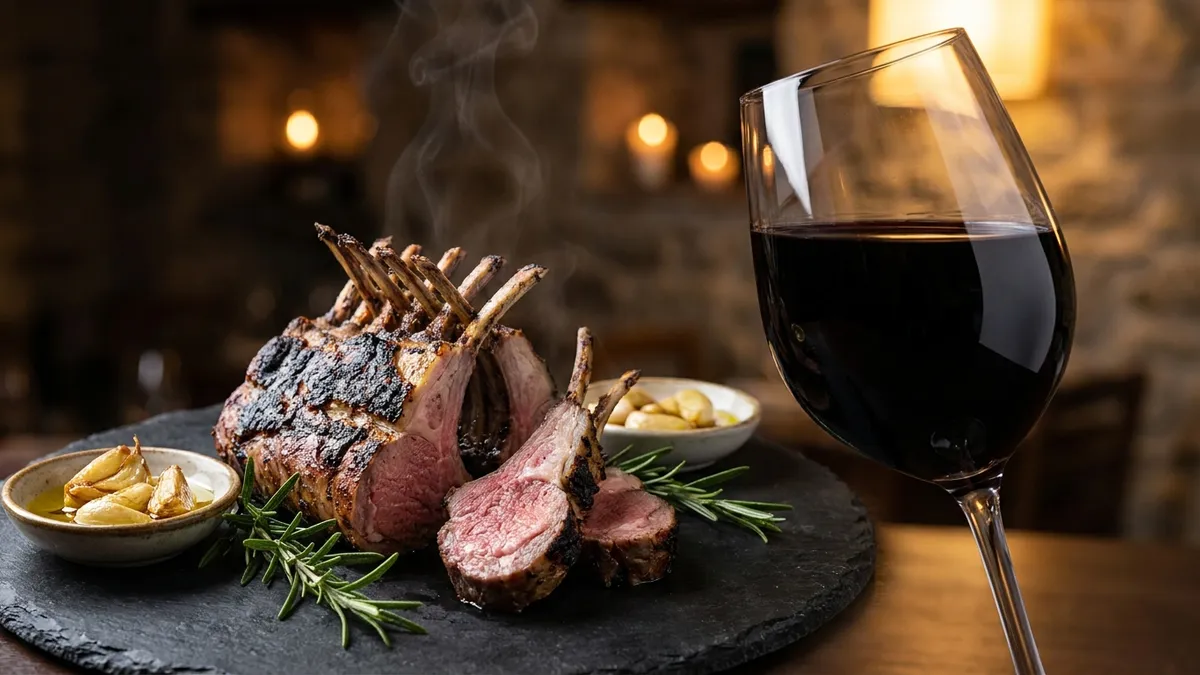
- Grilled lamb — the signature match for Bandol, especially when seasoned with rosemary and garlic
- Roast game — venison, wild boar, hare, partridge
- Beef stew — daube provençale, osso buco, boeuf bourguignon
- Duck confit — the wine's tannin cuts the fat, the savory notes mirror the meat
- Slow-cooked pork — shoulder, ribs, pulled pork with herbs
- Hearty Mediterranean stews — ratatouille, cassoulet, paella with chorizo
- Hard, aged cheeses — Manchego, aged Pecorino, well-aged Comte
Why these pairings work
Mourvèdre's savory, meaty character mirrors the umami of slow-cooked and grilled meats — what tasters often call savory or umami flavors. Its herbal edge echoes Mediterranean seasonings — rosemary, thyme, juniper, bay. Its firm tannin cuts through fat without being overwhelmed by it. For a deeper look at why these synergies work, see how food changes wine taste and the wine and food pairing guide.
What to avoid
Skip Mourvèdre with delicate fish, raw salads, fresh goat cheese, and most cream-based dishes. The wine's structure and savory depth will simply walk over them. Reach for a Sauvignon Blanc or a rosé instead.
The "Meaty" Question — Praised in Bandol, Criticized Elsewhere
Mourvèdre's wild side is one of the most divisive things in wine. The exact same aromas — game, leather, barnyard, smoked meat — are celebrated in Bandol and sometimes flagged as flaws in younger New World wines. Why?
The answer lies in expectation and tradition. Bandol drinkers have spent decades learning that Mourvèdre's animal character is part of the appellation's identity, much like the aged-cheese complexity of a great Comte or the truffle notes of mature Pinot Noir. In regions where the variety is newer — California, Australia, parts of southeastern Europe — modern winemakers often adjust their style to soften the funk, using earlier picking, gentler extraction, or oxygen during fermentation to reduce sulfur compounds.
Both approaches are legitimate. The "right" answer depends on whether you read those notes as complexity or as off-flavors. For a primer on this judgment call, see wine flaws vs faults and how to evaluate wine quality.
The Sommy app includes guided tasting exercises that help you identify and contextualize savory aromas — distinguishing the welcome wildness of a great Bandol from a wine that has actually crossed the line into fault territory.
Serving Mourvèdre — The Practical Details
Temperature
Serve Mourvèdre at 16 to 18 °C (60 to 65 °F). The high alcohol can feel hot if served too warm, so err toward the cooler end of the range. Fifteen minutes in the fridge brings a room-temperature bottle into the right zone. For more, see the wine serving temperature chart.
Decanting
- Young Mourvèdre or Monastrell — 60 to 120 minutes of air. The tight, reductive young wines bloom with extended exposure.
- Mid-aged Bandol — 45 to 60 minutes is plenty.
- Mature bottles (15+ years) — gentle decanting for sediment, then taste early — older bottles can fade quickly once open.
Glassware
A large-bowled red wine glass works best. The wide opening lets the savory, complex aromatics develop fully. To understand how glass shape interacts with aroma, see does wine glass shape affect taste.
Mourvèdre Compared to Other Reds
| Feature | Mourvèdre | Syrah | Grenache | Cabernet Sauvignon |
|---|---|---|---|---|
| Body | Full | Full | Medium-full | Full |
| Tannins | Firm | Medium-firm | Soft | High |
| Acidity | Medium | Medium | Medium-low | Medium-high |
| Alcohol | 14–15% | 13–14.5% | 14.5–16% | 13.5–14.5% |
| Key flavors | Game, leather, blackberry | Pepper, smoke, dark fruit | Strawberry, white pepper | Blackcurrant, cedar |
| Best with | Lamb, game, stews | BBQ, lamb, charcuterie | Grilled meats, pizza | Steak, aged cheese |
If you enjoy Tempranillo's savory depth, Mourvèdre is a natural next step — same Iberian roots, more wildness. If you love the Cabernet Sauvignon structure but want more rustic, herbal complexity, a top Bandol delivers. And if you already love GSM blends, drinking a 100-percent Bandol Mourvèdre alongside a Syrah and a Grenache-led Côtes du Rhône is the easiest way to feel each grape's individual contribution.
Building Your Mourvèdre Tasting Skills
Mourvèdre is one of the most rewarding grapes to study because its style varies so dramatically with place and time. A simple side-by-side tasting can teach you more about climate, winemaking, and aging than reading a textbook.
Try this: pour a young Jumilla Monastrell, a Bandol of five to ten years, and a southern Rhône GSM blend. Compare the color and rim, the dominant aromas, and the tannin texture. Pay attention to how the savory character expresses itself differently in each glass — riper and more chocolatey in Spain, more refined and herbal in Provence, blended and softened in the Rhône.
The Sommy app walks you through exactly these comparison tastings, helping you put words to what you sense and building your tasting vocabulary one grape at a time. To go deeper into how regions shape grape expression, browse the broader collection of grape variety guides — Mourvèdre may not have made the official noble cut, but in the right hands it stands shoulder to shoulder with any of them.
Frequently Asked Questions
What is mourvedre wine?
Mourvèdre is a dark-skinned red wine grape native to the western Mediterranean. It produces full-bodied, savory wines with flavors of blackberry, leather, smoked meat, black pepper, and forest floor. The grape is known as Monastrell in Spain and Mataro in Australia and the United States. It needs serious heat to ripen, so it thrives in coastal Mediterranean climates.
Are Mourvèdre, Monastrell, and Mataro the same grape?
Yes. They are three names for the same variety. Mourvèdre is the French name, used in Bandol and the Rhône Valley. Monastrell is the Spanish name, dominant in Jumilla, Yecla, and Alicante. Mataro is the older name still found on some Australian and Californian labels. The wines differ in style because of climate and tradition, not genetics.
What does Mourvèdre taste like?
Young Mourvèdre tastes of blackberry, black plum, black pepper, and fresh herbs, often with a slightly funky, gamey edge that some people describe as meaty or even barnyard-like. With age, it develops leather, dried fig, tobacco, forest floor, and roasted-meat notes. Tannins are firm, alcohol is high, and the wine carries a savory, almost reductive character when young.
Is Mourvèdre the M in GSM blends?
Yes. GSM stands for Grenache, Syrah, and Mourvèdre — the classic red blend of the southern Rhône, Provence, and increasingly Australia. Mourvèdre contributes color, tannic structure, savory complexity, and aging potential. Grenache brings ripe fruit and warmth, Syrah adds spice and depth, and Mourvèdre provides the backbone that holds the blend together over time.
What is the difference between Bandol and Jumilla Mourvèdre?
Bandol, in Provence, is the world's benchmark for Mourvèdre — structured, ageworthy, and complex with flavors of garrigue, leather, and game. Jumilla and Yecla, in southeastern Spain, produce richer, riper, more fruit-forward Monastrell from old bush vines, often at gentler prices. Bandol prizes elegance and longevity; Jumilla prizes concentration and accessibility.
What food pairs well with Mourvèdre?
Mourvèdre is built for hearty, rustic food. Classic pairings include grilled lamb, roast game, beef stew, duck confit, hard aged cheeses, and dishes seasoned with rosemary, thyme, and black pepper. Its savory, meaty character mirrors slow-cooked meats and herb-roasted vegetables. Avoid delicate fish or light salads — the wine will overwhelm them.
How long does Mourvèdre wine age?
Top Bandol can age beautifully for 10 to 15 years, with the best vintages drinking well at 20 years or more. Quality Spanish Monastrell from Jumilla typically peaks at 5 to 10 years. Young Mourvèdre often shows reductive, slightly funky aromas that soften and integrate with bottle age, revealing leather, truffle, and dried-fruit depth.
Why does Mourvèdre taste meaty or funky?
The grape's thick skins, high phenolic content, and tendency toward reductive winemaking produce sulfur-related compounds that read as savory, gamey, or even barnyard. In Bandol this character is celebrated as complexity — a hallmark of the appellation. In other regions, the same notes can be perceived as a flaw, depending on the producer's style and the drinker's expectations.
Sommy Team
LinkedInFounder & Wine Educator
The Sommy Team is building the world's most approachable wine education app, helping beginners develop real tasting skills through structured courses and AI-guided practice.