Spicy Red Wine: Which Reds Taste of Pepper, and Why

By the Sommy Team — AI-assisted, human-edited.
Updated Oct 1, 2026
Contents (10)
- What Is a Spicy Red Wine, in One Paragraph?
- Which Red Wines Taste Spicy?
- How Do You Find a Peppery Red on the Label?
- Is Spicy Red Wine Hot Like Chili?
- Which Spicy Red Goes With Spicy Food?
- Why Does Syrah Taste Like Black Pepper?
- Why Do Cool Vineyards Make More Pepper?
- Why Can't You Smell the Pepper?
- Does Oak Make Red Wine Spicy?
- How Do You Describe the Spice When You Taste?
TL;DR
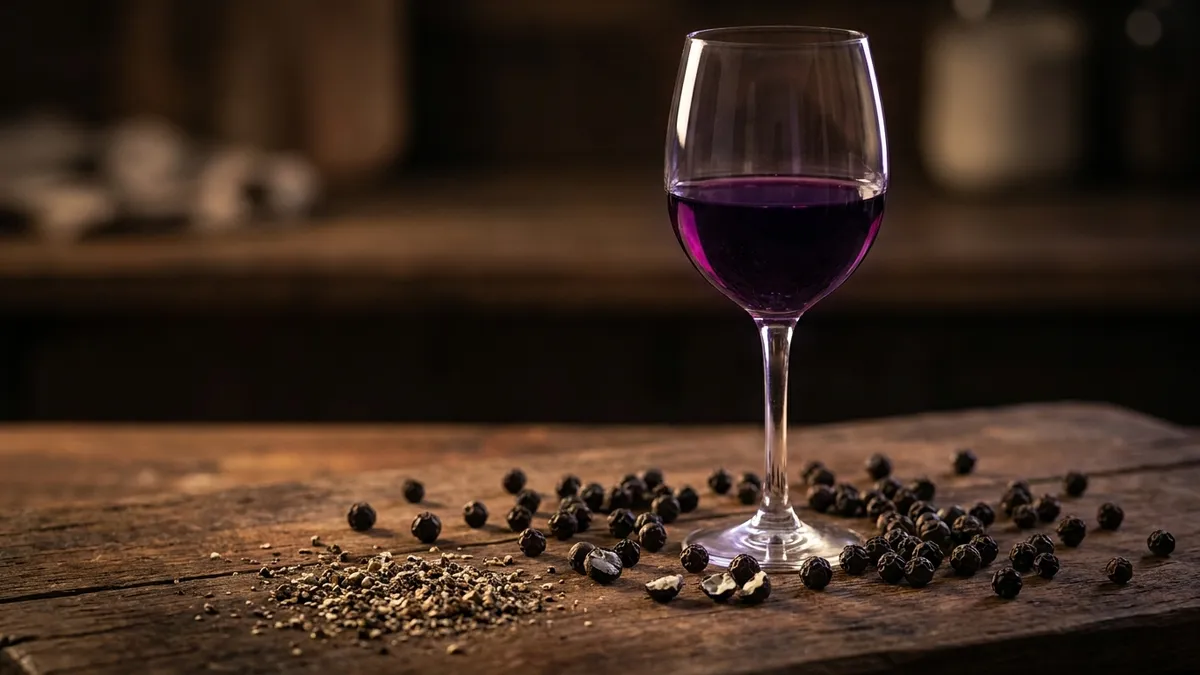
The black pepper in a spicy red wine is rotundone, a compound made in the grape skins and also found in peppercorns. Syrah is the classic source, especially from cool vineyards. Clove and cinnamon come from oak instead. About 20 to 25% of people cannot smell rotundone at all.
A spicy red wine smells of black pepper because of rotundone, a compound made in the grape skins and also found in peppercorns. That one fact tells you how to buy it: choose the grape best known for it, Syrah, from a cool vineyard where it builds up. About one person in five cannot smell rotundone at all, which explains many confused tastings.
What Is a Spicy Red Wine, in One Paragraph?
A spicy red wine is a red that smells of pepper, clove, cinnamon, anise or similar spices, and in the clearest cases that smell is black pepper from rotundone (a natural aromatic in grape skins). Wine Spectator counts pepper, cinnamon, clove, nutmeg, anise, mint, ginger and cardamom as spice notes. Black pepper comes from the grape and peaks in cool-climate Syrah. Clove, cinnamon and vanilla mostly come from oak barrels. Your nose detects rotundone at about 16 nanograms per litre of red wine. Roughly 20 to 25% of people cannot smell it at all. None of it is chili heat: wine contains no capsaicin.
Which Red Wines Taste Spicy?
Syrah is the classic peppery red, along with Mourvèdre and Petite Sirah, red grapes in which researchers have measured rotundone. Wine Spectator's spicy list adds Grenache, Malbec and Zinfandel, whose spice is usually clove, cinnamon and warmth from oak and very ripe fruit.
| Grape | Kind of spice | Where it comes from | Pick it when |
|---|---|---|---|
| Syrah (cool climate) | Cracked black pepper first, then blackberry | Rotundone in the skins | You want the clearest pepper, with pepper-crusted steak or lamb |
| Shiraz (warm climate) | Ripe plum and blackberry, pepper in the background | Less rotundone, more ripe fruit, often oak | You want fruit and weight with barbecue |
| Mourvèdre | Pepper with a savoury, meaty edge | Rotundone measured in the grape | You want pepper with more tannin, with stews and game |
| Petite Sirah (Durif) | Pepper inside very dense, dark fruit | Rotundone measured in the grape | You want the darkest, most tannic spicy red, with grilled beef |
| Grenache | Warm sweet spice, ripe strawberry | Very ripe fruit and alcohol | You want spice with soft tannin, with roast pork or chicken |
| Zinfandel | Clove, cinnamon, jammy blackberry | Very ripe fruit and oak barrels | You want baking spice, with ribs and sticky glazes |
| Malbec | Clove and vanilla over ripe plum | Mostly oak barrels; some cooler-site Malbec carries rotundone | You want a soft, spicy red with burgers or empanadas |
Two rare Italian reds, Schioppettino and Vespolina, also carry rotundone, as does the white grape Grüner Veltliner. For the full map of spice smells, including stems and age, see spice notes in wine. The grape guides go deeper on Mourvèdre, Petite Sirah and Zinfandel.
How Do You Find a Peppery Red on the Label?
Look for Syrah from a cool place, because rotundone is strongest where grapes ripen slowly. A cool climate (mild summers, which give tarter, lighter wine) keeps the pepper, and a warm one swaps it for ripe fruit. WSET's example: Côte-Rôtie Syrah "might smack of freshly cracked pepper," while warm Barossa Shiraz "often leans into riper, fruit-driven profiles."
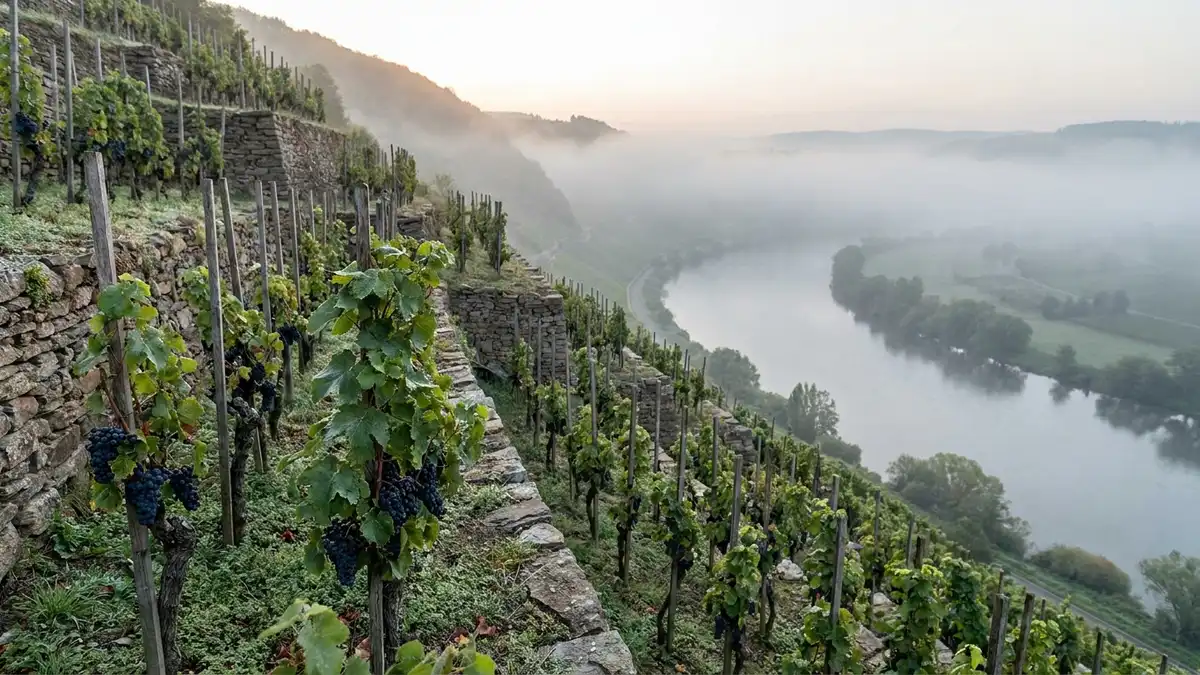
The word on the label is a clue too. Producers in cooler places tend to write Syrah, and many warm-climate bottles say Shiraz, though the grape is the same; Syrah vs Shiraz explains how far that rule holds. The northern Rhône names to know are Côte-Rôtie, Hermitage, Crozes-Hermitage, Saint-Joseph and Cornas, all covered in the Rhône Valley guide.
If the label names a cool region, expect cracked pepper before the fruit. If it names a hot one such as the Barossa, expect plum and blackberry first, with pepper faint or absent. Alcohol is a quick proxy: a Syrah near 13% usually grew somewhere cooler than one at 15%.
Is Spicy Red Wine Hot Like Chili?
No. Wine contains no capsaicin, the molecule that makes chili burn, so "spicy" on a wine describes a smell, not heat. The burning feeling some reds leave at the back of your throat comes from alcohol. A 15% Zinfandel can feel hot. A 12.5% Syrah can smell strongly of pepper and feel cool.
This matters at the table. Capsaicin and alcohol trigger the same warmth-sensing nerves, so a strong red makes chili feel hotter. Tannin (the drying grip on your gums) also turns bitter against chili. A peppery wine and a chili dish have nothing in common except the word.
Which Spicy Red Goes With Spicy Food?
Match chili heat with a juicy, lower-alcohol red, and save the peppery Syrah for pepper on the plate. Chili heat punishes alcohol and tannin, while ground pepper rewards a wine that carries the same smell. The higher the alcohol, the more the burn grows.
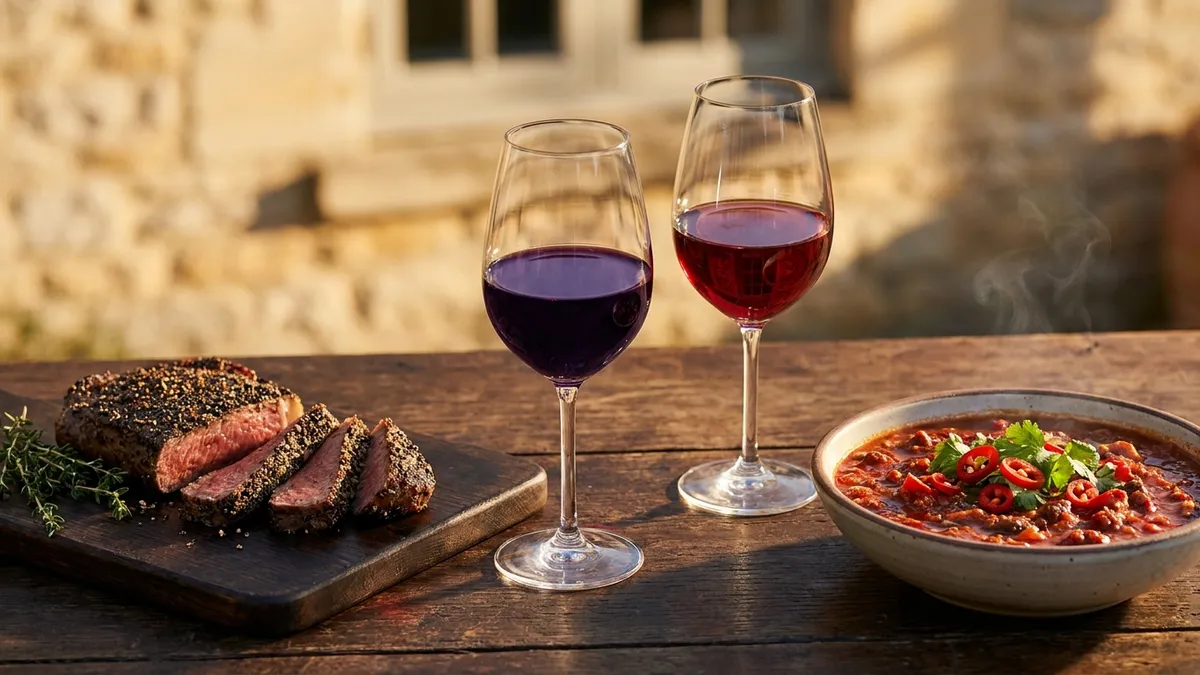
- Black pepper on the plate. Steak au poivre, pepper-crusted lamb or a peppery sausage: a cool-climate Syrah repeats the pepper, and its tannin meets the fat.
- Chili heat. Curry, Sichuan dishes or hot salsa: a red around 13% or below with soft tannin, such as a light Grenache or a chilled young red. Our guide to wine with spicy food explains why an off-dry white often beats any red here.
- Sweet, smoky barbecue. Ribs with a sticky glaze: Zinfandel's ripe fruit and baking spice stand up to the sugar and char. See wine with BBQ.
- Warm spices without heat. Cinnamon, cumin and clove in a tagine or a mole: an oaked Malbec or Grenache echoes them.
If the dish burns your tongue, pick a red at 13% or below with soft tannin. If the heat is from ground pepper, pour the Syrah.
Why Does Syrah Taste Like Black Pepper?
Syrah smells of black pepper because its skins make rotundone, the same aromatic in peppercorns. Researchers first identified it in Syrah wine in 2008. It was originally found in the tubers of a weed called Java grass, and it also gives marjoram, oregano, rosemary, basil and thyme part of their smell.
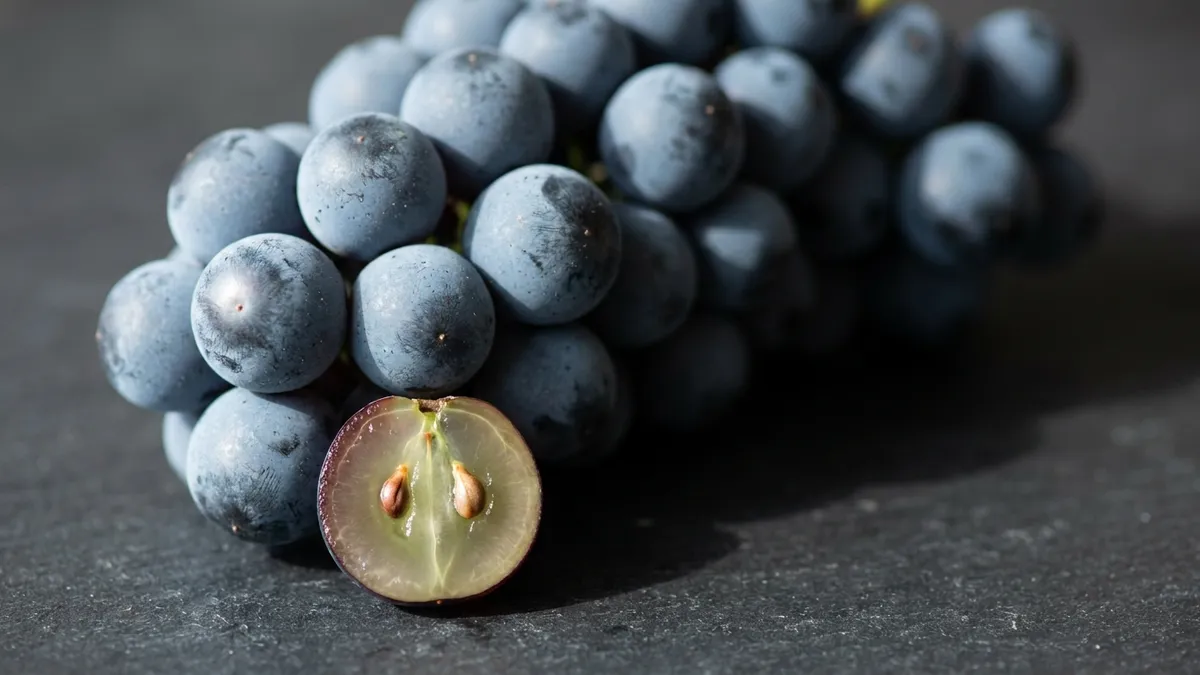
The compound sits in the skin. Red wine ferments with its skins in the tank, which is how the pepper gets into the glass. A tiny amount does the job. The detection threshold is about 16 nanograms per litre in red wine and 8 in water. WSET puts it at parts per trillion.
That low threshold is why one grape can swing so far. A Syrah just above 16 nanograms reads as a faint prickle. The same grape with several times more smells like the pepper mill.
Why Do Cool Vineyards Make More Pepper?
Rotundone builds late in ripening and suffers when the grapes get hot, so cool, slow seasons keep more of it. Studies found that grape-surface temperatures above 25 °C cut rotundone accumulation. The compound climbs in the last weeks before harvest and then levels off.
That makes the vintage matter as much as the place. A research review by University of Toulouse scientists notes that cool, wet years give the highest levels. A hot summer in a cool region can mute the pepper, and a cool year in a warm region can bring it out.
Winemaking plays a smaller part. WSET notes that extended maceration (leaving the wine on its skins longer after fermentation) can boost the pepper, though cellar trials of other techniques found little gain. The raw material still has to come from the vineyard. For the wider effect of temperature on flavour, see climate and wine flavor.
Why Can't You Smell the Pepper?
About 20 to 25% of people cannot smell rotundone at all, according to WSET, so a peppery Syrah can taste of plain blackberry and plum to them. This is specific anosmia (a blind spot for one smell while the rest of the nose works normally).
A missing pepper is a quirk of your nose, not a fault in the bottle. The test is cheap: share the glass with a friend. If they find pepper and you find only fruit, the blind spot is likely yours.
Does Oak Make Red Wine Spicy?
Yes, but it adds a different spice: barrels give vanilla, clove and cinnamon, while black pepper comes from the grape. Oak (barrels adding vanilla, toast or spice) is the main spice source in many reds, and it explains why Zinfandel, Grenache and warm-climate Shiraz can be called spicy without much rotundone.
The two spices feel different. Oak spice is sweet and warm, closer to a spice cake. Rotundone is sharp, dry and savoury, closer to a pepper mill. A Syrah aged in new barrels can carry both, the pepper on top and the clove underneath. French and American barrels lean in different directions, covered in oak flavors in wine tasting.
How Do You Describe the Spice When You Taste?
Name the spice, then its source: pepper points to the grape, clove and vanilla to the barrel. Say where you feel it too. Pepper tends to arrive first on the nose. Oak spice lingers on the finish. Then add one structural word, such as firm tannin or high alcohol, so the description says how the wine feels.
Words stay useful only if they are specific. "Spicy" alone tells a friend almost nothing. "Cracked black pepper, then blackberry, firm tannin" tells them it is likely a cool-climate Syrah. Our guide on how to describe wine gives the full vocabulary, and the wine styles hub places spicy reds among the other red styles.
Open a Syrah tonight and photograph its label in the Sommy app. Grind fresh pepper into a small dish beside the glass. Smell the pepper, then smell the wine, and taste it to see whether the prickle carries onto your palate.
Sources
- WSET: What gives Syrah/Shiraz its peppery spice?
- PMC: Takase et al., CYP71BE5 in grapevine catalyzes the formation of the spicy aroma compound (−)-rotundone
- Wine Spectator: What does it mean when a wine is described as spicy?
- Lodi Growers: Key facts about rotundone, practical ways to pepper your wine
- Wikipedia: Rotundone
Frequently Asked Questions
What red wine is the spiciest?
Syrah, especially from a cool vineyard such as the northern Rhône, is the red most likely to smell of cracked black pepper. Its skins make rotundone, the same aromatic found in peppercorns. Mourvèdre and Petite Sirah also carry it. Grenache, Zinfandel and Malbec are called spicy too, but their spice is usually clove and cinnamon from oak and very ripe fruit.
Why does Syrah taste like black pepper?
Syrah grape skins make rotundone, a natural aromatic that is also in black peppercorns, marjoram, oregano, rosemary, basil and thyme. It was first identified in Syrah wine in 2008. Your nose picks it up at about 16 nanograms per litre of red wine, a few parts per trillion, so a tiny amount reads clearly as pepper.
Is spicy red wine hot like chili?
No. Wine contains no capsaicin, the molecule that makes chili burn, so a spicy red describes a smell, not heat. The warm, burning feeling some reds leave in your throat comes from high alcohol. That is why a strong red makes a chili dish feel hotter, and why a lower-alcohol red is the better choice with heat.
Is Zinfandel a spicy wine?
Yes, but usually not peppery in the Syrah way. Wine Spectator lists Zinfandel among the spicy reds, and its spice tends to be clove, cinnamon and a warm, jammy sweetness from very ripe fruit and oak. Expect baking spice first, rather than the sharp cracked pepper of a cool-climate Syrah.
Why can't I smell pepper in Syrah?
There are two likely reasons. About 20 to 25% of people cannot smell rotundone at all, according to WSET, so the wine reads as plain blackberry and plum to them. The other reason is the wine itself: warm-climate Syrah, such as Barossa Shiraz, usually has less pepper and more ripe fruit than a cool-climate bottle.
Does oak make wine spicy?
Yes. Ageing in oak barrels adds warm spice smells such as vanilla, clove and cinnamon, and many reds called spicy owe their spice to the barrel rather than the grape. Oak spice is sweet and warm. Rotundone pepper is sharp and savoury. If a wine smells of both, the pepper came from the grape and the clove from the wood.
Sommy Team
LinkedInFounder & Wine Educator
The Sommy Team is building the world's most approachable wine education app, helping beginners develop real tasting skills through structured courses and AI-guided practice.