Spice Notes in Wine: Pepper, Clove, Vanilla, and More

By the Sommy Team — AI-assisted, human-edited.
Updated Apr 29, 2026
Contents (9)
- What Spice Notes in Wine Actually Are
- Spice Notes Wine Sources, in 100 Words
- Source One: Spice From the Grape
- Source Two: Spice From Oak Barrels
- Source Three: Spice From Whole-Cluster Fermentation
- Source Four: Tertiary Spice From Aging
- Common Spice Confusions
- How to Practice Identifying Spice Notes
- What Spice Notes Tell You About a Wine
TL;DR
Spice notes in wine come from three sources. The grape provides black pepper in Syrah and white pepper in Grüner. Oak provides vanilla, clove, cinnamon, coconut, and dill. Whole-cluster fermentation provides clove and allspice from the stems. Knowing the source tells you the grape, region, and winemaking style behind the glass.
What Spice Notes in Wine Actually Are
When a tasting note mentions spice notes, it is shorthand for any aroma in wine that resembles culinary spice — black pepper, white pepper, clove, cinnamon, vanilla, nutmeg, ginger, cardamom, star anise. These notes are real chemical compounds, not poetic stretches. The pepper note in Syrah comes from the same molecule found in black peppercorns. The vanilla note in oaked Chardonnay comes from the same molecule found in vanilla beans.
Spice in wine arrives from three distinct sources, and learning to tell them apart is one of the most useful tasting skills you can develop. Each source tells you something different about the glass — the grape variety, the winemaking choices, the region, and the age. This guide breaks down the main spice notes you will meet, what they mean, and how to spot them in the wild.
Spice Notes Wine Sources, in 100 Words
Spice in wine comes from three places. Grape-derived spice lives in the fruit itself — rotundone gives Syrah its black pepper, terpenes give Grüner Veltliner white pepper, Gewürztraminer's terpenes deliver lychee and ginger. Oak-derived spice comes from the barrel — vanilla, coconut, and dill from American oak; clove, cinnamon, and cedar from French oak. Whole-cluster fermentation uses grape stems during fermentation, contributing clove, allspice, and green peppercorn. Aged wine layers tertiary spice on top — cured meat, dried herb, sandalwood, exotic spice. Identifying the source tells you the grape, the region, and the winemaking style behind the glass.
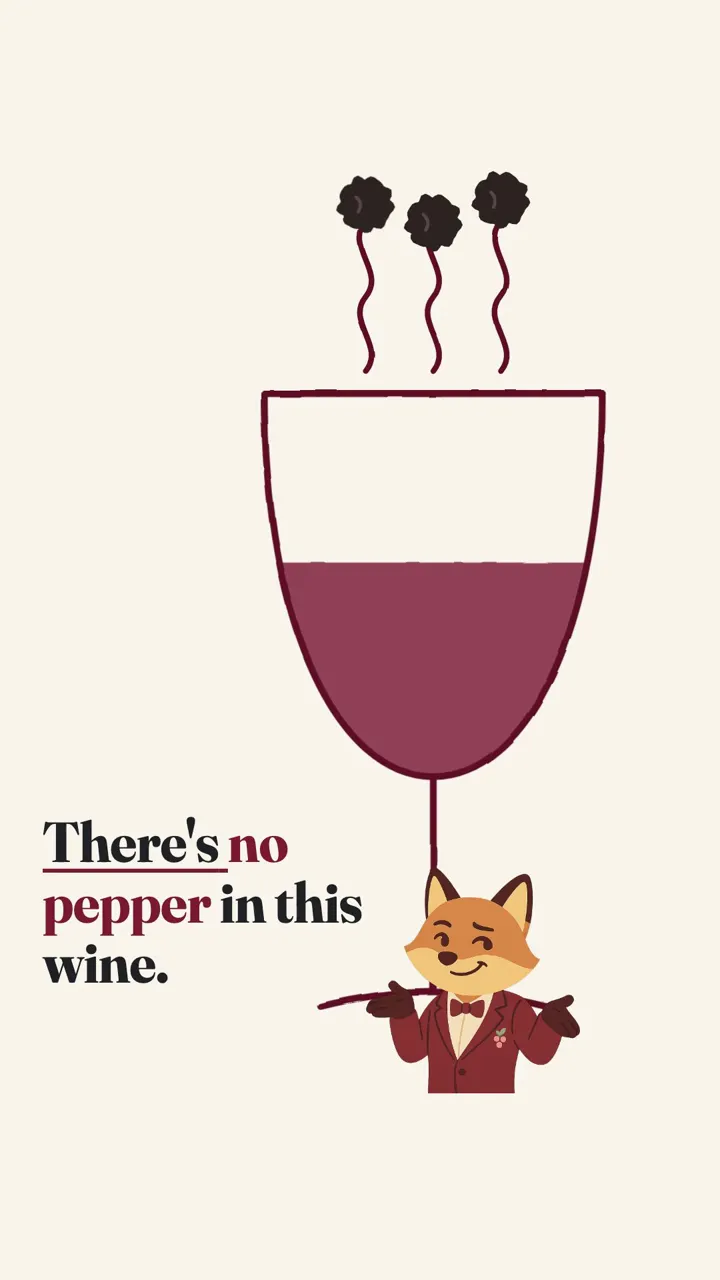
There's no pepper in this wine.
Sommy's voice is made with AI.
Read the script
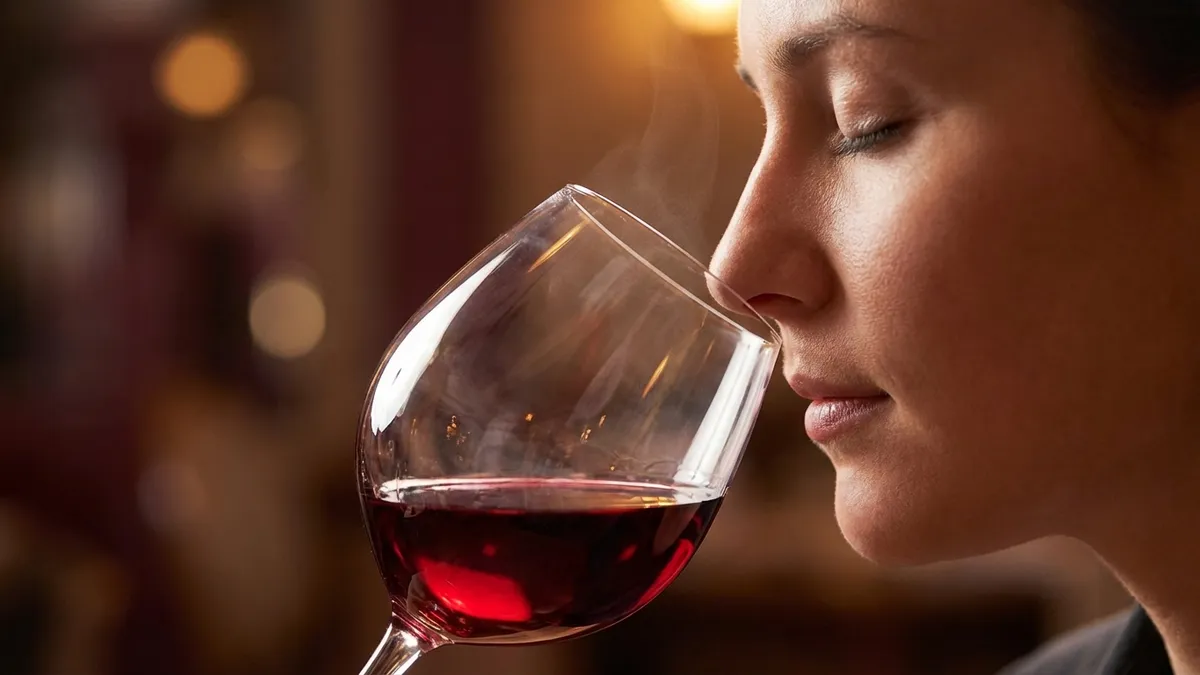
There's no pepper in this wine. So why does it smell like pepper? The grape and black pepper make the exact same molecule. It's called rotundone, and it sits in the grape skins. But one in five people can't smell it at all. Send this to the friend who says tasting notes are made up. Try it tonight. Sniff black pepper, then a Syrah. So... can you smell it?
Source One: Spice From the Grape
Some grapes carry spice in their DNA. The compounds responsible for these aromas are present in the fruit before fermentation begins, and they survive vinification largely intact. These are primary aromas — the grape's own signature, before anything else gets added. For a deeper view of how primary, secondary, and tertiary aromas differ, see our guide to primary, secondary, and tertiary aromas.
Black Pepper: Rotundone in Syrah
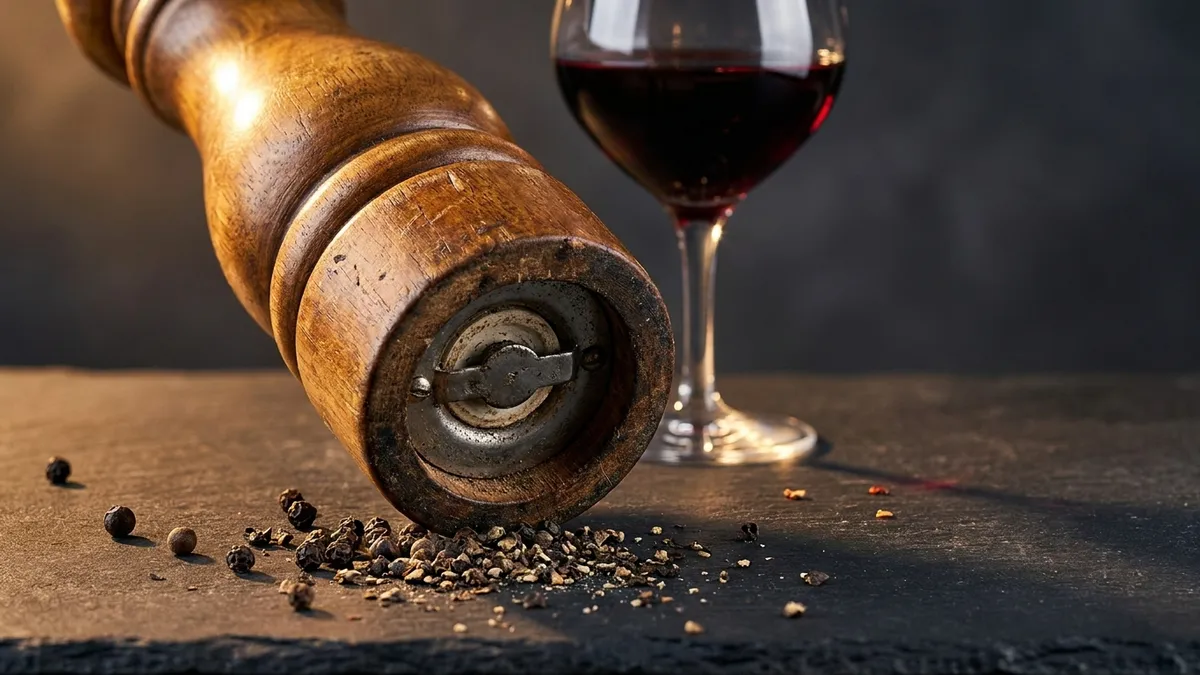
The most famous example is rotundone — the molecule responsible for black pepper character. Rotundone is found in Syrah, Mourvèdre, Schioppettino, and a few other red grapes, and it is literally the same compound that makes peppercorns smell peppery.
Cool-climate Syrah expresses rotundone at much higher levels than warm-climate Syrah. This is why northern Rhône Syrah from regions like Côte-Rôtie and Cornas often shows aggressive black pepper, while warm-climate Australian Shiraz tends toward jam and chocolate instead. The same grape, the same DNA — climate decides how much pepper makes it into the bottle. To dig deeper into this style split, our Syrah vs. Shiraz guide explains the regional and stylistic differences.
About 20% of people are genetically less sensitive to rotundone — they will taste black-fruit Syrah where you taste pepper-bomb Syrah. This is not a skill issue; it is a real perception difference. If a friend insists they cannot smell pepper in a wine you find peppery, they may simply be in that 20%.
White Pepper: Terpenes in Grüner Veltliner
White pepper is a separate compound from black pepper, and it shows up most clearly in Grüner Veltliner from Austria. The character is sharper, more lifted, and less savory than black pepper — closer to a spice rack than a peppermill. The compounds responsible are a mix of terpenes and other aromatic molecules in the grape's skin.
White pepper also appears in some cool-climate Riesling and Sauvignon Blanc. It is a distinctive marker — once your nose locks onto it, you will recognize it across grapes and regions.
Ginger and Lychee: Terpenes in Aromatic Whites
Aromatic white grapes — Gewürztraminer, Muscat, Torrontés — carry high concentrations of terpenes that smell like ginger, lychee, rose, and orange blossom. Gewürztraminer in particular is known for a warm, gingery spice character that makes it instantly identifiable. The "Gewürz" in the name literally translates to "spice."
If you want to practice identifying aromatic white wine character, our guide to tasting white wine walks through the steps.
Other Grape-Driven Spice
A handful of other grapes carry their own signature spice:
- Zinfandel — black pepper and brambly spice, alongside its trademark jammy fruit
- Mourvèdre — gamey spice, dried herb, and sometimes a curry-leaf character
- Carignan — black pepper and bay leaf
- Tempranillo — leather and dried tobacco spice as it ages
- Cabernet Franc — green peppercorn and bell pepper from pyrazine compounds
For more on Tempranillo's aging arc, see our Tempranillo wine guide.
Source Two: Spice From Oak Barrels
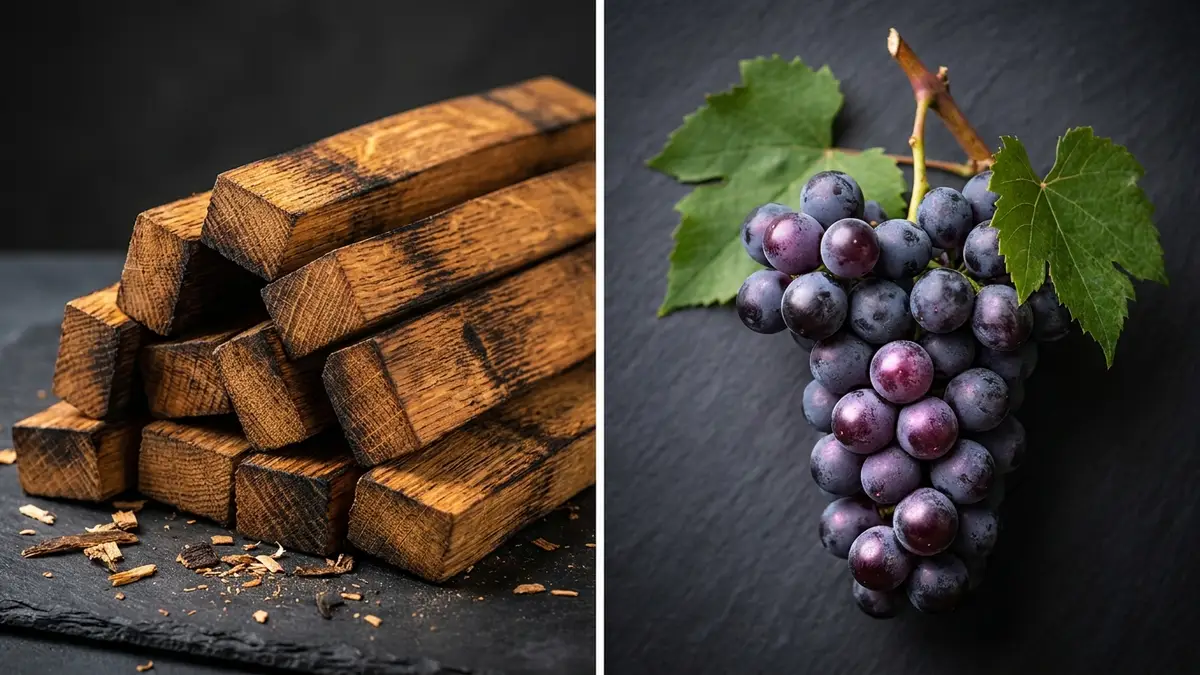
The second major source of spice in wine is oak aging. Oak wood naturally contains compounds that dissolve into wine during barrel aging, layering vanilla, clove, cinnamon, and toast on top of the grape's fruit. This is fundamentally different from grape-derived spice — the spice comes from outside the fruit, added by the winemaker's choice of vessel.
For the full picture of how oak transforms wine, see our companion guide on what oaked means. Below is the spice-specific summary.
Vanilla: Vanillin From Toasted Oak
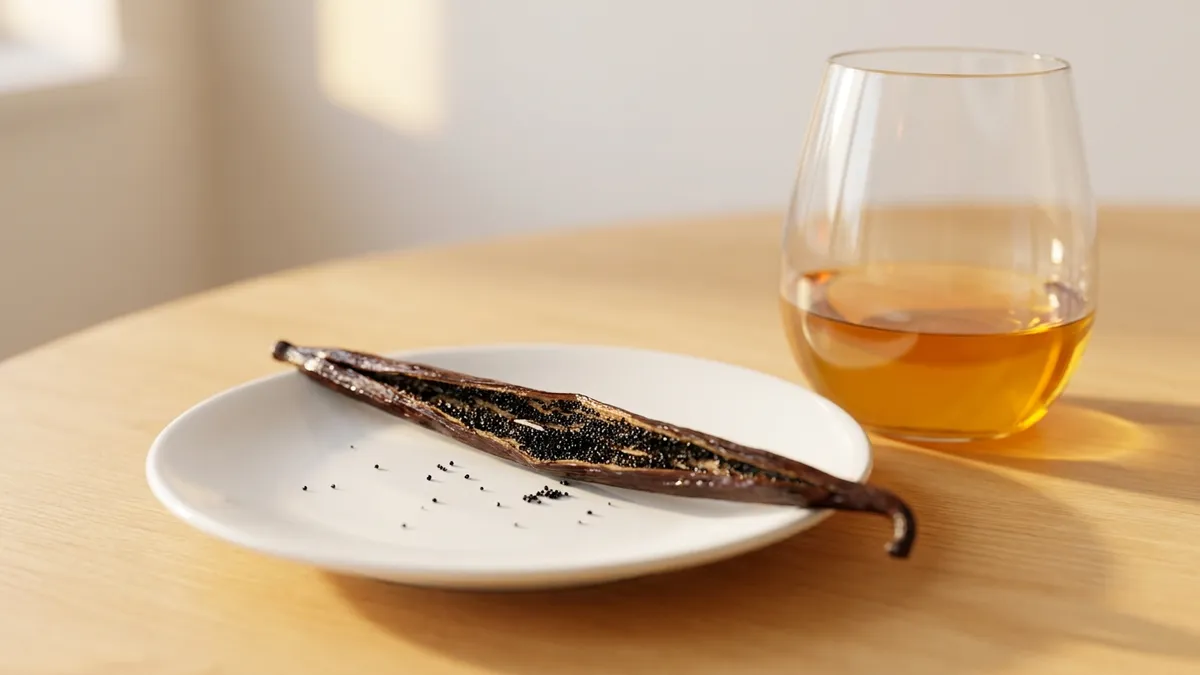
Vanillin is the same compound that gives vanilla beans their flavor. When oak barrels are manufactured, the inside is toasted over an open flame — this toasting breaks down lignin in the wood and creates vanillin. When wine ages in a toasted oak barrel, vanillin slowly dissolves into the liquid.
So a vanilla note in oaked Chardonnay or oaked Cabernet is not added flavoring. It is real vanillin, chemically identical to what you find in a vanilla pod, drawn out of the wood by the wine.
Clove and Cinnamon: Eugenol and Cinnamaldehyde
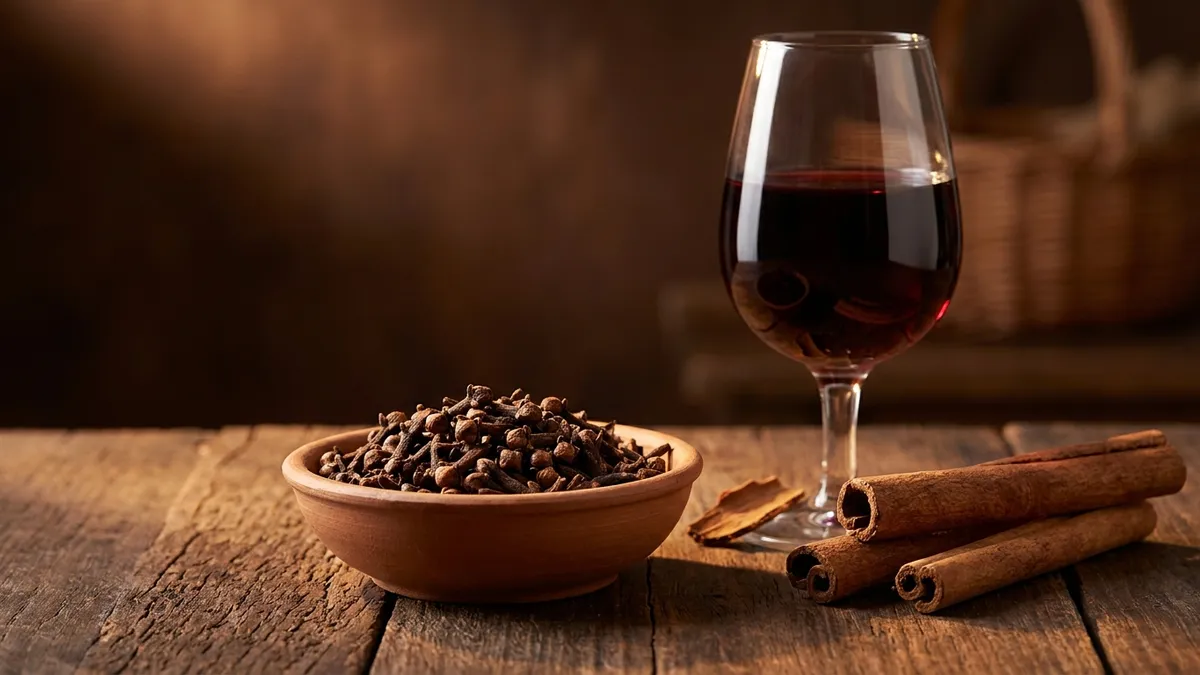
Eugenol is the compound responsible for clove flavor — it is the same molecule found in actual cloves and in clove oil. Oak contains eugenol naturally, and toasting concentrates it. French oak in particular tends to deliver pronounced clove character.
Related compounds produce cinnamon, nutmeg, and allspice notes. Together these are often described as "baking spice" — the warm, sweet, holiday-kitchen end of the spice spectrum.
Coconut and Dill: Lactones in American Oak
This is where French oak and American oak diverge sharply. American oak (Quercus alba) is high in whisky lactone — also called oak lactone — which produces coconut and dill aromas. French oak (Quercus robur and Quercus petraea) has much less. So when you smell coconut or dill in a wine, you are almost certainly smelling American oak.
This is why Rioja, Australian Shiraz, and many American wines show coconut and dill notes — these regions favor American oak. Bordeaux, Burgundy, and most premium Italian wines favor French oak and rarely show those notes.
Smoke and Toast: Guaiacol and Furfural
Heavily toasted oak releases guaiacol (smoky character) and furfural (toasted bread, caramel, almond). Heavy-toast barrels deliver bold, espresso-like roasted character. Light-toast barrels deliver subtle, restrained spice. The toast level is a winemaker's choice — the same wine in light-toast versus heavy-toast oak tastes substantially different.
Source Three: Spice From Whole-Cluster Fermentation
The third source of spice is whole-cluster fermentation — a winemaking technique where the grape stems are included during fermentation rather than removed first. Most modern winemaking destems the grapes before fermentation; whole-cluster keeps the stems in.
When ripe stems are included, they contribute a recognizable spice profile:
- Clove — a separate clove character from the eugenol in oak
- Allspice — warm, dried, baking-spice character
- Green peppercorn — sharper and greener than black pepper
- Savory lift — a herbal, almost mint-like freshness
Whole-cluster is most famously used in Burgundy Pinot Noir, where it adds spice, structure, and lift to wines that would otherwise lean purely fruity. Producers in the northern Rhône, Beaujolais, and parts of Oregon and California also use the technique.
The catch: whole-cluster only works with fully ripe, woody (lignified) stems. Green stems contain pyrazine and bitter compounds that make wine taste stalky, herbal in a bad way, and astringent. Skilled producers wait for stem ripeness before deciding what percentage of clusters to keep whole.
Sommelier tip: If a Pinot Noir shows clove and allspice but the wine has not seen new oak, you are probably tasting whole-cluster fermentation. Oak clove tends to feel sweeter and rounder; whole-cluster clove feels lifted, herbal, and slightly green. Reading both signals trains your nose for winemaking style.
Source Four: Tertiary Spice From Aging
A fourth source — really an extension of the first three — is bottle aging. As wine ages, primary fruit aromas fade and tertiary aromas develop. The slow chemical reactions over years in bottle produce dried, exotic, savory spice notes that young wine rarely shows.
Tertiary spice notes include:
- Cured meat — bacon, prosciutto, smoked salami (especially in aged Syrah)
- Dried herb — thyme, sage, bay leaf
- Tobacco and cedar — common in aged Cabernet and Bordeaux
- Sandalwood and incense — in long-aged Pinot Noir and Nebbiolo
- Cardamom and star anise — in old Rioja and aged Tempranillo
- Truffle and forest floor — in aged Pinot Noir and Nebbiolo
If you want to taste the difference between young and aged versions of the same wine, our guide to tasting young vs. aged wine walks through the technique.
Common Spice Confusions
A few mix-ups come up over and over for new tasters. Knowing the trap helps you avoid it.
Vanilla = Oak, but Also = Old Fortified Wine
A pronounced vanilla note in a dry red usually means oak. But vanilla in a Madeira, Tawny Port, or oxidative sherry is a different beast — it comes from years of barrel aging plus oxidation, and tends to feel more like dried vanilla, butterscotch, and toffee. For more on the fortified-wine flavor profile, see our fortified wine tasting guide.
Black Pepper = Syrah, Usually
Pronounced black pepper in a dry red almost always means Syrah, Mourvèdre, or another rotundone-rich grape. But cool-climate Cabernet Franc can show "green" pepper that some tasters call black pepper. Tasting them side by side is the fastest way to learn the difference.
Clove = Oak vs. Whole-Cluster
Clove in wine has two possible sources, and they feel slightly different. Oak clove is sweeter and more rounded. Whole-cluster clove is lifted, herbal, and a touch greener. Both are valid; identifying which one you are tasting tells you about the winemaking.
Cinnamon and Nutmeg in White Wine
A spicy white wine with cinnamon and nutmeg is almost always oaked — typically Chardonnay, Viognier, or Marsanne. Unoaked whites rarely show these notes. If you taste cinnamon in a white that the producer claims is unoaked, double-check the label — many producers use oak alternatives like staves or chips that still impart spice without using full barrels.
How to Practice Identifying Spice Notes
The fastest way to build a spice vocabulary is side-by-side tasting. Pour two wines that differ in one spice variable — the same grape from a cool versus warm climate, an oaked versus unoaked Chardonnay, a young versus aged Tempranillo. Smell them next to each other and you will start to feel the spice differences viscerally rather than abstractly.
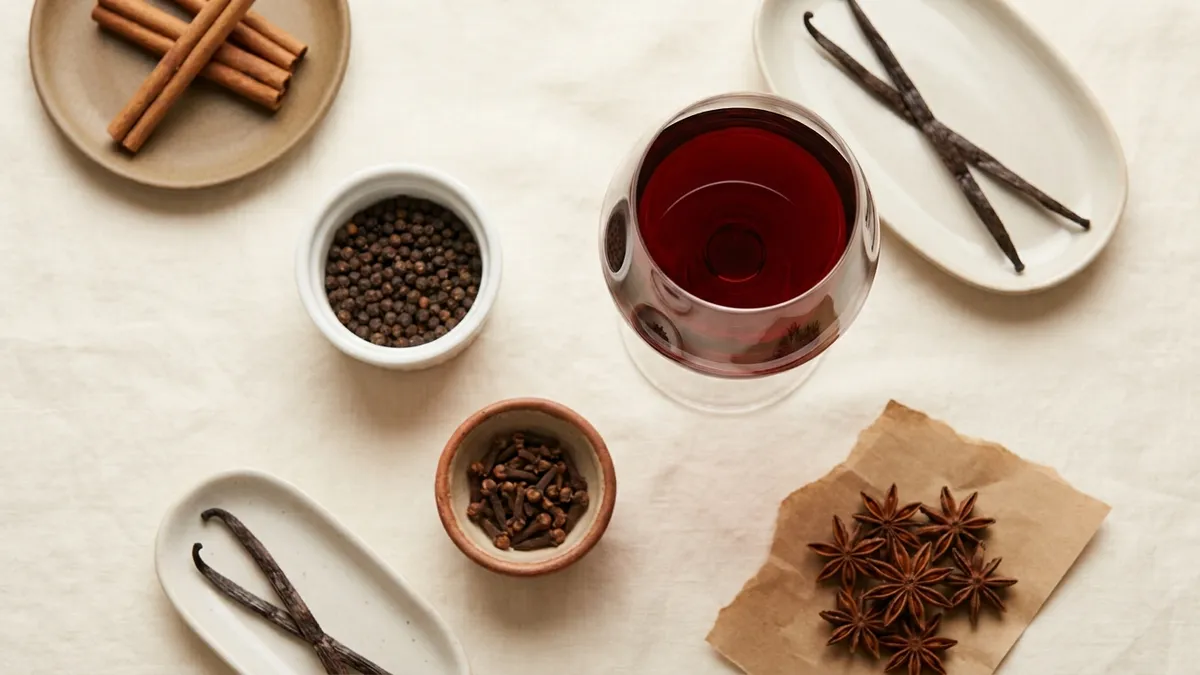
Keep a small spice rack or smelling kit on hand for reference. Crushing a black peppercorn between your fingers and smelling it next to a glass of Syrah anchors the connection. The same works for clove next to oak-aged red, vanilla pod next to oaked Chardonnay, and dried thyme next to aged Cabernet.
The Sommy app's tasting flow guides you through aroma identification step-by-step, with structured prompts for spice categories so you can train your nose deliberately rather than randomly. Building a journal of what you taste, paired with what the wine actually was, accelerates the calibration. Our guide to memory training for wine covers the technique in more detail.
What Spice Notes Tell You About a Wine
Once you can pin down the source of spice in a glass, you have decoded a lot of information without reading the label. Black pepper says cool-climate Syrah. Coconut and dill say American oak. Clove without obvious oak says whole-cluster fermentation. Cardamom and dried herb say significant bottle age. The spice profile is one of the most efficient signals in wine — it tells you grape, region, winemaking, and age in a few sniffs.
This is the kind of pattern recognition that separates curious drinkers from confident tasters. You do not need a sommelier exam to start spotting these signals — you need a few reference wines, a few weeks of practice, and a structured way to keep track. Practice with the Sommy Wine Coach helps you build the connections faster, with guided tastings that make the spice-source detective work feel obvious instead of obscure.
The next time someone hands you a glass and asks what you smell, start with the spice. It is the single most diagnostic note in the wine, and it is hiding in plain sight.
Frequently Asked Questions
Where do spice notes in wine come from?
Spice notes come from three sources. The grape itself contributes peppery and herbal compounds — rotundone for black pepper in Syrah, terpenes for white pepper in Grüner Veltliner. Oak barrels contribute vanilla, clove, cinnamon, coconut, and dill. Whole-cluster fermentation, where stems are included, adds clove, allspice, and green peppercorn. Aging on top adds dried, exotic spice notes.
Is the vanilla in wine real vanilla?
It is the same compound. Vanillin, the molecule responsible for vanilla's flavor, is naturally produced when oak barrels are toasted during manufacturing. When wine ages in toasted oak, vanillin dissolves into the liquid. So a vanilla note in wine is chemically identical to vanilla extract. It is not added flavoring — it comes from the wood itself.
Why does Syrah taste like black pepper?
Syrah contains a compound called rotundone, the same molecule that gives black peppercorns their pepper character. Cool-climate Syrah expresses rotundone at much higher concentrations than warm-climate versions, which is why northern Rhône Syrah and cool-climate Australian Shiraz often show pronounced black pepper while warmer-climate Shiraz tends toward jammy fruit instead.
What is the difference between French oak and American oak spice?
French oak has a tight grain that releases subtle, restrained spice — clove, cinnamon, light vanilla, and toasted cedar. American oak has a wider grain that releases bold flavors — pronounced vanilla, coconut, and dill from a compound called whisky lactone. French oak feels elegant and savory; American oak feels sweeter and more obvious. Both add structural tannin alongside the spice.
What does whole-cluster fermentation do to wine?
Whole-cluster fermentation includes the grape stems during fermentation rather than removing them first. The stems contribute clove, allspice, green peppercorn, and a savory herbal lift to the finished wine. Pinot Noir, Syrah, and some Grenache producers use this technique. It works only with ripe, woody stems — green stems make the wine taste bitter and stalky.
How do I tell oak spice from grape spice?
Oak spice tends to feel sweet and rounded — vanilla, coconut, baking spice, and toast. Grape spice tends to feel sharp and savory — black pepper that bites, white pepper that lifts, ginger that warms. Oak spice sits on top of the fruit; grape spice is woven into it. With practice, the two start to feel structurally different on the palate.
Why do aged wines taste of exotic spice?
As wine ages, primary fruit aromas fade and tertiary aromas develop. The slow chemical reactions that happen over years in bottle produce notes of dried herbs, cured meat, leather, tobacco, and exotic spice — cardamom, star anise, sandalwood. These tertiary notes are signs of bottle aging, not added flavorings. Young wine rarely shows them.
Sommy Team
LinkedInFounder & Wine Educator
The Sommy Team is building the world's most approachable wine education app, helping beginners develop real tasting skills through structured courses and AI-guided practice.