Petite Sirah Wine Guide: Not Petite at All

By the Sommy Team — AI-assisted, human-edited.
Updated Apr 29, 2026
Contents (11)
- Petite Sirah — California's Inky, Tannic Heavyweight
- What Is Petite Sirah, in 90 Words
- The History — From Durif in France to Petite Sirah in California
- Petite Sirah vs Syrah — A Family Resemblance, Not a Twin
- Petite Sirah Tasting Notes — What to Expect in the Glass
- Where Petite Sirah Grows — Key Regions
- The Zinfandel Connection — California's Old Field Blend
- Food Pairings for Petite Sirah
- Aging Potential — How Long Will It Last?
- How to Serve Petite Sirah
- Practicing Your Petite Sirah Tasting Skills
TL;DR
Petite Sirah is the California name for Durif, a French crossing of Syrah and Peloursin from 1880. The wine is massive — inky purple, very high tannin, blueberry and black pepper, 14 to 15.5 percent alcohol. It thrives in California's Lodi, Napa, and Central Valley. Petite refers to the small berries, never the wine's stature.
Petite Sirah — California's Inky, Tannic Heavyweight
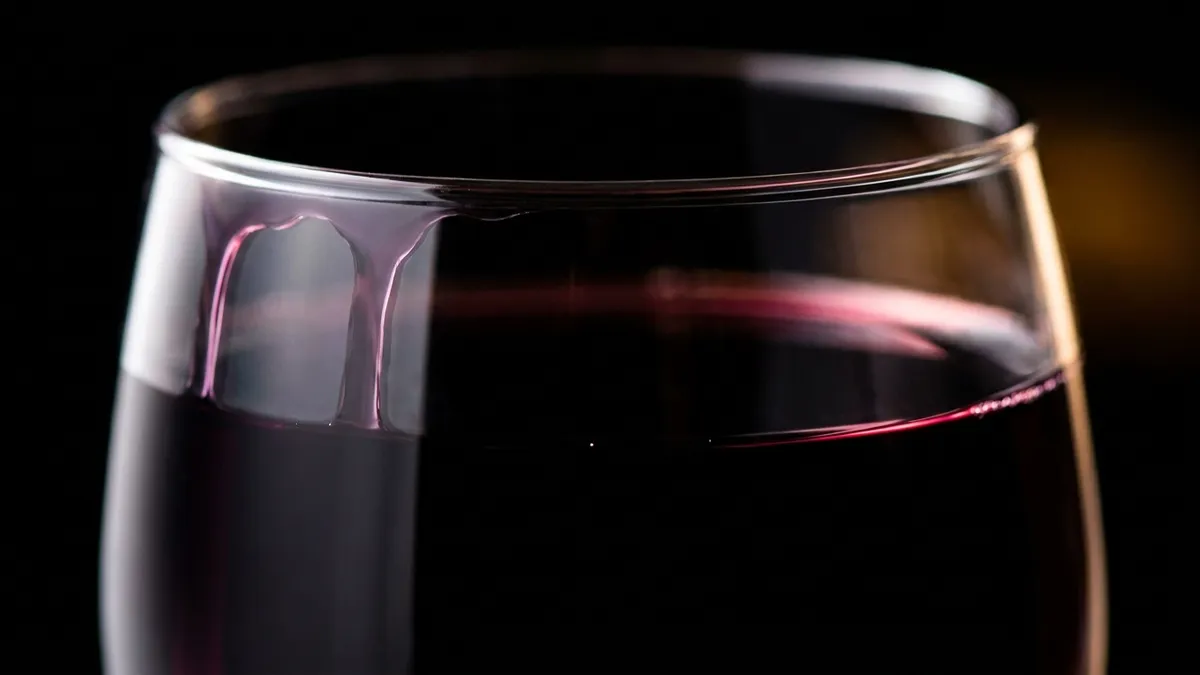
Pour a glass of Petite Sirah and the first thing you notice is the color. It is so deep it looks black, with a vivid purple rim that stains the bowl of the glass. Take a sip and the wine fills every corner of your mouth — dense fruit, grippy tannin, a long peppery finish.
The name is misleading. Petite Sirah wine is not petite, and despite the spelling, it is not Syrah either. It is one of California's most distinctive red wines and a grape with a fascinating identity story. The "petite" describes the berries on the vine, which are small and thick-skinned. The wine those berries produce is anything but small.
If you have ever tasted a wine that stained your teeth purple and made you reach for water, there is a good chance it was Petite Sirah.
What Is Petite Sirah, in 90 Words
Petite Sirah is the California name for Durif, a grape variety created in 1880 by French botanist Francois Durif as a crossing of Syrah and Peloursin. It is grown primarily in California — where most plantings live — and Australia. The wines are massive: inky purple, very high tannin, deep color, blueberry and blackberry, black pepper, dark chocolate, and 14 to 15.5 percent alcohol. It is not the same as Syrah, which is one of its parents but produces a more graceful wine. Star regions include Lodi, the Central Valley, Napa Valley, and parts of Australia. Often blended with Zinfandel for backbone.
The History — From Durif in France to Petite Sirah in California
The 1880 Crossing
In 1880, French botanist Francois Durif crossed Syrah with a now-obscure French grape called Peloursin at his nursery in southern France. The goal was practical — Peloursin was disease-prone, and Durif hoped a Syrah cross might produce a hardier vine. The result was a new variety, originally named after its creator: Durif.
Durif never gained traction in France. The wines were tannic and rustic, and French growers preferred the parent grape. By the late 19th century, Durif had largely disappeared from French vineyards. Today, fewer than 100 hectares remain in France.
Arrival in California
The grape crossed the Atlantic in the 1880s, arriving in California along with thousands of European cuttings during the Gold Rush boom. California growers planted Durif widely in the warm Central Valley, where its small berries and thick skins made it well suited to the heat.
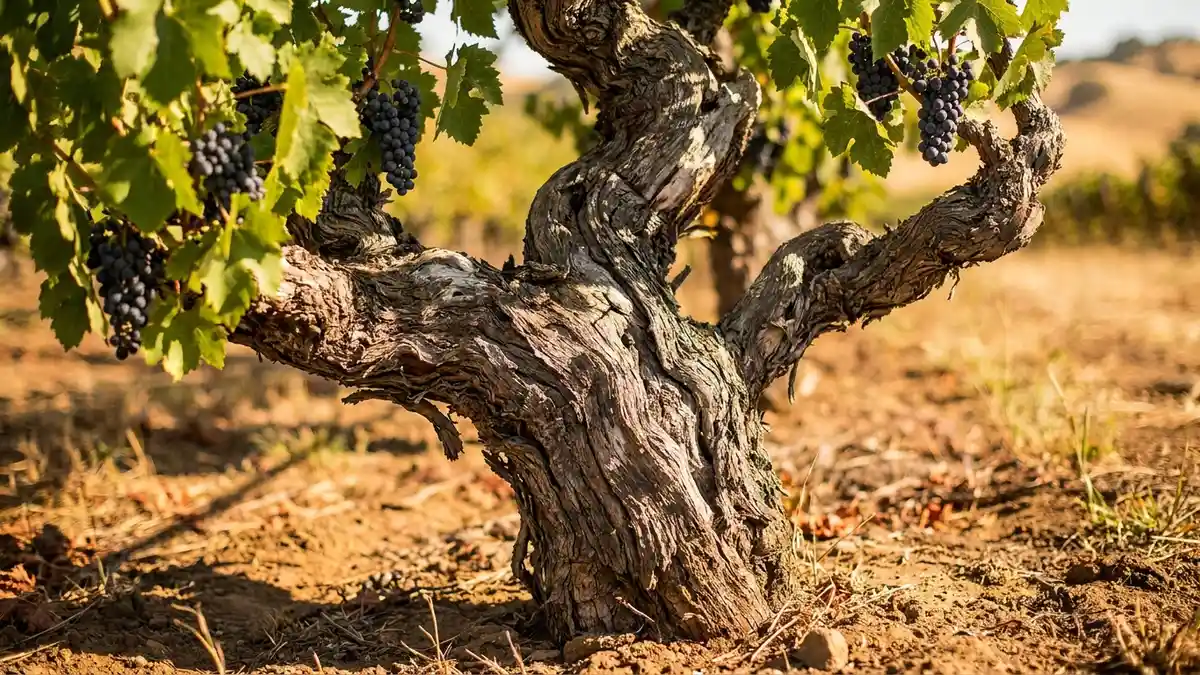
Somewhere along the way, the name changed. Growers began calling it Petite Sirah, partly because the small berries gave the grape a "petite" character on the vine, and partly because of confusion with Syrah, which had also made its way to California. For decades, no one was sure exactly what was in the field — multiple varieties were sold under the Petite Sirah name, including true Syrah and a grape called Peloursin.
DNA testing at UC Davis in 1997 finally confirmed that most California "Petite Sirah" was indeed Durif, the 1880 French crossing. Some old vineyards do contain a field blend of Durif, Syrah, Peloursin, and other varieties, planted decades before anyone bothered to keep them separate.
Petite Sirah vs Syrah — A Family Resemblance, Not a Twin
Because Syrah is one of Petite Sirah's parents, the wines share some DNA — and some flavors. But tasting them side by side makes the differences obvious.
Petite Sirah
- Color — inky, opaque, purple-black, often staining the glass
- Aromas — blueberry, blackberry, black plum, dark chocolate, black pepper, licorice
- Palate — full-bodied, very high tannin, dense and chewy
- Alcohol — 14 to 15.5 percent
- Finish — long, grippy, sometimes drying
Syrah
- Color — deep purple-garnet, more translucent
- Aromas — black pepper, black olive, smoked meat, violet
- Palate — medium to full body, firm but more refined tannins
- Alcohol — 13 to 14 percent (cool climate) or higher (warm climate)
- Finish — long, peppery, savory
The two share black pepper as a hallmark — both contain the rotundone compound that creates that peppery sensation. But Petite Sirah is rounder, denser, and more fruit-forward, while Syrah, especially in its Northern Rhone form, is more savory and structured.
If Syrah is a sleek athlete, Petite Sirah is a powerlifter — same family, different build.
Petite Sirah Tasting Notes — What to Expect in the Glass
Petite Sirah is a wine that wears its character openly. The flavors are bold, the structure is heavy, and the texture is unforgettable.
Sight
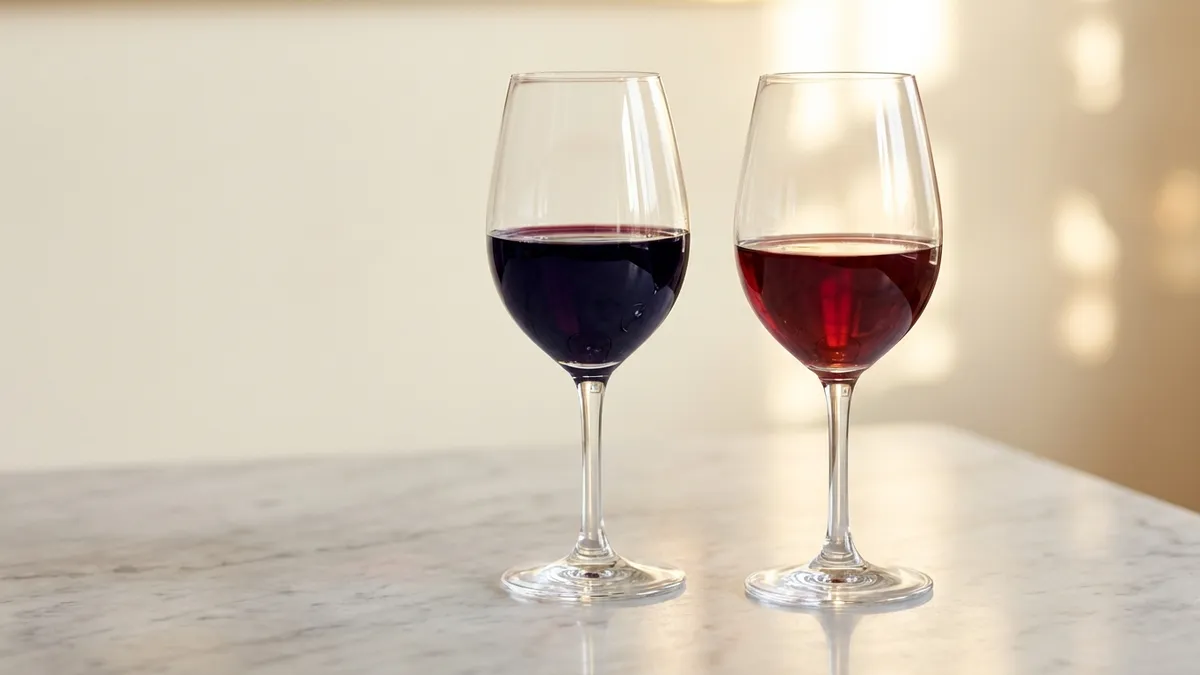
The color alone gives Petite Sirah away. Pour it next to a Pinot Noir and the difference is dramatic — Pinot is pale ruby, Petite Sirah is closer to ink. The deep pigmentation comes from the small berries' high skin-to-juice ratio, which extracts an enormous amount of color during fermentation.
The rim is bright purple in young wines, gradually shifting toward garnet as the wine ages. For more on what color tells you, see the wine color and age guide.
Smell
- Primary fruit — blueberry, blackberry, black plum, blueberry pie filling
- Spice — cracked black pepper, baking spice, anise, licorice
- Oak influence — vanilla, dark chocolate, mocha, toasted coconut (with American oak)
- Earth — sometimes a leathery, dusty, or savory edge
Taste
The structure is what most people remember. Petite Sirah is very high in tannin (the drying, gripping sensation in red wines), and those tannins dominate the mouthfeel. The wine feels dense and chewy, sometimes verging on astringent in its youth. Acidity is medium, enough to keep the wine from feeling flat despite the heavy fruit. Body is unambiguously full.
For a deeper look at how these elements interact, the tannins, acidity, and body guide breaks them down individually.
The Sommy app walks you through identifying these structural elements one by one — useful for a wine like Petite Sirah where the texture is more memorable than any single flavor.
Where Petite Sirah Grows — Key Regions
California
The vast majority of Petite Sirah lives in California, with roughly 9,000 acres planted across the state. Different regions produce noticeably different styles.
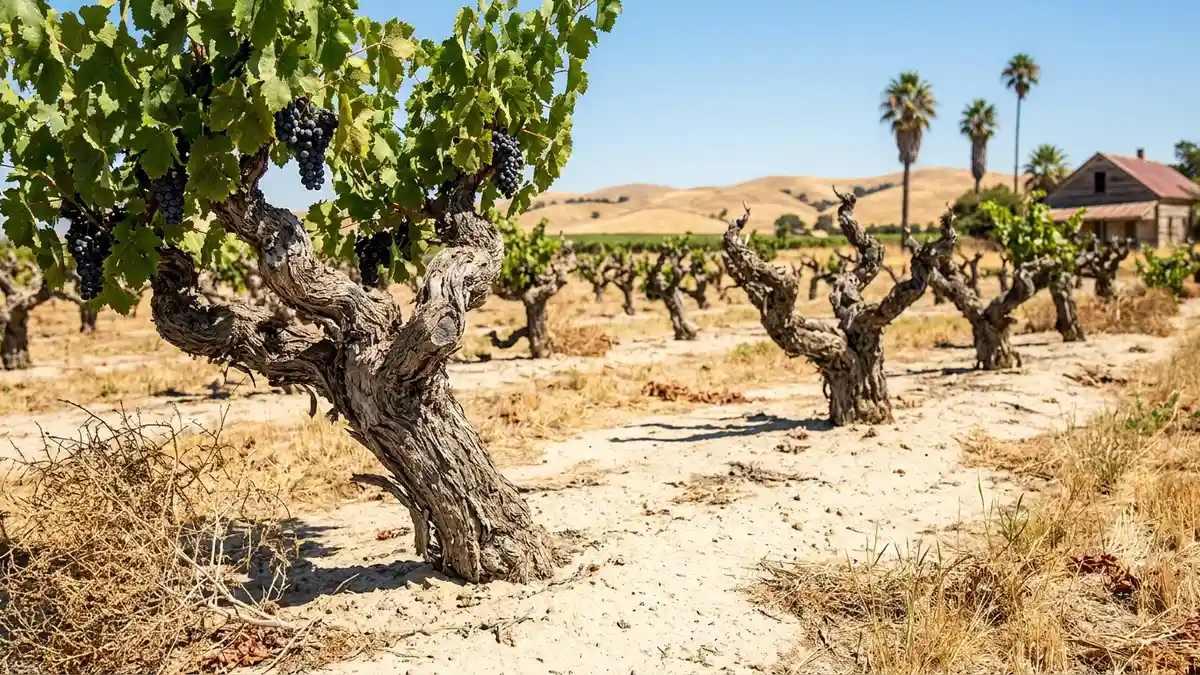
Lodi is the spiritual home of California Petite Sirah. The warm, sandy-soiled region in the northern Central Valley is dotted with old vine plantings, some over a century old. Lodi Petite Sirah tends to be ripe, fruit-forward, and generous, with blueberry compote and pepper.
Napa Valley produces a more polished, structured Petite Sirah, often aged in French oak and built for cellaring. These bottlings are typically more expensive and more restrained.
Paso Robles produces a warm-climate, jammy style with bold dark fruit and softer tannins than Lodi or Napa versions.
Suisun Valley and the Sierra Foothills are home to some of the oldest Petite Sirah plantings in the world, producing concentrated, gnarly wines from low-yielding vines.
Australia
In Australia, the grape is called Durif, retaining its original name. The warm Rutherglen region in northeastern Victoria is the country's Durif heartland, producing dense, port-like reds with massive fruit and intense tannin. Australian Durif tends to be even bigger than California Petite Sirah, often pushing 16 percent alcohol.
Other Regions
Smaller plantings exist in Israel (where the grape has gained a small but enthusiastic following), Mexico's Baja California, and Argentina. Each region puts its own stamp on the variety, but the fundamental character — bold, tannic, deeply colored — stays consistent.
The Zinfandel Connection — California's Old Field Blend
If you have explored California reds, you may have noticed Petite Sirah often appears in Zinfandel blends. There is a long tradition behind this pairing.
In the late 19th and early 20th centuries, California growers planted "field blends" — vineyards with multiple grape varieties interplanted in the same rows. Zinfandel was the dominant grape, but small percentages of Petite Sirah, Carignan, Mourvedre, and Alicante Bouschet were mixed in for color, structure, and complexity.
Zinfandel on its own can be jammy and soft, with limited tannin and a tendency to fade quickly. Petite Sirah brings what Zinfandel lacks:
- Color — deep purple pigment that masks Zinfandel's tendency toward orange edges
- Tannin — the structural backbone for aging
- Acidity — keeps the blend from feeling flabby in warm vintages
- Pepper and dark fruit — adds complexity to Zinfandel's red-fruit profile
A typical California field blend might be 80 percent Zinfandel, 15 percent Petite Sirah, and 5 percent other varieties. The result is more complete than either grape on its own.
Even today, many premium California Zinfandel producers add a small percentage of Petite Sirah to their wines — usually labeled as "Zinfandel" because the rules allow up to 25 percent of other varieties.
Food Pairings for Petite Sirah
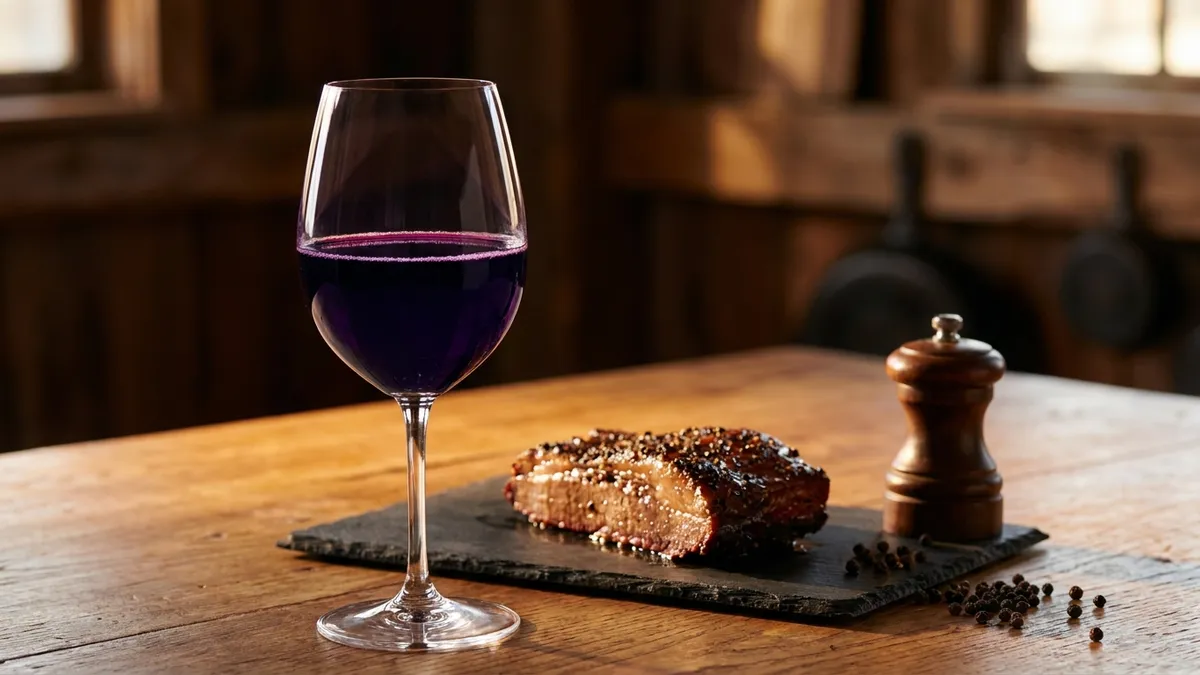
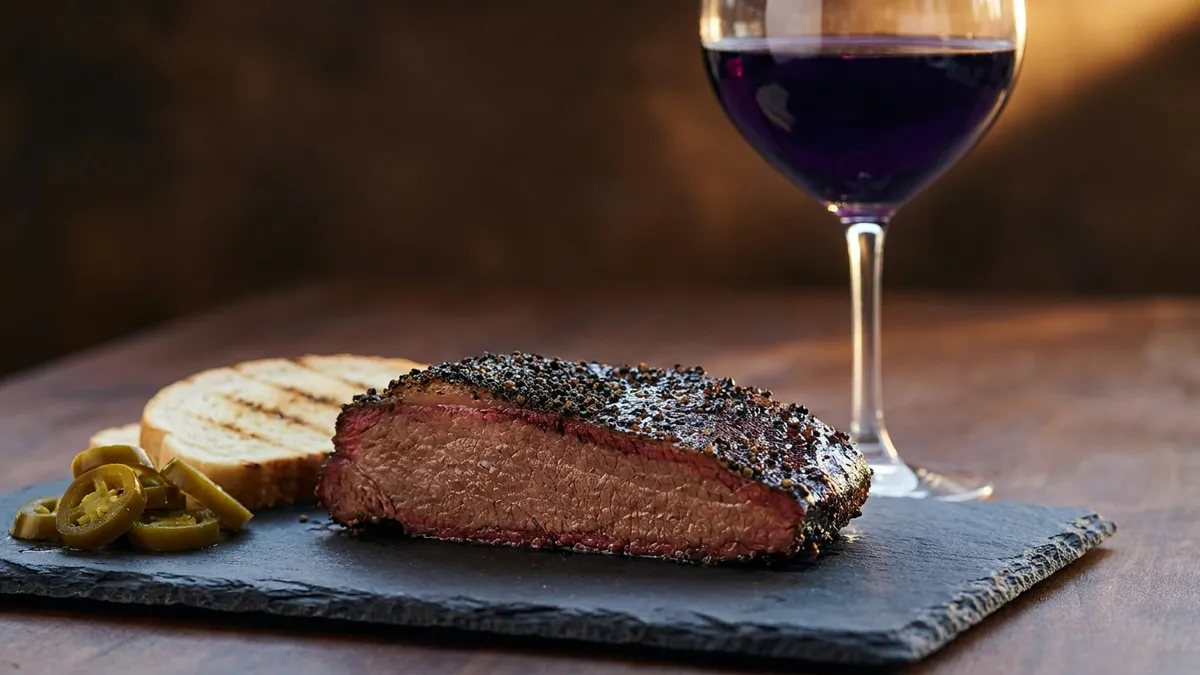
Petite Sirah is a barbecue wine. Its high tannin, bold fruit, and substantial body demand food with comparable intensity. Pour it with delicate dishes and the wine will dominate. Pair it with grilled, smoked, or pepper-forward food and it transforms into the perfect partner.
What Works
- Grilled steak — ribeye, New York strip, anything with a charred crust
- Smoked brisket and barbecue — the wine's pepper and dark fruit complement smoke beautifully
- Lamb shoulder or shanks — slow-braised with rosemary and garlic
- Pepper-crusted dishes — au poivre steak, pepper-rubbed pork shoulder
- Hard aged cheeses — aged cheddar, smoked Gouda, Manchego
- Mushroom dishes — grilled portobello, mushroom risotto with truffle
- Spicy barbecue sauces — the fruit and tannin handle assertive sauces
For the broader logic behind these matches, the wine and food pairing guide covers the underlying principles.
What to Avoid
- Light fish or shellfish — overwhelmed instantly
- Cream-based pastas — the tannin clashes with dairy fat
- Delicate salads — no contest
- Subtle Asian dishes — sushi or steamed dim sum, for example
When in doubt, treat Petite Sirah like Cabernet's louder cousin. If a dish would work with Cabernet Sauvignon, Petite Sirah will usually work too — just with more grip.
Aging Potential — How Long Will It Last?
Top Petite Sirah ages well for 10 to 15 years, with some old vine and Napa bottlings going longer. The wine's combination of high tannin, deep color, and decent acidity gives it the structural framework needed for cellaring.
Young Petite Sirah (1 to 5 years)
Bold and grippy. The fruit is at its most exuberant — blueberry, blackberry, fresh pepper. The tannins are firm and sometimes drying. Decant for 30 to 60 minutes before serving young Petite Sirah. The air softens the tannin and lets the wine open up.
For more on whether decanting changes the wine, see does decanting change wine flavor.
Mature Petite Sirah (5 to 15 years)
The fruit shifts from fresh berry toward dried fruit and cooked plum. Secondary aromas of leather, tobacco, cocoa, and forest floor emerge. The tannins soften and integrate. Color shifts from purple-black toward garnet at the rim.
This is when many tasters find Petite Sirah at its most expressive — still substantial, but with developed complexity. The tasting young vs aged wine guide explains how aromas evolve over time.
How to Serve Petite Sirah
Temperature
Serve Petite Sirah at 16 to 18 degrees Celsius (60 to 65 degrees Fahrenheit). Slightly cooler within that range is better for the high alcohol — too warm and the wine feels heavy and hot. Fifteen minutes in the fridge brings a room-temperature bottle into the right zone. The wine serving temperature chart covers other reds in the same range.
Glassware
A large-bowled red wine glass with a wide opening lets the dense aromas breathe. Avoid small glasses — Petite Sirah's intensity needs space to develop. The Sommy app's tasting modules include glassware guidance for different red styles, helping you understand why glass shape matters.
Decanting
Younger Petite Sirah benefits from 30 to 60 minutes of decanting. The high tannin softens noticeably, and the dark fruit becomes more lifted. Mature bottlings need shorter decanting — 15 to 30 minutes is usually enough, and primarily to separate the wine from any sediment.
Practicing Your Petite Sirah Tasting Skills
Petite Sirah is a wonderful grape to practice tasting with because every element — color, tannin, body, alcohol — is exaggerated. Beginners often have trouble identifying tannin in subtler wines. With Petite Sirah, the tannin is unmistakable.
For a comparison tasting, pour a Lodi Petite Sirah next to a Northern Rhone Syrah. Both are peppery, both are structured, but the Petite Sirah will feel denser and more inky. This kind of side-by-side practice is one of the fastest ways to build sensory confidence — see how to compare two wines for the full method.
The Sommy app includes structured tasting exercises that walk you through identifying tannin levels, body, and color intensity — exactly the elements Petite Sirah showcases. Once you have nailed those on a big wine, picking them out in subtler reds becomes much easier.
For broader context on how grape varieties shape wine character, the noble grapes guide covers the foundational varieties that, like Petite Sirah's parent Syrah, define entire wine styles around the world.
Frequently Asked Questions
Is Petite Sirah the same as Syrah?
No. Petite Sirah is the California name for Durif, a grape created in 1880 by French botanist Francois Durif by crossing Syrah with Peloursin. Syrah is one of its parents, so the two share DNA, but Petite Sirah produces darker, more tannic, and bigger wines than Syrah from any region.
Why is it called Petite Sirah?
The Petite refers to the small berries on the vine, not the size of the wine. Smaller berries have a higher skin-to-juice ratio, which produces deeper color, more tannin, and more concentrated flavor. The grape arrived in California in the 1880s, and growers adopted the name Petite Sirah, gradually replacing the original Durif label.
What does Petite Sirah taste like?
Petite Sirah delivers blueberry, blackberry, black plum, dark chocolate, and cracked black pepper, often with hints of licorice, blueberry pie, and toasted oak. It is full-bodied, very high in tannin, deeply colored, and typically 14 to 15.5 percent alcohol. The texture is dense and chewy, often staining the glass and your teeth.
Is Petite Sirah dry or sweet?
Petite Sirah is a dry red wine. The intense ripe blueberry and blackberry fruit can create the impression of sweetness, but the sugar is fully fermented. There is essentially no residual sugar in standard Petite Sirah. The richness comes from ripe fruit, full body, and high alcohol, not from sugar.
How long does Petite Sirah age?
Top Petite Sirah ages well for 10 to 15 years, with some old vine bottlings going longer. The high tannin and acidity provide a strong structural backbone for cellaring. Younger Petite Sirah benefits from decanting for 30 to 60 minutes before drinking to soften the grippy tannins and open up the dark fruit.
What food pairs with Petite Sirah?
Petite Sirah is a barbecue wine. It pairs beautifully with grilled steak, smoked brisket, ribs, lamb shoulder, pepper-crusted dishes, and hard aged cheeses. The wine's tannin and bold fruit handle assertive smoky and peppery flavors that would overwhelm lighter reds. Skip it with delicate fish or cream sauces.
Why is Petite Sirah blended with Zinfandel?
Zinfandel is fruit-forward and generous but can lack tannin and color. Petite Sirah brings deep purple pigment, structural tannin, and acidity to the blend, giving Zinfandel a backbone for aging. The tradition dates back to California's old field blends, where the two grapes were often planted and fermented together.
Sommy Team
LinkedInFounder & Wine Educator
The Sommy Team is building the world's most approachable wine education app, helping beginners develop real tasting skills through structured courses and AI-guided practice.