Wine with Middle Eastern Food: Hummus, Kebabs, and Mezze

By the Sommy Team — AI-assisted, human-edited.
Updated Sep 24, 2026
Contents (9)
- Wine with Middle Eastern Food, in One Paragraph
- What Wine Goes With Hummus and Other Mezze Dips?
- Why Do Sumac, Lemon and Za'atar Change the Wine?
- What Wine Goes With Lamb Kebabs and Grilled Meat?
- Is Red or White Better for a Mixed Mezze Spread?
- What Wine Goes With Falafel and Fried Mezze?
- Does Spicy Middle Eastern Food Need a Sweet Wine?
- Which Wines Grow Next to This Food?
- How Do You Set Up the Wine for a Mezze Night?
TL;DR
Most Middle Eastern food is built on lemon, sumac, tahini and olive oil rather than chili. Pour a high-acid dry white or dry rosé with hummus, dips and falafel, and a red with firm tannin once grilled lamb arrives. Lebanese, Turkish, Greek and Georgian grapes suit this table best.
A mezze table runs on lemon, sumac, tahini and olive oil far more than on chili. So the best wine with Middle Eastern food is a high-acid white or dry rosé for the dips, and a firmer red once grilled lamb arrives. Mezze means a spread of small shared dishes, and in the Levant it is often a meal in its own right.
Wine with Middle Eastern Food, in One Paragraph
The rule for wine with Middle Eastern food follows the plate. Hummus, baba ghanoush and tabbouleh are fatty and sour, so they need acidity, the tartness that makes your mouth water. A crisp dry white such as Assyrtiko or Rkatsiteli, or a dry rosé, handles them. Tahini is about 53% fat, and acid cuts through fat. Grilled lamb is the exception: a red with firm tannin, the drying grip on your gums, softens against the meat's protein. Try Bekaa Valley reds, Syrah, Xinomavro or Boğazkere. Only chili-hot dishes like harissa stews need an off-dry wine. If you open one bottle for a mixed table, make it dry rosé.
What Wine Goes With Hummus and Other Mezze Dips?
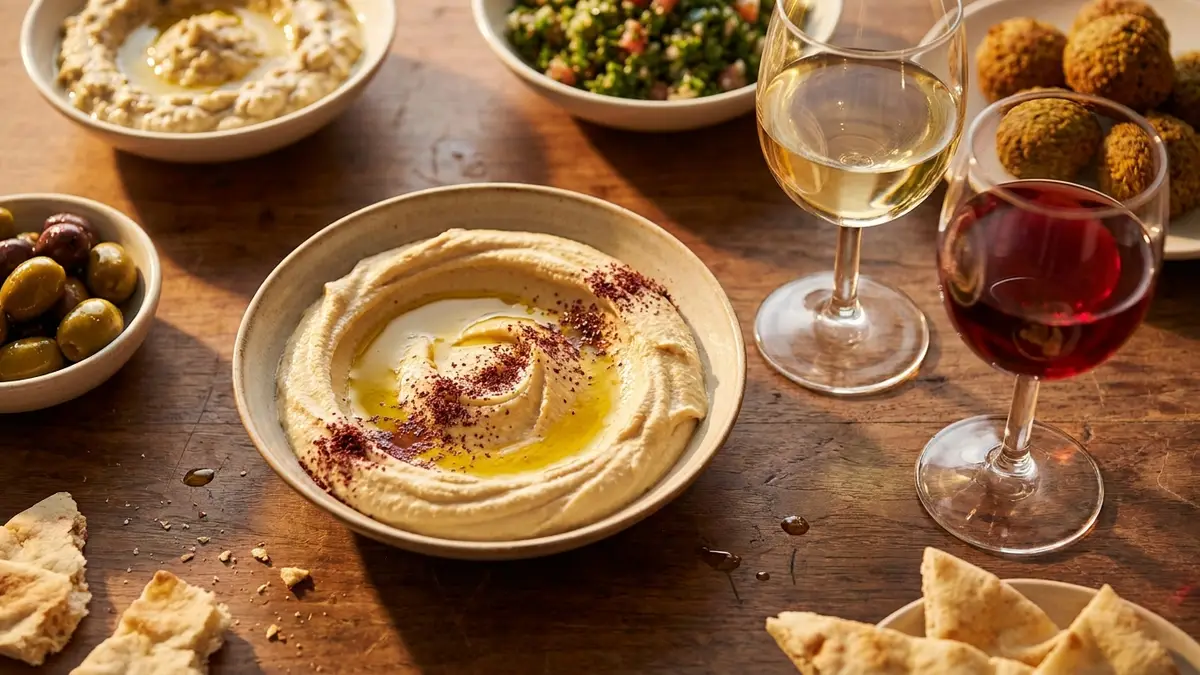
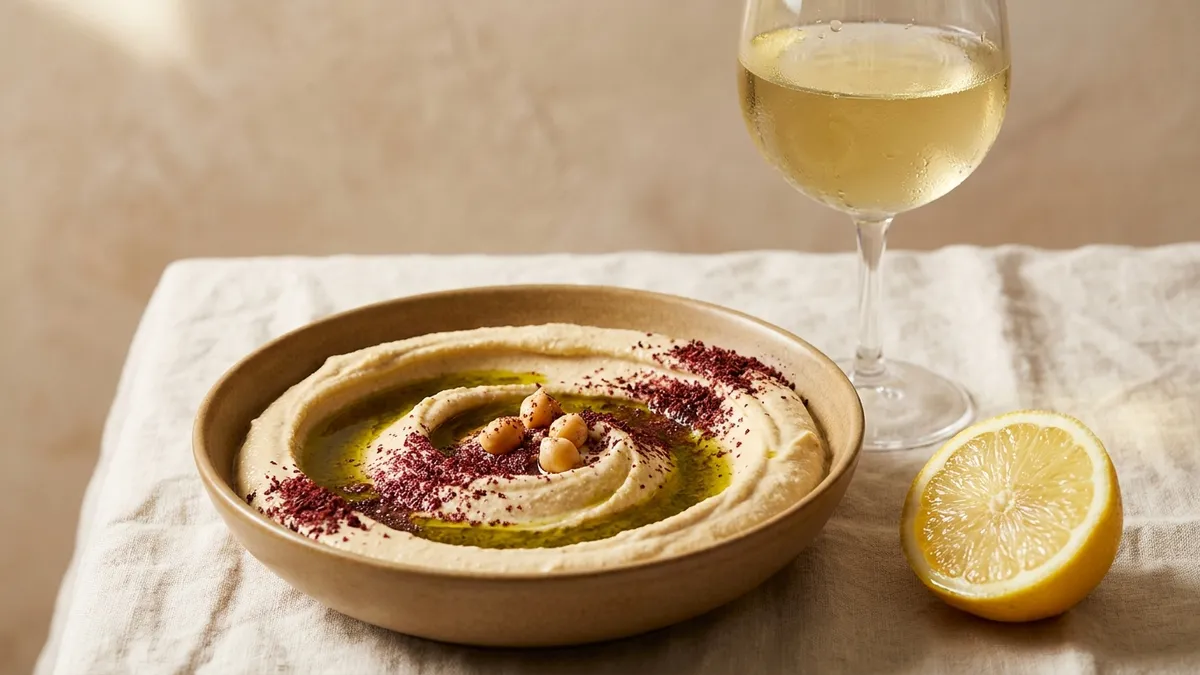
Pour a crisp dry white or a dry rosé with hummus, baba ghanoush and the other dips. Hummus is mashed chickpeas bound with tahini, a paste of ground sesame seeds that is about 53% fat. Acidity in wine cuts through that fat and resets your palate, so the next scoop tastes as bright as the first.
Tannin does the opposite with these dips. With no meat on the plate, there is no protein to soften it, and unhulled tahini already carries a slightly bitter edge. A big red stacks its own grip on top of that bitterness, and the dip tastes chalky. Heavy oak does similar damage: the vanilla and toast bury the lemon and garlic.
If the dip is built on tahini, pick a wine with high acidity and little or no oak.
| Dish | What dominates | Wine trait that fixes it | Pour this |
|---|---|---|---|
| Hummus, baba ghanoush | Sesame fat, lemon, garlic | High acidity, no oak | Assyrtiko, Rkatsiteli or dry rosé |
| Tabbouleh, fattoush | Lemon, sumac, fresh herbs | Acidity at least as sharp as the salad | Assyrtiko, Emir or Sauvignon Blanc |
| Falafel, fried kibbeh | Frying oil, herbs | Bubbles or crisp acidity | Dry sparkling wine or Emir |
| Za'atar flatbread, labneh | Dried thyme and oregano, tangy yogurt | Herbal white or light red | Rkatsiteli or Cinsault-based red |
| Lamb kebab, shish | Char, fat, protein | Firm tannin, good acidity | Bekaa red blend, Syrah, Xinomavro, Boğazkere |
| Kofta, spiced mince | Warm spice, fat | Medium body, softer tannin | Öküzgözü or Cinsault |
| Harissa, chili-hot stews | Capsaicin heat, salt | Low alcohol, a touch of sweetness | Off-dry Riesling |
The same logic sits behind every match in our wine and food pairing guide.
Why Do Sumac, Lemon and Za'atar Change the Wine?
Sour food makes a wine taste less tart, so a low-acid wine goes flat and the wine needs at least as much acidity as the plate. Sumac is the clearest case. The crimson spice dusted over hummus gets its tartness from malic acid, and it is also mixed into falafel and into za'atar.
Malic acid is the same sharp acid that gives green apples their bite, and many cool-climate whites are high in it. A wine that already carries that level of tartness holds its shape against the sumac. A soft, low-acid wine tastes thin and flabby beside it. Our explainer on how food changes wine taste covers the other flavours that shift a glass.
Za'atar is a blend of a dried wild herb, toasted sesame, sumac and salt. The herb is traditionally Origanum syriacum, and cooks swap in thyme, oregano or marjoram where it is missing. It flavours manakish, the flatbread brushed with za'atar and olive oil, and it is stirred into labneh, a thick strained yogurt. That dried-herb smell links to wines that smell of dried thyme themselves, like southern reds built on Cinsault or Syrah. The herbal notes in wine article shows where those smells come from.
If you can taste lemon or sumac on the plate, the wine must taste at least as tart.
What Wine Goes With Lamb Kebabs and Grilled Meat?
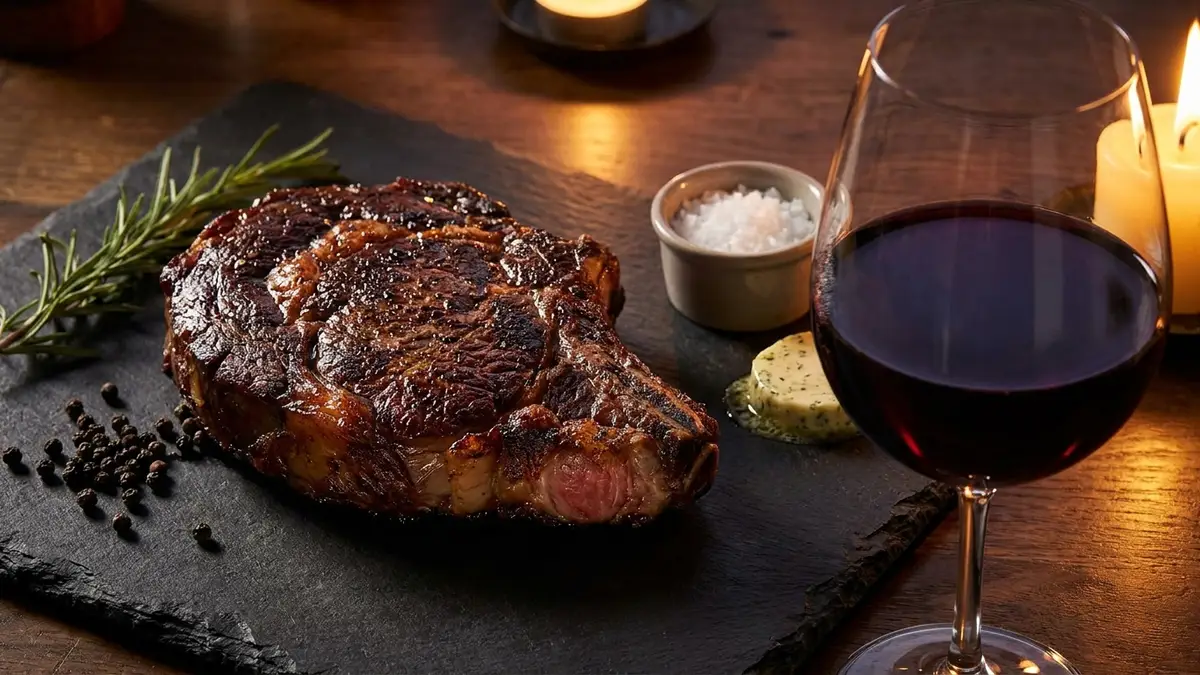
Grilled lamb is the one place on a Middle Eastern table where a tannic red belongs, because tannin binds to the meat's protein and fat and feels softer. Lamb is the traditional kebab meat, cooked on a skewer over an open fire. That gives the plate three things at once: fat, protein and char.
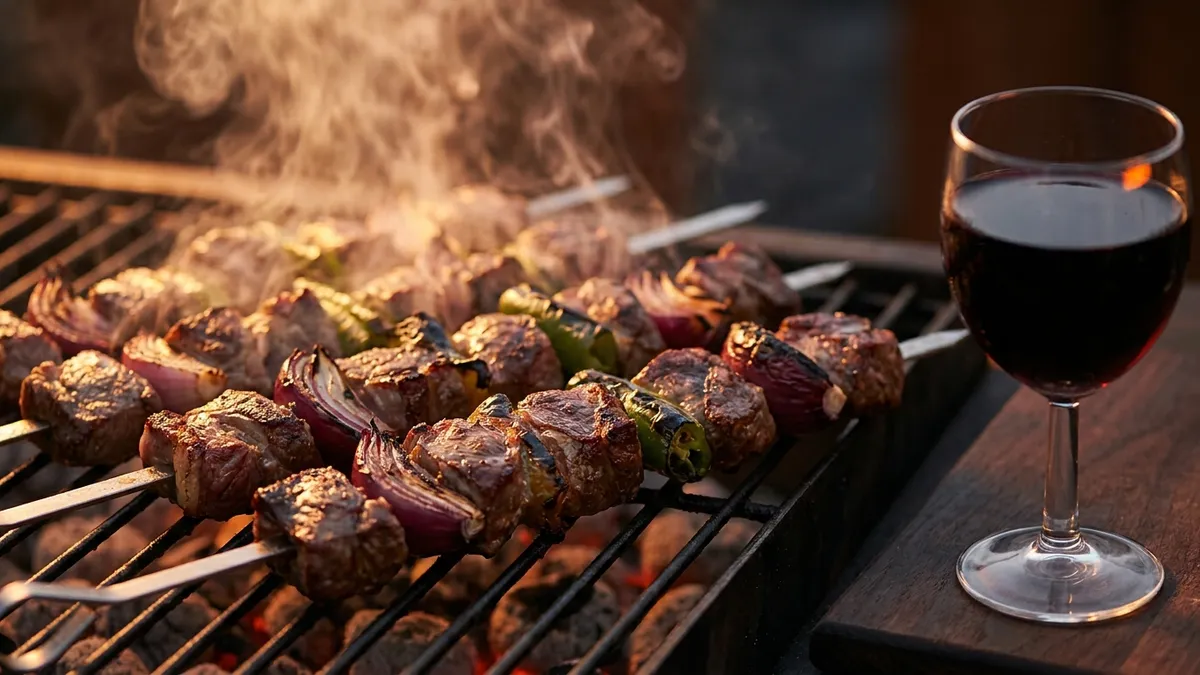
The fat coats your mouth, and the tannin scrapes it clean. The char from the grill tastes of toast and smoke, which lines up with the savoury side of a warm-climate red. A full-bodied red, one that feels as weighty in the mouth as whole milk rather than skimmed, stands up to the richest shoulder cuts. For a deeper look at how grip works, see what tannins are.
Kofta and other minced, spiced kebabs change the picture. The spice is warm rather than hot, and the meat is softer and often fattier. A medium-bodied red with gentler tannin, such as Öküzgözü or a Cinsault-based blend, keeps the cumin and allspice in view. Chicken shish with garlic sauce sits halfway, and a dry rosé or a light red both work there.
If the meat is charred whole cuts of lamb, choose a red with firm tannin. If it is minced and spiced, choose a softer, medium-bodied red.
Is Red or White Better for a Mixed Mezze Spread?
White or rosé covers more of a mixed spread, and a medium-bodied red joins once the meat arrives. Look at a typical mezze table: most of the dishes are legumes, vegetables, herbs and oil, and only one or two are grilled meat.
The old habit of reaching for red with anything grilled works for plain lamb and fails for the dips. A tannic red clashes with tahini's bitterness and mutes delicate herbs, while a crisp white or rosé handles hummus, tabbouleh and a lamb skewer.
A dry wine, one with no sugar you can taste, suits almost every dish on the table. Dry rosé sits between the two camps. It has white-wine acidity for the dips and enough weight and fresh strawberry fruit to meet a kebab. Cinsault, a staple Lebanese grape, is widely used for pale, dry rosé. Our rosé wine guide and Cinsault guide explain how that pale colour and fresh acid happen.
If you can open only one bottle for a mixed mezze table, open a dry rosé.
What Wine Goes With Falafel and Fried Mezze?
Fried falafel wants acid or bubbles to scrub the oil, so a crisp white or a dry sparkling wine works best. Frying leaves a film of oil on your tongue. Carbonation and acidity lift it away between bites, so each falafel tastes as crisp as the first.
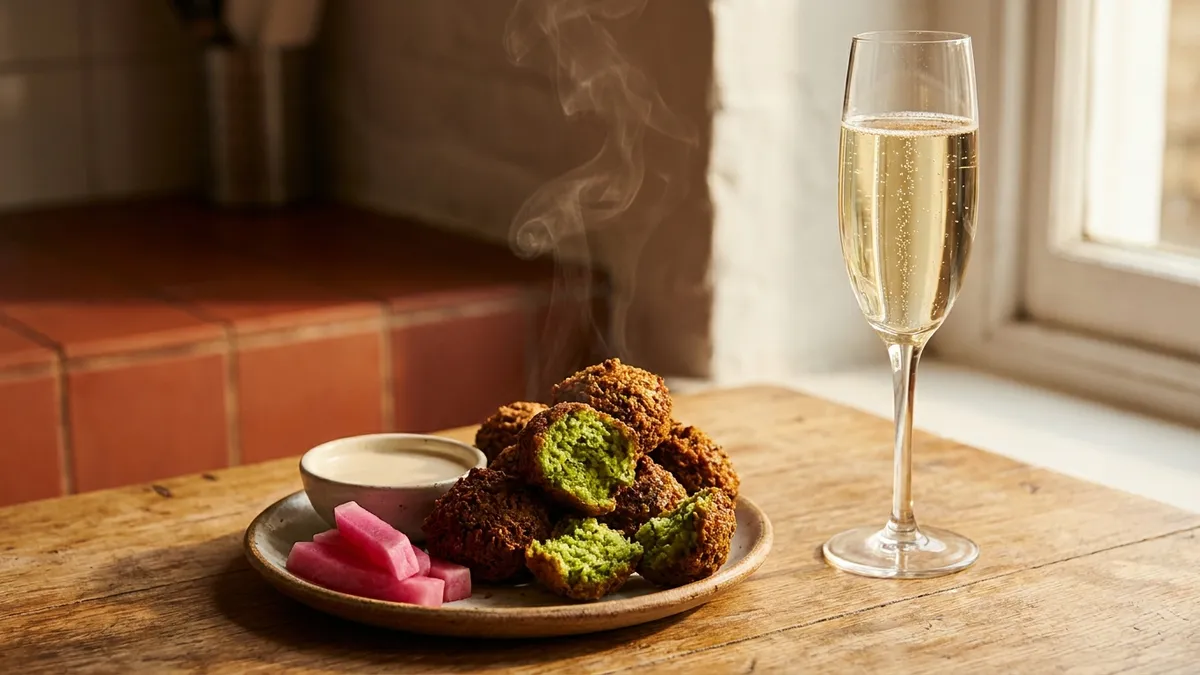
The inside of a good falafel is green with parsley and coriander. A light-bodied, unoaked wine keeps those herbs audible, while a heavy wine covers them. Fried kibbeh, the bulgur and minced-meat croquette, can take a light red or rosé because of the meat inside. The types of sparkling wine guide covers which dry styles to look for.
If it is fried, pick bubbles or a crisp white. If it is fried and filled with meat, a light red or rosé also works.
Does Spicy Middle Eastern Food Need a Sweet Wine?
Only when a dish is chili-hot, and most mezze is not. The dominant flavours in hummus, tabbouleh, grilled lamb and kibbeh are acid, fat, char and herbs rather than capsaicin, the compound that makes chilies burn. A dry white or rosé handles all of them.
The exception is real heat: harissa, hot pepper pastes and some spicy stews. Salt and chili heat both make alcohol feel hotter, so a strong red turns the burn up. A touch of sweetness does the reverse and soothes it. An off-dry wine, one with a little sugar you can just taste, balances that heat while its acidity keeps the sip fresh.
If the dish carries harissa-level chili, pick an off-dry, lower-alcohol white such as a Riesling. If it only has warm spices like cumin and cinnamon, stay dry. The wine with spicy food guide goes deeper on heat levels, and the wine with Indian food guide handles curries built on the same warm spices.
Which Wines Grow Next to This Food?
Lebanon, Turkey, Greece and Georgia all grow grapes that suit this food, and each has a style built for one part of the table. The first three also share the mezze habit itself. The word itself travelled from Persian maze, meaning taste or relish, into Turkish meze.
Lebanon
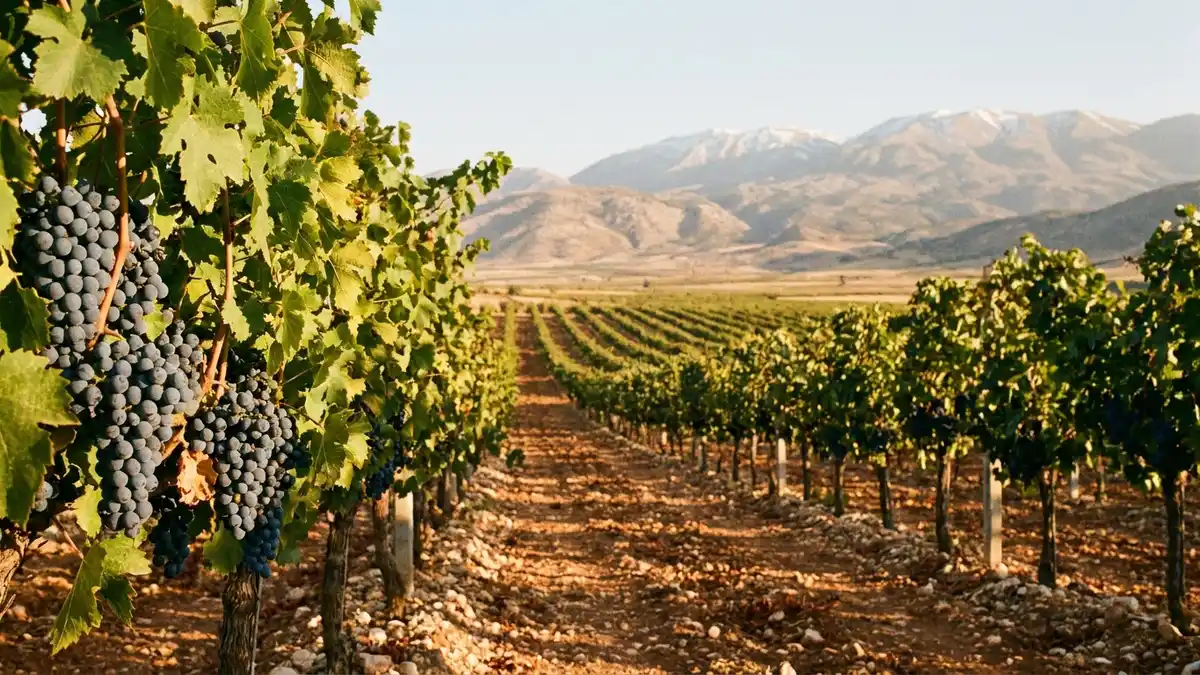
Lebanon's Bekaa Valley grows most of the country's wine, on vineyards around 1,000 metres above sea level. That altitude matters in the glass: cool nights keep acidity fresh in a hot climate, so the reds stay lively with fatty lamb. The main red grapes are Cinsault, Carignan, Syrah, Cabernet Sauvignon and Merlot. The modern industry is young: Lebanon had only five producers until 1995 and around 50 wineries now, making roughly 15 million bottles in 2024. That followed a 400-year ban under Ottoman rule, when only Christians could make wine for religious use. The Lebanon wine guide covers the native white grapes as well.
Turkey
Turkey has the fifth-largest vineyard area in the world, yet only an estimated 3 to 15% of the harvest becomes wine. Its native grapes match the kebab grill closely:
- Öküzgözü is a red with bright acidity and softer tannin, a fit for kofta.
- Boğazkere, whose name means "throat burner", is dark in colour and highly tannic, built for charred lamb.
- Emir is a white with high acidity and a flinty edge, made both still and sparkling.
Greece
Assyrtiko, from Santorini, keeps sharp acidity even when very ripe and tastes salty and briny, which suits sumac, lemon and feta. Xinomavro from northern Greece carries high tannin and medium-high acidity, and is often compared with Barolo. Pour it with lamb. The Assyrtiko, Xinomavro and Greece wine guides go further.
Georgia
Rkatsiteli is one of the oldest grape varieties, native to Georgia, and naturally high in acid. On its own the wine can taste sharply tart. That tartness makes it one of the surest matches for tahini dips and za'atar flatbread. The Georgia wine guide explains the amber, skin-fermented style it is often made in.
If the shop has one shelf from this part of the world, take an Assyrtiko or Rkatsiteli for the dips and a Bekaa red or Boğazkere for the lamb.
How Do You Set Up the Wine for a Mezze Night?
Open one crisp white or dry rosé and one medium-to-full red, and serve the white first with the dips. Mezze arrives in waves: cold dips and salads first, then fried and grilled dishes. Pour the white with the first wave and bring out the red with the grill.
Chill the white or rosé in the fridge and take it out a little before pouring. Give the red a light chill too, since a warm red tastes more alcoholic against salt. Put both glasses in front of each guest so they can switch dish by dish. If you want a wider framework to carry to other cuisines, the food pairing hub collects our pairing guides.
If a guest only drinks red, steer them to the lightest, lowest-tannin red on the table for the dips, and the firmer red for the lamb.
Tonight, pour a crisp white and a red side by side. Taste each one with a spoonful of hummus, then with a bite of grilled lamb, and write down which glass won each plate. Sommy's tasting mode walks you through look, smell and taste after you photograph each label, and saves both notes to your tasting journal. Find the app at sommy.wine, along with bite-sized courses that build the vocabulary behind every note.
Sources
Frequently Asked Questions
What wine goes with hummus?
A crisp dry white or a dry rosé goes best with hummus. Tahini, the sesame paste inside it, is about 53% fat, and a wine with high acidity cuts through that richness the way a squeeze of lemon does. Assyrtiko, Rkatsiteli and Provence-style rosé all work. Avoid heavily oaked whites and tannic reds, which turn bitter next to the sesame.
What wine pairs with lamb kebabs?
A red with firm tannin and good acidity pairs best with charred lamb kebabs. Tannin binds to the protein and fat in the meat and feels softer, while the char matches the wine's toasty, savoury side. Try a Bekaa Valley red blend, Syrah, Xinomavro or Turkish Boğazkere. For spiced minced kofta, a softer, medium-bodied red such as Öküzgözü or Cinsault is the safer pick.
Is red or white wine better with Middle Eastern food?
White and rosé cover more of a typical mezze spread, because hummus, baba ghanoush, tabbouleh and falafel are sour, oily and herby rather than meaty. Red earns its place when grilled meat arrives. If you can open only one bottle for a mixed table, choose a dry rosé, which has the acidity for the dips and enough fruit and weight for lamb.
Can you drink wine with spicy Middle Eastern food?
Yes, but only chili-hot dishes, such as those made with harissa or hot pepper paste, need a change of plan. Salt and chili heat make alcohol feel hotter, so pick a lower-alcohol wine with little or no tannin. A touch of sweetness, as in an off-dry Riesling, soothes the burn. Most mezze is not chili-hot and suits dry wines.
What wine goes with falafel?
A dry sparkling wine or a crisp, unoaked white goes best with falafel. The bubbles and acidity clear the frying oil from your mouth between bites, and a light body does not bury the parsley and herb flavours inside. If the falafel comes with a tahini sauce, stick with high acidity. Turkey's Emir grape, made both still and sparkling, fits this plate.
What is the traditional wine of Lebanon?
Lebanon's signature style is a red blend from the high Bekaa Valley, built on grapes such as Cinsault, Carignan, Syrah and Cabernet Sauvignon. The vineyards sit around 1,000 metres above sea level, which keeps acidity fresh in a hot climate. These reds suit grilled lamb and a herb-heavy mezze table.
Sommy Team
LinkedInFounder & Wine Educator
The Sommy Team is building the world's most approachable wine education app, helping beginners develop real tasting skills through structured courses and AI-guided practice.