Greek Wine Guide: Ancient Grapes, Modern Wines

By the Sommy Team — AI-assisted, human-edited.
Updated Jun 17, 2026
Contents (12)
- What Is Greek Wine?
- The Indigenous Grapes That Define Greek Wine
- Where Greece Grows: Islands and Mainland
- Santorini and Assyrtiko: Wine Grown in Volcanic Ash
- Naoussa and Xinomavro: The Barolo of Greece
- Nemea and Agiorgitiko: The Easy Way Into Greek Reds
- Mantinia and Moschofilero: High-Altitude Aromatic Whites
- Retsina: History, Not the Whole Story
- The Greek Wine Classification System
- What Makes Greek Wine Distinctive
- How a Beginner Should Start with Greek Wine
- The Reward of Learning Greek Wine
TL;DR
Greece makes distinctive wine from grapes grown almost nowhere else: bone-dry Assyrtiko on volcanic Santorini, structured Xinomavro in Naoussa, juicy Agiorgitiko in Nemea, and aromatic Moschofilero in Mantinia. This greek wine guide maps the islands and mainland, decodes the labels, and shows beginners where to start.
What Is Greek Wine?
This greek wine guide begins with the fact that makes the country so rewarding: Greece makes its best wines from grapes grown almost nowhere else on earth. While most countries lean on the same global varieties, Greece pours Assyrtiko, Xinomavro, Agiorgitiko, and Moschofilero — names that reward a little patience and give back wines of real character. The signature white is bone-dry, salty Assyrtiko from the volcanic island of Santorini. The headline red is firm, savory Xinomavro from Naoussa in the north. Add the soft reds of Nemea, the floral whites of Mantinia, and one of the oldest continuous winemaking traditions anywhere, and you have a region built for curious beginners. Learn four grapes and a handful of places, and Greek wine opens up.
The Indigenous Grapes That Define Greek Wine
Most wine countries chase the famous international grapes. Greece does the opposite, and that choice is the whole story. The country has more than 200 native varieties still in commercial use, the legacy of thousands of years of unbroken winemaking. After decades when cheap bulk wine and Retsina (a pine-resin-flavored white) dominated the export image, a new generation revived these old grapes and built a modern, dry, terroir-driven wine scene around them.
Four grapes anchor that revival, and learning them is the fastest route into the region:
- Assyrtiko (white): The flagship. Bone-dry, searingly high in acidity, with aromas of lemon, lime, and a distinct saline, crushed-stone character. At its best on volcanic Santorini, it ages remarkably well for a white.
- Xinomavro (red): The most serious red, from the cool north. The name means "acid-black," and it lives up to it — pale in color but high in both tannins (the drying, gripping sensation in red wine) and acidity, with savory tomato, olive, and dried-herb notes.
- Agiorgitiko (red): The crowd-pleaser, from Nemea in the Peloponnese. Soft, plummy, and medium-bodied with gentle tannins, it is the friendliest doorway into Greek reds.
- Moschofilero (pink-skinned aromatic white): From high-altitude Mantinia. Light, floral, and grapey with rose-petal perfume and crisp acidity, often faintly pink-tinged.
If grapes like these are the reason Greece excites the wine world, you will enjoy our wider look at indigenous grapes worth trying and the grapes to watch as the global thirst for distinctive flavor grows.
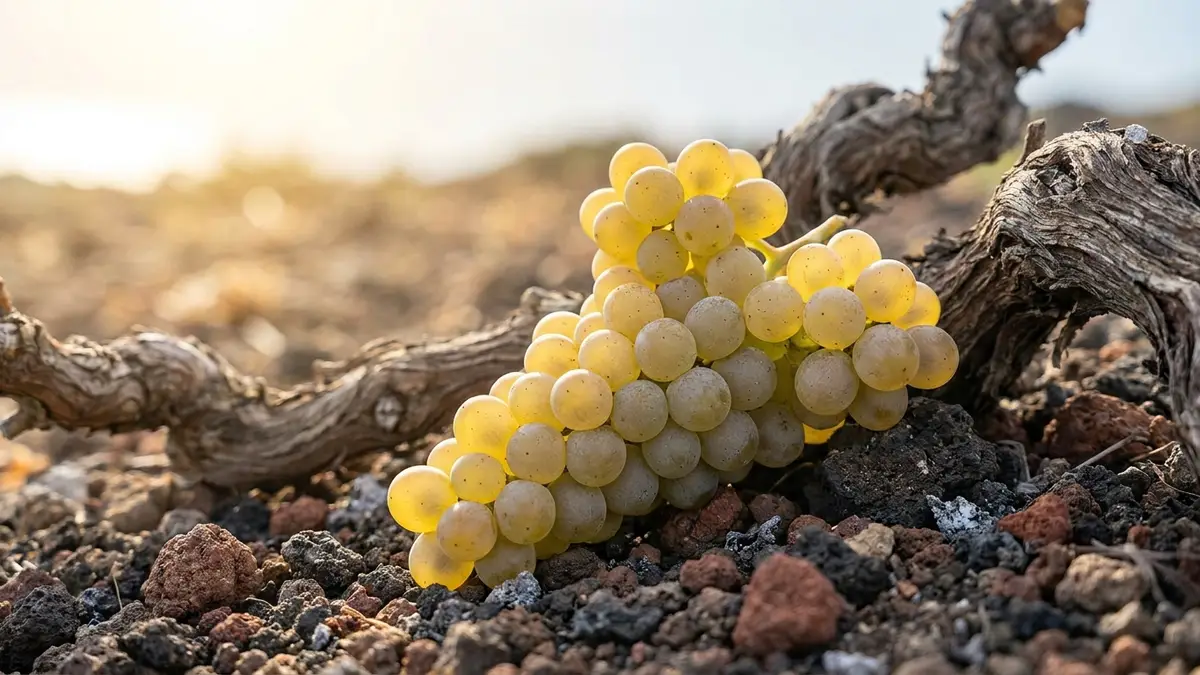
Where Greece Grows: Islands and Mainland
Greek wine splits naturally into two worlds. The islands of the Aegean — Santorini chief among them — are hot, sunny, and swept by sea winds, with poor volcanic or limestone soils that stress the vines and concentrate flavor. The mainland is more varied: the northern region of Macedonia is continental and cool enough for serious, age-worthy reds, while the southern Peloponnese peninsula offers warm valleys for soft reds and breezy high plateaus for fresh whites.
Altitude does as much work as latitude here. Greece is mountainous, and many of the best vineyards sit high above the summer heat, where cool nights preserve the bright acidity that defines the country's style. The result is a paradox: a hot Mediterranean country making some of the freshest, most food-friendly wines in Europe.
That tension between heat and freshness is the thread running through every Greek region. Hold onto it as the regions come into focus below.
Santorini and Assyrtiko: Wine Grown in Volcanic Ash
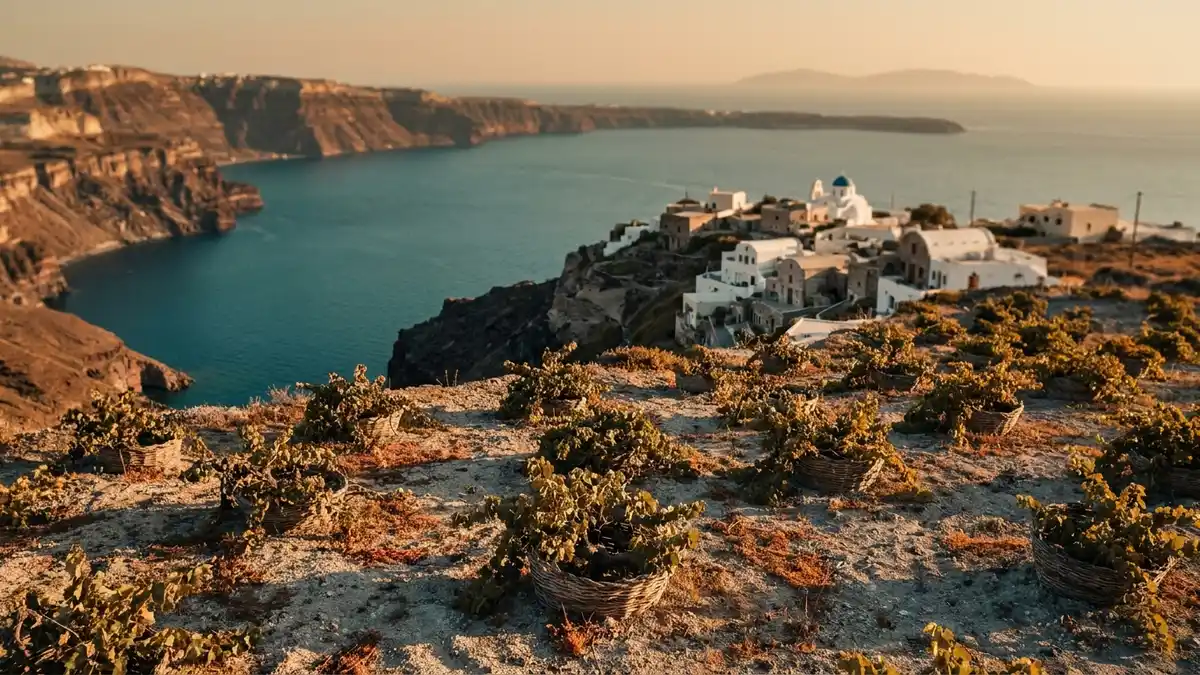
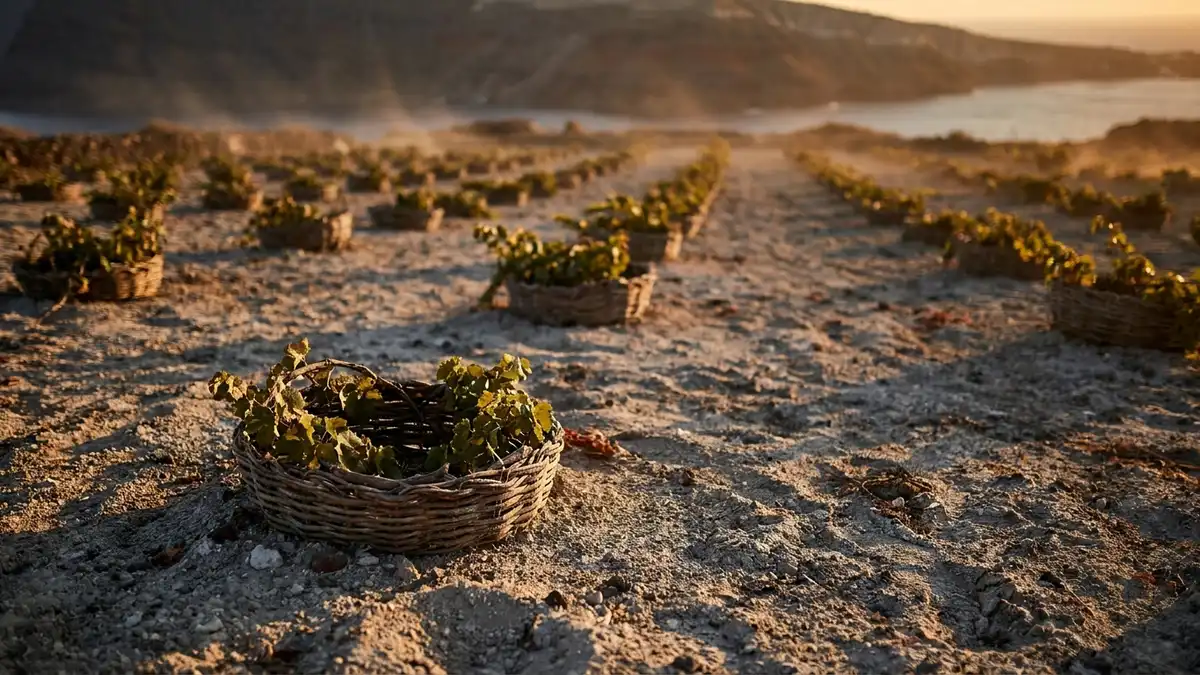
No place explains Greek wine better than Santorini. The island is the rim of a collapsed volcano, and its vineyards grow in volcanic ash, pumice, and lava with almost no clay and very little rain. There is no phylloxera, the root louse that devastated the rest of the world's vines, so some Santorini vines are well over a century old on their original rootstock.
To survive the relentless wind, growers train the vines into a low, woven basket called a kouloura: the canes are coiled into a circular nest on the ground, and the grapes ripen inside, sheltered from the gusts and salt spray while the basket traps precious morning moisture. It is one of the most distinctive vine-training methods in the world, and it produces tiny yields of intensely flavored fruit.
The wine these vines make is Assyrtiko at its purest — bone-dry, electric with acidity, and unmistakably mineral and salty, as if the sea air had soaked into the glass. Typical aromas: lemon, lime zest, green apple, crushed seashell, flint. Body: medium (3/5) · Acidity: very high (5/5) · with a long, saline finish. Top examples age for a decade or more, deepening into honey and toasted nuts.
The island also makes a remarkable sweet wine, Vinsanto, from sun-dried Assyrtiko — amber, concentrated, and balanced by that same searing acidity. To understand why a wine this distinctive comes down to its terroir — the environment where grapes grow, from soil to climate to altitude — our guide to how to taste wine connects place to flavor in plain terms.
Naoussa and Xinomavro: The Barolo of Greece
Head north to Naoussa, on the slopes of Mount Vermio in Macedonia, and Greek wine changes character entirely. This is the home of Xinomavro, the country's most ambitious red and the one most likely to fascinate a serious taster. The continental climate — cold winters, warm summers, big day-to-night temperature swings — suits a grape that ripens slowly and holds onto its acidity.
Xinomavro earns its nickname, the Barolo of Greece, from its uncanny resemblance to Nebbiolo, the grape behind Italy's Barolo. Both are deceptively pale, almost translucent, yet pack high tannins and high acidity behind that light color. Both smell savory rather than sweetly fruity — think sun-dried tomato, black olive, dried herbs, and a hint of leather. And both demand patience: young Xinomavro can taste austere and grippy, but with several years in bottle it softens into something complex and graceful.
That pale-but-powerful profile is a useful lesson in why color alone tells you little about a red wine. The same surprise appears with Sicily's volcanic red, and our Nerello Mascalese guide traces the parallel — another light-hued grape grown on volcanic soil that punches far above its color. To make sense of why these wines feel firm despite their delicacy, understanding tannins, acidity, and body breaks down the structure at work.
Naoussa is a PDO for dry red Xinomavro only. Nearby appellations — Amyndeon, high and cool, and Goumenissa, where Xinomavro is blended with the softer Negoska — round out the north and show the grape's range from sparkling rosé to powerful, age-worthy red.
Nemea and Agiorgitiko: The Easy Way Into Greek Reds
If Xinomavro is the region's challenge, Nemea in the northeastern Peloponnese is its welcome mat. This is the largest PDO red-wine zone in Greece, planted to Agiorgitiko — a grape whose tongue-twisting name (roughly "ah-yor-YEE-tee-ko") hides one of the most approachable reds in the Mediterranean.
Agiorgitiko gives deep ruby wines with soft, ripe tannins and generous fruit: plum, black cherry, and a touch of sweet spice. It is versatile, appearing as everything from light, juicy rosé to rich, oak-aged reds built for the cellar. Altitude shapes the style — vineyards on the warm valley floor make plush, fruit-forward wines, while cooler high-elevation sites yield fresher, more structured bottles.
For a beginner, a mid-priced Nemea is one of the safest, most enjoyable introductions to Greek red wine. It carries the country's signature freshness and savory edge without the demanding tannins of Xinomavro. The Sommy app's tasting exercises are a natural fit here — naming the dark fruit, gauging the soft tannins, and learning to tell an Agiorgitiko from a heavier international red by structure rather than guesswork.
Mantinia and Moschofilero: High-Altitude Aromatic Whites
South and west of Nemea, the cool high plateau of Mantinia sits around 600 metres above sea level in the central Peloponnese. The grape here is Moschofilero, a pink-skinned variety that behaves like an aromatic white. The altitude keeps nights cold, locking in the bright acidity and intense perfume that are the wine's hallmark.
Moschofilero is light-bodied, pale, sometimes faintly pink, and unmistakably floral. Typical aromas: rose petal, orange blossom, lemon, and a grapey, Muscat-like lift. Body: light (2/5) · Acidity: high (4/5). Low in alcohol and easy to love, it is the kind of wine that converts skeptics in a single glass — a fragrant, refreshing aperitif and a natural partner for Greek meze.
Together, Assyrtiko and Moschofilero show the two faces of Greek white wine: one steely, saline, and serious; the other delicate, floral, and joyful. Tasting them side by side is one of the clearest lessons in how grape and place combine.
Retsina: History, Not the Whole Story
No greek wine guide is complete without Retsina, the resinated white that long defined Greek wine abroad — for better and worse. Its origin is practical: for thousands of years Greeks sealed wine vessels with pine resin and pitch, and the flavor seeped into the wine. Drinkers grew fond of the piney, herbal note, and the style outlived the need for it.
For much of the twentieth century, cheap, heavily resinated Retsina became the stereotype of Greek wine — and a reason many drinkers wrote the country off. The modern revival is partly a reaction against that image. Most serious producers now make clean, dry, unflavored wines, and Retsina has shrunk to a niche.
It is worth tasting once, ideally a well-made modern example where the resin is a gentle seasoning rather than a turpentine wall. But it is a piece of history, not the country's defining flavor. The real story of Greek wine today is the indigenous-grape renaissance built on Assyrtiko, Xinomavro, Agiorgitiko, and Moschofilero.
The Greek Wine Classification System
Greek labels follow the EU framework, which makes them easier to read once the tiers are clear. Knowing the hierarchy helps you predict both style and reliability:
- PDO (Protected Designation of Origin): The top tier, called POP in Greek. It ties a specific grape, place, and method together — Santorini for Assyrtiko, Naoussa for Xinomavro, Nemea for Agiorgitiko, Mantinia for Moschofilero. A PDO name is the strongest signal of authentic regional character.
- PGI (Protected Geographical Indication): Called PGE in Greek, this is a broader regional tier with looser rules, allowing more grapes and styles. It covers many excellent, creative wines that fall outside the strict PDO recipes, including international varieties and modern blends.
- Table wine (basic tier): The simplest category, with the fewest geographic guarantees. Everyday Retsina often sits here.
The pattern mirrors the rest of Europe: the more specific and protected the name on the label, the tighter the link between grape and place. For a beginner, leaning on PDO names is the quickest way to taste each region's signature style with confidence.
What Makes Greek Wine Distinctive
A few threads set Greece apart from every other wine country, and they explain why it has become one of wine's most exciting frontiers.
- Grapes you find nowhere else. With 200-plus native varieties in use, Greece offers flavors no other country can — the heart of its appeal, and part of a wider movement among drinkers seeking authenticity over sameness.
- Ancient roots, modern execution. Greek winemaking stretches back thousands of years, among the oldest continuous traditions anywhere; our look at the oldest grape varieties places these vines in deep history. Yet the wines in the glass today are crisp, clean, and technically modern.
- Freshness in a hot climate. High altitude, sea breezes, and acid-retaining grapes keep Greek wines bright and food-friendly despite the Mediterranean sun.
- A new place among the greats. Xinomavro now sits in conversation with Nebbiolo, and Assyrtiko with the world's best dry whites. These grapes are no longer curiosities — they have earned a seat at the table of noble grapes worth learning, even if the official list still skews French.
This is also why Greece belongs in any tour of Europe's distinctive frontier regions. Our wider French wine regions guide makes a useful structural comparison: where France sells the place above all, Greece sells the rediscovered grape.
How a Beginner Should Start with Greek Wine
You do not need to memorize 200 grapes or visit the Aegean to enjoy Greek wine. The smartest path is to taste a few signature styles deliberately and notice what changes. Here is a practical order:
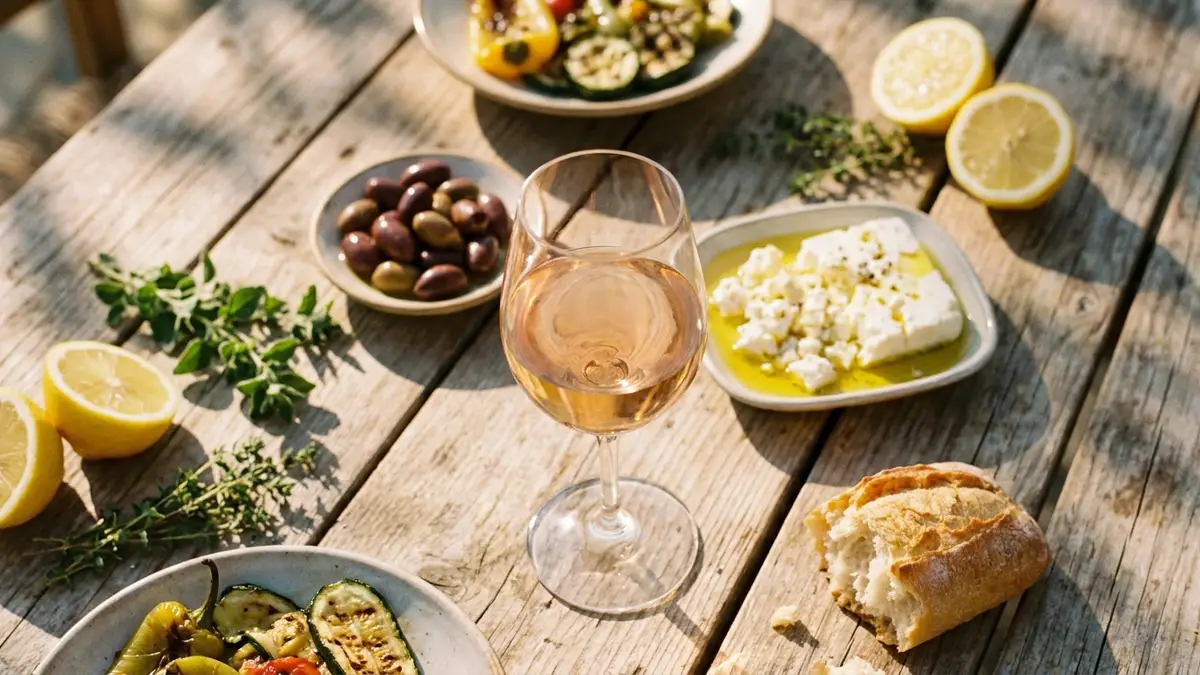
- Begin with Santorini Assyrtiko. A dry, unoaked example is the cleanest introduction to Greece's flagship white — bright, saline, and unmistakable. It pairs beautifully with grilled fish, lemon, and salt.
- Meet Greek reds through Nemea. A mid-priced Agiorgitiko from Nemea is soft, fruity, and forgiving — the gentlest doorway into the country's reds.
- Graduate to Xinomavro. Once firm tannins no longer surprise you, open a Naoussa red and look for the savory tomato-and-herb character that earns its Barolo comparison. Give it air, or a few years in the cellar.
- Add an aromatic white. Try a Mantinia Moschofilero next to the Assyrtiko to feel the gap between steely and floral.
- Taste in pairs and take notes. Greek wine rewards comparison. Set two glasses side by side, name the aromas, and score the structure rather than guessing.
Sommy turns exactly these comparisons into short, guided lessons — naming the aromas, scoring acidity and tannin, and building the vocabulary to describe what you sense. You can start practicing free at sommy.wine, then bring the method to your next bottle of Assyrtiko. To explore more regions this way, our wine regions learning path lays out the broader map.
The Reward of Learning Greek Wine
Greek wine asks a little more of a learner — the grape names are unfamiliar and the map takes a moment to settle. It gives far more back. Few countries offer this much flavor that you genuinely cannot find anywhere else, from the salt-and-stone purity of Santorini Assyrtiko to the savory grip of a mature Naoussa Xinomavro.
Start small, taste in pairs, and let each region reveal its signature one glass at a time. The Sommy app is built to make that habit stick — turning each bottle into a short, guided lesson so the next Greek wine you open is a little clearer than the last.
Sources
Frequently Asked Questions
What is the most famous Greek wine grape?
Assyrtiko is the flagship white grape, grown on the volcanic island of Santorini. It is bone-dry, high in acidity, and tastes of lemon, salt, and crushed stone. Among reds, Xinomavro from Naoussa earns the most attention for its structure and ageability, often compared to Italy's Nebbiolo.
What does Greek wine taste like?
It depends on the grape, but Greek wines share a savory, food-friendly character with bright acidity. Assyrtiko is salty and citrusy, Xinomavro is firm and earthy with high tannins and acidity, Agiorgitiko is soft and plummy, and Moschofilero is floral and light. Most are dry, fresh, and built for the table.
Is all Greek wine like Retsina?
No. Retsina is a traditional white flavored with pine resin, and it represents only a small slice of modern Greek wine. Today's producers focus on unflavored, dry wines from indigenous grapes like Assyrtiko and Xinomavro. Retsina survives as a niche style, but it is no longer the face of Greek wine.
What is Xinomavro and why is it called the Barolo of Greece?
Xinomavro is a red grape from northern Greece, mainly Naoussa. The nickname comes from its likeness to Nebbiolo, the grape behind Barolo: both are pale in color but high in tannin and acidity, with savory aromas of tomato, dried herbs, and red fruit, and both reward years of cellaring.
Why is Santorini wine so distinctive?
Santorini's vineyards grow in volcanic ash and pumice with almost no rain, so vines are trained low in a basket shape called kouloura to shelter grapes from wind and trap moisture. The volcanic soil and sea air give Assyrtiko its signature salinity, mineral edge, and searing acidity found almost nowhere else.
What is the Greek wine classification system?
Greece uses the EU framework: PDO (Protected Designation of Origin) for top regional wines like Santorini and Naoussa, PGI (Protected Geographical Indication) for broader regional wines, and a basic table-wine tier. PDO is the strictest, tying grape, place, and method together, and is the most reliable signal of regional character.
Where should a beginner start with Greek wine?
Start with a dry Assyrtiko from Santorini to meet Greece's signature white, then try a Nemea red from Agiorgitiko for an easy, fruit-forward introduction to Greek reds. Save Xinomavro for once your palate is comfortable with firm tannins. Tasting these side by side reveals how varied Greek wine really is.
What grapes are used in Greek wine?
Greece grows hundreds of indigenous varieties. The four to know first are Assyrtiko (white, Santorini), Xinomavro (red, Naoussa), Agiorgitiko (red, Nemea), and Moschofilero (pink-skinned aromatic white, Mantinia). Others worth meeting include Malagousia, Savatiano, and Vidiano, all part of Greece's revival of native grapes.
Sommy Team
LinkedInFounder & Wine Educator
The Sommy Team is building the world's most approachable wine education app, helping beginners develop real tasting skills through structured courses and AI-guided practice.