Georgian Wine Guide: 8,000 Years of Winemaking in Qvevri

By the Sommy Team — AI-assisted, human-edited.
Updated Jun 17, 2026
Contents (11)
- What Is Georgian Wine?
- The Cradle of Wine: 8,000 Years of Qvevri
- Amber Wine: White Grapes Made Like Reds
- Saperavi: Georgia's Inky Signature Red
- Rkatsiteli and Georgia's Indigenous Grapes
- Kakheti: The Heartland of Georgian Wine
- How Georgia Classifies Its Wines
- The Natural-Wine Connection
- What Makes Georgian Wine Distinctive
- How a Beginner Should Start with Georgian Wine
- The Reward of Learning Georgian Wine
TL;DR
Georgia is the cradle of wine, with an unbroken 8,000-year tradition of fermenting in buried clay qvevri vessels. This Georgian wine guide covers amber wine, the teinturier red Saperavi, the workhorse white Rkatsiteli, the Kakheti heartland, and how a beginner should begin tasting.
What Is Georgian Wine?
This Georgian wine guide begins where wine itself began. Georgia, a small country in the Caucasus between Europe and Asia, is widely recognized as the cradle of wine — the place where humans first fermented grapes some 8,000 years ago. What sets Georgian wine apart is not one grape or one style but a single unbroken method: fermenting and aging wine inside qvevri, large clay vessels buried in the earth. From that tradition come Georgia's two signatures: amber wine (skin-contact white) and dark, structured reds from the teinturier grape Saperavi. The heartland is Kakheti in the east, and the country grows hundreds of indigenous grapes found almost nowhere else. Learn the qvevri, the grapes, and the regions, and Georgia opens up beautifully.
The Cradle of Wine: 8,000 Years of Qvevri
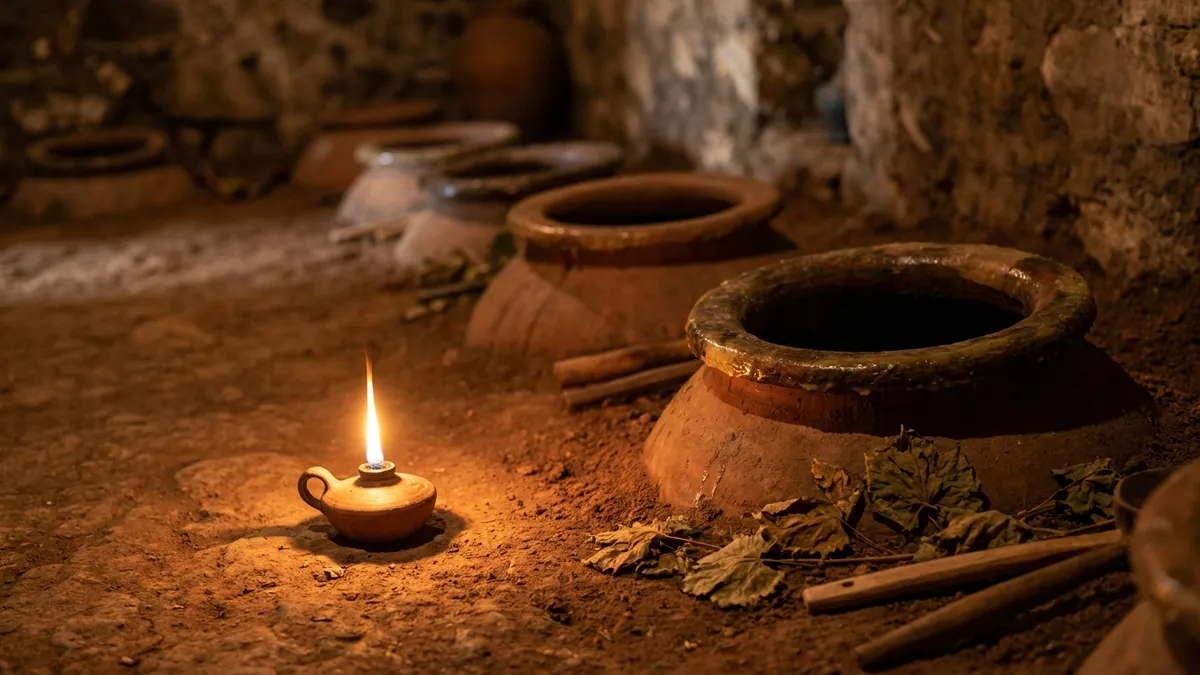
No region in this Georgian wine guide can be understood without the qvevri (pronounced roughly "kvev-ree"). A qvevri is a large, egg-shaped earthenware vessel, sometimes holding hundreds or even thousands of liters, lined with beeswax and buried up to its neck in the ground. Grapes are crushed and poured in — juice, skins, and often stems together — where they ferment with wild yeasts and then age, sometimes for months, sealed beneath the soil.
The cool, stable temperature of the buried earth does the work that a stainless-steel tank and thermostat do elsewhere. The vessel's shape encourages a slow, natural circulation of the cap of skins. It is winemaking with almost no machinery and very little intervention, and it has barely changed in eight millennia.
Archaeologists have found grape-wine residue on Neolithic pottery in Georgia dating to around 6,000 BCE, the oldest such evidence anywhere on earth. The tradition never stopped. In 2013, UNESCO added the ancient qvevri winemaking method to its list of Intangible Cultural Heritage, formally recognizing Georgia as the birthplace of the craft.
For a wider view of how old some of these vines really are, our guide to the oldest grape varieties traces the lineage that Georgia sits at the very start of.
Amber Wine: White Grapes Made Like Reds
The most distinctive thing a beginner will taste in Georgia is amber wine, often called orange wine abroad. It is white wine made using the red-wine method.
In conventional white winemaking, the juice is pressed off the skins immediately, so the wine stays pale and free of grip. In Georgia, white grapes ferment in long contact with their skins inside the qvevri — weeks or even months. That skin contact pulls color, tannin, and savory compounds out of the skins, exactly as it does for red wine.
The result is a white that behaves like a red. The color glows from deep gold to burnt amber. Typical aromas: dried apricot, orange peel, walnut, black tea, honey, and bruised apple. On the palate it carries real tannins (the drying, gripping sensation usually found only in reds), giving it grip and length. Body: medium-to-full (4/5) · Tannins: medium (3/5) · Acidity: medium-to-high (4/5).
That tannic structure is why amber wine pairs with food like a red, not a delicate white. If the idea of structure in a white wine is new, our guide to understanding tannins, acidity, and body explains exactly what your mouth is sensing and why.
Saperavi: Georgia's Inky Signature Red
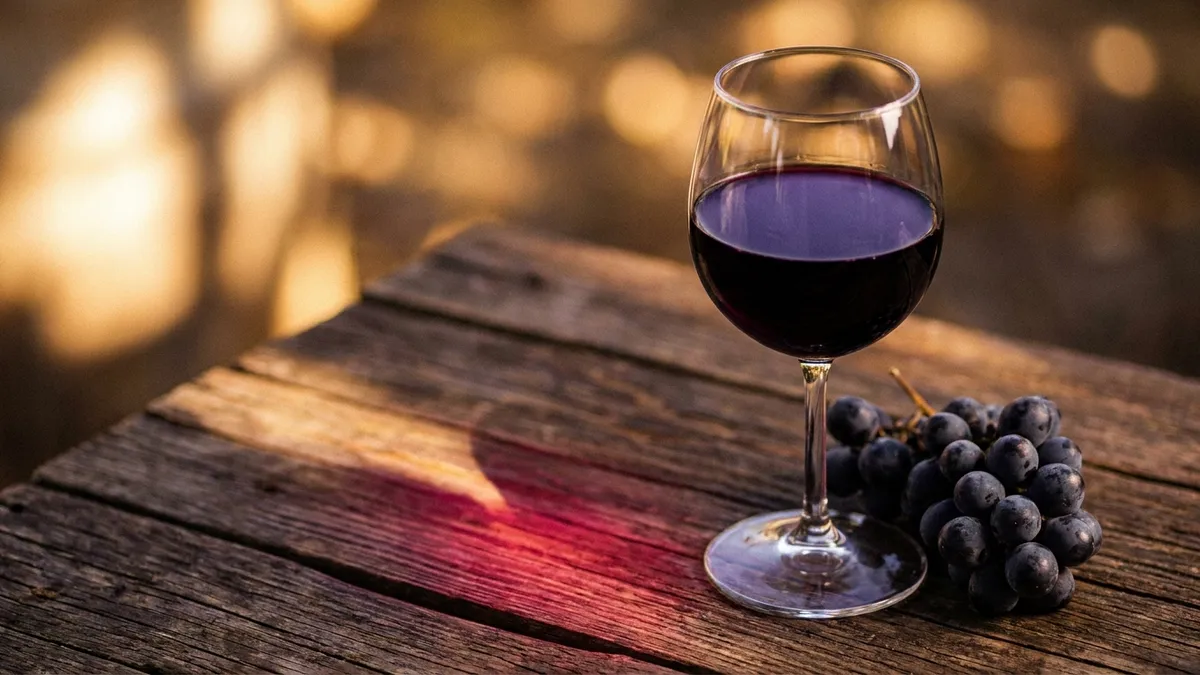
If amber wine is Georgia's most surprising style, Saperavi is its proudest red. The name means "dye" or "paint" in Georgian, and the grape earns it: Saperavi is a teinturier grape, meaning both its skin and its flesh are deeply pigmented. Most red grapes have clear juice and get their color only from the skins, but Saperavi's pulp is red too, so the wine comes out almost opaque.
That gives Saperavi unusual depth and power for a single variety. Typical aromas: black plum, blackberry, black cherry, licorice, and a savory, sometimes peppery edge. It is full-bodied with firm tannins and bright, food-friendly acidity, and it ages for many years.
- Saperavi (dry red): Inky and powerful. Body: full (5/5) · Tannins: high (4/5) · Acidity: high (4/5) · Flavor: dark fruit, plum, licorice, savory spice. The benchmark Georgian red.
- Saperavi (qvevri): The traditional version, fermented on skins and stems in clay. More rustic, earthy, and grippy, with a savory, almost dried-herb character layered over the dark fruit.
- Saperavi (semi-sweet): A historically popular style, especially the Kindzmarauli appellation, where ripe dark fruit is balanced by a touch of residual sugar. Softer and rounder than the dry version.
Saperavi is one of the great red grapes most beginners have never met. Our roundup of indigenous grapes worth trying puts it in context alongside other local varieties making a comeback, and for a deeper dive on the grape itself, see our dedicated Saperavi wine guide.
Rkatsiteli and Georgia's Indigenous Grapes
Georgia's white workhorse is Rkatsiteli (roughly "rkah-tsee-TEH-lee"), the country's most planted white grape and one of the oldest cultivated varieties anywhere. It is wonderfully versatile, which is why it appears in two very different guises.
- Rkatsiteli (fresh, modern): Pressed off its skins like a conventional white. Crisp and high in acidity with green apple, quince, and white peach. Clean and approachable — a friendly entry point.
- Rkatsiteli (qvevri amber): Fermented on its skins in clay for the traditional amber style. Richer, tannic, and savory, with dried fruit, nuts, and tea — Georgia's classic skin-contact white.
Rkatsiteli is just the headline. Georgia is thought to hold over 500 native grape varieties, an extraordinary genetic library found almost nowhere else. A beginner only needs a handful to start:
- Mtsvane: A fragrant white often blended with Rkatsiteli, adding florals and a stony freshness.
- Kisi: A characterful white, frequently made amber, with orchard fruit, citrus peel, and a gentle tannic grip.
- Khikhvi: A rarer aromatic white, prized for its richness in qvevri styles.
- Tavkveri and Shavkapito: Lighter, brighter reds from the Kartli region that contrast with Saperavi's power.
These grapes rarely leave Georgia, which is exactly what makes the country a thrilling stop for curious drinkers. The Sommy app's tasting exercises help you name the aromas in unfamiliar grapes like these, so a first glass of Rkatsiteli becomes a lesson rather than a guess. Beyond Georgia, our look at grapes to watch shows which lesser-known varieties are spreading worldwide, and our overview of the noble grapes sets the familiar reference points to compare against.
Kakheti: The Heartland of Georgian Wine
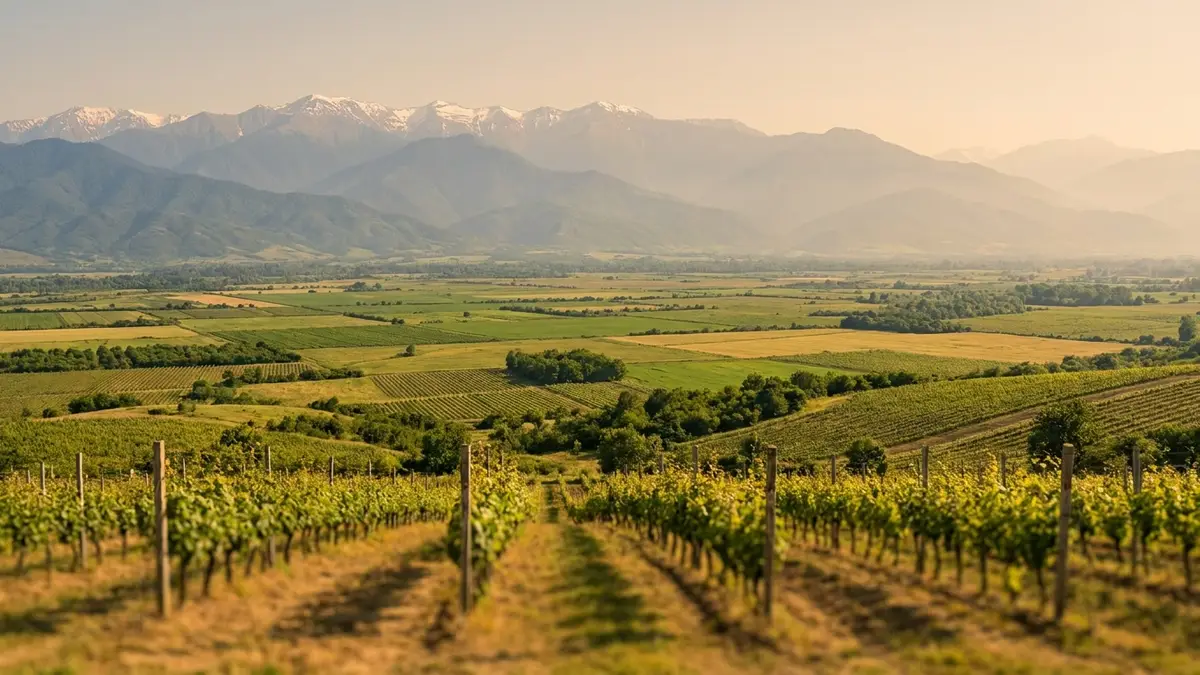
Most of what you will drink in this guide comes from one place: Kakheti, in eastern Georgia. This single region produces the large majority of the country's wine and is the spiritual home of qvevri winemaking.
Kakheti sits in and around the Alazani Valley, a broad, fertile plain that runs along the foot of the Greater Caucasus mountains. The climate is warm and continental — hot summers, cold winters, and reliable sunshine ripening the grapes fully — while the mountains feed cooling rivers and snowmelt that keep acidity fresh. This is classic terroir (the combination of soil, climate, and altitude that shapes a wine), and it is why Kakheti can grow both powerful Saperavi and high-acid Rkatsiteli on the same plain.
The other regions are smaller but worth knowing as you explore:
- Kakheti (east): The volume and tradition heart. Saperavi reds, Rkatsiteli whites, and the deepest qvevri culture. Home to appellations like Kindzmarauli, Tsinandali, and Mukuzani.
- Kartli (central): Cooler and flatter, around the capital. Known for fresher whites and sparkling, plus lighter local reds.
- Imereti (west): A humid, green region with its own gentler take on skin contact, using less stem and shorter maceration than Kakheti.
- Racha-Lechkhumi (northwest): High-altitude and small, famous for naturally semi-sweet reds like the prized Khvanchkara style.
How Georgia Classifies Its Wines
Georgia does not use a tiered quality pyramid like Burgundy's, but it does have a system of protected place names. The key term is the Appellation of Origin (PDO) — a legally defined geographic name that guarantees where the wine comes from and, usually, which grapes and style are permitted.
Some appellations a beginner will see most often:
- Tsinandali: A dry white blend, classically Rkatsiteli and Mtsvane, from the central Kakheti area. Fresh and structured.
- Mukuzani: Considered the benchmark dry Saperavi, aged in oak. Firmer and more serious than everyday Saperavi.
- Kindzmarauli: A naturally semi-sweet Saperavi from a defined Kakheti zone — ripe, dark, and gently sweet.
- Khvanchkara: A naturally semi-sweet red from high-altitude Racha, made from local grapes Aleksandrouli and Mujuretuli.
Alongside appellation, the single most useful word on a Georgian label is qvevri. If a bottle says qvevri (or the older term churi), it was made the traditional way — expect skin contact, savory depth, and grip, whether the wine is red or amber. A label without it is more likely a cleaner, modern, tank-made style. That one word tells you more about how the wine will taste than almost anything else.
The Natural-Wine Connection
Walk into a natural-wine bar anywhere in the world and you will eventually hear Georgia mentioned. There is a good reason: the modern natural-wine movement — wine made with wild yeasts, minimal additives, and as little intervention as possible — looks a lot like what Georgia has done for 8,000 years.
Traditional qvevri winemaking ferments with the grapes' own wild yeasts, uses extended skin contact, adds little or no sulfur, and lets the buried clay regulate temperature without electricity. Those are precisely the principles natural-wine producers rediscovered and championed in recent decades. Many of them point to Georgia as the original template, the proof that low-intervention wine is not a fad but the oldest way of all.
Georgia did not invent natural wine in this century. It simply never stopped making it.
That said, this Georgian wine guide should set one expectation straight. Not every Georgian bottle is "natural," and the country also produces plenty of clean, modern, conventionally made wine for everyday drinking. The qvevri tradition and the natural-wine philosophy overlap heavily, but they are not the same thing. Knowing the difference helps you choose a bottle that matches what you actually want in the glass.
What Makes Georgian Wine Distinctive
Several regions make great wine, but a few traits set Georgia apart for a learner:
- The method is the identity. Elsewhere the grape or the appellation leads. In Georgia, the buried qvevri shapes nearly everything — color, texture, and savory character.
- White wine with grip. Amber wine gives beginners a category that does not exist in most wine aisles: a white you chew like a red. It rewires what you think a white can be.
- A teinturier signature red. Saperavi's red flesh makes a naturally inky, powerful wine from a single grape, with no blending needed.
- A genetic treasure chest. With hundreds of native varieties, Georgia offers flavors literally unavailable anywhere else.
- An unbroken living tradition. This is not a revival. It is a continuous practice older than written history, still done in family cellars today.
Comparing Georgia with other ancient and emerging wine cultures sharpens all of this. Our overview of French wine regions shows how a classification-driven country differs from a method-driven one like Georgia. For another ancient wine culture in the middle of a modern renaissance, our Israeli wine guide covers a region with a similarly deep history that is rebuilding its reputation on international varieties rather than a single native method.
How a Beginner Should Start with Georgian Wine
You do not need a trip to Kakheti to understand Georgian wine. The smartest path is to taste deliberately and pay attention to the qvevri character. A practical order:
- Start with a dry Saperavi. Meet Georgia's signature red first. Note the opaque color, the dark fruit, and the savory, grippy structure. A Mukuzani is a reliable, more refined version.
- Try a fresh, modern Rkatsiteli next. A clean, high-acid white eases you into Georgian whites before the more challenging amber styles.
- Then taste a qvevri amber wine. A skin-contact Rkatsiteli or Kisi is the moment Georgia becomes unforgettable. Slow down, feel the tannin in a white, and name the dried-fruit and tea notes.
- Compare a modern white and an amber side by side. Pour them together. Same country, sometimes the same grape, wildly different mouthfeel — terroir and method made obvious.
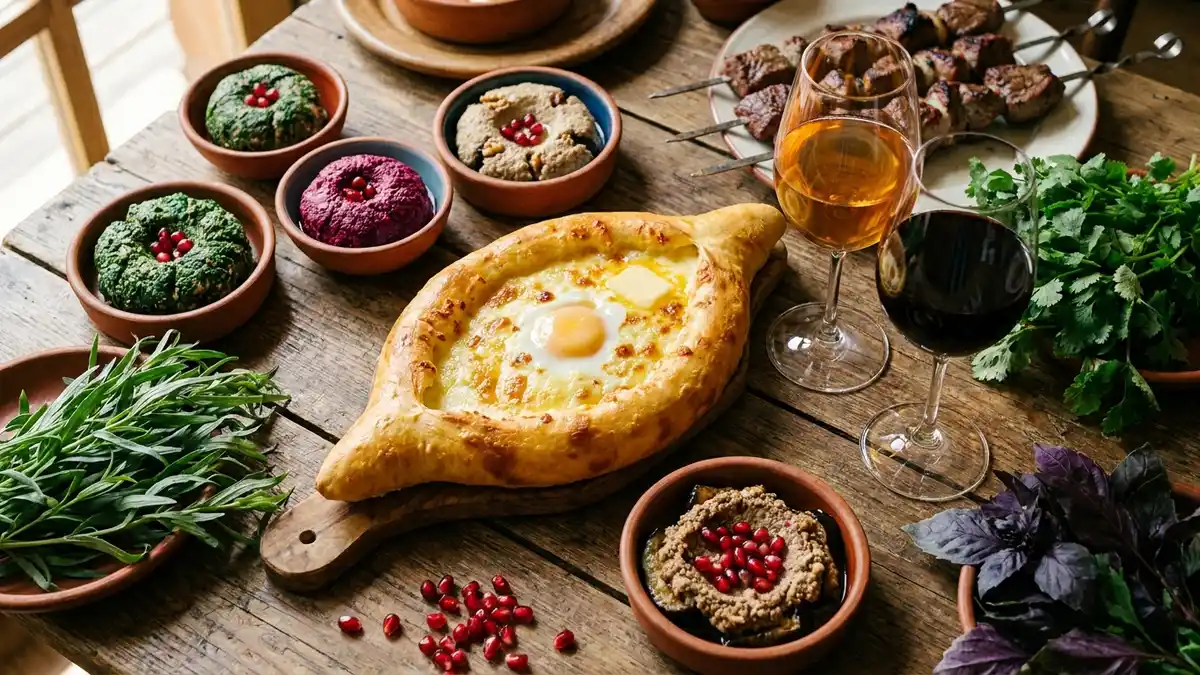
- Pair with hearty food. Georgian wines, especially amber and Saperavi, shine with rich, savory dishes. Tannic wine wants fat and protein; the grip softens against it.
Build the tasting habit as you go. Our guide to how to taste wine gives you the step-by-step method — look, smell, sip — so a glass of unfamiliar amber wine becomes a structured experience rather than a shrug.
Sommy turns these comparisons into guided exercises — naming the aromas, scoring the tannin and body, and building the vocabulary to describe what you sense. You can start practicing free at sommy.wine, then bring the method to your first bottle of qvevri wine.
The Reward of Learning Georgian Wine
Georgia gives a beginner something no other region can: a chance to taste wine the way the first winemakers made it, 8,000 years ago, in clay buried under the earth. The amber whites, the inky Saperavi, the hundreds of grapes you will not find on any supermarket shelf — none of it is gimmick. It is a continuous living tradition that the rest of the wine world is only now circling back to.
Start with one Saperavi and one amber wine, taste them slowly, and let the qvevri character reveal itself. The Sommy app is built to make that habit stick — turning each bottle into a short, guided lesson so the next Georgian wine you open is a little clearer than the last.
Sources
Frequently Asked Questions
Why is Georgia called the cradle of wine?
Archaeologists have found wine residue on pottery in Georgia dating back roughly 8,000 years, the oldest evidence of grape winemaking anywhere. The country has fermented wine continuously ever since, mostly in buried clay vessels. UNESCO added the qvevri method to its Intangible Cultural Heritage list in 2013, recognizing Georgia as the birthplace of the craft.
What is a qvevri?
A qvevri is a large egg-shaped clay vessel buried up to its neck in the ground. Grapes, juice, skins, and sometimes stems ferment and age inside it. The cool earth keeps the temperature stable, and the shape encourages gentle circulation. This method is around 8,000 years old and is still used across Georgia today, especially in Kakheti.
What is amber wine, also called orange wine?
Amber wine is white wine made like a red. The juice ferments in long contact with the grape skins, which adds color, tannin, and texture you would normally only find in reds. The result ranges from gold to deep amber, with grippy structure and savory, dried-fruit, and tea-like flavors. Georgia has made it in qvevri for millennia.
What does Saperavi wine taste like?
Saperavi is a deep, inky red with dark fruit, plum, blackberry, and a savory, sometimes spicy edge. It is a teinturier grape, meaning both its skin and flesh are red, so it produces unusually dark, full-bodied wine with firm tannins and bright acidity. It ages well and stands up to rich, hearty food.
What is the main wine region in Georgia?
Kakheti, in the east near the Alazani Valley and the Caucasus mountains, produces the large majority of Georgian wine. It is the heartland of qvevri winemaking and home to both Saperavi reds and Rkatsiteli whites. Other regions include Kartli, Imereti, and the high-altitude Racha-Lechkhumi, but Kakheti dominates in volume and tradition.
Is Georgian wine the same as natural wine?
Not identical, but closely linked. Traditional qvevri wine uses wild yeasts, long skin contact, and minimal additions, which overlaps heavily with the modern natural-wine philosophy. Many natural-wine drinkers point to Georgia as the original template. Georgia also makes conventional, cleaner-styled wines, so not every Georgian bottle fits the natural category.
How should a beginner start with Georgian wine?
Start with a dry Saperavi to meet Georgia's signature red, then try a qvevri-made amber Rkatsiteli to experience skin-contact white. Taste them slowly and note the tannin and savory character. A modern, cleaner-styled white can ease you in before the more rustic qvevri styles. Pair with hearty food to see the wines at their best.
What grape is Rkatsiteli?
Rkatsiteli is Georgia's most planted white grape and one of the oldest cultivated varieties in the world. It gives crisp, high-acid wine with green apple, quince, and white-peach notes when made in a fresh modern style, or a richer, tannic, amber character when fermented on its skins in qvevri. It is versatile and food-friendly.
Sommy Team
LinkedInFounder & Wine Educator
The Sommy Team is building the world's most approachable wine education app, helping beginners develop real tasting skills through structured courses and AI-guided practice.