Israeli Wine Guide: Modern Winemaking in an Ancient Land

By the Sommy Team — AI-assisted, human-edited.
Updated Jul 21, 2026
Contents (11)
- What Is Israeli Wine?
- A 4,000-Year Head Start, and a Very Long Gap
- How the Modern Industry Was Built Twice
- Where Israeli Wine Grows: The Five Regions
- Why Altitude Is the Whole Story
- The Grapes: Cabernet Leads, Carignan Endures
- The Ancient Varieties Coming Back
- What Kosher Actually Means for the Wine in Your Glass
- What Israeli Wine Actually Tastes Like
- Israeli Wine Guide: How a Beginner Should Start
- Israeli Wine in the Wider Wine World
TL;DR
Israel farms about 5,500 hectares of vines across five regions, from the volcanic Golan plateau to the Negev desert. Cabernet Sauvignon leads, Carignan endures, and altitude does the heavy lifting. This Israeli wine guide covers the regions, the grapes, kosher production, and where a beginner should start.
Israel makes serious wine in a country most drinkers still file under archaeology. This Israeli wine guide covers a young-feeling industry built on very old ground: roughly 5,500 hectares of vineyard, smaller than many single appellations in France, that has been rebuilt from near-nothing twice in the last 150 years. The wines are warm-climate reds and whites grown, almost always, higher up the hill than you would expect.
What Is Israeli Wine?
Israeli wine is warm-climate wine made at altitude. Around 5,500 hectares of vines are split across five official regions — Galilee, Shomron, Samson, Judean Hills, and the Negev — producing roughly 40 to 45 million bottles a year from more than 300 wineries. Cabernet Sauvignon is the most-planted grape at about 21% of the harvest, followed by Carignan at 15% and Merlot at 14%. The great majority of volume is kosher-certified, because the three largest producers are. The defining move of the modern era, dating to 1983, has been climbing: planting between 500 and 1,200 metres so that cold nights protect the acidity that hot Mediterranean days would otherwise burn off.
A 4,000-Year Head Start, and a Very Long Gap
Wine has been made on this land since roughly 4000 BC, and the archaeology is unusually vivid. At Tel Kabri, a Canaanite palace occupied around 1900 to 1600 BC, excavators uncovered a storage room holding about 40 large jars with a combined capacity near 2,000 litres — the equivalent of some 3,000 modern bottles. Residue analysis of 32 of those jars found tartaric acid, the chemical fingerprint of wine, alongside deliberate additions of honey, cedar oil, juniper, and storax resin. This was not rough farmhouse fermentation. It was a flavoured, formulated product made to a recipe.
That continuity broke. Roman destruction and Jewish dispersal dismantled the trade, the seventh-century arrival of Islamic prohibition led to vineyards being uprooted, and under Ottoman rule wine production was pushed down to small sacramental batches. For centuries the vineyards effectively went quiet, surviving mainly at monasteries. It is a sharper break than the one in Lebanese wine or Georgian wine, where production limped on more continuously.
How the Modern Industry Was Built Twice
The first rebuild was philanthropic. In 1882, Baron Edmond de Rothschild began pouring money into Ottoman Palestine's vineyards — eventually more than 11 million francs — planting Bordeaux varieties and building cellars at Rishon LeZion in 1890 and Zichron Ya'akov in 1892. It worked commercially and even critically: a Rishon LeZion wine took a gold medal at the 1900 Paris Exhibition, in the same show as the 1899 vintages of Lafite and Margaux. In 1906 Rothschild handed the operation to the growers, who traded under the name Carmel.
Then it stagnated. For most of the twentieth century the industry ran on volume, producing generic and frequently sweet wine at high yields. The second rebuild came in 1983, when a group of kibbutzim and moshavim founded the Golan Heights Winery on the volcanic plateau in the north. It arrived with cool-site selection, temperature-controlled fermentation, and computerised irrigation, and its first release in 1984 reset expectations for the entire country.
Small producers followed. Margalit, founded in 1989, is generally credited as the first true quality-focused boutique. The count went from about 70 wineries in 2000 to 140 by 2005 and past 300 today, and the centre of gravity moved uphill — away from the hot coastal plain toward the Judean Hills, Upper Galilee, and the desert highlands.
Where Israeli Wine Grows: The Five Regions
| Region | Elevation | Climate and soil | What it does best |
|---|---|---|---|
| Galilee (incl. Golan Heights) | 350–1,200 m | Cold nights, volcanic basalt and tuff | Cabernet Sauvignon, Chardonnay, high-elevation Syrah |
| Shomron | 0–850 m | Mediterranean, limestone and terra rossa | The largest region by area, and the historic Rothschild heartland |
| Samson | 0–200 m | Hot coastal plain rising into limestone foothills | The fastest-growing zone, with over a quarter of national plantings |
| Judean Hills | 500–1,000 m | Warm days, cold nights, thin stony limestone | Boutique reds and textured, mineral whites |
| Negev | 500–1,000 m | Desert, 50–150 mm annual rain, drip irrigation | Heat-adapted reds and climate-adaptation research |
Note that the Golan Heights is a sub-zone of Galilee rather than a sixth region, despite being listed as a separate one in a lot of popular wine writing.
Galilee and the Golan Heights
Galilee is the quality engine. Upper Galilee climbs from 350 to 1,000 metres near Mount Meron, with heavy volcanic, gravel, and terra rossa soils and a genuinely wet 800 to 1,000 mm of annual rain. Within Galilee sits the Golan Heights, a basalt plateau first planted in 1976 and rising to 1,200 metres, where the highest sites see snow in winter and cool air spills down off Mount Hermon.
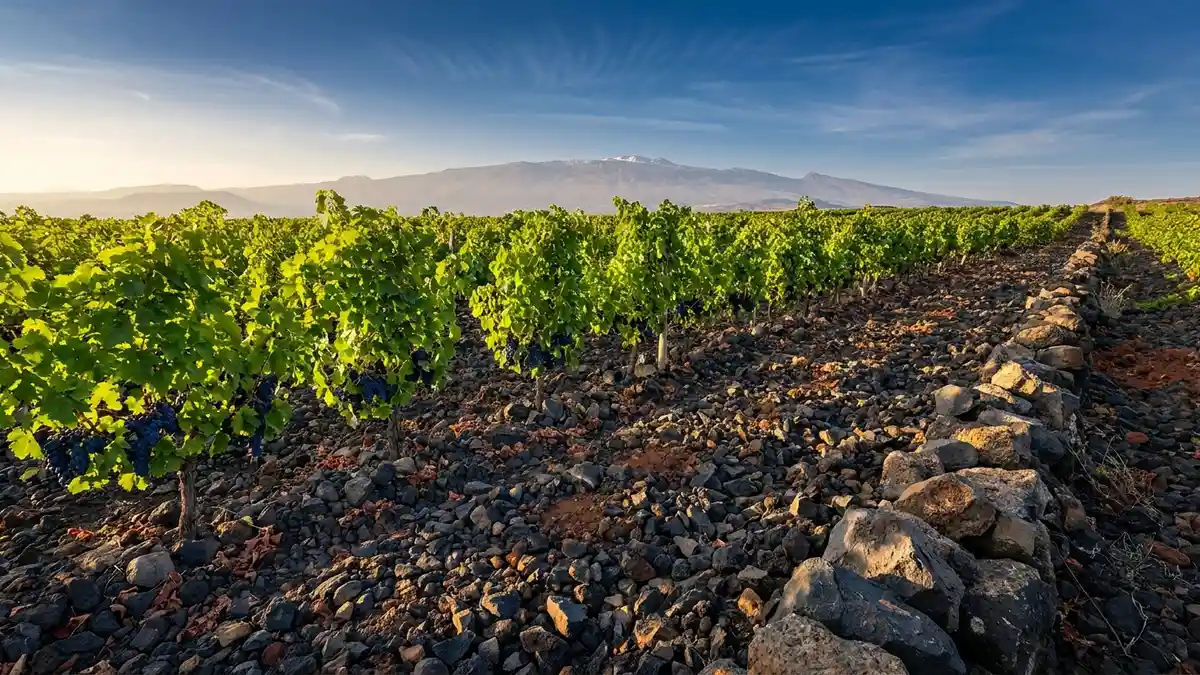
The basalt matters. It holds water unusually well, which lets vines root deeply and ride out a rainless summer without irrigation stress, and it drives the smoky, stony quality that shows up in the best northern reds.
Shomron, Samson, and the Judean Hills
Shomron is the biggest region by area, running from the coastal Sharon Plain up through Mount Carmel to hills at 850 metres. It is where Rothschild planted, and it still carries much of the country's volume on calcareous clay and terra rossa.
Samson covers the central coastal plain and the Judean foothills. The coastal part is hot, humid, and low, but the foothills around Latrun and Adulam have become the fastest-growing new-vineyard zone in the country, now accounting for more than a quarter of all Israeli plantings.
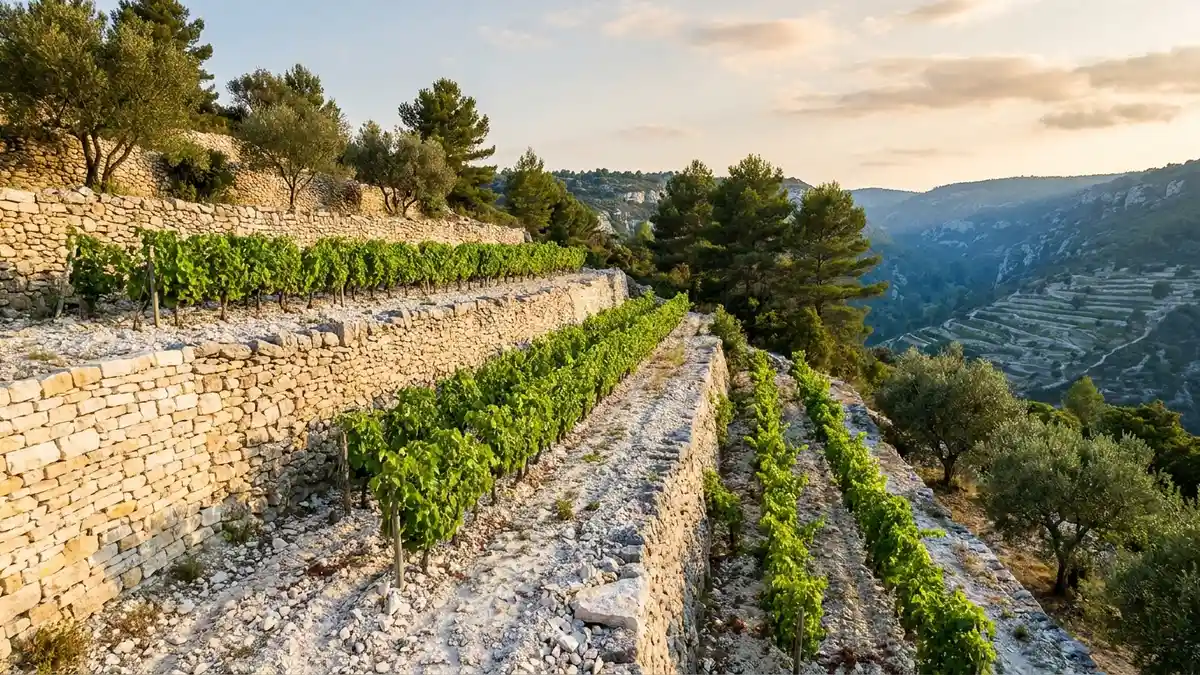
The Judean Hills, ringing Jerusalem at 500 to 1,000 metres, hold the densest concentration of boutique wineries. The soils are thin, stony limestone and terra rossa, the rainfall is modest at around 500 mm, and the hillsides are terraced with dry-stone walls that in places are genuinely ancient.
The Negev
The Negev should not work. The Ramat Arad sector gets about 150 mm of rain a year and the central highlands as little as 50 to 100 mm, so every vine depends on drip irrigation. What the desert offers in exchange is elevation of 700 to 1,000 metres, very cold nights, morning mist, and air so dry that fungal disease pressure nearly disappears.
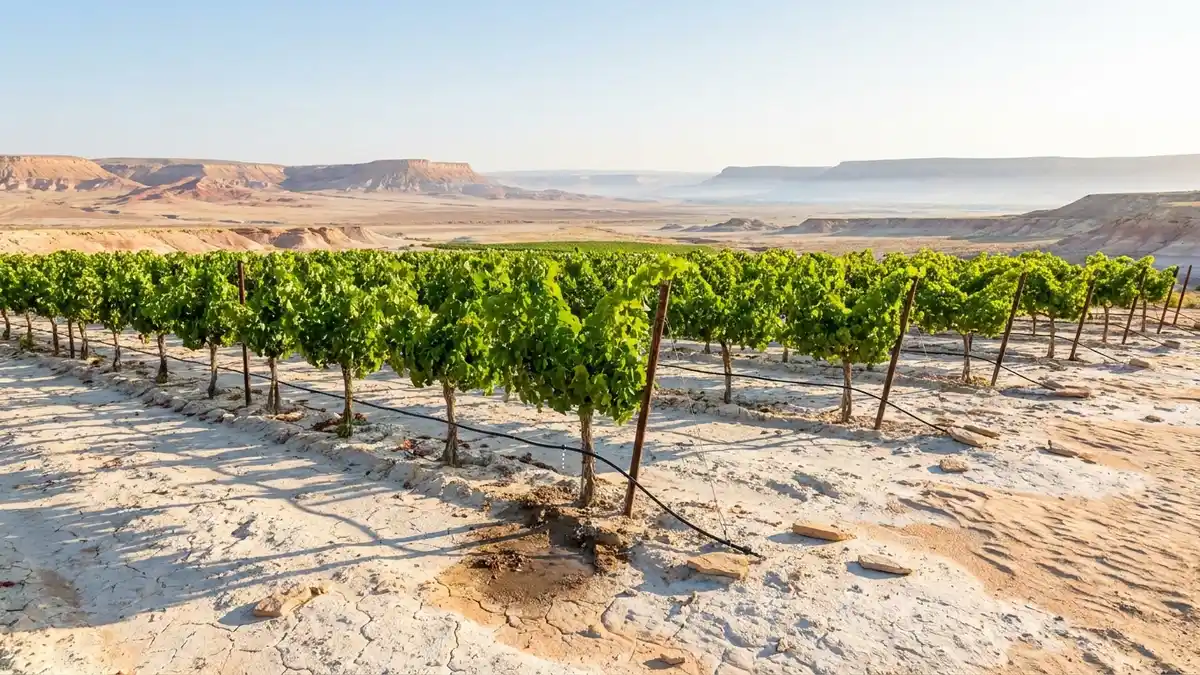
It also has history. A 2023 study reconstructed ancient DNA from a lost Negev Highlands grape connected to the Late Antiquity "Gaza wine" trade, so desert viticulture here is a revival rather than an invention.
Why Altitude Is the Whole Story
If you remember one number from this Israeli wine guide, make it the daily temperature swing: 15 to 20°C at the high sites. That gap is what makes fresh wine possible in a hot country.
Grapes accumulate sugar in the heat of the day and burn through acid overnight when it stays warm. Cool nights slow that respiration, so acidity — the tartness that makes wine feel lively rather than flat — survives all the way to harvest, while the fruit still ripens fully. This is the same mechanism that lifts high-altitude wine in Argentina and the Bekaa Valley, and it is a good practical illustration of what terroir actually means: not mystique, but measurable inputs producing predictable differences in the glass.
The Negev doubles as a climate laboratory. One controlled study tracked 30 cultivars across two desert sites separated by a consistent 1.5°C average difference and found that the warmer site pulled white-grape harvest dates forward by up to two weeks. That is a concrete measurement of how a small warming increment reshapes a growing season, and it is why growers there are experimenting with shade-forcing trellises and canopy nets.
The Grapes: Cabernet Leads, Carignan Endures
Israel is unusual among ancient wine lands in that its modern industry is built almost entirely on international varieties. By share of harvest tonnage:
- Cabernet Sauvignon — about 21%, the flagship, and the backbone of most serious reds. If you want the grape's full picture, see our Cabernet Sauvignon guide.
- Carignan — about 15%, down from a historic 40%. Old plantings are increasingly bottled on their own rather than blended away, echoing the old-vine Carignan revival in Languedoc and Priorat.
- Merlot — about 14%, usually a blending partner. See our Merlot guide for the grape's range.
- Syrah — about 8%, and arguably the country's most exciting red at altitude. The Syrah and Shiraz distinction is worth knowing before you taste one.
- Argaman — about 4%, a local crossing of Carignan and Souzão bred for yield rather than finesse.
Whites lean on Chardonnay and Sauvignon Blanc, particularly from cooler high-elevation sites. Rhône whites and Grenache-based blends have gained ground as growers lean further into Mediterranean varieties suited to the heat.
The Ancient Varieties Coming Back
The most interesting research in Israeli wine is not about Cabernet at all. Over more than a decade, a team at Ariel University led by Professor Elyashiv Drori collected roughly 600 wild grape plants representing more than 90 distinct varieties, screening them for winemaking potential.
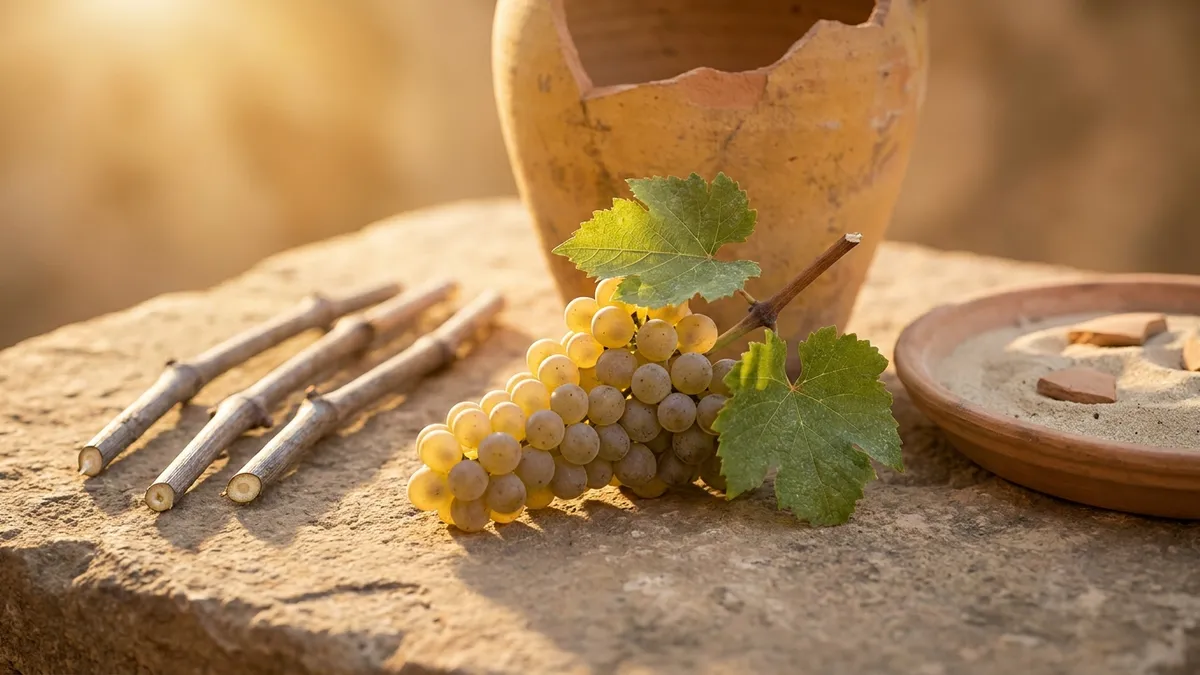
A few have made it into bottles. Marawi, also called Hamdani, is a white grape whose lineage researchers have traced to a reference in the Babylonian Talmud around AD 220; Recanati released the first modern commercial bottling in 2014, and it was reviewed at 90 points by Wine Advocate. Bittuni is the red equivalent. Dabouki, another old white, never fully disappeared — the Cremisan monastery near Bethlehem has used it continuously, making it the rare unbroken thread rather than a revival.
The scientific stakes are larger than one country's wine list. A 2021 study in Nature Communications sequencing 204 grapevine accessions placed the domestication of wine grapes in Western Asia roughly 8,000 years ago, with Levantine wild vines central to the story. Israeli wild-grape samples made up around 10% of that dataset. In other words, these are not merely local curiosities — they sit close to the root of the family tree that produced the indigenous grapes worth seeking out everywhere else.
What Kosher Actually Means for the Wine in Your Glass
Kosher status is a set of handling rules, not a recipe. From the moment grapes reach the winery until the bottle is sealed, only Sabbath-observant Jewish staff may handle the wine and equipment. Animal-derived fining agents such as non-kosher gelatin and isinglass are prohibited, so producers use bentonite clay or plant-based alternatives instead. Under shmita, the sabbatical year, agricultural land in Israel lies fallow every seventh year, which producers manage through stored juice and other permitted mechanisms.
Mevushal is the one term worth knowing as a drinker, and kosher wine explained sets out when you need it. A mevushal wine has been flash-pasteurised — heated very rapidly to roughly 80°C, depending on the certifying body, then cooled immediately — which allows anyone to pour and serve it without affecting its kosher status. That is why it is standard in restaurants, hotels, and catering, where the serving staff will not all be Sabbath-observant.
Here is the part that matters for taste: none of these rules touch viticulture, fermentation temperature, oak regime, or blending. A kosher wine and a non-kosher wine made from the same fruit in the same way taste the same. The stubborn "kosher wine is sweet and syrupy" stereotype comes from sacramental Kiddush wines, which are a distinct category — closer in intent to the historic sweet styles covered in our dessert wine guide than to modern dry table wine. Since the country's three biggest producers are all kosher-certified and account for over 80% of the domestic market, most Israeli wine you encounter will be kosher, including bottles that critics score in the nineties.
What Israeli Wine Actually Tastes Like
Typical Israeli red aromas
Fruit
- Black Currant
- Black Cherry
- Blackberry
Spice/Herbal
- Black Pepper
- Dried Herbs
- Bay Leaf
Earthy/Mineral
- Tar
Oak/Aged
- Smoke
- Cedar
- Leather
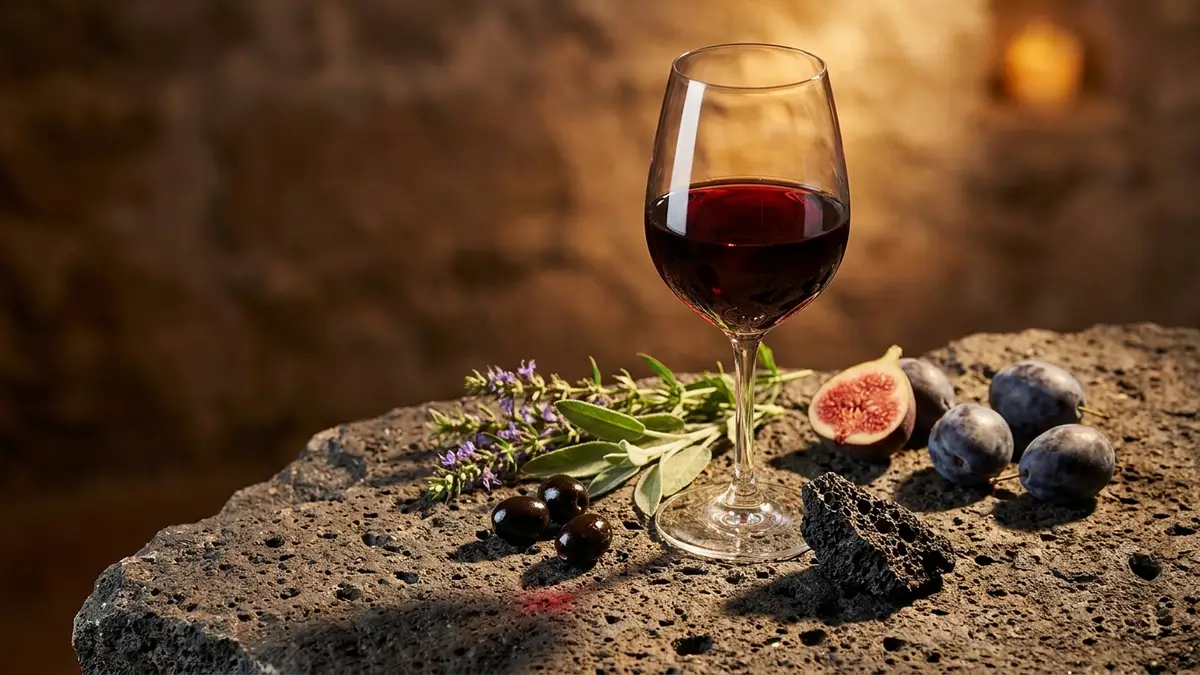
Israeli reds are ripe and dense, with dark fruit at the centre — blackcurrant, black cherry, blackberry — carried by firm tannins (the drying, gripping sensation on your gums) and generous alcohol. What separates the good ones from merely sunny ones is the savory half: dried Mediterranean herbs, black pepper, smoke and tar, sometimes a bay-leaf or aniseed note, and a stony finish from those volcanic and limestone soils.
Critics writing about Israeli Syrah reach for northern Rhône vocabulary — smoke, tar, garrigue herbs, tannic tension — rather than the sweeter language of New World Shiraz. That tells you most of what you need to know about the style.
Whites are brighter than the latitude suggests. Judean Hills and Galilee blends of Sauvignon Blanc and Chardonnay show citrus and pear with a light tropical lift and real texture, rather than the flabby warmth a hot country would normally produce.
Israeli Wine Guide: How a Beginner Should Start
Work through it in three steps.
- Start with a Cabernet Sauvignon or Bordeaux-style blend from Galilee, the Golan Heights, or the Judean Hills. This is the house style at its most self-assured. Serve it at 16 to 18°C with grilled lamb, roasted eggplant, or anything charred.
- Move to a high-altitude Syrah and look specifically for the savory notes — pepper, smoke, herbs — against the dark fruit. Comparing it side by side with a warm-climate Shiraz makes the altitude effect obvious.
- Finish with an indigenous white such as Marawi if you can find one. It will not taste like anything else on the shelf, and it is the clearest way to taste the difference between a 150-year-old industry and a 4,000-year-old wine culture.
Tasting two wines side by side is the fastest way to build real vocabulary, because the contrast does the teaching. The Sommy app walks you through structured comparisons like these step by step, so you learn to name what you are tasting instead of guessing at it.
Israeli Wine in the Wider Wine World
Israel sits awkwardly across the usual categories, which is precisely what makes it useful to learn. By history and geography it is about as Old World as a place can be. By practice — international varieties, New World vineyard technology, varietal labelling, no inherited appellation law — it is unmistakably New World. If you have read our comparison of Old World and New World wine, Israel is the case study that shows where the framework stops working.
Its closest stylistic neighbours are worth tasting alongside it. Lebanese reds from the Bekaa Valley share the high-altitude Mediterranean formula with a more French-influenced blend. Greek wine offers the same ancient-roots-modern-execution arc but built on native grapes. And South Africa provides the closest parallel for old-vine revival in a warm Mediterranean climate.
The reward for learning Israeli wine is not just a new region on the list. It is a clean demonstration that altitude, not latitude, sets the ceiling on freshness — a lesson that transfers to every warm-climate wine you will ever taste. Sommy's regional courses build exactly that kind of comparative instinct, one glass at a time.
Sources
- Expert's Choice: Israel — Decanter, 2023
- The genomes of 204 Vitis vinifera accessions reveal the origin of European wine grapes — Nature Communications, 2021
- Characterizing a Middle Bronze Age Palatial Wine Cellar from Tel Kabri, Israel — PLOS ONE, 2014
- Israel's Grape Varieties — Adam Montefiore, Wines of Israel
Frequently Asked Questions
Where is Israeli wine made?
Israel has five official wine regions: Galilee in the north, Shomron along the coast and Carmel range, Samson on the central plain and Judean foothills, the Judean Hills near Jerusalem, and the Negev desert in the south. The Golan Heights, a high volcanic plateau, is a sub-zone of Galilee and produces many of the country's most acclaimed wines.
What grapes are used in Israeli wine?
International varieties dominate. Cabernet Sauvignon accounts for roughly 21% of the harvest, Carignan 15%, Merlot 14%, and Syrah 8%. Argaman, a local crossing of Carignan and Souzão, makes up about 4%. Chardonnay and Sauvignon Blanc lead the whites. A small revival movement is also bottling indigenous grapes such as Marawi, Bittuni, and Dabouki.
Does kosher certification affect how the wine tastes?
Not in itself. Kosher rules govern who handles the wine and which fining agents are permitted, not how grapes are grown or fermented. A kosher wine and a non-kosher wine made identically will taste the same. The old stereotype of sweet, syrupy kosher wine comes from sacramental Kiddush bottlings, which are a separate category from modern dry table wine.
What does Israeli red wine taste like?
Expect ripe, dense dark fruit — blackcurrant, black cherry, blackberry — with firm tannins and generous alcohol. The better altitude sites add a savory counterpoint: dried Mediterranean herbs, black pepper, smoke, tar, and a stony edge. Critics often reach for northern Rhône vocabulary when describing Israeli Syrah rather than sweet New World Shiraz language.
How can a hot country like Israel make fresh wine?
By planting high. Vineyards sit between roughly 350 and 1,200 metres, where the daily temperature swing reaches 15 to 20°C. Hot days ripen the fruit fully while cold nights slow sugar accumulation and preserve natural acidity. Volcanic basalt soils on the Golan plateau hold water well, letting vines root deeply and survive dry summers.
What are Marawi and Bittuni?
They are indigenous Levantine wine grapes that nearly vanished after European varieties arrived in the 1880s. Marawi, also called Hamdani, is a white grape traced by researchers at Ariel University to a reference in the Babylonian Talmud around AD 220. Recanati bottled the first modern commercial Marawi in 2014. Bittuni is its red counterpart.
Where should a beginner start with Israeli wine?
Start with a Cabernet Sauvignon or a Bordeaux-style red blend from Galilee, the Golan Heights, or the Judean Hills — that is the country's house style at its most confident. Serve it around 16 to 18°C with grilled lamb or eggplant. Move on to a high-altitude Syrah, then try an indigenous white to taste the older story.
Sommy Team
LinkedInFounder & Wine Educator
The Sommy Team is building the world's most approachable wine education app, helping beginners develop real tasting skills through structured courses and AI-guided practice.