Lebanese Wine Guide: One of the Oldest Wine Regions on Earth

By the Sommy Team — AI-assisted, human-edited.
Updated Jun 17, 2026
Contents (10)
- What Is Lebanese Wine?
- The Phoenician Roots of Lebanese Wine
- Where Lebanon Grows: The Bekaa Valley
- The Red Blends That Define Lebanon
- How Lebanon Compares to Other Mediterranean Reds
- The Native White Grapes: Obeidi and Merwah
- Resilience Through Conflict
- How a Beginner Should Start with Lebanese Wine
- Lebanese Wine in the Wider Wine World
- The Reward of Learning Lebanese Wine
TL;DR
Lebanon is one of the oldest wine regions on earth, with the high-altitude Bekaa Valley at its heart. Most bottles are sun-ripe red blends of Cinsault, Carignan, Grenache, Syrah, and Cabernet, plus whites from native Obeidi and Merwah. This Lebanese wine guide shows beginners where to start.
What Is Lebanese Wine?
This Lebanese wine guide begins with a claim few regions can make: Lebanon is one of the oldest wine regions on earth, with vines tended on the same land since the time of the Phoenicians over three thousand years ago. The heart of the modern industry is the Bekaa Valley, a high plateau in the east where hot, dry days and cool mountain nights ripen grapes fully while keeping them fresh. Most bottles are generous red blends built on Cinsault, Carignan, and Grenache, rounded out with Cabernet Sauvignon and Syrah, while whites come from the native Obeidi and Merwah grapes as well as international varieties. Learn the valley, the blend, and the heritage, and Lebanese wine opens up quickly.
The Phoenician Roots of Lebanese Wine
Long before France or Italy had a wine culture, the coast that is now Lebanon was home to the Phoenicians, a seafaring people who traded wine across the entire Mediterranean. They carried vines and winemaking knowledge to Greece, southern Italy, North Africa, and Spain, helping seed the wine map we know today. Wine from this shore was prized in the ancient world, shipped in distinctive clay vessels to courts and temples across the sea.
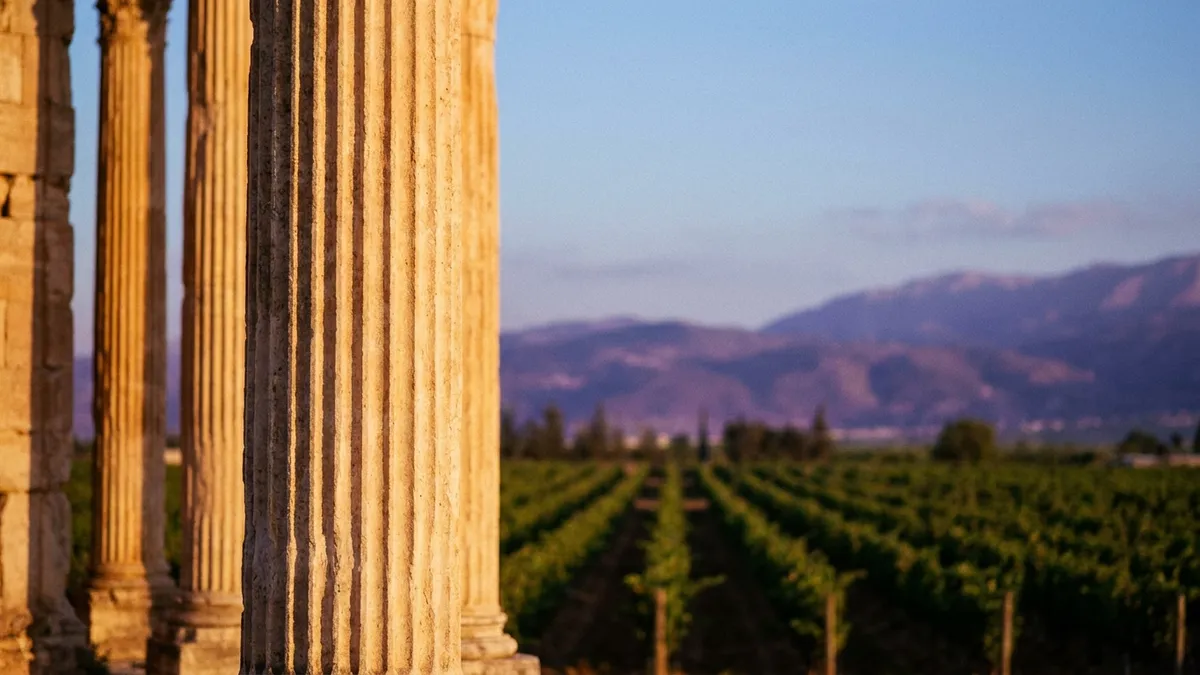
That deep history is not a marketing flourish. It is the reason Lebanese wine carries a sense of continuity that newer regions cannot fake. The vine has grown here without real interruption through Roman, Byzantine, Arab, Crusader, and Ottoman rule. The famous Roman temple complex at Baalbek, dedicated in part to Bacchus, the god of wine, still stands in the Bekaa Valley as a reminder of how central wine has always been to this land.
When the modern industry took shape in the nineteenth century, growers planted French grapes — especially the southern Rhône and Languedoc varieties suited to a hot, sunny climate. That choice still defines the bottle in your hand. The result is a wine culture that is ancient at its root and Mediterranean-French in its grapes.
Where Lebanon Grows: The Bekaa Valley
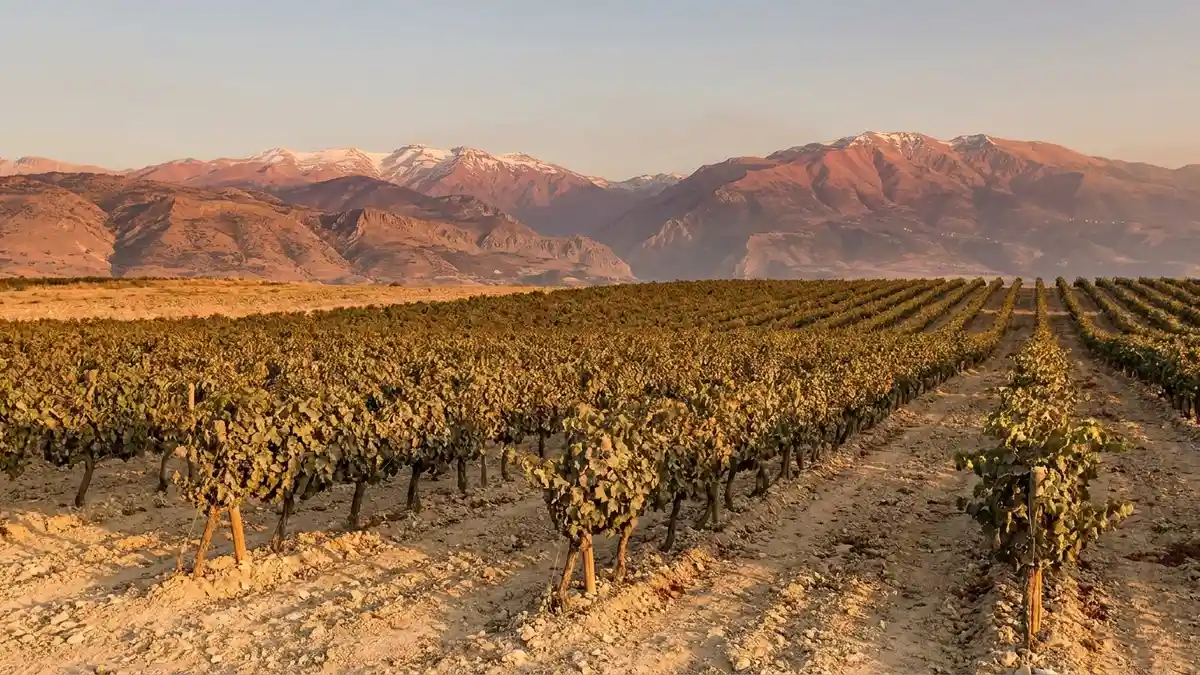
Nearly all Lebanese wine comes from one place: the Bekaa Valley. This is a long, fertile plateau wedged between the Mount Lebanon range to the west and the Anti-Lebanon mountains to the east, which form the border with Syria. The combination of geography and altitude is what makes the wines distinctive.
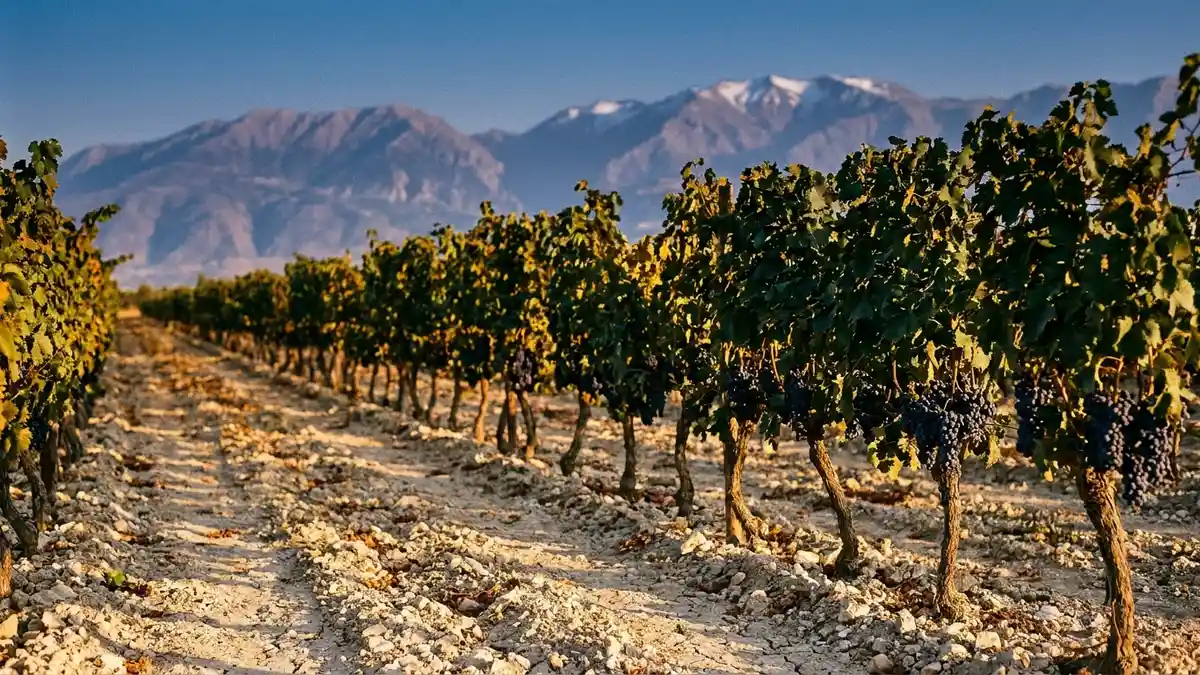
The valley floor sits at roughly 1,000 metres above sea level, high enough to change everything about how grapes ripen. During the day the Mediterranean sun is intense and the air is dry, pushing the fruit to full, sun-baked ripeness. At night the altitude pulls temperatures sharply down, slowing the grapes and locking in acidity — the tart, mouthwatering freshness that stops a ripe wine from tasting flat or jammy. This daily swing between hot days and cool nights is the engine behind the region's signature balance.
The climate brings other gifts. Summers are reliably dry and sunny, so vines stay healthy with little disease pressure and grapes ripen evenly almost every year. Snowmelt from the surrounding peaks feeds the water table, helping the vines through the rainless months. The soils are a mix of clay, limestone, and gravel that drain well and add structure to the wines.
While the Bekaa is the powerhouse, smaller pockets of vineyards grow in the cooler coastal hills, in the mountains near Mount Lebanon, and in the north of the country. These newer sites are expanding the range of styles, but the high plateau of the Bekaa remains the soul of Lebanese wine.
The Red Blends That Define Lebanon
If you pick up a Lebanese bottle, it is most likely a red blend, and that blend is the clearest signature of the region. Rather than bottling a single grape, Lebanese winemakers traditionally weave several together to build warmth, structure, and complexity. The cast list comes mostly from southern France.
- Cinsault: A historic backbone of Lebanese reds, planted widely for over a century. It gives soft, juicy red fruit, gentle tannins, and a perfumed lift that keeps big blends from feeling heavy. In the Bekaa it ripens beautifully and adds approachable charm.
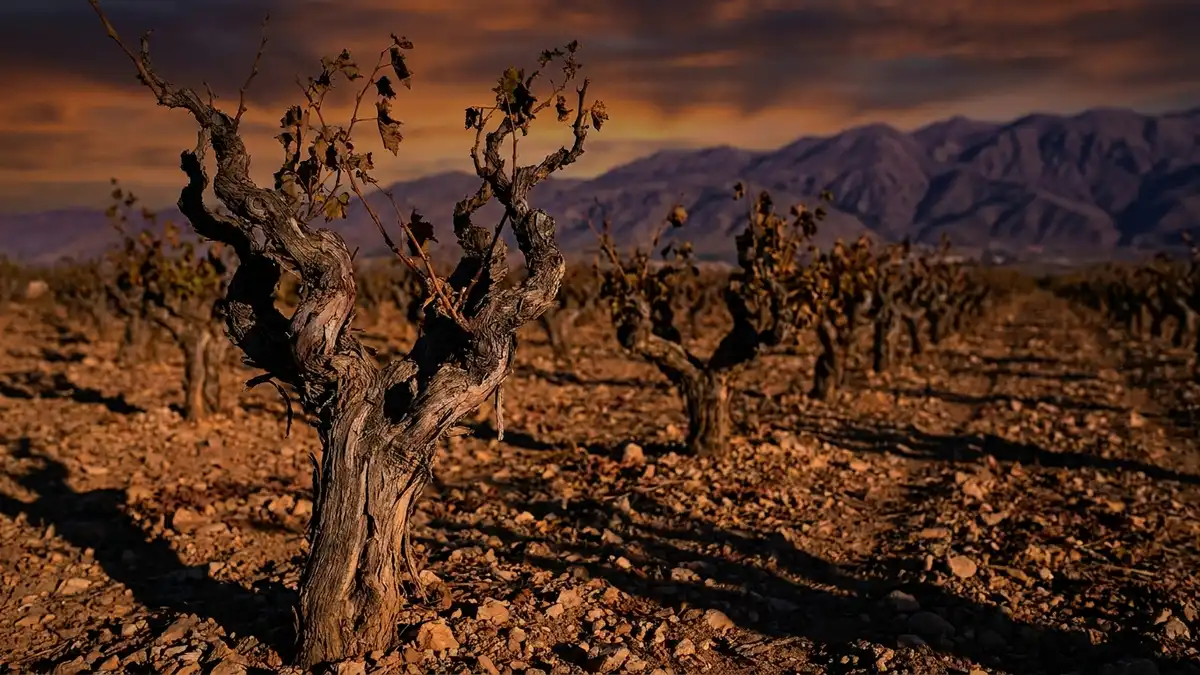
- Carignan: A rugged, deeply coloured grape that brings dark fruit, firm structure, and a savory, almost rustic grip. Old Carignan vines in hot, dry sites like the Bekaa produce concentrated, characterful wine. Our Carignan wine guide explains why this once-overlooked grape is winning new respect.
- Grenache: A sun-loving variety that thrives in heat, adding ripe strawberry and raspberry fruit, warmth, and generous alcohol. It softens and sweetens a blend's mid-palate. The Grenache wine guide covers how this grape behaves across the Mediterranean.
- Cabernet Sauvignon: Added in the modern era for backbone, black-fruit depth, and ageing potential. It lends a firmer, more structured edge to the softer southern grapes.
- Syrah and Mourvèdre: Increasingly common, bringing dark berry, black pepper, and a meaty, savory dimension that suits the warm climate.
The classic Lebanese red leans on the Cinsault-Carignan-Grenache trio, sometimes with a measure of Cabernet for spine. The style is full-bodied and warm, with ripe dark fruit, dried Mediterranean herbs, spice, and a sun-baked depth — yet the high-altitude acidity keeps it lifted rather than heavy. Typical aromas: blackberry, plum, fig, thyme, leather, and warm spice. Body: full (4/5) · Acidity: medium-to-high (4/5) · Tannins: medium-to-firm (3-4/5) · Alcohol: generous.
Think of it as closer in spirit to the southern Rhône than to Bordeaux — a Mediterranean red built for the table.
How Lebanon Compares to Other Mediterranean Reds
It helps to place Lebanese reds next to wines you may already know. Three quick comparisons:
- Lebanese Bekaa blend — Climate: hot days, cool high-altitude nights · Grapes: Cinsault, Carignan, Grenache, Cabernet · Style: warm, herbal, structured, sun-baked
- Southern Rhône (Châteauneuf style) — Climate: hot, sunny, wind-cooled · Grapes: Grenache, Syrah, Mourvèdre · Style: ripe, spicy, generous, herb-laced
- Bordeaux blend — Climate: maritime, cooler, damper · Grapes: Cabernet Sauvignon, Merlot · Style: firmer tannins, cassis, cedar, more restrained
The takeaway: Lebanon shares the southern Rhône's sun-loving grapes and warmth, but its altitude gives the wines a freshness and herbal lift that set them apart. The Cabernet in the blend nods toward Bordeaux structure without the cooler, more austere edge.
The Native White Grapes: Obeidi and Merwah
Lebanon's whites are where its oldest identity survives. Two indigenous grapes — Obeidi and Merwah — have grown here for centuries, long before any French vine arrived, and they remain a living link to the ancient wine culture.
- Obeidi: A hardy native white grown across the Bekaa, traditionally used for both table wine and for distilling arak, Lebanon's aniseed-flavoured spirit. As a wine it offers ripe orchard fruit, a nutty, herbal note, and a sun-touched richness balanced by mountain acidity.
- Merwah: An older, rarer native grape often found on high, cool slopes near Mount Lebanon. It brings a fresher, more mineral and citrus-edged character. It was long thought to be linked to Chardonnay, but it stands as its own distinct variety.
Alongside these, modern Lebanese whites also use familiar international grapes — Chardonnay, Sauvignon Blanc, and Viognier — to make crisper, more recognisable styles for export. The most interesting bottles often blend the native grapes with an international partner, marrying heritage to modern freshness. These indigenous varieties belong to the same deep lineage explored in our piece on the oldest grape varieties still in production today.
A wine made from Obeidi or Merwah is a taste of a grape your great-great-grandparents could have shared — the same vine, the same valley, an unbroken thread across millennia.
Resilience Through Conflict
No account of Lebanese wine is complete without its defining trait: endurance. The modern industry came of age through one of the most turbulent histories of any wine region, and that resilience is woven into its character.
Through the long civil war and repeated periods of invasion and instability, Lebanese winemakers kept the vines tended and the harvest coming. Grapes were sometimes picked under shelling, trucks ran the gauntlet of roadblocks to reach the cellar, and bottles were aged in the same valley where conflict raged above ground. The vine, with its long roots and patient cycle, became a quiet act of continuity when little else held.
That history shapes how the wines are received. A Lebanese red is not just a Mediterranean blend; it is the product of a region that refused to stop making wine even when stopping would have been understandable. During the calmer stretches of recent decades, the number of producers has grown sharply, vineyards have expanded into new sites, and the wines have reached tables around the world. The thread that the Phoenicians first spun has never been cut.
How a Beginner Should Start with Lebanese Wine
You do not need a rare bottle or a big budget to understand Lebanon. The smartest path is to start with the house style, then branch toward the heritage grapes. Here is a practical order:
- Begin with a classic Bekaa red blend. Look for a wine built on Cinsault, Carignan, and Grenache, perhaps with some Cabernet. This is the region's signature and the clearest single introduction to its warm, herbal, sun-baked character.
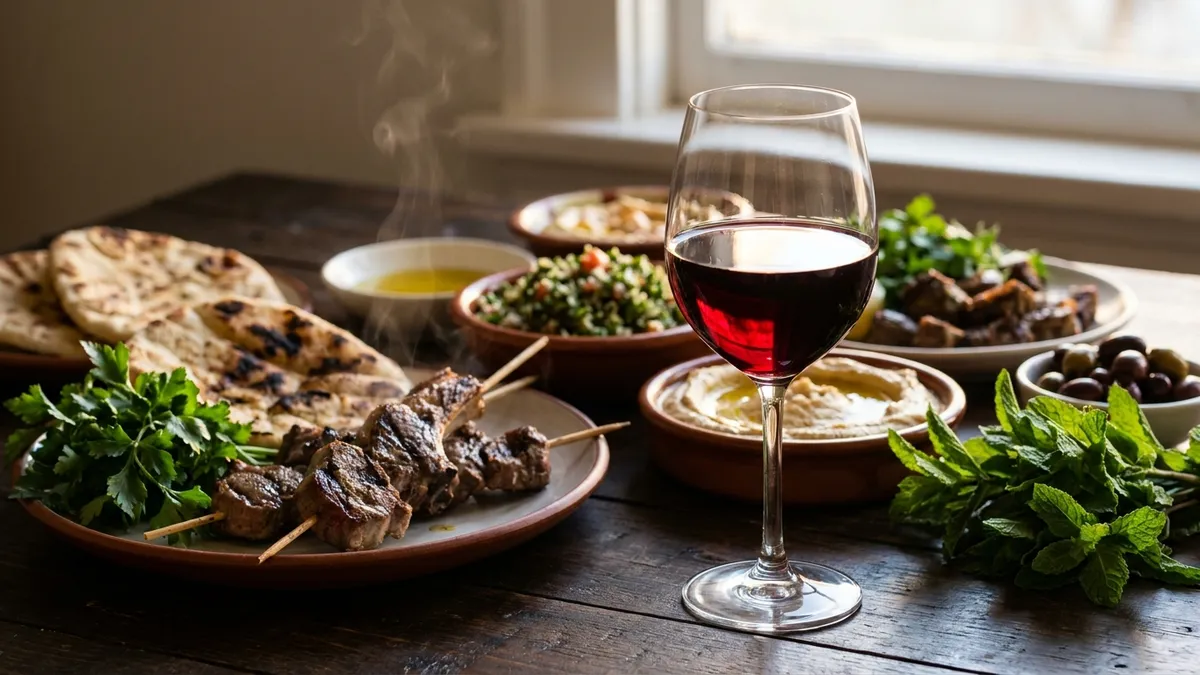
- Pair it with the food it was made for. Lebanese reds shine with grilled lamb, kebabs, and a herb-rich mezze spread. The wine's ripe fruit and firm tannins handle fat and char, while its acidity cuts through olive oil and spice.
- Taste a native white next. Seek out an Obeidi or Merwah wine to meet Lebanon's indigenous side. Notice how it differs from the international Chardonnay or Sauvignon Blanc styles also made there.
- Compare with a southern Rhône red. Open a Lebanese blend beside a Grenache-based Rhône wine. Same sun-loving grapes, different place — a great lesson in how altitude and terroir shape a familiar set of varieties.
- Build the tasting habit. Note the warmth, the dried-herb edge, and the surprising freshness from high-altitude acidity. Our guide to how to taste wine lays out the step-by-step method, and understanding tannins, acidity, and body explains the structure that defines these reds.
Sommy turns these comparisons into guided exercises — naming the aromas, scoring the structure, and building the vocabulary to describe what you sense. You can start practicing free at sommy.wine, then bring the method to your next Bekaa Valley bottle.
Lebanese Wine in the Wider Wine World
Lebanon belongs to a fascinating club of regions whose wine history predates the famous names of France and Italy. Its grapes also connect it to wines you may already enjoy. The Cinsault, Carignan, and Grenache at the core of its blends are the same varieties that shaped the southern Rhône and Languedoc, and lesser-known southern French grapes like Counoise round out the same family of warm-climate reds.
Lebanon's indigenous Obeidi and Merwah also place it among the world's keepers of ancient varieties — the same instinct that makes regions like the Caucasus and the eastern Mediterranean so compelling to explore. If the idea of grapes that have survived for millennia draws you in, our overview of the noble grapes every learner should know first gives a useful contrast between the global stars and the old natives that regions like Lebanon have quietly preserved. To see where the country sits among Europe's classic appellations, our guide to French wine regions shows the home of the grapes Lebanon adopted. Just south along the same stretch of coast, our Israeli wine guide covers another ancient eastern Mediterranean wine culture that rebuilt itself around international grapes and high-altitude vineyards.
The Reward of Learning Lebanese Wine
Lebanese wine rewards curiosity in a way few regions can. Behind every bottle is a continuous story that runs from Phoenician traders to growers harvesting through hard times, all rooted in one remarkable high-altitude valley. The wines themselves are generous, food-friendly, and balanced in a way that surprises first-time tasters who expect heat without freshness.
Start with a Bekaa blend, taste it next to a Rhône red, then reach for a native white. The Sommy app is built to make that habit stick — turning each bottle into a short, guided lesson so the next Lebanese wine you open is a little clearer than the last.
Sources
Frequently Asked Questions
Where is Lebanese wine made?
Almost all of it comes from the Bekaa Valley, a high plateau in eastern Lebanon sitting between two mountain ranges at roughly 1,000 metres above sea level. Smaller amounts grow in coastal hills and the north. The Bekaa's hot, dry days and cool nights ripen grapes fully while preserving the acidity that keeps the wines fresh.
What grapes does Lebanese wine use?
Reds are usually blends of Cinsault, Carignan, and Grenache with international grapes like Cabernet Sauvignon, Syrah, Merlot, and Mourvèdre. The historic red base leans on southern French varieties planted long ago. Whites use the native Obeidi and Merwah grapes alongside Chardonnay, Sauvignon Blanc, and Viognier, giving both heritage and modern styles.
How old is winemaking in Lebanon?
Lebanon is among the oldest continuous wine cultures on earth. The Phoenicians, who lived along this coast over three thousand years ago, traded wine across the Mediterranean and helped spread the vine to Greece, Italy, and beyond. Wine has been made on this land more or less without pause since antiquity, through every empire that has ruled it.
What does Lebanese red wine taste like?
Most Lebanese reds are warm, full-bodied blends with ripe dark fruit, dried herbs, spice, and a sun-baked, almost leathery depth. The high-altitude growing keeps acidity lively so the wines feel structured rather than heavy. Expect medium-to-firm tannins, generous alcohol, and a savory, Mediterranean character closer to the southern Rhône than to Bordeaux.
Are Obeidi and Merwah the same as international white grapes?
No. Obeidi and Merwah are indigenous Lebanese white grapes grown for centuries, long predating the arrival of French varieties. They are traditionally used both for table wine and for arak, the local aniseed spirit. Some old comparisons linked Merwah to Chardonnay, but it is its own distinct grape with a nutty, herbal, sun-touched character.
How has conflict affected Lebanese wine?
Lebanon's winemakers have kept producing through civil war, invasion, and instability, sometimes harvesting grapes under shelling and bottling wine when borders were closed. This resilience is part of the region's identity. The vineyards of the Bekaa Valley have continued through decades of upheaval, and the industry has expanded steadily during periods of relative calm.
Where should a beginner start with Lebanese wine?
Start with a classic Bekaa Valley red blend built on Cinsault, Carignan, and Grenache, which shows the region's house style at a fair price. Pair it with grilled lamb or a herb-heavy mezze spread, the food it was made for. Add a native Obeidi or Merwah white later to taste Lebanon's older, indigenous side.
Sommy Team
LinkedInFounder & Wine Educator
The Sommy Team is building the world's most approachable wine education app, helping beginners develop real tasting skills through structured courses and AI-guided practice.