Wine with Mediterranean Food: Greek, Turkish, and Levantine

By the Sommy Team — AI-assisted, human-edited.
Updated Oct 1, 2026
Contents (9)
- Wine with Mediterranean Food, in One Paragraph
- Which Wine Goes With Each Part of the Plate?
- What Wine Goes With Greek Food Like Souvlaki, Feta and Moussaka?
- Is Retsina Worth Trying With Meze?
- What Wine Goes With Turkish Kebabs, Dolma and Grilled Fish?
- What Wine Goes With Levantine Meze Like Hummus and Tabbouleh?
- Do Yogurt and Garlic Sauces Ruin Wine?
- What If the Shop Has No Greek, Turkish or Lebanese Wine?
- How Should You Set the Wine for a Meze Night?
TL;DR
Greek, Turkish and Levantine food runs on lemon, olive oil, yogurt, salt and grill smoke. A crisp unoaked white or dry rosé handles most meze. Assyrtiko suits Greek seafood and feta, soft reds like Agiorgitiko or Öküzgözü suit kebabs and moussaka, and tannic Xinomavro or Boğazkere wait for fatty lamb.
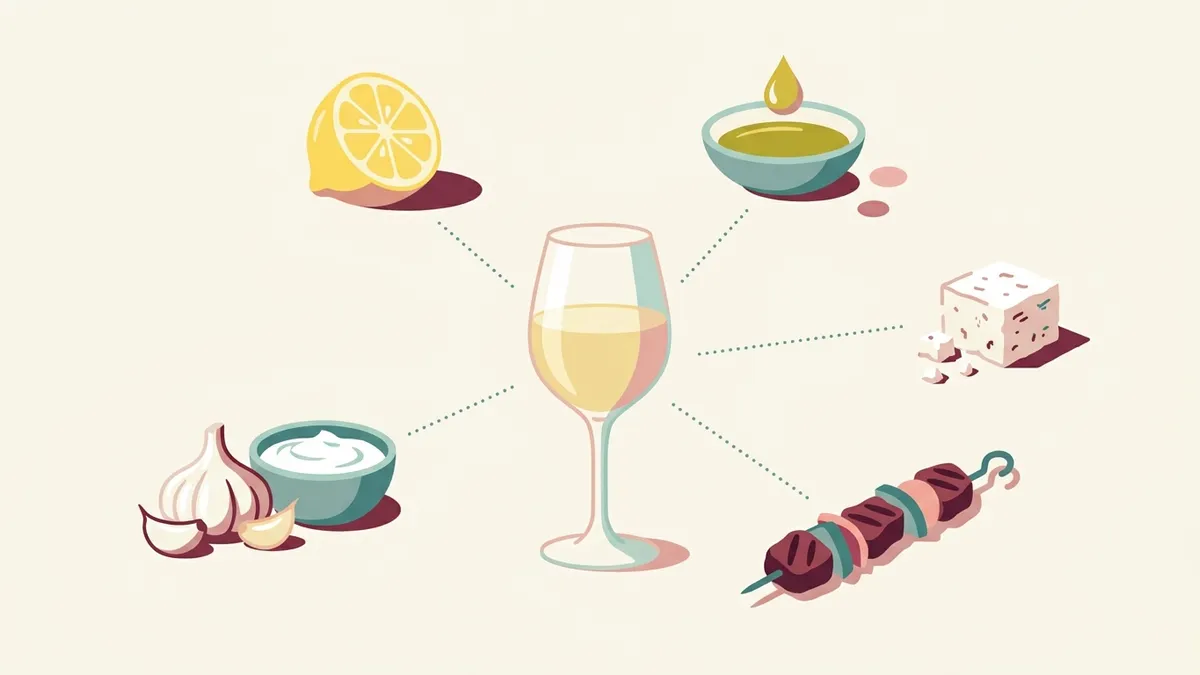
Food from Greece, Turkey and the Levant runs on olive oil, lemon, yogurt, salt and grill smoke. That makes a crisp, unoaked white or a dry rosé the safest wine with Mediterranean food, and a red the right call only when grilled or roasted meat arrives. Meze (a spread of small shared plates, served cold and hot) is how most of this food reaches the table, so one wine has to meet many flavours at once.
Wine with Mediterranean Food, in One Paragraph
With most Mediterranean food, pour a crisp, unoaked white or a dry rosé, and open a red only when grilled or slow-roasted meat reaches the table. The cuisine is built on the olive, wheat and the grape, and it follows the olive tree from Gibraltar to the Bosphorus. Unoaked means the wine was made without oak barrels, so it tastes of fruit and lemon rather than vanilla and toast. Greek Assyrtiko and Moschofilero cover the cold meze. Soft reds like Agiorgitiko, Öküzgözü and Kalecik Karası handle souvlaki, kebabs and moussaka. Tannic Xinomavro and Boğazkere wait for fatty lamb.
If the dish is cold, pour white or rosé; if it came off the grill, pour red.
Which Wine Goes With Each Part of the Plate?
Match the wine to the strongest thing on the plate: lemon and olive oil call for high acidity, salt and chilli call for lower alcohol, and charred meat calls for tannin. Acidity is the tartness that makes your mouth water. Tannin is the drying grip on your gums, and it comes mostly from red grape skins.
| On the plate | What it does to wine | Wine style | Greek grape | Turkish or Levantine grape | Pour this |
|---|---|---|---|---|---|
| Lemon, vinegar, sumac | Makes low-acid wine taste flat and thin | High-acid white | Assyrtiko | Merwah | Dolma, tabbouleh, grilled fish with lemon |
| Olive oil, tahini, fried batter | Coats the mouth; acid or bubbles cut it | Crisp white, retsina or dry rosé | Moschofilero, retsina | Obeideh | Hummus, calamari, fried courgette, spanakopita |
| Yogurt and raw garlic | Turns oaky wine flat and tannic wine bitter | Unoaked white or dry rosé | Moschofilero | Rosé from local reds | Tzatziki, cacık, yogurt-topped kebab |
| Feta, olives, cured fish | Salt can make high alcohol feel hotter | Fresh white under about 13% | Assyrtiko, Savatiano | Light whites | Horiatiki salad, olives, taramosalata |
| Grill char on lamb or beef | Fat and protein soften tannin | Medium to firm red | Xinomavro, Agiorgitiko | Boğazkere, Öküzgözü | Lamb chops, kleftiko, shish kebab |
| Chilli heat (pul biber, Adana) | Heat and alcohol feed each other | Light, juicy, low-tannin red | Agiorgitiko | Kalecik Karası | Adana kebab, spicy sausages |
The table rests on three mechanisms. Acid cuts through heavy, oily food the way a squeeze of lemon does. Tannin binds to protein in meat and comes across softer, which is why a grippy red that feels harsh on its own turns friendly next to lamb. Chilli heat, and to a lesser degree salt, makes alcohol burn more, while a little sweetness calms that heat. The full set of these rules is in wine pairing rules, and what is wine acidity shows how to feel it on your tongue.
If lemon or vinegar is in the dish, the wine has to taste at least as tart as the food.
What Wine Goes With Greek Food Like Souvlaki, Feta and Moussaka?
Assyrtiko covers most of a Greek table, from grilled octopus to feta salad, and a soft Agiorgitiko or a firm Xinomavro takes over when lamb or moussaka arrives. Assyrtiko does not lose its acidity even when its grapes are very ripe. That gives a full, ripe white that still tastes of lemon peel and sea salt.
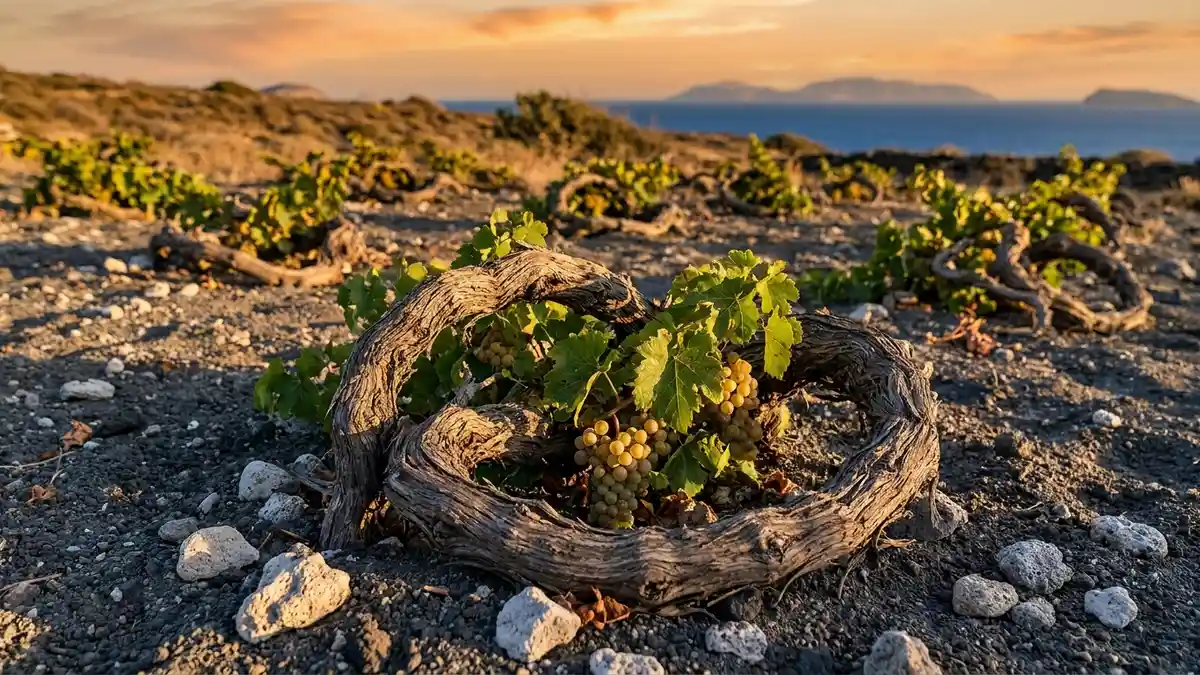
On Santorini, growers coil the vines into low baskets called kouloura that sit on the volcanic ground and shelter the grapes from strong wind and sun. The island is widely described as free of phylloxera, the root louse that destroyed most European vineyards, so many vines grow on their own roots. Wines from there taste savoury, stony and citrus-fresh, which suits grilled octopus, salt-baked fish and fried calamari. The Santorini wine guide and the Assyrtiko wine guide cover the island and the grape.
Moschofilero from Mantineia is crisp and floral, and it smells of rose petal and lemon. That perfume suits herby food: horiatiki salad, spanakopita, courgette fritters with dill.
Two reds split the hot dishes. Agiorgitiko from Nemea makes a soft, fruity red with gentle tannin, which suits moussaka, with its tomato, cinnamon and béchamel, and pork souvlaki in pita. Xinomavro from Naoussa has high tannin and medium-high acidity, and it is often compared with the Nebbiolo of Barolo. It needs fatty, slow-roasted lamb like kleftiko to soften its grip.
If the dish is grilled seafood or feta salad, pour Assyrtiko. If it is baked or minced meat, pour Agiorgitiko. If it is a fatty lamb shoulder, open Xinomavro. The Greece wine guide maps every region these grapes come from, and Xinomavro wine guide explains how age softens it.
Is Retsina Worth Trying With Meze?
Yes, with fried and oily meze, because the pine resin adds a bitter, fresh edge that cuts through fat. Retsina is a white wine made with small pieces of Aleppo pine resin added to the must (the crushed grape juice) while it ferments. The traditional grape is Savatiano, sometimes blended with Assyrtiko or Rhoditis.
The habit is ancient. The Roman writer Columella described resin being mixed into wine in the first century. The EU protects Retsina as a traditional name for Greece and parts of southern Cyprus.
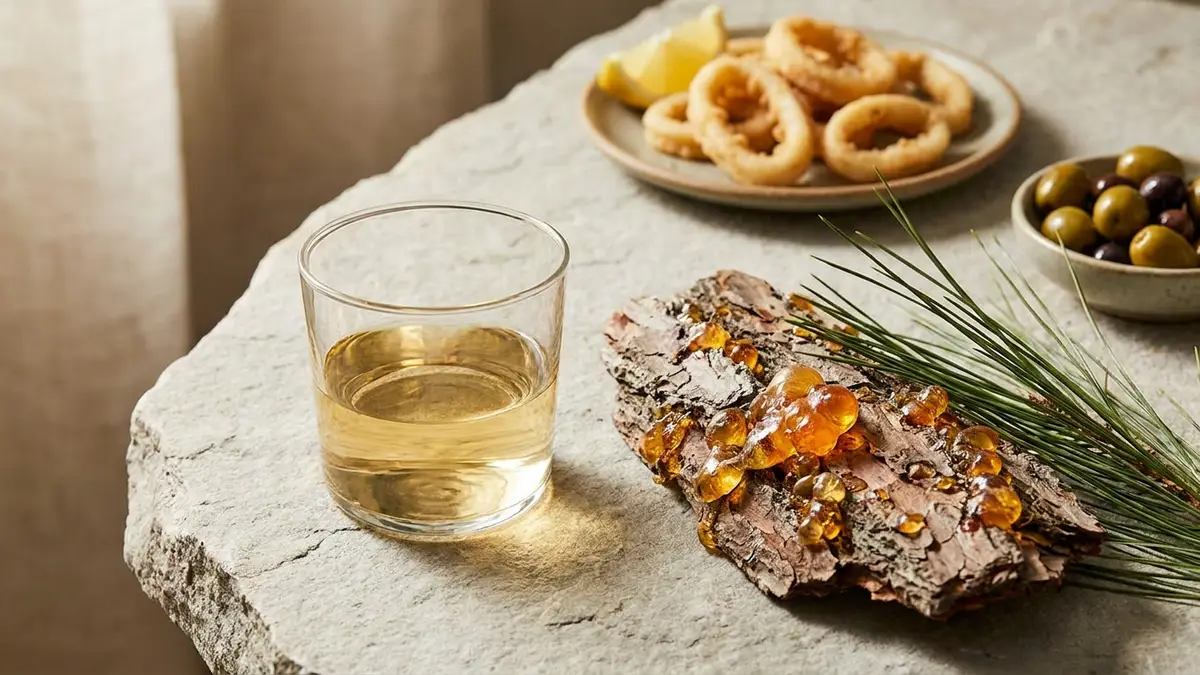
The "turpentine" reputation comes from cheap, heavily resinated bottles, and it misses the point. Retsina smells of pine sap and lemon peel, and the light bitterness on the finish works like a squeeze of lemon on fried food. It belongs next to calamari, fried courgette, taramosalata and grilled sardines, served cold in a small glass.
If the meze is fried or drenched in oil, try retsina. If the food is delicate, like plain white fish, the resin takes over, so pour Assyrtiko instead. The retsina wine guide covers modern, lighter styles.
What Wine Goes With Turkish Kebabs, Dolma and Grilled Fish?
Pick a soft, juicy Turkish red such as Öküzgözü or Kalecik Karası for most kebabs, a tannic Boğazkere for fatty lamb, and a crisp white for dolma and grilled fish. Pairing began as local food with local wine, and Turkey's native grapes grew up beside these dishes.
Turkey grows grapes on a vast scale, yet most of them are eaten fresh or dried. Estimates of the share that becomes wine run from only 3 to 15%. The three red grapes worth knowing:
- Öküzgözü ("ox eye") makes a softer, brighter red with fresh acidity. It suits shish kebab, köfte and lahmacun.
- Boğazkere ("throat burner") is tannic and deeply coloured. It needs lamb chops or a fatty shoulder to soften it. Many Turkish reds blend the two.
- Kalecik Karası is light and often compared with Pinot Noir. It is the red to chill slightly and pour with spicy Adana kebab.
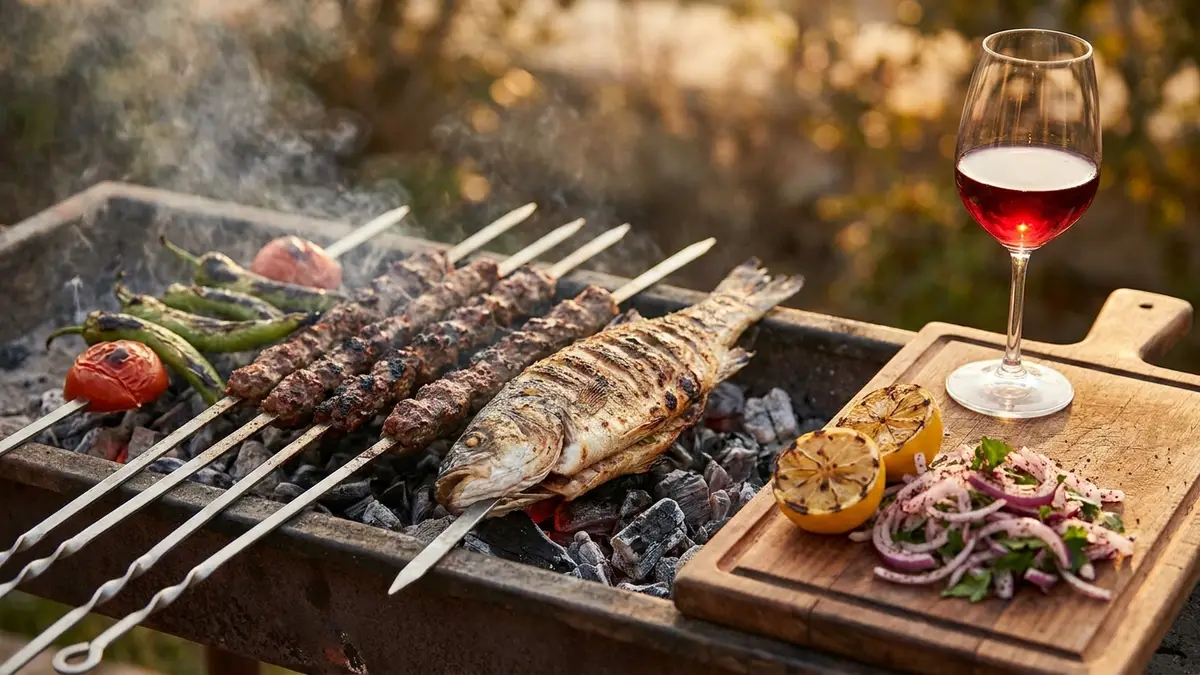
Chilli changes the choice. Adana kebab and pul biber flakes add heat, and heat makes alcohol burn. If the kebab is chilli-hot, choose a red at or below about 13% with soft tannin. Our guide to wine with spicy food has the rest.
Olive-oil dishes come cold and lemony. Stuffed vine leaves, beans in olive oil and grilled sea bass with lemon want a crisp white. For yogurt-topped İskender kebab, see the yogurt section below. Grilled whole fish follows the same rules as in wine with seafood.
What Wine Goes With Levantine Meze Like Hummus and Tabbouleh?
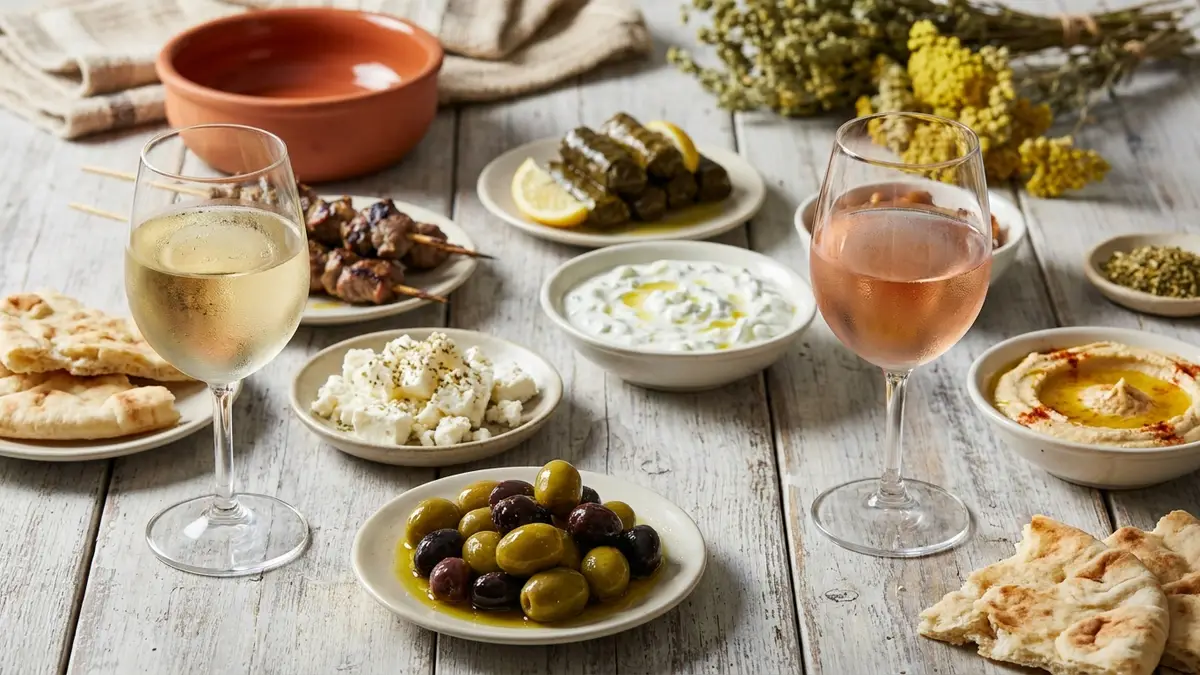
A high-acid white or dry rosé goes with hummus, tabbouleh and baba ghanoush, because lemon, tahini and olive oil all need acidity to meet them. These three are the core cold meze of the Levant. Our full guide to wine with Middle Eastern food goes dish by dish, from falafel to shawarma.
Lebanon grows two native white grapes with opposite jobs. Obeideh is high in sugar and low in acidity, and it makes a creamy white that sits well on smoky baba ghanoush. Merwah has fresher acidity and suits lemony tabbouleh. The Lebanon wine guide explains why its mountain vineyards keep reds fresh enough for grilled lamb.
If tahini is on the plate, keep the acidity high. If the dish is smoky aubergine, a rounder white like Obeideh works.
Do Yogurt and Garlic Sauces Ruin Wine?
No. Yogurt and garlic make oaky, tannic wine taste sour and bitter, so they push you toward fresh, high-acid whites and rosé. Tzatziki and Turkish cacık narrow the choice; they do not end it. Only big, oaky whites and grippy reds drop off the list.
Yogurt brings its own sourness, so a low-acid wine tastes flat beside it. Raw garlic is sharp enough to make new oak taste like sawdust. Moschofilero, Assyrtiko and dry rosé all hold up. If a garlic-yogurt sauce sits on grilled meat, pick a rosé or a light red over a big tannic one. Our rosé wine guide explains the dry styles to look for.
What If the Shop Has No Greek, Turkish or Lebanese Wine?
Swap by structure: any crisp unoaked white stands in for Assyrtiko, and any light, low-tannin red stands in for the soft Turkish and Greek reds. The grape names on the shelf change; the jobs in the table above stay the same.
- For the high-acid white slot: Albariño, Sauvignon Blanc, or Vermentino. The Albariño wine guide shows why it handles seafood and lemon.
- For the soft red slot: Gamay or Pinot Noir. A cool-climate example around 12.5 to 13% works best with spiced kebabs.
- For the tannic red slot: Syrah or Nebbiolo, for fatty lamb only.
- For one bottle on a mixed table: a pale, dry rosé.
If a white label says "oaked", "barrel-fermented" or "reserve", leave it for another night. Barrels add vanilla and toast that clash with lemon and garlic. What does oaked mean covers the label words.
How Should You Set the Wine for a Meze Night?
Pour white or rosé first with the cold meze, then a red once the grill food lands. Serve the white and rosé well chilled and the light red slightly cool, because warm wine tastes hotter beside salty food. Lamb on the grill follows the cut-by-cut rules in wine with lamb, and other cuisines are sorted in the food pairing hub.
The Sommy app also has bite-sized courses, including Wine 101, for the structure terms used here. Buy a crisp unoaked white tonight, pour it cold with olives, feta and one lemony dish, and taste it after each bite.
Sources
Frequently Asked Questions
What wine goes with Mediterranean food?
A crisp, unoaked white or a dry rosé goes with most Mediterranean food, because lemon, olive oil, yogurt and salty cheese all need high acidity to meet them. Assyrtiko, Moschofilero and Albariño-style whites cover the cold meze. Open a red only when grilled or roasted meat arrives, and pick a soft one unless the meat is fatty lamb.
What wine goes with Greek food?
Assyrtiko is the most useful single wine for Greek food. It keeps its sharp acidity even when the grapes are very ripe, so it handles lemon, feta, grilled octopus and fried calamari. For moussaka or pork souvlaki, a soft Agiorgitiko from Nemea works. For slow-roasted lamb, a tannic Xinomavro from Naoussa has the grip to meet the fat.
What does retsina taste like?
Retsina is a white wine, usually from the Savatiano grape, made with small pieces of Aleppo pine resin added to the fermenting juice. It smells of pine sap and lemon peel and finishes with a light bitterness. That bitter, resinous edge cuts through fried and oily meze such as calamari, fried courgette and taramosalata, which is where it tastes best.
What wine goes with lamb kebab or souvlaki?
A juicy, low-tannin red goes with most kebabs and souvlaki, such as Turkish Öküzgözü or Kalecik Karası, or Greek Agiorgitiko. Fatty lamb shoulder or chops can take a firmer red like Boğazkere or Xinomavro, because tannin binds to the protein and feels softer. If the kebab is chilli-hot, keep the red light and lower in alcohol.
What wine goes with tzatziki and other yogurt-garlic sauces?
A crisp, unoaked white or a dry rosé goes best with tzatziki and Turkish cacık. Yogurt is sour and raw garlic is sharp, so oaky whites taste flat and tannic reds turn bitter next to them. When the sauce sits on grilled meat, pick a rosé or a light red with little tannin rather than a big, oaked red.
Are there good wines from Turkey and Lebanon?
Yes. Turkey grows native red grapes such as Öküzgözü, Boğazkere and Kalecik Karası, although most of its grapes are eaten fresh or dried rather than made into wine. Lebanon's high vineyards produce red blends and whites from local grapes like Obeideh and Merwah. Both countries make wines shaped by the same dishes they are served with.
Is red or white wine better with Mediterranean food?
White and rosé cover more of the table. Most meze is sour, salty, oily or herby, and those flavours need acidity more than tannin. Red earns its place with grilled lamb, kebabs and slow-baked dishes like moussaka. If only one bottle is open for a mixed spread, choose a dry rosé, which handles the dips and the grill.
Sommy Team
LinkedInFounder & Wine Educator
The Sommy Team is building the world's most approachable wine education app, helping beginners develop real tasting skills through structured courses and AI-guided practice.