Best Wine with Lamb: Roast Leg, Chops, and Slow-Cooked

By the Sommy Team — AI-assisted, human-edited.
Updated Sep 24, 2026
Contents (11)
- Wine with Lamb, in One Paragraph
- Which Wine Goes With Which Lamb Cut?
- What Wine Goes With Roast Leg of Lamb?
- What Wine Goes With Lamb Chops and Rack of Lamb?
- What Wine Goes With Slow-Cooked or Braised Lamb?
- Why Does Red Wine Work So Well With Lamb?
- Can You Drink White or Rosé Wine With Lamb?
- Do Mint Sauce, Rosemary and Spice Change the Wine?
- Which Wine Traditions Grew Up Around Lamb?
- How Should You Serve Red Wine for a Lamb Dinner?
- Your Lamb Dinner Tonight
TL;DR
The best wine with lamb follows the cut and the cooking. Roast leg suits medium-tannin reds such as Rioja Crianza or Chianti Classico. Charred chops and rack take firmer Cabernet Sauvignon, Syrah or Nebbiolo. Slow-cooked shanks want soft, ripe Grenache blends. Mint sauce fights tannic reds, so choose a higher-acid red.
The best wine with lamb is chosen by the cut and the cooking. A pink roast leg wants a medium-weight red, a charred chop can take a firmer one, and a shank that has braised all afternoon wants something soft and ripe.
Wine with Lamb, in One Paragraph
For wine with lamb, start with red and set its tannin (the drying grip you feel on your gums) by the cut. Roast leg and rack: Rioja Crianza or Reserva, Chianti Classico, or a Bordeaux blend. Seared or grilled chops: Cabernet Sauvignon, Syrah or Nebbiolo. Slow-cooked shank, shoulder or tagine: a Grenache-led Côtes du Rhône, Garnacha or Zinfandel. Tannin works because it binds to proteins, and a 2012 study from the Monell Chemical Senses Center found that alternating astringent sips with fatty food lowered both the fatty and the drying sensations.
Mint sauce is the one trap. Its vinegar makes tannic reds taste flat, so choose a higher-acid red when it is on the table.
Which Wine Goes With Which Lamb Cut?
Match the wine's grip to the fat and char on the plate. Lean roast leg wants medium tannin, fatty seared chops want firm tannin, and a long braise wants soft tannin with ripe fruit. Body (a wine's weight in the mouth, like skimmed versus whole milk) rises with the richness of the dish.
If the lamb is pink and lean, choose medium tannin. If it has a charred fat cap, go firmer. If it falls off the bone, go soft and ripe.
| Lamb dish | What is on the plate | Pick this on the label | Why it works |
|---|---|---|---|
| Roast leg, pink | Lean meat, mild flavour, thin crust | Rioja Crianza or Reserva, Chianti Classico, Bordeaux blend | Medium tannin meets the protein without drying out lean meat |
| Rack of lamb | Fat cap, herb crust, pink centre | Rioja Reserva, Syrah, Bordeaux blend | A little more grip for the fat, still gentle on tender meat |
| Chops, seared or grilled | Crisp fat, char, salt | Cabernet Sauvignon, Syrah, Nebbiolo | Firm tannin and acidity stand up to fat and char |
| Slow-cooked shank or shoulder | Rendered fat, rich sauce, very tender | Côtes du Rhône, Garnacha, Zinfandel | Soft tannin and ripe fruit match a rich, sticky sauce |
| Spiced tagine or curry | Cumin, dried fruit, some chilli | Garnacha, young Côtes du Rhône, dry rosé | Low tannin and juicy fruit keep chilli heat in check |
| Cold lamb, kebabs with yogurt | Lean meat, cool sauce, fresh herbs | Dry rosé, full-bodied white | Freshness beats grip when the dish is cool and light |
What Wine Goes With Roast Leg of Lamb?
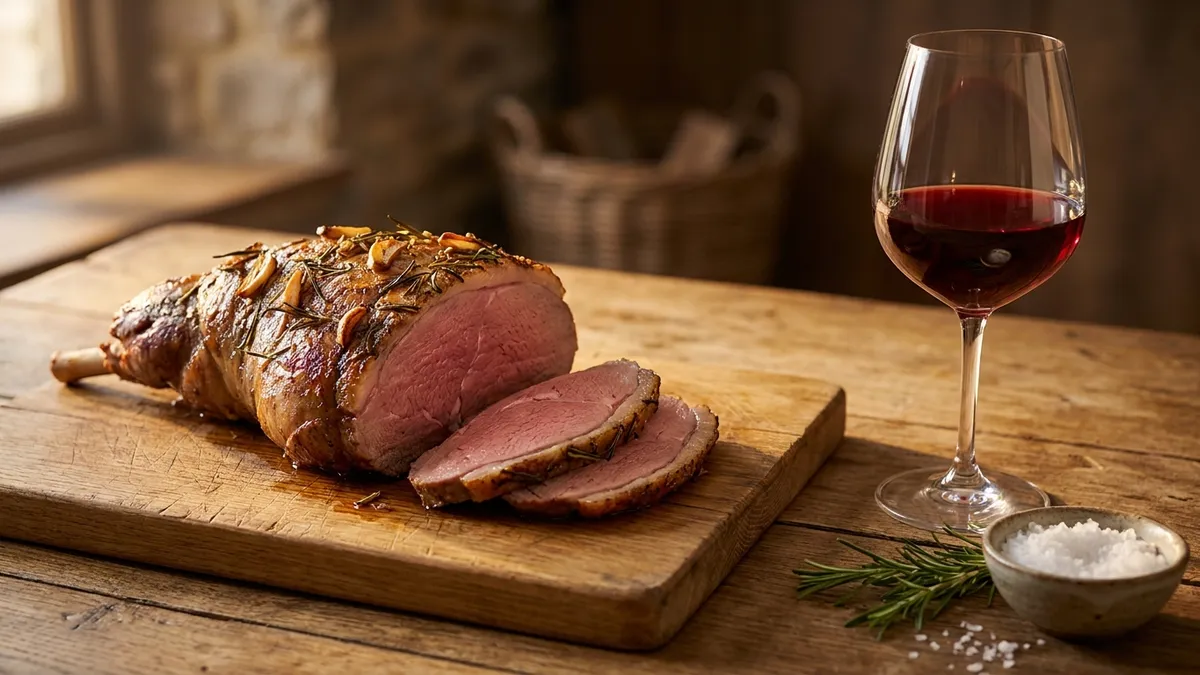
A roast leg of lamb goes best with a medium-bodied red with moderate tannin, such as Rioja Crianza or Reserva, Chianti Classico, or a Bordeaux blend. Leg is a lean cut, and served pink it has little fat to soften a very tannic wine, so a heavy Cabernet can taste like stewed tea beside it.
Rioja is the easiest shelf to shop, because the label tells you how long the wine aged. A red Crianza must age at least two years, with at least one in barrel. A Reserva needs at least 36 months, with at least 12 in oak (barrels that add vanilla, toast and spice). That oak time rounds the tannin, and the vanilla sits well beside a browned crust. If the label says Crianza or Reserva, you have a safe roast match; save Gran Reserva for a richer roast with gravy. The Rioja wine guide explains each tier.
Chianti Classico is the Italian answer, made mostly or entirely from Sangiovese and often aged partly in oak. Sangiovese tastes of sour cherry because of its high acidity, which keeps a plate with gravy and roast potatoes feeling light. The Sangiovese guide covers its styles.
The age of the animal matters too. Spring lamb is usually three to five months old, and milk-fed lamb only four to six weeks. The younger the lamb, the milder the meat, and the lighter the red should be. With a tiny milk-fed roast, a young Rioja Crianza or even a Pinot Noir is enough.
What Wine Goes With Lamb Chops and Rack of Lamb?
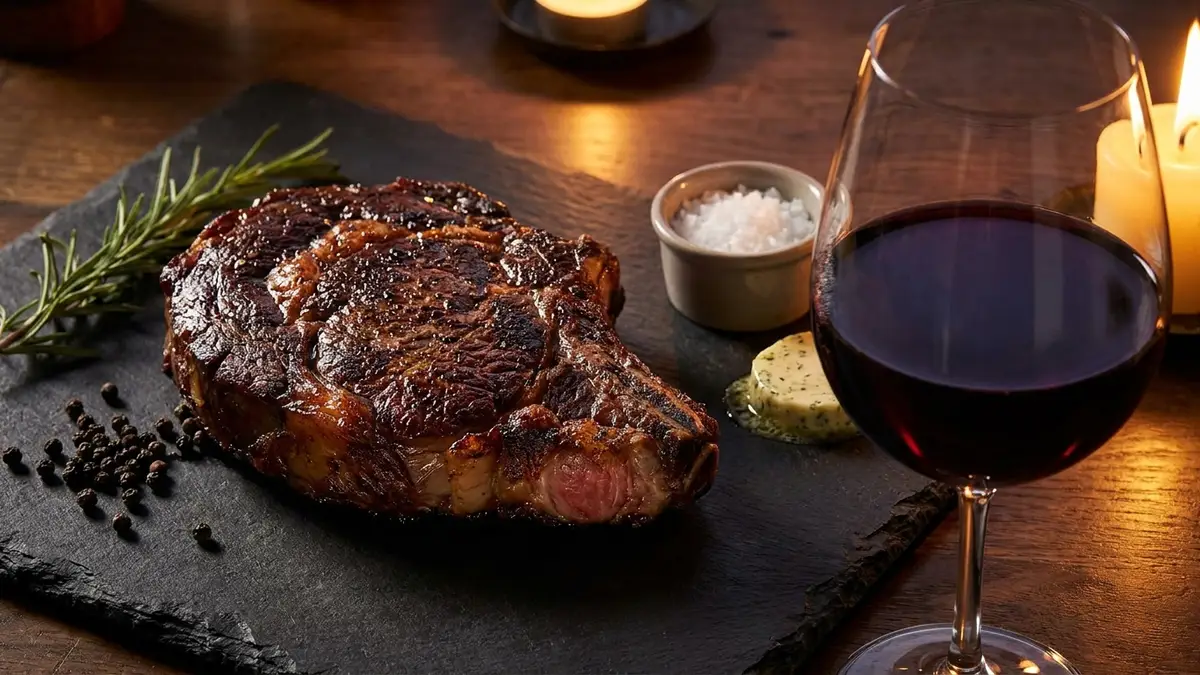
Lamb chops and rack of lamb can take a firmer, more tannic red, such as Cabernet Sauvignon, Syrah or Nebbiolo. Their fat cap renders and crisps in a hot pan or on the grill, and that fat plus the seared crust gives a grippy wine something to work against.
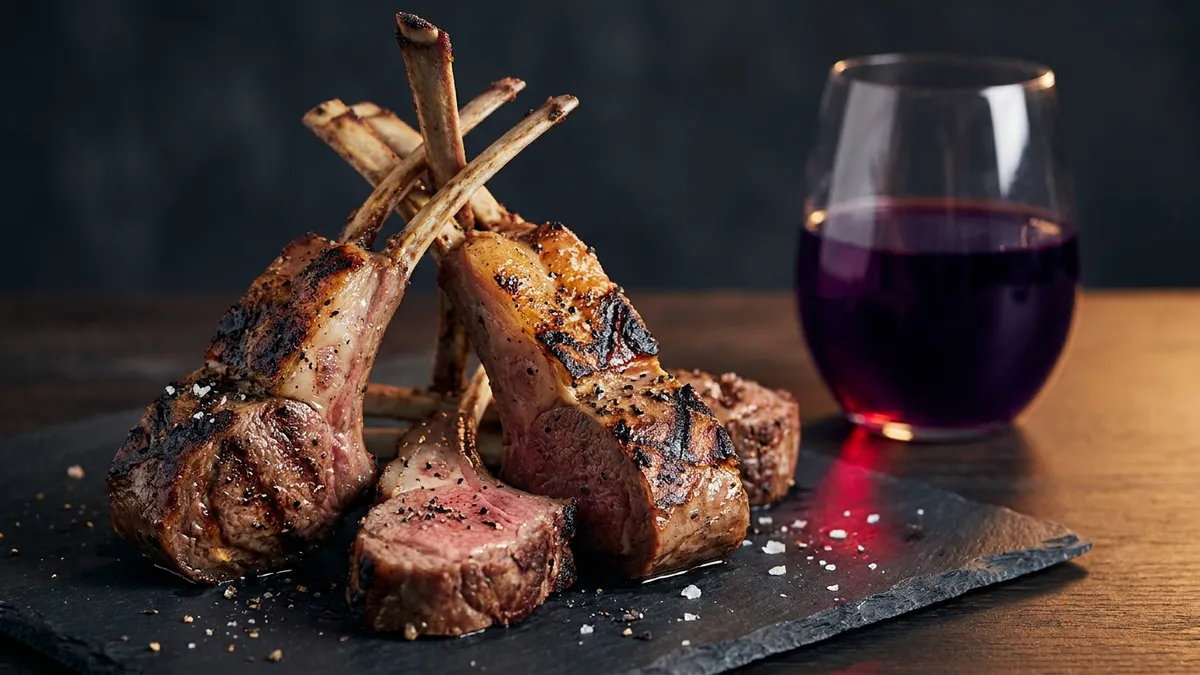
Cabernet Sauvignon is the classic pick for a charred chop. Its firm tannin comes from thick grape skins, and regions such as Coonawarra, a cool, maritime corner of South Australia, give it the taste of plum and blackcurrant. The Cabernet Sauvignon guide covers where else it grows.
Syrah suits chops cooked with pepper and garlic, because its own savoury, peppery smell meets the seasoning. French Syrah is leaner and more peppery, while Australian Shiraz is riper and softer; Syrah vs Shiraz lays out which label word gives which style.
Nebbiolo is the firmest choice, and Barolo is its best-known wine. It has pronounced tannin and high acidity (the tartness that makes your mouth water), so it wants the fattiest chop on the grill. The Nebbiolo guide explains why young Barolo can feel so tight.
If the chops are pink and the fat is crisp, pick Cabernet or Nebbiolo. If they are cooked well done and trimmed, step down to Merlot or a Rioja Crianza. Rack of lamb sits between the two: it has a fat cap but tender, mild meat, so a Rioja Reserva or a Syrah is the safer bet. The same cut-by-fat logic runs through the wine with steak guide.
What Wine Goes With Slow-Cooked or Braised Lamb?
Slow-cooked lamb goes best with a ripe, round red with soft tannin, such as a Grenache-led Côtes du Rhône, a Spanish Garnacha or a Zinfandel. Hours of cooking have already made the meat tender and the sauce rich, so the wine needs ripe fruit to match that richness more than it needs grip.
A red Côtes du Rhône from the south of the region must be at least 40% Grenache, with Syrah and Mourvèdre together making up at least 15%. Grenache gives strawberry and raspberry ripe to the point of jam, because it thrives in hot, dry summers. Syrah and Mourvèdre add colour and a savoury edge. The Côtes du Rhône guide and the Grenache guide cover both sides of the blend.
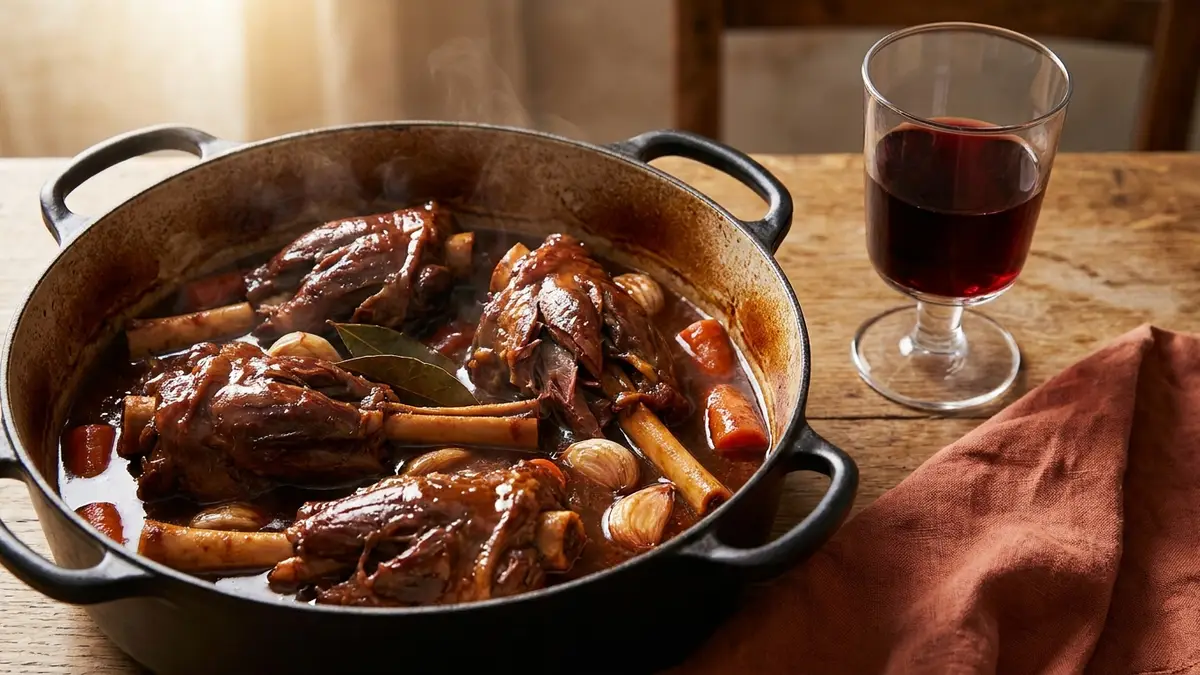
Shoulder and shank are the usual braising cuts, and older sheep go the same way. Hogget (a sheep between about one and two years old) and mutton (older than two) taste stronger than lamb because they carry more of the fatty acids that give sheep meat its flavour. If the pot holds hogget or mutton, choose the fullest-bodied red in this group, such as Zinfandel or a Côtes du Rhône Villages.
Spice changes the pick again. If the braise carries chilli or plenty of cumin, choose the softest, lowest-alcohol red you have, because heat makes alcohol burn and firm tannin taste bitter. The wine with spicy food guide has the full rule set, and wine with Indian food covers lamb curries.
Why Does Red Wine Work So Well With Lamb?
Red wine works with lamb because tannin binds to proteins, and fatty meat and a grippy wine tone each other down when you alternate bites and sips. Tannins are plant compounds that bind to and precipitate proteins, including the lubricating proteins in saliva, which leaves a young red feeling dry and rough on your gums when you taste it alone.
A common claim says tannin "cuts" fat the way lemon juice does. The chemistry says otherwise. Tannin works on protein, while fat acts as a lubricant that coats the mouth. Researchers at the Monell Chemical Senses Center tested the pairing directly in a 2012 study. Repeated sips of a mildly astringent drink, alternated with fatty food, gave lower ratings for both fattiness and astringency than water rinses did.
Lamb is a strong test of that effect because the fat is so easy to taste. Lamb fat has a distinctive, slightly gamey flavour that coats the mouth, and a grippy sip scrubs it away before the next bite. White wines have almost no tannin, so they cannot do this job. Our explainer on what tannins are goes further into grape skins and oak.
Can You Drink White or Rosé Wine With Lamb?
Yes, when the lamb is served cool, lean or with yogurt and fresh herbs. In those dishes a dry rosé or a full-bodied white holds up well. A heavy red would feel clumsy against a light plate, and its tannin turns chalky beside a cold yogurt sauce.
If the lamb is cold, in a salad, or on a skewer with yogurt sauce, choose a dry rosé. Rosé carries fresh strawberry fruit and enough acidity to meet garlic, lemon and mint, with little tannin to clash with a cool sauce. The rosé wine guide lists the drier styles, and Provence is the region most known for them.
A full-bodied white works with lean spring lamb roasted with lemon and herbs. White Rhône blends and oaked whites have the weight to meet the meat. A light, crisp white such as Pinot Grigio will taste thin next to anything with a crust.
Do Mint Sauce, Rosemary and Spice Change the Wine?
Mint sauce is the hardest part of a lamb dinner to pair, because its vinegar makes tannic reds taste flat and bitter. Rosemary and garlic are easy, because almost any red on the list sits well beside them. Spice asks for softer tannin and lower alcohol, as with a tagine.
Classic British mint sauce is chopped mint in vinegar, often with sugar. Sharp acid in food makes a wine taste less acidic and flatter, and sweetness makes tannin taste harsher. A big, oaky Cabernet takes both hits at once. The how food changes wine taste explainer covers the reasons.
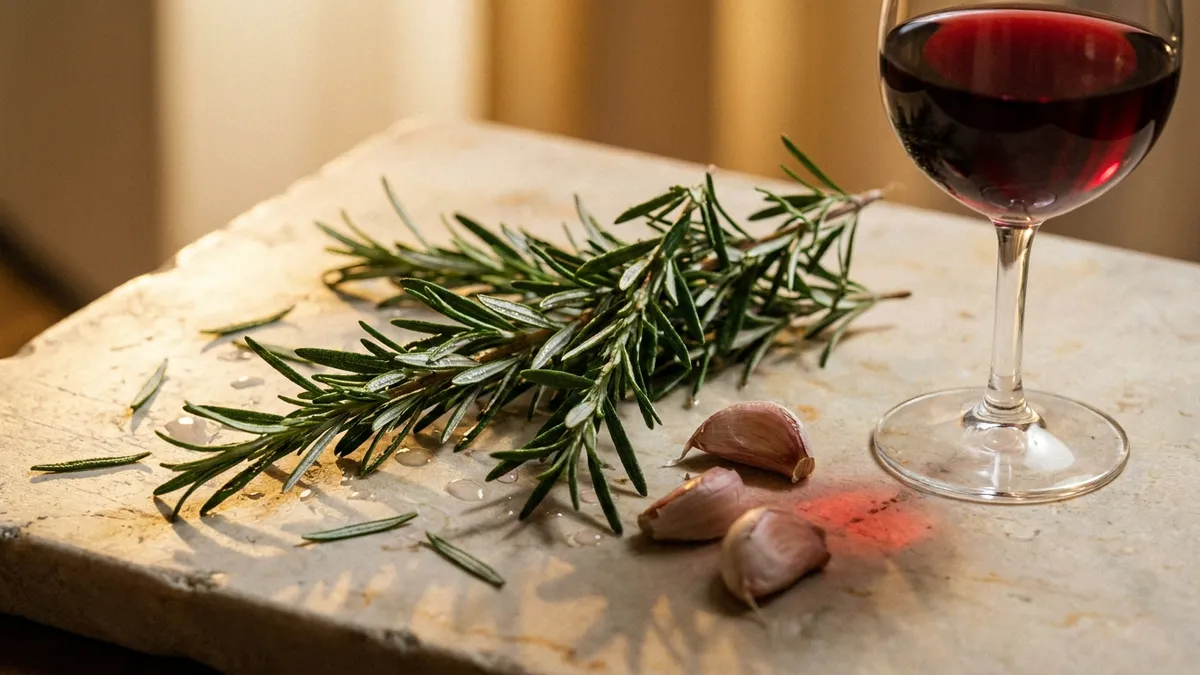
Rosemary goes with almost any red on this list. Its oil is rich in camphor and α-pinene, the compounds behind its piney, resinous smell. That smell sits well next to reds that smell of dried herbs, such as Syrah and southern Rhône blends. See herbal notes in wine to learn to spot them in the glass.
Which Wine Traditions Grew Up Around Lamb?
Three lamb-eating wine regions show these rules at work: Rioja in Spain, the southern Rhône in France and Naoussa in northern Greece. Each serves lamb with the local red, and each red fits a different place in the cut chart.
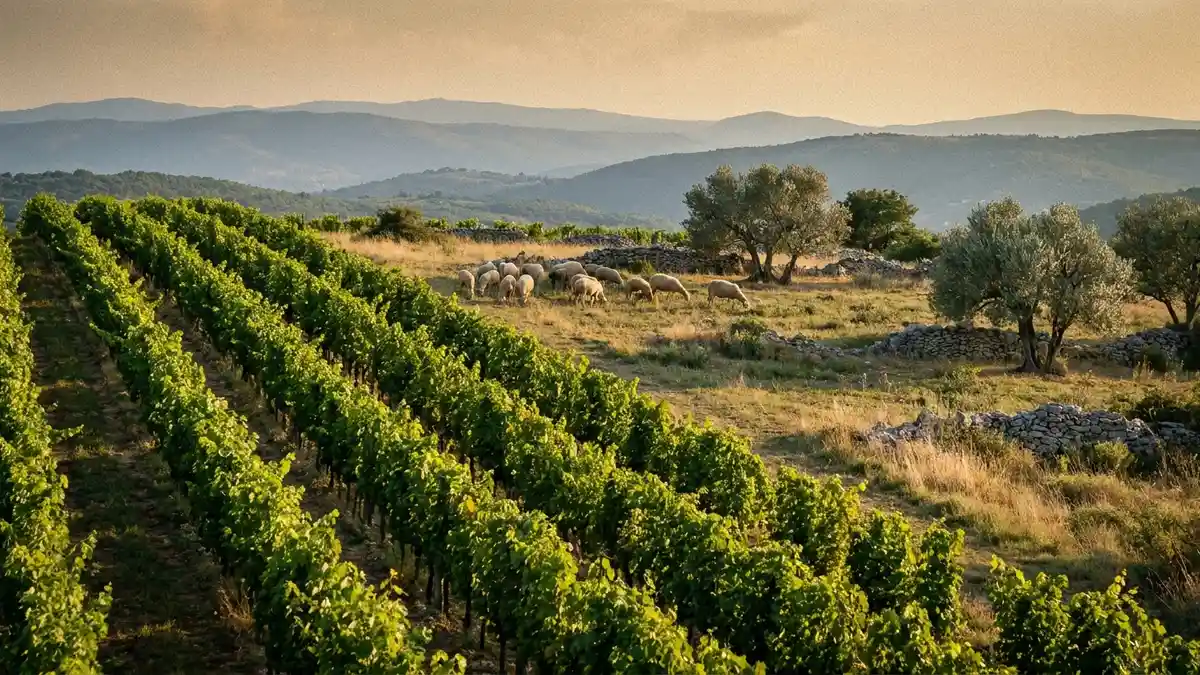
Rioja is Tempranillo country, with the grape at about 88% of red plantings, and roast lamb is a regional classic. Its oak-aged Crianza and Reserva reds suit the roast column of the table.
The southern Rhône and Provence roast lamb with garlic and wild herbs and pour Grenache blends, which sit in the braise and rack columns.
In Greece, the Naoussa red is Xinomavro, a grape with high tannin and medium-high acidity, often compared to Barolo. It belongs with charred chops and spit-roasted lamb. Greece also makes retsina, a mostly white wine flavoured with Aleppo pine resin since ancient times, mainly from the Savatiano grape. Its resin smell sits close to rosemary's. The Greece wine guide covers both.
Sommy's regional courses on Spain, Italy and France teach these reds grape by grape, so the label words in the table start to mean something on the shelf.
How Should You Serve Red Wine for a Lamb Dinner?
Serve the red a little cooler than a warm dining room, and give a young, tannic wine air before dinner. Pour it into a jug or decanter when the lamb comes out of the oven to rest. The air softens the first sips of a young Cabernet or Nebbiolo.
If the wine is a young Barolo, Cabernet or Xinomavro, decant it. If it is an older Rioja Gran Reserva with sediment, stand the bottle upright for a day and pour it gently just before serving. Soft Grenache blends and Crianza need neither. The how to decant wine guide shows the method, and the serving temperature chart gives the target for each style. For more pairings beyond lamb, the food pairing hub collects every guide in one place.
Your Lamb Dinner Tonight
Look at the plate first. Pink roast leg means Rioja Crianza or Chianti Classico; charred chops mean Cabernet, Syrah or Nebbiolo; a braise means Côtes du Rhône or Garnacha. Tonight, pour the wine before the food arrives, taste it alone, then taste it again after a bite of lamb fat. Open the Sommy app at sommy.wine, photograph the label, and let the AI-guided tasting mode walk you through look, smell and taste, then log both sips in your tasting journal.
Sources
Frequently Asked Questions
What is the best wine with lamb?
For most lamb dinners, a medium-bodied red with moderate tannin is the safest choice: Rioja Crianza or Reserva, Chianti Classico, or a Bordeaux blend. Move up to a firmer Cabernet Sauvignon, Syrah or Nebbiolo for charred chops and rack of lamb, and down to a soft, ripe Grenache blend such as Côtes du Rhône for slow-cooked shanks and stews.
Should you drink red or white wine with lamb?
Red is the usual choice, because tannin binds to proteins and alternating sips of a grippy wine with fatty meat tones down both the fat and the drying feel. White and rosé work in narrower cases: cold roast lamb, lamb salads, grilled kebabs with yogurt sauce, or lean spring lamb with fresh herbs. There, a dry rosé or a full-bodied white is the better pick.
What wine goes with lamb chops?
Lamb chops, especially seared or grilled with a crisp fat cap, can take a firmer red than a roast leg. Cabernet Sauvignon, Syrah and Nebbiolo all have the grip to meet the char and fat. If the chops are cooked well done and the fat is trimmed, step down to a softer Merlot or a Rioja Crianza so the wine does not taste harsh.
What wine goes with slow-cooked lamb shank?
Slow-cooked shank or shoulder wants a ripe, round red with soft tannin and plenty of fruit. A Grenache-led Côtes du Rhône, a Spanish Garnacha or a Zinfandel all work. The long cook has already made the meat tender and the sauce rich, so the wine needs to match that richness rather than add more grip. For a spiced tagine, choose the softest and least alcoholic of these.
What wine goes with lamb and mint sauce?
Mint sauce is sharp with vinegar and often sweetened, and both make a tannic red taste flatter and more bitter. Choose a red with higher acidity and moderate tannin, such as Chianti Classico or another Sangiovese, and serve the sauce as a thin smear. A dry rosé is the fallback if the table wants plenty of mint sauce.
Is Pinot Noir good with lamb?
Pinot Noir works with the leaner, gentler end of lamb: a pink roast leg, rack of spring lamb, or cold lamb the next day. Its light tannin and high acidity keep it fresh beside mild meat. It struggles against heavily charred chops or a spiced braise, where a firmer or riper red such as Syrah or a Grenache blend holds up better.
Sommy Team
LinkedInFounder & Wine Educator
The Sommy Team is building the world's most approachable wine education app, helping beginners develop real tasting skills through structured courses and AI-guided practice.