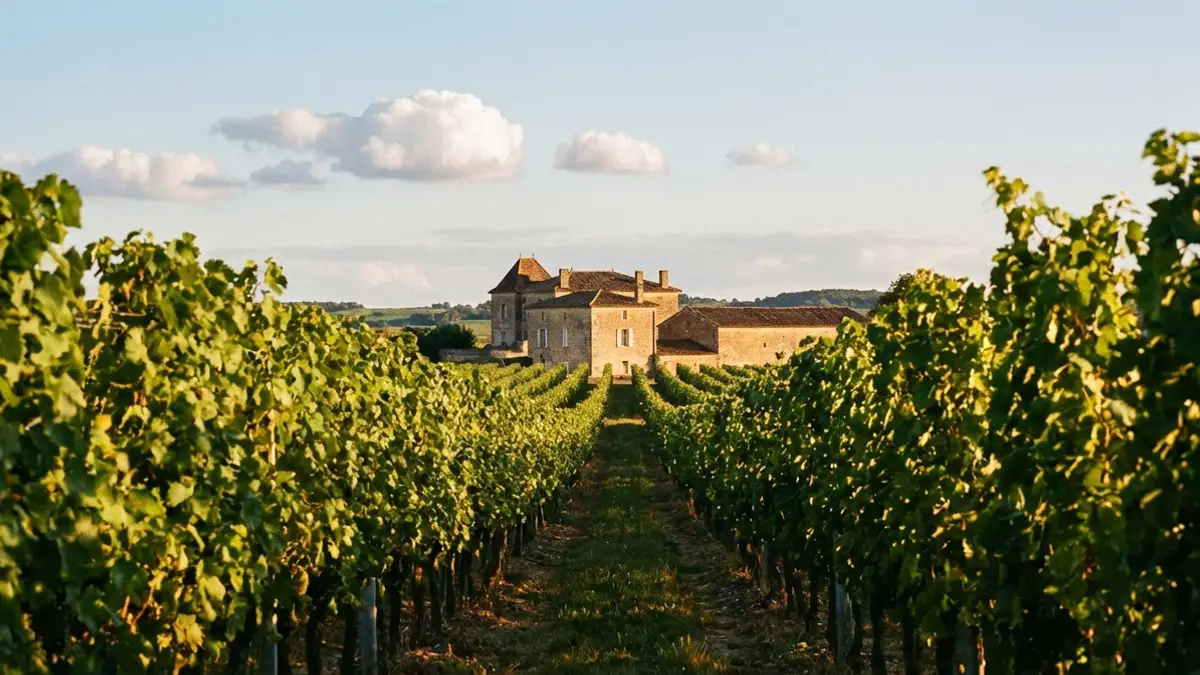
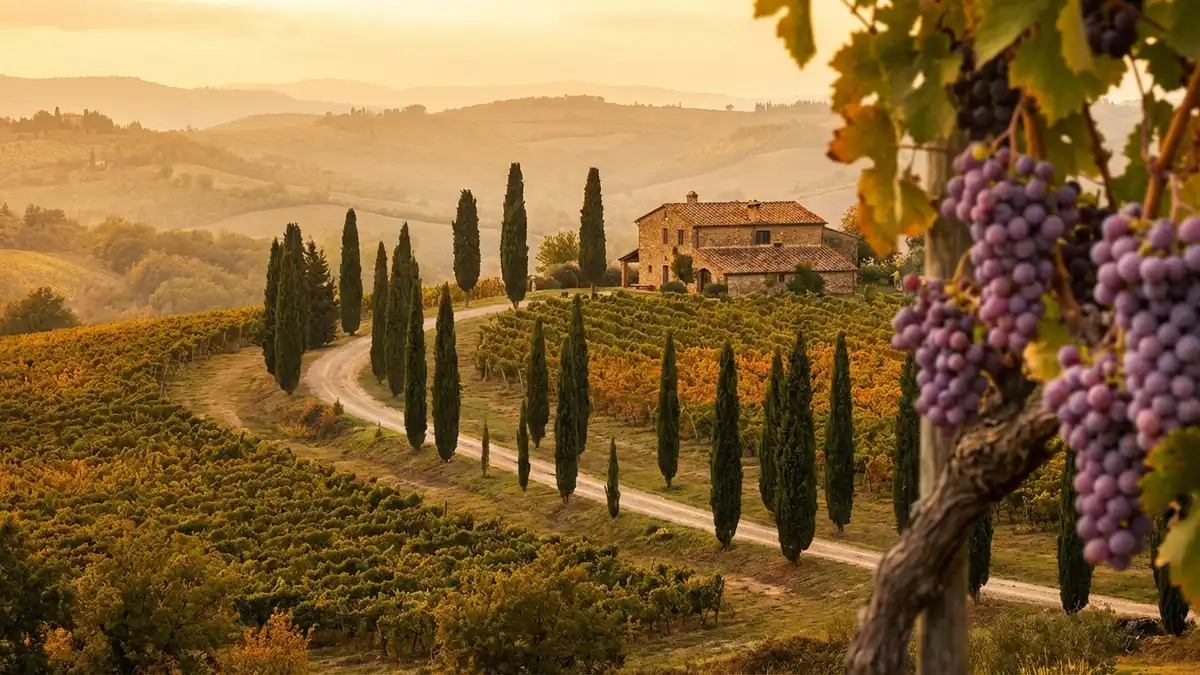
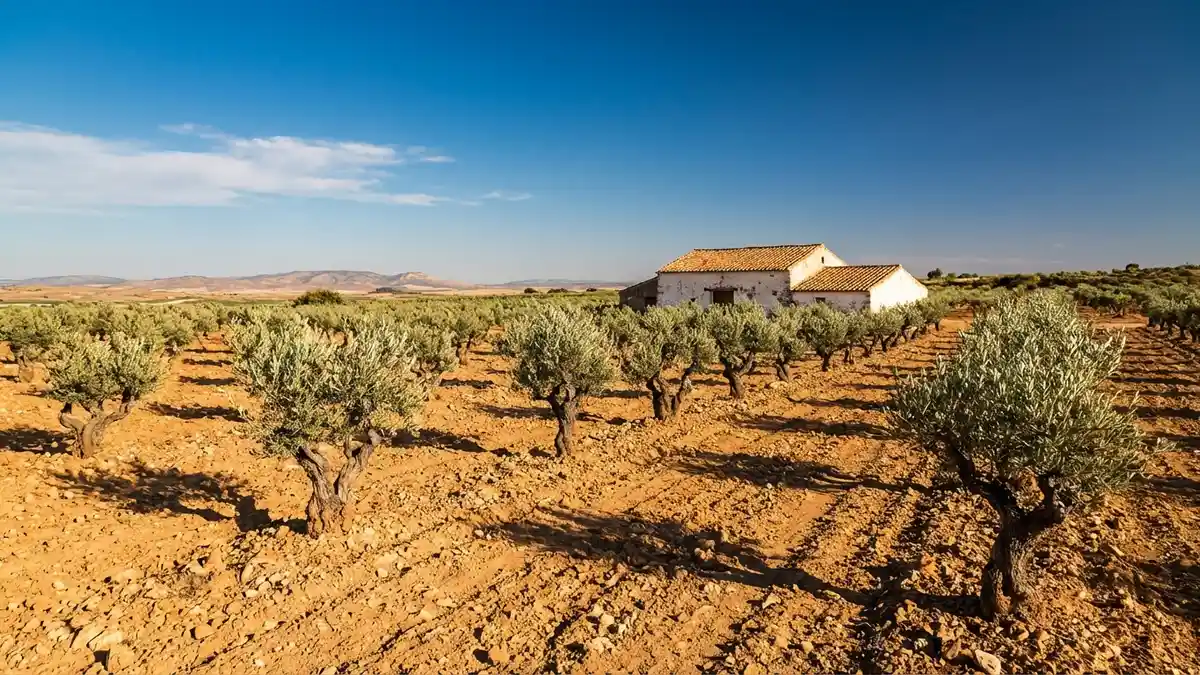
Provence Wine Guide: The Spiritual Home of Rosé

By the Sommy Team — AI-assisted, human-edited.
Updated Jun 17, 2026
Contents (10)
- What Is Provence Wine?
- The Style That Defines Provence: Pale, Dry Rosé
- How the Pale Provence Style Is Made
- Climate and Terroir: Why Provence Grapes Ripen So Easily
- The Signature Grapes of Provence
- Key Sub-Regions and Appellations of Provence
- How Provence Rosé Compares to Other Pink Wines
- Provence and the Table: Food Pairing
- How a Beginner Should Start with Provence
- The Reward of Learning Provence
TL;DR
Provence is the global benchmark for pale, dry rosé, made from Grenache, Cinsault, Syrah, and Mourvèdre across the warm Mediterranean southeast of France. This provence wine guide covers how the signature pale color is made, the key appellations like Côtes de Provence and Bandol, and how a beginner should start tasting it.
What Is Provence Wine?
This provence wine guide begins with the style that made the region famous worldwide: pale, dry rosé. Provence is a warm, sun-soaked stretch of southeast France along the Mediterranean, and it is the global benchmark for the modern pink wine you see everywhere in summer. Around 90% of its production is rosé, blended from Mediterranean grapes — Grenache, Cinsault, Syrah, and Mourvèdre, with the local Tibouren. The largest appellation is Côtes de Provence, while Bandol makes ageworthy Mourvèdre-led reds and rosés, and Cassis specializes in whites. The signature is that delicate salmon-pink color and a crisp, savory, mineral character — never sweetness.
The Style That Defines Provence: Pale, Dry Rosé
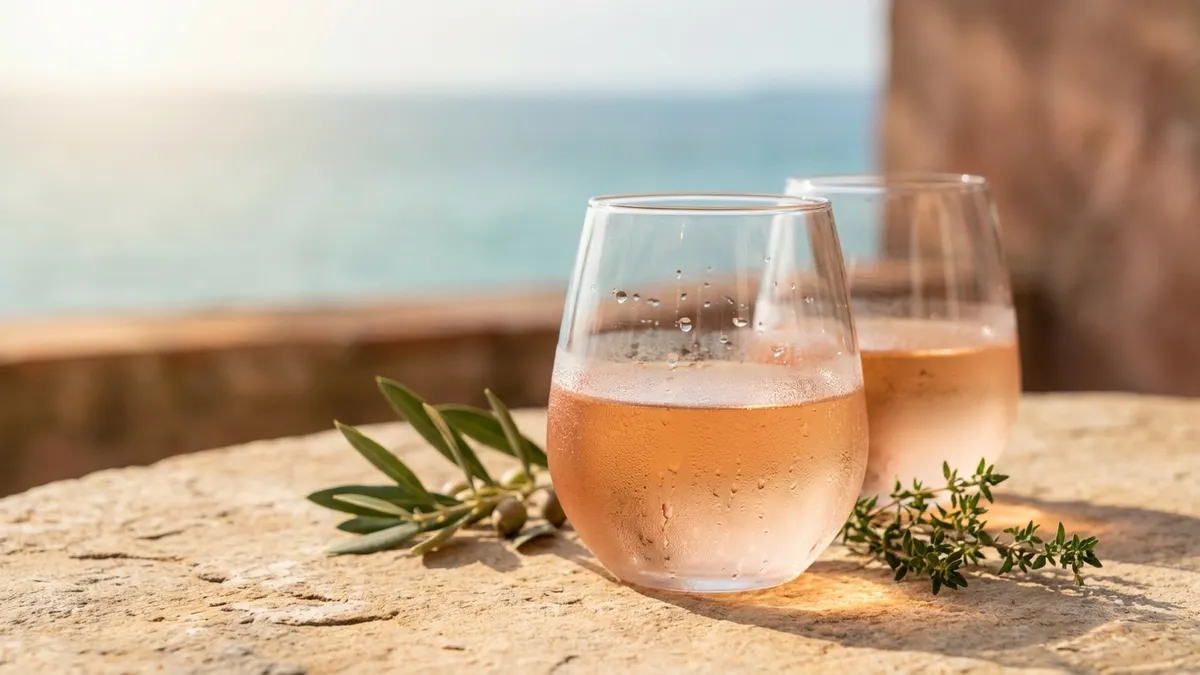
Most wine regions are known for a red or a white. Provence is known for a color. The pale, salmon-pink rosé of Provence is the most copied style in the wine world, and it set the template that producers from California to South Africa now chase.
The first thing to unlearn is the idea that pink means sweet. Classic Provence rosé is bone dry. Its appeal comes from a bright, savory, slightly salty character — think crushed strawberry, white peach, citrus zest, and a stony, herbal edge that locals link to the wild scrubland nearby.
That herbal note has a name worth knowing: garrigue (the aromatic Mediterranean brush of rosemary, thyme, lavender, and juniper that perfumes the hillsides). It turns up again and again in Provence wine, in both the rosés and the reds.
If you are new to pink wine in general, our broader rosé wine guide explains the category from the ground up, and the rosé grapes guide covers which varieties make the best pink wines.
How the Pale Provence Style Is Made
The famous color is not an accident of weak grapes — it is a deliberate method. Understanding it is the single most useful thing in this region, because it explains why Provence rosé looks and tastes the way it does.
Rosé gets its pink color from brief contact between clear grape juice and dark grape skins. The longer the juice sits on the skins, the deeper the color and the more tannin and weight the wine picks up. Provence chooses the gentlest end of that spectrum.
- Direct press: The dominant Provence method. Red grapes are pressed almost immediately, so the juice barely touches the skins. Minimal skin contact means a very pale color, low tannin, and a crisp, delicate wine. This is how the iconic onion-skin and salmon hues are achieved.
- Short maceration: Some producers let the juice rest on the skins for a few hours before pressing, giving a slightly deeper pink and a touch more body. Still dry, still fresh, just a shade more substantial.
- Saignée (bleeding off): Juice is "bled" from a tank of red wine in progress, concentrating the red and producing rosé as a by-product. This gives a darker, fruitier pink and is less typical of the classic Provence look.
The Provence calling card is direct press, and it is why the wines are so pale yet so dry. Color tells you about method here, not sugar. The Sommy app's tasting exercises train you to read color as a clue to how a wine was made, so a pale glass stops being a mystery and becomes information.
Climate and Terroir: Why Provence Grapes Ripen So Easily
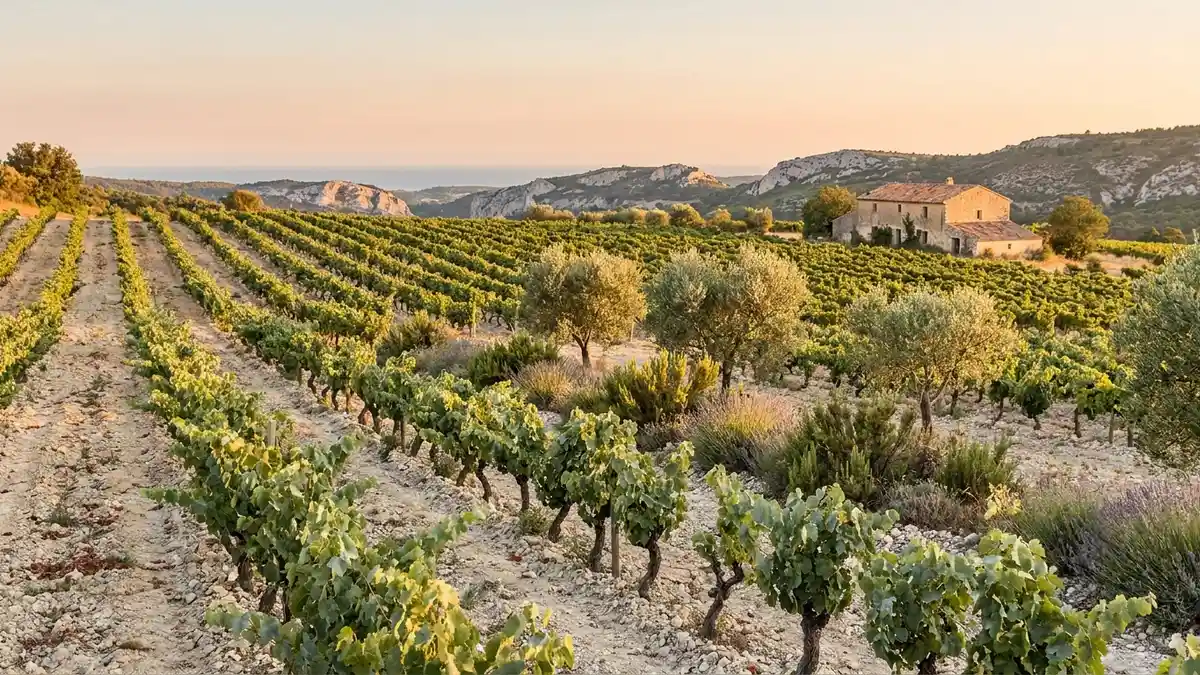
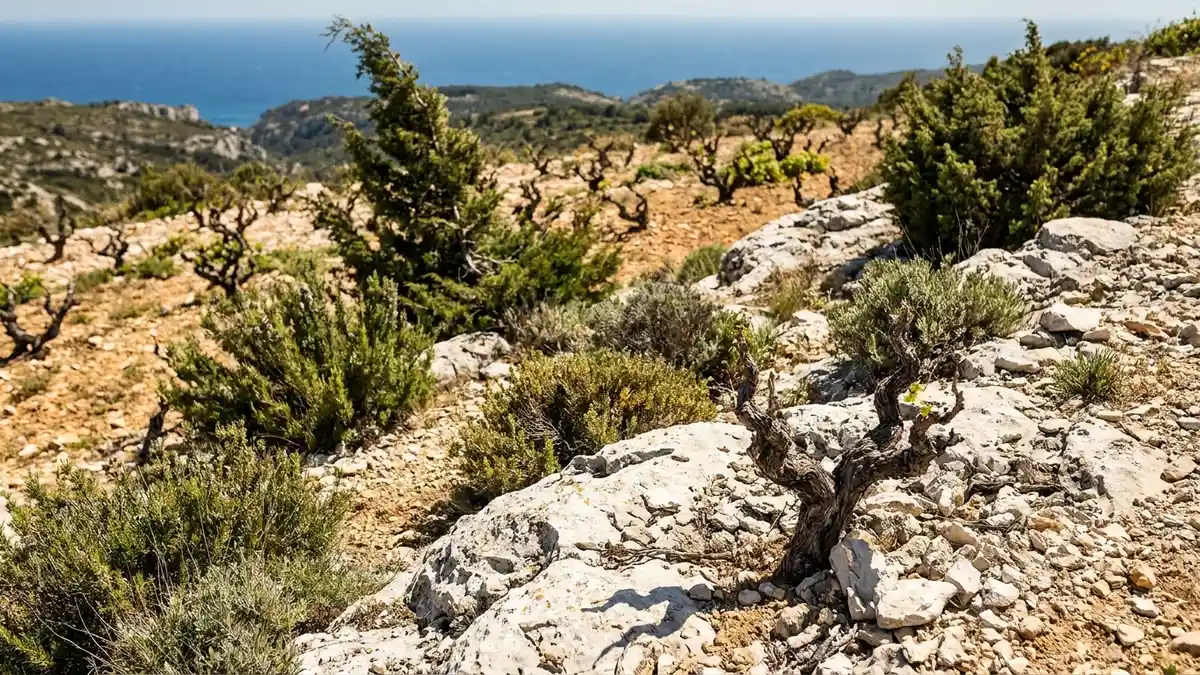
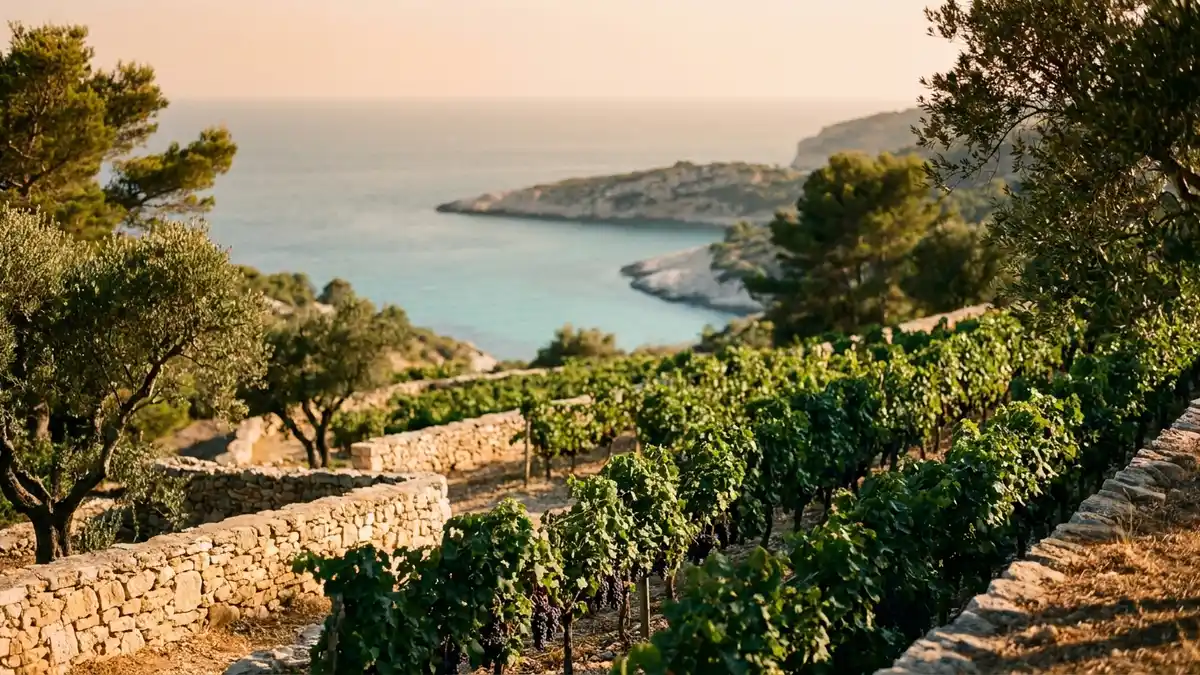
Provence sits in France's deep south, hugging the Mediterranean coast roughly between Marseille and Nice, with vineyards reaching inland toward the Alps. The climate is classic Mediterranean: long, hot, dry summers, mild winters, and an enormous amount of sunshine — well over 2,800 hours a year in places.
Two forces shape the wines. The first is heat and light, which ripen the southern grapes fully and reliably. The second is the mistral (a strong, cold, dry wind that funnels down the Rhône valley to the coast). The mistral keeps vineyards dry and disease-free, which suits low-intervention farming and helps preserve the freshness that balances all that ripeness.
The soils vary widely — limestone, schist, sandstone, and clay — but the unifying thread is terroir shaped by sun, sea breeze, and that ever-present wind. The result is wine that is ripe and generous yet kept lively and savory by the climate.
The Signature Grapes of Provence
Provence is a region of blends, not single varieties. Each grape plays a role, and knowing the cast helps you predict what is in the glass. These are the workhorses of both the rosés and the reds.
- Grenache: The backbone of most Provence rosé and red blends. It brings ripe red fruit — strawberry and raspberry — warmth, and a soft, round body. For the full picture of this Mediterranean staple, see our Grenache wine guide.
- Cinsault: A softening grape that adds gentle red fruit, floral lift, and finesse. It lowers the alcohol and freshens the blend, making it ideal for pale, elegant rosé.
- Syrah: Brings color, structure, and darker fruit, plus a peppery, savory edge. It gives reds their grip and lends rosé a touch more spine.
- Mourvèdre: The power grape, demanding heat to ripen fully. It adds depth, firm tannin, and aging potential, and it is the star of Bandol. Our Mourvèdre wine guide covers why it needs so much sun.
- Tibouren: A Provence specialty, prized for fragrant, characterful rosé with a distinctive savory, almost wild perfume. A signature of the region's traditional pink wines.
Whites lean on different grapes. Rolle (the local name for Vermentino) leads, bringing citrus, pear, and a saline freshness, often joined by Clairette and Ugni Blanc. White is a small slice of production but central to the appellation of Cassis.
In Provence, the grape is rarely the headline. The blend, the color, and the place do the talking.
Key Sub-Regions and Appellations of Provence
Provence is not one wine but several, organized into appellations that each have a personality. Learning the main ones turns a wall of pink bottles into a map you can read.
Côtes de Provence
The giant of the region. Côtes de Provence is the largest appellation, accounting for the bulk of all Provence wine, and it is overwhelmingly rosé. This is the home of the classic pale, dry, easy-drinking style and the best place for a beginner to meet the Provence house signature. Reliable, widely available, and built for the table.
Coteaux d'Aix-en-Provence and Coteaux Varois
Two large inland appellations sitting alongside Côtes de Provence. Coteaux d'Aix-en-Provence stretches across the warmer western reaches near the city of Aix, while Coteaux Varois en Provence lies in cooler, higher country inland, where altitude lends a touch more freshness. Both make mainly rosé in the regional style, plus reds and a little white.
Bandol
The region's serious heavyweight. Bandol is a small coastal appellation built around Mourvèdre, which must form a high proportion of its reds. The reds are deep, structured, and famously ageworthy — full of dark fruit, leather, herbs, and grip that softens beautifully over a decade or more. Bandol also makes rich, ageworthy rosé with real weight. It is the answer to anyone who assumes Provence makes only summer sippers. The aging potential here comes from Mourvèdre's firm tannins (the drying, gripping sensation that gives red wine its backbone and lets it age).
Cassis
Not to be confused with the blackcurrant liqueur, Cassis is a tiny coastal appellation near Marseille that is unusual in Provence for specializing in white wine. Built on Rolle, Clairette, and Marsanne, Cassis whites are crisp, saline, and herb-tinged — a natural match for the local seafood.
Les Baux-de-Provence and Palette
Two small, distinctive appellations round out the picture. Les Baux-de-Provence is known for bold reds and a strong tradition of organic farming, while Palette is one of France's smallest appellations, prized for characterful reds, whites, and rosés from a handful of estates.
How Provence Rosé Compares to Other Pink Wines
The fastest way to understand the Provence style is to set it against the alternatives. The differences come down to color, sweetness, and intent.
- Provence rosé: Color: very pale salmon to onion-skin · Sweetness: bone dry · Style: crisp, savory, mineral, herbal · Made by: direct press, as a serious wine in its own right.
- Bordeaux and Loire rosé: Color: deeper pink · Sweetness: dry but fruitier · Style: rounder, more red-fruit-forward · Made by: often saignée, sometimes treated as a secondary wine.
- White Zinfandel and off-dry blush: Color: bright pink · Sweetness: clearly off-dry to sweet · Style: candied, simple, juicy · Made by: arrested fermentation to keep sugar.
- Tavel (Rhône): Color: deep rose to light red · Sweetness: dry · Style: full-bodied, powerful, structured · Made by: longer maceration for a richer, gastronomic pink.
The takeaway: Provence is the pale, dry, food-friendly benchmark, and most pale dry rosés you find elsewhere are deliberately made in its image. To explore the grapes behind these pink wines more deeply, our Cinsault wine guide and the carignan wine guide cover two southern-French varieties that turn up across the wider Mediterranean.
Provence and the Table: Food Pairing
Provence wine was built for Mediterranean food, and that is the easiest way to enjoy it. The dry, savory, mineral profile of the rosé is a versatile partner that handles dishes many wines struggle with.
- Pale Provence rosé loves grilled vegetables, salads with goat cheese, herbed chicken, and especially the garlicky, oily flavors of the coast — aioli, tapenade, and ratatouille.
- Provence rosé with seafood is a natural: grilled fish, mussels, prawns, and the saffron-rich fish stew bouillabaisse all sing with a chilled glass.
- Bandol reds want richer fare — lamb, game, daube (a slow-braised beef stew), and aged cheese — where their structure and herb notes shine.
- Cassis whites are made for shellfish, sea urchin, and grilled sardines straight off the Mediterranean.
The salty, savory edge that runs through Provence wine is exactly what makes it so easy at the table. Sommy turns pairings like these into guided practice, helping you taste why a wine's acidity and savory character work with a dish rather than against it.
How a Beginner Should Start with Provence
You do not need a special-occasion bottle to understand Provence. The smart path is to taste deliberately and notice what changes as you move from the everyday style to the serious one. Here is a practical order:
- Start with a basic Côtes de Provence rosé. Serve it well chilled and pay attention to the pale color, the dry savory fruit, and that herbal garrigue edge. This is the house style in its purest form.
- Compare two rosés side by side. Put a pale Côtes de Provence next to a richer Bandol rosé. The Bandol will feel weightier and more structured — proof that Mourvèdre changes the game even in pink wine.
- Try a Bandol red. Once you know the rosé, a Bandol red shows the region's depth: dark fruit, leather, herbs, and firm tannin built to age.
- Add a Cassis white. A crisp, saline Cassis broadens your picture of the region beyond pink and shows what the coast does with white grapes.
- Build the tasting habit. Note the color first, then the dryness, then the savory and herbal notes. Our guide to how to taste wine gives you the step-by-step method, and understanding tannins, acidity, and body explains the structure that separates a light rosé from a serious Bandol.
Provence also rewards a wider curiosity about French wine. To see how it fits alongside Burgundy, Bordeaux, and the rest, our overview of French wine regions maps the whole country, and the foundational guide to the noble grapes puts Syrah and the other key varieties in context.
Sommy turns these comparisons into guided exercises — naming the aromas, scoring the structure, and building the vocabulary to describe what you sense. You can start practicing free at sommy.wine, then bring the method to your next bottle of Provence rosé.
The Reward of Learning Provence
Provence looks simple from the outside — pretty pink bottles for summer. Underneath is a region with real range: a benchmark rosé style copied around the world, the powerful ageworthy reds of Bandol, the saline whites of Cassis, and a method-first approach to color that teaches you to taste with your eyes as well as your mouth.
Start with one chilled glass of Côtes de Provence, notice the pale color and the dry savory finish, and build from there. The Sommy app is designed to make that habit stick — turning each bottle into a short, guided lesson so the next Provence rosé you open tells you more than the last.
Sources
Frequently Asked Questions
What is Provence wine known for?
Provence is known above all for pale, dry rosé — the world's benchmark style. Roughly nine in ten bottles from the region are rosé, made mostly from Grenache, Cinsault, and Syrah. The signature is a delicate salmon-pink color and a crisp, savory, mineral character rather than sweetness. Provence also makes serious reds and a little white.
Why is Provence rosé so pale?
The pale color comes from method, not weak grapes. Most Provence rosé is made by direct press, where red grapes are pressed quickly and the juice barely touches the dark skins. Less skin contact means less color and tannin. The result is the famous delicate salmon-to-onion-skin hue that defines the modern Provence style worldwide.
What grapes are used in Provence wine?
Provence blends Mediterranean grapes. Grenache brings red fruit and warmth, Cinsault adds softness and floral lift, Syrah gives structure and color, and Mourvèdre adds power and aging potential, especially in Bandol. Tibouren is a local specialty prized for fragrant rosé. Whites use Rolle, also called Vermentino, along with Clairette and Ugni Blanc.
What is Bandol wine?
Bandol is a small, prestigious appellation on the Provence coast built around the Mourvèdre grape. Its reds are deep, structured, and ageworthy, with dark fruit, leather, and herb notes that reward years in the cellar. Bandol also makes rich, serious rosé. It is the region's answer to anyone who thinks Provence makes only easy summer wine.
Is Provence rosé sweet?
No. Classic Provence rosé is dry, crisp, and savory, not sweet. The pale pink color often misleads beginners into expecting sugar, but the style is built on freshness and a salty, mineral edge that suits Mediterranean food. If you want a clearly sweet pink wine, you are thinking of off-dry styles like White Zinfandel, which are a different category.
What is the difference between Provence and Bordeaux rosé?
Provence rosé is made as a serious wine in its own right, usually by direct press for a pale color and a dry, mineral, herb-tinged style. Bordeaux and many other regions often treat rosé as a by-product or a fruitier, deeper-colored quaffer. Provence sets the global pale-and-dry benchmark that other regions now copy.
Where should a beginner start with Provence wine?
Start with a basic Côtes de Provence rosé, the region's largest appellation, to learn the pale, dry, savory house style. Taste it well chilled alongside Mediterranean food. Next, compare it with a Bandol rosé to feel how Mourvèdre adds weight, then try a Bandol red and a Cassis white to see the region's full range.
Sommy Team
LinkedInFounder & Wine Educator
The Sommy Team is building the world's most approachable wine education app, helping beginners develop real tasting skills through structured courses and AI-guided practice.