Côtes du Rhône: France's Best-Value Red Wine

By the Sommy Team — AI-assisted, human-edited.
Updated Jun 17, 2026
Contents (9)
- What Is Côtes du Rhône Wine?
- Where Côtes du Rhône Is and Its Mediterranean Climate
- The GSM Blend: Why Côtes du Rhône Mixes Its Grapes
- The Côtes du Rhône Wine Guide to the Four-Tier Value Pyramid
- Beyond the Reds: White and Rosé Côtes du Rhône
- What Makes Côtes du Rhône Distinctive
- How to Read a Côtes du Rhône Label and Find Value
- How a Beginner Should Start with Côtes du Rhône
- The Reward of Learning Côtes du Rhône
TL;DR
Côtes du Rhône is southern France's best-value red, built on a Grenache-Syrah-Mourvèdre blend grown in a warm Mediterranean climate. Its appellations form a four-tier value pyramid, from broad regional bottlings up to named Crus. This Côtes du Rhône wine guide shows beginners how to read the label and find the value.
What Is Côtes du Rhône Wine?
This Côtes du Rhône wine guide begins with the reason the name turns up on so many dinner tables: it is one of the best-value reds in France. Côtes du Rhône is the broad appellation covering the warm, sun-soaked southern stretch of the Rhône Valley in southeastern France. Most of its wine is red, built on a blend led by Grenache and supported by Syrah and Mourvèdre — the trio known as GSM. The appellations stack into a four-tier value pyramid: broad regional Côtes du Rhône at the base, then Côtes du Rhône Villages, then named villages such as Cairanne, and the prestigious Crus like Châteauneuf-du-Pape and Gigondas at the summit. Learn the blend and the pyramid, and you can find generous, food-friendly wine at almost any budget.
Where Côtes du Rhône Is and Its Mediterranean Climate
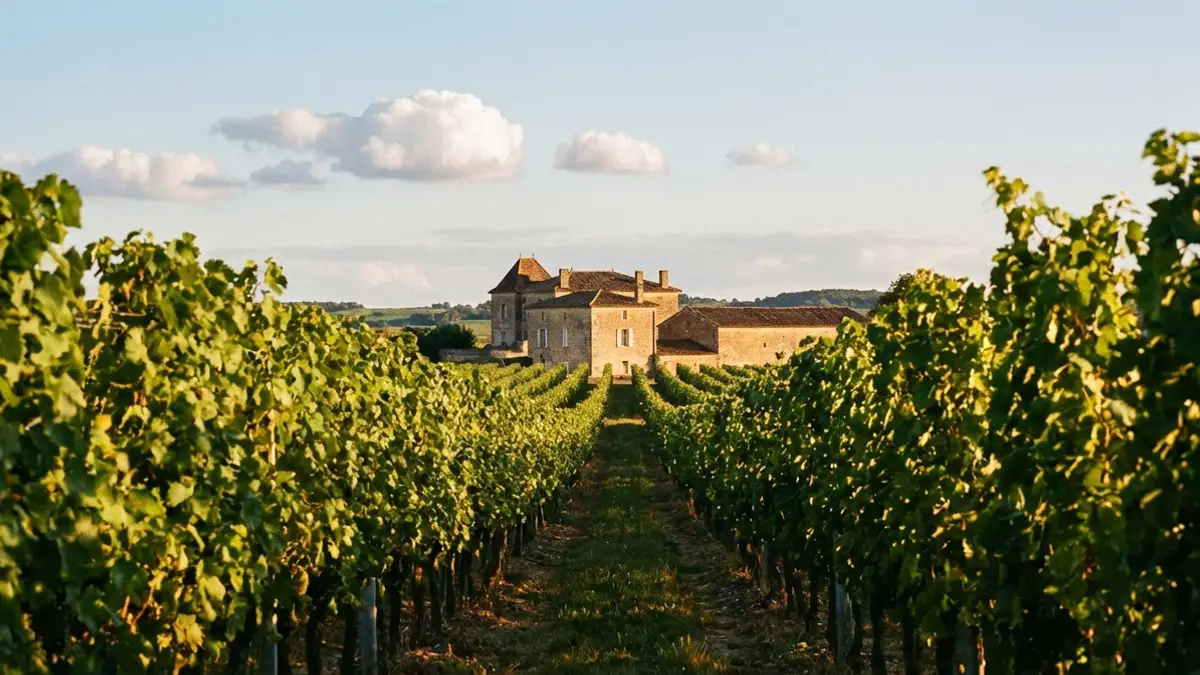
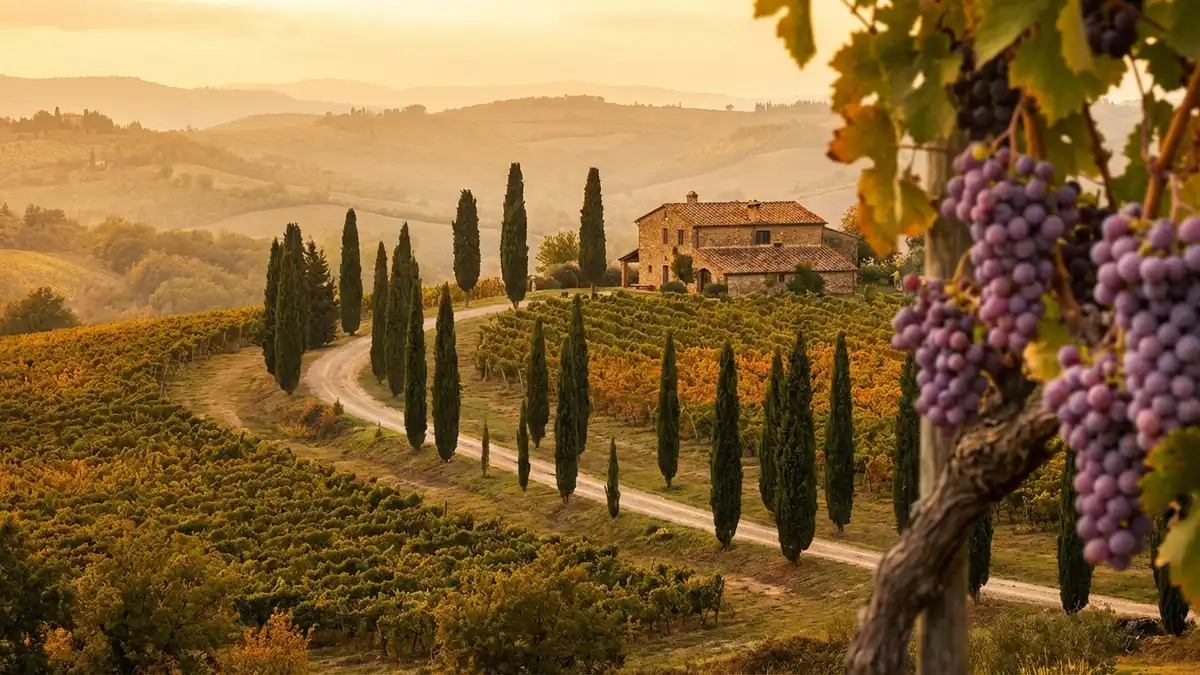
Côtes du Rhône sits in the southern Rhône, the wide, hot lower half of the Rhône Valley as the river runs south toward the Mediterranean. This is a different world from the steep, cool northern Rhône an hour upstream, where single-grape Syrah dominates narrow hillsides. The south is broad, flat-to-rolling, and bathed in sun — the heart of the southern Rhône wine guide story is warmth.
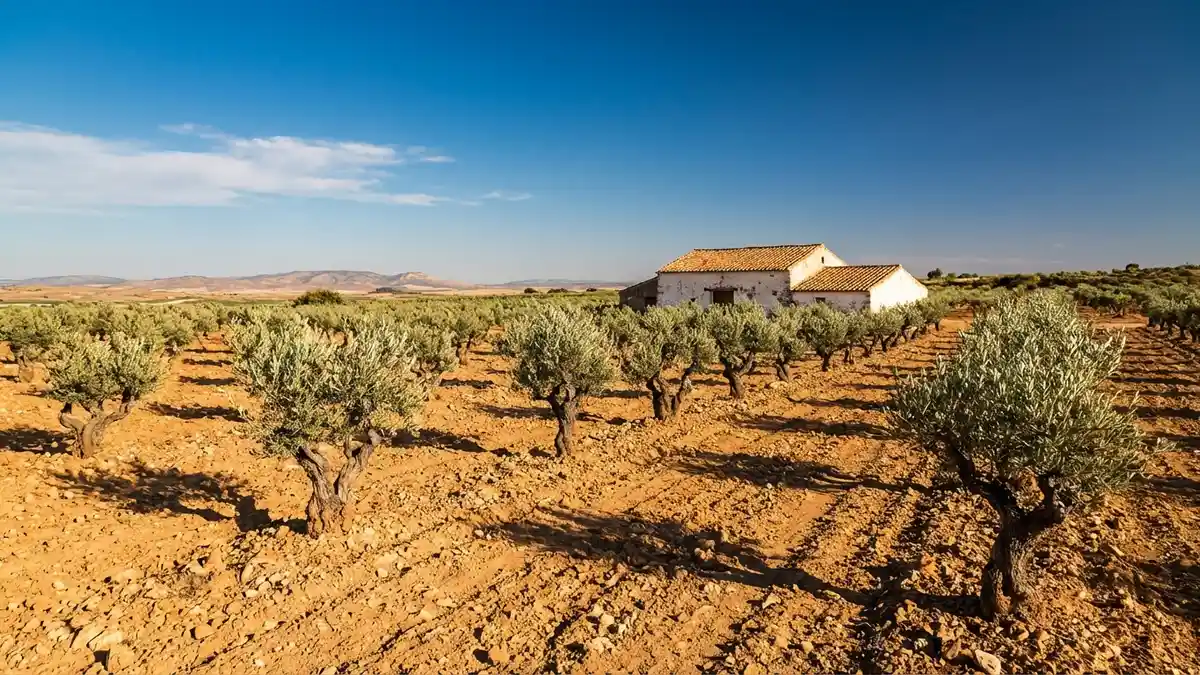
The climate here is firmly Mediterranean: long, hot, dry summers and mild winters. Grapes ripen fully and reliably, which is exactly why the reds taste so ripe, round, and generous. The famous local wind, the mistral, sweeps down the valley, drying the vines, keeping disease at bay, and preserving freshness in the fruit.
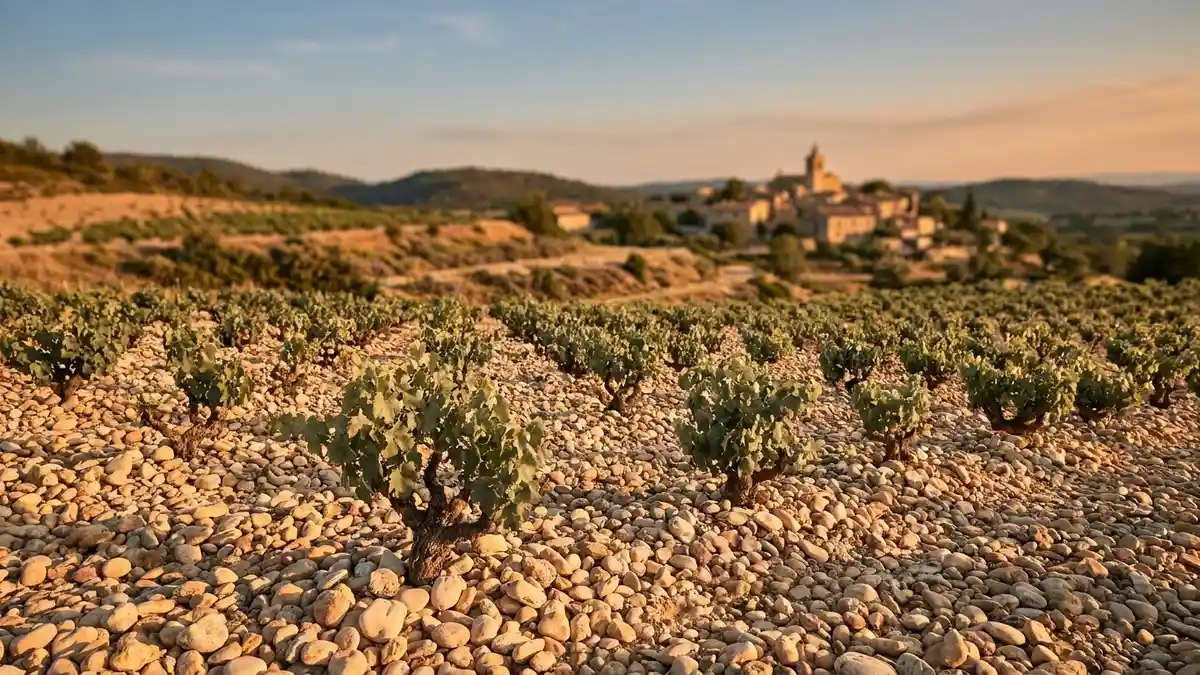
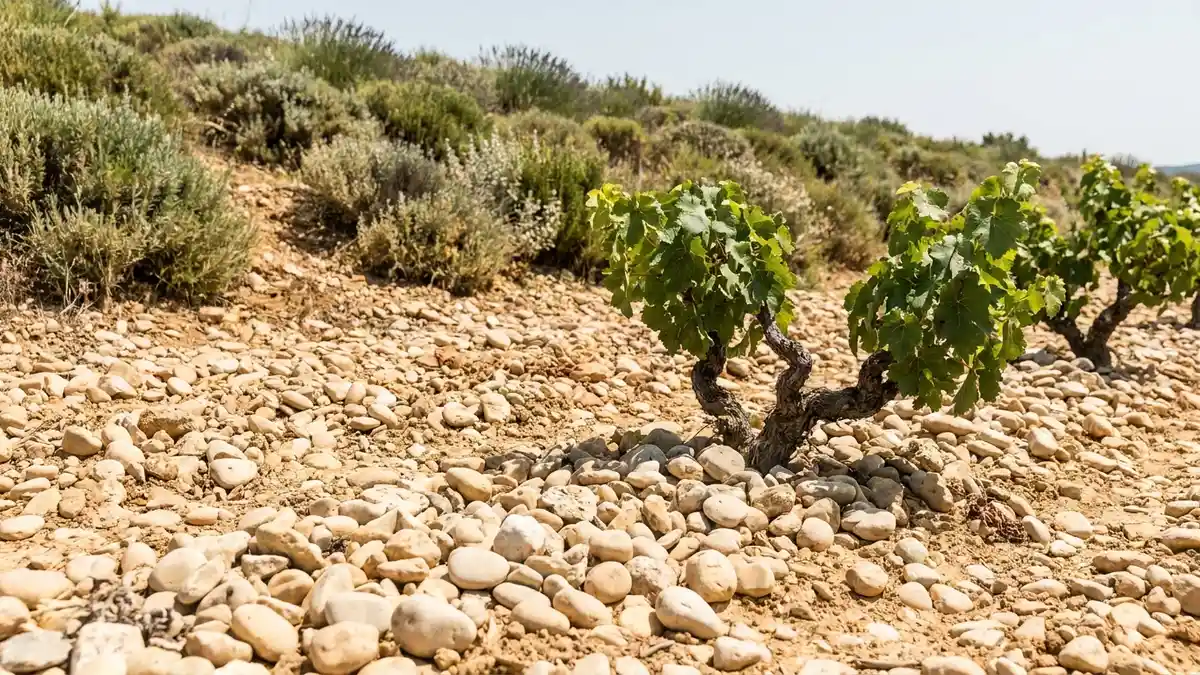
Two soil features define the region's character. The first is galets — smooth, fist-sized stones polished by the ancient river — that blanket many of the best vineyards. By day they soak up heat and by night they radiate it back to the vines, pushing ripeness even further. The second is garrigue, the wild scrubland of rosemary, thyme, lavender, and juniper that grows across the hills. That herbal, sun-baked aroma finds its way into the wine, giving southern Rhône reds their savory, peppery, dried-herb signature.
The GSM Blend: Why Côtes du Rhône Mixes Its Grapes
Where the northern Rhône bottles Syrah on its own, the south is a region of blends. The logic is simple: each grape brings something the others lack, and together they make a wine more complete than any one could alone. This is the opposite philosophy to single-variety regions, and it is the engine of Côtes du Rhône's easy charm.
The backbone is the GSM trio:
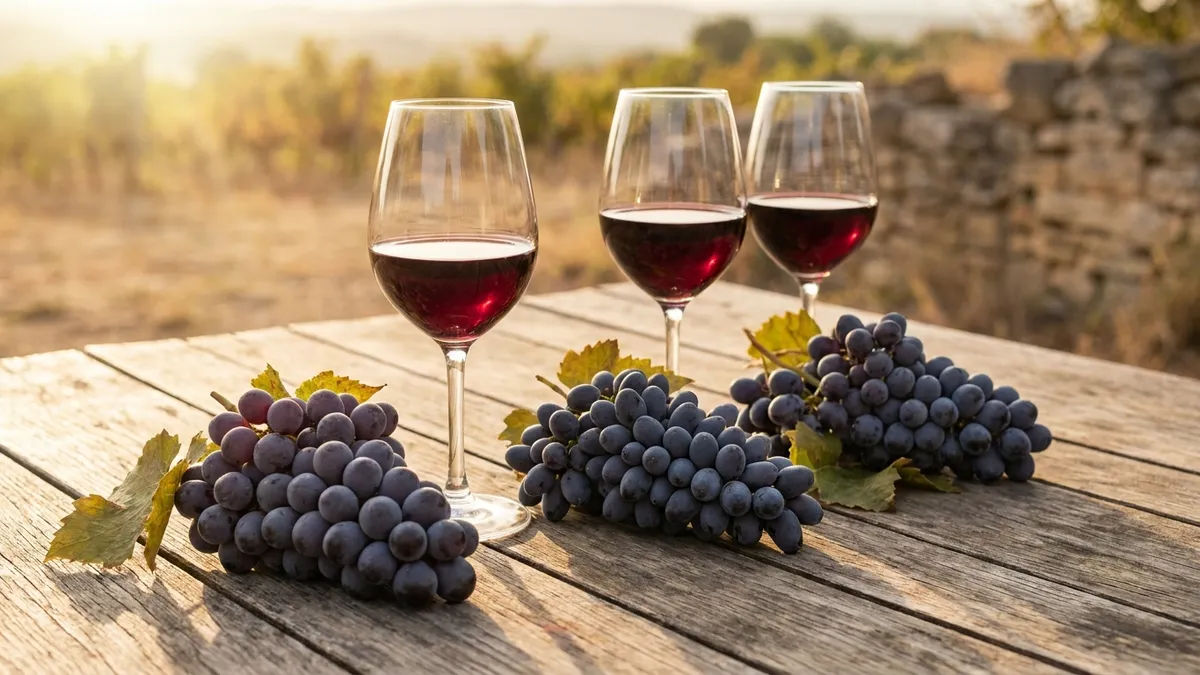
- Grenache: The leader and usually the largest share of the blend. It gives ripe red fruit — strawberry, raspberry, red cherry — generous warmth, and high alcohol with relatively soft tannins. Grenache is the source of the wine's juicy, welcoming character. Our Grenache wine guide goes deep on the grape that anchors nearly every southern Rhône red.
- Syrah: The grape that adds color, structure, and a distinct black-pepper and dark-fruit edge. In the warm south it plays a supporting role, firming up Grenache's softness and deepening the wine. Syrah is the dominant grape of the northern Rhône, so the south borrows its best traits without letting it take over.
- Mourvèdre: The savory anchor. It brings firmer tannins, dark color, and a gamey, meaty, almost leathery depth that gives serious southern Rhône reds their backbone and ability to age. Mourvèdre needs heat to ripen, so the south's climate suits it perfectly.
Beyond the core three, the appellation permits a long supporting cast. Carignan adds color and rustic structure — see our Carignan wine guide for the grape's old-vine revival. Cinsault lightens the blend and shines in rosé, while Counoise lends a peppery, aromatic lift; our Counoise wine guide covers this rare but characterful minor partner. The reds typically combine several of these into a single, harmonious bottle.
The blending approach means no two producers' Côtes du Rhône taste quite the same, yet all share that warm, fruity, herb-dusted core. If you want to understand how grapes like these build a wine's feel — the moderate tannins (the drying, gripping sensation in red wine), the medium acidity (the fresh, mouth-watering tartness), and the generous body — our guide to understanding tannins, acidity, and body lays out the structure clearly.
The Côtes du Rhône Wine Guide to the Four-Tier Value Pyramid
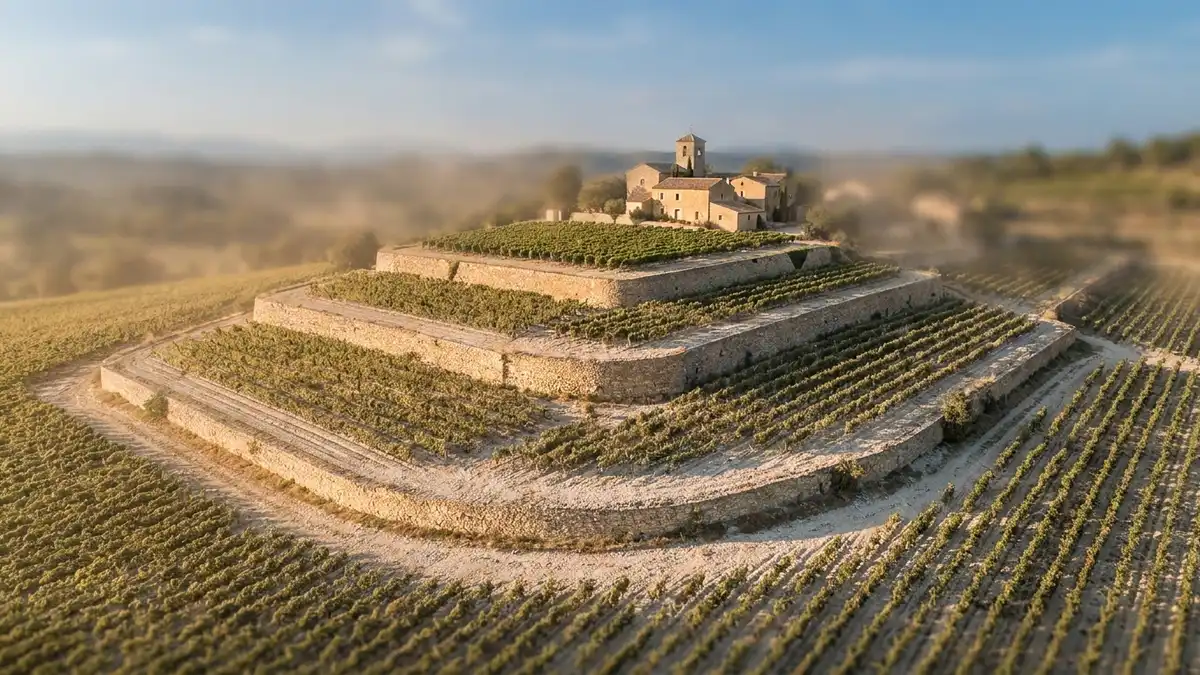
The single most useful thing to learn about Côtes du Rhône is its value pyramid. Every bottle sits in one of four tiers, ranked by how specific the place on the label is. The narrower the named place, the higher the quality and the price. This pattern appears on every label and predicts both style and cost, which is exactly why this region rewards a little label literacy. From broadest to most exclusive:
- Côtes du Rhône (Regional): The wide base of the pyramid and the bulk of all production. Grapes come from across the whole appellation, with the highest permitted yields. These are ripe, easy, fruit-forward reds at the friendliest price — the smartest place for a beginner to meet the region's house style.
- Côtes du Rhône Villages: A step up, drawn from a smaller, higher-quality zone with stricter rules and lower yields. The wines show more concentration, more Grenache-led structure, and a clearer sense of place. The label reads simply "Côtes du Rhône Villages."
- Named Villages: When a specific commune earns recognition, its name joins the label — for example "Côtes du Rhône Villages Plan de Dieu" or "Côtes du Rhône Villages Sablet." A handful of villages such as Cairanne and Rasteau have been promoted further to stand alone as their own appellations. These wines are more individual and more ambitious.
- Crus: The summit. The greatest named villages drop "Côtes du Rhône" from the label entirely and stand on their own as Crus — Châteauneuf-du-Pape, Gigondas, Vacqueyras, and others. These are the most concentrated, age-worthy, and prestigious southern Rhône reds, and they command the highest prices in the region.
The pattern to remember mirrors the wider logic of French wine regions: the more specific the place named on the label, the higher the tier. A broad regional name sits at the bottom; a single famous Cru standing alone sits at the top. The Sommy app's French wine course walks through real southern Rhône labels so you can place any bottle in this pyramid at a glance.
Beyond the Reds: White and Rosé Côtes du Rhône
Reds dominate, but the region makes excellent whites and rosés across the same four-tier pyramid, and both are easy to overlook.
- White Côtes du Rhône: A blend of Grenache Blanc, Viognier, Marsanne, Roussanne, and Clairette. The style is rounded and textured, with stone fruit, white flowers, and a touch of honey or almond. These wines are fuller and softer than crisp northern whites, built for the warm climate.
- Rosé Côtes du Rhône: Usually led by Grenache and Cinsault, southern Rhône rosé is dry, fruity, and substantial — more structured than a pale Provence pink and a strong match for grilled food and warm evenings.
Both styles offer the same value logic as the reds: the regional tier is the everyday workhorse, while villages and Crus reward a step up. They are a useful reminder that this region is far more than a single red blend.
What Makes Côtes du Rhône Distinctive
A few traits set Côtes du Rhône apart and explain why it punches so far above its price.
The first is value. Because the regional appellation is large and the climate ripens grapes reliably every year, the base tier delivers consistent, generous wine cheaply. As you climb the pyramid, quality rises faster than price compared with more famous French regions, so even the Crus feel like fair deals beside equivalent Bordeaux or Burgundy.
The second is the blend itself. Relying on a team of grapes rather than a single star makes the wines remarkably food-friendly and forgiving. A blend can balance a hot vintage by leaning on its fresher components, which is part of why Côtes du Rhône rarely disappoints.
The third is warmth made savory. The galets and garrigue turn sun-ripened fruit into something more than sweet — peppery, herbal, and dried-fruit-tinged. That savory edge is the signature that links a humble regional red to a grand Cru. It also makes these wines a natural classroom for tasting, since the flavors are bold and easy to name.
The genius of the southern Rhône is teamwork — no single grape has to be perfect, because together they cover for one another.
Côtes du Rhône proves a great-value wine is not a compromise. It is a different philosophy: ripeness, blending, and a generous southern sun.
How to Read a Côtes du Rhône Label and Find Value
Once the pyramid clicks, the label does most of the work for you. Here is how to turn the front of the bottle into a quick value read:
- Find the appellation line. The words "Côtes du Rhône," "Côtes du Rhône Villages," a village name, or a Cru name tell you the tier instantly. The narrower the place, the higher the quality and price.
- Use "Villages" as your value sweet spot. Côtes du Rhône Villages, especially with a named village attached, often delivers the biggest jump in quality for the smallest jump in price — the savvy buyer's tier.
- Treat the regional tier as your everyday wine. A simple Côtes du Rhône red is the reliable midweek bottle: ripe, easy, and inexpensive. There is no need to spend up for a casual glass.
- Reach for a Cru when the occasion calls for it. A Châteauneuf-du-Pape, Gigondas, or Vacqueyras rewards a special meal with real depth and the ability to age.
- Check the color word for whites and rosés. "Blanc" means white and "Rosé" means pink, both made across the same pyramid — the regional versions are the best everyday value.
Sommy turns this label logic into guided practice, helping you match what you read on the bottle to what you taste in the glass. You can start free at sommy.wine and bring the method to your next southern Rhône red.
How a Beginner Should Start with Côtes du Rhône
You do not need a Cru or a big budget to understand this region. The smartest path is to taste deliberately up the pyramid and pay attention to what changes. Here is a practical order:
- Begin at the regional tier. Pick a basic Côtes du Rhône red and learn the house style: ripe red fruit, soft tannins, a peppery, herbal warmth. This is the baseline everything else builds on.
- Step up to Villages side by side. Open a Côtes du Rhône Villages beside the regional bottle. You should feel more concentration, firmer structure, and a clearer sense of place — the pyramid made obvious in two glasses.
- Taste a named village or accessible Cru. Once the blend makes sense, try a wine with a village name or an entry-level Cru to see how far the region can go. Notice the deeper Mourvèdre-driven savor in the better bottles.
- Compare the grapes' roles. As you taste, try to pick out Grenache's juicy fruit, Syrah's pepper, and Mourvèdre's gamey depth. Naming the parts of a blend is one of the most satisfying tasting skills, and our guide to the noble grapes gives useful context on the varieties at work.
- Build the tasting habit. Note the color, the medium acidity, and the warm, dried-herb finish that sets southern Rhône reds apart. Our guide to how to taste wine gives you the step-by-step method, and the Rhône Valley wine guide shows how the warm south contrasts with the cool, Syrah-led north.
Sommy turns these comparisons into guided exercises — naming the aromas, scoring the structure, and building the vocabulary to describe what you sense. Each bottle becomes a short, guided lesson, so the next Côtes du Rhône you open is a little clearer than the last.
The Reward of Learning Côtes du Rhône
Côtes du Rhône asks very little of a learner and gives a great deal back. The four-tier pyramid is one of the clearest value maps in wine: it tells you, at a glance, roughly how good a bottle should be and what you should pay. Once you can read it, a southern Rhône label stops being a wall of unfamiliar place names and becomes a precise guide to what is in the glass.
Start at the base, taste in pairs, and let the blend reveal itself one glass at a time. The Sommy app is built to make that habit stick — turning each bottle into a short, guided lesson so your next southern Rhône red is a little more rewarding than the last.
Sources
Frequently Asked Questions
What grapes are in Côtes du Rhône wine?
Most red Côtes du Rhône is a blend led by Grenache, supported by Syrah and Mourvèdre — the trio often shortened to GSM. Other permitted grapes include Carignan, Cinsault, and Counoise. Whites use Grenache Blanc, Viognier, Marsanne, Roussanne, and Clairette. The blend is the signature: warmth and red fruit from Grenache, structure from Syrah and Mourvèdre.
Is Côtes du Rhône a good value wine?
Yes. Côtes du Rhône is widely regarded as one of France's best-value reds. The broad regional appellation delivers ripe, generous, food-friendly wine at an accessible price, while the village and Cru tiers offer real complexity for a fraction of what comparable Bordeaux or Burgundy costs. The four-tier pyramid lets you trade up gradually as your palate develops.
What does Côtes du Rhône taste like?
Red Côtes du Rhône is medium to full bodied with ripe red and black fruit — strawberry, raspberry, blackberry — plus pepper, dried herbs, and a warm, spicy finish. Grenache gives juicy fruit and warmth, Syrah adds pepper and color, and Mourvèdre contributes savory, gamey depth. Tannins are moderate and acidity is medium, making it approachable young.
How does the Côtes du Rhône classification work?
Four tiers rank quality by how specific the place on the label is. Regional Côtes du Rhône is the broad base, Côtes du Rhône Villages is a step up, named-village wines like Cairanne add the commune name, and the Crus — such as Châteauneuf-du-Pape and Gigondas — sit at the top. The narrower the named place, the higher the tier and the price.
What is the difference between Côtes du Rhône and Côtes du Rhône Villages?
Côtes du Rhône is the entry-level regional appellation covering a wide area with generous yields. Côtes du Rhône Villages is a stricter tier from a smaller, higher-quality zone, with lower yields and more Grenache-led structure. A further step adds a village name to the label, signaling a single named commune of recognized quality.
Are there white and rosé Côtes du Rhône wines?
Yes, though reds dominate. White Côtes du Rhône blends Grenache Blanc, Viognier, Marsanne, Roussanne, and Clairette into rounded, stone-fruit-and-floral wines. Rosé, often led by Grenache and Cinsault, is dry, fruity, and a strong warm-weather choice. Both are made across the same four-tier pyramid as the reds, with the regional tier offering the best everyday value.
Where should a beginner start with Côtes du Rhône?
Start at the regional tier with a basic Côtes du Rhône red to learn the warm, fruity house style. Then taste a Côtes du Rhône Villages beside it to feel the step up in concentration. Once the blend makes sense, try a named-village wine or an accessible Cru. Tasting in pairs makes the pyramid click quickly.
Sommy Team
LinkedInFounder & Wine Educator
The Sommy Team is building the world's most approachable wine education app, helping beginners develop real tasting skills through structured courses and AI-guided practice.