Best Online Wine Courses for Beginners, Matched to Your Goal

By the Sommy Team — AI-assisted, human-edited.
Updated Oct 1, 2026
Contents (8)
- Best Online Wine Courses, in One Paragraph
- Which Online Wine Course Fits Your Goal?
- Are There Good Free Online Wine Courses?
- Is WSET Level 1 Worth It?
- When Does WSET Level 2 Make Sense?
- WSET or Court of Master Sommeliers: Which Path Fits?
- Do Online Wine Courses Include Real Tasting?
- Can an App Replace an Online Wine Course?
TL;DR
Pick an online wine course by the result you want. Free university and regional courses teach the basics or one place; WSET Level 1 gives a first certificate after at least six hours; Level 2 adds about 27 hours. Every option still needs you to open bottles and taste at home.
Online wine courses do four different jobs: better drinking this month, one region in depth, a certificate, or daily practice. Pick the job first and the course follows. Whichever one wins, the learning happens at home with a bottle open beside the screen, so the budget covers wine as well as fees.
Best Online Wine Courses, in One Paragraph
The best online wine course for a beginner is the one that fits the goal. For daily practice between lessons, an app is enough. A free university course, such as the University of Adelaide's six-week course on edX, covers winemaking and tasting basics at no cost. Regional bodies run free courses too: the Comité Champagne's first level takes about one hour. For a recognised certificate, WSET (the Wine & Spirit Education Trust) Level 1 needs at least six hours of study and a 30-question exam. Level 2 adds 16 hours of teaching and 11 of self-study.
Which Online Wine Course Fits Your Goal?
Match the course to the result you want. A short video class suits drinking better soon, a regional course suits learning one place, WSET suits a certificate, and an app suits daily practice. The table puts time next to cost so you can see what each hour buys.
| Course type | Time | Cost | What you come away with | Choose it if |
|---|---|---|---|---|
| Short video class | A few hours of video | Paid once, varies by platform | Confidence and vocabulary, no exam | You want to order better at dinner next week |
| Free university course (e.g. Adelaide on edX) | Six weeks, 2 to 3 hours a week | Free to enrol | Winemaking, vineyard and tasting basics | You want structure at no cost and can keep a weekly slot |
| Free regional course (e.g. Comité Champagne) | About 1 hour per level | Free | Deep knowledge of one region | You already love one region and want its detail |
| WSET Level 1 | At least 6 hours | Set by each provider | A recognised certificate and a tasting method | You want a first credential |
| WSET Level 2 | 16 hours taught plus 11 hours self-study | Set by each provider | Grapes and places explained, a second certificate | You can describe a wine and want to know why it tastes that way |
| Wine-learning app | Minutes a day | Free to subscription | Daily practice and tasting notes | You learn best in small steps between bottles |
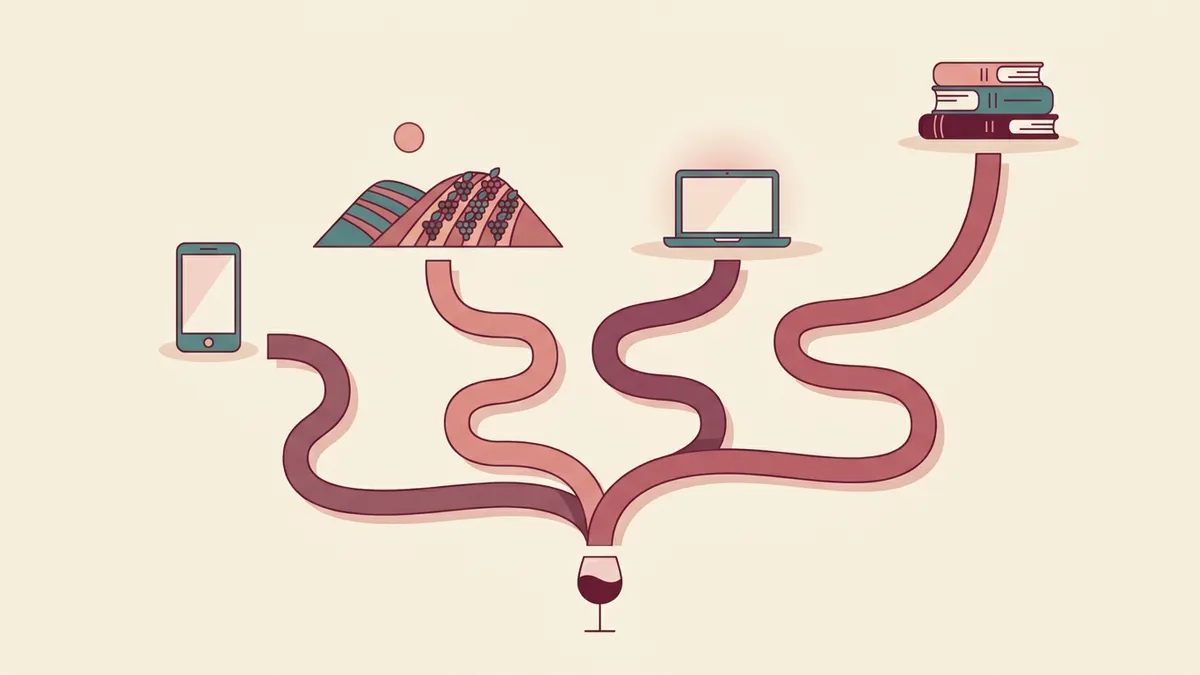
If you want to order better within a month, a short class or a free course is enough. If you want letters on a CV, book WSET. Learning for pleasure rarely needs an exam, and a certificate does not make wine taste better. Every credential up to Master of Wine is compared in wine certifications: WSET vs CMS.
Are There Good Free Online Wine Courses?
Yes. Universities and regional wine bodies run free online courses, and the best are taught by wine-science staff or the region's own educators. The catch is scope: a regional course is funded by that region's producers and teaches only their region, while a university course covers wine in general.
The University of Adelaide's World of Wine: From Grape to Glass, on the edX platform, is taught by its wine-science staff. It ran over six weeks at two to three hours a week and was free to enrol, with tens of thousands of students from 160 countries in its early runs. It covers wine styles, tasting, the vineyard and winemaking, which makes it a sound general base. Check the current run before you plan around it, and expect to pay extra for a certificate.
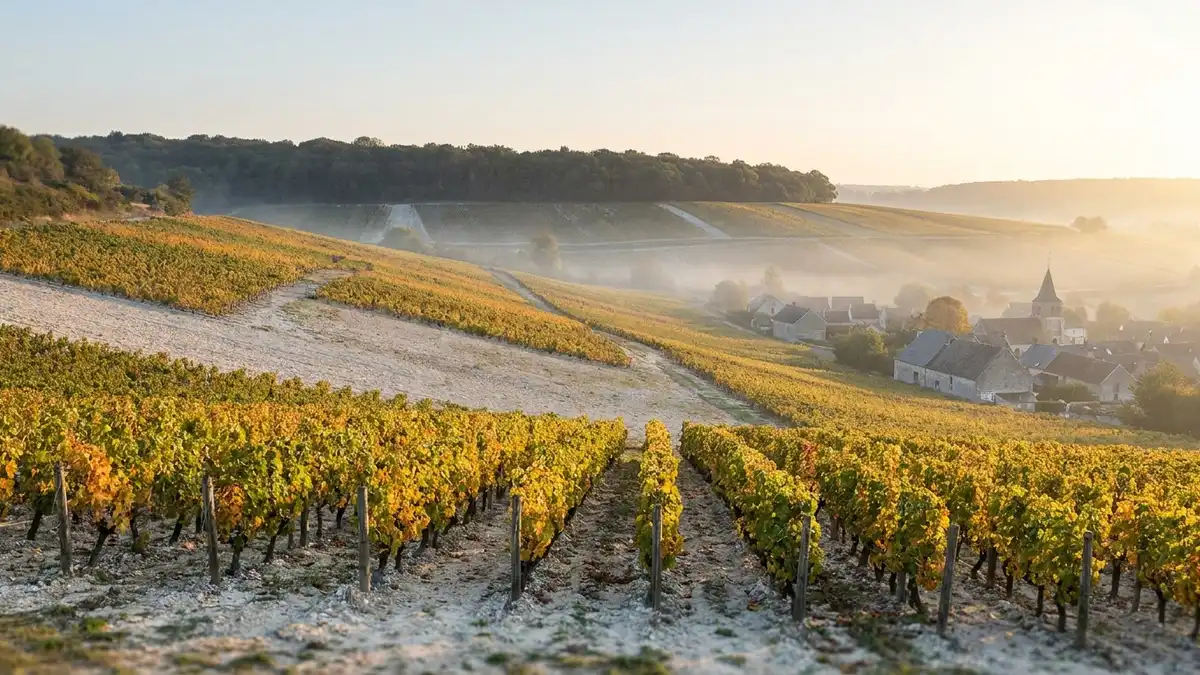
The Comité Champagne, the trade body funded by Champagne's houses and growers, runs a free training platform. Level 1 takes about an hour and covers the wines and how to taste them; Level 2 takes 90 minutes and moves on to soil, vineyard work and production. It replaced an earlier course that trained over 35,000 learners.
If you take a regional course, pair it with a general one. A course paid for by one region's producers will not tell you how its sparkling wine compares with Spain's or England's.
Is WSET Level 1 Worth It?
It is worth it if you want a first recognised certificate and a tasting method. It is not worth it if you only want to enjoy wine more, because it covers basics in a minimum of six hours that a free course or a good book also covers.
WSET Level 1 asks for at least six hours of study in a classroom or online, through an approved course provider, and it is offered in 13 languages. It covers:
- the main types and styles of wine
- common grapes and how they taste
- how to store and serve wine
- the principles of food and wine pairing
- the Systematic Approach to Tasting (WSET's fixed checklist for describing a wine's look, smell and taste)
The exam allows no notes and has 30 multiple-choice questions. WSET does not set one price: each provider sets its own, so fees change with the country and the format. When you compare quotes, check whether the exam fee and tasting samples are included.
If you can already tell a dry Riesling from an oaked Chardonnay by taste, skip Level 1 and start at Level 2. The certificate is the main thing Level 1 would add.
When Does WSET Level 2 Make Sense?
Take Level 2 when you can already describe a wine's style and want to know why grapes and places taste the way they do. It is the right second step for a hobbyist who enjoys studying, and a common first course for anyone heading into a wine-shop job.
WSET sets 16 hours of teaching plus 11 hours of personal study and revision. The exam is one hour, closed book, with 50 multiple-choice questions. The course covers 22 regionally important grapes beyond the main ones, and over 70 GIs (geographical indications, protected place names such as Rioja or Chablis). From this level a place name on a label, such as Chablis, points to a grape and a style.
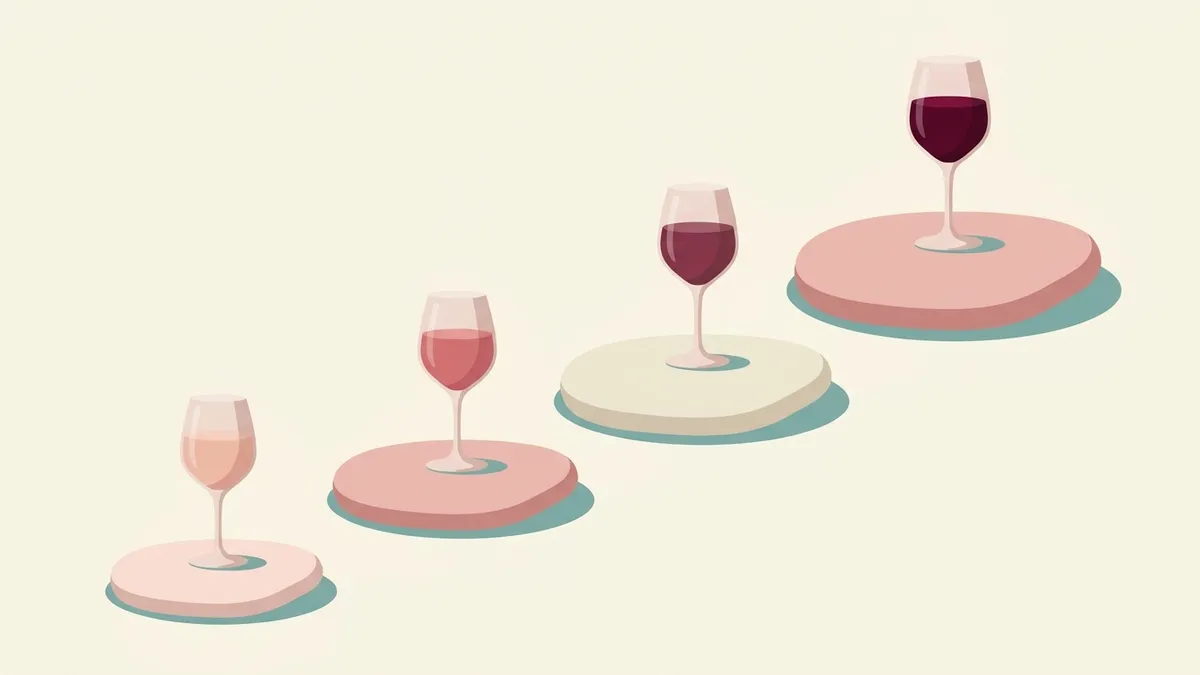
If a Level 2 quote looks cheap, ask what it leaves out. The wines you taste in class are part of the learning, and a course without them is only half a course.
WSET or Court of Master Sommeliers: Which Path Fits?
For a hobbyist learning online, WSET, because its exams test what you know about wine rather than how you serve a table. The Court of Master Sommeliers is built for restaurant service: its four steps run from the Introductory Sommelier Course and Exam, through the Certified and Advanced levels, to the Master Sommelier Diploma.
The two are not one ladder. WSET examines knowledge, adding a blind tasting exam from Level 3; the Court adds the skills of the restaurant floor, such as serving and selling wine to a guest. If you want to work as a sommelier, start with the Court. If you want to understand what you drink, start with WSET. What the job itself involves is covered in what is a sommelier.
Do Online Wine Courses Include Real Tasting?
Yes, but you supply the wine. "Online means no tasting" is a myth. The course teaches the method on screen and names the styles to buy, and you pour along at home, so a three-wine lesson costs three bottles on top of the fee.
You need less than you might think:
- two or three bottles in contrasting styles, such as a tart white, an oaked white and a light red
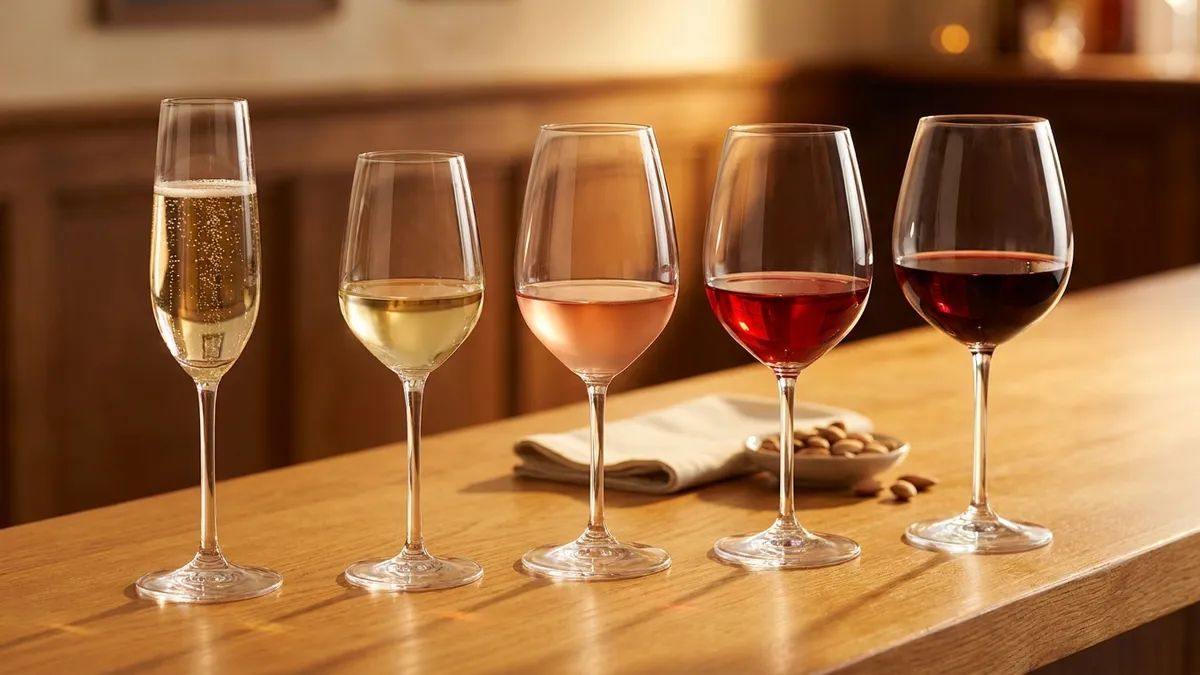
- one clear, plain glass per wine, so colours compare fairly
- a notebook or app for what you find
If the course lists specific wines, buy the style rather than the exact bottle. A cool-climate Sauvignon Blanc from any good shop teaches the same lesson as the one in the video. Taking the lesson with three friends, set up as in how to host a wine tasting at home, splits each bottle's cost four ways.
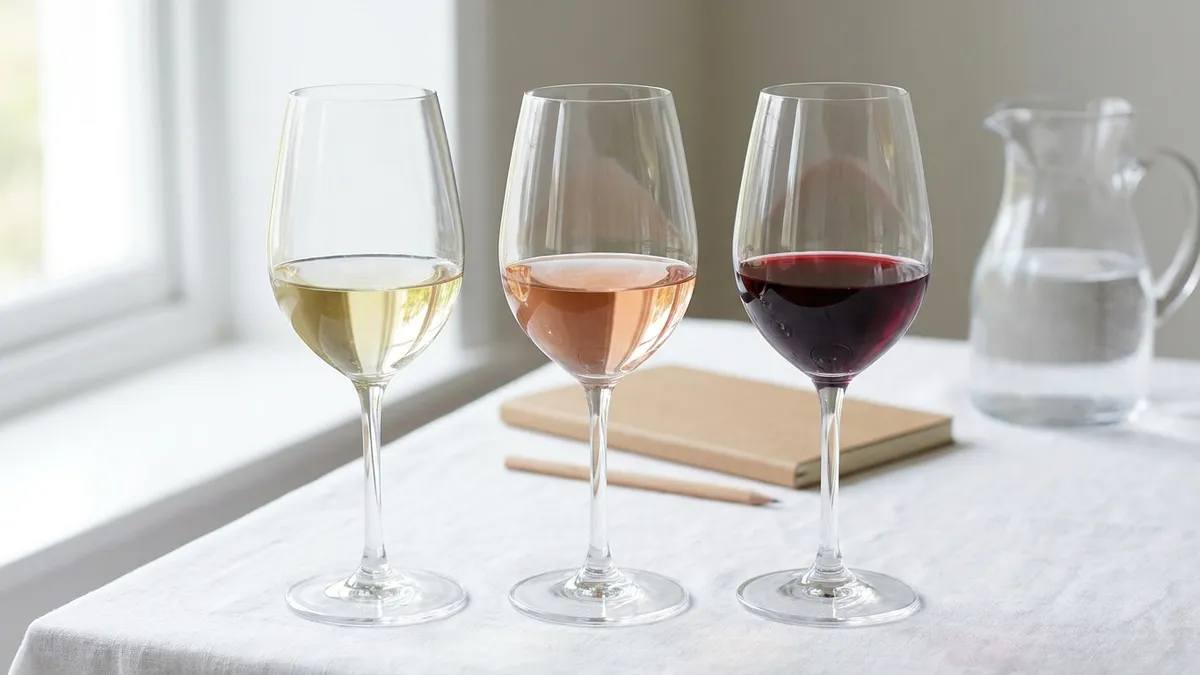
The look, swirl, sniff and sip routine behind most courses is set out in how to taste wine, and the words for what you find are in the wine tasting vocabulary cheat sheet. Red wine adds tannin (the drying grip on your gums), which a light Pinot Noir shows gently and a young Cabernet Sauvignon shows hard.
Can an App Replace an Online Wine Course?
Not for a certificate, but for daily practice between lessons, yes. Courses teach in blocks of hours, while tasting skill grows from short, frequent sessions: one glass, a few minutes of attention, and a note written down. An app keeps those notes in one place and prompts the next session.
Apps fall into types, from shopping and rating apps to learning apps, compared in the best wine learning apps. Sommy is a learning app: bite-sized courses, including Wine 101 and regional courses on Spain, Italy, France and California, plus an AI-guided tasting mode that logs your notes to a journal. Tips for making those notes useful are in wine tasting journal tips.
If you are building a course around an app, use the course for the theory and the app for each bottle you open. More first steps sit in the beginners and buying hub, with styles to start on in best wine for beginners.
Tonight, open one bottle, photograph the label in Sommy and taste it through look, smell and taste. Then pick the row in the table that matches what you want next, and book that course.
Sources
Frequently Asked Questions
What is the best online wine course for a beginner?
The best one matches your goal. To drink better soon, a short video class or a free university course is enough. To hold a recognised certificate, book WSET Level 1, which takes at least six hours and ends in a 30-question multiple-choice exam. To know one region well, take that region's free course. For daily practice between lessons, use an app.
Are there free online wine courses?
Yes. The University of Adelaide's World of Wine course on edX was free to enrol and ran over six weeks at two to three hours a week. The Comité Champagne runs a free training platform whose first level takes about an hour. Regional courses are paid for by that region's producers, so pair one with a general course.
How long does WSET Level 1 take?
WSET sets a minimum of six hours of study for Level 1, taught in a classroom or online by an approved course provider. Most people finish it in a day or spread over a few evenings. The exam is closed book, with 30 multiple-choice questions, and the course is offered in 13 languages, so you can take it almost anywhere.
Can you take WSET online?
Yes. WSET Levels 1 and 2 can be studied online through approved course providers, who set their own prices and dates. Prices change with the provider and the country, so compare quotes and check whether the exam fee, the study pack and any tasting samples are included before you pay, since some providers charge for them separately.
Do online wine courses include tasting?
Most do, but you supply the wine. The course teaches a tasting method on screen and asks you to pour along at home, so budget for a few bottles in contrasting styles and one clear glass per wine. A friend who shares the bottles halves that cost. A course without any tasting teaches facts you will struggle to use in a shop.
Is WSET or the Court of Master Sommeliers better for a beginner?
For someone learning for pleasure, WSET. Its levels test knowledge with written exams, add a blind tasting exam at Level 3, and start with a six-hour course. The Court of Master Sommeliers has four levels built around restaurant service, from the Introductory course to the Master Sommelier Diploma, and suits people who want to work a restaurant floor.
Sommy Team
LinkedInFounder & Wine Educator
The Sommy Team is building the world's most approachable wine education app, helping beginners develop real tasting skills through structured courses and AI-guided practice.