How to Learn About Wine: Pick a Route, Then a 4-Week Plan
By the Sommy Team — AI-assisted, human-edited.
Updated Nov 10, 2026
Contents (8)
- How to Learn About Wine, in One Paragraph
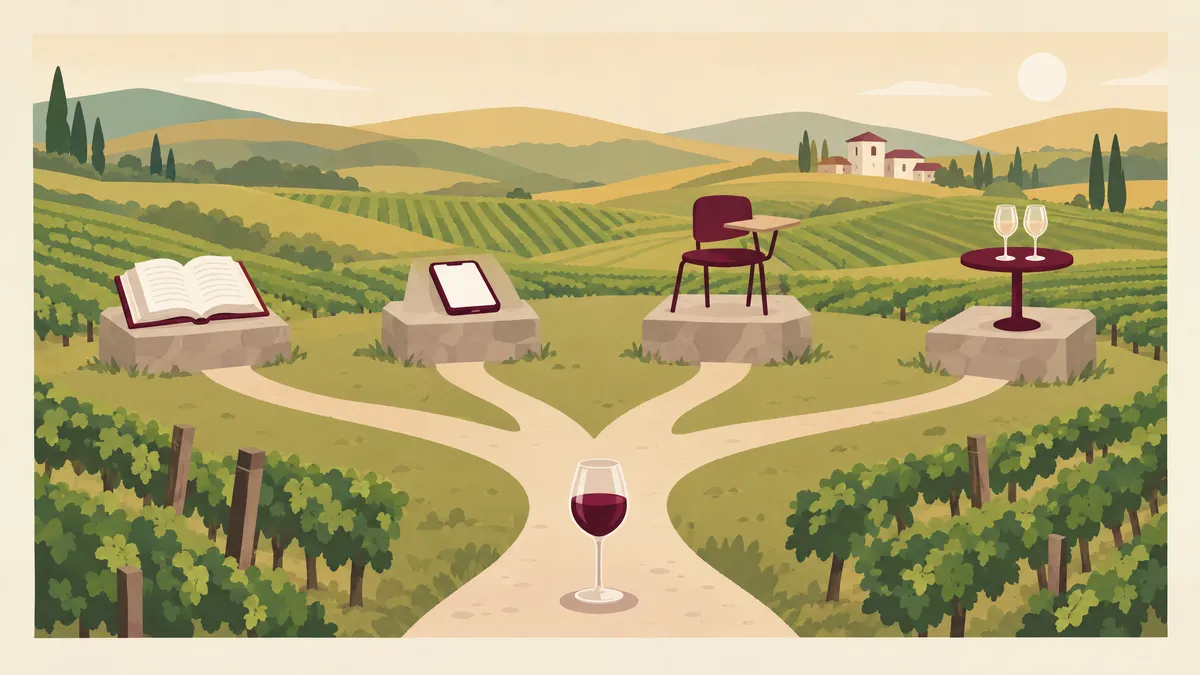
- Which Way to Learn Wine Should You Pick?
- Can You Learn About Wine at Home on Your Own?
- Apps, Courses, Classes or Books: What Each Does Best
- Is a Wine Course With an Exam Worth It?
- A 4-Week Plan to Start Learning Wine
- How Do You Remember What You Taste?
- When Should You Level Up?
TL;DR
Learn wine by tasting two different wines side by side and naming the difference. Pick the cheapest route that serves your goal: home tasting, an app, an online course, a class or a book. Add an exam such as WSET Level 1 only if you want a certificate. Four weekly pairs make a solid start.
How to learn about wine comes down to one habit: taste two different wines side by side and name what separates them. Every route, from an app to an exam course, decides only who picks the pair and who checks your answer, so choose it by goal, budget and weekly hours.
How to Learn About Wine, in One Paragraph
Start with a goal: enjoy wine more, order and buy with confidence, or hold a certificate. For the first two, taste at home with a plan, practise with an app, or take an online course or local class, with a book as reference. For a certificate, the entry exams are short. WSET (the Wine & Spirit Education Trust) Level 1 is six hours of guided learning and a 30-question multiple-choice exam. The Court of Master Sommeliers' Introductory exam is 70 questions with a 60% pass mark. Whatever the route, four weeks of one contrasting pair a week builds the base.
Which Way to Learn Wine Should You Pick?
Pick the cheapest route that serves the goal, and add an exam only when proof on paper matters. To enjoy wine or order better, start at home or with an app. If the goal is a certificate, book an exam course.
| Route | Best for | Budget | Time a week | What you end with | Pick it if |
|---|---|---|---|---|---|
| Taste at home | Enjoying wine, buying better | Low: the wine only | One evening | A palate for the four traits | You learn by doing and have a friend to share bottles |
| Learning app | Steady practice, ordering | Free to start, then varies | A few short sessions | Notes and quiz scores in one place | You forget between bottles and want a nudge |
| Online course | Structure at your own pace | Free to mid | A fixed weekly slot | A course finished, sometimes a certificate | You need a syllabus and a deadline |
| Local class or tasting | Feedback from a teacher | Mid, per session | One evening | Corrected tasting notes | You want someone to tell you when you are wrong |
| Book | Reference, maps and depth | Low | Whenever you like | Background on grapes and places | You like to read before you taste |
| Exam course | Work, a CV line, proof | Mid to high, varies by provider | Several hours | A recognised certificate | You work with wine or want letters after your name |
Most people mix two: a course, class or app to set the pace, plus home tasting.
Can You Learn About Wine at Home on Your Own?
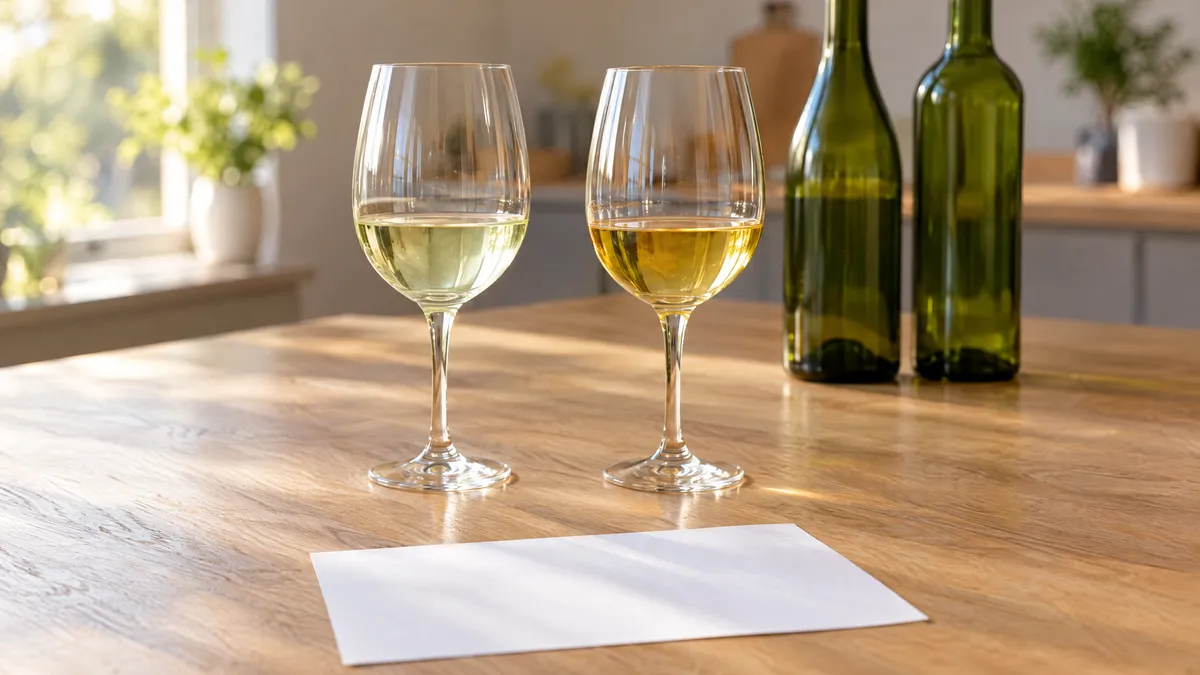
Yes: two bottles that differ in one trait, two clear glasses and a notebook teach the four traits every wine course starts with. They are sweetness, acidity (the tartness that makes your mouth water), tannin (the drying grip on your gums) and body.
Body is weight, like skimmed against whole milk. Taste each glass with the four steps Wine Folly teaches: look, smell, taste, and think. One bottle teaches little, because a beginner has nothing to measure it against. Two glasses that differ in one trait make the gap obvious, which is how palate training works.
Shop by grape and style. Most wines are dry (no sugar you can taste; fruity is not sweet), so sweetness only shows when a dry wine sits next to an off-dry one. The full routine is in how to taste wine.
Apps, Courses, Classes or Books: What Each Does Best
Each route is strong at one job: apps at frequent practice, online courses at structure, classes at correction and books at reference. If practice lapses between bottles, pick an app. If a deadline helps, pick a course. If feedback matters most, pick a class.
Learning apps
Apps teach in short lessons and keep notes in one place, but they cannot taste with you. Rating apps and learning apps are compared in the best wine learning apps.
Sommy, the app we build
Sommy is the app we build: a wine learning app for iPhone from the team that writes this blog. Lessons are short, built on picture questions and quizzes rather than long text. Pick a goal (enjoy wine more, order with confidence, or pass a level 1 or level 2 wine exam) and its more than 20 courses form one path for it. They run from Wine 101 to regions, styles, blind tasting and fine wine.
Guided tasting starts from a photo of the label of the bottle you are drinking. Sommy then walks through look, smell and taste and saves the note to a tasting journal. Free to start on iPhone. It suits people who learn in small steps between bottles; anyone who wants a teacher in the room should pick a class.
Online courses
An online course gives a syllabus, a pace and sometimes a certificate; the wines are still yours to buy. Free and paid options are compared in online wine courses matched to your goal.
Local classes and tastings
A class puts a teacher beside your glass to tell you the wine you called tannic is actually tart. Shop and winery tastings cost less; wine tasting etiquette covers them.
Books
A book with maps explains why a place tastes the way it does. Read the chapter on a grape the week you drink it.
Is a Wine Course With an Exam Worth It?
Only if you want a certificate or work in a shop, bar or restaurant, where a certificate shows what you know. The entry exams below are multiple-choice tests of wine and service knowledge, and none of them measures which wines you enjoy.
| Exam | Study time | Exam format | Pass mark | Cost | Entry |
|---|---|---|---|---|---|
| WSET Level 1 Award in Wines | 6 hours guided | 30 multiple-choice questions, closed book | Not stated on WSET's page | Varies by course provider | No entry requirements |
| WSET Level 2 Award in Wines | 16 hours guided plus 11 hours private study | 50 multiple-choice questions, closed book, 45 minutes to an hour | Not stated on WSET's page | Varies by course provider | No entry requirements |
| Court of Master Sommeliers Introductory | A day and a half to two days in person, or online over up to six months | 70 multiple-choice questions in 45 minutes | 60% | $949 in person, $649 online (Americas, read November 2026) | Anyone 21 or over (in person) |
If you work in a shop, bar or restaurant, or want a line on your CV, book WSET Level 1 or the Court's Introductory course. WSET leans toward knowledge; the Court is built around restaurant service. Level 2 can also be taken in WSET's Online Classroom, at your own pace over five weeks. Each step is set out in WSET Level 1, WSET Level 2 and WSET vs CMS.
A 4-Week Plan to Start Learning Wine
Spend each week on one pair of wines that differ in a single trait, then test yourself blind in week four.
- Week 1, acidity and body. A cool-climate Sauvignon Blanc against an oaked Chardonnay. One waters your mouth; the other coats it.
- Week 2, tannin. A Pinot Noir against a young Cabernet Sauvignon. Feel where the Cabernet dries your gums.
- Week 3, sweetness. A dry Riesling against an off-dry one (a little sugar you can taste). Sip the dry one second and notice how tart it seems.
- Week 4, blind. Ask a friend to pour two wines from earlier weeks into unmarked glasses. Name which is tarter, more tannic or fuller, then check.
If two wines taste the same, swap one for a more extreme example: a lighter Pinot Noir or an oakier Chardonnay. Styles to start on are in best wine for beginners, and splitting bottles with friends is set out in how to host a wine tasting at home.
How Do You Remember What You Taste?
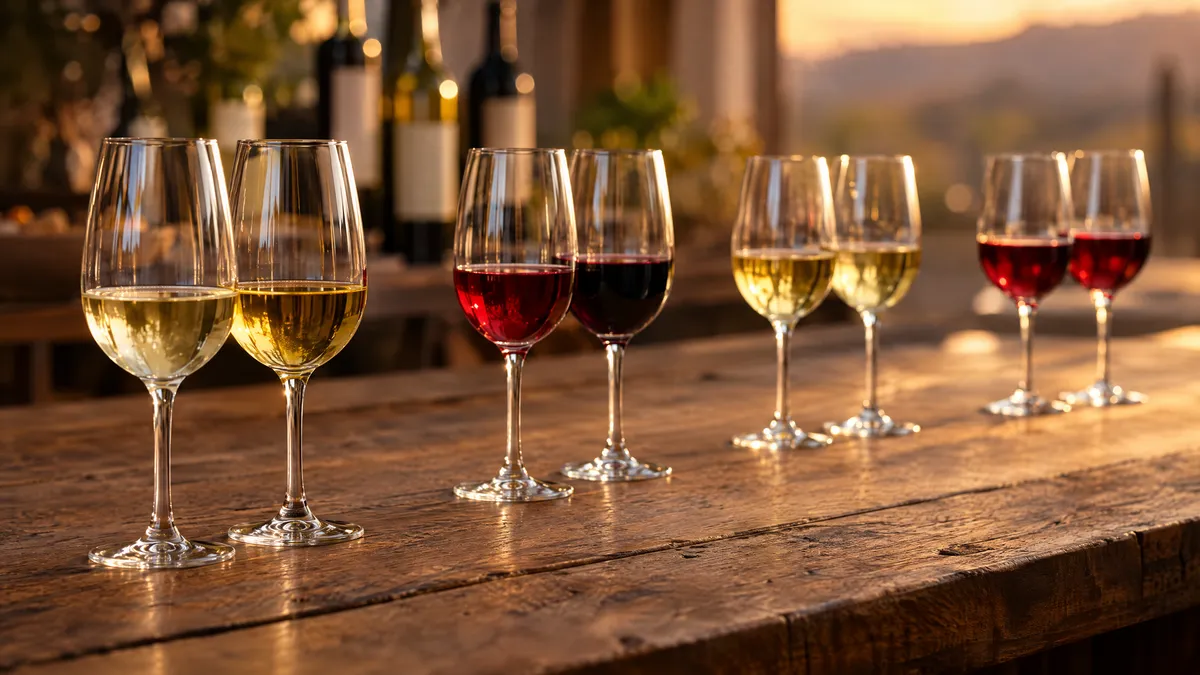
Write four short lines per wine, look, smell, taste and think, and score sweetness, acidity, tannin and body from 1 to 5. Record the grape, the place and what you paid, so a wine you liked can be bought again.
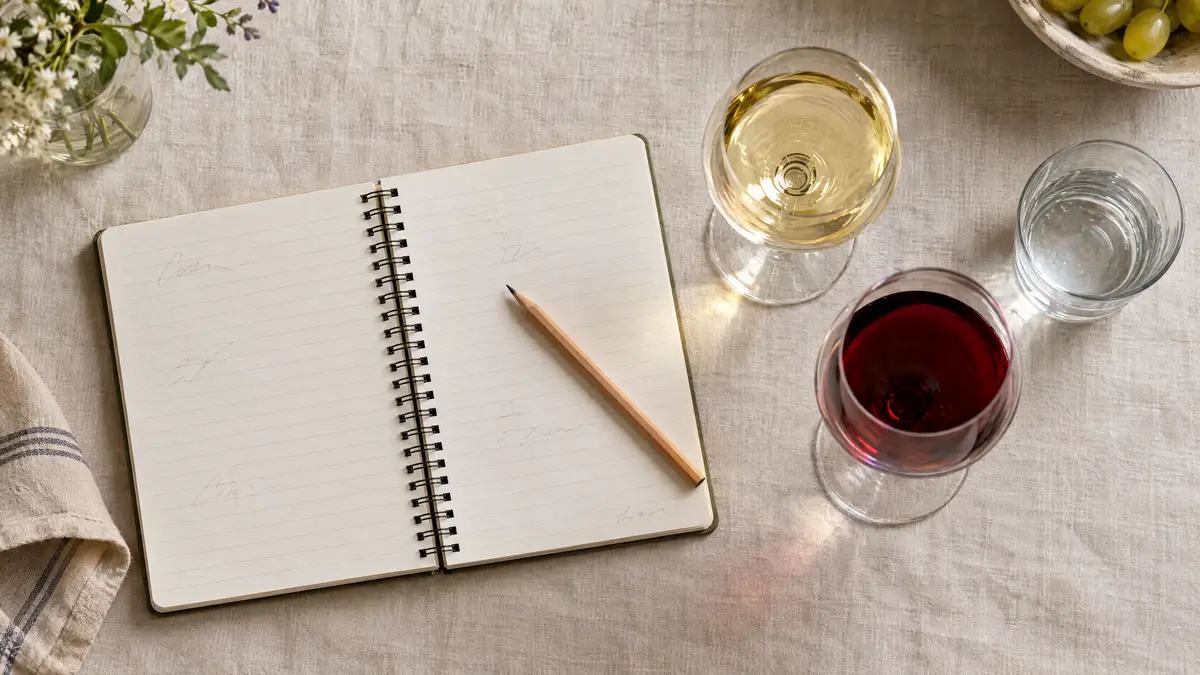
A layout to copy is in the wine tasting notes template, and habits that keep notes useful are in wine tasting journal tips.
When Should You Level Up?
Move on when you can name the tarter, more tannic or fuller wine in three of four blind pairs. Then join a class or start a course on one region, or book WSET Level 1 if proof matters. With two or more misses, repeat the plan with more extreme pairs.
A 90-day version is in how to get into wine, and more first steps sit in the beginners and buying hub.
Buy the week-one pair tonight, pour both glasses and write four lines for each.
Sources
Frequently Asked Questions
What is the best way to learn about wine for a beginner?
Taste two contrasting wines side by side, often, and write down the difference. That habit is the core of every course. Then pick a route by goal: an app for frequent practice, an online course for structure, a local class for a teacher who corrects you, a book for reference, or an exam course if you want a certificate.
Can I learn about wine on my own at home?
Yes. Two bottles that differ in one trait, two clear glasses and a notebook teach sweetness, acidity, tannin and body, the traits every course starts with. Use the look, smell, taste and think routine on each glass. Sharing bottles with a friend halves the cost and gives you someone to compare notes with.
How long does it take to learn about wine?
Four weeks of one tasting pair a week is enough to tell the basic traits apart. A first certificate takes longer: WSET Level 1 is at least six hours of guided learning, and Level 2 is 16 guided hours plus about 11 hours of private study. Knowing regions and grapes well is a habit of years.
Do I need a WSET course to learn about wine?
No. WSET Level 1 has no entry requirements, but it is optional. It suits people who want a certificate or work in a shop, bar or restaurant. For drinking and buying better, home tasting with a plan teaches the same traits. The exam is multiple choice, so it tests what you know rather than what you like.
Is there an app to learn about wine?
Yes. Wine learning apps teach in short lessons with quizzes and keep your tasting notes in one place, which suits learning between bottles. They are good at frequent practice and weak at correcting how you taste, so pair one with a class or a friend now and then. Shopping and rating apps are a different kind of tool.
How do I remember what I taste?
Write four short lines per wine as you taste: what it looks like, what it smells of, how it feels and what you think it is. Score sweetness, acidity, tannin and body from 1 to 5. Tasting two wines at once helps most, because the difference between them sticks better than a single description.
Sommy Team
LinkedInFounder & Wine Educator
The Sommy Team is building the world's most approachable wine education app, helping beginners develop real tasting skills through structured courses and AI-guided practice.