WSET Level 2: Syllabus, Exam and Which Level to Pick

By the Sommy Team — AI-assisted, human-edited.
Updated Oct 29, 2026

Contents (8)
TL;DR
WSET Level 2 Award in Wines needs at least 28 hours of study and ends in a one-hour, closed-book exam of 50 multiple-choice questions. There is no entry requirement and no tasting exam. The syllabus covers 8 principal grapes, 22 regional grapes and over 70 places. The pass mark is 55%, or 28 questions.
WSET Level 2 is a one-hour, 50-question multiple-choice exam that follows at least 28 hours of study. There is no entry requirement and no wine to taste in the exam room. Answer 28 questions correctly and you pass.
WSET Level 2, in One Paragraph
The WSET Level 2 Award in Wines is the second of the Wine & Spirit Education Trust's wine qualifications, taught by approved course providers in a classroom or online. It needs at least 28 hours of study. The exam lasts one hour, with 50 multiple-choice questions and no tasting. The syllabus covers 8 principal grapes, 22 regionally important grapes and more than 70 wine places, plus winemaking, labels, service and food pairing. The pass mark is 55%, which is 28 correct answers.
Which WSET Level Should You Pick?
Pick Level 2 if you already drink wine with some curiosity and want a certificate for the main grapes and the places they grow. WSET sets no entry requirements, so Level 1 is optional, and neither Level 1 nor Level 2 has a tasting exam.
| Level | Exam | Minimum study | Tasting exam | Needed first | Pick this if |
|---|---|---|---|---|---|
| Level 1 Award in Wines | 30 multiple-choice questions, closed book | 6 hours | No | Nothing | Wine is new to you and you want a first certificate in a day |
| Level 2 Award in Wines | 50 multiple-choice questions in 1 hour, closed book | 28 hours | No | Nothing | You know the common grapes and want the places and styles behind them |
| Level 3 Award in Wines | 50 multiple-choice questions plus a short written answer paper | 84 hours | Yes, two wines blind | Level 2 recommended, not required | You want to explain in writing why a wine tastes as it does |
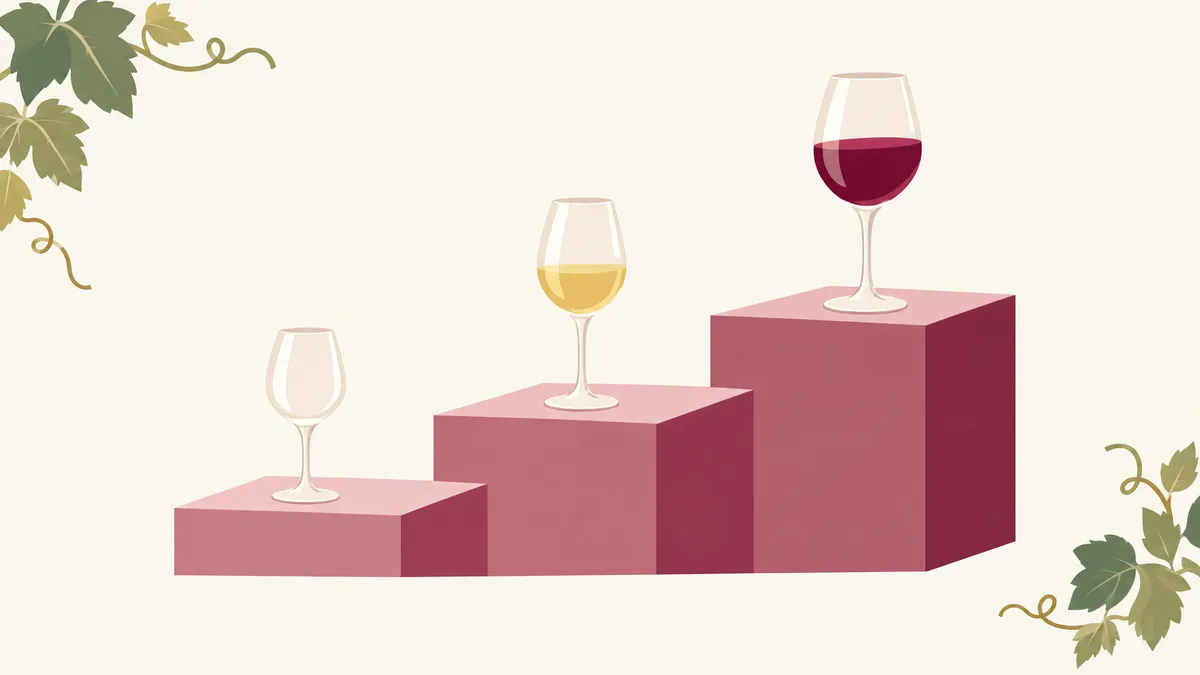
If you cannot yet tell a Chardonnay from a Sauvignon Blanc in the glass, start at Level 1. If you can, book Level 2. Level 3 is the bigger jump, with three times the study hours and written answers. It adds a blind tasting (judging wines without seeing the label), which our blind wine tasting tips help you practise.

Quick check
One question on what you just read
You can already tell a Chardonnay from a Sauvignon Blanc. Which WSET course should you book?
Tap an answer to see how you did.
What Does the WSET Level 2 Syllabus Cover?
Eight principal grapes, 22 regionally important grapes and more than 70 geographical indications (GIs, legally protected place names on a label, such as Chablis or Rioja). The principal grapes carry the most weight: Chardonnay, Pinot Grigio/Gris, Sauvignon Blanc and Riesling among the whites, and Cabernet Sauvignon, Merlot, Pinot Noir and Syrah/Shiraz among the blacks.
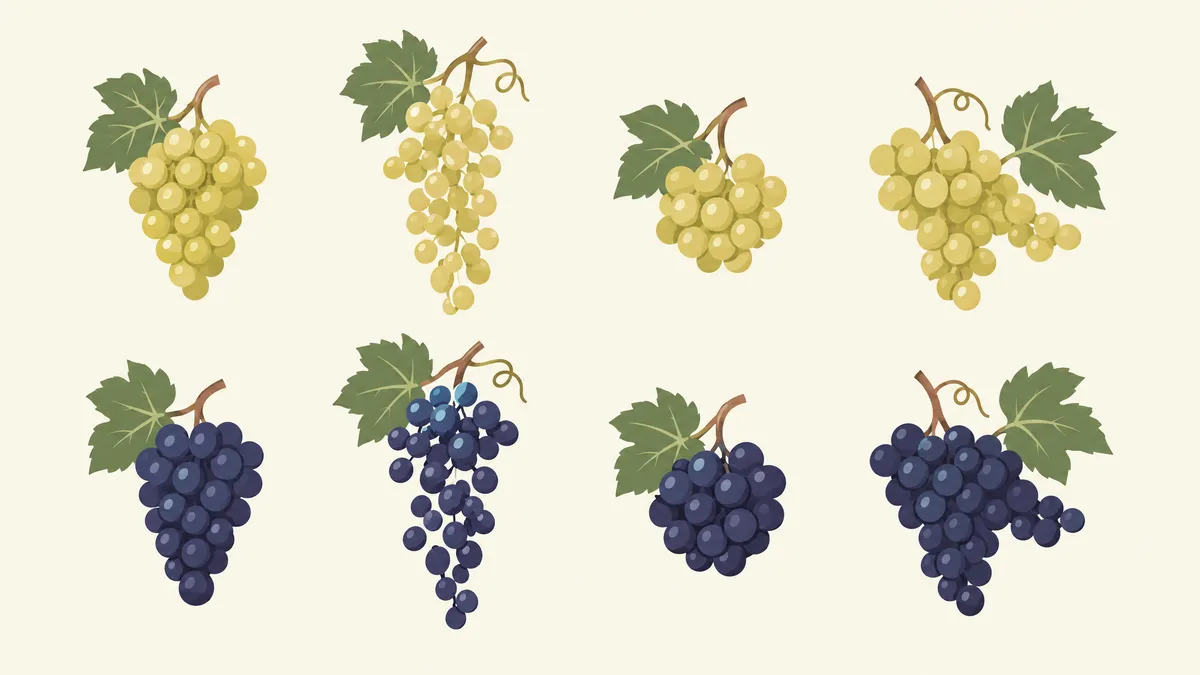
Each principal grape is taught with its main places and how climate and winemaking change it. The 22 regional grapes come in more briefly, tied to their home places. The same grape can sit under two names, which is why the syllabus lists Pinot Grigio/Gris and Syrah/Shiraz; our guide to Syrah vs Shiraz shows the style difference behind the second pair.
The rest of the course covers how grapes grow and wine is made, sparkling wine types and fortified wines, reading a wine label, storage and service, and food pairing. You also learn the Systematic Approach to Tasting (SAT, WSET's fixed order for describing a wine: appearance, nose, palate, conclusions). Our side by side of the WSET SAT grids shows what the Level 2 version asks for.
How Does the WSET Level 2 Exam Work?
One hour, 50 multiple-choice questions, closed book, and nothing to taste. Closed book means no notes, books or phones. WSET's qualification page lists this exam as the only assessment. That surprises people who expect a sommelier-style blind test: tasting sits in the classroom at Level 2, and in the exam only from Level 3.
WSET's specification sets the pass mark at 55%. On 50 questions each answer is worth 2%, so the grades translate into a count:
| Grade | Score | Correct answers out of 50 | What it means for revision |
|---|---|---|---|
| Fail | Below 55% | 27 or fewer | Revise the principal grapes and their places first |
| Pass | 55 to 69% | 28 to 34 | You know the core; the regional grapes lift you further |
| Pass with Merit | 70 to 84% | 35 to 42 | Breadth across the 70+ places is paying off |
| Pass with Distinction | 85% and above | 43 to 50 | You can miss no more than 7 questions |
Is WSET Level 2 Hard?
It is broad rather than deep. The questions test recall: which grape grows in a named place, what a label term means, which wine suits a dish. Each fact is simple, but the syllabus asks you to hold about 30 grapes and more than 70 places at once.
A figure of 70% often appears in unofficial study guides as the pass mark. It is the Merit line, not the pass mark. Passing takes 28 correct answers, so a candidate who knows the 8 principal grapes and their main places well has most of the margin needed. WSET's qualification page publishes no pass rate, and the high rates quoted online come from individual schools.
How Should You Study for WSET Level 2?
Plan on at least 28 hours: 16 with a course provider, 11 on your own and the 1-hour exam. Spend your own hours from the core outwards, starting with the eight principal grapes the syllabus leads with and ending with timed practice papers:
- Principal grapes first. For each of the eight, learn its main places and how a cool or warm climate changes it.
- Then the 22 regional grapes, each attached to its home GI.
- Then labels and law, such as what an appellation promises and the label terms of each country.
- Then sparkling, fortified, service and pairing, the shorter topics that still earn questions.
- Last, practice papers under a one-hour timer.
If a topic links a grape and a place, learn them as a pair on one flashcard, because a question can name one and ask for the other.
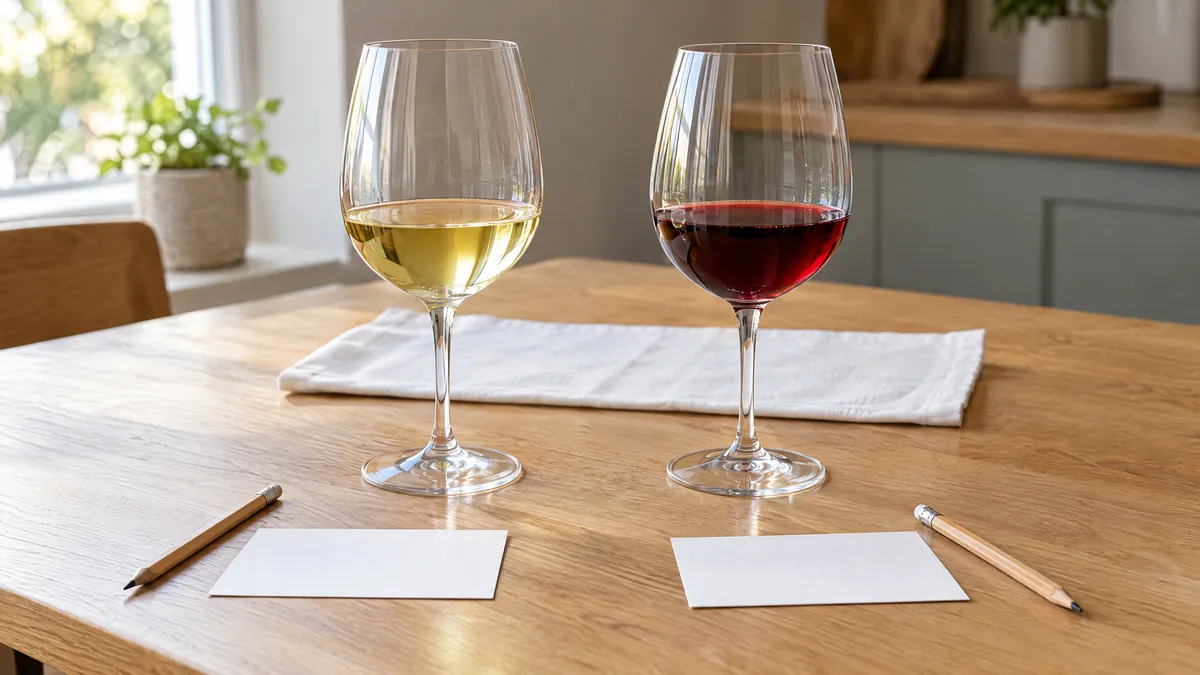
Two glasses opened side by side teach acidity and body (the weight of a wine in the mouth, like skimmed versus whole milk) faster than reading about them.
Is WSET Level 2 Worth It If You Just Love Wine?
Yes for a structured course, a tutor and a certificate; no for better bottles this month. If you want the certificate or plan to work with wine, book it, because Level 3 expects Level 2 knowledge. For better bottles soon, a free course or an app costs less; our guide to online wine courses sorts them by goal.
Sommy is one of those apps, with bite-sized courses including Wine 101 and regional courses on France, Italy, Spain and California. It is not a WSET course and gives no WSET certificate. Our comparison of wine education apps lists the flashcard tools learners use for exam facts.

What Should You Check Before Exam Day?
Two things: the course version and how the exam is delivered. WSET lists the current specification as August 2026, Issue 2.1, and tells students to confirm their version with the provider. WSET's page does not say whether the exam runs online or in a room, so ask your provider before booking.
More starting points sit in the beginners and buying hub, and the Sommy app lives at sommy.wine. Open one of the eight principal grapes tonight, write a note in SAT order, and put the place on its label on your first flashcard.
Sources
Frequently Asked Questions
What is the pass mark for WSET Level 2?
The pass mark is 55%, which on a 50-question paper means 28 correct answers. WSET's specification lists three passing grades: Pass from 55 to 69%, Merit from 70 to 84%, and Distinction at 85% and above. The 70% figure that circulates online is the Merit line. Each question is worth 2%, so one answer can move a score across a band.
Do I need WSET Level 1 before Level 2?
No. WSET states there are no entry requirements for Level 2, so you can book it directly. Level 1 suits someone who has never thought about grapes or styles. If you can already tell a Chardonnay from a Sauvignon Blanc and know roughly where Merlot grows, Level 2 is a sensible first course.
Is there a tasting exam at WSET Level 2?
No. The only assessment WSET lists for Level 2 is the closed-book multiple-choice exam. You still taste wines in class and learn the Systematic Approach to Tasting, which gives you the words for describing wine styles. A blind tasting exam first appears at Level 3, where candidates assess two wines without seeing the labels.
How long does it take to study for WSET Level 2?
WSET sets a minimum of 28 hours: 16 hours with a course provider, 11 hours of personal study and revision, and the one-hour exam. Providers run it over a few full days or spread across several weeks of evening classes. The 11 hours of self-study are a minimum, and learners new to wine places often need more.
What is the difference between WSET Level 2 and Level 3?
Level 3 needs at least 84 hours of study against 28 for Level 2. Its exam adds a short written answer paper to 50 multiple-choice questions, plus a blind tasting of two wines. WSET recommends holding Level 2 first, or equivalent knowledge, but does not require it. Level 2 asks what a wine is; Level 3 asks why it tastes that way.
Can you take the WSET Level 2 exam online?
Ask your course provider. WSET's qualification page describes the exam format but not how it is delivered, and courses are taught in a classroom or online. Confirm with your provider how and where the exam runs before you book.
Is WSET Level 2 worth it for a hobbyist?
It is worth it if you want a structured course, a tutor and a recognised certificate. It covers the grapes and places behind most bottles in a good wine shop. If you only want to choose better wine this month, a free course or an app teaches enough, and the course fee can buy bottles to taste instead.
Sommy Team
LinkedInFounder & Wine Educator
The Sommy Team is building the world's most approachable wine education app, helping beginners develop real tasting skills through structured courses and AI-guided practice.