How to Study for WSET: Pick a Week-by-Week Plan by Level

By the Sommy Team — AI-assisted, human-edited.
Updated Nov 10, 2026
Contents (9)
- How to Study for WSET, in One Paragraph
- How Many Weeks Should You Give Each Level?
- What Does a Four-Week Level 2 Plan Look Like?
- How Do You Stretch It to Twelve Weeks for Level 3?
- Why Does Testing Yourself Beat Rereading?
- How Do You Drill Grapes and Places?
- How Do You Practise Tasting Notes at Home?
- Which Study Tools Fit Between Classes?
- What Should You Do in the Final Week?
TL;DR
WSET sets 11 hours of private study for Level 2 and 54 for Level 3, on top of guided classes. Spread them over about four and twelve weeks. Weight Level 2 time to the spec: 19 of 50 questions cover the eight principal grapes. Test yourself instead of rereading, and taste two wines side by side each week.
How to study for WSET comes down to your own hours. Spread the private study the exam body sets over several weeks, test yourself instead of rereading, and taste two wines in the grid's order every week.
How to Study for WSET, in One Paragraph
Turn the exam body's private-study hours into a weekly calendar. WSET sets 11 hours of private study for the Level 2 Award in Wines and 54 for Level 3, on top of 16 and 30 guided hours. Spread Level 2 over about four weeks and Level 3 over about twelve. Give each topic time in proportion to its questions: at Level 2, 19 of the 50 questions cover the eight principal grapes. Quiz yourself on cards and blank maps at gaps that grow, and taste two contrasting wines each week.
How Many Weeks Should You Give Each Level?
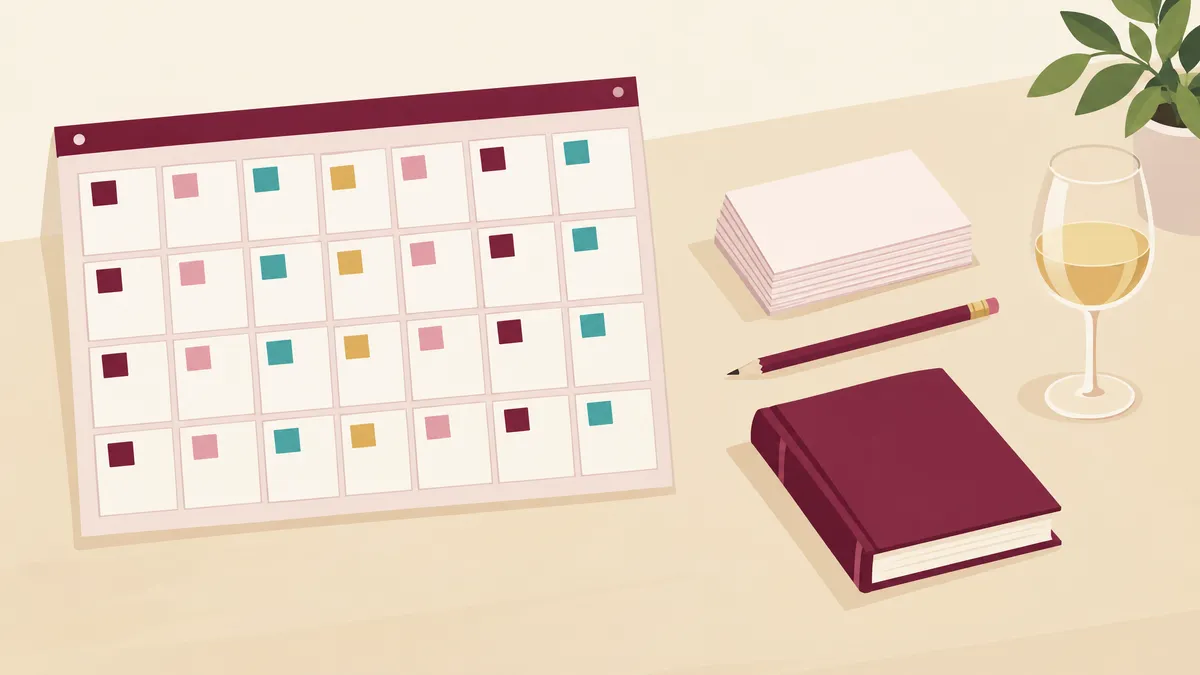
Give Level 2 about four weeks and Level 3 about twelve, roughly three and four and a half hours of private study a week. That is your own reading, testing and tasting, on top of guided learning hours taught by an approved course provider, in a classroom or through one of the online wine courses with their prices and hours.
| Level | Guided hours | Private study | Exam | Plan length | Pick this plan if |
|---|---|---|---|---|---|
| Level 1 Award in Wines | 6 | Not stated | 30 multiple-choice questions | 1 week of short reviews | Wine is new to you and the course is short |
| Level 2 Award in Wines | 16, plus a 1-hour exam | 11 hours | 50 multiple-choice questions in 60 minutes, pass at 55% | 4 weeks, about 3 hours a week | You want a steady month around evening or weekend classes |
| Level 3 Award in Wines | 30 | 54 hours | 50 multiple-choice questions and a written paper, plus a blind tasting of two wines | 12 weeks, about 4.5 hours a week | You can protect two or three sessions every week for three months |
If you have fewer hours a week, add weeks rather than cut topics. What each level covers is in the guides to WSET Level 1, Level 2 and Level 3.
What Does a Four-Week Level 2 Plan Look Like?
Spend the hours where the questions are. WSET's Level 2 specification splits the 50 questions across six learning outcomes, and the principal grapes alone carry 19 of them, 38% of the marks. Week 2 is the heaviest.
| Week | Topic | Exam questions | Self-test at the end of the week |
|---|---|---|---|
| 1 | Vineyard (climate, grape growing) and winemaking | 5 + 4 | Cards on how heat, sun and oak change a wine |
| 2 | The eight principal grapes and their places | 19 | Blank map: place each grape's main regions from memory |
| 3 | Regional grapes, then sparkling and fortified wines | 12 + 6 | Cards both ways: place to grape, grape to place |
| 4 | Storage, service and food pairing; mixed review | 4 | One full paper: 50 questions in 60 minutes |
Open each session with ten minutes of earlier cards. If a weekly self-test scores under 55%, the pass mark, repeat that week's cards before moving on.
How Do You Stretch It to Twelve Weeks for Level 3?
Run the same weekly loop for twelve weeks, with tasting and writing in every week. WSET recommends holding Level 2 first. Level 3 adds two skills Level 2 never tests: a written paper in Unit 1, and a blind tasting of two wines in Unit 2, judged without seeing the bottle.
- Weeks 1-2: vineyard and winemaking, the causes behind every region.
- Weeks 3-9: one block of regions a week, ending with a blank map and a timed written answer.
- Weeks 10-11: mixed cards, plus two written answers a week.
- Week 12: a full multiple-choice paper and a final blind pair.
Start tasting in week 1. The tasting unit is marked on its own, so a strong theory score cannot carry a weak note.
Why Does Testing Yourself Beat Rereading?
Because a fact pulled out of memory lasts longer than one read again. In a 2006 study by Roediger and Karpicke, students who reread a passage scored better five minutes later. After one week the result flipped: students who had tested themselves remembered much more, though rereading had made the others feel more confident.
Spacing adds a second gain. A 2006 review by Cepeda and colleagues pooled 839 assessments from 317 experiments. The best gap between reviews grew with how long the facts had to last. Both findings come from lab studies of words and prose, and a WSET paper is mostly recall of words: grape, place, process.
How Do You Drill Grapes and Places?
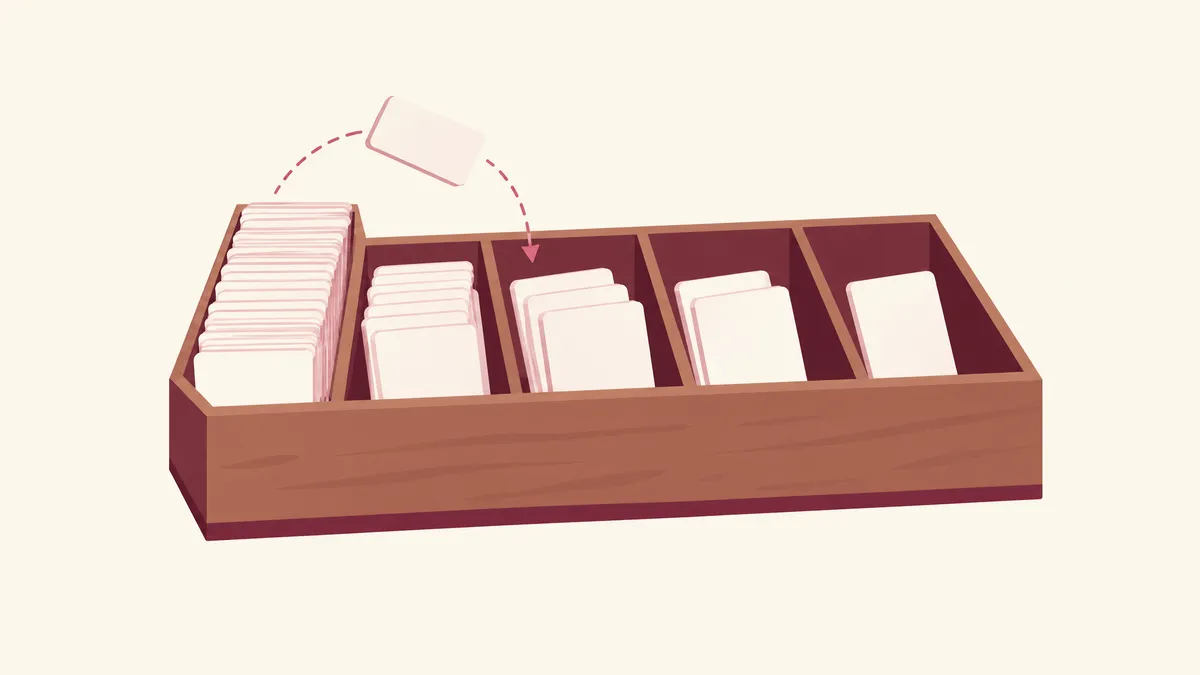
Make every card a pair the exam can ask in either direction, and review it at gaps that grow. That pattern is spaced repetition: missed cards return tomorrow, known cards in days, then weeks. Blank maps test the same facts by position.
- Both directions. "Marlborough" on the front, "Sauvignon Blanc" on the back, then the reverse card.
- Cause and effect. Front: "Cool climate". Back: "higher acidity, lighter body, green fruit".
- Say it before you flip. A card you recognise but cannot say aloud counts as a miss.
- Promote and demote. If you get a card right three times in a row, move it to a longer gap; one miss sends it back to daily.
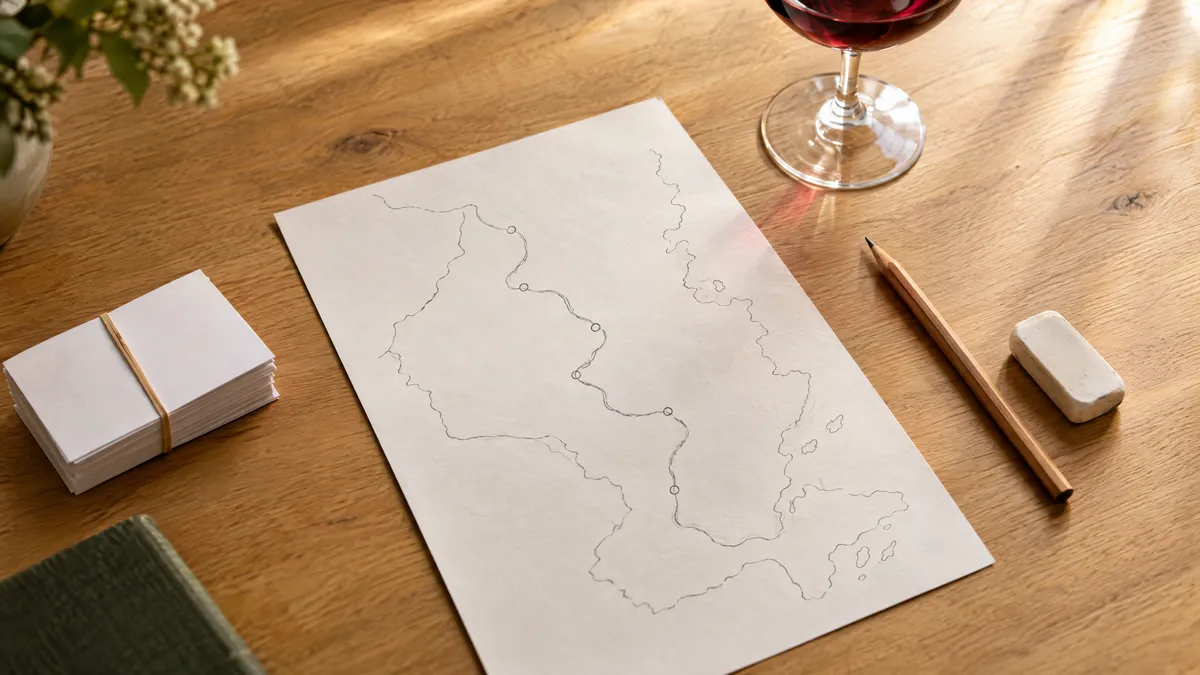
For maps, trace a country's outline once. Each week, fill in its regions and main grapes from memory and mark the misses in red, so the next session starts there. Wine memory training has more ways to make names stick.
How Do You Practise Tasting Notes at Home?
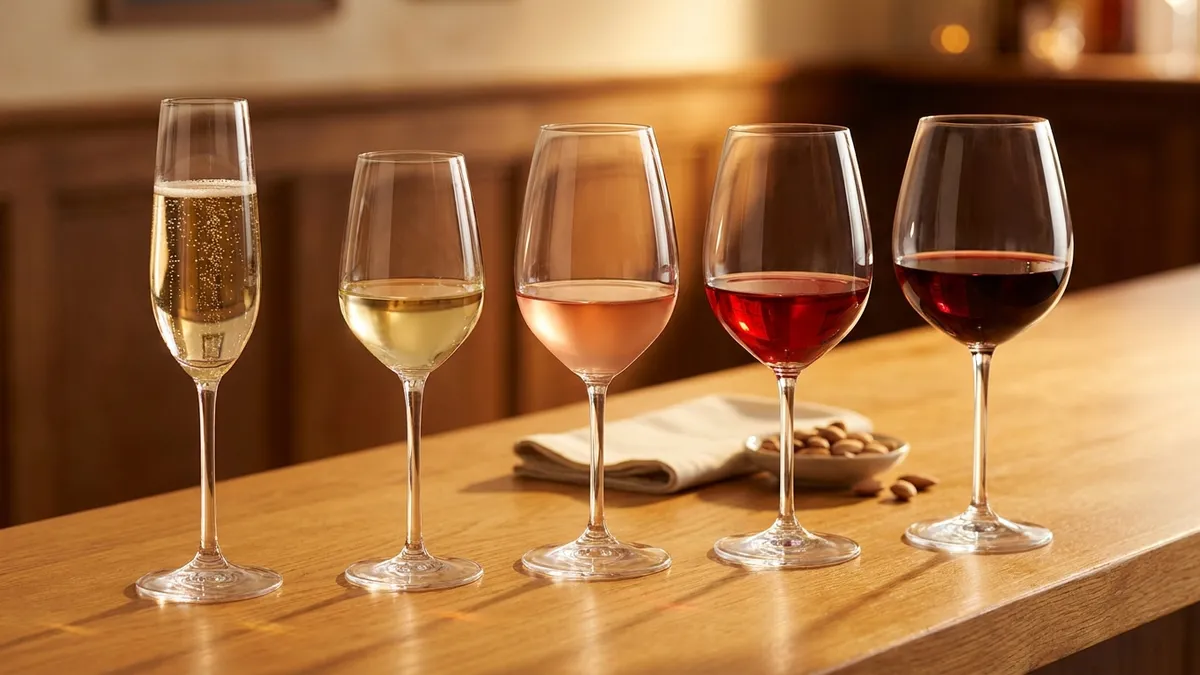
Taste two contrasting wines side by side and write each note in the grid's words and order. WSET's Systematic Approach to Tasting (SAT) runs appearance, nose, palate, conclusions. On the Level 2 grid, acidity, tannin and alcohol are each low, medium or high, and quality runs from faulty to outstanding.
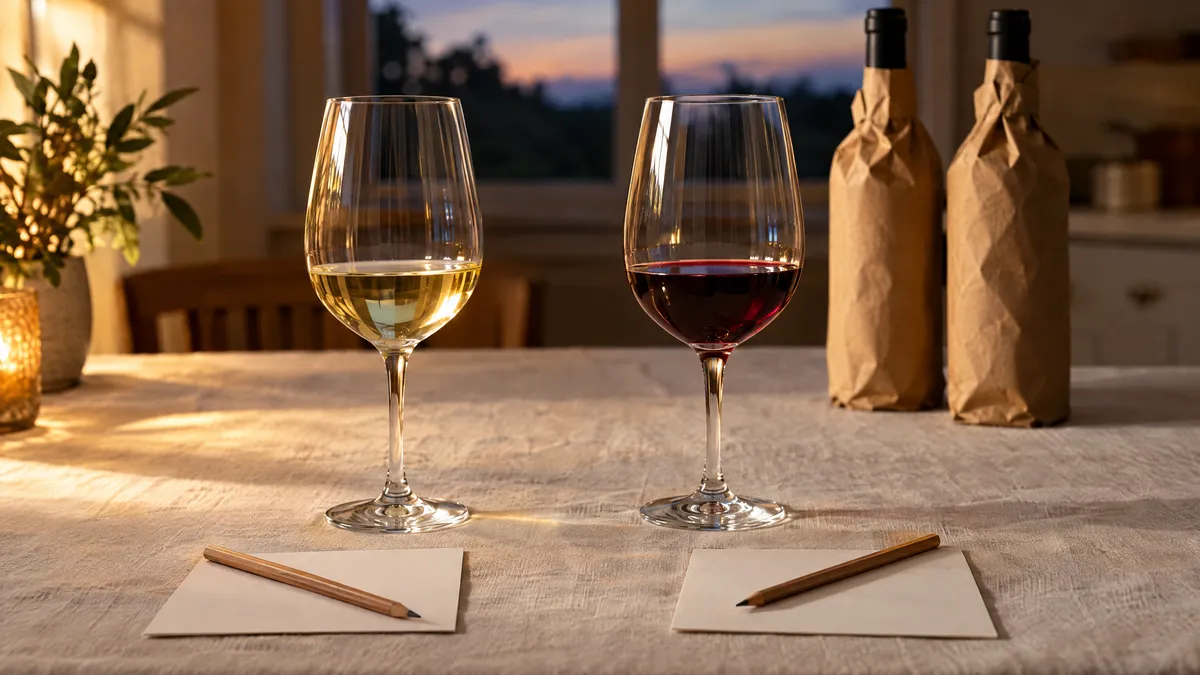
If two wines get the same word on a line, taste them again until one moves. The grids for each level are in the WSET SAT compared, and a tasting notes template keeps every line in view. For Level 3, ask someone to pour and wrap the bottles, as in blind wine tasting tips.
Which Study Tools Fit Between Classes?
The course book and your classes come first; other tools are for self-testing between them. WSET's Level 2 specification says its recommended study materials hold what the exam questions need, so check every card and map against the book. Add a spaced flashcard app or card box, blank outlines, and a friend to pour blind.
Sommy, the app we build
Sommy is a wine learning app for iPhone, built by the team that writes this blog. Lessons are short picture questions and quizzes, which suits self-testing. One of the goals you can pick is passing a level 1 or level 2 wine exam, and Sommy lays its courses out as one path for it. They cover grapes, regions and tasting.
Guided tasting walks through look, smell and taste from a photo of the label and saves the note to a tasting journal. Sommy is independent of every exam body and is no official prep course. Use it for practice between classes; keep the course book and mock papers for the exam itself. Free to start on iPhone at sommy.wine.
What Should You Do in the Final Week?
Sit one full timed paper, review only the cards you miss, and answer every question on the day. WSET's Level 2 specification says marks are not subtracted for wrong answers, so a blank is a lost mark. If unsure, rule out what you can and pick from the rest.
For how WSET compares with sommelier exams, see WSET vs CMS; more starting points sit in the beginners and buying hub.
Write ten cards from week 1 tonight and test yourself on them tomorrow. Then pour one glass and taste it in grid order.
Sources
- WSET: Level 2 Award in Wines specification, Issue 2.1 (study hours, exam, weighting, pass mark)
- WSET: Level 2 Systematic Approach to Tasting Wine, Issue 2 (grid scales)
- WSET: Level 3 Award in Wines (study hours, assessment, entry)
- WSET: Level 1 Award in Wines
- Roediger and Karpicke (2006), Test-enhanced learning, Psychological Science
- Cepeda et al. (2006), Distributed practice in verbal recall tasks, Psychological Bulletin
Frequently Asked Questions
How many hours of study does WSET Level 2 need?
WSET's specification sets 28 hours in total: 16 hours of guided learning with a course provider, the one-hour exam, and 11 hours of private study. Spread the 11 private hours over about four weeks, close to three hours a week, and spend the largest share on the principal grapes, which carry 19 of the 50 exam questions.
How long before the exam should I start studying for WSET?
Start private study when classes start, and give Level 2 about four weeks and Level 3 about twelve. Spacing matters more than the start date: research on 317 experiments found the best gap between reviews grows with how long you need to remember. Short sessions spread across weeks beat the same hours packed into the last few days.
Can I pass WSET by self-study alone?
Not entirely. WSET's own hours include guided learning with an approved course provider, which runs the course and the exam. What you control is the private study: 11 hours at Level 2 and 54 at Level 3. That is where self-testing, blank maps and home tastings decide how much of the course you can recall on the day.
Are flashcards good for WSET?
Yes, used as a test rather than a reading list. Write each card as a pair the exam can ask either way, such as a place on one side and its main grape on the other. Say the answer before you turn the card, and move a card to a longer gap once you get it right three times in a row.
How do I practise WSET tasting notes at home?
Pour two contrasting wines side by side and write each note in the order and words of the WSET grid: appearance, nose, palate, conclusions. The Level 2 grid rates acidity, tannin and alcohol as low, medium or high. For Level 3, where Unit 2 is a blind tasting of two wines, ask someone to pour so you cannot see the bottles.
Do you lose marks for wrong answers on the WSET Level 2 exam?
No. WSET's Level 2 specification says each correct answer is worth one mark and marks are not subtracted for wrong answers. The pass mark is 55%, which is 28 of 50. Answer every question, and when two options look right, remove the ones you can rule out and pick from what is left.
Sommy Team
LinkedInFounder & Wine Educator
The Sommy Team is building the world's most approachable wine education app, helping beginners develop real tasting skills through structured courses and AI-guided practice.