What Is a Sommelier? Roles, Training, and Certifications

By the Sommy Team — AI-assisted, human-edited.
Updated Jul 24, 2026
Contents (8)
- What Is a Sommelier, in One Paragraph
- What Does a Sommelier Actually Do?
- Where Does the Word "Sommelier" Come From?
- What Skills Does a Sommelier Need?
- How Do You Become a Sommelier? The Four Certification Levels
- Sommelier vs Master of Wine vs WSET: The Credentials Compared
- How to Talk to a Sommelier at a Restaurant
- Do You Need a Sommelier to Drink Well?
TL;DR
A sommelier is a trained wine professional who manages a restaurant's wine program — building the list, buying and storing bottles, and guiding guests to pairings. Becoming one means climbing a certification ladder, from an entry course to the Master Sommelier Diploma, a three-part exam fewer than 300 people worldwide have passed.
Order a bottle at a nice restaurant and someone in a crisp apron might appear, ready to talk grapes, vintages, and pairings with unnerving fluency. That person is a sommelier — and for many wine drinkers, they are equal parts helpful and intimidating. So what is a sommelier, really? Not a snob with a silver tasting cup, but a trained hospitality professional whose whole job is making wine easier to enjoy. This guide unpacks the role, the skills behind it, and the certification ladder that separates a floor sommelier from a Master Sommelier.
What Is a Sommelier, in One Paragraph
A sommelier is a trained wine professional — most often working in a restaurant — who runs the wine program from cellar to table. The job covers buying and storing bottles, writing the wine list, training service staff, and recommending pairings that fit a guest's food, taste, and budget. The word carries no single legal meaning: anyone managing wine service can use it. The prestige titles are earned separately. The best-known is Master Sommelier, awarded by the Court of Master Sommeliers after a brutal three-part exam that fewer than 300 people worldwide have ever passed. At heart, though, a sommelier is a guide, not a gatekeeper.
What Does a Sommelier Actually Do?
The romantic image is all tableside theatre, but most of a sommelier's work happens before the doors open. The role is part buyer, part librarian, part teacher, and part host.
On a typical week, a sommelier will:
- Build and edit the wine list — choosing which grapes, regions, and styles the restaurant pours, and at what prices
- Buy and manage inventory — tasting with distributors, placing orders, and tracking what sells
- Run the cellar — storing bottles at the right temperature and humidity, and deciding when older wines are ready
- Train the floor staff — teaching servers enough to describe and recommend wines confidently
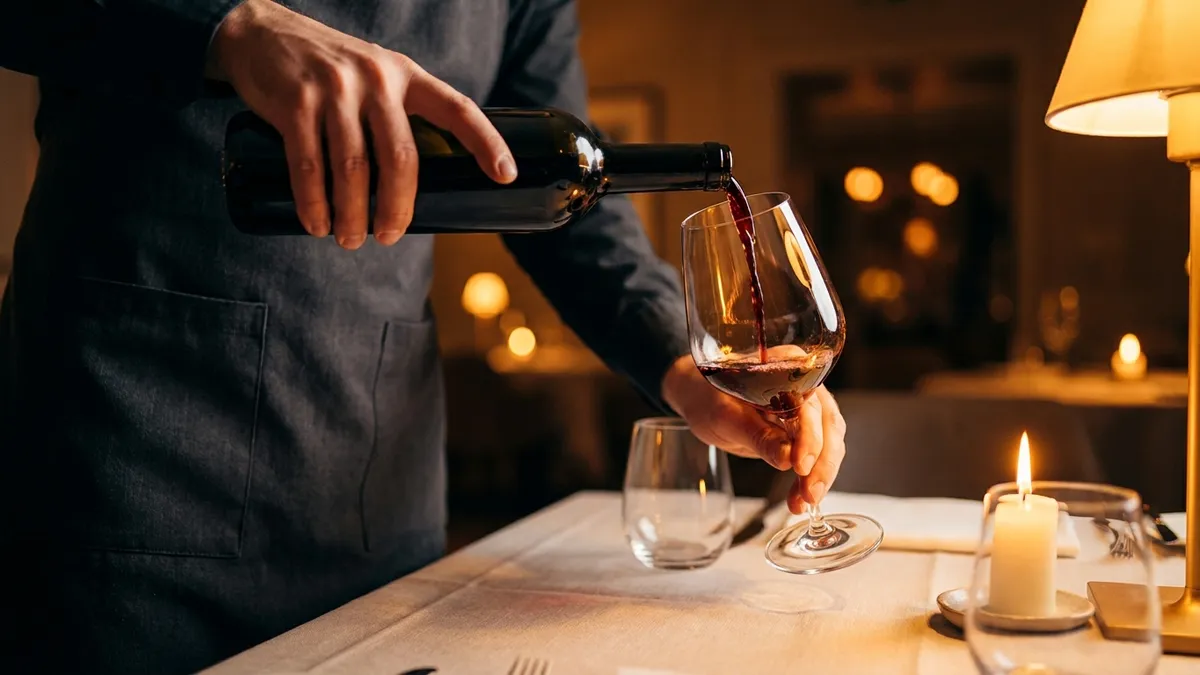
- Guide guests — the visible part, reading a table and steering them toward a bottle they will love
That last task is where skill meets hospitality. A strong sommelier asks what you are eating, what you usually enjoy, and roughly what you want to spend, then narrows a hundred-bottle list to two or three smart options. The goal is never to show off — it is to make the wine fit the meal and the moment. Learning how to order wine at a restaurant makes that conversation far less daunting.
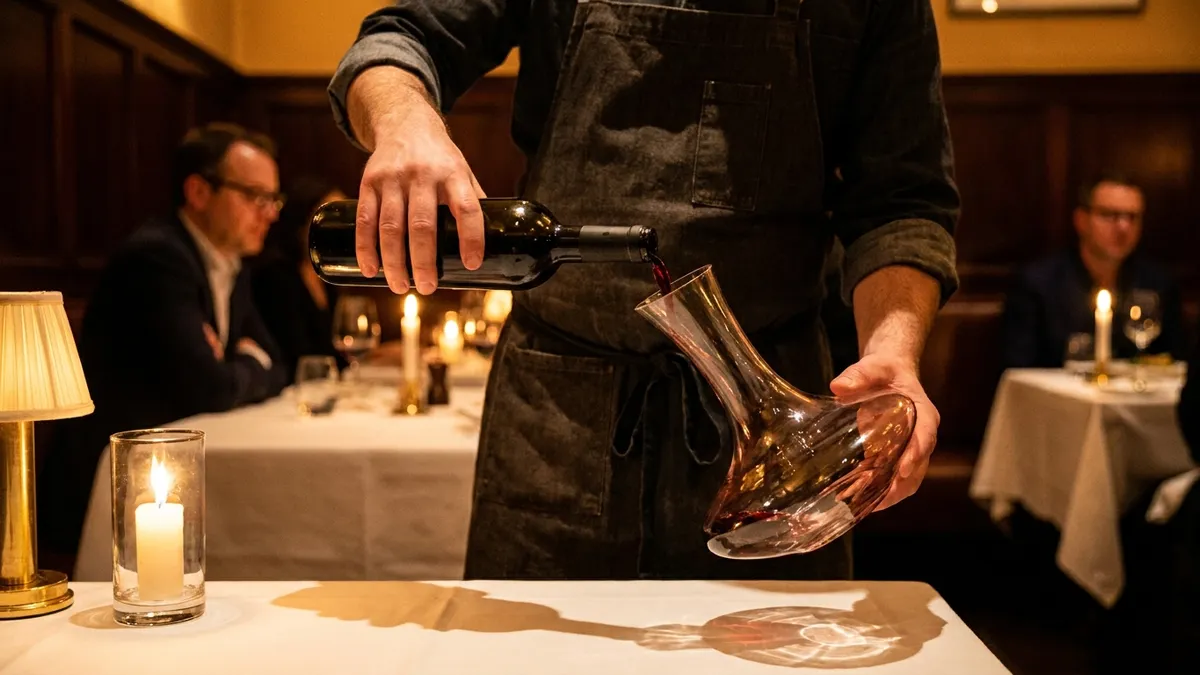
In larger establishments the title splits into a hierarchy — a head sommelier or wine director oversees the program, with junior sommeliers, sometimes called commis sommeliers, working the floor. In a small bistro, one person may do all of it. The scale changes; the mission does not.
Where Does the Word "Sommelier" Come From?
The word sounds impossibly refined, but its roots are humble. "Sommelier" traces back to a medieval French term for the official who managed a household's provisions — and the pack animals that hauled them. The person in charge of loading the supply beasts, the sommier, evolved into the servant responsible for the table, the linen, and eventually the wine cellar of a noble house.
Over centuries the title narrowed to its modern meaning: the specialist responsible for wine service. So the elegant figure at your table is the descendant of a household logistics manager — a fitting lineage, since so much of the job is still about getting the right bottle to the right place at the right time.
The profession was formalised much more recently. The Court of Master Sommeliers was founded in 1977 in the United Kingdom to standardise training and raise the quality of wine service across the restaurant trade. That single decision created the certification ladder most people picture when they hear the word today.
A sommelier is the modern descendant of a medieval household's supply manager — the job has always been about getting the right thing to the table.
What Skills Does a Sommelier Need?
Knowledge matters, but a sommelier is judged on three practical abilities: tasting blind, serving with polish, and remembering a staggering amount of detail.
Blind and deductive tasting
The signature sommelier skill is deductive tasting — working out a wine's grape, region, and age from the glass alone, with no label to help. It follows a fixed grid: assess the colour and clarity, catalogue the aromas, judge the structure on the palate (acidity, tannin, body, alcohol), then reason toward a conclusion. It is detective work with a rulebook.
This is the same disciplined method behind our guide to how to taste wine like a sommelier, and it is exactly what the WSET Systematic Approach to Tasting codifies for students. The point of tasting blind is not to perform party tricks — it is to build a calibrated palate that can describe any wine objectively. If you want to try the discipline yourself, our blind wine tasting tips walk through the setup.
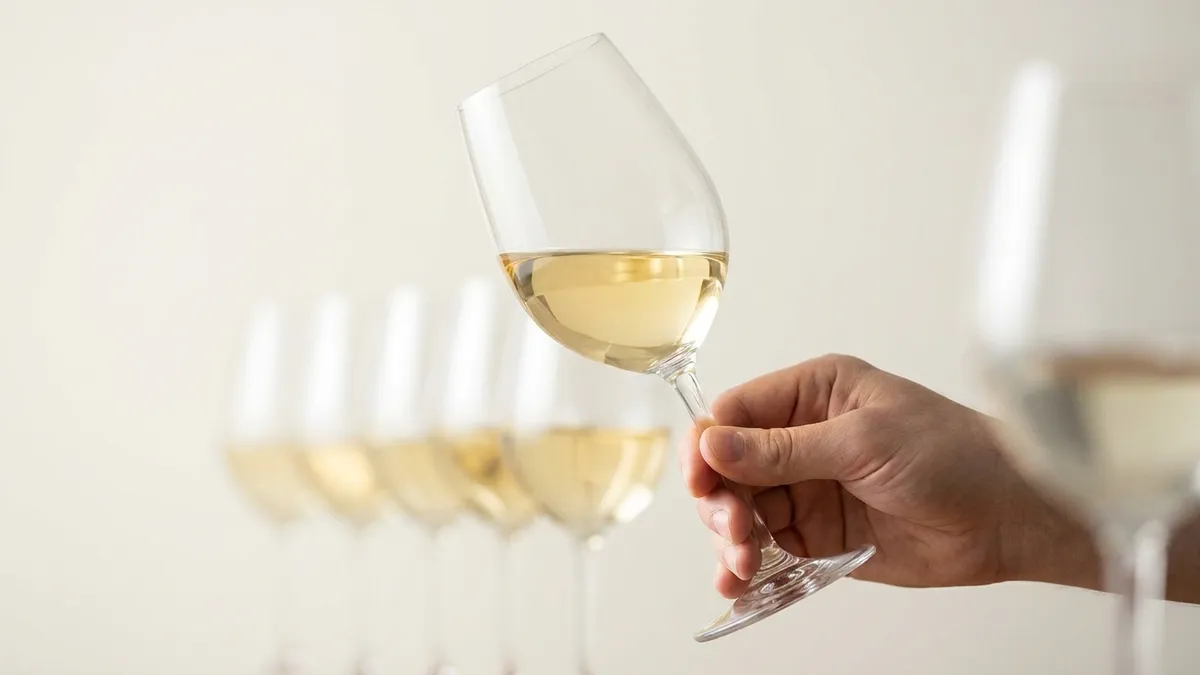
Service and hospitality
Tasting gets the headlines, but service is half the job. A sommelier is assessed on the mechanics of presenting a bottle, opening it cleanly, decanting when needed, and pouring correctly — all while reading the table's mood. In the Master Sommelier exam, this is a graded discipline in its own right, tested under pressure with examiners playing demanding guests.
Memory and constant study
A working sommelier holds a mental map of hundreds of wines on the list plus thousands more in the wider world — grapes, appellations, vintages, and how they taste. That library is never finished. The best sommeliers taste daily and study relentlessly, because the trade keeps producing new regions and vintages to learn. Reading how to evaluate wine quality gives a sense of the framework they carry in their heads.
How Do You Become a Sommelier? The Four Certification Levels
There is no single licence to become a sommelier, but the most recognised path is the Court of Master Sommeliers' four-stage ladder. Each level is harder, and the drop-off between them is steep.
Introductory Sommelier
A short, intensive course and exam covering the foundations of wine, service, and the world's major regions. This is the entry point — most candidates pass, and it is enough to start working a wine floor.
Certified Sommelier
A tougher exam adding a blind tasting of two wines and a practical service test. Passing here marks you as a genuinely competent working sommelier, ready for a serious wine program.
Advanced Sommelier
A multi-day course and demanding exam across theory, tasting, and service. The pass rate falls sharply, and reaching this level typically takes years of floor experience and study.
Master Sommelier
The summit — a three-part Diploma Examination in theory, blind tasting, and service. Many candidates attempt it repeatedly over years, and fewer than 300 people worldwide have ever passed.
The final exam is the stuff of legend. The Master Sommelier Diploma tests three separate disciplines: an oral theory exam ranging across wine, spirits, sake, and beer; a service exam under exam-room pressure; and a blind tasting of six wines — three red, three white — described and identified aloud in just 25 minutes. Candidates must pass all three parts, and the tasting portion alone humbles seasoned professionals. It is widely considered one of the hardest exams in any field.
You do not need the top of the ladder to work as a sommelier. Plenty of excellent professionals stop at Certified or Advanced and spend their careers running great lists. The Master title is a specialist peak, not a job requirement.
Sommelier vs Master of Wine vs WSET: The Credentials Compared
Wine's credential system confuses almost everyone, because three respected bodies run parallel paths and the titles sound alike. Here is how they actually differ.
| Credential | Awarding body | Focus | Roughly how many hold it |
|---|---|---|---|
| Master Sommelier (MS) | Court of Master Sommeliers (founded 1977) | Restaurant service, blind tasting, wine-list management | Fewer than 300 worldwide |
| Master of Wine (MW) | Institute of Masters of Wine (founded 1955) | Academic mastery — viticulture, winemaking, business, the whole trade | About 418 in 29 countries |
| WSET Level 4 Diploma | Wine & Spirit Education Trust (founded 1969) | Structured wine and spirits education, not a service role | Thousands of graduates globally |
The key distinction is purpose. A Master Sommelier is built for the floor — reading a table, pulling a cork cleanly, nailing a wine blind. A Master of Wine is an academic authority who may never work a restaurant shift, holding a qualification from the Institute of Masters of Wine that spans grape-growing, winemaking, and the global business. And the WSET — the Wine & Spirit Education Trust, founded in London in 1969 — is an education provider rather than a title-granting club: its courses now reach more than 70 countries and over 100,000 exam candidates a year, from beginners at Level 1 to Diploma students at Level 4.
Many professionals mix and match, holding a WSET Diploma while pursuing the Master Sommelier or Master of Wine. The credentials overlap in knowledge but point at different careers.
How to Talk to a Sommelier at a Restaurant
Knowing what a sommelier is makes them far easier to use — and using them well gets you better wine. The trick is to treat the sommelier as a guide, not a test you might fail.
Give them three things and they will do the rest:
- Your food — what everyone at the table is ordering, so they can match the wine to the meal
- Your taste — a style you usually enjoy, even in plain words like "crisp and dry" or "soft and fruity"
- Your budget — the easiest and most useful signal is to point at a price on the list and say "something around here"
Pointing at a number is a completely normal, quietly professional move; a good sommelier will never make you feel cheap for it. From there they narrow the list, and you can ask why they chose a bottle to learn something along the way. Pair this with knowing how to read a wine label and the whole exchange stops feeling like an exam.
Do You Need a Sommelier to Drink Well?
Here is the honest answer that the profession itself would give: no. A sommelier is a wonderful resource when you have one, but the underlying skill — tasting with attention and a method — belongs to everyone. The whole point of the deductive grid is that it is a repeatable process, not a gift.
That is exactly the gap the Sommy app is built to close. It teaches the same structured look-swirl-smell-sip method sommeliers use, guiding you through what to notice at each step until the vocabulary becomes second nature. You end up able to describe a wine, judge its balance, and choose your next bottle with real confidence — sommelier optional.
If you want to go further, comparing structured courses in our roundup of the best wine education apps is a good next step, and building a calibrated palate is a skill you can train deliberately — our guide to developing your wine palate shows how.
A sommelier, in the end, is not a barrier between you and good wine. They are a guide who spent years learning a method — and that method is one you can start learning today.
Sources
- About Master Sommeliers — Court of Master Sommeliers, Americas
- Our Story — Wine & Spirit Education Trust (WSET)
- Our History — Institute of Masters of Wine
- Sommelier — definition and etymology — Merriam-Webster
Frequently Asked Questions
What is a sommelier?
A sommelier is a trained wine professional, usually working in a restaurant, who manages the wine program end to end. That means building the wine list, buying and storing bottles, training staff, and guiding guests toward pairings that suit their meal and budget. The role blends deep wine knowledge with hospitality — a good sommelier makes wine easier, not more intimidating.
What is the difference between a sommelier and a Master Sommelier?
Anyone working the wine floor of a restaurant can be called a sommelier. Master Sommelier is a specific, protected title earned by passing the Court of Master Sommeliers' Diploma Examination — a three-part test of theory, blind tasting, and service. Fewer than 300 people worldwide hold it, which is why the two words are not interchangeable.
How do you become a sommelier?
Most sommeliers combine floor experience with formal study. The best-known path is the Court of Master Sommeliers ladder: Introductory, Certified, Advanced, and Master Sommelier. Others study through the WSET, which runs four levels of wine qualifications. You can start pouring as a sommelier with an entry certificate; the higher titles take years of tasting practice and exams.
What is the difference between a Master Sommelier and a Master of Wine?
A Master Sommelier is trained for the restaurant floor — service, blind tasting, and running a wine list. A Master of Wine holds a broader academic qualification from the Institute of Masters of Wine, covering viticulture, business, and the wider trade. There are roughly 418 Masters of Wine and fewer than 300 Master Sommeliers; both are among the hardest credentials in wine.
How do you pronounce sommelier?
Sommelier is pronounced roughly so-muhl-YAY, with the stress on the last syllable and a silent r, following its French roots. You will also hear the softer suh-MEL-yay in everyday English. Both are widely accepted. The plural, sommeliers, keeps the same sound, and the short form som is common among wine professionals themselves.
Do you need a sommelier to enjoy wine?
Not at all. A sommelier is a helpful guide, especially with a long restaurant list, but the tasting skills they use are learnable. Looking, swirling, smelling, and sipping with attention is a method anyone can practise. Tools like the Sommy app teach the same structured approach sommeliers use, so you can build real confidence on your own.
Sommy Team
LinkedInFounder & Wine Educator
The Sommy Team is building the world's most approachable wine education app, helping beginners develop real tasting skills through structured courses and AI-guided practice.