Court of Master Sommeliers: Levels, Fees and Which to Pick

By the Sommy Team — AI-assisted, human-edited.
Updated Nov 10, 2026
Contents (10)
- The Court of Master Sommeliers, in One Paragraph
- Which Court of Master Sommeliers Level Should You Book?
- The Four Levels Side by Side
- Are the Americas and Europe Courts the Same Body?
- What Happens at the Introductory Level?
- What Does the Certified Exam Test?
- How Hard Is the Advanced Level?
- What Does It Take to Pass Master Sommelier?
- When Does Another Route Fit Better?
- What to Do Before You Book
TL;DR
The Court of Master Sommeliers runs four levels in a fixed order: Introductory, Certified, Advanced and Master Sommelier. The first three need 60% in every section, Master needs 75%. The Americas and Europe chapters publish separate fees and entry rules: the Americas Introductory costs $949 in person, the UK one £695 and asks for hospitality experience.
The Court of Master Sommeliers has four exams taken in a fixed order, and two separate chapters, Americas and Europe, set their own fees, formats and entry rules. The chapter that runs exams in your country decides the fee and whether restaurant experience is required before the first class.
The Court of Master Sommeliers, in One Paragraph
The Court of Master Sommeliers certifies sommeliers in four levels: Introductory, Certified, Advanced and the Master Sommelier Diploma. Each must be passed before the next. The first three need 60% in every section; Master needs 75%. From Certified up, every exam marks theory, blind tasting and table service. Fees differ by chapter: the Americas Introductory costs $949 in person or $649 online, while the UK Introductory costs £695 and asks for twelve months of hospitality experience.
Which Court of Master Sommeliers Level Should You Book?
Book the Introductory if you are new, because every later level requires it. Where to stop after that comes down to whether you serve guests at a table, and for how long. Pick the line below that matches your work.
- Introductory, then stop: you serve wine part-time, or want a structured start before choosing a floor career.
- Certified: you work a restaurant floor and want proof that you can taste and serve.
- Advanced: you have years of service behind you and run, or want to run, a wine list.
- Master Sommelier: you have passed Advanced and can give several years to tasting and theory.
- Another body: you will never serve guests: take WSET Level 2 or Level 3.
If you live in Europe and have never worked in hospitality, the European Introductory asks for a year you do not have; the Americas online course asks for none, but only the Americas chapter accepts it as the step to Certified.
The Four Levels Side by Side
Fees as published on each chapter's pages, read 10 November 2026.
| Level | Format | Pass mark | Entry rule | Americas fee (USD) | UK fee (GBP, 2025) | Book it if |
|---|---|---|---|---|---|---|
| Introductory | Course plus multiple-choice exam; Europe adds a service test | 60% | Americas: 21 or over. Europe: 12 months in hospitality | $949 in person, $649 online | £695 | You want a first credential |
| Certified | One-day exam: theory, blind tasting, service | 60% in each, one sitting | Introductory pass | On the registration page | £325 | You work a restaurant floor |
| Advanced | Course, then theory, spoken blind tasting, service | 60% in each | Certified; Americas adds 3 years of restaurant service | $1,899 course; $399 theory exam; $100 application | £1,100 with course | Service is your career |
| Master Sommelier | Oral theory, six wines blind, service | 75% in each, within 3 years | Advanced pass | On the Diploma page | £1,500 | You run wine programmes |
Are the Americas and Europe Courts the Same Body?
No. They are two chapters with separate websites, price lists and rules, so check the chapter that runs exams in your country. The Americas chapter covers North and South America, Canada and Korea. The European chapter runs courses in the UK, Ireland, Norway, Sweden, Poland, Austria, Greece, South Africa, India, China, Singapore, Malaysia, Australia and New Zealand.
Outside the UK, the European chapter charges the equivalent of its UK price in local currency. Pick a chapter early, because the European chapter accepts Master Sommelier applicants only if they passed Advanced with it.
What Happens at the Introductory Level?
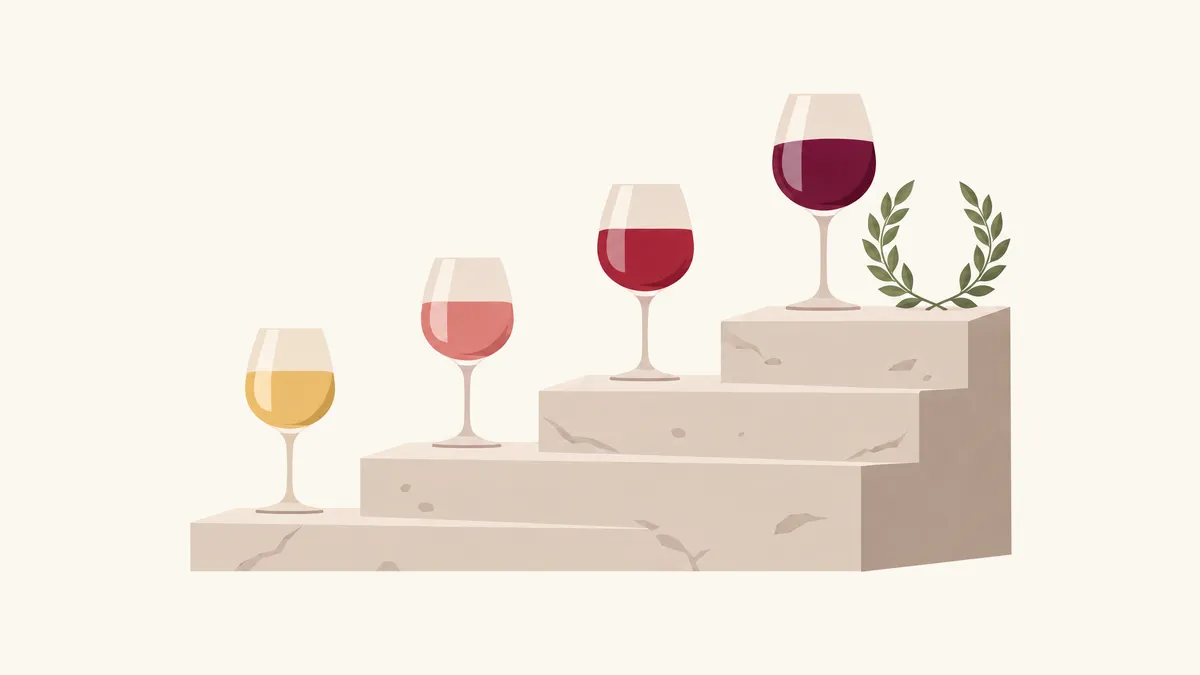
The Introductory is a short course that ends in a multiple-choice exam with a 60% pass mark. It covers grapes, regions, winemaking, food matching and the basics of service and tasting. The Americas runs it over two days or online; Europe takes three days and adds a service test.
In the Americas, the in-person course runs from 8am to 6pm on both days, with a 45-minute exam of 70 questions. It costs $949 with wines. The online version gives you up to six months and costs $649, wines bought separately. It is open to anyone 21 or over, with no experience rule.
In Europe, two days of coursework lead to a day of exams: 65 multiple-choice questions plus a practical service test. Both parts need 60% at the same sitting. The chapter asks for twelve months of hospitality experience and at least six weeks of study before the course.
If you study best alone, take the Americas online course. If you have never opened a bottle at a table, take it in person, where the service demonstration happens in front of you.
What Does the Certified Exam Test?
The Certified exam tests theory, blind tasting and service in one day, and every section needs 60% at the same sitting. There is no coursework at this level: candidates prepare on their own and arrive for a full day of exams.
In the Americas, the blind tasting (wines served with the bottle hidden) is written: four wines, two white and two red, in 45 minutes. The theory paper is 45 questions in 38 minutes. The service practical recreates a real restaurant. You must pass the Introductory before the registration deadline, nine days before the exam, and the exam runs in person only. Three years of trade experience is suggested but optional.
The European version has a 40-question theory paper, two wines tasted blind on a grid, and a service test. It costs £325 in the UK. Top-ranking Introductory candidates can sit it on the same day as their Introductory exam.
If you cannot yet tell two grapes apart with the bottles hidden, wait a season before booking.
How Hard Is the Advanced Level?
Advanced is built for sommeliers with years of service behind them. In the Americas you need a three-day Advanced course, at least three years of restaurant service or sales within the last seven years, and a current job in the trade. The application fee is $100.
The Americas exam has three sections: written theory, a spoken blind tasting, and a practical covering service and the business side of wine. All three must be passed in the same calendar year. The course and the exam run separately.
In Europe it is a five-day programme costing £1,100 in the UK: two and a half days of coursework, then two and a half of exams. The theory paper lasts one hour, with 24 multiple-choice and 60 short-answer questions. Six wines are tasted blind in 25 minutes, out loud, using the deductive tasting method. The service test lasts 45 minutes.
What Does It Take to Pass Master Sommelier?
Master Sommelier needs 75% in each of three sections: a one-hour oral theory exam, six wines tasted blind in 25 minutes, and a 45-minute service test, as the European chapter lists them. All three must be passed within three years. Only candidates who passed Advanced can apply, and the European chapter takes applicants by invitation only.
When Does Another Route Fit Better?
Another route fits better if you do not work, or plan to work, on a restaurant floor. The Court marks table service from Certified up, and that skill earns nothing in a shop, an office or your own kitchen. To understand and buy wine, WSET's levels test knowledge and tasting without service.
The broader comparison is in WSET vs CMS. For no exam at all, online wine courses teach the same grapes and regions.
Sommy, the app we build
Sommy is a wine learning app for iPhone, made by the team behind this blog. Lessons are short picture questions and quizzes rather than long text. Pick a goal, such as passing a level 1 or level 2 wine exam, and Sommy lays out its courses as one path. Over 20 courses cover grapes, regions, styles, blind tasting and serving, for practice between classes.
Guided tasting starts from a photo of the label, walks through look, smell and taste, and saves the note to a tasting journal. Sommy is independent and not an official prep course. Free to start on iPhone. Anyone who needs a classroom and a certificate should book a course instead.
What to Do Before You Book
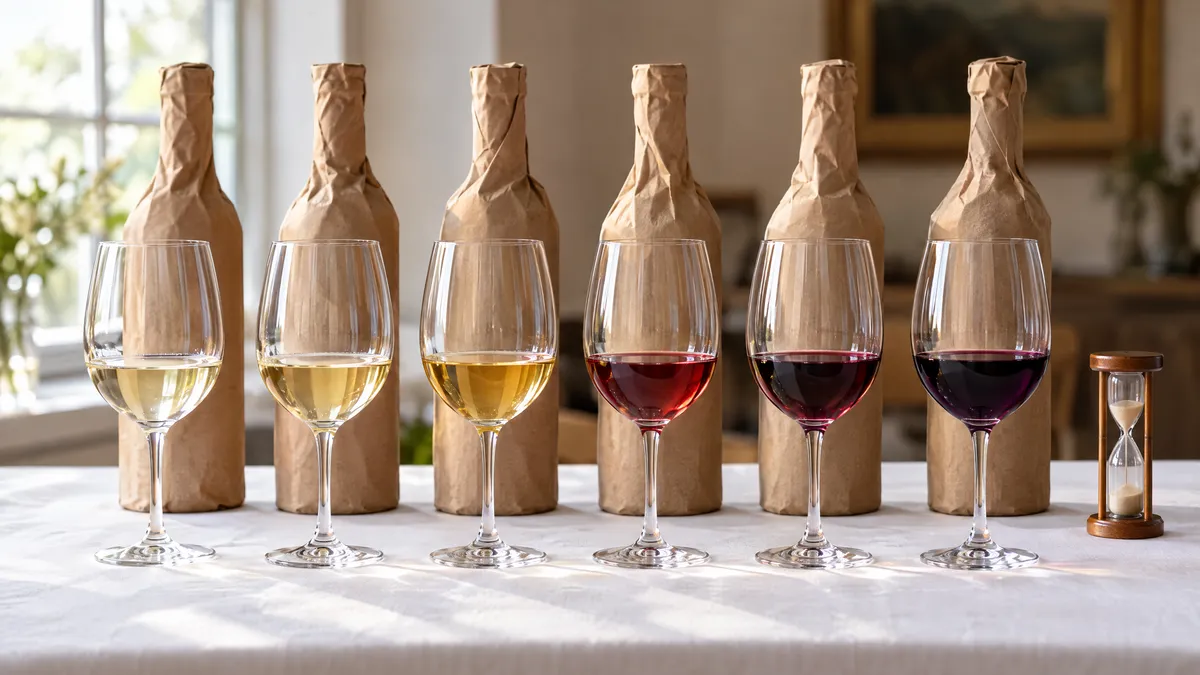
Test yourself at home first. Follow the blind tasting tips for setting up, then describe each wine in the order of tasting like a sommelier. More first steps sit in the beginners and buying hub.
Tonight, pour two wines blind and give yourself four minutes on each. Then open the chapter page for your country and book the Introductory date that leaves you six weeks to study.
Sources
- Introductory Sommelier Course and Examination — Court of Master Sommeliers, Americas
- Certified Sommelier Examination — Court of Master Sommeliers, Americas
- Advanced Sommelier Course and Examination — Court of Master Sommeliers, Americas
- Master Sommelier Diploma Examination — Court of Master Sommeliers, Americas
- Court of Master Sommeliers Europe Prospectus 2025 — Court of Master Sommeliers, Europe
- Current Course Prices — Court of Master Sommeliers, Europe
Frequently Asked Questions
How many levels does the Court of Master Sommeliers have?
Four, taken in order: the Introductory Sommelier Course and Examination, the Certified Sommelier Examination, the Advanced Sommelier Course and Examination, and the Master Sommelier Diploma Examination. Each level must be passed before you can sit the next one. The first three need 60% in every section; the Master Sommelier Diploma needs 75% in each of its three sections.
How much does the Introductory Sommelier course cost?
It depends on the chapter. The Americas chapter lists $949 for the in-person course and exam, wines included, and $649 for the online version, with wines sold separately. The European chapter's 2025 UK price is £695. Outside the UK, the European chapter charges the equivalent value in the host country's currency, so check the page for your country.
Do you need restaurant experience to take the Court of Master Sommeliers exams?
Not for the Americas Introductory, which is open to anyone 21 or over. The European chapter asks for twelve months of practical hospitality experience from its first level. For the Americas Advanced exam you need at least three years of restaurant service or sales experience within the last seven years and a current job in the trade.
Can you skip the Introductory and go straight to Certified?
No. Both chapters require the Introductory pass before Certified. In the Americas it must be passed before the Certified registration deadline, nine days before the exam. In Europe you can book both levels at one location: the Introductory exam runs on the morning of day three, and the top-ranking candidates are invited to sit Certified later that day.
What is the pass mark for the Certified Sommelier exam?
60% in every section, passed at the same sitting. In the Americas the sections are a written blind tasting of four wines in 45 minutes, a 45-question theory paper in 38 minutes and a service practical. The European chapter's version has a 40-question theory paper, two wines tasted blind on a grid and a service test.
Is the Court of Master Sommeliers or WSET better for a beginner?
For a beginner who wants to understand and buy wine, WSET, because its early levels test knowledge only and have no experience rule. The Court suits people who work, or plan to work, on a restaurant floor, since every level from Certified up marks service at the table. To try the Court without a hospitality job, the Americas online Introductory is open to anyone 21 or over.
Sommy Team
LinkedInFounder & Wine Educator
The Sommy Team is building the world's most approachable wine education app, helping beginners develop real tasting skills through structured courses and AI-guided practice.