Moscato vs Prosecco: Sweetness and Fizz Side by Side

By the Sommy Team — AI-assisted, human-edited.
Updated Nov 3, 2026

Contents (7)
TL;DR
Moscato d'Asti is chilled to stop fermentation at about 5% alcohol, so most grape sugar stays and the wine is sweet and softly fizzy. Prosecco ferments dry, gets its bubbles in a steel tank, and is mostly Brut (under 12 g/L sugar) or Extra Dry (12 to 17 g/L) at 11% and up.
Moscato vs Prosecco is a question of when the fermentation stops. Moscato d'Asti is chilled to a halt at about 5% alcohol, so most of the grape sugar stays in the wine. Prosecco ferments its sugar away, gets its bubbles in a steel tank, and is mostly sold as Brut or Extra Dry at 11% alcohol or more.
Moscato vs Prosecco, in One Paragraph
Moscato d'Asti is a sweet, gently fizzy white from the Asti hills of Piedmont, made from Moscato Bianco. Fermentation stops at about 5% alcohol, so it tastes of ripe peach and fresh grape, with plenty of sugar. Prosecco comes from nine provinces across Veneto and Friuli-Venezia Giulia, made mostly from Glera. It must reach at least 10.5 to 11.5% alcohol, depending on the denomination, and most bottles are Brut or Extra Dry.
| Moscato d'Asti | Prosecco | |
|---|---|---|
| Sweetness | Sweet: more than half the grape sugar left | Mostly Brut (under 12 g/L) or Extra Dry (12 to 17 g/L) |
| Alcohol | About 5% (legal floor 4.5%) | At least 10.5 to 11.5% |
| Fizz | Frizzante: soft, light bubbles | Mostly spumante: fully sparkling; some frizzante |
| Grape | Moscato Bianco | Glera, with up to 15% other permitted grapes |
| Region | Asti, Cuneo and Alessandria provinces, Piedmont | Veneto and Friuli-Venezia Giulia |
| Pick it for | Fruit desserts, brunch, spicy dishes, low-alcohol sipping | Aperitifs, salty snacks, cocktails, a crowd |
Which Is Sweeter, Moscato or Prosecco?
Moscato d'Asti, by a wide margin. The rules require grapes ripe enough for 11% alcohol, but fermentation stops near 5%, so more than half the sugar stays unfermented. That leftover is residual sugar (grape sugar the yeast never turned into alcohol), and sparkling labels sort it into the EU bands below.
| Label word or wine | Residual sugar | Tastes | Pick it if |
|---|---|---|---|
| Prosecco Brut | Under 12 g/L | Crisp, dry, green apple and pear | You want the driest Prosecco, or salty food |
| Prosecco Extra Dry | 12 to 17 g/L | Round, a touch of sweetness | Brut feels sharp to you |
| Prosecco Dry | 17 to 32 g/L | Noticeably sweet | You like fruity, off-dry fizz |
| Asti (fully sparkling) | About 75 to 100 g/L in the sweet style | Sweet and foamy | You want sweet bubbles with a party pop |
| Moscato d'Asti | About 120 to 150 g/L, far past the 50 g/L doux line | Sweet peach and fresh grape | Dessert, or a glass for someone who dislikes dry wine |

The surprise sits in the middle of the ruler. Extra Dry is sweeter than Brut, not drier: it allows 12 to 17 g/L against Brut's under 12. If the label says Extra Dry, expect a soft edge of sweetness; if you want the crispest bottle on the shelf, pick Brut. The full scale for still and sparkling wine is in the wine sweetness scale.

Quick check
One question on what you just read
A Prosecco label says Extra Dry. How does it compare with a Brut Prosecco?
Tap an answer to see how you did.
Why Is Moscato d'Asti So Low in Alcohol?
Because the winemaker chills the wine to stop fermentation at about 5% alcohol, leaving most of the grape sugar unfermented. Yeast turns sugar into alcohol and carbon dioxide; chill the must close to freezing and filter the yeast out, and both stop.
Moscato d'Asti ferments once, in a closed pressure tank, and keeps the gas from that single fermentation; no second fermentation is allowed in the bottle. The low-alcohol wines list puts it at the bottom of the range.
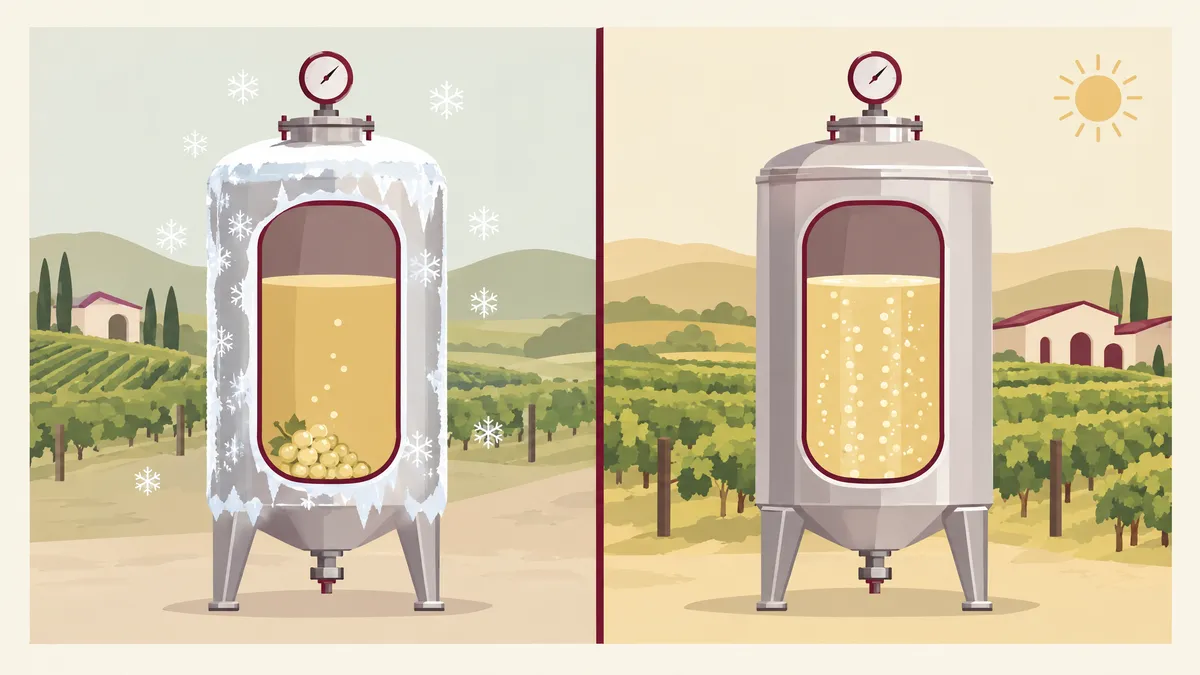
Prosecco takes the opposite route. A dry base wine goes into a large stainless steel tank with yeast and sugar for a second fermentation, which makes the bubbles. This is the Charmat-Martinotti or tank method, and it lasts at least 30 days, up to about nine months for the longer Charmat Lungo. The winemaker then sets the sweetness level before bottling. The step-by-step is in the Charmat method explained.
How Fizzy Is Each One?
Prosecco Spumante is fully sparkling; Moscato d'Asti is frizzante (semi-sparkling), with far less pressure. EU rules call a wine sparkling only above 3 atmospheres of pressure, while semi-sparkling wines sit between 1 and 2.5. Champagne, for scale, is sold at 5 to 6 atmospheres.
Prosecco comes in both: spumante bubbles last in the glass, frizzante ones fade sooner. If the label says spumante, expect a lively mousse; if it says frizzante, or Moscato d'Asti, expect a soft prickle that is gone a few minutes after the pour.

Which Should You Pick for Brunch, Dessert, Spicy Food or a Party?
Pick Moscato d'Asti when the food or the drinker wants sugar, and Prosecco Brut when the food is salty or savoury. If the dish is sweeter than the wine, the wine tastes thin and sour, so dessert always gets the sweeter bottle.
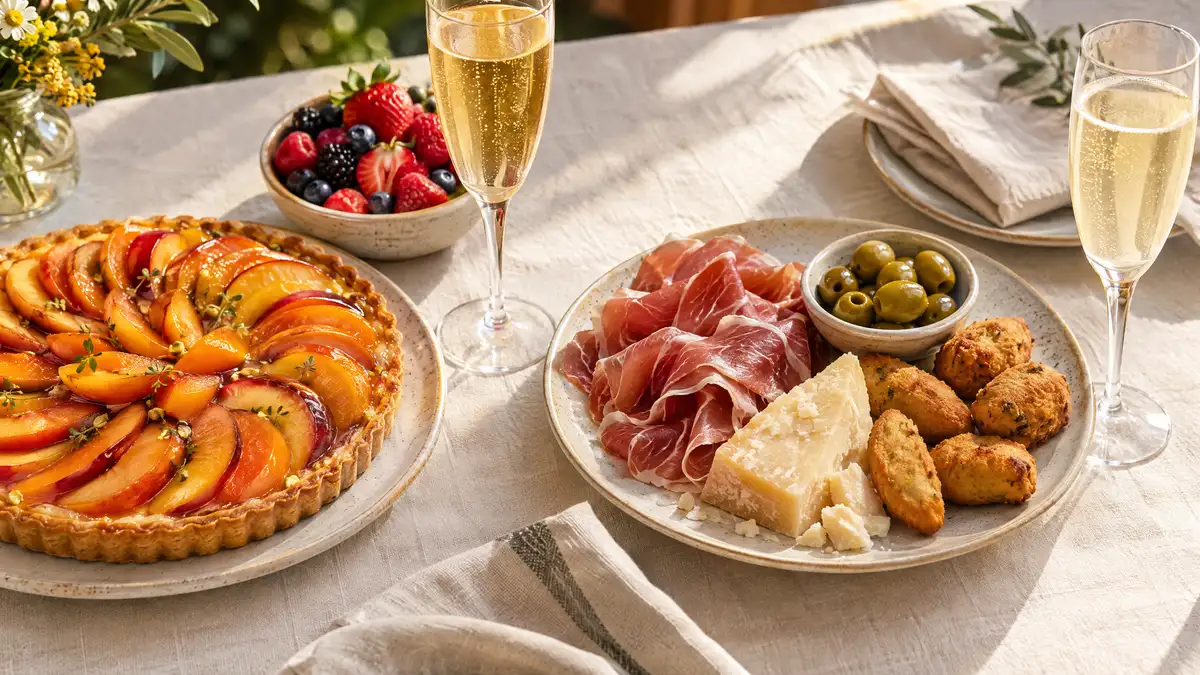
- Fruit desserts and cakes: Moscato d'Asti. Peach tart and light sponge are sweet enough to flatten a Brut; more matches are in wine with cake.
- Savoury brunch: Prosecco Brut. Eggs, cured ham and smoked salmon bring salt and fat that acidity and bubbles cut. If there are pancakes with syrup, switch to Moscato d'Asti (wine for brunch).
- Spicy food: Moscato d'Asti. Chilli makes alcohol burn, and this wine has little alcohol and plenty of sugar to soften the heat (wine with spicy food).
- Aperitifs and salty snacks: Prosecco Brut. Crisps, olives and fried bites want a dry wine to rinse away the salt and oil.
- Spritzes and cocktails: Prosecco. Its dry base takes bitters and fruit (wine cocktails and spritzes).
- A guest who dislikes dry wine: Moscato d'Asti first; Prosecco Extra Dry as the middle step.
Is Moscato the Same as Moscato d'Asti or Asti?
No. Moscato is the Italian name for the Muscat grape family, which also makes still, dry and fortified wines; the Moscato wine guide maps them. Moscato d'Asti and Asti are two DOCG wines (Italy's top tier of protected wine names) from Piedmont, both made from one grape, Moscato Bianco.
Moscato d'Asti became a DOC in 1967 and a DOCG in 1993. Asti is its fully sparkling sibling: usually 7 to 9.5% alcohol and, in its classic sweet style, about 75 to 100 g/L of sugar. A bottle that says only "Moscato" with no place name can come from anywhere, in any style. Read the back label: around 5% alcohol points to a sweet, softly fizzy wine in the Moscato d'Asti mould. The wider Piedmont picture is in the Piedmont wine guide.
Prosecco has its own label ladder. Prosecco DOC covers the broad area. The hill zones of Conegliano Valdobbiadene and Asolo were promoted to DOCG in 2009. The grape, Glera, gets its own page in Prosecco grape: Glera, and the Spanish alternative is weighed in Cava vs Prosecco.
How Should You Serve Them?
Both go into the glass fridge-cold and young, after a few hours in a cold fridge. The exact ranges are in the wine serving temperature chart. Neither is made for ageing, so buy the most recent vintage you can find.
A white wine glass shows the peach and grape aroma of Moscato d'Asti better than a narrow flute. If you serve both at one table, pour the Brut first and the Moscato d'Asti last: sugar after dry tastes fine, but dry after sugar tastes sour. Every other bubbly style is sorted in sparkling wine types and the wine styles hub.
The Sommy app walks you through look, smell and taste for each label you photograph and saves the notes to your tasting journal. Pour a Prosecco Brut and a Moscato d'Asti side by side tonight, photograph both labels, and taste the Brut first.
Sources
Frequently Asked Questions
Is Moscato sweeter than Prosecco?
Yes, by a wide margin. Moscato d'Asti keeps more than half of its grape sugar because fermentation is stopped at about 5% alcohol, which puts it far past the 50 grams per litre where the EU's sweetest sparkling term, doux, begins. Most Prosecco is Brut, under 12 g/L, or Extra Dry, 12 to 17 g/L, so it tastes fruity rather than sugary.
Which has more alcohol, Moscato or Prosecco?
Prosecco. The rules set its minimum at 10.5 to 11.5% alcohol depending on the denomination, while Moscato d'Asti is stopped at about 5%, with a legal floor of 4.5%. Fully sparkling Asti, made from the same grape as Moscato d'Asti, sits between them at usually 7 to 9.5%. A glass of Moscato d'Asti carries about half the alcohol of the same glass of Prosecco.
What does Extra Dry mean on a Prosecco label?
Extra Dry means 12 to 17 grams of sugar per litre, which is sweeter than Brut, the driest common Prosecco at under 12 grams. The word dry on a sparkling label means less sweet than the band above it, not free of sugar. If you want the crispest Prosecco, look for Brut. If you want a softer, rounder glass that still tastes far from sweet, Extra Dry is the one.
Is Moscato d'Asti the same as Asti?
No, though both come from the same grape, Moscato Bianco, in the same part of Piedmont. Moscato d'Asti is gently fizzy (frizzante) and stopped at about 5% alcohol. Asti, once called Asti Spumante, is fully sparkling, usually 7 to 9.5% alcohol, and in its classic sweet style keeps a little less sugar, about 75 to 100 g/L. Both are usually made in pressure tanks; a rarer Asti Metodo Classico is fermented in the bottle.
Which is better for people who do not like dry wine?
Moscato d'Asti. Its sweetness, low alcohol and soft bubbles make it the easiest first glass for anyone who finds dry wine sour or harsh. If you want something in between, try Prosecco Extra Dry or Dry, which keep 12 to 32 grams of sugar per litre: a touch of sweetness with more fizz and a fresher finish than Moscato d'Asti.
Which goes better with dessert, Moscato or Prosecco?
Moscato d'Asti. A wine needs to be at least as sweet as the dessert, or the dessert makes it taste thin and sour. Moscato d'Asti has the sugar for fruit tarts, peach cobbler and light sponge cakes. Prosecco Brut does better before the meal and with salty foods such as cured ham, fried snacks and hard cheese.
Sommy Team
LinkedInFounder & Wine Educator
The Sommy Team is building the world's most approachable wine education app, helping beginners develop real tasting skills through structured courses and AI-guided practice.