Wine with Cake: Best Pairings From Carrot Cake to Tiramisu

By the Sommy Team — AI-assisted, human-edited.
Updated Oct 1, 2026
Contents (9)
- Wine With Cake: The Answer in One Paragraph
- Why Does Dry Wine Taste Sour Next to Cake?
- Which Wine Goes With Which Cake?
- What Wine Goes With Chocolate Cake?
- What Wine Goes With Carrot Cake and Other Spiced Cakes?
- What Wine Goes With Tiramisu?
- What Wine Goes With Cheesecake, Vanilla and Wedding Cake?
- Can You Serve Dry Wine With Cake?
- How Should You Serve Wine With Cake?
TL;DR
Wine with cake works only when the wine is sweeter than the cake; a dry wine turns thin and sour. Sort the cake by flavour: sweet or fortified reds for chocolate, tawny Port or late-harvest Riesling for carrot cake, sweet Marsala for tiramisu, and Moscato d'Asti or demi-sec sparkling for cream and wedding cakes.
Wine with cake follows one rule: the wine has to be sweeter than the slice. Get that right and the rest is matching flavour, with dark sweet reds for chocolate, nutty amber wines for spice and coffee, and bright sweet whites or demi-sec bubbles for cream and vanilla cakes.
Wine With Cake: The Answer in One Paragraph
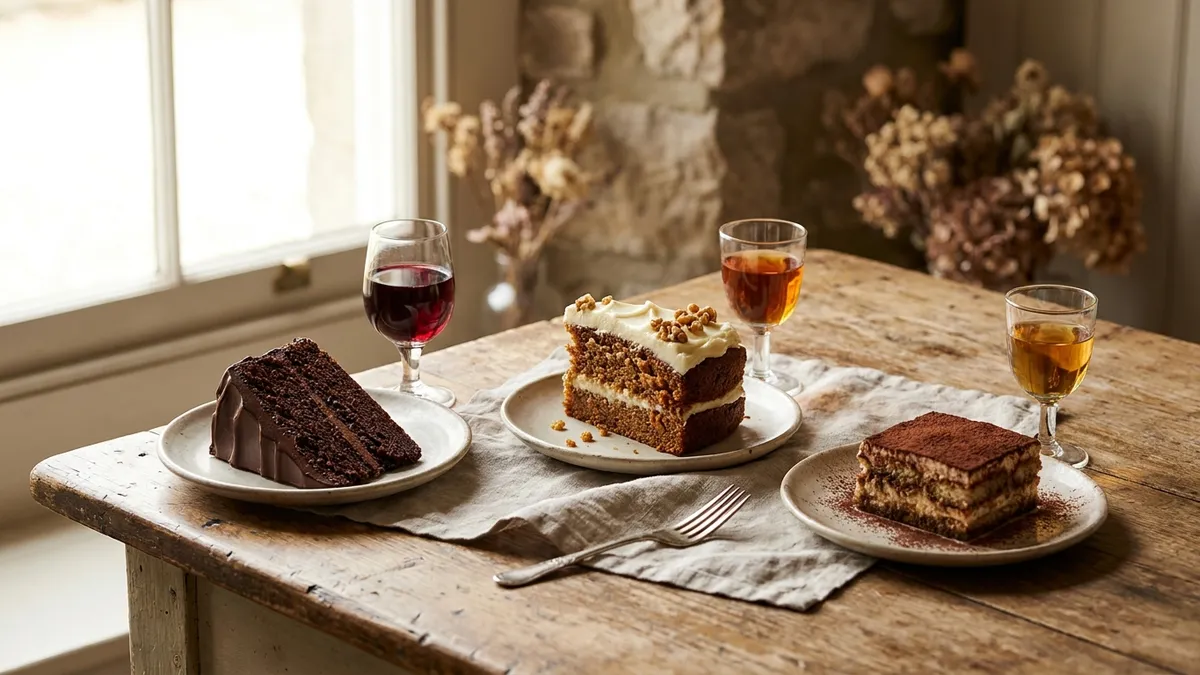
Pour a wine that is sweeter than the cake, then match the cake's loudest flavour. Under EU labelling rules a still wine needs more than 45 grams of sugar per litre to be called sweet, and most cake wines sit well above that. Chocolate cake takes a sweet or fortified red (spirit added, about 15 to 22% alcohol) such as ruby Port or Banyuls. Carrot cake and spiced cakes take tawny Port or a late-harvest Riesling. Tiramisu takes sweet Marsala, Vin Santo or tawny Port. Cheesecake, vanilla and wedding cake take Moscato d'Asti, Sauternes or a sparkling wine labelled demi-sec. If the frosting is thick, move one step sweeter.
Why Does Dry Wine Taste Sour Next to Cake?
Sugar on your tongue resets what "sweet" means for the next sip. After a bite of frosting, a dry wine has no sweetness left to show, so its fruit disappears and its acid takes over. The standard rule in food and wine pairing follows from this: a sweet wine should be sweeter than the dish it is served with.
The number to look at is residual sugar (grape sugar left unfermented in the wine). EU rules for still wine set the bands, with some leeway for high-acid wines: dry is up to 4 grams per litre, medium dry up to 12, medium up to 45, and sweet above 45. A slice of frosted cake is far sweeter than anything in the first three bands, so cake wines come from the last one. The wine sweetness scale puts common styles on that ladder, and sweet vs dry wine explains why fruity is not the same as sweet.
Which Wine Goes With Which Cake?
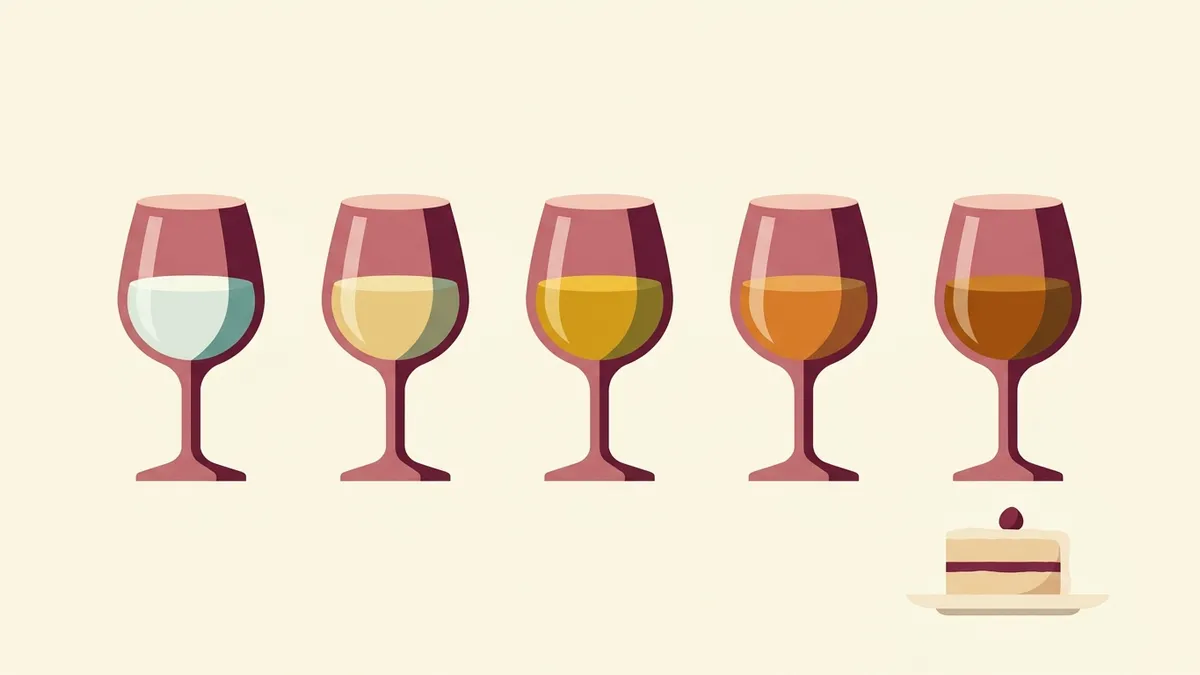
Sort the cake by its loudest flavour, then pick from the matching row. The name of the cake matters less than whether it tastes mostly of chocolate, fruit and spice, cream, or coffee and nuts. Every wine in the table is sweet; the rows differ in fruit, weight and acidity.
| Cake family | Examples | Wine styles | Why it works | Pour this if |
|---|---|---|---|---|
| Chocolate | Chocolate layer cake, brownies, Black Forest | Ruby Port, Banyuls, Brachetto d'Acqui | Sweet dark-cherry fruit meets cocoa; sugar matches the ganache | The cake is dark and dense: Port or Banyuls. Lighter or mousse-based: Brachetto |
| Fruit and spice | Carrot cake, apple cake, gingerbread | Tawny Port, late-harvest Riesling, sweet Chenin Blanc | Nutty, caramel wine echoes cinnamon and walnuts; acidity cuts cream cheese | Thick frosting: a sweet white. Little or no frosting: tawny Port |
| Cream and vanilla | Cheesecake, sponge with cream, wedding and birthday cake | Moscato d'Asti, Sauternes, demi-sec or doux sparkling | High acidity keeps butter and cream from feeling heavy | Light and airy: Moscato d'Asti. Dense or caramel-topped: Sauternes |
| Coffee and nut | Tiramisu, coffee cake, hazelnut torte | Sweet Marsala, Vin Santo, tawny Port | Dried-fruit, toffee and nut flavours sit with coffee and cocoa | The recipe uses Marsala: pour Marsala. Rum or amaretto: tawny Port |
If the cake carries a thick layer of frosting or a sugary glaze, move one step sweeter within its row: from Moscato d'Asti to Sauternes, or from a late-harvest Riesling to a richer one.
What Wine Goes With Chocolate Cake?
A sweet red or a fortified red: ruby Port, Banyuls, or Brachetto d'Acqui for lighter chocolate cakes. Red dessert wines and fortified wines are the standard match for chocolate desserts, because their sugar meets the ganache and their dark-cherry fruit sits under the cocoa.
The common advice to pour a dry red with chocolate cake is the mistake to skip. Sweet food makes tannin (the drying grip on your gums) taste harder and more bitter, so a dry Cabernet Sauvignon tastes harsh and papery next to the frosting. A sweet red has tannin too, but its sugar holds the bitterness back.
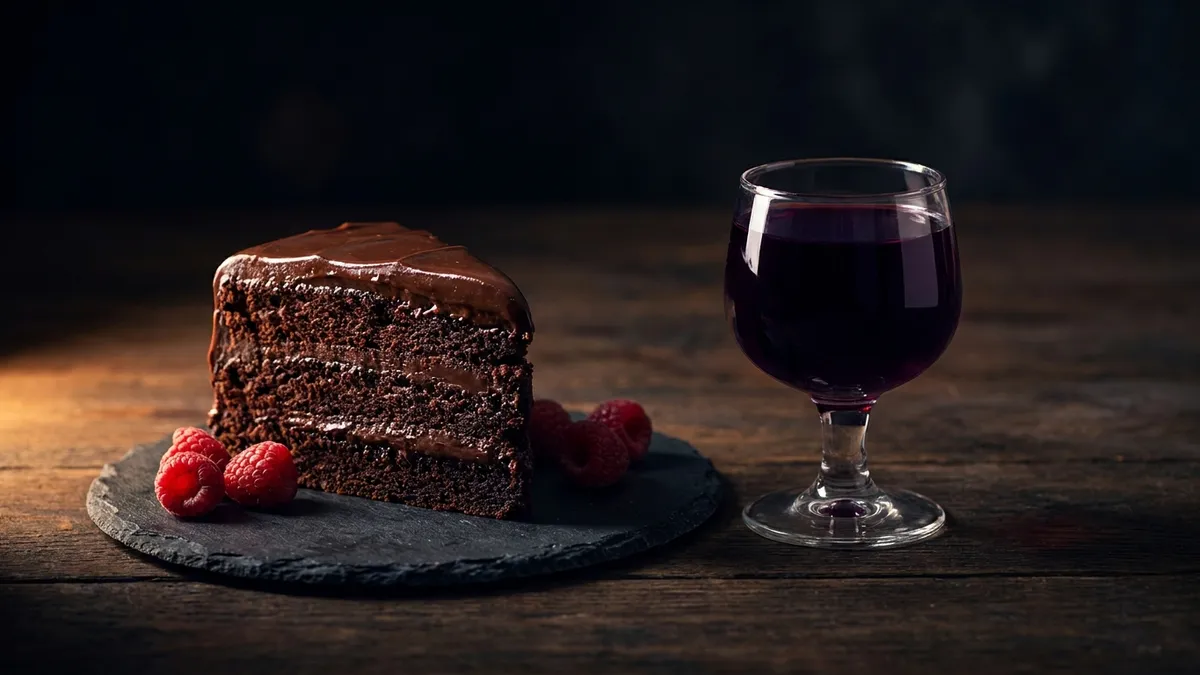
Banyuls comes from the far south of France and is based on Grenache noir, fortified to keep its grape sugar. It tastes of cooked cherry and cocoa, which makes it a close match for a flourless chocolate cake. Ruby Port does the same job with more blackberry; the Port wine guide explains the styles. Brachetto d'Acqui is an aromatic sweet red from Piedmont, usually sparkling, that smells of strawberries and roses. Its lower weight suits a milk-chocolate or mousse cake that would make Port feel heavy.
If the cake is dark, dense and bitter, pour ruby Port or Banyuls. If it is milky, airy or topped with berries, pour Brachetto. Chocolate by itself, from dark bars to truffles, gets its own table in wine with chocolate.
What Wine Goes With Carrot Cake and Other Spiced Cakes?
Tawny Port, or a sweet white with high acidity such as late-harvest Riesling or Chenin Blanc. Carrot cake is spiced with cinnamon and ginger, often made with walnuts, and usually topped with a thick cream cheese frosting, so the wine has to handle spice, nuts and tangy fat at once.
Tawny Port spends years in wooden casks, where it turns from purple to brown and picks up nutty, caramel flavours. Labels may carry an age statement of 10, 20, 30 or 40 years, and the wine sits around 19 to 22% alcohol. Those walnut and toffee flavours line up with the nuts and brown sugar in the cake.
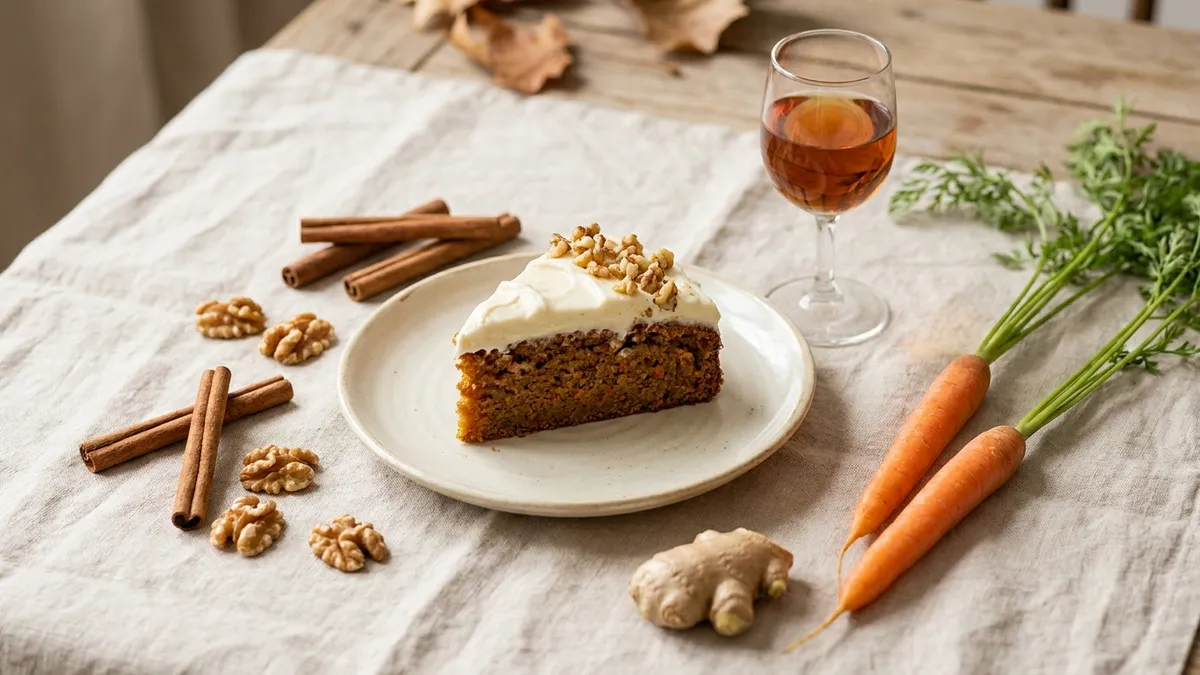
The frosting changes the choice. Acidity (the tartness that makes your mouth water) cuts through cream cheese, and it also makes sugar taste less heavy. Riesling and Chenin Blanc keep their sharpness even when the grapes are very ripe, so their sweet versions stay fresh beside a dense frosting. On a German Riesling label, look for Spätlese or Auslese, two late-harvest grades, but skip any marked trocken (dry); the Riesling wine guide covers how to read them, and the Chenin Blanc guide covers the Loire's sweet styles.
If the frosting is thick and tangy, pour the late-harvest white. If the cake is plain, nutty or glazed, pour tawny Port. Apple cake and gingerbread follow the same split.
What Wine Goes With Tiramisu?
Sweet Marsala, the fortified Sicilian wine many recipes use to soak the ladyfingers, or Vin Santo or tawny Port. Tiramisu layers coffee-soaked sponge with mascarpone and cocoa, so the wine needs sugar, enough body for the cream, and flavours that sit with coffee.
Sweet Marsala is used in rich Italian desserts such as zabaione and tiramisu, so the pairing often repeats a flavour already in the dish. Marsala is fortified to at least 17.5% alcohol and comes in three sweetness levels: secco (up to 40 grams of sugar per litre), semisecco (41 to 100) and dolce (above 100). For tiramisu, buy dolce. The Marsala wine guide explains the colour and age words on the label.
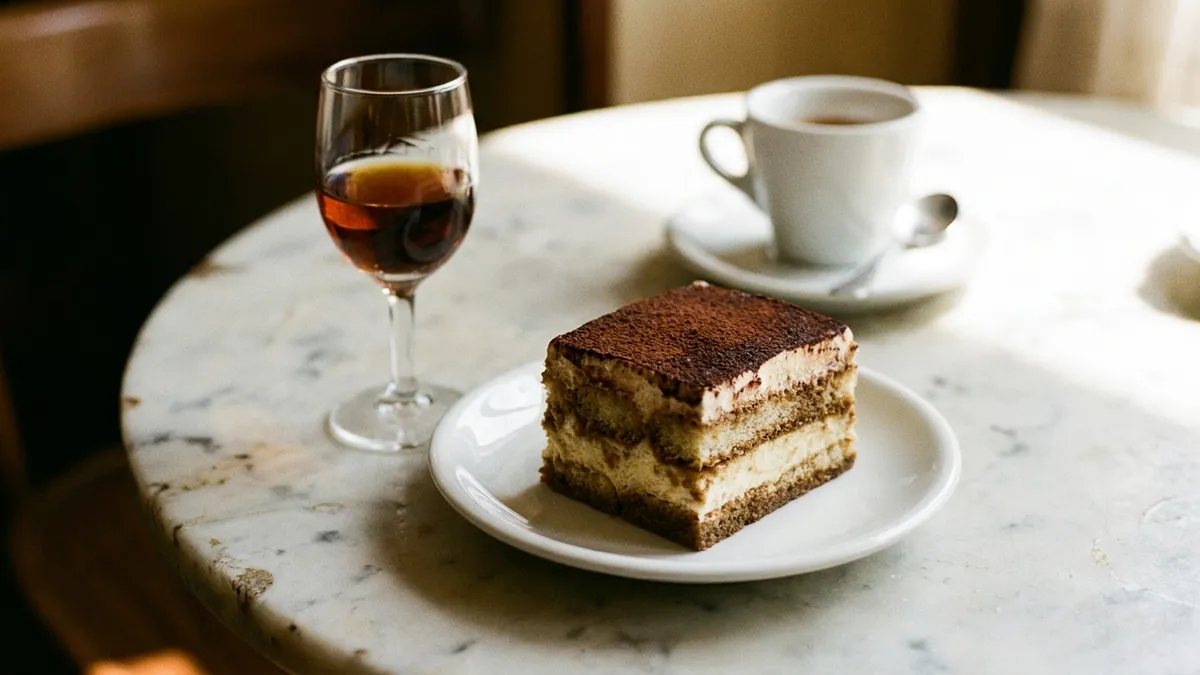
Vin Santo is Tuscany's classic dessert wine, made from grapes dried before pressing, then aged for years in small barrels. It tastes of dried apricot, honey and walnut, and is traditionally served with almond cantucci for dipping; the Vin Santo guide covers it. Its nuttiness suits tiramisu that leans on cocoa.
Tiramisu is younger than its reputation: it seems to have appeared in north-east Italy in the late 1960s or early 1970s, and the details are disputed. Recipes have never settled on one soaking liquor either. Marsala, amaretto, dark rum, Madeira, Port and brandy all appear. If the recipe used Marsala, pour the same wine. If it used rum or amaretto, pour tawny Port, whose caramel side meets both.
What Wine Goes With Cheesecake, Vanilla and Wedding Cake?
A sweet white with high acidity, such as Moscato d'Asti or Sauternes, or a sparkling wine labelled demi-sec or doux. Cream, butter and vanilla need a wine with enough sugar to match the cake and enough acid to keep the fat from coating your mouth.
Moscato d'Asti is made from the Moscato Bianco grape in Piedmont. It is frizzante (lightly fizzy, softer than full sparkling wine) and sits around 5% alcohol, with flavours of peach, grape and orange blossom. It suits sponge with cream and light cheesecakes. Sauternes is made in Bordeaux from Sémillon, Sauvignon Blanc and Muscadelle grapes shrivelled by botrytis (a mould called noble rot that concentrates sugar). Its honey and apricot weight suits a dense baked cheesecake or one topped with caramel. The Moscato wine guide and the Sauternes wine guide cover both.
Wedding and birthday cake bring the most common mistake. A vintage brut Champagne served with sweet wedding cake can taste tart and weak. EU rules let Brut carry up to 12 grams of sugar per litre. Demi-sec means 32 to 50 grams, and doux means more than 50, which is the range that holds up to buttercream.
Can You Serve Dry Wine With Cake?
Only with cakes that barely taste sweet, such as olive oil cake, a plain sponge with fresh berries or a lemon drizzle with little glaze. These cakes carry so little sugar that a crisp, dry sparkling wine or an off-dry white keeps its fruit next to them.
The test is your own bite. If you can clearly taste sugar in the cake, the wine needs sugar too. If the cake tastes mostly of butter, citrus or fruit, an off-dry Riesling or a dry sparkling wine works. A dry red is the worst option across the board: no sugar to meet the cake and tannin that the sugar turns bitter. More on how sugar, salt and acid in food change a wine's taste is in how food changes wine taste.
How Should You Serve Wine With Cake?
Serve the sweet whites and sparkling wines cold, the reds and fortified wines cool, and pour small. Cold sharpens acidity and makes a sweet white feel fresher, which helps against cream and butter; the wine serving temperature chart gives the ranges for each style.
Tawny Port and sweet Marsala are better slightly cool than at warm room temperature, where their alcohol shows more. Give a bottle that has sat in a warm kitchen a short spell in the fridge before serving.
Portions matter because the wine is sweet and, in the fortified styles, strong. A fortified wine at 19% carries far more alcohol per sip than a 5% Moscato d'Asti, so a small glass of each per slice is enough. Use a small white-wine glass rather than a large red one; the wine glass guide explains why a narrower bowl suits sweet and fortified wines. If you pour fortified wine, pour half the usual glass.
The dessert wine guide covers every sweet style beyond these, and the food pairing hub gathers the other matches. The Sommy app at sommy.wine has bite-sized courses, including Wine 101, and an AI-guided tasting mode that starts from a photo of the label. Find the row for the cake you plan to serve tonight, buy one sweet bottle from it, and pour a small glass beside the first slice.
Sources
Frequently Asked Questions
What wine goes with chocolate cake?
A sweet or fortified red. Ruby Port and Banyuls, a fortified Grenache from southern France, have the sugar and dark-cherry fruit to stand up to dark chocolate. For a lighter milk-chocolate cake or a mousse cake, Brachetto d'Acqui, a usually sparkling sweet red from Piedmont, is gentler. Avoid dry, tannic reds such as Cabernet Sauvignon, because the sugar in the cake makes their tannin taste bitter.
What wine goes with carrot cake?
Tawny Port or a sweet, high-acid white. Tawny Port's nutty, caramel flavours from years in wood echo the walnuts and cinnamon in the cake. A late-harvest Riesling or sweet Chenin Blanc has the acidity to cut through cream cheese frosting. If the frosting is thick, choose the white; if the cake is plain or nut-heavy, choose the tawny.
What wine goes with tiramisu?
Sweet Marsala is the natural choice, since many tiramisu recipes soak the ladyfingers in it. Look for Dolce on the label, which means more than 100 grams of sugar per litre. Vin Santo from Tuscany and tawny Port also work, because their dried-fruit and nutty flavours sit well with coffee and cocoa. Match the pour to whatever liquor the recipe used.
Does champagne go with birthday cake?
Only if it is sweet. Most Champagne is Brut, which allows up to 12 grams of sugar per litre, far less than frosting. Against a sweet cake it tastes tart and thin. Look for demi-sec (32 to 50 grams per litre) or doux (over 50) on the label, or pour Moscato d'Asti. Keep the Brut for the toast before the cake is cut.
Can you drink dry wine with cake?
Only with cakes that barely taste sweet, such as olive oil cake or plain sponge with fresh berries. Sugar on the tongue makes the next sip of wine taste less sweet and more sour, so a dry wine loses its fruit and keeps its acid. The sweeter the cake, the sweeter the wine needs to be.
What is the best wine for cheesecake?
A sweet white with high acidity. Moscato d'Asti, lightly fizzy and around 5% alcohol, keeps a dense baked cheesecake from feeling heavy. Sauternes or a late-harvest Riesling suit cheesecakes topped with fruit or caramel, because their acidity cuts the cream cheese while their sugar matches the topping. Skip red wine, which clashes with the tang of the cheese.
Should dessert wine be sweeter than the dessert?
Yes. The standard rule in food and wine pairing is that the wine should be at least as sweet as the food, and ideally sweeter. When the cake is sweeter, the wine tastes sour, thin and sometimes bitter. When the wine is sweeter, both keep their flavour. Acidity in the wine then keeps the sweetness from feeling heavy.
Sommy Team
LinkedInFounder & Wine Educator
The Sommy Team is building the world's most approachable wine education app, helping beginners develop real tasting skills through structured courses and AI-guided practice.