Wine for Date Night: Styles, Pairings and Serving Tips

By the Sommy Team — AI-assisted, human-edited.
Updated Oct 1, 2026

Contents (9)
- How to Choose Wine for Date Night, in One Paragraph
- What Wine Goes With the Meal You Are Cooking?
- Should You Open Sparkling Wine First?
- Red, White or Rosé: Which Is the Safer Pick?
- Why Do These Pairings Work?
- What Temperature and Glass Make Wine Taste Its Best?
- What Should You Pour With Dessert?
- How Much Wine Do You Need, and What If One of You Drinks Less?
- How Do You Pick a Bottle at a Restaurant?
TL;DR
Choose date-night wine by the richest thing on the plate. Open a Brut sparkling wine, which carries less than 12 g/L of sugar, with salty snacks. For one bottle through the whole meal, dry rosé or a light red is the safest pick. With dessert, the wine must taste sweeter than the dish.
The best wine for date night is chosen by the richest thing on the plate. Open with a dry sparkling wine while you cook. Then pour one bottle that suits the main course: dry rosé or a light red if you are unsure. Finish, if there is dessert, with a wine that tastes sweeter than the dish.
How to Choose Wine for Date Night, in One Paragraph
Match the wine's body (its weight in the mouth, like skimmed milk versus whole) to the weight of the main course. Light fish takes a light, crisp white; creamy sauces take a fuller white; steak or lamb takes a full-bodied red. Start the evening with Brut sparkling wine, which by EU rules carries less than 12 grams of sugar per litre. If you want one bottle for everything, buy dry rosé or a light red such as Pinot Noir. With dessert, the wine must be sweeter than the food. Serve whites and sparkling cold and reds below room temperature.
What Wine Goes With the Meal You Are Cooking?
Match the wine's weight to the richest thing on the plate, then let acidity (the tartness that makes your mouth water) handle fat and tannin (the drying grip on your gums) handle protein. The table covers the dinners most couples cook at home.
| Dinner | Wine style | Why it works | Serve it |
|---|---|---|---|
| Seared white fish with lemon | Crisp, dry white such as Sauvignon Blanc or Albariño | Light body meets a light fillet; acidity matches the lemon | Straight from the fridge |
| Salmon or tuna | Dry rosé or Pinot Noir | Oily fish sits between white and red in weight | Lightly chilled |
| Pasta in tomato sauce | Medium red with high acidity, such as Sangiovese | Tart sauce needs a wine at least as tart, or the wine tastes flat | Cellar-cool |
| Creamy pasta or risotto | Full white such as oaked Chardonnay | Cream is heavy, so the wine needs weight too | Chilled, not icy |
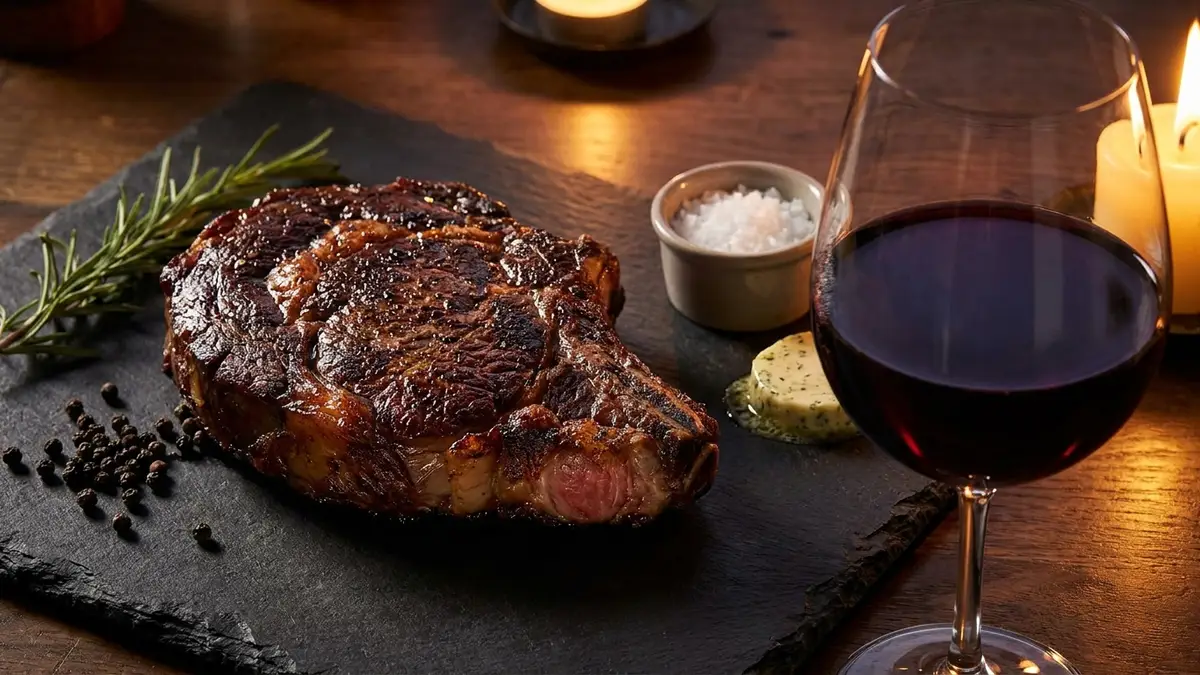
| Steak or lamb | Full-bodied red such as Cabernet Sauvignon or Syrah | Tannin binds to the meat's protein and feels softer | Slightly cool |
| Curry or chilli heat | Off-dry Riesling or a low-alcohol white | Chilli makes alcohol burn, so keep alcohol low | Fridge-cold |
| Sushi or salty snacks | Brut sparkling wine | Bubbles and acidity cut salt and fried batter | Ice bucket |
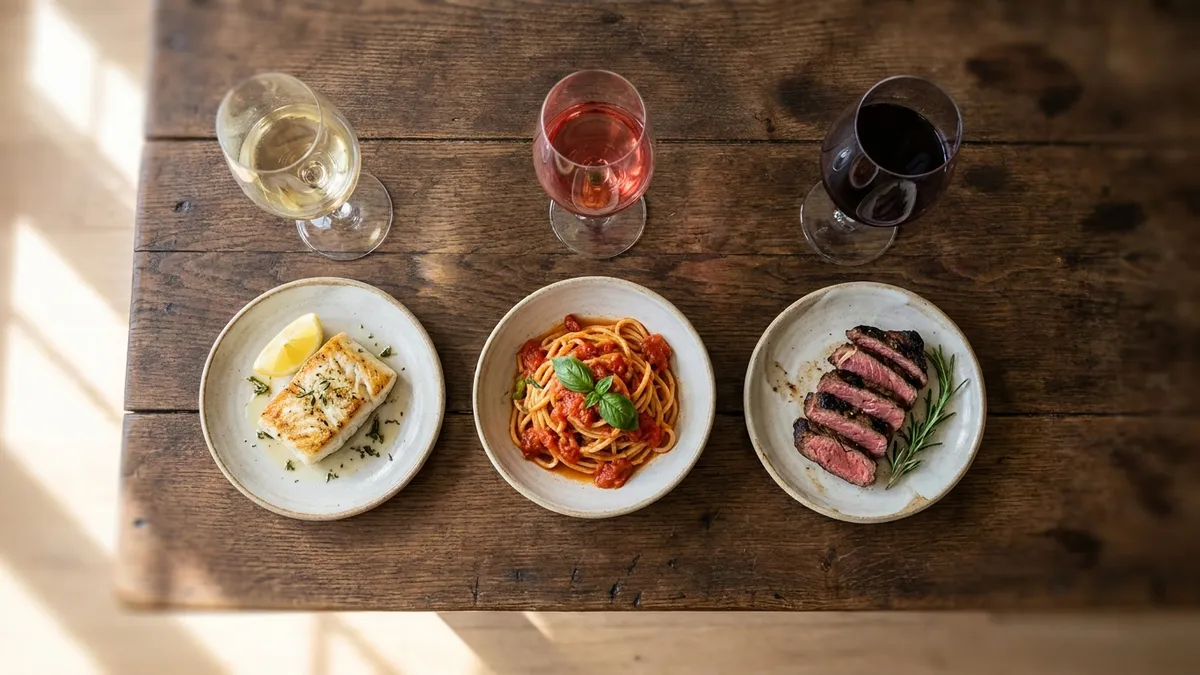
If the sauce is creamy or buttery, buy a white with weight; if the meat is charred and red, buy a red with tannin. A steak dinner with more detail by cut sits in wine with steak, and spicy menus in wine with spicy food.
Should You Open Sparkling Wine First?
Yes, if it is dry. A cold glass of Brut before dinner is light, and its acidity and bubbles stand up to salty olives, almonds or crisps. The label word tells you how sweet the bottle is. The EU bands, in grams of sugar per litre:
- Brut: under 12 g/L. The aperitif choice.
- Extra Dry: 12 to 17 g/L. Sweeter than Brut, despite the name.
- Dry: 17 to 32 g/L. Noticeably sweet.
- Demi-sec: 32 to 50 g/L. Dessert territory.
- Doux: over 50 g/L. The sweetest.
If the label says Extra Dry, save it for fruit or a light dessert, and buy Brut for the first glass. Prosecco is often sold as Extra Dry, so check before you pour it with salty food.
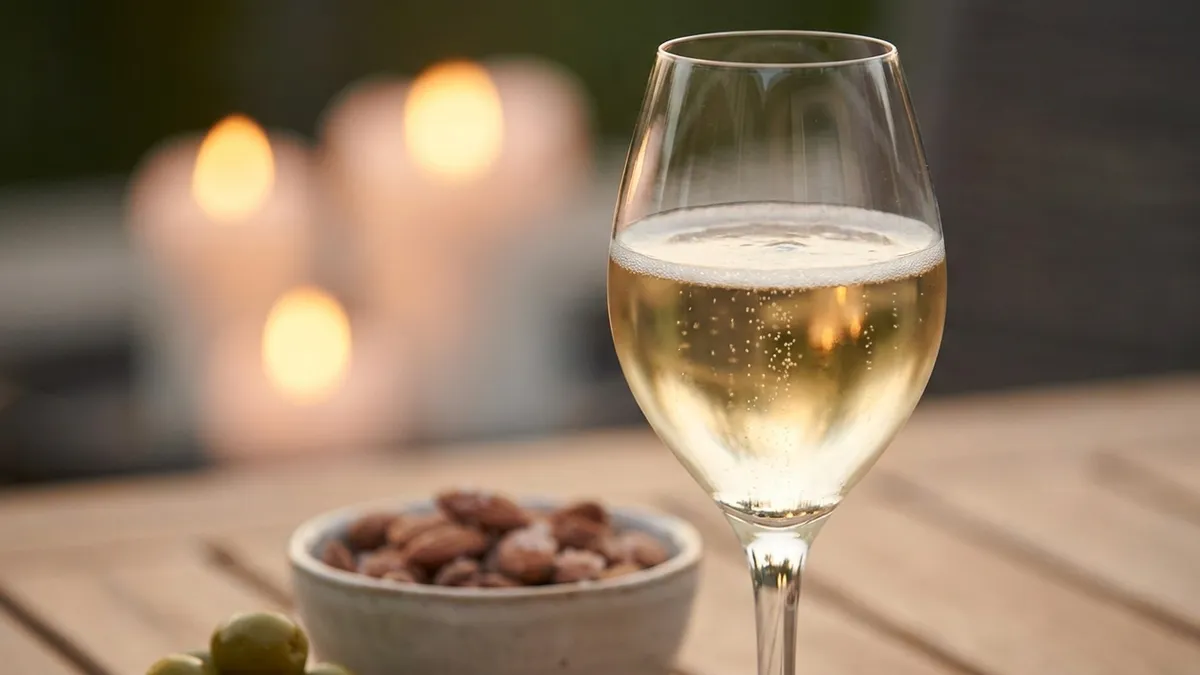
Method changes the texture. Champagne and Cava are made by the traditional method (a second fermentation inside each bottle). Non-vintage Champagne must age in the cellar for at least fifteen months, most of it on its spent yeast, which gives it bread and toast notes. Most Prosecco is made by the tank method: the second fermentation happens in large steel tanks, which keeps the pear and apple fruit fresh and the bubbles softer.
Fully sparkling wines hold 5 to 6 atmospheres of pressure, so open the cork slowly with a cloth over it. If you want toast and fine bubbles, buy Champagne or Cava; if you want light fruit, buy Prosecco. The full comparison is in Champagne vs Prosecco vs Cava.
Red, White or Rosé: Which Is the Safer Pick?
Dry rosé or a light red is the safest single bottle, because both sit in the middle for weight and tannin. Choosing by colour, red for meat and white for fish, is outdated: modern winemaking produces heavy whites and light reds, so colour no longer predicts weight. An oaked Chardonnay can outweigh a Pinot Noir.
A pale, dry rosé has enough acidity for fish and salad and enough fruit for roast chicken or pork. A light red such as Pinot Noir or Gamay has little tannin, so it does not taste harsh beside fish or vegetables, yet it still feels like a red with lamb or mushrooms. The rosé wine guide explains how skin contact sets a rosé's colour and weight, and the Pinot Noir guide covers the lightest of the classic reds.
If you do not know what your date likes, buy dry rosé. If the main course is red meat, buy a light-to-medium red and keep the big, tannic bottle for a dinner where you know both tastes.
Why Do These Pairings Work?
Four mechanisms do the work: acidity cuts fat and salt, tannin binds to protein, sweet food needs a sweeter wine, and the wine's weight must match the food's. Once you know them, the table above becomes something you can rebuild for any recipe. The longer version is in our wine and food pairing guide.
Acidity. In fatty, oily, rich or salty dishes, a wine's acidity cuts through the heaviness, so a crisp white lightens a butter sauce and sparkling wine lightens fried batter.
Tannin. Tannins bind to and precipitate proteins. In the mouth that means saliva, which is why a tannic red gives the dry, puckered feeling also found in strong tea. Meat and cheese give the tannin other protein to grab, so the same wine feels softer with a steak than on its own. Our explainer on what tannins are shows how to feel them on your gums.
Weight. A heavy wine buries a delicate dish, and a light wine vanishes next to a heavy one. Cabernet Sauvignon fits a hearty stew; Pinot Grigio fits a light fish.
Salt and heat. Salt and chilli heat both accentuate alcohol, so a strong wine tastes hotter next to spicy food. If the dish has chilli, choose a wine with lower alcohol and a touch of sweetness. The five working rules are set out in wine pairing rules.
What Temperature and Glass Make Wine Taste Its Best?
Serve whites and sparkling wine cold and reds below the temperature of a warm room, in a glass that narrows at the top. Temperature changes taste in a predictable way. Lower temperatures emphasise acidity and tannin while muting aroma. Higher temperatures soften acidity and tannin and lift aroma, including the smell of alcohol.
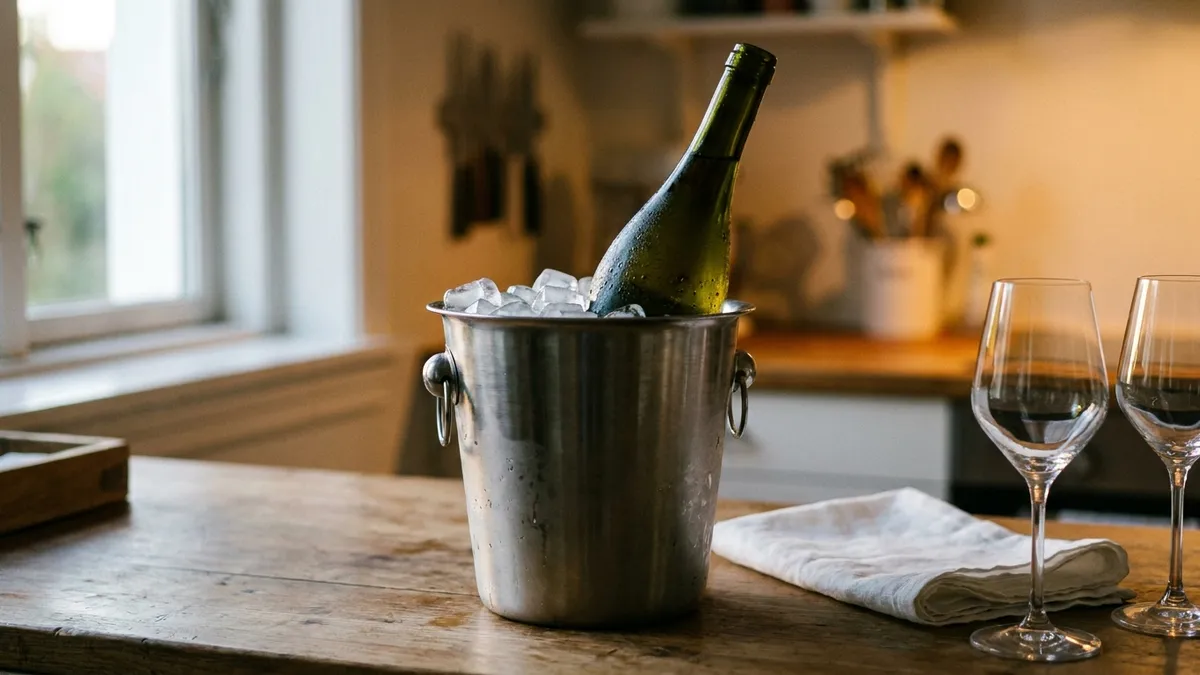
That is why the advice to serve red at room temperature misleads: a heated dining room on a winter evening pushes a red warm enough for the alcohol to dominate. A fridge-cold red has the opposite problem, tasting tart and grippy with little smell. Exact ranges by style are in the wine serving temperature chart.
For the glass, use one that is wider at the bottom and narrower at the opening, a tulip or egg shape. The bowl gives room to swirl and the narrow rim holds the aroma in. One pair of all-purpose glasses of that shape covers red, white and sparkling; the wine glass guide explains when special shapes matter.
What Should You Pour With Dessert?
Pour a wine that tastes sweeter than the dessert. If the dish is sweeter, the wine tastes sour and thin. That rules out the Brut you opened at the start: with cake or tart it turns sharp. Sugar decides it, so check the sweetness word on the label before buying.
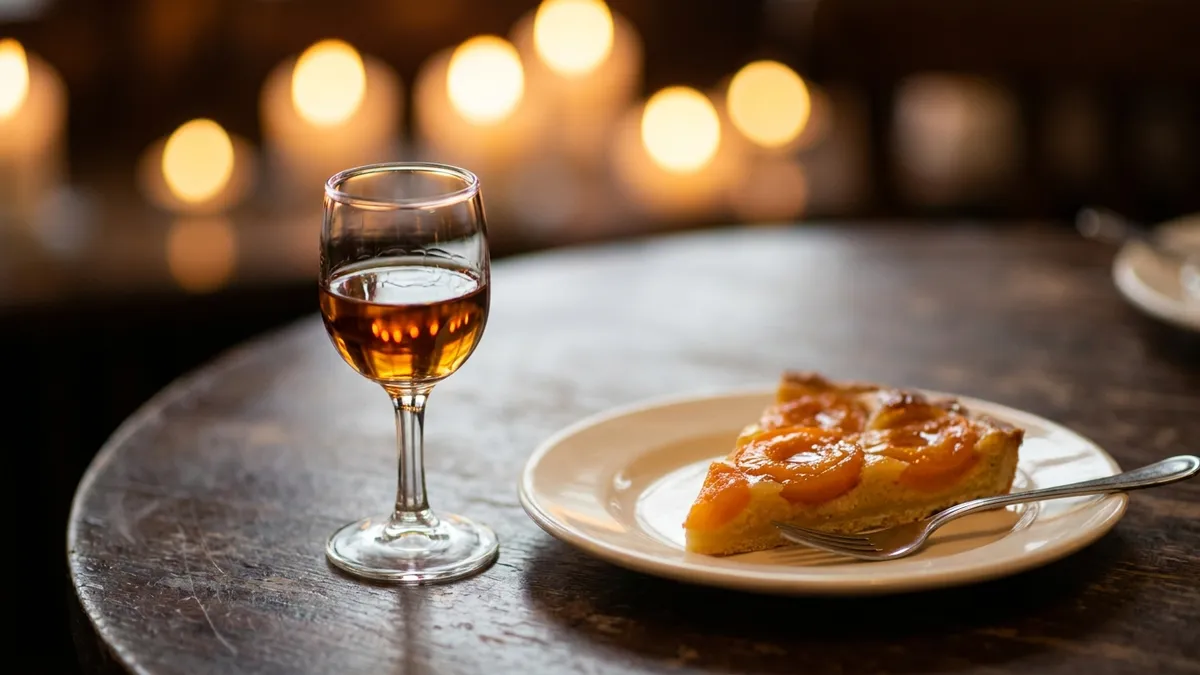
A Demi-sec or Doux sparkling wine suits fruit tarts, cake and creamy desserts. Still dessert wines, from late-harvest whites to fortified reds, are compared in the dessert wine guide. Chocolate is its own case, with bitterness and fat on top of sugar; wine and chocolate pairing handles it.
If the dessert tastes sweeter than the wine in your glass, switch to a sweeter label word, or serve the dessert with coffee and the wine on its own. Pour small: a few sips each is enough.
How Much Wine Do You Need, and What If One of You Drinks Less?
One bottle covers a dinner for two at home in most cases, plus a small dessert wine if there is a sweet course. That allows a glass each with the aperitif, the main course and a little left for later. The glasses in a bottle guide shows how far one bottle goes at different pour sizes.
If one of you drinks less or not at all, choose a lighter style rather than a second full bottle. Prosecco has a legal minimum of only 10.5 to 11.5% alcohol, depending on the appellation. The low-alcohol wines guide lists other light options, including Kabinett Riesling and non-alcoholic wine. Set out a jug of water and a non-alcoholic sparkling drink in the same glasses, so both of you have something cold and festive.
How Do You Pick a Bottle at a Restaurant?
Name the dish you ordered, the style you like and the price you want to pay, and let the staff choose inside those limits. A useful script: "We are having the lamb and the fish, we like dry and not too heavy, around this price," pointing at a figure on the list.
If the list confuses you, order a wine from the same region as the food. Regional cooking and winemaking evolved together, so an Italian trattoria's local red is usually built for its tomato sauces. If two dishes pull in different directions, order by the glass, or fall back on the rosé-or-light-red rule from above. Our guide to ordering wine at a restaurant walks through the tasting ritual at the table, and restaurant wine markup shows where to find value on the list.
More pairing guides by dish sit in the food pairing hub. Tonight, put the bottle in the fridge while you cook, then taste it once alone and once with the first bite. Then photograph the label in the Sommy app. Its AI-guided tasting walks you both through look, smell and taste and saves the notes to a tasting journal for the next shop.
Sources
Frequently Asked Questions
What is the best wine for a romantic dinner at home?
The best wine is the one that matches the richest thing on the plate. A delicate fish wants a crisp white, a creamy pasta a fuller white, and a steak a red with firm tannin. If you are cooking several dishes or do not know your date's taste, a dry rosé or a light red such as Pinot Noir covers the widest range.
Is red or white wine better for date night?
Neither colour wins on its own. The old red-with-meat, white-with-fish rule is outdated, because modern winemaking makes heavy whites and light reds. Match the wine's weight to the food's weight instead. A buttery white suits roast chicken in cream, and a light red suits salmon. Dry rosé is the compromise when you cannot decide.
Should you serve sparkling wine on a date?
Yes, as the first glass. A dry Brut sparkling wine, with less than 12 grams of sugar per litre, wakes up appetite and goes with salty snacks like olives and almonds. Watch the label: Extra Dry is sweeter than Brut, so save it for fruit. Champagne and Cava are bottle-fermented, while most Prosecco is made in tanks and tastes fruitier.
How much wine should you buy for two people?
One bottle covers a dinner for two at home in most cases, with a glass each before, during and after the main course. Add a half bottle or a small dessert wine if you plan a sweet course. If one of you drinks less, pick a lower-alcohol style such as Prosecco or a German Kabinett Riesling rather than a second full bottle.
What wine goes with dessert on a date?
Choose a wine that tastes sweeter than the dessert, or both turn sour and thin. Demi-sec sparkling carries 32 to 50 grams of sugar per litre and Doux more than 50, so either works with fruit tarts and cake. A dry Brut with chocolate cake tastes sharp. For chocolate, look at sweet reds or fortified wines instead.
What temperature should date-night wine be?
Serve sparkling wine and whites straight from the fridge, and reds slightly cool, below the warmth of a heated dining room. Cold wine tastes tarter and more tannic but smells less, while warm wine smells more and tastes softer and more alcoholic. A red that feels warm in the hand needs a short spell in the fridge before dinner.
Sommy Team
LinkedInFounder & Wine Educator
The Sommy Team is building the world's most approachable wine education app, helping beginners develop real tasting skills through structured courses and AI-guided practice.