Wine for Christmas Dinner: Every Course, Bubbles to Port

By the Sommy Team — AI-assisted, human-edited.
Updated Sep 25, 2026
Contents (10)
- Wine for Christmas Dinner, in One Paragraph
- What One Wine Goes With All of Christmas Dinner?
- What Wine Goes With Christmas Turkey?
- What Wine Goes With a Glazed Christmas Ham?
- What Wine Goes With Prime Rib or Roast Beef?
- Should You Serve Champagne All Through Christmas Dinner?
- What Wine Goes With Christmas Pudding, Pie and the Cheese Board?
- Is Mulled Wine a Pairing or a Drink on Its Own?
- How Many Bottles Do You Need, and In What Order?
- How to Test Your Christmas Wines Before the Day
TL;DR
The best wine for Christmas dinner has high acidity and low tannin, because one plate holds turkey, glazed ham, gravy and cranberry at once. Pinot Noir or off-dry Riesling covers the main plate, dry sparkling wine can run all night, a tannic red belongs only with beef, and dessert wine must be sweeter than the pudding.
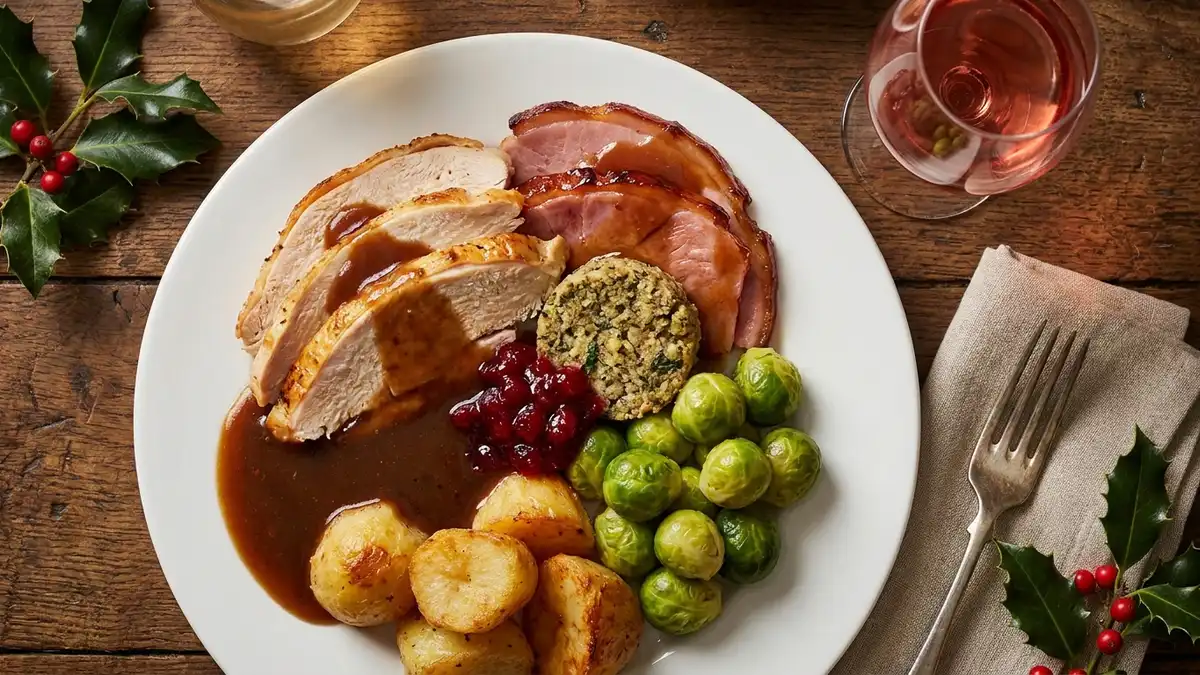
Wine for Christmas dinner has one hard job: survive a plate that holds turkey, glazed ham, gravy, stuffing and cranberry sauce at the same time. The wine that does that has high acidity and low tannin. Save the big tannic red for roast beef, and make sure the dessert wine is sweeter than the pudding.
Wine for Christmas Dinner, in One Paragraph
Open a dry sparkling wine as guests arrive and with salty starters. For the main plate, pour a light red such as Pinot Noir or Gamay, or an off-dry Riesling. Their high acidity cuts gravy and butter, and their low tannin stays calm next to cranberry and ham glaze. A glazed ham leans toward Riesling, because the wine needs some sugar to face the glaze.
Roast beef is the one dish that wants a firm, tannic red such as Syrah. For pudding and cheese, pour tawny Port at 19 to 22% alcohol, because a dessert wine must be sweeter than the dessert. A 750 ml bottle pours six 125 ml glasses, so plan in glasses, then bottles.
What One Wine Goes With All of Christmas Dinner?
A light red or an off-dry white with high acidity covers the main Christmas plate. Acidity (the tartness that makes your mouth water) cuts through fat, salt and rich sauces. Low tannin (the drying grip on your gums) matters just as much, because tannin turns bitter and metallic against sweet cranberry sauce and sugar glazes.
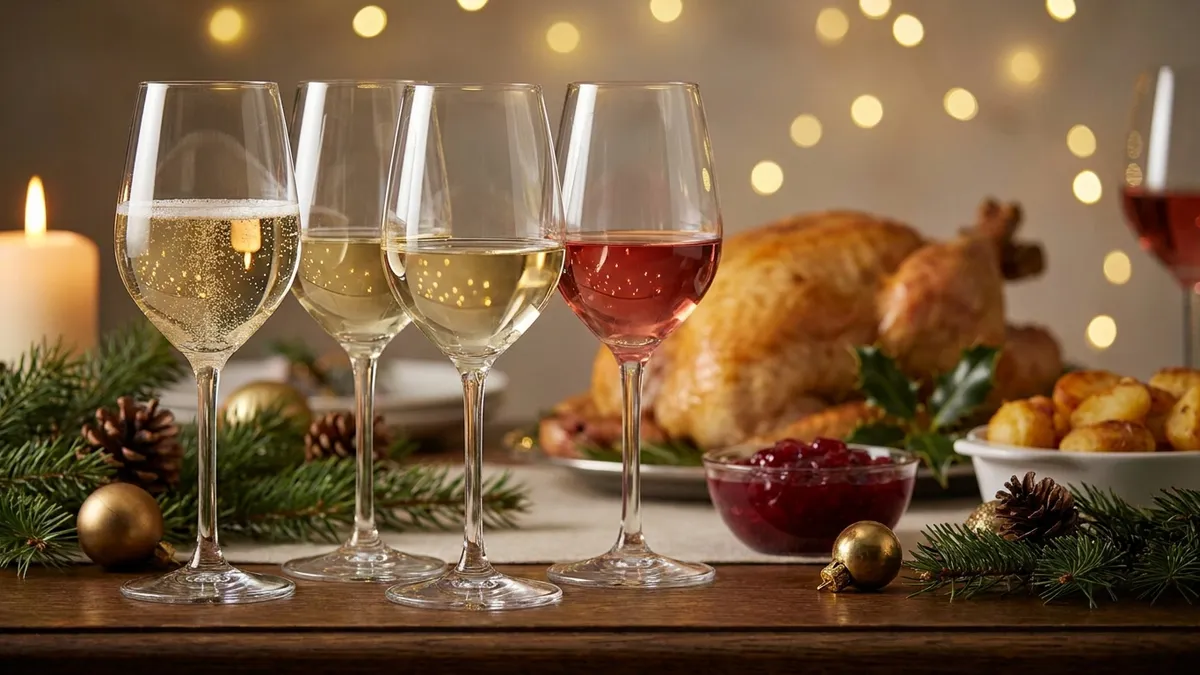
A home Christmas dinner rarely arrives in neat courses. Turkey, ham, gravy, stuffing and cranberry share one plate and often one forkful. So the job is picking a wine that clashes with nothing on it, rather than one that flatters a single dish.
Three wines clear that bar. Pinot Noir is light in colour and tannin. Gamay, the grape of Beaujolais, is juicier and lighter still. Riesling brings high acidity with a touch of sugar in its off-dry styles. If the plate holds cranberry or a sweet glaze, pick a red light enough to see your fingers through the glass. If roast beef is the centre, move to the firmer reds in the table below.
| On the plate | What drives the pairing | Pour this | Why it works |
|---|---|---|---|
| Mixed plate: turkey, ham, gravy, cranberry | Fat, salt and sweetness at once | Pinot Noir, Gamay or off-dry Riesling | High acidity cuts fat; low tannin leaves the sweet bits alone |
| Roast turkey with gravy and stuffing | Savoury gravy, lean meat | Pinot Noir or Gamay | Light body suits lean meat; acidity cuts the gravy |
| Honey or brown-sugar glazed ham | Sugar and salt | Off-dry Riesling | Some sugar meets the glaze; acidity handles the salt |
| Prime rib or roast beef | Protein and fat | Syrah or Zinfandel | Tannin binds to protein and tastes softer |
| Salty starters, smoked fish, canapés | Salt and fat | Brut sparkling wine | Acidity and bubbles cut salt and grease |
| Christmas pudding, mince pies, Stilton | Sugar, dried fruit, salty blue cheese | Tawny Port | Sweeter than the dessert; sugar contrasts the salt |
What Wine Goes With Christmas Turkey?
Turkey itself is lean and mild, so the gravy, stuffing and cranberry decide the wine, and a low-tannin Pinot Noir or Gamay handles all three. A wine chosen for the bird alone often fails the moment it meets a spoonful of cranberry.
Pinot Noir works because of its grape. Its thin skins and low levels of the compounds that give tannin make a lightly coloured, medium-bodied (the wine's weight, like the difference between skimmed and whole milk) red with light tannin. That weight suits white meat, and the acidity lifts dark gravy. Gamay is the lighter, juicier choice, and the Beaujolais wine guide explains how the village wines there differ from the fresh Nouveau style.
If the gravy is dark and the stuffing holds sausage, pour Pinot Noir. If the bird comes with a creamy sauce or the table eats mostly white meat, pour an off-dry Riesling. The Pinot Noir guide shows which regions give the lighter versions that suit a turkey plate best. The Thanksgiving wine guide covers a similar bird with American sides such as sweet potato and green bean casserole.
What Wine Goes With a Glazed Christmas Ham?
Pick an off-dry Riesling. A sugar glaze makes a bone-dry wine taste thin and sour, and Riesling's acidity handles the salt of the cured meat. Off-dry means a wine with a little sugar you can taste, less than a dessert wine. It gives the wine enough sweetness to stand beside the glaze.
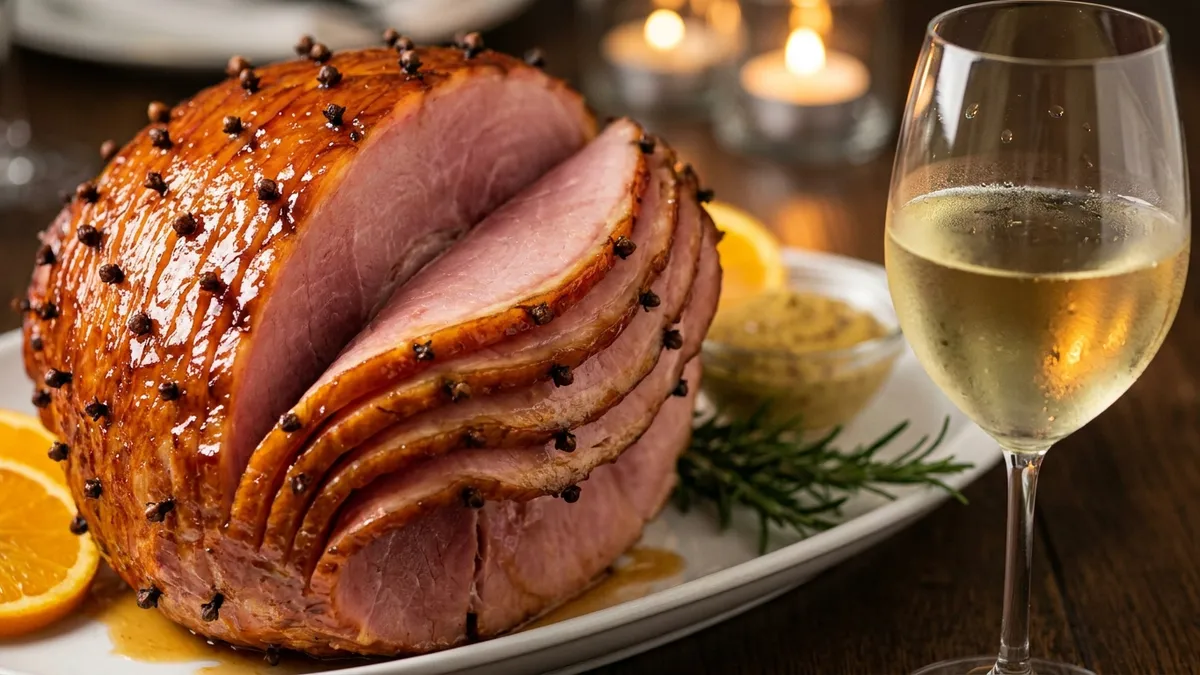
Ham deserves its own bottle. As of 2019, Americans bought about as much ham as turkey for the holidays. In the US, ham began to appear as a Christmas dish around 1900, and the glazed version arrived in the 1930s.
Riesling fits because it pairs pronounced acidity with residual sugar in many of its styles. It is made dry, semi-sweet, sweet and sparkling, so read the label for the sweetness word. That sugar-and-acid balance is also why it handles salty food so well.
If the glaze is honey or brown sugar, choose a Riesling labelled off-dry or semi-sweet. If the ham has a mustard or herb crust with little sugar, a dry Riesling or a Gamay works. The Riesling wine guide explains how to read those sweetness words, and the pork pairing guide covers other cuts and sauces.
What Wine Goes With Prime Rib or Roast Beef?
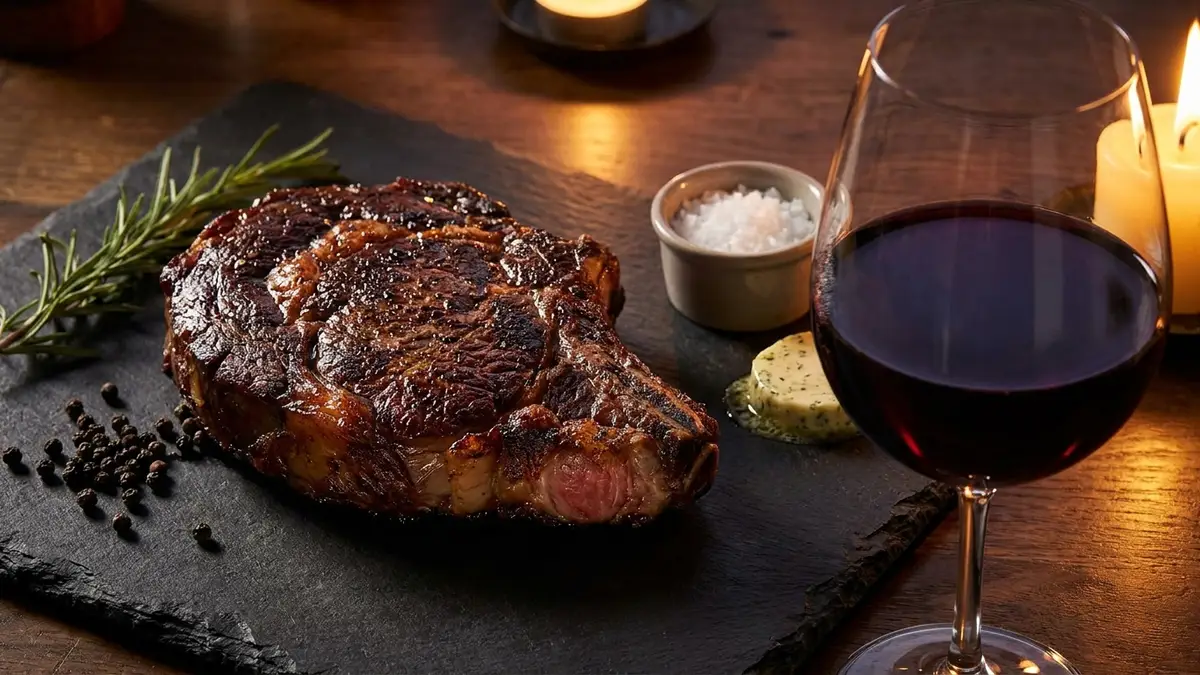
This is the one course where a tannic red belongs. When a wine meets dishes high in protein and fat, its tannins bind to the protein and taste softer. So the grip that would turn bitter against cranberry turns pleasant against a rare slice of beef.
Syrah gives firm tannin and a peppery edge that echoes a peppered crust. Warm-climate Zinfandel tends to taste of ripe blackberry, anise and pepper. Its grapes build high sugar, which ferments into strong alcohol and a fuller body. That weight suits a beef plate with roasted roots and a rich jus. Cabernet Sauvignon is the other classic choice for a rare, fatty rib.
If the beef is rare with a peppery crust, pour Syrah or Zinfandel. If it is lean and well done, step down to a lighter red, because there is less fat to soften the tannin. The same logic runs through the wine with steak guide, and what tannins are explains the grip itself. The Zinfandel wine guide covers its lighter and riper styles.
Should You Serve Champagne All Through Christmas Dinner?
Yes, dry sparkling wine can run through the meal, because its acidity and bubbles cut fat and salt from starters to cheese. Switch to a still red only if roast beef is on the table. Stop the dry sparkling before dessert, since a dry wine next to a sweet pudding tastes sour.

Champagne is a protected place name, not a word for any sparkling wine. Only wine from the Champagne region of France can carry it. Almost all of it is made from three grapes: Pinot Noir, Pinot Meunier and Chardonnay. It is made by the traditional method, where a second fermentation happens inside the bottle to create the bubbles.
Prosecco from Italy usually makes its bubbles in a large tank instead, which keeps it fruitier and lighter. Cava from Spain uses the same in-bottle method as Champagne. The Champagne vs Prosecco vs Cava guide sets them side by side.
If you want one wine all night, choose sparkling labelled Brut, the common dry level. If guests arrive before dinner, pour Prosecco with nibbles and save the traditional-method bottle for the table. Chill it well and hold the cork as you twist the bottle, because the pressure inside is high.
What Wine Goes With Christmas Pudding, Pie and the Cheese Board?
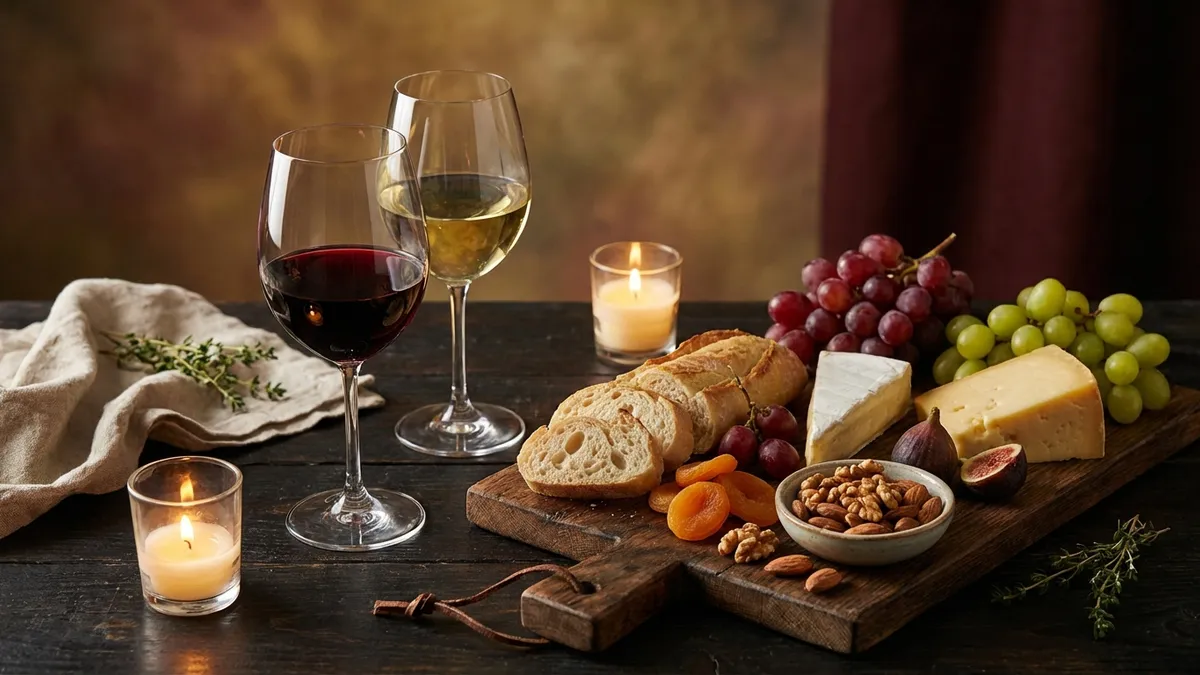
Pour a wine that is sweeter than the dessert. Sweet wines often need to be sweeter than the dish they are served with, or they taste thin and sour. Tawny Port covers Christmas pudding, mince pies and the Stilton in one bottle.
Port is a fortified wine: neutral grape spirit is added partway through fermentation, which stops the yeast and leaves grape sugar in the wine. The result usually sits between 19% and 22% alcohol. Tawny Port ages in wooden casks until it turns amber and tastes of dried fig, walnut and caramel. Its labels carry age statements in 10-year steps, from 10 to 50 years. Under EU rules, only wine from Portugal may be labelled Port, and it comes from the Douro region.
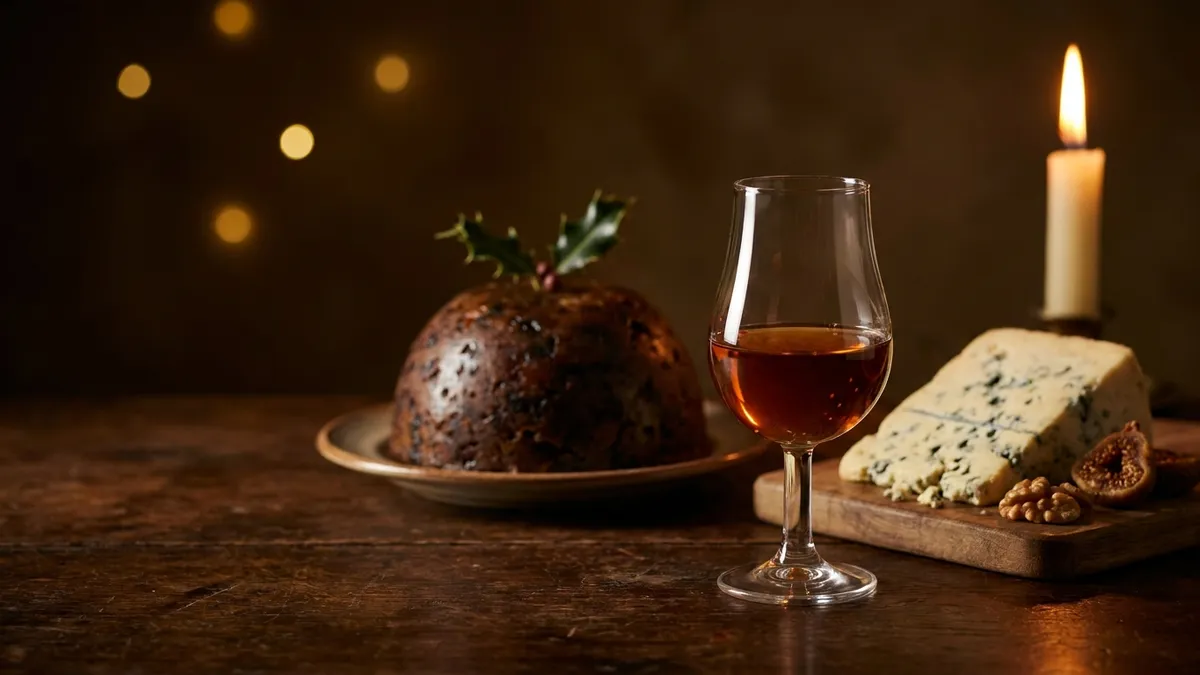
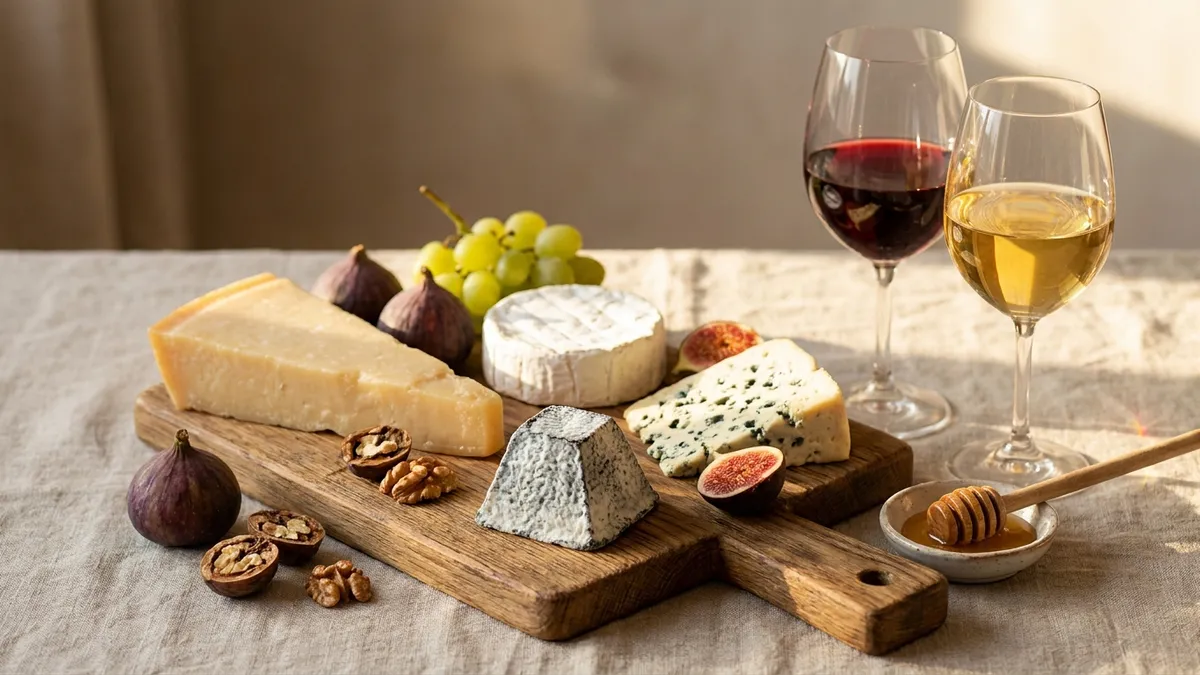
The cheese board works on a second effect. Sweetness in wine contrasts with salt, which is why salty Stilton and sweet Port are an old European custom. The wine and cheese pairing guide extends the idea to other blue and hard cheeses.
If the dessert is dried fruit and spice, such as pudding or mince pies, pour tawny Port. If it is lighter, such as a fruit tart or a yule log, a sweet white wine fits better; the dessert wine guide covers the options. The Port wine guide explains ruby, tawny and vintage styles.
Is Mulled Wine a Pairing or a Drink on Its Own?
Serve mulled wine as the welcome drink before dinner, because its sugar and spices flatten the dry wines that follow at the table. Warm, spiced wine is a Christmas custom in the United Kingdom, in Germany as Glühwein, and in Denmark, Norway, Sweden and Finland as gløgg or glögg.
If you serve mulled wine, pour it on arrival or on a walk before dinner. Then switch to the dry wines once everyone sits down. For the pot, a cheap, fruity, low-tannin red is enough, because heat, sugar and spice cover its details.
How Many Bottles Do You Need, and In What Order?
A standard 750 ml bottle pours six 125 ml glasses. Estimate how many glasses each adult will drink over the evening, multiply by the number of guests, divide by six and round up. The how many glasses in a bottle guide shows how pour size changes the count.
Split the total across the styles you are serving. Open in this order:
- Sparkling with arrivals and starters
- White, such as Riesling, with smoked fish or the ham
- Light red with the turkey plate
- Firm red with the beef, if you serve it
- Sweet Port with pudding and cheese
That order runs from light to heavy and from dry to sweet, so no wine tastes thin after the one before it. If you serve the ham and turkey together, open the Riesling and the light red at the same time and let guests pick. The wine serving temperature chart tells you how cold each style should be before you pour.
How to Test Your Christmas Wines Before the Day
Buy one bottle of each style a week early and taste it against the two hardest foods on the menu. The sweetest is usually the cranberry or glaze; the fattiest is usually the gravy or beef. A wine that survives both will survive the plate. The wine and food pairing guide and the food pairing hub explain the rules behind each result.
The Sommy app at sommy.wine also has short courses, including Wine 101, that teach acidity, tannin and sweetness by taste.
Buy one light red and one off-dry Riesling tonight. Open both and sip each after a spoonful of cranberry sauce.
Sources
Frequently Asked Questions
What is the best single wine for Christmas dinner?
A light, low-tannin red such as Pinot Noir or Gamay, or an off-dry Riesling if your table leans white. Both have high acidity, which cuts through gravy, butter and salty ham, and neither has enough tannin to turn bitter against cranberry sauce or a sugar glaze. If roast beef is the main event, switch to a firmer red such as Syrah.
Is red or white wine better for Christmas dinner?
Neither colour wins on its own, because the plate decides. Turkey with gravy and stuffing suits a light red, a honey-glazed ham suits off-dry white Riesling, and roast beef suits a tannic red. If you only open one bottle for a mixed table, choose low tannin and high acidity, which you find in Pinot Noir, Gamay and Riesling.
What wine goes with glazed ham at Christmas?
Off-dry or semi-sweet Riesling. A brown-sugar or honey glaze makes a bone-dry wine taste thin and sour, so the wine needs a little sugar of its own. Riesling's high acidity also handles the salt of cured pork. If the ham has a savoury mustard crust instead of a sweet glaze, a dry Riesling or a light red such as Gamay works well.
What wine goes with Christmas pudding?
A sweet fortified wine such as tawny Port. Christmas pudding is dense with dried fruit, sugar and spice, and any wine less sweet than the pudding will taste sour next to it. Tawny Port is fortified to 19 to 22% alcohol, keeps plenty of grape sugar, and tastes of dried fruit and nuts, so it stands up to the pudding and to the Stilton afterwards.
Can you drink Champagne with Christmas dinner?
Yes. A dry sparkling wine labelled Brut has enough acidity and bubbles to cut through turkey fat, gravy and salty starters, so it can run from the first nibbles to the cheese. Stop it before dessert: a dry wine next to a sweet pudding tastes sour. If roast beef is the main course, pour a red with the meat instead.
How many bottles of wine do you need for Christmas dinner?
Work it out in glasses. A standard 750 ml bottle pours six 125 ml servings. Estimate how many glasses each adult will drink across the evening, multiply by the number of guests, and divide by six. Round up, and split the total across the styles you are serving: sparkling to start, the main wine or wines, and one sweet wine.
Sommy Team
LinkedInFounder & Wine Educator
The Sommy Team is building the world's most approachable wine education app, helping beginners develop real tasting skills through structured courses and AI-guided practice.