Wine with Turkey: The Best Pairings Beyond Thanksgiving

By the Sommy Team — AI-assisted, human-edited.
Updated Oct 1, 2026
Contents (10)
- What Wine Goes With Turkey, in One Paragraph?
- Why Is Turkey Hard to Pair With Wine?
- Which Wine Fits Each Kind of Turkey?
- Is Red or White Wine Better With Turkey?
- Does Pinot Noir Really Work With Turkey?
- Which White Wines Suit Turkey?
- What Wine Goes With Cranberry Sauce and Gravy?
- What Wine Goes With Smoked, Fried or Leftover Turkey?
- What Should You Avoid With Turkey?
- How Do You Serve Wine at a Turkey Dinner?
TL;DR
Turkey breast is about 1% fat, so a tannic red tastes dry and bitter beside it. Choose high acidity and low tannin: Pinot Noir or Gamay, lightly oaked Chardonnay, dry or off-dry Riesling, or dry sparkling. Then let the gravy, cranberry, smoke or fryer oil decide which one.
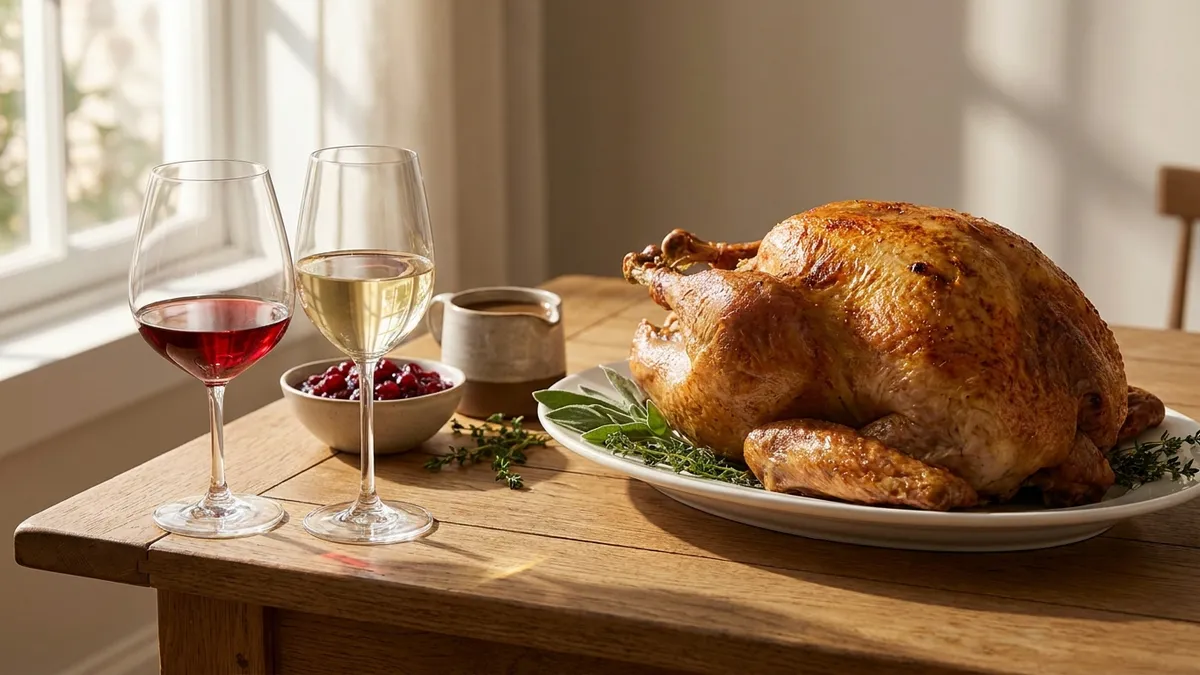
Wine with turkey works when it has acidity and little tannin, because turkey breast is about 1% fat and gives a tannic red nothing to soften against. Pinot Noir, Gamay, lightly oaked Chardonnay and dry Riesling all qualify. The loudest thing on the plate picks among them: gravy, cranberry, smoke, fryer oil or a leftover curry.
What Wine Goes With Turkey, in One Paragraph?
The best wine with turkey has high acidity and low tannin. Pour Pinot Noir or Gamay for a red, and unoaked or lightly oaked Chardonnay or dry Riesling for a white. Dry sparkling wine suits fried or cold turkey. Raw turkey breast is 74% water, 25% protein and only 1% fat. A big Cabernet beside it tastes dry and bitter. With a sweet cranberry sauce, move to an off-dry Riesling, because a wine less sweet than the food tastes sour. With smoked or barbecued turkey, move up to a riper red such as Zinfandel.
Why Is Turkey Hard to Pair With Wine?
Turkey breast is lean, and lean meat gives tannin very little fat to soften against. Tannin is the drying grip on your gums from grape skins and seeds. It binds to the proteins in your saliva and leaves a rough, sandpapery feel, and rich, fatty meat is what usually softens that grip.
A turkey has two meats in one bird. Dark meat needs a higher temperature than white meat before its red pigment, myoglobin, fully breaks down. Cooking the legs through therefore tends to dry out the breast. Cooked turkey is generally less moist than chicken or duck, which is why a red that suits wine with chicken can feel harsher here. If a red feels rough on breast meat, the tannin is the cause, so trade it for a lighter red.
Acidity (the tartness that makes your mouth water) does the opposite job. It cuts through fat and heavy sauces and makes dry meat feel juicier, because it starts saliva flowing. So a turkey wine needs acidity first and fruit second, with tannin kept low. The full mechanism is laid out in what are tannins and what is wine acidity.
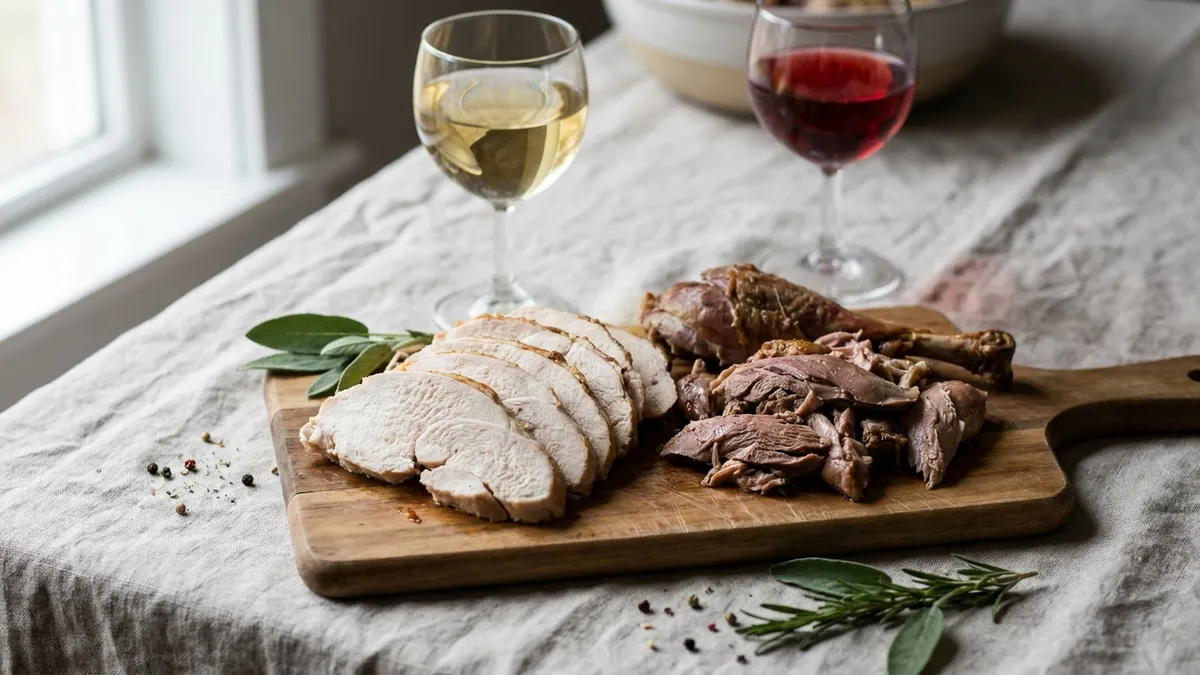
Which Wine Fits Each Kind of Turkey?
Match the wine to whatever is loudest on the plate: the gravy, the smoke, the fryer oil or the sauce on the leftovers. The bird itself is mild, so smoked thigh, fried breast and a cold sandwich each need a different bottle, from a riper red to a chilled Gamay.
| Turkey dish | What dominates | Pour | Why it works |
|---|---|---|---|
| Roast breast with herb butter | Butter, sage, lean white meat | Lightly oaked Chardonnay or dry Riesling | Acidity cuts the butter; no tannin to dry the breast |
| Roast thigh and leg with brown gravy | Savoury gravy, darker meat | Pinot Noir | Light body and low tannin, enough fruit for the gravy |
| Brined, herb-roasted whole bird | Salt and herbs, moister meat | Gamay (Beaujolais) | High acidity balances salt; juicy fruit, little grip |
| Smoked or barbecued turkey | Smoke, char, sweet rub | Zinfandel or Primitivo | Riper fruit and more body stand up to smoke |
| Deep-fried turkey | Oil and crisp skin | Dry sparkling wine | Bubbles and acidity scrub oil from the palate |
| Cold turkey sandwich | Mayonnaise, bread, cranberry | Chilled Gamay or dry rosé | Light and cool; acidity cuts the dressing |
| Turkey curry or mole leftovers | Spice and chilli heat | Off-dry Riesling | Low alcohol and a touch of sugar calm the heat |
Brining is what makes the third row moister: soaking the bird in salt water lets the legs cook through without drying the breast. If the plate is mostly thigh with dark gravy, pour Pinot Noir. If it is breast with herb butter, pour Chardonnay.
Is Red or White Wine Better With Turkey?
Neither wins outright: dark meat and brown gravy lean red, while breast meat with butter, herbs or cream leans white. "White meat means white wine" is a myth here. A turkey carries both meats, and the sauce shifts the match more than the meat colour does.
The deciding factor is body (how heavy the wine feels, like skimmed versus whole milk). A full-bodied wine flattens a delicate dish, and a heavy sauce can lift a dish into fuller-wine territory. A plain breast slice is delicate. Thigh meat under a reduced gravy is not.
If the plate is mostly dark meat with brown gravy and sausage stuffing, choose a light or medium-bodied red. If it is mostly breast with lemon, a cream sauce or a buttery herb crust, choose a white with acidity. If you are feeding a table and can open only one bottle, choose a low-tannin red: it handles dark meat well and does no harm to the breast. The wine pairing rules explain why weight matching beats colour matching.
Does Pinot Noir Really Work With Turkey?
Yes. Pinot Noir has thin skins and low levels of tannin, so it adds red cherry, raspberry and strawberry flavour without drying a lean breast. Young Pinot smells of fresh red berries, and in cool climates the grape keeps its acidity. That acidity is what refreshes a mouthful of gravy.
Lighter Pinot from cool places suits turkey better than the riper, more oaky versions. The Pinot Noir guide sorts the regions by weight.
Gamay, the grape of Beaujolais, is a cheaper relative and has naturally high acidity. Much Beaujolais is made partly by carbonic maceration (fermenting whole, uncrushed grapes inside their skins), which keeps the fruit up front without pulling bitter tannin from the skins. That is exactly the profile turkey needs. If the label names one of the Beaujolais villages, such as Morgon or Fleurie, expect more body than a bottle of Beaujolais Nouveau. Choose the village wine for a roast and the Nouveau for sandwiches. The Gamay wine guide and the Beaujolais guide map the differences.
Which White Wines Suit Turkey?
Whites with high acidity suit turkey best, and Chardonnay works when the oak is light. Oak means barrels that add vanilla, toast or spice. A little oak gives Chardonnay enough weight for butter and herbs. Heavy oak brings a thick, toasty texture that clashes with tart cranberry.
On the shelf, a Chardonnay labelled "unoaked" or one from a cool region such as Chablis is the safer pick. A rich, buttery style needs a creamy sauce to match it. The Chardonnay wine guide explains how to read the style from the label.
Riesling has high acidity and comes in every style from dry (no sugar you can taste) to sweet. German labels often say which. If the label reads trocken, the wine is dry and suits roast breast and herb stuffing.
If it reads feinherb or halbtrocken, it is off-dry (lightly sweet), which suits a sweet cranberry sauce or a spiced leftover dish. The Riesling wine guide covers the full ladder.
Dry sparkling wine is the third white option. Its acidity and bubbles suit fried turkey and salty cold cuts best. The sparkling wine types guide shows which ones are drier.
What Wine Goes With Cranberry Sauce and Gravy?
Cranberry sauce sets the sweetness bar and gravy sets the weight, so taste both before opening the bottle. Sweetness matters most, because a wine should be at least as sweet as the food beside it. Next to sugar, a dry wine loses its fruit and tastes sharp and thin.
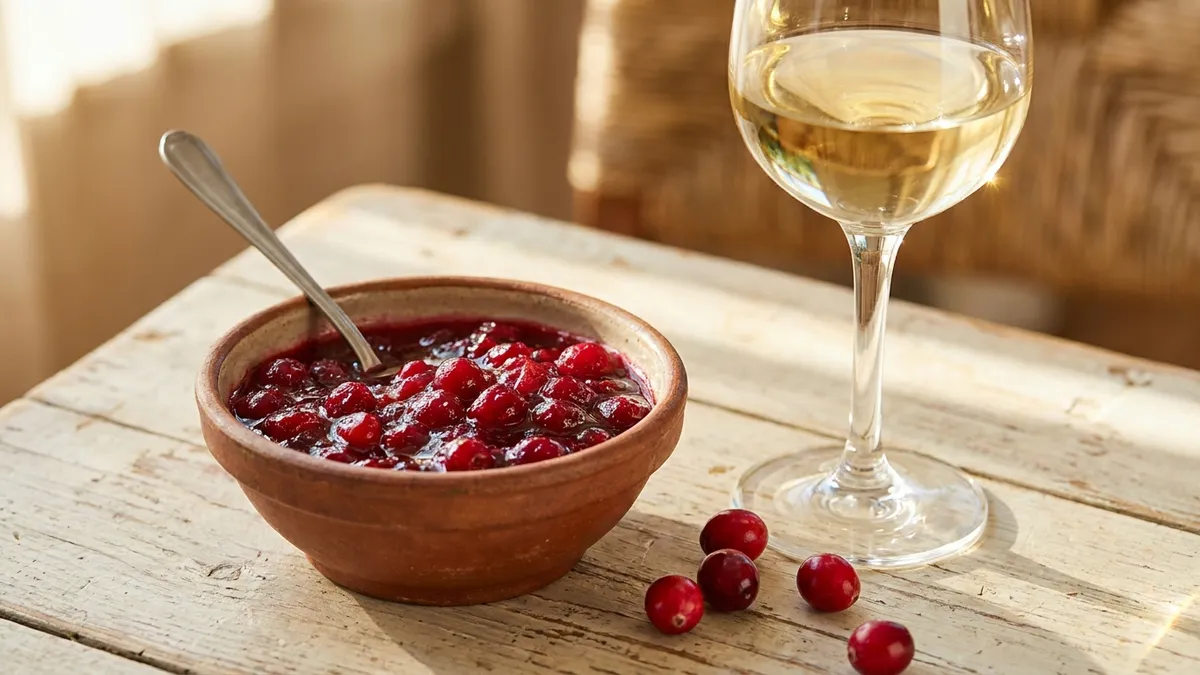
The sauce itself changes by country. In Europe cranberry sauce is usually only lightly sweet and slightly sour, while in North America it is typically much sweeter. If the cranberry is jellied and sweet, choose an off-dry Riesling or a very fruity Gamay. If it is tart and homemade, a dry wine with high acidity holds up.
Gravy works the other way: the darker and more reduced it is, the more body the wine can take. A thin pan gravy suits Gamay or a dry white. A thick gravy made with giblets or red wine suits Pinot Noir, or a lighter Grenache.
What Wine Goes With Smoked, Fried or Leftover Turkey?
Smoke and spice call for more fruit and body, oil calls for bubbles, and a cold sandwich calls for something light and chilled. Turkey is eaten far beyond the November table, and each preparation moves the wine in its own direction, from a riper red for the smoker to a sparkling glass for the fryer.
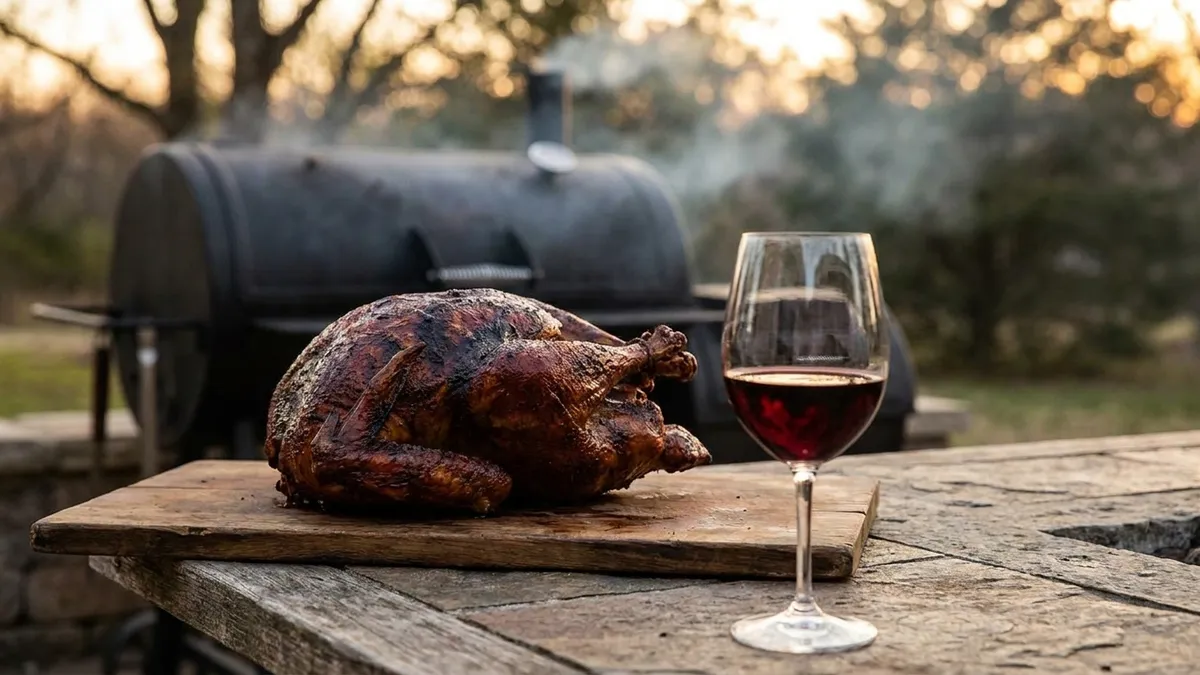
- Smoked turkey. Smoke and a sweet rub need riper fruit. Zinfandel can ferment to more than 15% alcohol, and its jammy blackberry fruit stands up to char. In Italy the same grape is labelled Primitivo; DNA testing in 1993 confirmed the two are one variety. The Zinfandel wine guide and wine with BBQ cover the smoky side.
- Deep-fried turkey. Frying in hot oil is common in the American South. Dry sparkling wine strips the oil from your tongue between bites.
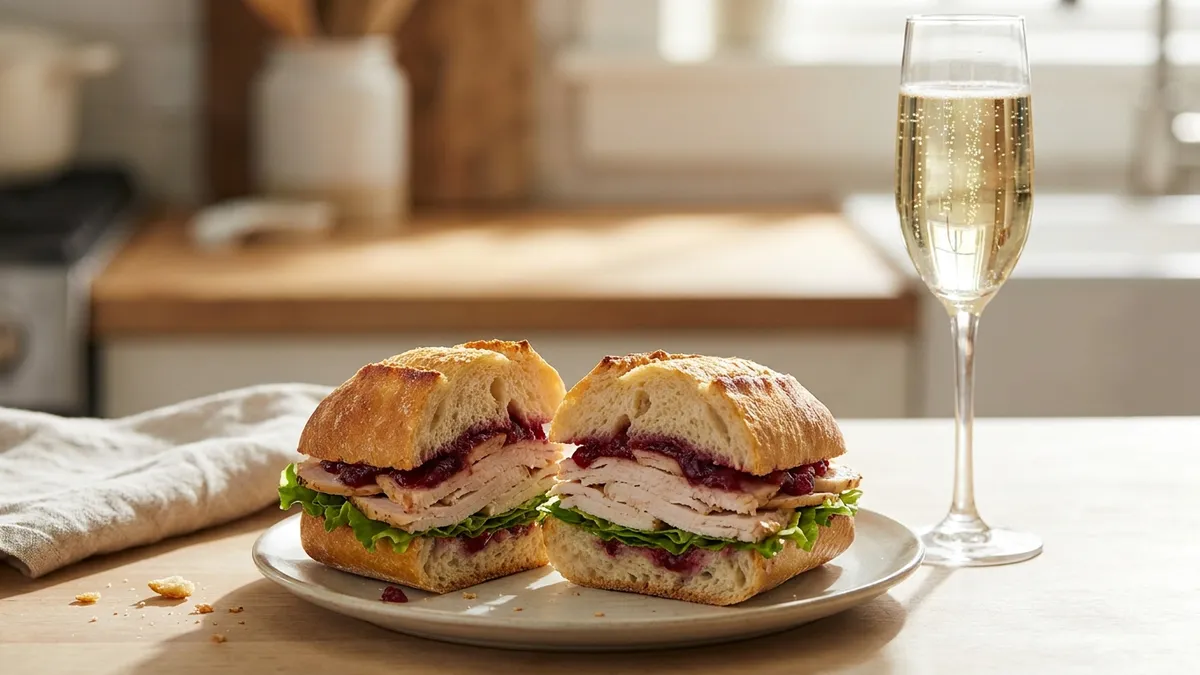
- Turkey sandwiches and cold cuts. Sliced turkey is a standard sandwich meat. A chilled Gamay, a dry rosé or a glass of sparkling wine suits bread, mayonnaise and a smear of cranberry.
- Turkey burgers. Ground turkey is usually leaner than beef, so the bun toppings decide. With cheese and ketchup, Gamay or a fruity Grenache works.
- Curry or mole leftovers. Chilli heat makes alcohol burn harder. Pick a lower-alcohol off-dry Riesling over a 15% Zinfandel. The spice rules in wine with Indian food and wine with Mexican food apply here.
What Should You Avoid With Turkey?
Avoid big tannic reds, heavily oaked whites and any wine less sweet than the cranberry sauce. The common idea that a festive bird needs a big red has it backwards: the lean breast is exactly where high tannin shows worst.
- Young Cabernet Sauvignon, Nebbiolo or Tannat. High tannin with little fat to soften it tastes dry and bitter on lean meat.
- Heavily oaked Chardonnay. Toast and vanilla clash with tart cranberry and herbs.
- Bone-dry wines beside sweet sauces. The sugar strips their fruit and leaves them sour.
- 15% reds with chilli. Alcohol amplifies the burn of a spicy rub or curry.
If a tannic red is the only bottle in the house, serve it with dark meat and plenty of gravy, never the plain breast.
How Do You Serve Wine at a Turkey Dinner?
Open one light red and one white with acidity at the same time, and serve the red slightly cool. Guests then choose by what is on their own plate, breast or thigh, and nobody is stuck with a mismatch. Two styles also cover the cranberry problem, since the white can be off-dry.
Light reds like Pinot Noir and Gamay show their acidity better at cellar temperature than at warm room temperature. A short spell in the fridge does it. Whites and sparkling go colder still; the wine serving temperature chart gives the range for each. If the meal has several courses, pour from lighter to fuller and from dry to sweet. The wine for Christmas dinner and wine with Thanksgiving guides plan bottles for a full holiday table, and the food pairing hub collects every pairing by dish.
If you can buy only one bottle, buy Pinot Noir or a Beaujolais village wine. The Sommy app guides look, smell and taste once the label is photographed, and saves the notes to a tasting journal. Pour a light red and a dry white side by side tonight, taste each with breast and then with thigh, and log which one held up.
Sources
Frequently Asked Questions
What is the best wine with turkey?
A wine with high acidity and low tannin. Pinot Noir and Gamay are the safest reds, because their low tannin does not dry out lean breast meat. For white, choose unoaked or lightly oaked Chardonnay or a dry Riesling. Dry sparkling wine also works, especially with fried turkey or a cold turkey sandwich the next day.
Is red or white wine better with turkey?
Neither wins on its own. Dark meat with brown gravy suits a light red such as Pinot Noir or Gamay. Breast meat with butter, herbs, lemon or a cream sauce suits a white with good acidity. If you open only one bottle for a mixed plate, a low-tannin red covers the most ground.
What wine goes with turkey and cranberry sauce?
Check how sweet the sauce is first. A wine should be at least as sweet as the food beside it, or the wine tastes sour. With a sweet North American-style sauce, pick an off-dry Riesling or a very fruity red like Gamay. With a tart, lightly sweetened sauce, a dry wine with high acidity works.
What wine goes with smoked turkey?
Smoke needs a wine with more ripe fruit and body than roast turkey does. Zinfandel, called Primitivo in southern Italy, is the classic choice, with jammy blackberry fruit and often 15% alcohol or more. If the smoked turkey has a spicy rub, choose a lower-alcohol fruity red, because alcohol makes chilli heat burn harder.
What wine goes with a turkey sandwich?
Something light, fresh and slightly chilled. A glass of Gamay from the fridge, a dry rosé or a dry sparkling wine suits sliced turkey with bread and mayonnaise, because acidity and bubbles cut through the fat in the dressing. Save the fuller reds for the hot roast, where gravy gives them something to work against.
What wine should you avoid with turkey?
Avoid high-tannin reds such as young Cabernet Sauvignon, because lean breast meat gives the tannin nothing to soften against and the wine tastes dry and bitter. Heavily oaked whites can turn harsh beside tart cranberry. Avoid any dry wine served with a very sweet sauce, which makes the wine taste thin and sour.
Sommy Team
LinkedInFounder & Wine Educator
The Sommy Team is building the world's most approachable wine education app, helping beginners develop real tasting skills through structured courses and AI-guided practice.