Feast of the Seven Fishes Wine: A Course-by-Course Plan

By the Sommy Team — AI-assisted, human-edited.
Updated Oct 1, 2026
Contents (10)
- Feast of the Seven Fishes Wine, in One Paragraph
- Which Wine Goes With Each Course?
- What Wine Goes With Oysters, Clams and Crudo?
- What Wine Goes With Fritto Misto and Fried Calamari?
- What Wine Goes With Spaghetti alle Vongole and Tomato Dishes?
- What Wine Goes With Baccalà?
- Can Three Bottles Cover a Seven-Course Night?
- Does Red Wine Clash With Fish?
- Why Seven Fishes, and Does the Number Matter?
- How Do You Serve a Long Fish Dinner?
TL;DR
Match Feast of the Seven Fishes wine to the cooking, not the fish. Raw shellfish takes Muscadet or lees-aged sparkling, fried dishes take traditional-method sparkling, clams and tomato take Vermentino, and baccalà takes a rounder white such as Fiano. One sparkling, one crisp white and one rounder white cover a seven-course night.
Feast of the Seven Fishes wine is easier to choose by cooking method than by fish. Oysters, fried calamari, clams in tomato and baked salt cod each need a different kind of wine, and the species barely matters next to the batter, the brine and the sauce. Three bottles, poured from lightest to fullest, cover a Christmas Eve that runs several hours.
Feast of the Seven Fishes Wine, in One Paragraph
Pour a dry traditional-method sparkling wine (bubbles made by a second fermentation in the bottle) with the fried dishes. Pour a crisp coastal white such as Muscadet or Vermentino with raw shellfish and clams, and a rounder white such as Fiano with baked or stewed baccalà. Every one of these wines has high acidity (the tartness that makes your mouth water), which cuts salt and oil the way lemon does. None has the drying grip of a tannic red, so none turns harsh against shellfish. Serve them cold. A 750 ml bottle gives six 125 ml pours, so eight guests drinking three glasses each need four bottles.
Which Wine Goes With Each Course?
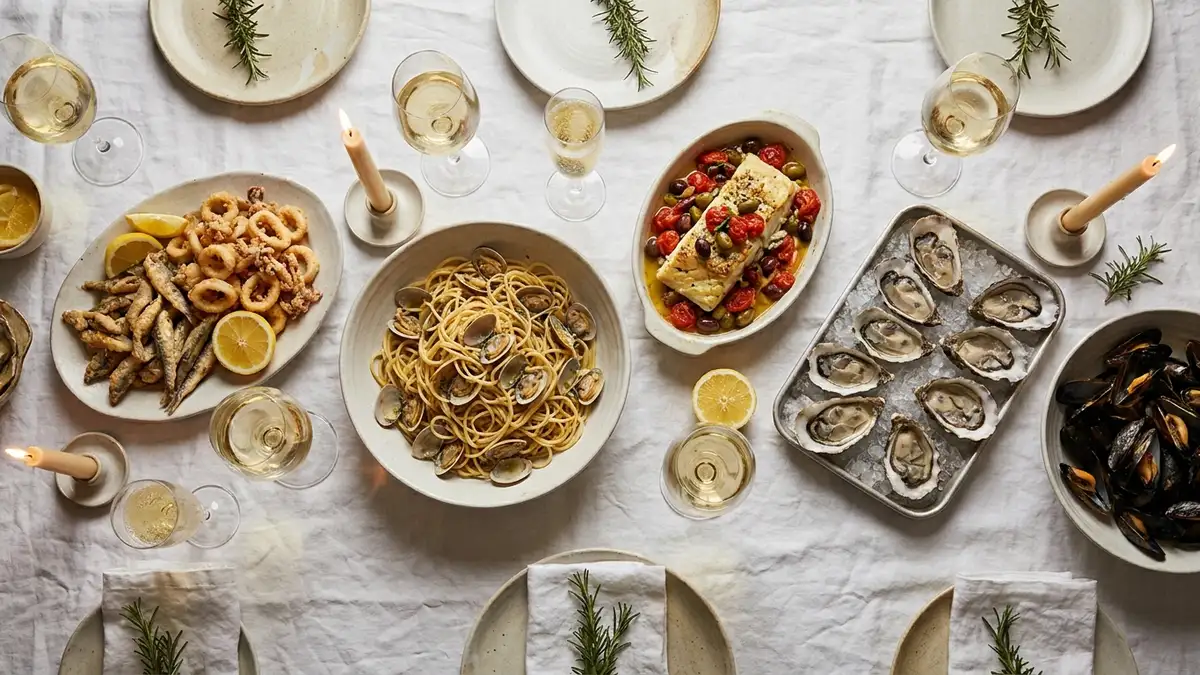
Sort the dishes into four groups, raw, fried, tomato-sauced and baked, and give each group one wine style. If a dish fits two groups, such as fried baccalà, the stronger cooking wins: fried beats salted, and a tomato sauce beats garlic and oil.
| Course | Cooking method | Pour | Serve | Why it works |
|---|---|---|---|---|
| Oysters, raw clams, crudo | Raw, briny | Muscadet or dry lees-aged sparkling | 9-11°C, fridge-cold | High acid matches lemon; light body leaves the brine in front |
| Fritto misto, calamari, smelts | Fried | Traditional-method sparkling (Franciacorta, Champagne, Cava) | Fridge-cold | Bubbles and acid scrub oil from the mouth |
| Spaghetti alle vongole | Garlic, oil, white wine | Vermentino | Fridge-cold | Salty, lemony finish mirrors the clam juice |
| Calamari or clams in thick tomato sauce | Braised in tomato | Vermentino, or a light low-tannin red served cool | White cold; red 20 min in the fridge | Acid matches tomato acid; low tannin keeps the red from turning harsh |
| Baked or stewed baccalà, creamy fish | Baked, salted, rich | Fiano or another rounder Italian white | Fridge, then 10 min out | More body stands up to salt and olive oil |
If the menu has only fried and raw dishes, two bottles do it: sparkling and Muscadet. Add the rounder white the moment a baked or stewed dish appears. The broader logic of matching sauce over species sits in our wine with seafood guide, and the wider rules of acid, salt and fat are in the food pairing hub.
What Wine Goes With Oysters, Clams and Crudo?
Pour Muscadet, or a dry sparkling wine that has spent a long time on its yeast. Raw shellfish tastes of salt and sea, and a lean, high-acid wine works like the squeeze of lemon on the plate. Anything oaky or heavily aromatic covers the brine.
Muscadet comes from the western end of the Loire Valley, near Nantes, and is made only from the Melon de Bourgogne grape. Better bottles say sur lie on the label: the wine rests on its lees (the spent yeast left after fermentation) until bottling. That contact gives a creamy feel and a faint bready note to a wine that would otherwise be very lean. Serve it at 9 to 11°C. The grape's story is in our Muscadet guide.
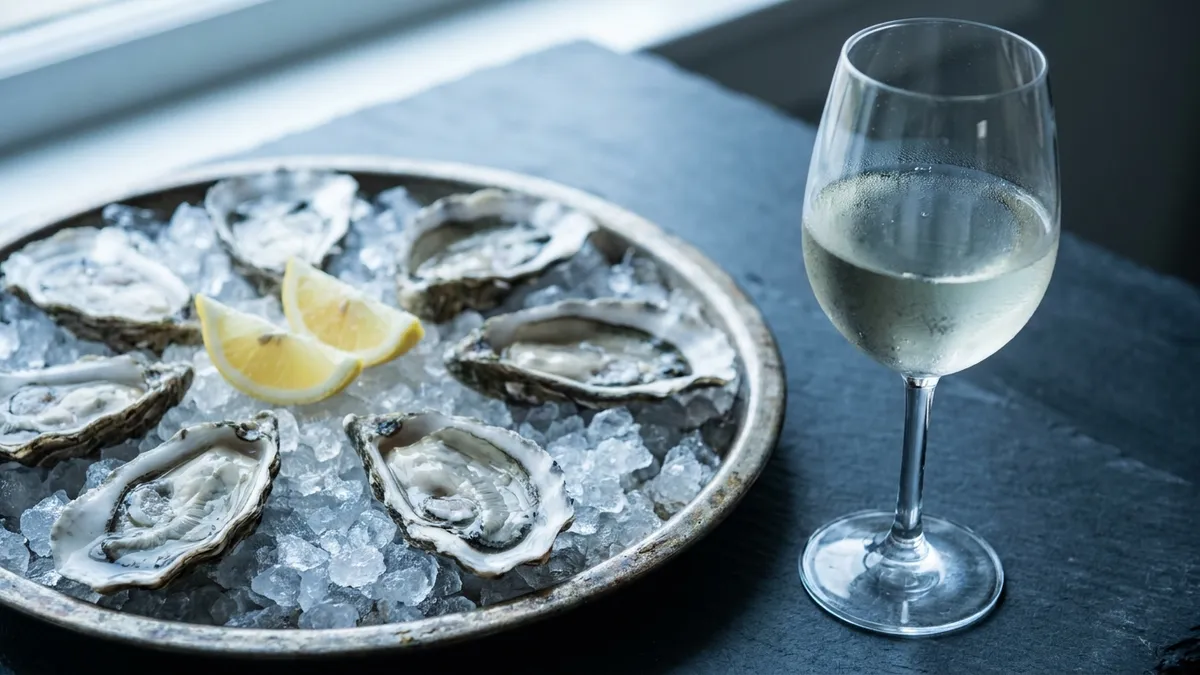
A 2020 study in Scientific Reports found free glutamate in Champagne and free glutamate plus nucleotides in oysters, a mix that boosts savoury taste. Glutamate was higher in aged Champagnes with long yeast contact. If the oysters come with only lemon, pour Muscadet. If the crudo is dressed with olive oil, pour the sparkling, because the bubbles lift the oil.
What Wine Goes With Fritto Misto and Fried Calamari?
Pour a dry traditional-method sparkling wine, such as Franciacorta. A fritto misto di pesce mixes baby octopus, calamari rings, cod, sardines, shrimp and whitebait in batter, so oil coats every bite. Bubbles and high acidity strip that oil from your tongue, and the next piece tastes as crisp as the first.
Franciacorta is a traditional-method sparkling wine from the hills between Lake Iseo and the city of Brescia in Lombardy. It became a DOCG (Italy's top tier of protected wine names) in 1995. Non-vintage bottles must spend at least 18 months on the yeast in the bottle, which adds a toasty, bready note and enough body for battered fish. Champagne and Cava follow the same method. Sparkling wine types sets out how each is made.
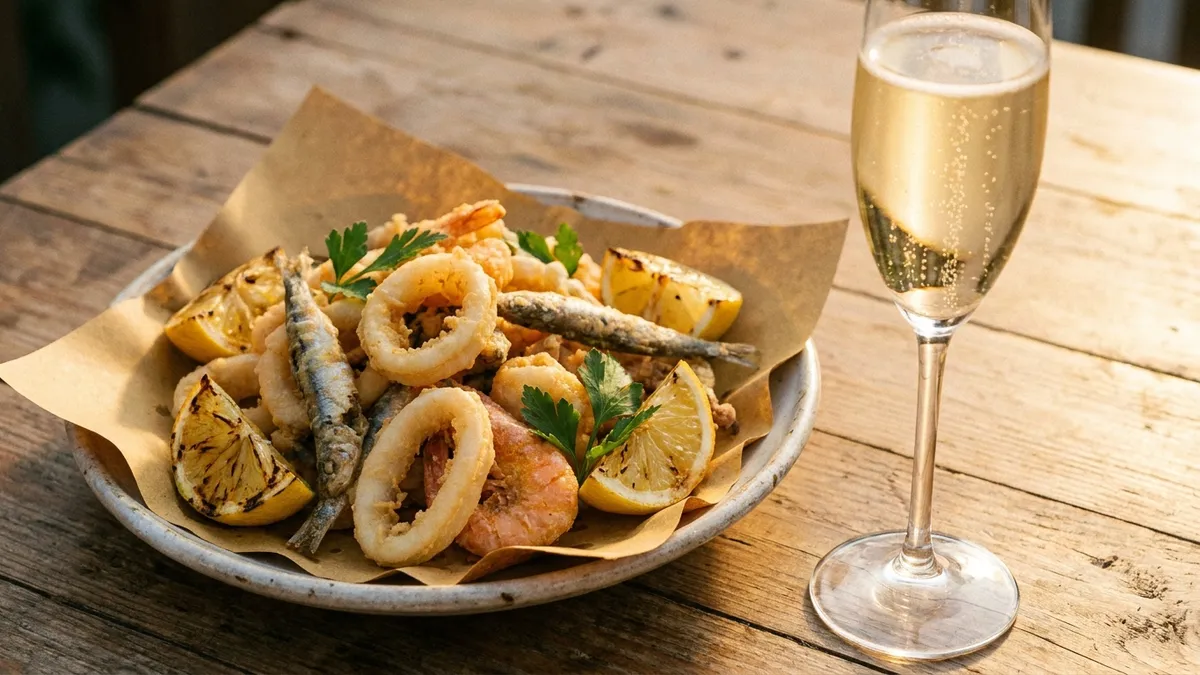
If the label says Satèn, expect softer bubbles. Satèn is a blanc de blancs (sparkling wine from white grapes only, here Chardonnay and Pinot Bianco) bottled at no more than 5 atmospheres of pressure instead of the usual 6. That gentler fizz suits smelts and lightly fried fish. For heavily battered calamari, a standard Brut scrubs harder.
What Wine Goes With Spaghetti alle Vongole and Tomato Dishes?
Pour Vermentino. Clams cooked with garlic, olive oil and white wine release salty juice into the pasta, and Vermentino's lemony acidity and salty finish meet it head on. Switch to a light, cool red only when the sauce turns into a thick tomato braise.
Vermentino grows in Sardinia, Liguria and Tuscany, often on slopes facing the sea, where the vines catch reflected light off the water. The most prized version is Vermentino di Gallura, a DOCG from the north of Sardinia. Its lemon, green almond and salty finish are described in our Vermentino guide.
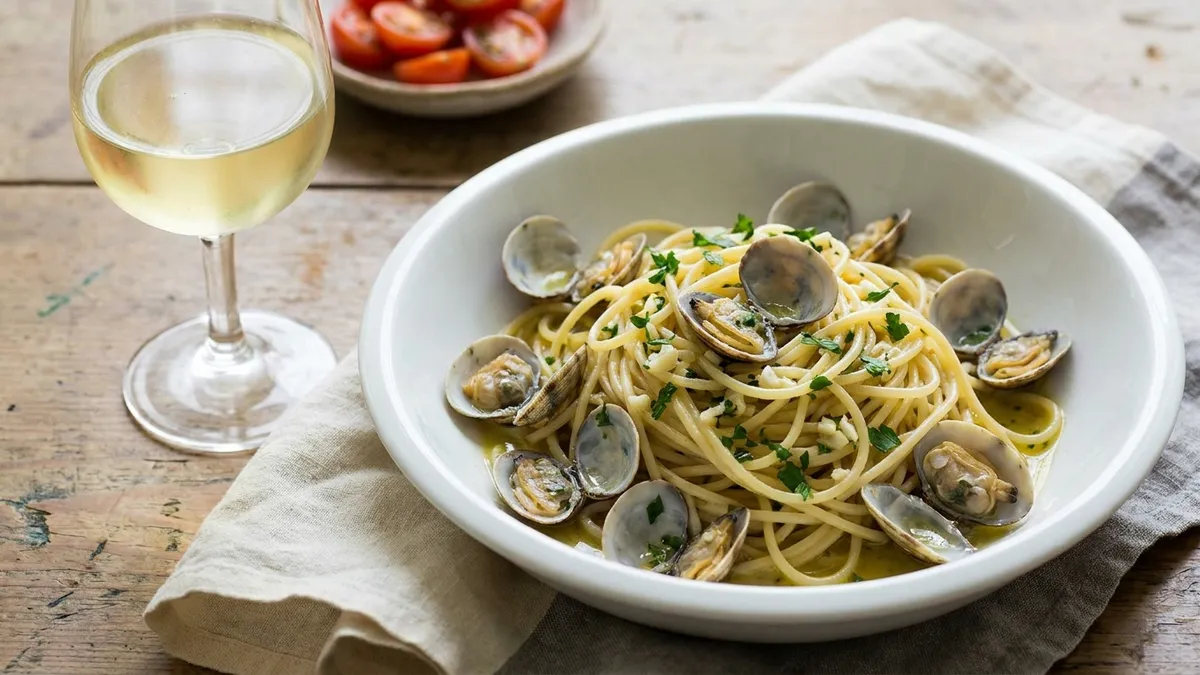
Tomato changes the job. A long-cooked tomato sauce brings its own acidity and some sweetness, which makes lean whites taste thin. If the sauce is white wine and garlic, pour Vermentino. If the calamari or clams sit in a thick red sauce, pour a light, low-tannin red served cool.
What Wine Goes With Baccalà?
Pour a rounder Italian white with some texture, such as Fiano from Campania, for baked, stewed or creamed baccalà. Baccalà (salted, dried cod, soaked before cooking) is part of Christmas Vigil meals across Europe and of the Italian-American feast. Its salt and the olive oil around it flatten a very lean wine.
Fiano is a white grape from Campania, and its top zone, Fiano di Avellino, is a DOCG. It tastes of ripe pear and hazelnut and has more weight than Vermentino or Muscadet while keeping firm acidity. Our Fiano guide covers its styles.
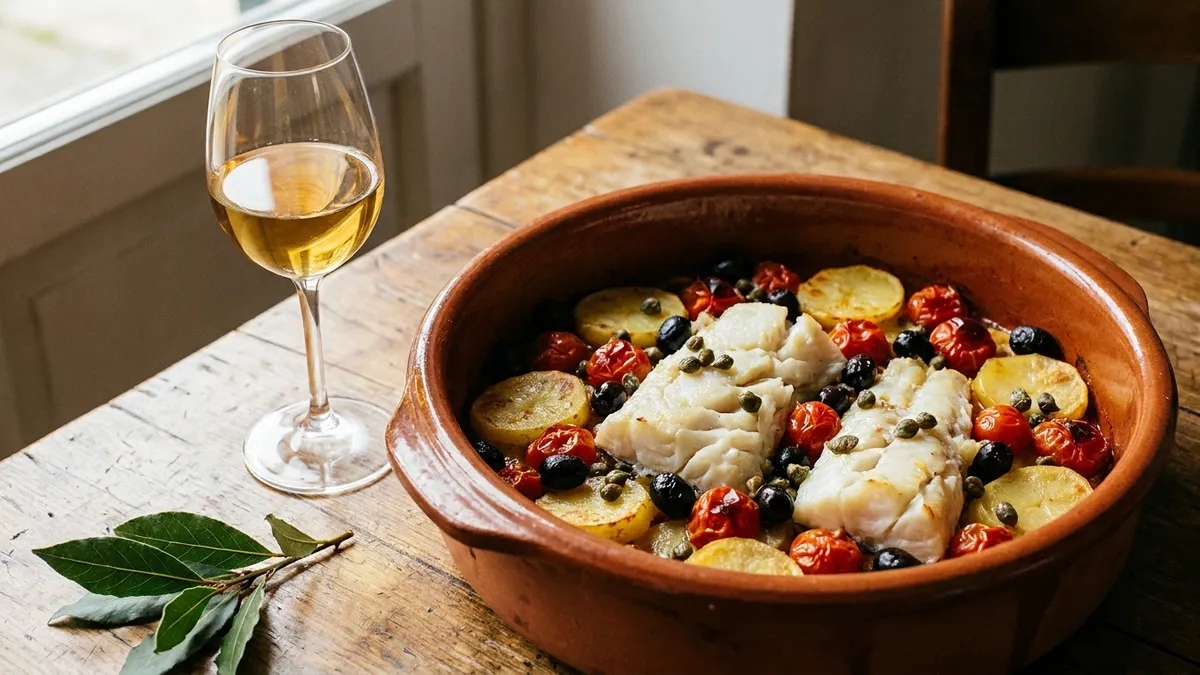
If the baccalà is fried, pour the sparkling with it. If it is baked with potatoes or whipped with oil and milk, pour the Fiano. Skip heavily oaked, buttery whites: oak adds vanilla and toast that taste harsh against salt cod.
Can Three Bottles Cover a Seven-Course Night?
Yes. One dry traditional-method sparkling, one crisp coastal white and one rounder white cover raw, fried, tomato and baked courses. Muscadet and Vermentino do the same job, so pick one: Muscadet if oysters lead, Vermentino if pasta with clams does.
Work the quantity in glasses. A 750 ml bottle pours six 125 ml servings, the arithmetic in our guide to glasses in a bottle. For eight adults drinking three glasses each over the night, that is 24 glasses, or four bottles. The sparkling runs longest, because it opens the night and returns with the fried course.
If more than eight guests come, double the sparkling before you double anything else. If someone wants a single wine all night, make it the sparkling: its acid handles salt, its bubbles handle oil, and a lees-aged bottle has enough body for the baked fish. The Christmas Day version of this logic, from turkey to pudding, is in wine for Christmas dinner.
Does Red Wine Clash With Fish?
Sometimes, and the main suspect is iron in the wine rather than its red colour. A 2009 study in the Journal of Agricultural and Food Chemistry rated wines with dried scallops. The fishy aftertaste rose with the wine's iron content. Adding iron to a model wine made it worse, and binding up the iron in a red wine suppressed it.
Raw shellfish and delicate white fish show a clash most. Tomato-braised calamari, clams in red sauce and grilled oily fish are where a red has room.
If you pour red, choose a light one with low tannin, such as Pinot Noir or Gamay, and give it 20 minutes in the fridge. Our explainer on tannins shows how to feel the difference in the mouth.
Why Seven Fishes, and Does the Number Matter?
Nobody agrees on why seven, and families serve seven, thirteen or an uncounted number of dishes. The meal, also called la Vigilia (the Vigil), is a Christmas Eve feast eaten over several hours. It grew from the Catholic custom of skipping meat on the eve of a feast day.
The seven may refer to the Catholic sacraments, the hills of Rome or something else; there is no general agreement. The name is mostly Italian-American, though a Christmas Eve meal of seven or thirteen fish dishes is well documented in Calabria.
Thirteen dishes still fall into the four cooking groups, so a bigger feast needs more bottles of the same three styles.
How Do You Serve a Long Fish Dinner?
Pour from lightest to fullest, keep every white cold, and pour small. Start with the sparkling and the raw shellfish, move to the crisp white with clams and pasta, and finish the fish courses with the rounder white beside the baccalà.
Keep the bottles in a bucket of ice and water on the table rather than going back to the fridge. A white left out warms quickly in a candlelit room, and warm white wine tastes flat and more alcoholic. If a white starts to taste dull, it is too warm: put it back in the ice for ten minutes. Our serving temperature chart gives the target for each style.
Pour about 125 ml per glass and refill as each course arrives. Smaller pours keep the wines cold in the glass and stretch the bottle count over a long night.
The wider map of Italian grapes, from Vermentino in Sardinia to Fiano in Campania, is in our Italian wine guide. The Sommy app at sommy.wine has bite-sized courses, including one on Italy, and an AI-guided tasting mode. Buy one bottle of dry traditional-method sparkling tonight, chill it, then taste it with something fried before you plan the rest.
Sources
- Wikipedia: Feast of the Seven Fishes
- Tamura T. et al. (2009), Iron is an essential cause of fishy aftertaste formation in wine and seafood pairing, Journal of Agricultural and Food Chemistry
- Schmidt C.V., Olsen K., Mouritsen O.G. (2020), Umami synergy as the scientific principle behind taste-pairing champagne and oysters, Scientific Reports
- Consorzio Franciacorta: Production regulations
- Wikipedia: Muscadet
Frequently Asked Questions
What wine goes with the Feast of the Seven Fishes?
Choose by cooking method. Raw oysters and crudo want Muscadet or a dry lees-aged sparkling wine. Fried calamari and fritto misto want traditional-method sparkling such as Franciacorta. Clams and tomato pasta want Vermentino. Baked or stewed baccalà wants a rounder white such as Fiano. Those four styles, or three bottles if you double up, cover the whole meal.
Can you serve red wine at the Feast of the Seven Fishes?
Yes, with the tomato-heavy dishes. Pick a light, low-tannin red, served cool, for calamari or clams in thick red sauce. Keep it away from raw shellfish and delicate white fish. A 2009 study traced the fishy aftertaste of wine with seafood to iron in the wine, so a fishy clash is a reason to switch bottles, not proof that every red fails.
How many bottles of wine do you need for a Feast of the Seven Fishes?
A 750 ml bottle gives six 125 ml pours. Count how many glasses each adult will drink over the evening, multiply by the guests, and divide by six. For eight guests drinking three glasses each, that is four bottles. Split them across sparkling, a crisp white and a rounder white, and keep one spare sparkling.
What wine goes with fried calamari?
A dry traditional-method sparkling wine. The bubbles and high acidity scrub the oil from your mouth between bites, the way a squeeze of lemon does. Franciacorta from Lombardy is the Italian classic, and the same logic covers Champagne or Cava. A crisp unoaked white such as Vermentino works if you would rather pour a still wine.
What wine pairs with baccalà?
Match the cooking. Fried baccalà goes with the same sparkling wine as the rest of the fried course. Baked, stewed or creamed baccalà wants a rounder white with some texture, such as Fiano from Campania, because salt and richness flatten a very lean wine. Avoid oaky, buttery whites, which fight the salt.
Why is it called the Feast of the Seven Fishes?
The name comes from the seven seafood dishes many Italian-American families serve on Christmas Eve, also called la Vigilia. The meal grew from the Catholic custom of skipping meat on the eve of a feast day. Some families serve thirteen dishes or never count, and nobody agrees on what the seven stands for.
Can you drink one wine all night at a seafood feast?
Yes. A dry traditional-method sparkling wine is the best single choice, because its acidity handles salt, its bubbles handle oil, and lees-aged styles have enough body for baked fish. Pour a rounder still white alongside it only if the menu leans heavily on baked or creamy dishes.
Sommy Team
LinkedInFounder & Wine Educator
The Sommy Team is building the world's most approachable wine education app, helping beginners develop real tasting skills through structured courses and AI-guided practice.