Wine with Pork: Tenderloin, Ribs, Chops, and Pulled Pork

By the Sommy Team — AI-assisted, human-edited.
Updated Sep 24, 2026
Contents (10)
- Wine with Pork, in One Paragraph
- Is Pork a Red Wine or White Wine Meat?
- Which Wine Goes With Which Pork Dish?
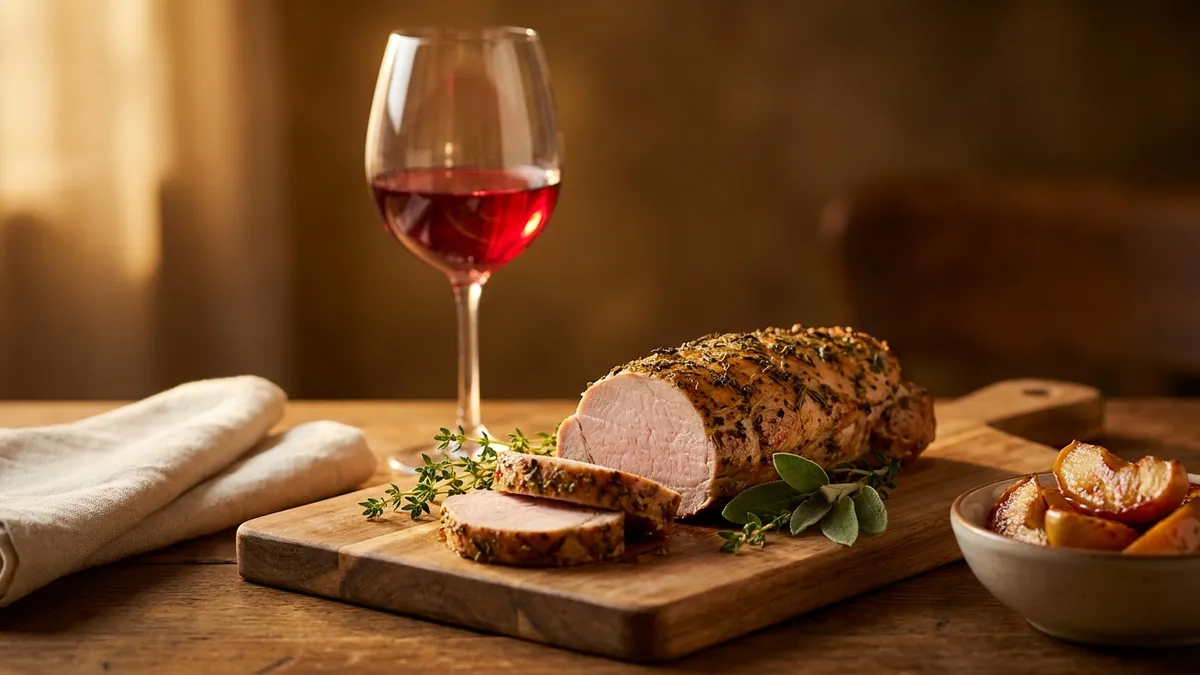
- What Wine Goes With Pork Tenderloin?
- What Wine Goes With Pork Chops?
- What Wine Goes With Roast Pork and Crackling?
- What Wine Goes With BBQ Pork Ribs?
- What Wine Goes With Pulled Pork?
- Does Cooking Pork Well Done Change the Wine?
- How Do You Pick a Wine for Pork Tonight?
TL;DR
Wine with pork follows the plate, not the animal. Lean tenderloin and plain chops take light, low-tannin reds such as Pinot Noir and Gamay, or crisp Riesling. Fatty roast pork wants acidity or bubbles. Sweet BBQ ribs and pulled pork need ripe fruit, low tannin, or a touch of sugar in the glass.
The best wine with pork is chosen by the fat, the sauce and the smoke on the plate. Pork itself is mild and slightly sweet, so a lean tenderloin behaves like chicken and a sticky rack of ribs behaves like barbecue. Across all of them, keep tannin low.
Wine with Pork, in One Paragraph
Pick wine with pork by the cut and the sauce. Lean tenderloin and plain chops take low-tannin light reds, Pinot Noir and Gamay, or a crisp dry Riesling or Chenin Blanc. Chops with fruit take an off-dry white. Roast pork with crackling carries the most fat, so it wants high acidity or bubbles: Cava, Riesling, Chenin. Dry-rub ribs suit juicy Grenache or Zinfandel. Sweet, sauced ribs and pulled pork need ripe fruit and very little tannin, or a touch of sugar, which is where sparkling red Lambrusco earns its place. Skip big tannic reds with most pork, because sweet sauce makes tannin taste bitter.
Is Pork a Red Wine or White Wine Meat?
Both. Pork is mild and slightly sweet, so the fat, sauce and char on the plate decide the colour. The colour-by-meat rule breaks down here: pork is classed as a red meat but is pale and mild like a white one. A pink tenderloin sits on the white side, and a smoked, sauced shoulder sits on the red.
What actually matters is tannin, the drying grip a red wine leaves on your gums. Tannins are compounds from grape skins and seeds that bind to proteins, including the proteins in your saliva, which is why a tannic wine feels rough. A fatty steak gives tannin plenty to work against. A lean slice of tenderloin gives it almost nothing, so the same wine tastes drying and harsh.
Acidity, the tartness that makes your mouth water, does the opposite job. It refreshes your mouth after a bite of fat and stands up to vinegar in a sauce. So the working rule for pork is simple: low to medium tannin, plenty of acidity, and fruit that matches any sweetness on the plate. For the principles behind that rule, the wine and food pairing guide and our explainer on what tannins are go further.
Which Wine Goes With Which Pork Dish?
Match the wine to the loudest thing on the plate: lean meat, rendered fat, smoke, or sugar. Pork shows up as four very different dishes, and each one points to a different family of wine. Find your dish in the table, pour from the third column, and skip the fourth.
| Pork dish | Loudest thing on the plate | Pour this | Skip this |
|---|---|---|---|
| Roast or seared tenderloin | Lean, mild meat | Pinot Noir, Beaujolais (Gamay), dry Riesling | Young Cabernet, oaky Shiraz |
| Plain grilled pork chop | Char, little fat | Gamay, Pinot Noir, dry Chenin Blanc | High-alcohol, tannic reds |
| Chops with apples or fruit glaze | Fruit sugar | Off-dry Riesling, demi-sec Vouvray | Bone-dry, tart whites |
| Roast pork or belly with crackling | Fat and salt | Cava or other traditional-method sparkling, Riesling, Chenin Blanc | Soft, low-acid whites |
| Dry-rub ribs | Smoke and spice | Grenache, Zinfandel, Merlot | Delicate, very light whites |
| Wet ribs in sweet tomato sauce | Sugar and smoke | Zinfandel, Lambrusco, ripe Grenache | Tannic Cabernet or Nebbiolo |
| Pulled pork, vinegar sauce | Sharp acidity | Dry Riesling, Chenin Blanc, chilled Beaujolais | Soft, oaky Chardonnay |
| Pulled pork, sweet or mustard sauce | Sugar, tang, heat | Lambrusco, off-dry Riesling, Gewürztraminer | High-alcohol dry reds |
What Wine Goes With Pork Tenderloin?
A light red with little tannin, such as Pinot Noir or Gamay, or a crisp dry white such as Riesling or Chenin Blanc. Tenderloin is the leanest, mildest cut of the pig, cooked fast and served pink, so the wine must not overpower it.
Pinot Noir is the default. Its thin skins give a light-bodied red (body is the wine's weight in your mouth, like skimmed milk versus whole) with low tannin and the taste of fresh red cherry and raspberry. Those fruit flavours sit easily beside the gentle sweetness of the meat. Our Pinot Noir guide covers the styles, from light cool-climate bottles to riper ones.
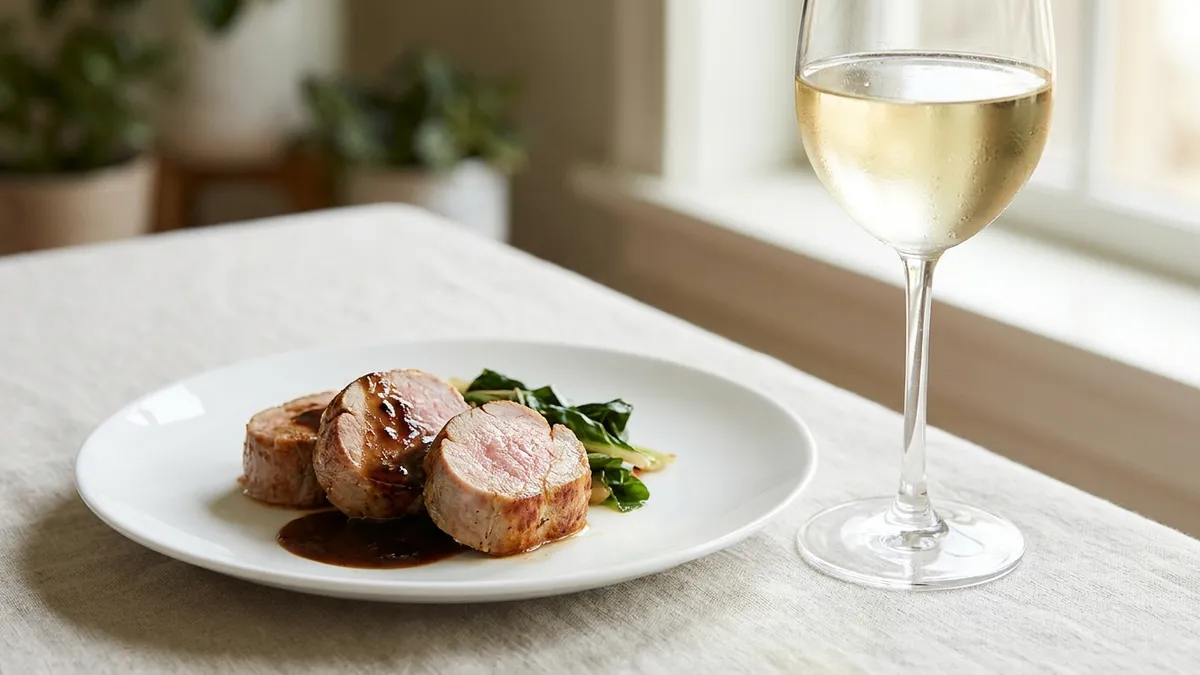
Gamay, the grape of Beaujolais, is the budget alternative. It is also thin-skinned and low in tannin, and it tastes of fresh strawberry and cherry. Serve a basic Beaujolais slightly cool, around 13 to 14°C, and a fuller Cru Beaujolais a touch warmer at 16 to 17°C. The Gamay wine guide explains how to tell the two apart on a label.
If the tenderloin is wrapped in bacon or crusted in mustard and herbs, move up from basic Beaujolais to a Cru or a riper Pinot Noir, because salt and smoke need more fruit. If it is plain and pink with a light pan sauce, a dry white is just as good. A dry Riesling adds a squeeze of lemon-like freshness to the plate.
What Wine Goes With Pork Chops?
Pick by what is in the pan. A plain grilled chop takes Gamay or dry Riesling. A chop with apples or a fruit glaze takes an off-dry white, meaning a wine with a little sugar you can just taste. A chop in a creamy mustard sauce takes a rounder dry white.
Chops are lean and dry out fast on the grill, which puts them close to tenderloin with more char. The one thing that changes the wine is fruit. Apples, apricots or plums make a bone-dry wine taste thin and sour.
Riesling handles this better than most grapes. From cool regions such as Germany's Mosel, it tastes of green apple and pear with pronounced acidity. It is also made in every sweetness level, and its sharp acidity with a little sugar balances salty food well. Our Riesling wine guide explains how to find the sweetness on a label.
Chenin Blanc is the other route. It has naturally high acidity, and in Vouvray in the Loire Valley it is often made demi-sec, the French label word for off-dry, with a honeyed, floral character. The Chenin Blanc wine guide maps the dry and sweet styles.
The rule for chops: if there is fruit on the plate, the wine needs at least as much sweetness as the fruit. If there is none, drink it dry. The sweet vs dry wine explainer covers what those words mean in the glass.
What Wine Goes With Roast Pork and Crackling?
Something with high acidity or bubbles. Roast pork carries more fat than tenderloin or chops, and pork belly, the classic crackling cut, holds about 53 g of fat per 100 g. The wine's job is to refresh your mouth between bites.
Sparkling wine does this best. The bubbles and acidity scrub fat and salt from your tongue, so each bite of crackling tastes as good as the first. Cava is a smart buy here. It is made by the traditional method, with a second fermentation in the bottle that creates the bubbles, the same way as Champagne, and most of it comes from Penedès in Catalonia. Our comparison of Champagne vs Prosecco vs Cava sets out how they differ.
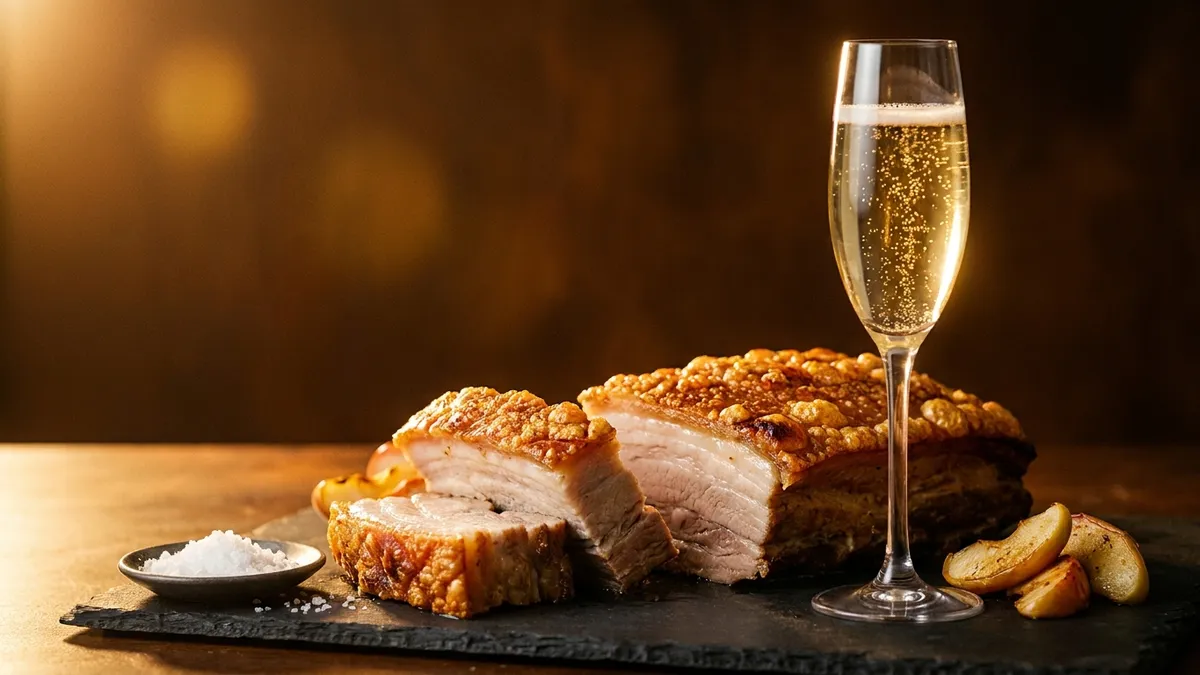
If you prefer still wine, a dry Riesling or Chenin Blanc does the same job with acidity alone. A light red works too when the roast comes with apple sauce or roasted fruit, because Pinot Noir's cherry fruit meets the fruit on the plate. Merlot, with soft tannins and plum fruit, suits a slow roast shoulder with gravy. Soft, low-acid whites are the ones to skip. Against this much fat they taste flat.
What Wine Goes With BBQ Pork Ribs?
Dry-rub ribs take a juicy medium red such as Grenache or Zinfandel. Sweet, sticky sauced ribs take a fruity, low-tannin red or a slightly sweet sparkling red such as Lambrusco. The sauce decides more than the smoke, because sugar changes how the wine tastes.
In Memphis, ribs come two ways: "dry", with a spice rub only, or "wet", brushed with sauce before and after cooking. Kansas City barbecue goes further, with a thick tomato-based sauce that is central to the style. That sauce is sweet, and sugar is what trips up most red wines.
Sweet food makes a dry wine taste less fruity, more sour and more bitter. With a tannic red, that bitterness lands on top of the drying grip, and the wine tastes harsh and metallic next to the glaze. A big young Cabernet or a Nebbiolo is the classic mistake with sticky ribs.
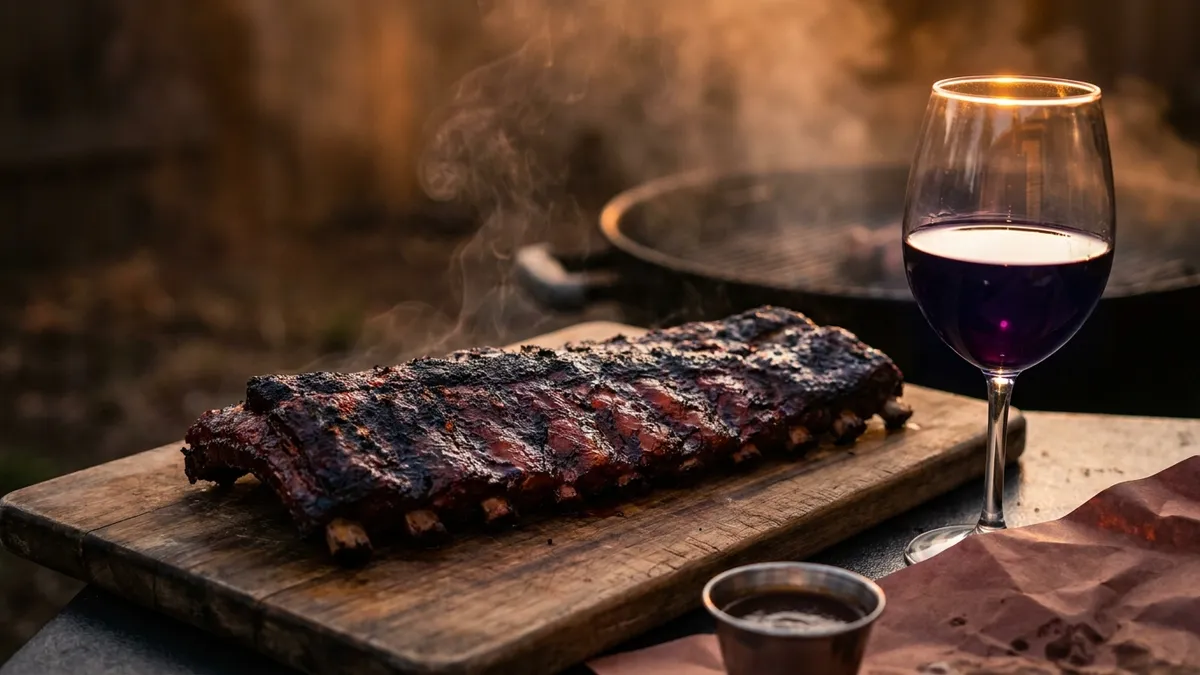
The fix is ripe fruit and soft tannin. Grenache is naturally low in tannin and acidity, tastes of ripe raspberry and strawberry with a little white pepper, and often reaches high alcohol, so it feels generous. Zinfandel from warm sites tastes of blackberry and black pepper and ripens to plenty of sugar, which becomes high alcohol. The Zinfandel wine guide and Grenache wine guide cover the styles.
Lambrusco is the wild card. It is a frizzante, or lightly fizzy, red from Emilia-Romagna in northern Italy, often with a little sweetness. Bubbles lift the fat, the fruit meets the sauce, and it is served cool, which helps with a hot grill. Lambrusco Grasparossa is the most tannic style and suits dry-rub ribs; Lambrusco di Sorbara is the most acidic and suits vinegar sauces.
The rule for ribs: if the sauce is sweeter than the wine, choose ripe fruit and low tannin, or a wine with a touch of sugar.
What Wine Goes With Pulled Pork?
Go by the sauce. A vinegar sauce wants a high-acid wine such as dry Riesling, Chenin Blanc or a chilled Beaujolais. A sweet tomato sauce wants a fruity, low-tannin red such as Zinfandel or Lambrusco. A mustard sauce wants off-dry Riesling or Gewürztraminer.
Pulled pork is a barbecue dish from the Southern United States, made from pork shoulder. The shoulder is smoked low, around 275°F (135°C), often for more than 12 hours, until it reaches 195 to 205°F (91 to 96°C) inside and pulls apart. That long cook melts the fat and connective tissue into the meat, so every forkful is soft, fatty and smoky.
The Carolinas split on sauce. Eastern North Carolina uses a thin vinegar-and-pepper sauce with no tomato. Central and western North Carolina add ketchup, known as Lexington style. Mustard-based sauce belongs mainly to central South Carolina. The classic sauce is thin and vinegar-sharp, which is why acid in the glass matters more here than weight.
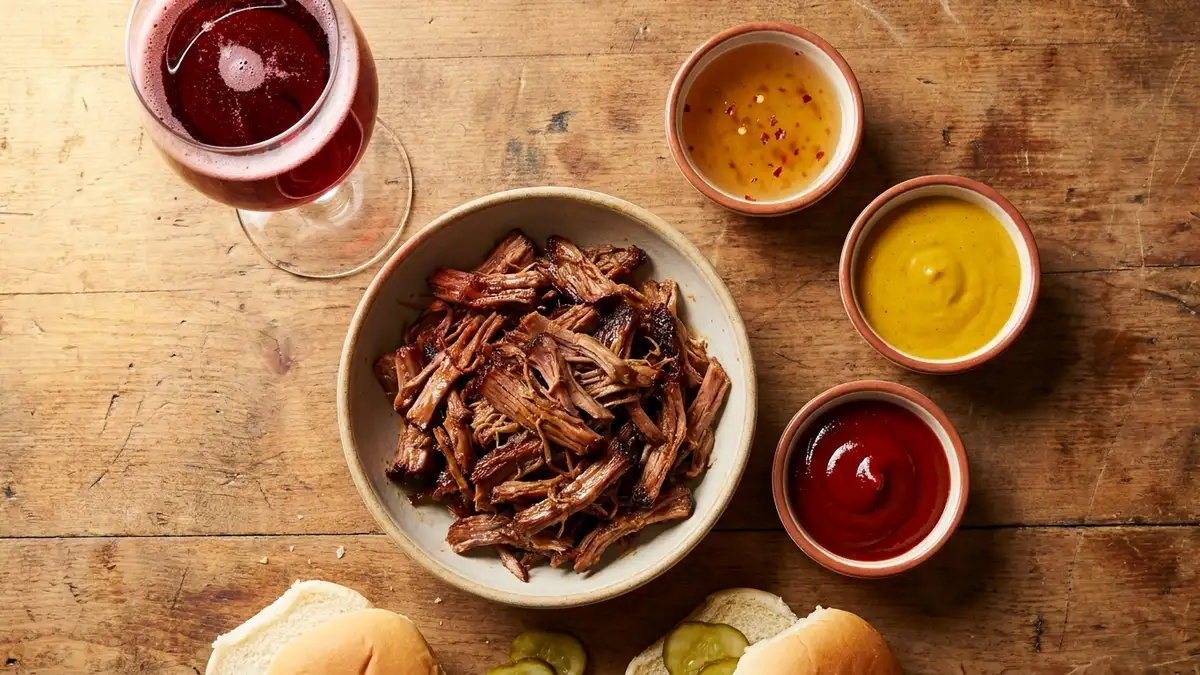
With vinegar, match acid with acid. A wine less tart than the sauce tastes flat and flabby next to it. With a sweet tomato sauce, move to the rib wines: Zinfandel, Grenache or Lambrusco. With a mustard sauce, and with any pork carrying chilli heat, an off-dry Riesling or Gewürztraminer works best. Gewürztraminer is usually off-dry, smells of lychee and rose, and goes with spicy and bittersweet dishes. The guide to wine with spicy food explains why a little sugar and moderate alcohol calm chilli heat.
Does Cooking Pork Well Done Change the Wine?
Yes. Dry, overcooked pork makes every wine taste harder, and it pushes people toward heavier bottles than the dish needs. Cook whole cuts to 145°F (63°C) with a 3-minute rest, the USDA figure, and the light wines above work as intended.
The old habit of cooking pork grey comes from fear of trichinosis, a parasite infection. It was once very common and is now rare in the developed world: the US averaged about 11 cases a year from 2002 to 2007, most of them from wild game. The decline came from bans on feeding raw meat scraps to hogs, freezing, and public awareness. Ground pork is the exception and still needs 160°F (71°C).
For wine, the difference is juiciness. A juicy, slightly pink chop has moisture of its own, and a light Pinot Noir or Gamay tastes fresh beside it. A dry chop leaves your mouth parched, and any tannin in the glass feels rougher. If the pork has come out dry, pour the wine with more fruit and acidity, such as a Beaujolais or an off-dry Riesling, and add a spoonful of sauce.
How Do You Pick a Wine for Pork Tonight?
Look at the sauce first, then the fat, then choose from three bottles: a Pinot Noir or Gamay, an off-dry Riesling, or a juicy Grenache or Zinfandel. Those three cover almost every pork dish, from a weeknight chop to a Sunday roast.
If the plate is lean and plain, pour the light red. If there is fruit, sugar, mustard or chilli, pour the Riesling. If there is smoke and a sweet barbecue glaze, pour the juicy red. Add a sparkling wine when crackling or pork belly is on the table. Our wine pairing rules turn the same logic into a checklist for other meats, and the guides to wine with chicken and wine with steak show where pork sits between them. More pairings live in the food pairing hub.
The fastest way to learn these rules is to taste two wines with one dish. Sommy has bite-sized courses on wine basics and an AI-guided tasting mode. Photograph the label, and the app walks through look, smell and taste, then saves the notes to a tasting journal.
Tonight, pour a Pinot Noir and an off-dry Riesling next to your pork. Take a bite, sip each wine, and write down which one makes the meat taste juicier.
Sources
- Wikipedia: Pork (USDA cooking temperatures and trichinosis)
- Wikipedia: Pork belly
- Wikipedia: Pulled pork
- Wikipedia: Barbecue in the United States (Memphis, Kansas City and Carolina styles)
- Wikipedia: Barbecue in North Carolina (Eastern and Lexington sauces)
- Wikipedia: Barbecue in South Carolina (mustard sauce)
- Wikipedia: Beaujolais (Gamay and serving temperatures)
Frequently Asked Questions
Is pork better with red or white wine?
Both work, and the plate decides. Pork is a mild, slightly sweet meat, so lean cuts like tenderloin sit happily with a crisp white such as dry Riesling or a light red such as Pinot Noir. Fatty, smoky or sauced pork, such as ribs and pulled pork, suits juicy low-tannin reds like Grenache, Zinfandel or Lambrusco. What to avoid is heavy tannin, whatever the colour.
What wine goes best with pork tenderloin?
Pinot Noir is the safest choice for pork tenderloin, because its thin skins give a light-bodied red with little tannin to dry out a lean cut. Gamay from Beaujolais works the same way. For a white, pour a dry Riesling or a dry Chenin Blanc. If the tenderloin is wrapped in bacon or crusted in mustard, step up to a fuller Cru Beaujolais.
What wine goes with BBQ pork ribs?
The sauce decides. Dry-rub ribs, seasoned with spices only, suit a juicy medium red like Grenache or Zinfandel. Wet ribs coated in a thick, sweet tomato sauce need a wine with ripe fruit and very little tannin, or a hint of sugar, such as a sparkling red Lambrusco. Young, tannic Cabernet tends to taste bitter against sweet sauce.
What wine goes with pulled pork?
Read the sauce first. A thin vinegar sauce, the classic Carolina style, wants a high-acid wine such as dry Riesling, Chenin Blanc or a chilled Beaujolais. A thick, sweet tomato sauce wants a fruity, low-tannin red such as Zinfandel or Grenache, or a sparkling red Lambrusco. A mustard sauce works with off-dry Riesling or Gewürztraminer.
What wine goes with pork chops?
A plain grilled or pan-fried chop pairs with Gamay, Pinot Noir or dry Riesling. Chops served with apples, apricots or a fruit glaze need an off-dry white, such as off-dry Riesling or a demi-sec Vouvray, so the wine is at least as sweet as the fruit. A creamy mustard sauce suits a rounder dry white such as Chenin Blanc.
What wine goes with roast pork and crackling?
Pour something with high acidity or bubbles. Roast pork, and pork belly above all, carries a lot of fat, and a crisp sparkling wine such as Cava or a high-acid white like Riesling or Chenin Blanc refreshes your mouth between bites. A light red such as Pinot Noir also works when the roast comes with apple sauce or roasted fruit.
Can you drink Cabernet Sauvignon with pork?
You can, but it is rarely the best pick. Cabernet is high in tannin, and pork is usually leaner and sweeter than beef, so a young Cabernet can taste drying against tenderloin and bitter against a sweet BBQ glaze. It works best with a fatty, savoury, dry-rubbed pork shoulder with no sweet sauce. For most pork dishes, a softer red such as Merlot or Grenache is easier.
Sommy Team
LinkedInFounder & Wine Educator
The Sommy Team is building the world's most approachable wine education app, helping beginners develop real tasting skills through structured courses and AI-guided practice.