Wine with Veal: Osso Buco, Piccata, Schnitzel and More

By the Sommy Team — AI-assisted, human-edited.
Updated Oct 1, 2026
Contents (9)
- What Wine Goes with Veal?
- Which Wine for Which Veal Dish?
- Should You Serve Red or White Wine with Veal?
- What Wine Goes with Osso Buco?
- What Wine Goes with Veal Piccata and Scallopini?
- What Wine Goes with Veal Saltimbocca?
- What Wine Goes with Wiener Schnitzel and Veal Cutlets?
- What Wine Goes with Veal in Cream or Mushroom Sauce?
- What Wine Goes with Vitello Tonnato?
TL;DR
Veal is pale, lean and mild, so the sauce chooses the wine. Lemon, capers and fried crumb want a crisp unoaked white. Osso buco, with its marrow and long braise, takes a high-acid red like Barbera or Nebbiolo. Cream sauces take a round Chardonnay, and cold vitello tonnato a chilled white or dry rosé.
The best wine with veal is chosen by the sauce, because the meat is too mild to choose it. Lemon, capers and fried crumb ask for a sharp white. A long braise with marrow in the bone can carry a firm red.
What Wine Goes with Veal?
Veal is pale, lean and mild, so the best wine with veal matches the sauce rather than the meat. Lemon-and-caper scallopini and fried Wiener schnitzel want a crisp, unoaked white such as Pinot Grigio, Soave or Grüner Veltliner. Braised osso buco takes a medium-bodied red with high acidity, such as Barbera or a lighter Nebbiolo.
Saltimbocca, with salty prosciutto and sage, works with Barbera or a dry Italian white. Cream sauces like blanquette de veau want a round, lightly oaked Chardonnay. Cold vitello tonnato, served in summer under a tuna mayonnaise, wants a chilled crisp white or a dry rosé. If you only buy one bottle for a veal dinner, make it a high-acid white or a Barbera.
Which Wine for Which Veal Dish?
Pick by the sauce column, then buy from the last one. If the sauce is sharp, salty or fried, pour white; if the dish was braised for hours, a red can join. Two bottles cover most veal dinners: a crisp Italian white and a Barbera.
| Dish | What the sauce brings | Wine style | Pour |
|---|---|---|---|
| Piccata, scallopini | Lemon, butter, capers | Crisp unoaked white | Pinot Grigio, Soave, Chablis |
| Saltimbocca | Prosciutto salt, sage, white wine and butter | Light red with high acidity, or dry white | Barbera, Soave |
| Osso buco | Long braise, marrow, gremolata | Medium-bodied red with high acidity | Barbera, Langhe Nebbiolo |
| Wiener schnitzel, cutlets | Fried crumb, lemon wedge | High-acid white or dry sparkling | Grüner Veltliner, dry Riesling, brut sparkling |
| Blanquette, cream sauce | Cream and egg yolk | Round white | Lightly oaked Chardonnay |
| Veal with mushroom sauce | Earthy, savoury | Light red | Pinot Noir |
| Vitello tonnato | Cold tuna mayonnaise, capers | Chilled crisp white or dry rosé | Arneis, dry rosé |
Should You Serve Red or White Wine with Veal?
White is the safer default, and red works when the dish adds the fat, collagen or salt that tannin needs. Milk-fed veal is pale, often ivory or creamy pink, and lower in fat than many meats. When a red does join, choose one with high acidity and moderate tannin.
Tannin (the drying grip a red leaves on your gums) softens against protein and fat. Marbled beef gives it plenty of both, which is why a big Cabernet tastes softer beside a steak. Lean veal gives it little, so the same Cabernet tastes harsh and the meat disappears. Veal looks like pink meat that should take a steak red; on the plate it behaves more like pork or chicken. The guide to tannins explains why meat protein softens that grip.
Acidity (the tartness that makes your mouth water) matters more. Veal sauces lean on lemon, white wine, butter or cream, and a wine needs enough acid to stay fresh against them. If the plate has no fat, salt or collagen beyond the meat, skip the tannic red and pour a crisp white or a light red. The wine pairing rules explain why acidity cuts richness and why the sauce outranks the protein.
What Wine Goes with Osso Buco?
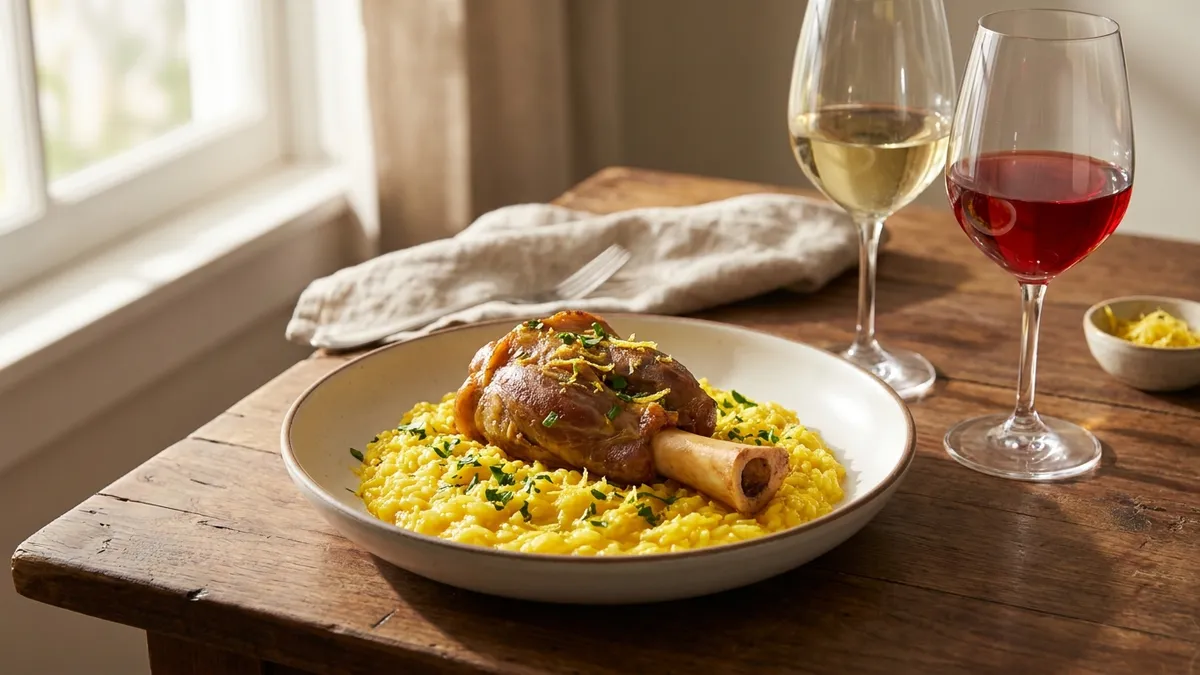
Osso buco takes a medium-bodied red with high acidity, such as Barbera or a lighter Nebbiolo, or a full white from northern Italy. The dish is cross-cut veal shank, about 3 cm thick, braised with vegetables, white wine and broth. It is a specialty of Lombard cuisine.
Two parts of the dish change the pairing. The first is the bone: its marrow is prized and is the defining feature of the dish. Marrow and the slow-cooked collagen of the shank give a red's tannin the fat it was missing in a thin cutlet. The second is gremolata, the garnish of lemon zest, garlic and parsley often scattered on top, which adds a sharp citrus edge.
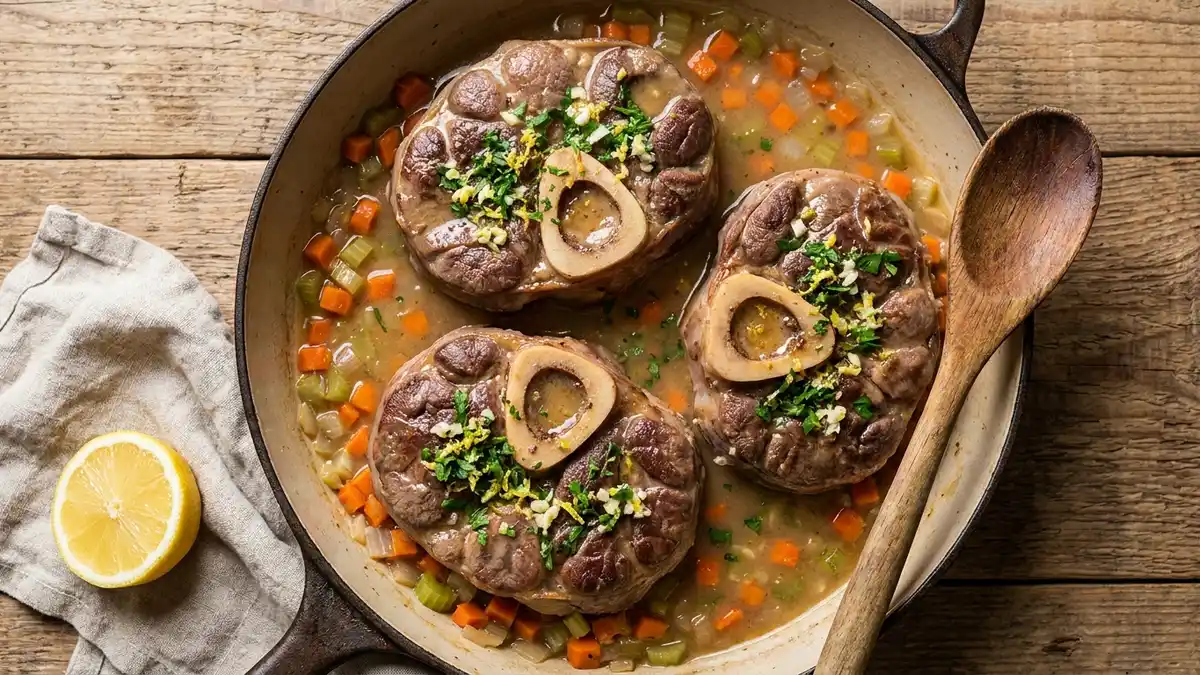
Osso buco is braised in white wine, not red, which is why a huge Malbec misreads it. A wine needs acidity to match the gremolata more than power to match the meat. Body (how heavy a wine feels, like skimmed versus whole milk) should stay medium.
- Barbera has high acidity and soft tannin, so it handles the lemon and the marrow at once. The Barbera guide covers its styles.
- Nebbiolo has high acidity and firm tannin. Barolo is 100% Nebbiolo, and a young one can overpower the dish; a Langhe Nebbiolo is lighter. See the Nebbiolo guide.
- A full white such as Soave Classico or Lugana stays close to the braising liquid.
Osso buco comes with risotto alla milanese or polenta, depending on the region. If it sits on saffron risotto, a full white fits the creamy rice; if it comes on polenta with lots of gremolata, choose Barbera.
What Wine Goes with Veal Piccata and Scallopini?
Veal piccata and scallopini want an unoaked white with high acidity, such as Pinot Grigio, Soave or Chablis. Piccata is thin, flour-dredged meat pan-fried and finished in a sauce of lemon juice, butter, parsley and often capers. Veal is the traditional meat, though chicken is now more common in American versions.
The lemon sets the bar. A wine with less acid than the sauce tastes flat and slightly sweet next to it. Capers add salt, which makes tart wine taste rounder.
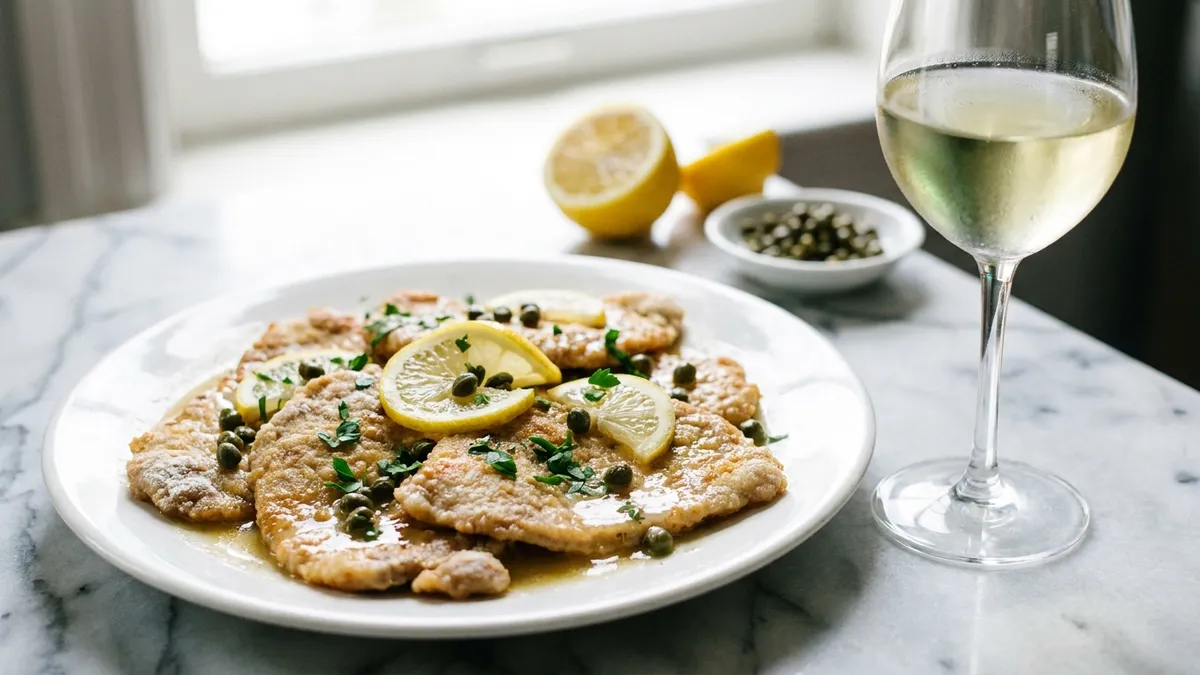
Oak (barrels that add vanilla, toast and a creamy texture) clashes with the lemon, giving a bitter, woody taste. If the label says barrel-fermented, save that bottle for the cream sauce below. Pinot Grigio from northern Italy is lean and tart; the Pinot Grigio vs Pinot Gris guide explains why the French name often means a richer wine. Unoaked Chardonnay from Chablis brings the same acid with a little more weight, covered in the Chablis guide.
What Wine Goes with Veal Saltimbocca?
Saltimbocca goes with Barbera or a dry Italian white, because prosciutto's salt needs acidity more than tannin. The Roman dish wraps veal with prosciutto and sage, then cooks it in dry white wine and butter. Its name means "jumps in the mouth".
Salt makes a wine taste softer and fruitier, so a tart, light red like Barbera turns round beside it. Sage adds a herbal, slightly bitter note that heavy oak would amplify. A dry white such as Soave keeps the dish close to its cooking liquid.
Marsala is sometimes used in place of the white wine, and it adds a nutty, sweeter edge. If the sauce is finished with Marsala, move to the red. If it uses white wine and butter, either style works. The Italian wine guide maps where Barbera and Soave come from.
What Wine Goes with Wiener Schnitzel and Veal Cutlets?
Wiener schnitzel goes best with Grüner Veltliner, dry Riesling or a dry sparkling wine, whose acidity cuts the fried crust. Austrian law requires that Wiener Schnitzel be made of veal, so the name on a menu tells you the meat.
The fried crumb sets the pairing. It coats the palate with oil, and a tart wine cuts it the way the lemon wedge does.
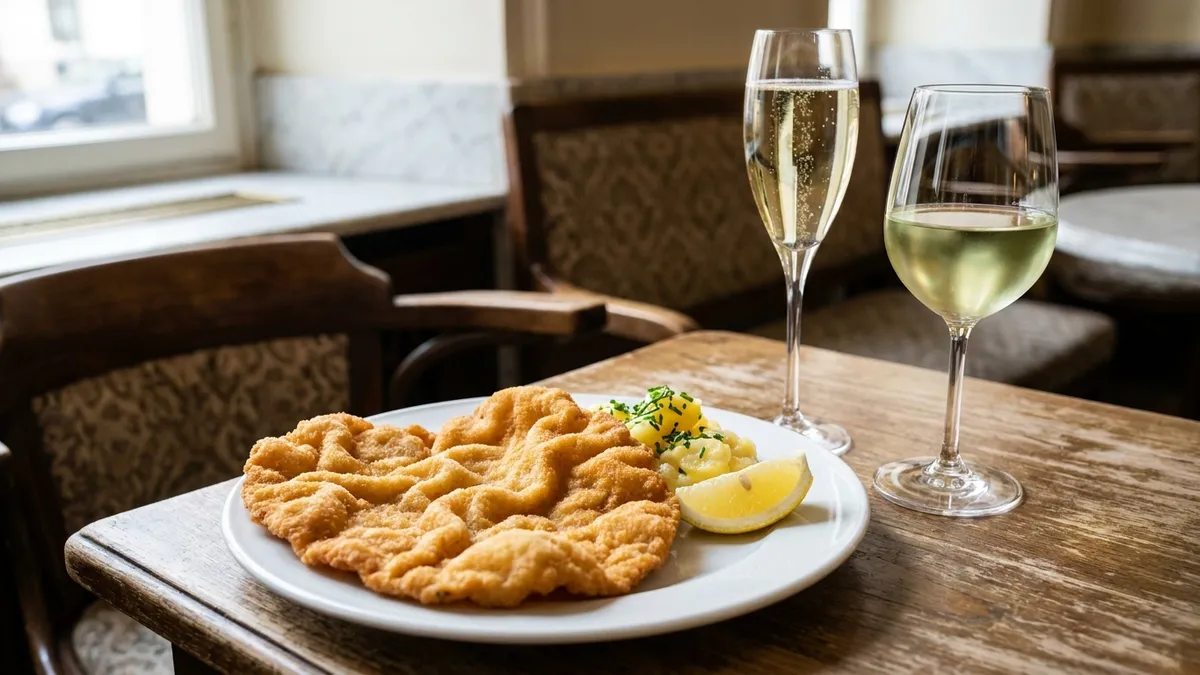
Grüner Veltliner is Austria's own match: high acidity and a white-pepper bite. The Grüner Veltliner guide covers its styles. A dry Riesling (no sugar you can taste) brings even more acid. Bubbles scrub oil from the tongue, so a brut sparkling wine works well too; the sparkling wine types guide sorts the dry labels from the sweet ones.
If the schnitzel comes with potato salad and lemon, pour Grüner. If it comes with sweet lingonberry jam, choose a Riesling with a touch of sweetness, because a sweet side makes a bone-dry wine taste sour.
What Wine Goes with Veal in Cream or Mushroom Sauce?
Cream sauces take a round white such as lightly oaked Chardonnay, and mushroom sauces can take a light red like Pinot Noir. Blanquette de veau, the French white veal stew, is served in a velouté sauce enriched with cream and egg.
Cream and egg yolk coat the mouth. A lean, sharp white tastes thin beside them, while a Chardonnay with gentle oak has the weight and creamy texture to meet the sauce. This is where the barrel-fermented bottle you skipped for piccata belongs. The Chardonnay guide explains how to read oaked and unoaked labels.
Mushrooms pull the dish toward earthy flavours. Pinot Noir has low tannin and smells of cherries and damp leaves, which echo the mushrooms without gripping the lean meat. The wine with mushrooms guide goes further on fungi. If mushrooms lead the sauce, pour Pinot Noir; if cream and egg lead, pour Chardonnay.
What Wine Goes with Vitello Tonnato?
Vitello tonnato wants a chilled, crisp white or a dry rosé, because the cold tuna sauce is rich, salty and fishy. It is a Piedmontese dish of cold, thinly sliced veal topped with a creamy, mayonnaise-style tuna sauce, served chilled or at room temperature, especially in summer.
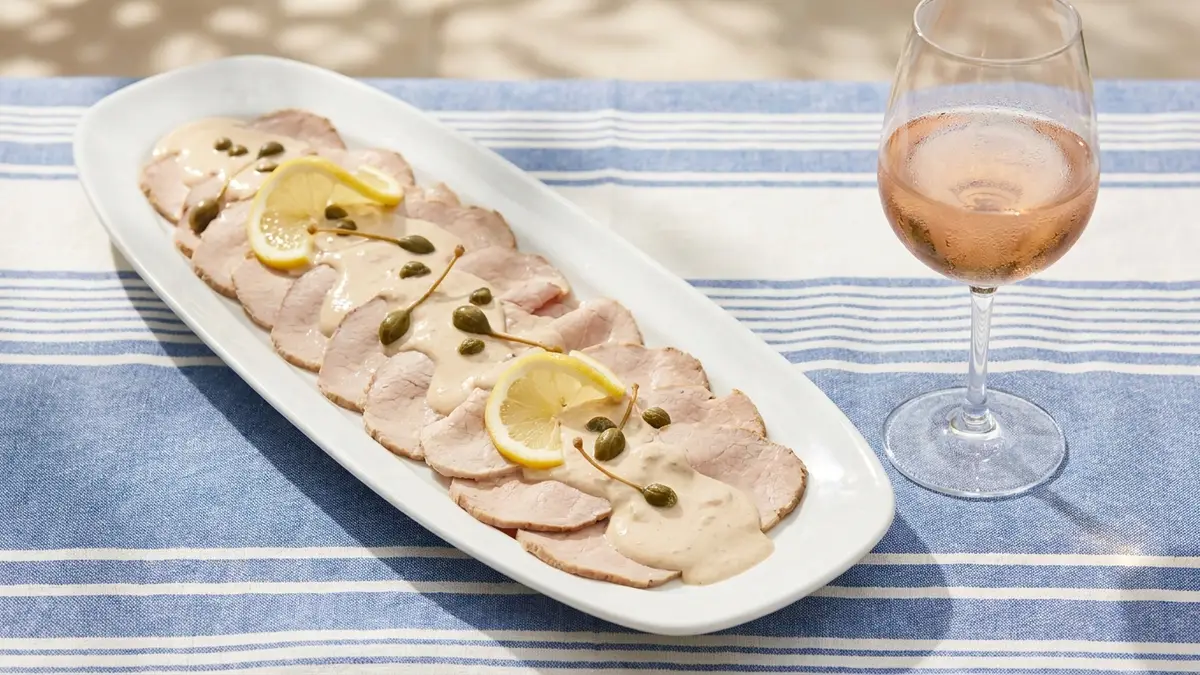
Fish oil and many red wines together can leave a fishy, metallic aftertaste, so keep reds off this plate. Arneis, a white grape from Piedmont, has the soft acidity and almond flavour to sit with the mayonnaise. A dry rosé adds a little fruit against the capers. If it is served on a hot day, chill the rosé well and pour small glasses so it stays cold. The Piedmont wine guide places Arneis beside Barbera and Nebbiolo, all three of which can share a veal menu.
For more meat matches, the food pairing hub groups them by protein. Sommy at sommy.wine has a bite-sized Italy course and an AI-guided tasting mode that walks you through look, smell and taste. Log the result in your Sommy tasting journal. Tonight, cook veal scallopini with lemon, then pour a Soave and a Barbera side by side and taste which one holds up to the sauce.
Sources
Frequently Asked Questions
What is the best wine with veal?
There is no single best wine, because veal is mild and the sauce sets the flavour. For lemon and caper dishes such as piccata, pour a crisp unoaked white like Pinot Grigio or Soave. For braised osso buco, pour a medium-bodied red with high acidity such as Barbera. For cream sauces, choose a round, lightly oaked Chardonnay.
Should you drink red or white wine with veal?
White is the safer default. Veal is lean and pale, with little fat to soften tannin, so a big tannic red tastes harsh and hides the meat. Red works when the dish brings its own richness: the marrow and long braise of osso buco, salty prosciutto in saltimbocca, or an earthy mushroom sauce. Choose reds with high acidity and moderate tannin.
Does Barolo go with osso buco?
It can, but it is not the safest choice. Barolo is 100% Nebbiolo, a grape with high acidity and strong tannin. The marrow and gelatin of a braised shank can handle that grip, yet a young Barolo may still overpower the delicate meat and saffron risotto. A lighter Langhe Nebbiolo or a Barbera does the same job with less force.
What wine goes with veal piccata?
Veal piccata needs a white with high acidity and no heavy oak. The sauce is lemon juice, butter, parsley and capers, so a wine must be at least as tart as the lemon or it tastes flat. Pinot Grigio, Soave, Sauvignon Blanc and Chablis all work. Save barrel-aged Chardonnay for veal in cream sauce, where its roundness fits.
What wine goes with Wiener schnitzel?
Grüner Veltliner is the classic match in Austria, where the law says a Wiener Schnitzel must be made of veal. Its high acidity and peppery bite cut through the fried crumb like the lemon wedge does. Dry Riesling and dry sparkling wine work for the same reason: tart wine and bubbles refresh the palate after each bite of fried coating.
Is veal considered red meat for wine pairing?
For pairing, treat milk-fed veal like pork or chicken rather than beef. Its flesh is pale, often ivory or creamy pink, and lower in fat than many meats. When a red does join, choose one with high acidity and moderate tannin. That lean, mild meat cannot soften strong tannin the way marbled beef does. Pair to the sauce and cooking method, and keep reds light to medium in body.
Sommy Team
LinkedInFounder & Wine Educator
The Sommy Team is building the world's most approachable wine education app, helping beginners develop real tasting skills through structured courses and AI-guided practice.