Wine with Ribs: Sweet, Smoky and Sticky BBQ Pairings

By the Sommy Team — AI-assisted, human-edited.
Updated Oct 1, 2026
Contents (10)
- Wine with Ribs, in One Paragraph
- What Wine Goes With Each Kind of Ribs?
- Why Does Sweet Rib Sauce Make Red Wine Taste Bitter?
- Do Spare Ribs and Baby Back Ribs Need Different Wine?
- What Wine Goes With Beef Short Ribs?
- What Wine Goes With Spicy Ribs?
- Is Zinfandel Really the Ribs Wine?
- Do Lambrusco and Rosé Work With Ribs?
- How Should You Serve Wine With Ribs?
- Try the Two-Bite Test Tonight
TL;DR
Wine with ribs is chosen by the finish on the rack. Dry-rub pork ribs take a juicy medium red such as Grenache. Sticky sweet glaze needs riper fruit and less tannin: Zinfandel or a semi-sweet Lambrusco. Beef short ribs carry a firm Syrah or Malbec. Hot ribs want cold, off-dry Riesling.
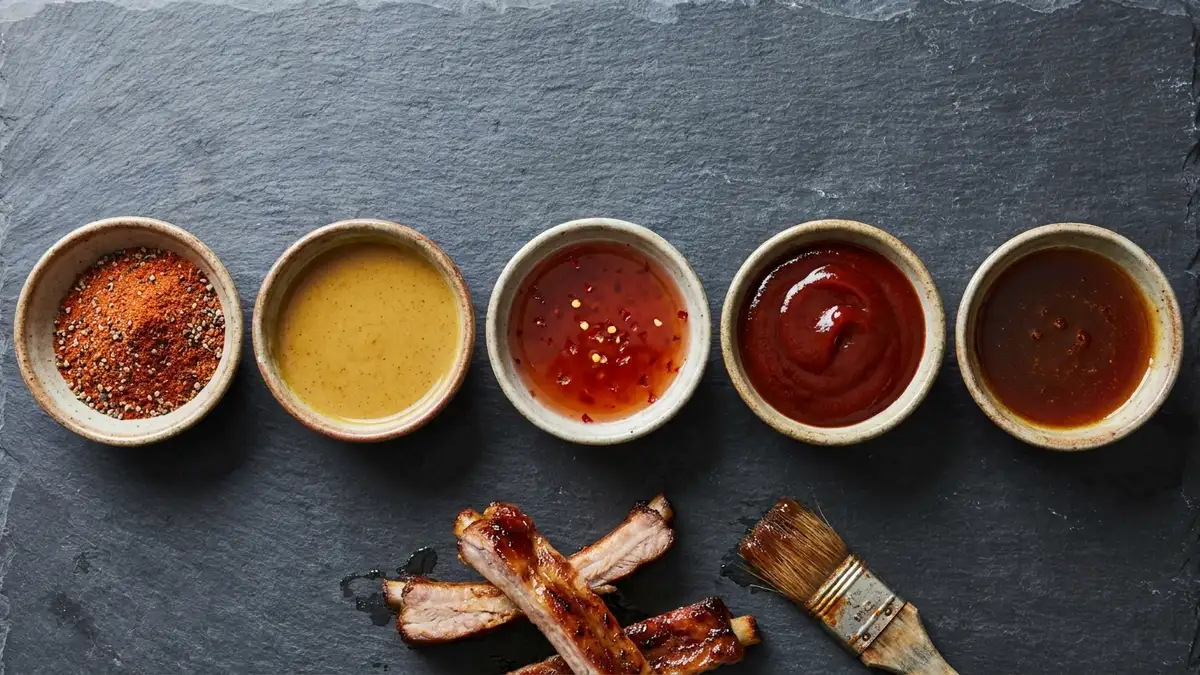
The best wine with ribs follows the last thing brushed on the rack. A dry spice rub leaves room for a red with some grip. A thick, sweet glaze needs a wine that is riper and softer than the sauce, or it turns sour and bitter in your mouth. Pork or beef, smoked or braised, matters less than that one step.
Wine with Ribs, in One Paragraph
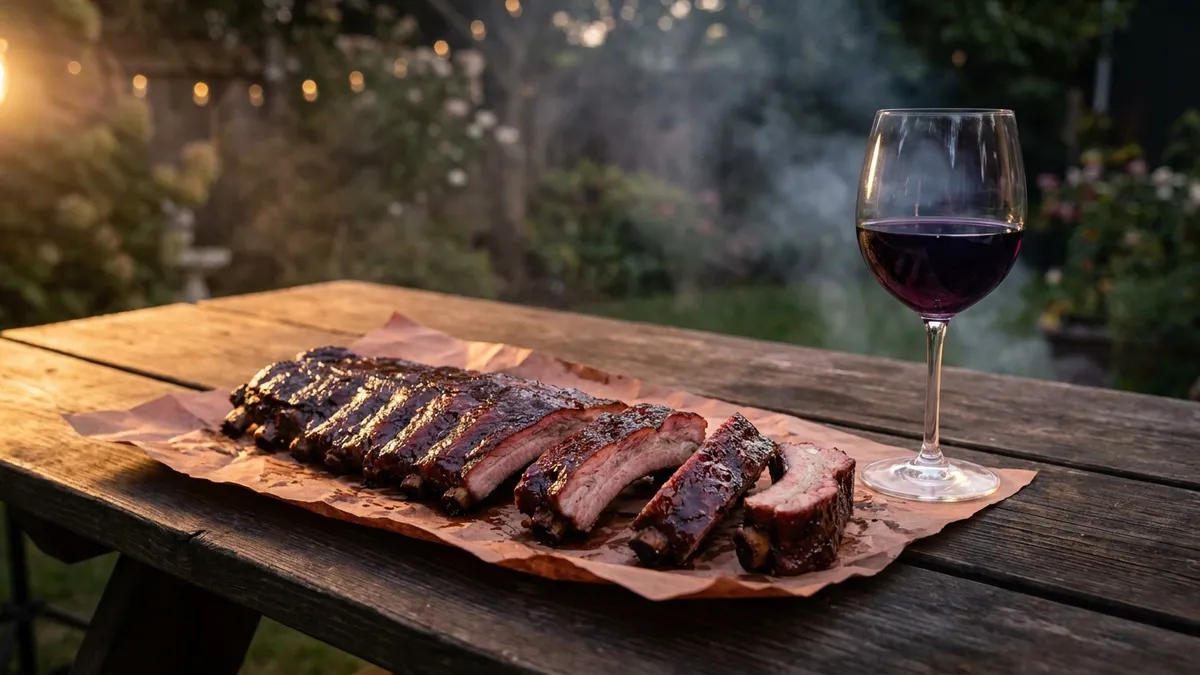
Choose wine with ribs by the finish. Dry-rub pork ribs take a juicy medium-bodied red such as Grenache or a lighter Zinfandel. Ribs in a sweet tomato sauce or sticky honey glaze take a riper, lower-tannin red such as Zinfandel or Primitivo, or a semi-sweet sparkling red Lambrusco. Vinegar and mustard mops take acidity: dry rosé or a light red served cool. Hot, chilli-heavy ribs take a cold, off-dry Riesling. Beef short ribs are bigger and meatier than pork ribs, so they suit a firmer, full-bodied red such as Syrah or Malbec. Zinfandel can pass 15% alcohol, so serve every red a little cool at a cookout.
What Wine Goes With Each Kind of Ribs?
Pick by the finish on the rack first, then by the animal. A rub asks the wine for grip, a sweet sauce or glaze asks for ripe fruit, a vinegar mop asks for acidity and chilli asks for cold and a little sugar. Beef ribs then add more meat and richer flavour than pork.
| Ribs | Pour | Skip | Serve it |
|---|---|---|---|
| Dry-rub pork ribs | Grenache, lighter Zinfandel, Merlot | Delicate whites | Cool, 15 minutes in the fridge |
| Pork ribs in sweet tomato sauce | Zinfandel, Primitivo, amabile Lambrusco | Young oaky Cabernet | Red cool; Lambrusco well chilled |
| Sticky honey or Chinese-style glaze | Amabile Lambrusco, off-dry Riesling | Dry, tannic reds | Cold, straight from the fridge |
| Vinegar or mustard mopped ribs | Dry rosé, Gamay, secco Lambrusco | Oaky, high-alcohol reds | Cold; keep the bottle on ice |
| Hot, chilli-heavy ribs | Off-dry Riesling, fruity rosé | Reds above 14.5% | Cold, small pours |
| Smoked or braised beef short ribs | Syrah, Malbec, Petite Sirah | Light, fruity reds | Cool room temperature |
| Korean galbi (soy-marinated beef) | Grenache, off-dry Riesling | Very tannic reds | Red cool; Riesling cold |
If the sauce goes on the ribs, pour fruit; if only a rub does, you can pour some grip. The wine with BBQ guide applies the same sauce logic to brisket, chicken and wings.
Why Does Sweet Rib Sauce Make Red Wine Taste Bitter?
Sugar in the sauce makes a dry wine taste thinner, sharper and more bitter, so tannin that felt fine on its own turns harsh. Sommeliers treat this as a working rule rather than a lab law, and it holds at most tables: the wine should be at least as fruity as the food.
Tannin is the drying grip on your gums, the same puckery feeling as strong tea. It comes from grape skins and seeds, and wines aged in charred oak barrels absorb more of it from the wood. A young, oaky Cabernet carries plenty of both. Against a molasses-sweet glaze, the fruit seems to vanish and the grip is all that is left.
Ripe, low-tannin reds survive because their fruit is loud enough to stand next to sugar. The guide to tannins shows how to feel the difference between a soft red and a gripping one.
Do Spare Ribs and Baby Back Ribs Need Different Wine?
A little: fattier spare ribs can carry a red with more grip, while leaner baby backs want a softer, juicier one. The sauce still decides first, but the cut nudges the choice, because fat is what cushions tannin in the mouth.
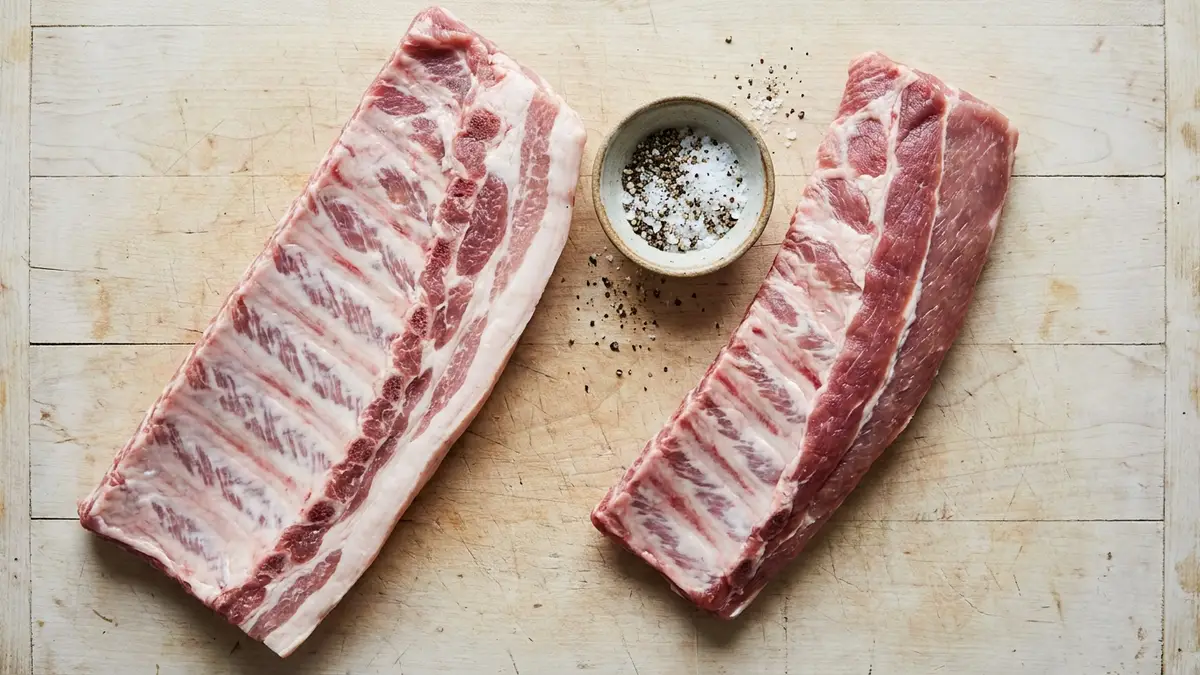
Spare ribs come from the belly side of the pig's rib cage. They are flatter than back ribs and carry more bone than meat, plus a good deal of fat, which makes them tender after hours of low, slow cooking. St. Louis cut ribs are spare ribs with the breastbone, cartilage and rib tips trimmed off, so they cook evenly. That fat coats the mouth and softens tannin, so a Grenache or a medium Merlot holds up well.
Baby back ribs (also called back or loin ribs) sit at the top of the rib cage, under the loin. Their bones are shorter and curved, with meat on top of the bones. They carry less fat, and they are often finished with a sweet glaze.
If the rack is long, flat and fatty, open a medium red with some grip. If it is short, curved and glazed, open the softest, ripest red you have, or a semi-sweet Lambrusco. More pork cuts, from tenderloin to crackling, are matched in wine with pork.
What Wine Goes With Beef Short Ribs?
A fuller, firmer red, because beef short ribs are bigger and meatier than pork ribs, with deeper, long-cooked flavour. Syrah, Malbec and Petite Sirah all have the weight and tannin to meet them. Korean galbi is the exception, and it wants softer fruit.
Short ribs are cut from the brisket, chuck, plate or rib of beef cattle. Plate short ribs are the fattiest, and all short ribs carry plenty of connective tissue. That is why they need long cooking, braised or smoked for hours, to turn tender. The result is soft, rich meat with melted fat, which gives a tannic red something to grip.
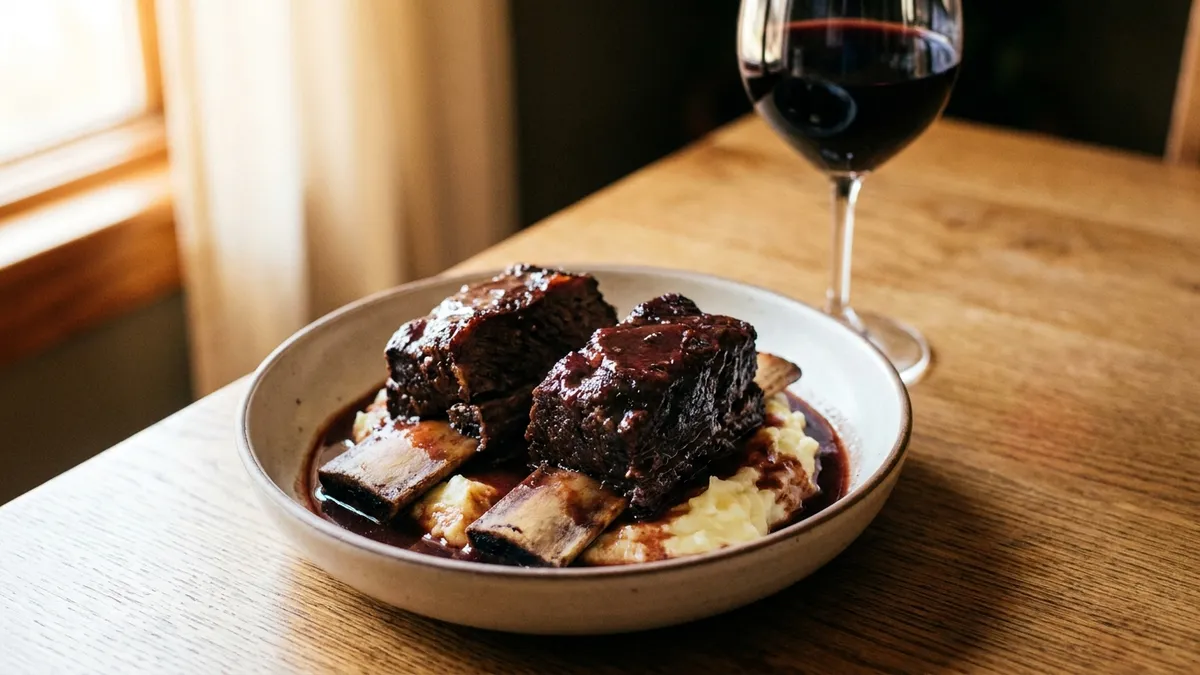
Syrah gives blackberry and black pepper over firm tannin; the Syrah vs Shiraz explainer shows how the cooler French style and the riper Australian one differ. Malbec brings plum ripe to the point of jam, which helps when the braise has a sweet edge. The Malbec wine guide covers its main styles.
Galbi works differently. The ribs are usually marinated in a sweet soy-based sauce and grilled fast, so they come off sweet, salty and caramelised rather than slow-cooked and fatty. If the short ribs are braised or smoked, pour Syrah or Malbec. If they are galbi, pour a juicy Grenache or an off-dry Riesling.
What Wine Goes With Spicy Ribs?
A cold, fruity wine with moderate alcohol and, if the heat is real, a touch of sugar. Off-dry wine (with a little sugar you can just taste) calms the burn, and cold temperature dulls it further. The riskiest pour is a warm, strong red.
Chilli heat comes from capsaicin. Capsaicin dissolves in alcohol, which tempts people to think a strong red will rinse it away. At the table, a high-alcohol wine tends to make the burn feel hotter. If the burn gets too much, cold milk helps, because proteins in milk called caseins relieve it.
Riesling is the safest choice because it pairs high acidity with a range of sweetness levels, and many off-dry examples are light in alcohol. German labels marked feinherb or halbtrocken signal off-dry; the Riesling wine guide explains the rest. A chilled, fruity rosé is the fallback for guests who will not drink white.
If the sauce makes you reach for water, put the Zinfandel away and pour an off-dry Riesling. The wine with spicy food guide covers curries, tacos and wings by the same rule.
Is Zinfandel Really the Ribs Wine?
Yes, for sweet, mild ribs; no, for hot ones. Zinfandel's ripe berry fruit keeps up with a sugary glaze, and its tannin is moderate. Its weak spot is alcohol: the grape's high sugar can ferment to more than 15%, which feels hot beside chilli and in summer sun.
That ripeness has a cause in the vineyard. Zinfandel ripens unevenly, so one bunch can hold raisin-like, overripe berries next to green, unripe ones. The raisined berries bring jammy, dried-fruit flavour and sugar; the green ones keep some freshness. Against a molasses-sweet sauce, that jam is exactly what keeps the wine from tasting thin.
Zinfandel is often sold as an American grape, yet its roots are in the Adriatic. In 1993, DNA fingerprinting confirmed that Italy's Primitivo and Zinfandel are clones of the same variety, and Croatia's Crljenak Kaštelanski turned out to be the same grape too. A Primitivo from Puglia is therefore an easy swap on the shop shelf. The Zinfandel wine guide covers its styles, and the Primitivo wine guide covers the Italian side.
Do Lambrusco and Rosé Work With Ribs?
Yes, and with sticky ribs they often beat a still red. Both are served cold and both carry fresh acidity, which cuts rib fat. The right Lambrusco also brings its own sugar to meet a sweet glaze, and dry rosé handles the tangy vinegar and mustard sauces.
Lambrusco is a red wine from four zones in Emilia-Romagna and one in Lombardy, in northern Italy. Most of it is frizzante (lightly sparkling), with high acidity and berry flavours, and it is made to drink young.
Its reputation as cheap sweet fizz misses the range. Labels run from secco (bone dry to dry) to amabile (off-dry to sweet) and dolce (very sweet).
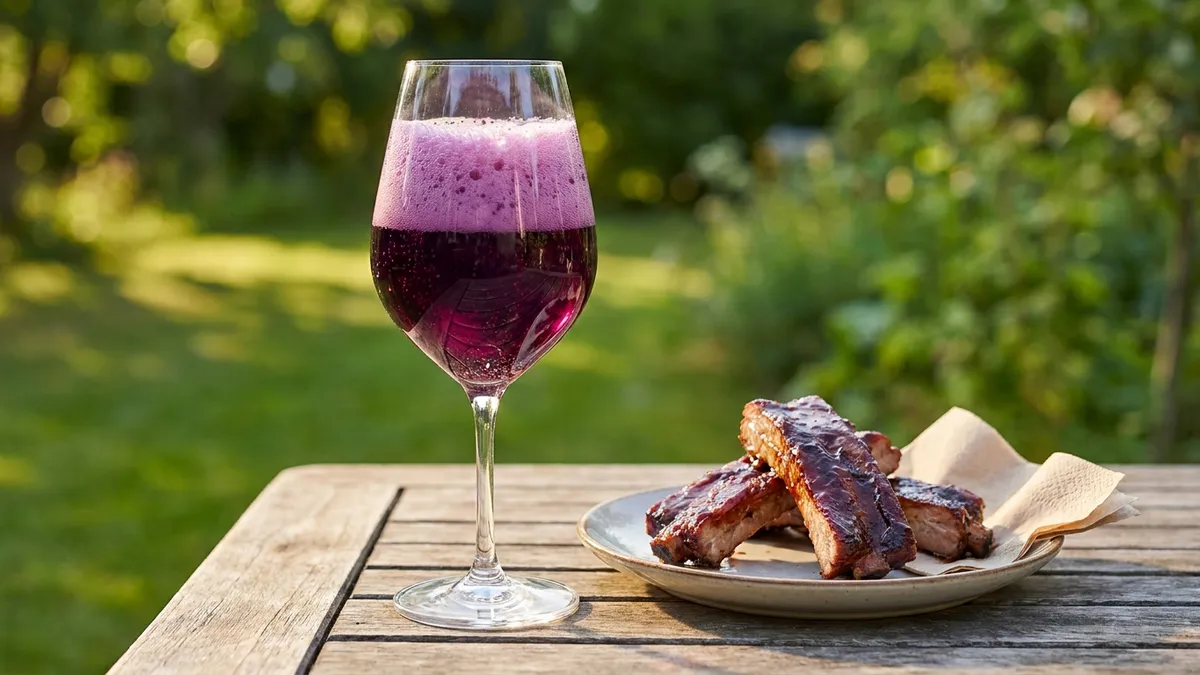
The bubbles and acidity cut through rib fat, and the berry fruit stands next to the sauce. If the label says amabile, open it with sticky, sweet ribs. If it says secco, open it with dry-rub or vinegar-mopped ribs. Lambrusco Grasparossa di Castelvetro and Lambrusco di Sorbara are two of the protected names to look for; the Lambrusco wine guide explains how they differ.
Dry rosé is the pick for vinegar and mustard sauces, where its acidity matches the tang and its light body leaves the smoke in front. The rosé wine guide sorts pale dry styles from deeper fruity ones.
How Should You Serve Wine With Ribs?
Cool, in small pours, and away from the grill. Warm wine shows its alcohol, which makes tannin feel rougher and chilli feel hotter. Reds want 15 to 20 minutes in the fridge; Lambrusco, rosé and Riesling stay on ice between pours.
Ribs are sticky food, so the bottle does not need to be expensive. A thick glaze covers the subtle aromas an aged bottle is prized for. If you are buying for a rack of sauced ribs, spend on ripe fruit and the right sweetness word, and keep the old, delicate bottles for a plainer roast. The wine serving temperature chart gives the target range for each style, and how to chill wine fast covers the ice-bucket method.
Try the Two-Bite Test Tonight
Brush sauce on only half the rack. Pour one glass of the red you planned, take a bite of a dry-rub rib and sip, then a bite of a sauced rib and sip again. If the second sip tastes sour or thin, that red belongs with the rub, and the sauced half wants something riper or semi-sweet.
More pairing logic lives in the food pairing hub. The Sommy app at sommy.wine has bite-sized courses, including Wine 101, and an AI-guided tasting mode that saves notes to a tasting journal. Photograph tonight's label in Sommy, then taste it through look, smell and taste, and log the dry-rub sip next to the sauced one.
Sources
Frequently Asked Questions
What wine goes best with BBQ ribs?
Pick by the sauce. Dry-rub pork ribs suit a juicy medium red such as Grenache. Ribs in a thick sweet tomato sauce or sticky glaze suit a riper, low-tannin red such as Zinfandel, or a semi-sweet sparkling Lambrusco. Ribs mopped with vinegar or mustard sauce suit a dry rosé. Beef short ribs can take a firmer red such as Syrah or Malbec.
Is red or white wine better with ribs?
Red is the usual pick because ribs are fatty, smoky and often sweet, and a ripe red has the fruit to keep up. White wins in two cases: an off-dry Riesling with hot, chilli-heavy ribs, and a crisp, dry white or rosé with ribs mopped in a sharp vinegar or mustard sauce. The colour matters less than tannin, sugar and alcohol.
Why does red wine taste bitter with sweet BBQ sauce?
Sugar in food makes a dry wine taste less fruity and more sour and bitter. With a tannic red, that bitterness lands on top of the drying grip, so the wine turns harsh next to a sticky glaze. It is a tasting rule rather than a law, but it is why young, oaky Cabernet so often disappoints with sweet ribs.
What wine goes with spicy ribs?
A cold, fruity wine with moderate alcohol and, ideally, a little sugar. Off-dry Riesling is the safest pour, and a chilled, fruity rosé or a semi-sweet Lambrusco also works. Avoid strong, warm reds above 14.5%, because high alcohol tends to make chilli heat feel stronger. If the burn gets too much, cold milk helps more than wine.
Is Zinfandel good with ribs?
Yes, with mild ribs in a sweet sauce. Zinfandel's ripe, jammy fruit keeps up with sugar, and its tannin is moderate. Its weak spot is alcohol: the grape's high sugar can ferment to more than 15%, which feels hot next to chilli and when the bottle warms in the sun. Serve it cool and keep it away from the hottest ribs.
What wine goes with beef short ribs?
Braised or smoked beef short ribs are bigger and meatier than pork ribs, with richer, long-cooked flavour, so they take a fuller, firmer red such as Syrah, Malbec or Petite Sirah. Korean galbi is different: the ribs are usually marinated in a sweet soy sauce and grilled fast, so a juicy, low-tannin red or an off-dry Riesling suits its sweet-salty glaze better.
Should wine for ribs be chilled?
Yes, a little. Reds for a cookout taste better cooler than room temperature, because warm wine shows its alcohol and makes tannin and chilli feel harsher. Give a red 15 to 20 minutes in the fridge or a few minutes in an ice bucket. Keep Lambrusco, rosé and Riesling properly cold, and pour small glasses so the rest stays cool.
Sommy Team
LinkedInFounder & Wine Educator
The Sommy Team is building the world's most approachable wine education app, helping beginners develop real tasting skills through structured courses and AI-guided practice.