Wine with Prime Rib: The Christmas Roast Pairing Guide

By the Sommy Team — AI-assisted, human-edited.
Updated Oct 1, 2026
Contents (10)
- What Wine Goes With Prime Rib, in One Paragraph?
- Which Red Should You Open for Your Rib Roast?
- Why Do Tannic Reds Work With a Rib Roast?
- Does the Doneness of the Roast Change the Wine?
- Which Slice Should You Plan Around, the End Cut or the Centre?
- How Do Horseradish, Au Jus and the Sides Change the Pick?
- Can You Serve a Lighter Red, a White or a Sparkling Wine?
- How Many Bottles Do You Need, and When Should You Open Them?
- What Should You Avoid With a Christmas Rib Roast?
- The Rule to Remember on the Day
TL;DR
Prime rib wants a full-bodied, tannic red such as Cabernet Sauvignon, a Bordeaux blend or Syrah, because the roast's protein and fat make tannin feel softer. Rare centre slices and creamy horseradish call for a softer red at 14% alcohol or less. Plan one 750 ml bottle for every two or three wine drinkers.
Wine with prime rib works best when it is a full-bodied red with plenty of tannin, such as Cabernet Sauvignon or Syrah. The roast's fat and protein soften that tannin, so a red that feels stiff on its own tastes rounder at the table. Then three things on the plate adjust the pick: how rare the slice is, whether it carries the fatty cap, and how much horseradish goes on top.
What Wine Goes With Prime Rib, in One Paragraph?
The best wine with prime rib is a full-bodied, tannic red: Cabernet Sauvignon, a Bordeaux blend or Syrah. Tannin (the drying grip on your gums) binds to the beef's protein, and body (the wine's weight, like whole milk against skimmed) matches the roast's richness. Rare, juicy centre slices take a softer red such as Merlot. Creamy horseradish and salty jus call for 14% alcohol or less, because salt and spicy heat make alcohol burn. For a table of mixed tastes, open one firm red and one softer red, and plan one 750 ml bottle for every two or three wine drinkers.
Which Red Should You Open for Your Rib Roast?
Pick by the crust, the doneness and the guests. Cabernet or a Bordeaux blend fits a classic medium-rare roast, Syrah fits a thick pepper crust, and Merlot or Pinot Noir fits a table that finds big reds harsh. Each option below names what it does against the beef.
| Wine | Structure | Why it works with the roast | Open this if |
|---|---|---|---|
| Cabernet Sauvignon | Full body, high tannin, fresh acidity | Thick skins give firm tannin that the fat and protein soften | The roast is medium-rare with a salted crust |
| Bordeaux blend (Cabernet with Merlot) | Full body, firm but rounder tannin | Merlot fills in Cabernet's grip, so lean and fatty slices both work | You want one red for every slice on the board |
| Syrah | Full body, medium-plus tannin | Smells of black pepper, which echoes a peppered crust | The roast is rubbed with cracked pepper or herbs |
| Malbec | Full body, ripe, softer tannin | Ripe plum fruit stands up to dark, reduced jus | Gravy is thick and the beef is medium |
| Rioja Reserva (Tempranillo) | Medium body, fine tannin, oak-aged | Barrel ageing adds vanilla and dried fruit without heavy grip | Horseradish is on the table and you want moderate alcohol |
| Merlot or Pinot Noir | Medium body, low to medium tannin | Little tannin to fight a lean, rare slice | Guests dislike big reds or the centre is rare |
Cabernet Sauvignon is the default for a reason: the grape has small berries with thick skins, which makes wines with full body, high tannin and noticeable acidity (the tartness that makes your mouth water). That acidity matters as much as the tannin, because it refreshes the palate between fatty bites. Its grape-by-grape profile sits in the Cabernet Sauvignon guide.
A Bordeaux blend combines Cabernet with Merlot, Cabernet Franc and sometimes Malbec or Petit Verdot. Merlot's softer tannin makes the blend easier with the lean eye of the roast; the Bordeaux blend grapes page explains what each grape adds. If the crust is heavy with black pepper, open Syrah instead: the Syrah vs Shiraz guide shows which label words mean a peppery, cooler style and which mean a riper one.
Why Do Tannic Reds Work With a Rib Roast?
Tannin binds to protein. On its own, a tannic red grabs the proteins in your saliva and makes them clump, which you feel as a rough, sandpapery dryness. With a mouthful of beef, the tannin binds to the meat's protein instead, so the same wine feels softer.
That is also the myth to drop: tannin does not cut through fat the way acid does. It binds to protein, and the fat cushions the grip. Cabernet Sauvignon and Merlot are textbook drying reds; the chemistry is set out in what tannins are.
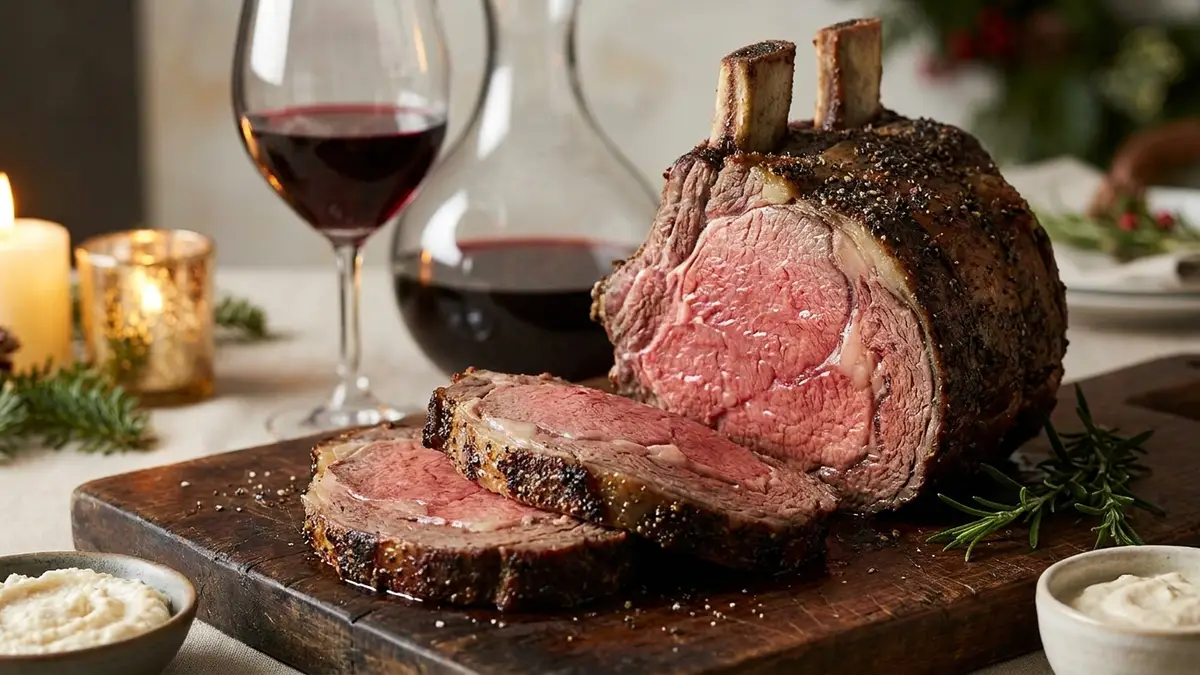
The crust adds a second layer. A standing rib roast is traditionally rubbed with salt and seasoning and slow-roasted in dry heat. The outside browns through the Maillard reaction (amino acids and sugars reacting under heat), which runs fast from about 140 to 165°C and builds roasted, savoury flavour. A red with enough body and oak-spice holds its own against that browned edge, where a light red tastes thin.
Does the Doneness of the Roast Change the Wine?
Yes. The rarer and juicier the slice, the softer the red should be; the more crust and rendered fat on the plate, the more tannin it can carry. A rare slice is mostly lean, moist protein with little browning, so a firm Cabernet can taste drying beside it.
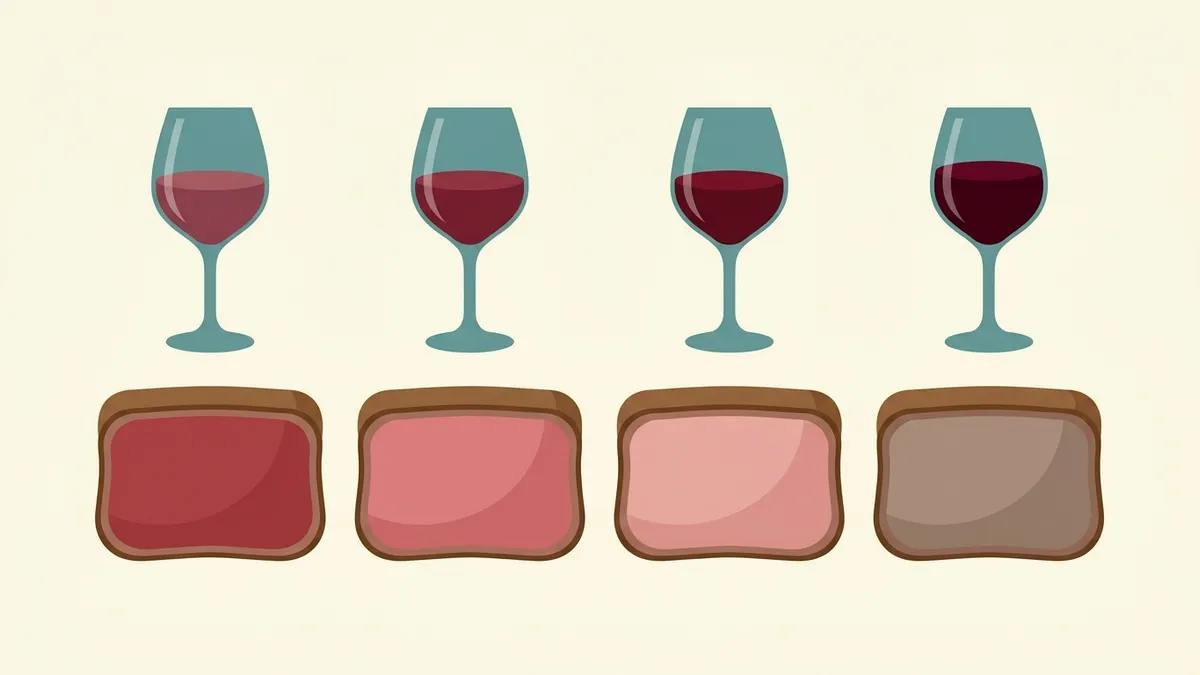
Doneness bands vary between sources, so treat these core temperatures as ranges:
- Rare, 52 to 55°C (125 to 130°F): Pinot Noir or Merlot, low tannin and plenty of fruit.
- Medium rare, 55 to 60°C (130 to 140°F): Cabernet Sauvignon or a Bordeaux blend.
- Medium, 60 to 65°C (140 to 150°F): Syrah, Malbec or Cabernet.
- Well done, 71°C (160°F) and above: a riper, rounder red such as Malbec or Merlot, since dry meat has less juice to soften tannin.
Plan the wine around the temperature the roast reaches after resting. Carryover cooking (heat inside the meat that keeps cooking it after it leaves the oven) can raise the core by 3 to 14°C (5 to 25°F), more in a large roast. If you pull the roast at rare, expect to serve medium rare, and open the Cabernet.
Which Slice Should You Plan Around, the End Cut or the Centre?
Plan around the centre slices, because most guests get them. Each slice of a rib roast holds two muscles: the round, leaner eye, and the outer, marbled cap (the spinalis dorsi). The centre is the rarest part, and the eye dominates the plate.
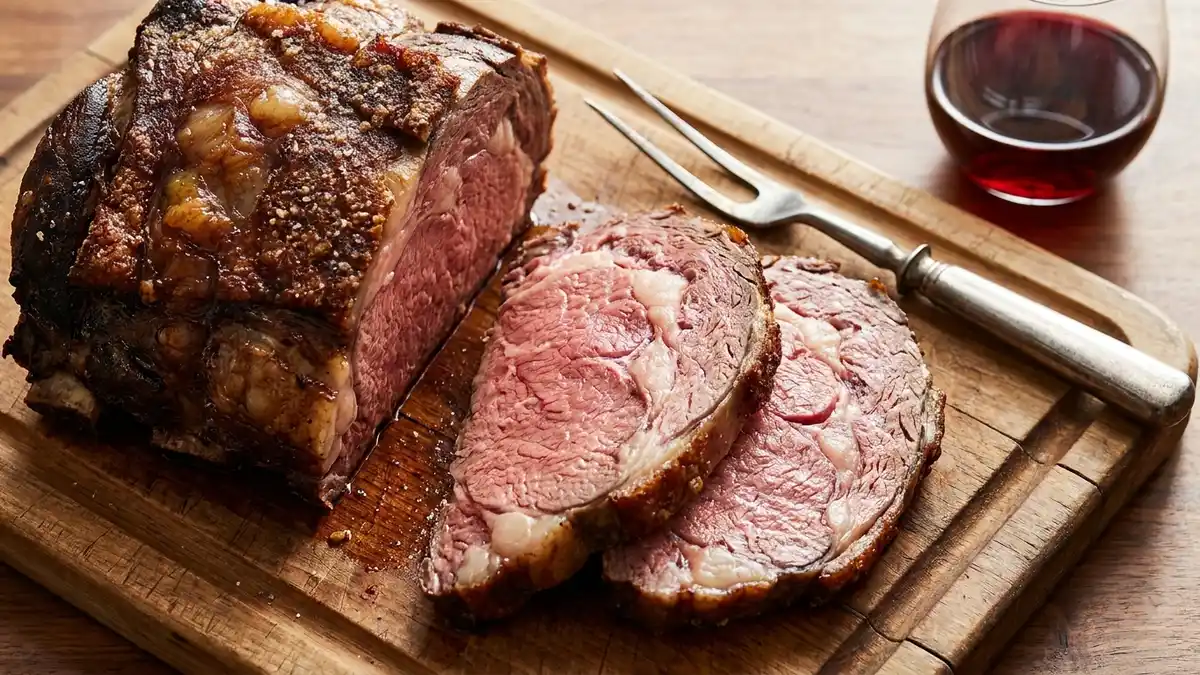
The end cuts are a different meal. They carry the most crust and rendered fat and are cooked furthest, which suits the firmest red on the table. If your family fights over the end cuts, serve them with the Cabernet. If the centre slices go to most plates, a Bordeaux blend covers both muscles.
The name does not tell you how marbled the beef is. "Prime rib" means the cut, a standing rib roast from the primal rib with two to seven ribs, and the USDA does not require it to come from Prime-grade beef. If your roast has thin marbling, lean one step softer down the table above.
How Do Horseradish, Au Jus and the Sides Change the Pick?
Horseradish and salty jus push the pick toward lower alcohol, and rich sides push it toward more acidity. Salt and spicy heat both make alcohol feel hotter, so a 15% red turns sharp next to a spoon of creamy horseradish.
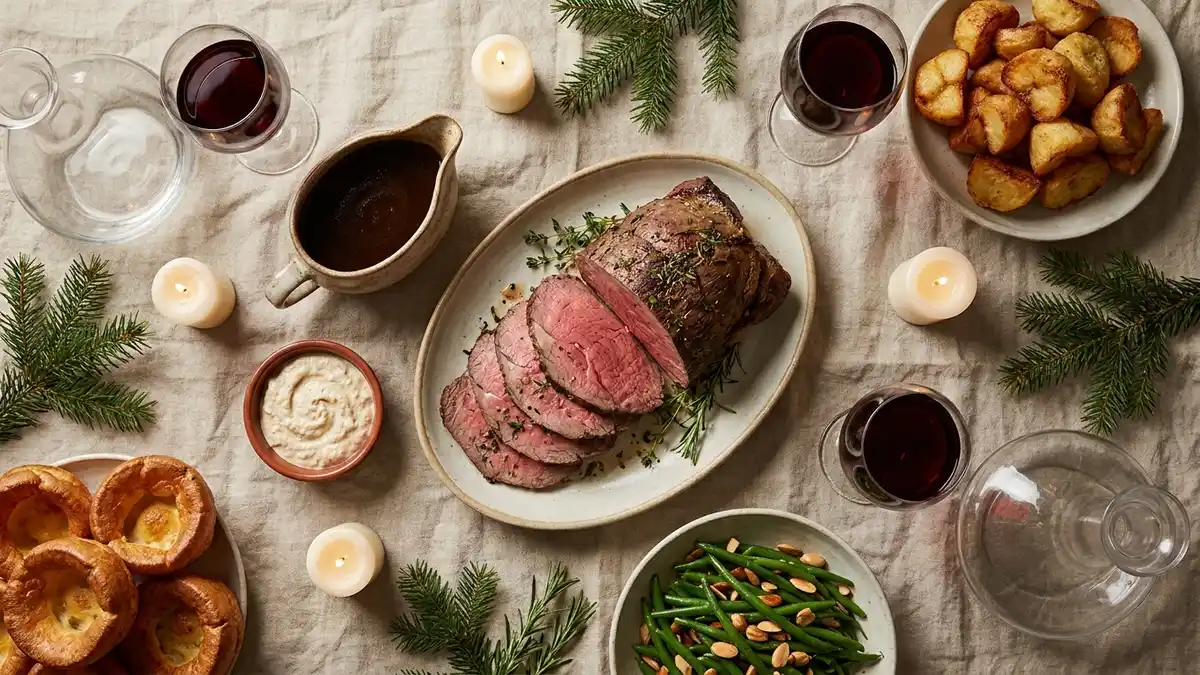
- Creamy horseradish: if it goes on most plates, keep the red at 14% alcohol or below, such as a Rioja Reserva or Merlot.
- Au jus or gravy: salty, meaty juices suit a red with ripe plum or blackberry fruit, such as Malbec, because salt makes a lean, high-alcohol red taste hot.
- Yorkshire pudding and roast potatoes: fat and starch call for acidity, which Cabernet and Syrah both carry.
The rest of the festive spread, from turkey to pudding, is covered in wine for Christmas dinner.
Can You Serve a Lighter Red, a White or a Sparkling Wine?
Yes, as a second bottle beside the main red. A lighter red, a weighty white or a dry sparkling wine each suits part of the table. The habit of pouring red with beef began as a loose assumption that heavy, red meat needs a heavy, red wine. The fat, salt and doneness on the plate matter more than the colour.
A Pinot Noir is the best lighter red, because its high acidity and low tannin suit the rare eye; the Pinot Noir guide shows which regions make the fuller styles. For guests who never drink red, pour an oaked (aged in barrels that add vanilla and toast) Chardonnay, whose weight stands up to the beef better than a light, crisp white. A dry sparkling wine works with the starters and the Yorkshire pudding, but fades beside the roast itself.
If the table is split between big-red fans and everyone else, open a Cabernet and a Pinot Noir side by side and let each guest choose by the slice.
How Many Bottles Do You Need, and When Should You Open Them?
A 750 ml bottle pours six 125 ml glasses, so plan one bottle for every two or three wine drinkers over a long dinner. That assumes two or three glasses each. Buy one extra bottle of the main red, plus one softer red for guests who prefer lighter wine.
Open young, tannic reds early. If you are serving a young Cabernet, Syrah or Nebbiolo, decant it when the roast comes out of the oven to rest: the meat and the wine are then ready at the same moment. The step-by-step is in how to decant wine. Pinot Noir and older reds go straight from bottle to glass.
Serve full-bodied reds slightly below room temperature. A warm Christmas dining room pushes a red above its best range, which makes the alcohol stand out; a short spell in the fridge corrects it. The wine serving temperature chart gives the targets.
What Should You Avoid With a Christmas Rib Roast?
Avoid reds over 15% alcohol, sweet reds and wines served too warm. High alcohol tastes hot next to horseradish and salty jus, and the burn hides the fruit. A sweet red clashes with the savoury jus and tastes cloying; sweet wines belong with dishes that are sweet too.
Very young, very tannic bottles are the other trap: with a lean, rare eye they taste like stewed tea. If your only bottle is young and firm, decant it and serve it with the end cuts and the cap.
The Rule to Remember on the Day
Firm red for crust and fat, softer red for rare and lean, lower alcohol when horseradish is out. The cut-by-cut logic for single steaks is in wine with steak, and the wider rules sit in the food pairing hub.
The Sommy app at sommy.wine teaches structure in bite-sized courses, starting with Wine 101. Tonight, buy two candidate reds, open them beside a few slices of deli roast beef, and photograph each label in Sommy's AI-guided tasting mode. Taste each red after a bite of beef, and log which one stayed soft.
Sources
Frequently Asked Questions
What red wine goes best with prime rib?
Cabernet Sauvignon or a Bordeaux blend is the classic choice for a medium-rare rib roast. Both are full-bodied with high tannin and fresh acidity, and the protein and fat in the beef make that tannin feel softer. Syrah suits a roast with a thick pepper crust. For guests who find big reds harsh, a Merlot or Pinot Noir works with the rarer centre slices.
Is prime rib the same as USDA Prime beef?
No. Prime rib is the name of the cut, a standing rib roast from the primal rib section that can hold two to seven ribs. The USDA does not require it to come from Prime-grade beef, so most prime rib is Choice or another grade. The grade changes how marbled the meat is, which shifts how much tannin the wine can carry.
Can you serve white wine with prime rib?
Yes, but choose a full-bodied white with some weight, such as an oaked Chardonnay, rather than a light, crisp one. A white has almost no tannin, so it will not tighten against the beef, and its acidity can refresh the palate after gravy and Yorkshire pudding. It works best for guests who never drink red, not as the main wine.
Does horseradish sauce change the wine choice?
It does. Spicy heat and salt make alcohol feel hotter in the mouth, so a 15% red tastes sharper next to horseradish and salty jus. If horseradish is on the table, choose a red at 14% alcohol or less with ripe fruit and moderate tannin, such as a Merlot or a Rioja Reserva, and keep the sauce portion small.
How many bottles of wine do I need for a prime rib dinner?
A 750 ml bottle pours six 125 ml glasses. Plan on two or three glasses per wine drinker over a long Christmas dinner, which works out to about one bottle for every two or three people. Buy one extra bottle of the main red, and one bottle of a softer red for guests who prefer lighter wine.
Should I decant the wine for prime rib?
Decant a young, tannic Cabernet Sauvignon, Syrah or Nebbiolo when the roast comes out of the oven to rest. The air and the pour make the first glass feel less tight, and the timing means the wine is ready when the meat is carved. Pour lighter reds such as Pinot Noir straight from the bottle.
Sommy Team
LinkedInFounder & Wine Educator
The Sommy Team is building the world's most approachable wine education app, helping beginners develop real tasting skills through structured courses and AI-guided practice.