Wine with Goose: Best Pairings for a Rich Holiday Roast

By the Sommy Team — AI-assisted, human-edited.
Updated Oct 1, 2026
Contents (10)
- Wine With Goose, in One Paragraph
- Why Does Goose Need a Different Wine Than Turkey?
- Which Wine Goes With Each Goose Plate?
- Red or White Wine With Goose?
- Which Wine Goes With Goose and Red Cabbage?
- Does Pinot Noir Go With Goose?
- What Wine Goes With Goose Stuffed With Apples and Prunes?
- Is Goose Pairing the Same as Duck?
- What Wine Goes With Martinmas Goose?
- How Should You Serve Wine With Goose?
TL;DR
Roast goose renders a great deal of fat and usually comes with sweet-sour sides, so it needs a wine with high acidity and low tannin. Pour dry or off-dry Riesling with red cabbage and fruit stuffing, Pinot Noir or Gamay with gravy and roast potatoes, and a young red for Martinmas.
Wine with goose has one job above all: stand up to fat. A roasting goose gives off far more fat than turkey or chicken, and it nearly always arrives with sweet-sour sides such as red cabbage, apple and prune. That calls for a wine with high acidity and low tannin, which in practice means Riesling or Pinot Noir.
Wine With Goose, in One Paragraph
The best wine with goose is a high-acid white or a light, low-tannin red, chosen by the side dishes. With red cabbage braised in apples and vinegar, or a stuffing of apples and prunes, pour dry or off-dry Riesling. With a plainer roast, gravy and potatoes cooked in goose fat, pour Pinot Noir or Gamay. For a Martinmas goose on 11 November, pour a young, fresh red, because that feast traditionally met the year's first wine. Heavy oak and big tannin are the main thing to avoid: they turn bitter against the sweet-sour sides that come with the bird.
Why Does Goose Need a Different Wine Than Turkey?
Goose is all dark meat under a thick layer of fat, and roasting it renders a great deal of that fat. Turkey is mostly lean white meat, so its wine only has to handle gravy and stuffing. A goose wine has to cleanse your mouth after every forkful.
That cleansing comes from acidity (the tartness that makes your mouth water). In fatty, oily or rich dishes, acidity cuts through the heaviness, so the next bite tastes as good as the first. A soft, low-acid wine does the opposite. It sits on the fat, and the meal starts to feel heavy by the second slice.
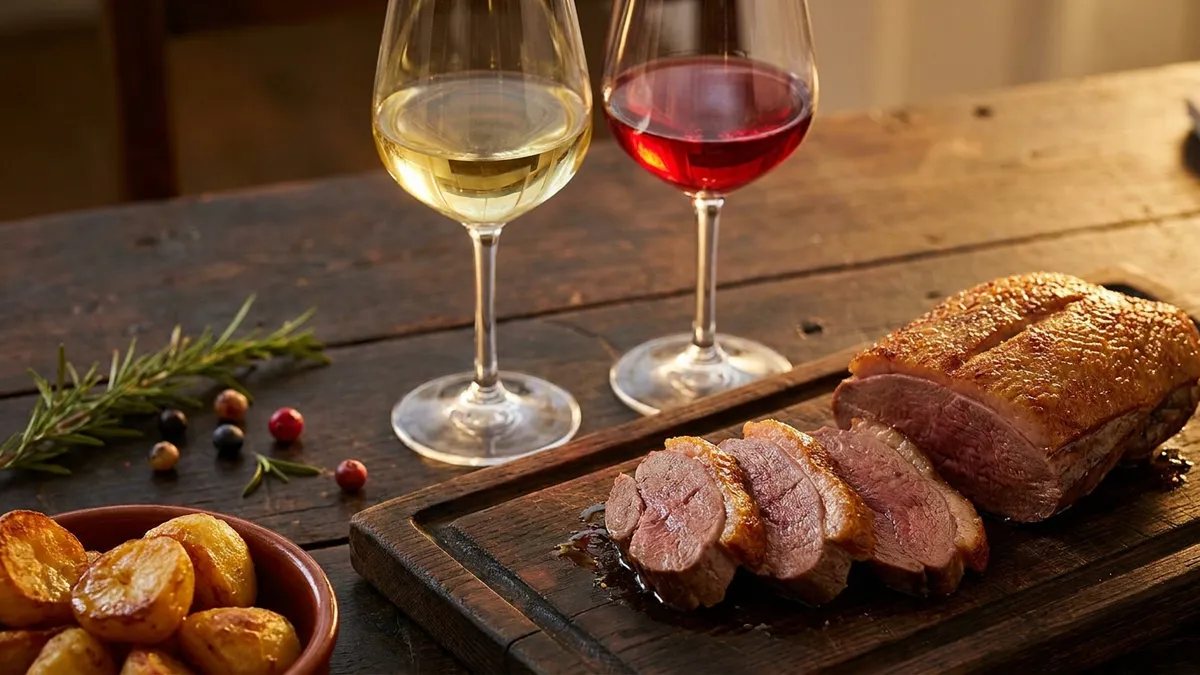
Tannin (the drying grip on your gums) is the second thing to watch. Fat and protein soften it, so the meat on its own is not the problem. The problem is the sugar and vinegar on the rest of the plate, covered in the red cabbage section below. Goose fat also roasts the potatoes, which adds even more richness to each mouthful.
Which Wine Goes With Each Goose Plate?
The side dishes steer the wine more than the bird does, because every goose plate is equally fatty. Cabbage and fruit bring sugar and vinegar, while gravy and dumplings bring savoury weight. Find what is next to the goose and pour from the third column.
| On the plate | What drives the pairing | Pour this | Why it works |
|---|---|---|---|
| German style: red cabbage, potato dumplings | Sweet-sour cabbage, fat | Dry or off-dry Riesling | High acidity meets the vinegar; a touch of sugar meets the apple |
| Apple and prune stuffing | Cooked fruit sweetness, fat | Off-dry Riesling or a riper Pinot Noir | Fruit and a little sugar keep the wine from tasting sour |
| Plain roast, gravy, potatoes in goose fat | Fat and savoury gravy | Pinot Noir or Gamay | Low tannin stays soft; acidity cuts the fat |
| Goose with noodles or plain dumplings | Starch and fat, little sugar | Dry Riesling or Pinot Noir | Either works; nothing sweet on the plate to clash |
| Martinmas goose in November | Fat, the season's new wine | Young, fresh Gamay such as Beaujolais | Fruit forward with very little tannin |
If one bottle has to cover a mixed plate with cabbage, stuffing and gravy, choose off-dry Riesling: it clashes with nothing on it. The same plate-first approach runs through the wine pairing rules for any meal.
Red or White Wine With Goose?
Both work, and the side dishes decide which. The old rule that poultry means white wine fails here, because goose is dark, rich meat that a light red handles easily. A sweet-sour side, on the other hand, can push a red wine out of balance.
The whites to buy are high in acidity. Riesling leads, and off-dry (a little sugar you can taste, without being a dessert wine) versions cope best with fruit on the plate. Our Riesling wine guide explains how to read the sweetness on a label. Avoid low-acid, heavily oaked whites, which feel heavy next to the fat.
The reds to buy are light and low in tannin: Pinot Noir and Gamay. A good test in the shop is colour. If you can see your fingers through the wine in the glass, it is light enough for goose.
If the plate carries red cabbage, apple or prune, pour white. If it carries gravy, dumplings and roast potatoes, pour red.
Which Wine Goes With Goose and Red Cabbage?
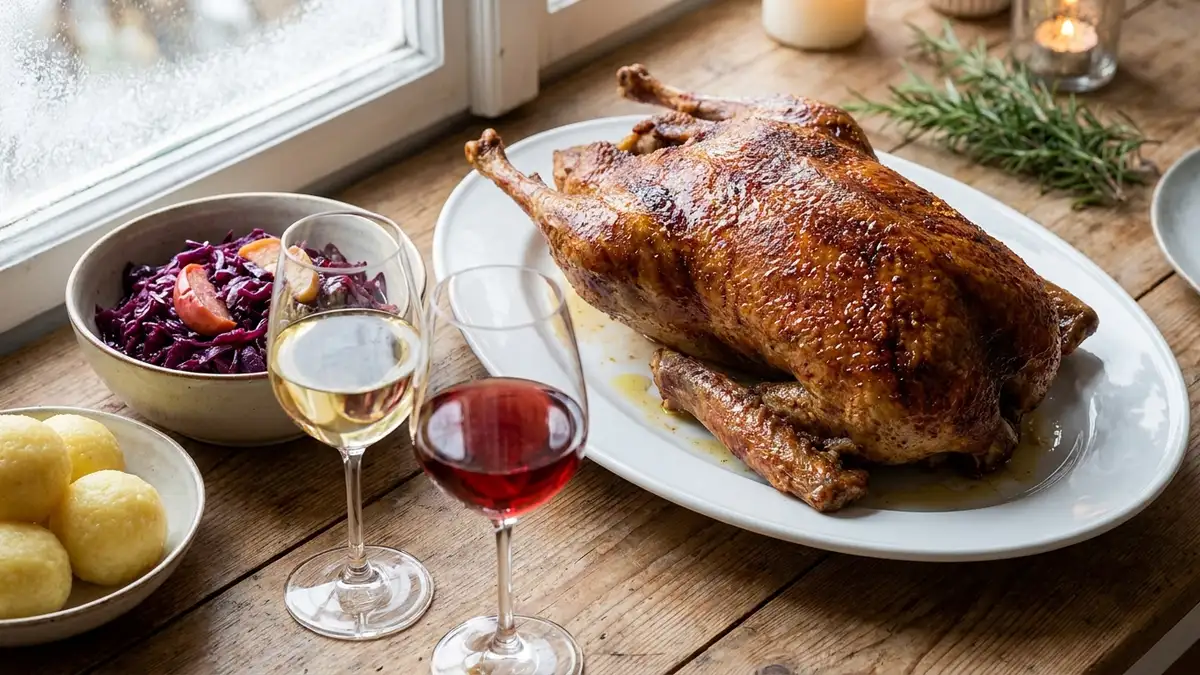
An off-dry or dry Riesling is the safest wine with goose and red cabbage, because only a high-acid wine can stand next to a dish cooked with vinegar. In Germany, roast goose is the traditional Christmas Day dish and is almost always served with red cabbage, with potato dumplings or, in some areas, noodles.
Red cabbage is braised with apples and a little vinegar to give it a sweet and sour taste. The vinegar also keeps the cabbage red. That acid is the pairing problem. A wine with less acidity than the cabbage tastes flat and thin, as if it had been watered down.
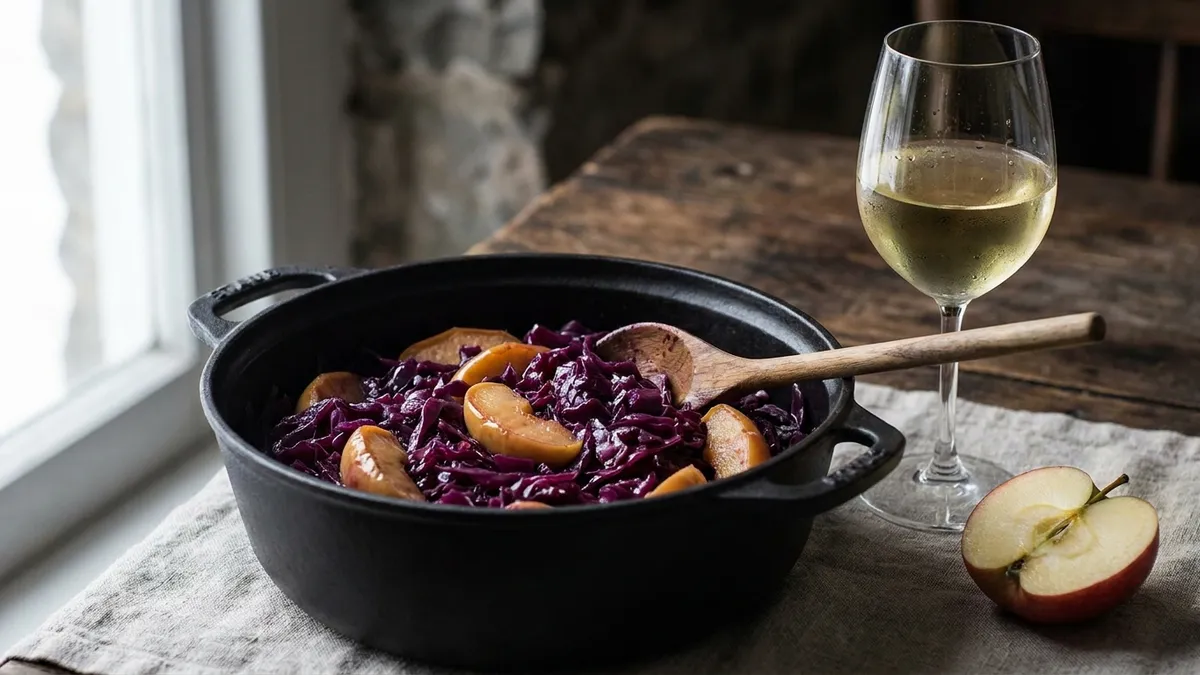
Riesling has high natural acidity, so it holds its shape against the vinegar. It also comes from the same regions that cook this dish. Food and wine traditions in one region tend to grow up together, and German Riesling with German goose and cabbage is a clear case.
If the cabbage is sweet with apple and sugar, choose off-dry Riesling. If it is sharp and sour, dry Riesling is enough. Alsace offers both, as the Alsace wine guide shows.
Gewürztraminer is a tempting alternative because it smells of lychee and spice. In warm climates it can be high in sugar with too little acidity, and then it feels heavy next to the fat. If you want it, buy one from a cool region and check that it tastes fresh; the Gewürztraminer guide covers the styles.
Does Pinot Noir Go With Goose?
Yes. Pinot Noir is the best red for goose, because its thin grape skins give it low tannin, and it keeps high acidity. The acidity cuts the fat, and the low tannin stays soft against the sweet sides. Its medium body (weight in the mouth, like skimmed versus whole milk) adds no extra heaviness to the meal.
Young Pinot Noir smells of fresh cherries, raspberries and strawberries, because the grape gives bright fruit without much grip. That fruit sits easily next to apple and prune. The Pinot Noir guide explains which regions make lighter and riper versions.
A big bird does not need a big red. Tannin binds to proteins and tastes softer with meat, which is why a firm red can look like a good idea. With sweet-sour cabbage and fruit stuffing on the same fork, though, high tannin and heavy oak taste bitter and harsh.
If the sides are sweet, choose a riper Pinot Noir from a warmer region. If the roast is plain, a cooler-climate Pinot Noir with more acidity is the better buy. Gamay is the lighter, juicier option, and the Beaujolais wine guide explains its levels from simple to cru.
What Wine Goes With Goose Stuffed With Apples and Prunes?
Pick a wine with ripe fruit and a touch of sweetness: an off-dry Riesling or a riper Pinot Noir. One classic French recipe stuffs the goose with apple wedges simmered in butter and stoned prunes. A bone-dry, lean wine tastes sour beside that stuffing.
Sweetness in the wine is a tool for contrast as well as for dessert. In food pairing, sweetness balances spice and heat and plays against salt, and crisp, salty goose skin gives it plenty to work against. Our explainer on sweet vs dry wine shows how to spot that touch of sugar on a label.
If the stuffing tastes sweeter than the wine, move one step up in sweetness. If it holds more herbs and onion than fruit, stay dry. A full holiday table with goose next to other roasts is planned in wine for Christmas dinner.
Is Goose Pairing the Same as Duck?
The logic is the same, but goose pushes it further. Both are dark, fatty birds that want high acidity and gentle tannin. Goose is larger, renders more fat, and comes as a holiday meal with heavier, sweeter sides than a duck breast on a weeknight.
That moves the choice toward the high-acid end. Pan-seared duck can take a firmer red; whole roast goose with cabbage rarely can. Our guide to wine with duck goes dish by dish, from confit to Peking duck.
If a wine worked with roast duck, buy its fresher, higher-acid version for goose: a cooler-climate Pinot Noir instead of a riper one, or a Riesling instead of a soft white.
What Wine Goes With Martinmas Goose?
A young, fresh, low-tannin red, because the custom of the day pairs the goose with the year's first wine. Martinmas, or St Martin's Day, falls on 11 November, and goose is eaten for it in most places. In the winegrowing regions of Europe, the first wine of the vintage was ready around the same time.

Beaujolais Nouveau is released on the third Thursday of November, so it lands in the same weeks. The old custom covered any new wine of the year, and Nouveau simply fits it. Nouveau is made by carbonic maceration (fermenting whole, uncrushed grapes in a tank full of carbon dioxide), which keeps most bitter tannins out of the wine. That makes it fruity and soft, a good fit for fatty meat.
If you pour Nouveau, chill it a little and drink it young. If you want more depth from the same grape, buy a Beaujolais-Villages or a cru Beaujolais.
How Should You Serve Wine With Goose?
Serve the white cool and the red slightly cool, and open both at once. Riesling should be well chilled. A light red tastes fresher a little below room temperature, so give the Pinot Noir or Gamay a short spell in the fridge. Our wine serving temperature chart gives the target range for each style.
Open the white and the red together and let guests pick by what is on their fork. Pour smaller glasses than usual, because a goose dinner lasts for hours and each glass should stay cool and fresh.
If only one bottle fits the budget, buy Riesling for a German-style table with cabbage and dumplings, and Pinot Noir for a plain roast with gravy. Our guide to wine acidity explains how to feel acidity in your own mouth, and more holiday and everyday matches sit in the food pairing hub.
The Sommy app at sommy.wine has an AI-guided tasting mode that walks you through look, smell and taste and saves your notes to a tasting journal. Tonight, buy one off-dry Riesling and one light Pinot Noir. Photograph each label in Sommy, then taste each wine against a spoonful of red cabbage.
Sources
Frequently Asked Questions
What wine goes best with roast goose?
Riesling and Pinot Noir are the two best wines with roast goose. Both have high acidity, which cuts through the large amount of fat a goose renders as it roasts. Riesling suits a plate with red cabbage or fruit stuffing, because it matches their sweet-sour taste. Pinot Noir suits a plainer roast with gravy and potatoes, because its low tannin stays soft next to the fat.
Is red or white wine better with goose?
Both work, and the side dishes decide. Goose is dark, fatty meat, so a light red is never wrong for the bird itself. Once sweet-sour red cabbage, apple or prune join the plate, a white with high acidity and a little sweetness, such as off-dry Riesling, copes better. With gravy, dumplings and roast potatoes, a low-tannin red such as Pinot Noir or Gamay is the stronger pick.
What wine goes with goose and red cabbage?
Riesling. Red cabbage is braised with apples and a little vinegar, which makes it sweet and sour at once. A wine needs at least as much acidity as the cabbage, or it tastes flat and thin beside it. Riesling has high acidity, and its off-dry styles add a touch of sugar to meet the apple. If the cabbage is very sweet, pick off-dry. If it is sharp, pick dry.
Can you drink Cabernet Sauvignon with goose?
It is a risky choice. Fat and protein soften tannin, so the goose meat alone can handle a firm red. The trouble is the side dishes: sweet-sour red cabbage, apples and prunes make a tannic wine taste bitter and harsh. If the plate is just goose, gravy and potatoes, a firm red will do. With the classic fruit and cabbage sides, a lower-tannin red such as Pinot Noir is safer.
Is wine with goose the same as wine with duck?
The logic is the same: both birds are dark and fatty, so both want high acidity and gentle tannin. Goose pushes it further. It is a larger bird that renders more fat and usually arrives as a holiday meal with heavy, sweet-sour sides. That tips the choice toward higher-acid wines such as Riesling, and toward the lighter, fresher end of Pinot Noir and Gamay.
What wine is traditional with Martinmas goose?
Young wine. Goose is eaten for Martinmas on 11 November in much of Europe, and in winegrowing regions the first wine of the year was ready around the same time. That makes a fresh, fruity, low-tannin red the historical fit. Beaujolais Nouveau, released on the third Thursday of November, shares only the timing, but its style suits the bird well.
Sommy Team
LinkedInFounder & Wine Educator
The Sommy Team is building the world's most approachable wine education app, helping beginners develop real tasting skills through structured courses and AI-guided practice.