Does Wine Expire? How Long Unopened Bottles Last (Chart)

By the Sommy Team — AI-assisted, human-edited.
Updated Oct 29, 2026
Contents (9)
- Does Wine Expire, in One Paragraph?
- How Long Does Unopened Wine Last? A Shelf Life Chart by Style
- Why Does Unopened Wine Go Downhill?
- Does Cork or Screw Cap Last Longer?
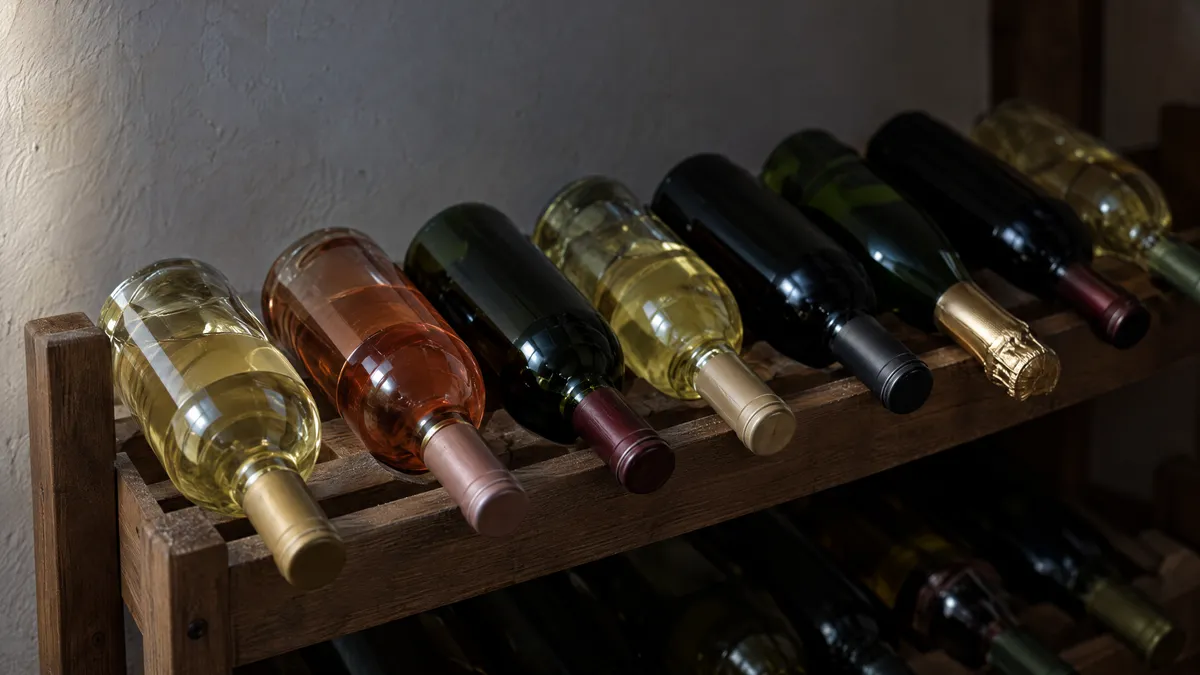
- How Does Storage Change the Clock?
- How Can You Tell If an Unopened Bottle Has Gone Bad?
- Can Old Wine Make You Sick?
- Is There an Expiry Date on a Wine Label?
- What Should You Do With a Bottle Past Its Best?
TL;DR
Unopened wine has no expiry date, but it fades. Everyday whites, rosés and reds taste best within 1 to 3 years of the vintage, premium reds 5 to 15 years, and vintage Port or Madeira for decades. Heat above about 21°C (70°F) and a leaky cork shorten every window.
The short answer to "does wine expire" is no: unopened wine has no expiry date, only a drinking window that each style closes at its own pace.
Does Wine Expire, in One Paragraph?
Unopened wine does not expire on a set date, but it does fade. Most everyday whites, rosés and reds taste best within 1 to 3 years of their vintage and lose their fresh fruit after about 4 or 5. Premium reds hold for 5 to 15 years; vintage Champagne, vintage Port and Madeira last for decades. Oxygen past the closure, storage temperature and the wine's build set the pace. Labels carry no required best-before date, so the vintage is your clock. A wine past its window usually tastes flat or of bruised apple rather than becoming unsafe.
How Long Does Unopened Wine Last? A Shelf Life Chart by Style
Most unopened wine lasts 1 to 5 years from its vintage, and only premium, vintage sparkling and fortified styles run to decades. The vintage is the harvest year printed on the label.
| Style | Best within | Holds up to | Do this |
|---|---|---|---|
| Everyday white | 1-2 years from vintage | 3-4 years | Drink the oldest first; whites fade before reds |
| Rosé | 1-3 years from vintage | About 4 years | Buy the latest vintage on the shelf |
| Everyday red | 1-3 years from vintage | 4-5 years | Open within a year of buying |
| Non-vintage sparkling | 1-3 years from purchase | About 5 years | Write the purchase date on the box or neck tag |
| Premium white | 3-8 years from vintage | 10+ years | Keep cool and steady if you plan to wait |
| Premium red | 5-15 years from vintage | 20+ years | Store on its side at 13-18°C (55-65°F) |
| Vintage Champagne | 8-15+ years from vintage | 25-40+ years | Cellar it; no rush |
| Vintage Port, Madeira | Decades | Decades to centuries | No rush; keep it cool and dark |
If a supermarket white or rosé is more than three years past its vintage, open it this month. Non-vintage sparkling wine has no year on the label, so count from the day you bought it. Which reds and whites are built for the long end of the chart is covered in which wines age well.

Quick check
One question on what you just read
You find a supermarket rosé four years past its vintage. What should you do with it?
Tap an answer to see how you did.
Why Does Unopened Wine Go Downhill?
Unopened wine fades because oxygen slowly uses up its preservative. Most wine gets a dose of sulfur dioxide at bottling, the preservative behind "contains sulfites" on the label. The Australian Wine Research Institute describes it as protecting wine against both oxygen and microbes. Oxygen that gets in, at bottling or through the closure, uses some of it up.
When the free sulfur dioxide runs low, the wine starts to oxidise: oxygen turns fresh fruit into bruised apple and nutty notes, and the colour browns. The full picture is in oxidized wine explained.
Two things set the speed. Temperature is one: the AWRI notes that oxidation reactions run more slowly at lower temperatures. The plan is the other: a wine meant for long storage needs more sulfur dioxide than one meant to be drunk soon, so winemakers dose for the window they intend.
Box wine sits at the short end: the AWRI notes that the bag inside the box lets oxygen through, so the wine can lose its sulfur dioxide quickly after packing. Treat a sealed box as drink-soon.
Does Cork or Screw Cap Last Longer?
A good screw cap lets in the least oxygen, so it keeps a fresh white closest to how it was bottled. Natural cork varies from bottle to bottle, so two corked bottles of the same wine, bought together, can age at different speeds.
A French team (Suhas and colleagues, 2025) stored Sauvignon Blanc from three appellations under 88 closures for 12 years. One screw cap with a tin-and-plastic-film liner let in about 0.05 mg of oxygen a year. One natural cork let in about 89.1 mg. Below about 0.27 mg a year, the wines kept their signature aromas; above about 0.82 mg, they risked noticeable oxidation.
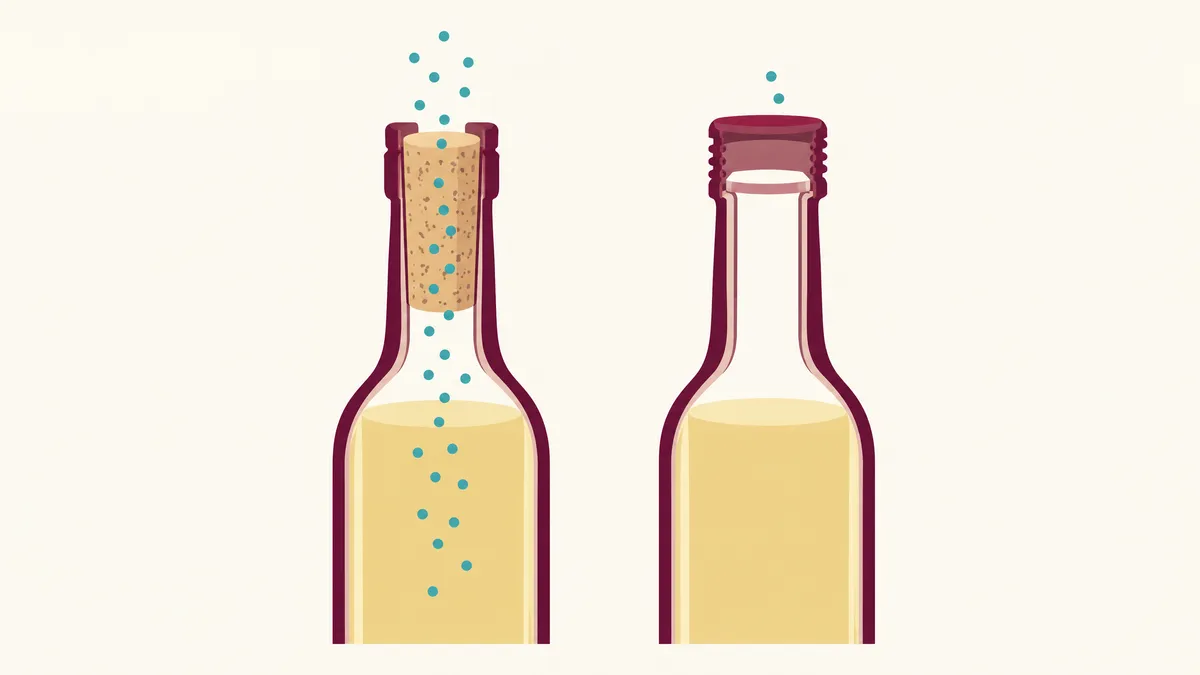
The 28 natural corks spread from about 0.1 to 89.1 mg a year. If you want to hold a white past its window, choose one under a screw cap. The trade-offs for reds are in screw cap vs cork.
How Does Storage Change the Clock?
Heat is the fastest way to shorten the window. VinePair puts the start of temperature damage at about 21°C (70°F) and the ideal storage range at 13 to 18°C (55 to 65°F). A delivery truck in summer can pass 38°C (100°F).
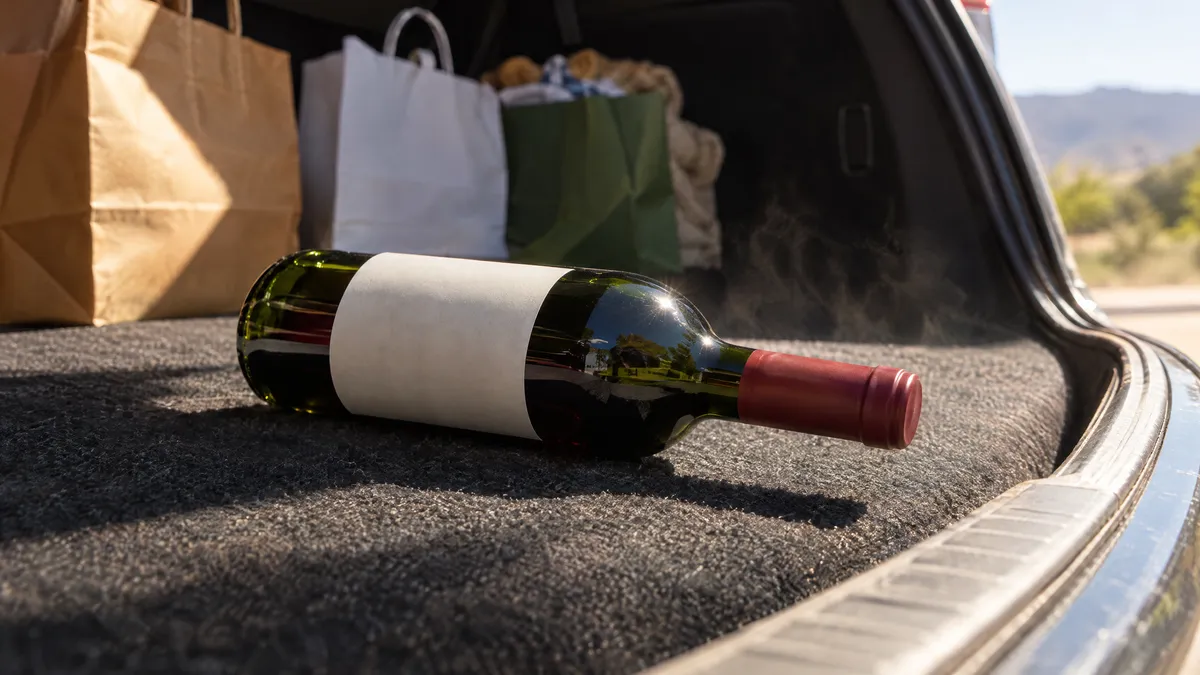
If the only spot you have sits above 21°C for weeks in summer, treat everything in it as drink-soon, starting with the whites and rosés. Lay corked bottles on their side so the cork stays moist and does not shrink. Darkness matters too: keep bottles out of direct light.
An interior cupboard is usually the coolest spot in a flat; how to store wine at home has the setup, and cooked wine explains what heat does to the taste. Side versus upright is settled in horizontal vs vertical storage, and the serving and storage hub covers fridges, racks and serving temperatures.
How Can You Tell If an Unopened Bottle Has Gone Bad?
Check the cork, the capsule and the colour before you open the bottle, then let the smell decide. A bottle that fails one of the first three checks is the one to open next, because only the smell can settle it.
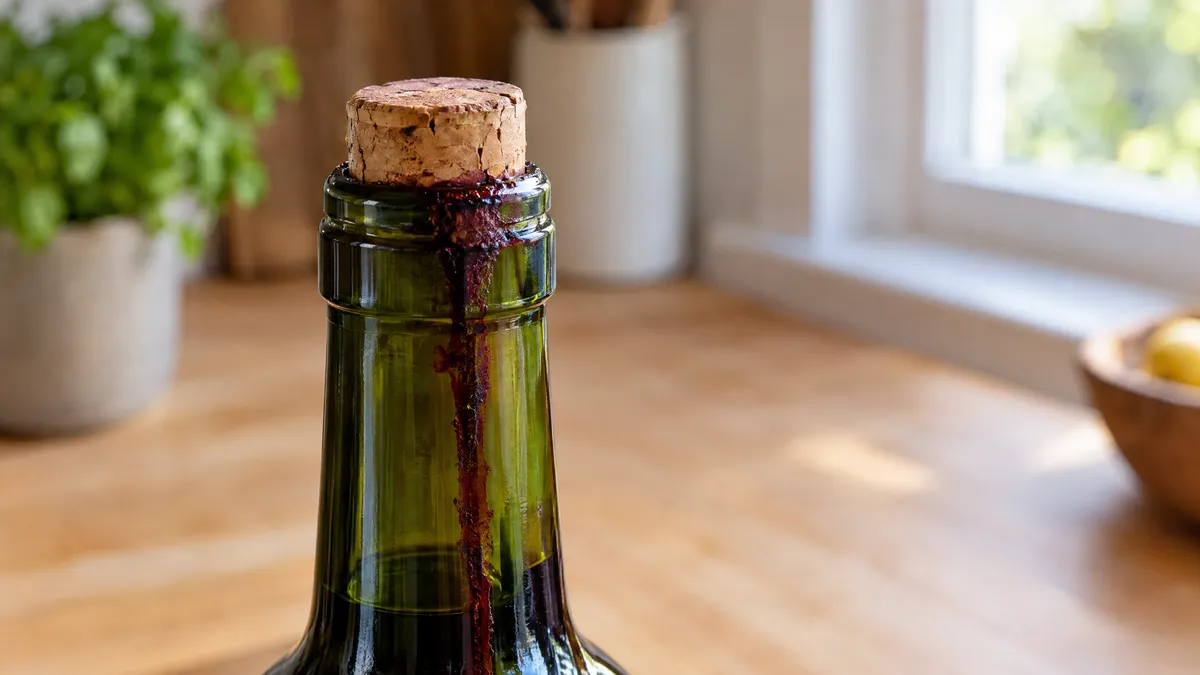
- The cork. A dry, shrunken or pushed-up cork is the first sign to look for.
- The capsule. A sticky foil or a dried stain down the neck means wine has leaked out and air has come in.
- The colour. A young white turning deep gold or amber, or a young red turning brick brown, has likely oxidised. Wine colour and age shows the shades.
- The smell. Once open, vinegar, bruised apple or stewed prune where fresh fruit should be means the wine is past it.
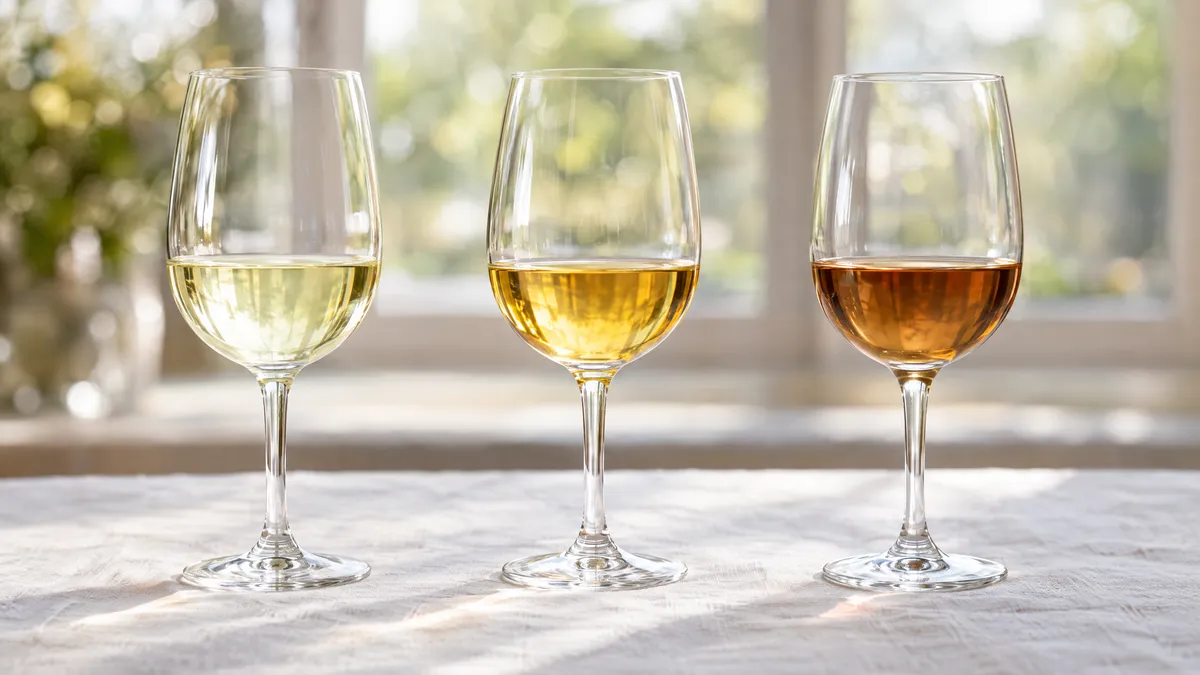
The full checklist, with what each smell means, is in has your wine gone bad.
Can Old Wine Make You Sick?
Old wine is not known to cause food poisoning the way spoiled food can. The usual cost of a tired bottle is a dull or sour glass. If it smells sharply of vinegar or nail polish remover, pour it out rather than drink it.
Is There an Expiry Date on a Wine Label?
No. Neither US nor EU rules require a best-before date on wine, so the vintage is the date to read. The US labelling rules list brand name, wine type, the bottler's name and address, volume and alcohol as mandatory, plus a sulfite statement when sulfites are present.
The EU food labelling regulation exempts wine, sparkling wine and any drink of 10% alcohol or more from a "date of minimum durability".
If the back label gives a suggested window ("drink now to 2030"), follow it over the chart, because it is the producer's own estimate. The harvest year itself is explained in what is wine vintage.
What Should You Do With a Bottle Past Its Best?
Taste it first, then sort it: a small sip tells you whether the bottle has only lost some fruit or has turned sour like vinegar. Pour the sip into a clean, dry glass so no stale cupboard smell gets mixed in.
- Faded but clean: less fruit, no off smells. Drink it tonight with a salty, savoury dinner rather than on its own.
- Flat but sound: cook with it in a stew or risotto. The cooking wine guide shows which dishes take which style.
- Vinegar or nail polish: pour it out.
- Vintage Port or Madeira: open it; it is built for long storage.
Find the oldest everyday bottle you own tonight and check its vintage against the chart. If it is near the end of its window, open it with dinner and log its colour and first smell in the Sommy tasting journal.
Sources
- Vinovest: Does Wine Expire? Shelf life of unopened wine by type
- Australian Wine Research Institute: Revisiting sulfur dioxide use
- WineLand: OTR and long-term ageing of Sauvignon blanc wines (summary of Suhas et al., Food Packaging and Shelf Life, 2025)
- VinePair: How much heat does it take to ruin wine? Not much
- Regulation (EU) No 1169/2011, Annex X: date of minimum durability
Frequently Asked Questions
Does unopened wine expire?
Not on a fixed date. Unopened wine slowly loses its fresh fruit as oxygen seeps in and the preservative added at bottling runs out. Most everyday whites, rosés and reds are best within 1 to 3 years of the vintage and fade after about 4 or 5. Premium reds, vintage Port and Madeira last far longer.
How long does unopened wine last in a pantry?
As long as its style allows, provided the pantry stays cool. A cupboard that holds a steady 13 to 18°C (55 to 65°F) keeps everyday wine on its normal 1 to 3 year schedule. A cupboard next to the oven or a sunny wall can pass 21°C (70°F), where heat damage starts, so drink anything stored there first.
Is there an expiration date on wine bottles?
No. US labelling rules list brand name, wine type, bottler, volume and alcohol as mandatory, and no date. EU food labelling rules exempt wine, sparkling wine and any drink of 10% alcohol or more from a best-before date. The date to read is the vintage, the year the grapes were picked.
Does screw cap wine last longer than cork?
For keeping wine fresh, often yes. In a 12-year study of 88 closures on French Sauvignon Blanc, the tightest screw cap let in about 0.05 mg of oxygen a year, while one natural cork let in 89.1 mg. Natural corks varied the most, so two corked bottles of the same wine can age differently.
Can you drink wine that is 10 years old?
If it was made to age, yes. A premium red, vintage Champagne or Port can be at its best after 10 years in a cool place. A 10-year-old supermarket white or rosé is far past its window and will likely taste flat or of bruised apple. Taste a small sip and decide from that.
Can you drink wine that got hot in a car?
Usually it is drinkable, but it may taste dull. Heat damage starts at about 21°C (70°F), and a parked car or delivery van can pass 38°C (100°F). Check whether the cork has been pushed up or wine has leaked under the capsule. If the wine smells of stewed jam instead of fresh fruit, it has cooked.
Sommy Team
LinkedInFounder & Wine Educator
The Sommy Team is building the world's most approachable wine education app, helping beginners develop real tasting skills through structured courses and AI-guided practice.