Chilled Red Wine Chart: Which Reds to Chill and for How Long

By the Sommy Team — AI-assisted, human-edited.
Updated Nov 3, 2026
Contents (10)
- Which Reds to Chill, in One Paragraph
- Chilled Red Wine Chart: Target and Fridge Time by Style
- Which Red Wines Are Good Served Chilled?
- Which Reds Should You Not Put in the Fridge?
- How Long Does Red Wine Take to Chill?
- Why Does Cold Red Wine Taste Bitter or Flat?
- Should Lambrusco and Other Sparkling Reds Be Served Cold?
- What If You Chilled the Red Too Much?
- Is Chilled Red Only for Summer?
- Try It Tonight
TL;DR
Chill a red by its tannin and oak. Lambrusco goes coldest, at 8 to 10°C. Pale, tart reds such as Gamay want 50 to 55°F, about 30 to 45 minutes in the fridge. Pinot Noir and medium reds want 55 to 60°F. Tannic, oaked reds such as Cabernet get 20 minutes at most.
Chilled red wine works best for reds with little tannin and little oak. The paler and tarter the red, the colder it can go: Gamay takes 30 to 45 minutes in the fridge, while a grippy, oaked Cabernet takes 20 minutes at most.
Which Reds to Chill, in One Paragraph
Chill a red by how much tannin (the drying grip on your gums) and oak it carries. Lambrusco and other sparkling reds go coldest, at 8 to 10°C (46 to 50°F). Pale, light-bodied reds (body is weight, like skimmed versus whole milk) want 50 to 55°F (10 to 13°C). Gamay, Cinsault and Schiava get there in 30 to 45 minutes in the fridge.
Pinot Noir and medium reds such as Merlot want 55 to 60°F (13 to 15°C), about 20 to 30 minutes. Tannic, oaked reds such as Cabernet Sauvignon, Nebbiolo and Malbec stay at 60 to 68°F (15 to 20°C), which means 20 minutes at most, and only when the room is warm.
Chilled Red Wine Chart: Target and Fridge Time by Style
Chill sparkling reds coldest, light juicy reds next, Pinot Noir and medium reds a little, and full oaked reds barely at all. The times assume a bottle that starts on a kitchen counter near 70°F.
| Style | Grapes and examples | Serve at | Fridge time from a 70°F room | Verdict |
|---|---|---|---|---|
| Sparkling red | Lambrusco, from secco (dry) to dolce (sweet) | 46–50°F (8–10°C) | Up to 1h30, or 10 min in ice water | Pour straight from the fridge |
| Light, juicy, low tannin | Gamay (Beaujolais), Cinsault, Schiava | 50–55°F (10–13°C) | 30–45 min | Chill it, then drink it as it warms |
| Light with more structure, and medium reds | Pinot Noir, Cru Beaujolais, Merlot, Grenache | 55–60°F (13–15°C) | 20–30 min | A light chill only |
| Full, tannic, oaked | Cabernet Sauvignon, Nebbiolo, Malbec, Syrah | 60–68°F (15–20°C) | 20 min at most, only if the room is warm | Never fridge-cold |
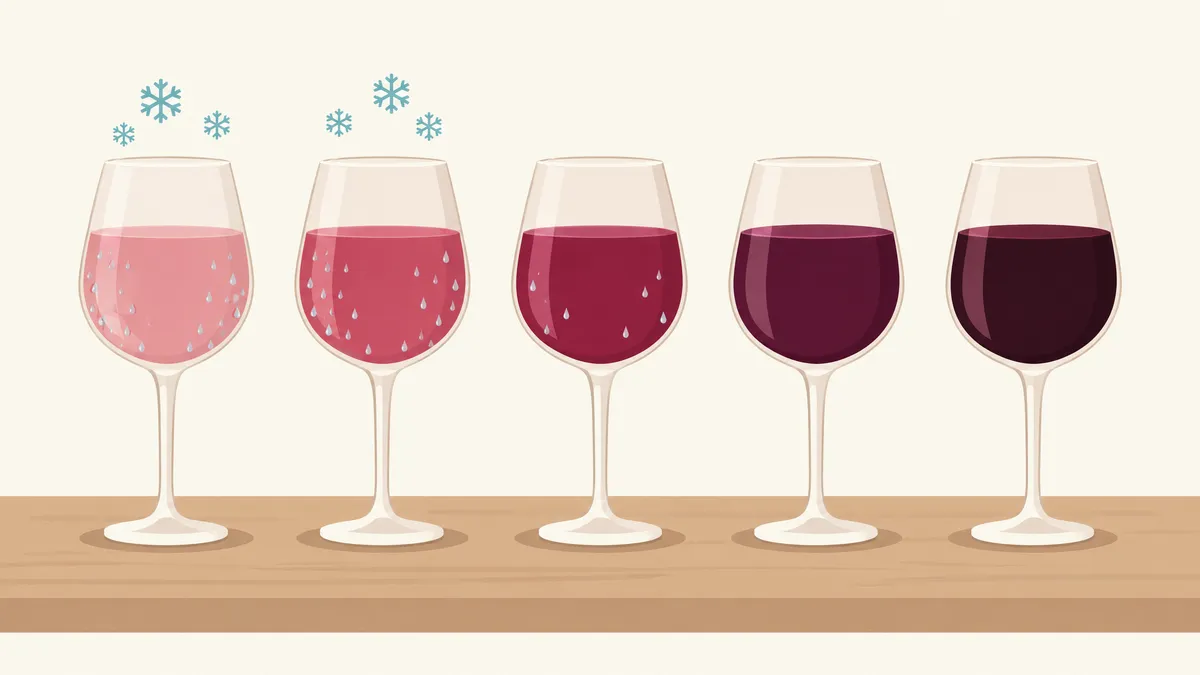
If a red is see-through and barely dries the gums, it gets 30 to 45 minutes. If it grips, it gets 20 minutes at most. Every other style, white, rosé and sparkling, sits in the full wine serving temperature chart.

Quick check
One question on what you just read
Your kitchen is warm. Which red should get 20 minutes in the fridge at most?
Tap an answer to see how you did.
Which Red Wines Are Good Served Chilled?
Reds that are pale, tart and soft on the gums chill well: Gamay, Cinsault, Schiava, light Pinot Noir and dry Lambrusco. Quebec's wine retailer SAQ lists the traits: lighter body, thirst-quenching acidity (the tartness that makes your mouth water), less tannin, little oak and shorter vatting (less time on the skins).
Three questions sort any red in the shop or at the table:
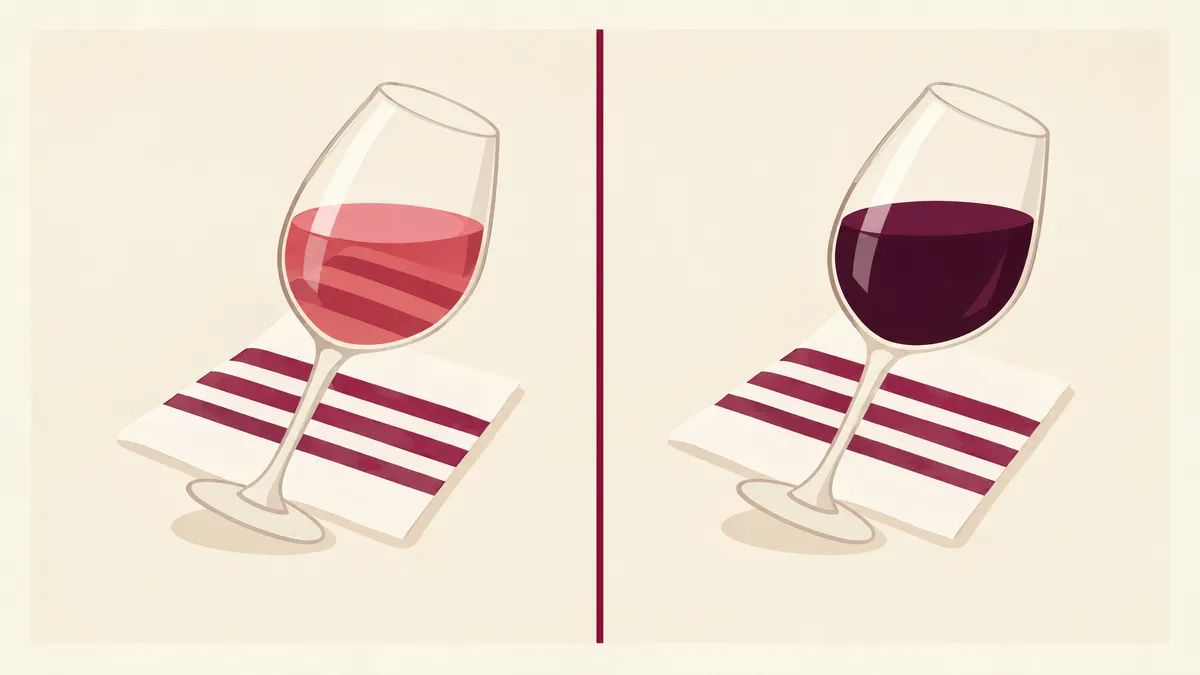
- See-through. Tilt the glass over a striped napkin. If the stripes show, the grape has thin skins, which give little colour and little tannin.
- Grip. Take a sip and press your tongue to your gums. A rough, furry feeling is tannin.
- Oak. Oak is barrels adding vanilla, toast or spice. A label that says "oak aged" or "barrel aged", or a vanilla smell, counts against a chill.
If two of the three checks point light, chill it to 50 to 55°F. If it grips and smells of oak, keep it at cellar cool.
Gamay is the model. The winery Samsara describes it as "naturally low in tannins, high in acidity", which is why it tastes of fresh cherry and raspberry even when cold. The Gamay wine guide covers the grape, and the Cinsault and Schiava guides cover two more pale reds that behave the same way.
Grenache is the edge case. Samsara still calls it chillable, but it often lands at 14 to 15% alcohol. Give it the Pinot Noir treatment, 20 to 30 minutes, so the fruit stays fresh without the alcohol taking over as it warms.
Which Reds Should You Not Put in the Fridge?
Keep tannic, oaked reds such as Cabernet Sauvignon, Nebbiolo and Malbec out of a long chill, because cold turns their tannin bitter and their oak hollow. Samsara puts it plainly: when a high-tannin red is chilled, its grip turns "into something bitter and astringent", and oak-heavy reds "tend to feel hollow".
SAQ gives the same reason from the other side. Wood contact leaves a trace that can taste bitter when cold, which is one reason reds are served warmer than whites.
These reds still need a cool room. Wine Folly sets full reds at 60 to 68°F, and a heated home near 70°F sits above that range. Twenty minutes in the fridge is the fix when the bottle has been near the oven. If the label says oak aged, or the wine smells of vanilla and toast, stop there. What are tannins explains where the grip comes from, and what does oaked mean covers the label words.
How Long Does Red Wine Take to Chill?
From a 70°F room, a light red needs 30 to 45 minutes in the fridge, a sparkling red up to 1h30, and any red about 10 minutes in a bucket of ice water. Published times disagree because they aim at different targets.
Twenty to 30 minutes brings a red down to 55 to 60°F, the Pinot Noir range in our serving temperature chart. Samsara's 30 to 45 minutes aims colder, at the 50 to 55°F sweet spot for Gamay-style reds. SAQ's "about 1h30" in the fridge gets close to fridge-cold, so SAQ then takes the bottle out 30 minutes before serving; without that rest, it suits only Lambrusco. SAQ also notes that "some 10 minutes in an ice bucket is just as effective", because ice water touches every part of the bottle and pulls heat out far faster than air.
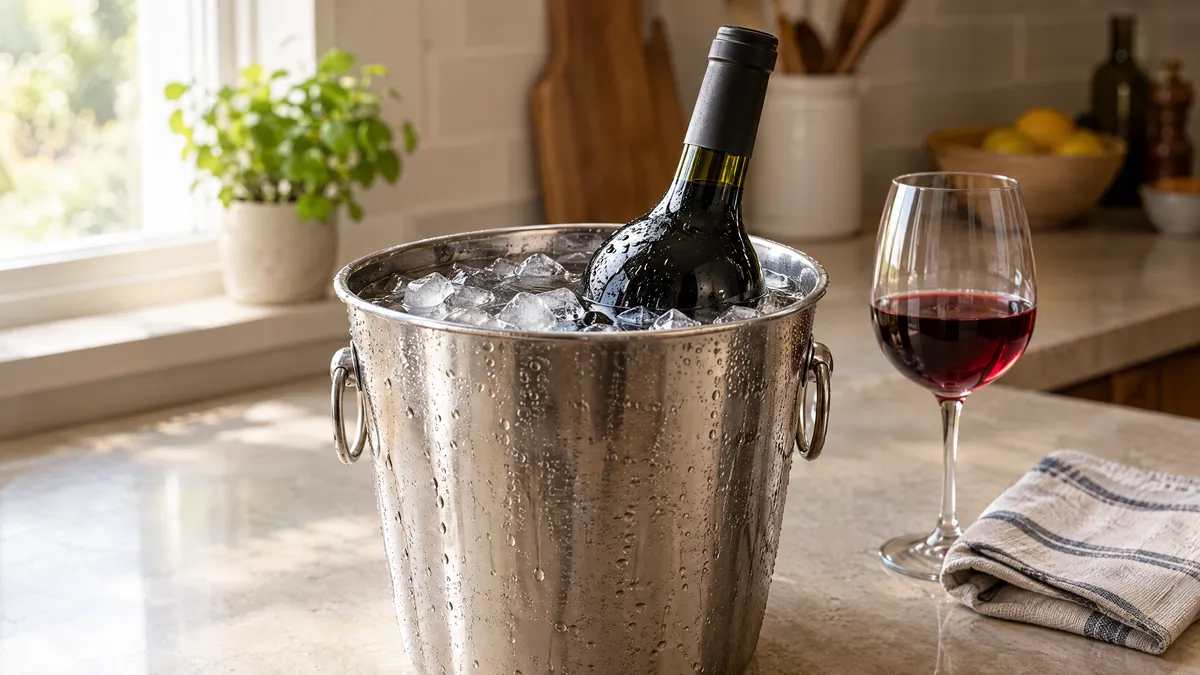
The starting point changes the clock too. A bottle from a cool cellar needs half the time, or none. If guests arrive in 10 minutes, use ice water; if they arrive in an hour, use the fridge and set a timer. The wine chiller bucket guide gives the fill levels.
Before you pour, hold the bottle in your palm. A chilled light red should feel cool, like a glass of tap water. If it feels as cold as a white straight from the fridge, it went too far.
Why Does Cold Red Wine Taste Bitter or Flat?
Cold mutes aroma and sweetness, so the tannin and acid are left on their own. SAQ warns that serving reds too cold means "we deprive ourselves of their aromatic potential and numb our taste buds". In a low-tannin red, what is left is tart cherry and fresh acidity. In a tannic red, what is left is the bitter, drying grip.
Flat is the other symptom. Wine Folly's fix for a red with no flavour is to warm it, and it notes the problem is common in reds stored in the fridge. A bottle kept there for days pours at about the temperature of a cold white, far below any red on the chart.
Cold also covers faults. Wine Folly notes that lower-quality wines do well served cooler because it mutes potential flaws. Chilling hides a flaw; it does not remove one, and the same cold hides the fruit. The full mechanism, with a three-glass experiment, is in how temperature affects wine taste.
Should Lambrusco and Other Sparkling Reds Be Served Cold?
Yes, and colder than any still red. The Lambrusco producers' consortium recommends 8 to 10°C, which is 46 to 50°F and close to a white wine. Lambrusco is a frizzante (lightly sparkling) red from Emilia-Romagna and Lombardy in northern Italy, and cold keeps its bubbles fine and its acidity fresh.
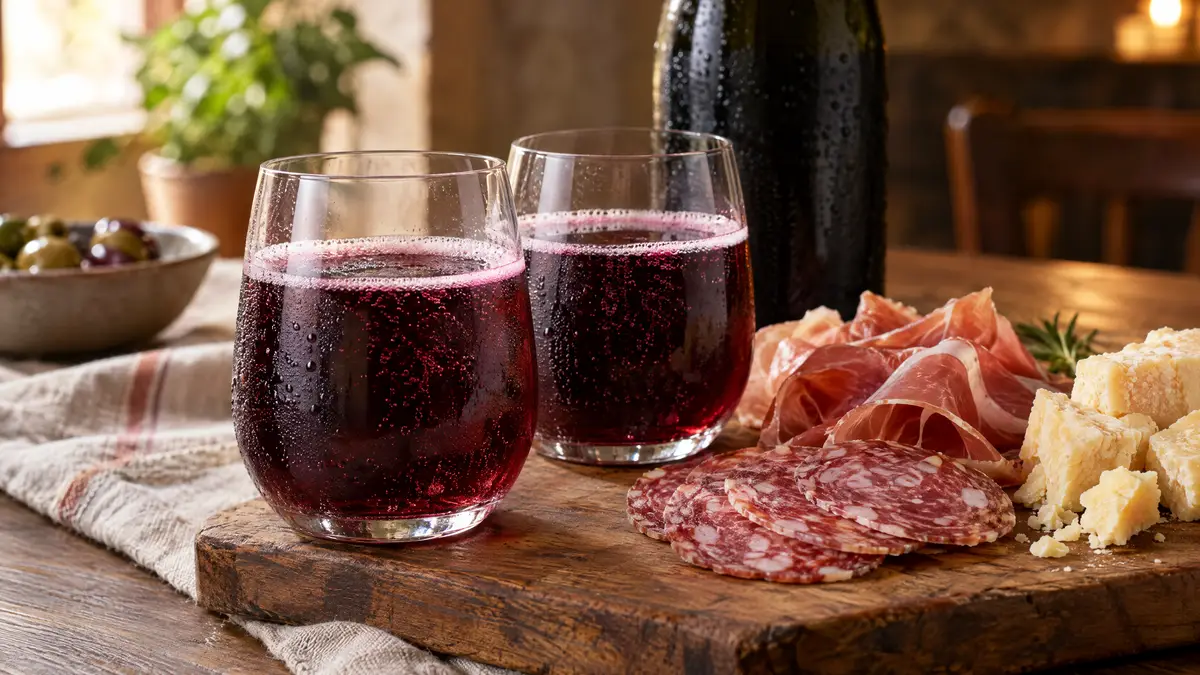
Sweetness does not change the target. Lambrusco runs from secco (dry) to dolce (sweet), and the label word tells you which. Both get the same 8 to 10°C. If the bottle has been in the fridge for a few hours, pour it straight away. If it is warm, sink it in ice water for at least 10 minutes before opening, or it will foam over. Styles, grapes and food are in the Lambrusco wine guide.
What If You Chilled the Red Too Much?
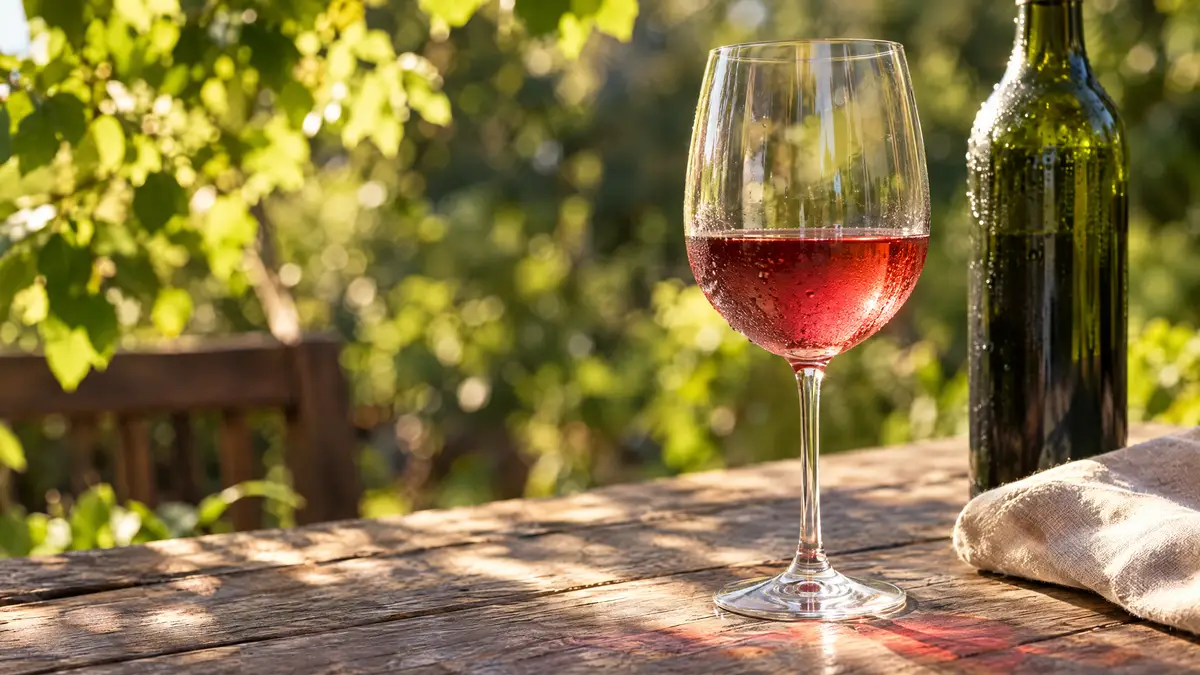
Pour it and wait, or cup the bowl of the glass in your hands. A light red that came out at fridge temperature reaches its range after a few minutes in the glass. A full red that went fridge-cold needs more help, because its tannin feels hard until it reaches its 60 to 68°F range.
For that full red, stand the bottle in a bowl of lukewarm water rather than hot, which can cook the fruit. How to warm up red wine gives the methods in order of speed.
Pour smaller glasses of a red that started too cold. A small pour warms faster than a full glass, and each refill comes from a bottle that has had more time on the table.
Is Chilled Red Only for Summer?
No. The best-known chilled red, Beaujolais Nouveau, is released on the third Thursday of November and served cool. Gamay makes up nearly 98% of the vineyards in Beaujolais, and much of it is made by carbonic maceration (fermenting whole, uncrushed bunches), which gives a light, fruity red.
Chilling a red answers the wine's structure, not the season: a low-tannin red tastes fresher cool in any month, and a tannic red tastes harder cold even in August. Beaujolais Nouveau explained covers the release, and more styles sorted by how they are made sit in the wine styles hub.
Try It Tonight
Put a bottle of Gamay or Beaujolais-Villages in the fridge for 30 minutes. Pour the first glass, then pour a second 15 minutes later, and taste them side by side. Note which one smells of more cherry and which one feels fresher. Sommy, at sommy.wine, has an AI-guided tasting mode: photograph the label, follow the look, smell and taste steps, and log both glasses in your tasting journal.
Sources
Frequently Asked Questions
Should red wine be chilled?
Most reds should be served cooler than a modern room, and light reds should be served properly cool. A pale, tart, low-tannin red such as Gamay tastes fresher at 50 to 55°F, about 30 to 45 minutes in the fridge. A tannic, oaked red such as Cabernet Sauvignon only wants to come down to 60 to 68°F, so 20 minutes is the limit.
Which red wines are best served chilled?
The reds that chill best are light in body, high in acidity, low in tannin and made with little or no oak. Gamay from Beaujolais is the classic example. Cinsault, Schiava, light Pinot Noir and Lambrusco work the same way. A quick test: if you can see through the glass and the wine barely dries your gums, it will take the fridge.
How long should you chill red wine in the fridge?
From a room near 70°F, give a light red 30 to 45 minutes to reach 50 to 55°F. Pinot Noir and medium reds need about 20 to 30 minutes. Lambrusco can stay up to about an hour and a half. If time is short, a bucket of ice and water does the job in about 10 minutes.
Can you put Cabernet Sauvignon or Merlot in the fridge?
Briefly. Cabernet Sauvignon is tannic and usually oaked, so a long chill makes it taste bitter, astringent and hollow. If your room is warm, 20 minutes in the fridge brings it to its 60 to 68°F range. Merlot is softer and can take 20 to 30 minutes. Neither should be poured fridge-cold.
Why does cold red wine taste bitter?
Cold mutes a red's aroma and its sense of fruit, so the tannin and acid are left exposed. In a tannic red, that exposed tannin reads as bitter and drying. Oak that tasted of vanilla and spice at cellar temperature can taste flat and woody. Light, low-tannin reds have little to expose, which is why they chill well.
Is Lambrusco served chilled?
Yes, and colder than any still red. The Lambrusco producers' consortium recommends serving it at 8 to 10°C, about 46 to 50°F, which is close to a white wine. That holds for dry secco and sweet dolce alike. Cold keeps the bubbles fine and the acidity fresh, and a warm Lambrusco foams hard and tastes rough.
Does chilling a cheap red wine make it taste better?
It can make it taste cleaner, because cold mutes aromas, including the faulty ones. Wine Folly notes that lower-quality wines do well served cooler for exactly that reason. The same chill also mutes the fruit, so it hides flaws without adding anything. A light red chills well whatever its price; a cheap tannic red still turns bitter.
Sommy Team
LinkedInFounder & Wine Educator
The Sommy Team is building the world's most approachable wine education app, helping beginners develop real tasting skills through structured courses and AI-guided practice.