Beaujolais Nouveau: The Wine That Arrives Every November

By the Sommy Team — AI-assisted, human-edited.
Updated Oct 1, 2026
Contents (10)
- What Is Beaujolais Nouveau?
- When Is Beaujolais Nouveau Released?
- Which Beaujolais Should You Buy in November?
- How Is Beaujolais Nouveau Made So Fast?
- What Does Beaujolais Nouveau Taste Like?
- Is Beaujolais Nouveau Good Wine?
- How Should You Serve Beaujolais Nouveau?
- What Food Goes With Beaujolais Nouveau?
- How Long Does Beaujolais Nouveau Last?
- Why Is Nouveau Released on One Day?
TL;DR
Beaujolais Nouveau is a Gamay red from Beaujolais, France, released at 00:01 on the third Thursday of November, only weeks after harvest. Whole-bunch fermentation makes it purple, fruity and nearly free of tannin, with a banana smell. Serve it cool, around 12°C, with salty bistro food, and drink it within a few months.
Beaujolais Nouveau is a Gamay red that goes from vine to shop in a few weeks, released at one minute past midnight on the third Thursday of November. Fermenting whole bunches of grapes is what makes that speed possible. The same method gives the wine its purple colour, its soft feel and the banana smell it is famous for.
What Is Beaujolais Nouveau?
Beaujolais Nouveau is a red wine from the Beaujolais region of France, made from Gamay and sold only weeks after the grapes are picked. The grape's full name is Gamay noir à jus blanc: black skin, clear juice. Beaujolais is an appellation (a protected place name with its own rules) just south of Burgundy.
Nouveau is a vin de primeur, French for a wine sold in the same autumn it was harvested. It is light, bright and made to be opened within months. Most of the region's wine, including its best, is made more slowly and sold later under other names. The full region is mapped in the Beaujolais wine guide.
When Is Beaujolais Nouveau Released?
Beaujolais Nouveau goes on sale at 00:01 on the third Thursday of November, a date set by French law. In 2026 that is Thursday 19 November. Shops and restaurants can receive stock earlier, but they cannot sell or pour it before midnight.
The Thursday is deliberate. A release late in the week runs straight into a weekend, which is when most first bottles get opened. If you want the freshest bottle, buy in the first weeks after release, when the fruit is at its loudest.
Which Beaujolais Should You Buy in November?
Buy Nouveau for the release day and the weeks after it; buy a cru (one of ten named villages with the region's top status) when you want a Beaujolais that holds up for years. All five labels below are Gamay. They differ in where the grapes grow and how long the wine stays in the cellar.
| Label | Where from | On sale | Style | Buy it for |
|---|---|---|---|---|
| Beaujolais Nouveau | The Beaujolais appellation | Third Thursday of November, harvest year | Purple, very light, banana and cherry | Release week, parties, an easy weeknight red |
| Beaujolais-Villages Nouveau | 38 northern villages around the crus | Same November day | Same quick method, a little more fruit | Release week when you want a touch more depth |
| Beaujolais | The wider appellation | Later, no November rush | Light, fresh red cherry | Picnics, lunch, a red to chill in summer |
| Beaujolais-Villages | The same northern villages | Later | Light to medium, juicier | Roast chicken, pork, everyday dinners |
| Cru Beaujolais | Ten named villages | Later; many age for years | Firmer, deeper ruby, more structure | Dinner with friends, a bottle to keep |
If the label says Beaujolais-Villages Nouveau, expect slightly more concentrated fruit for little more money. If you want a bottle for Christmas next year, skip Nouveau and buy a cru. The grape behind all five is profiled in the Gamay wine guide.
How Is Beaujolais Nouveau Made So Fast?
Whole grape bunches ferment inside their own skins first, which gives colour and fruit without much tannin (the drying grip on your gums), so the wine needs no time to soften. A normal red is crushed, left on its skins for weeks, then often aged to let that grip relax. Nouveau skips both steps.
The method is carbonic maceration (whole berries fermenting in a tank full of carbon dioxide). With no oxygen around them, the intact berries start turning their own sugar into alcohol from the inside. Beaujolais uses the semi-carbonic version. The weight of fruit crushes the bottom layer, and that juice ferments with yeast. The gas it gives off fills the tank around the intact bunches on top.
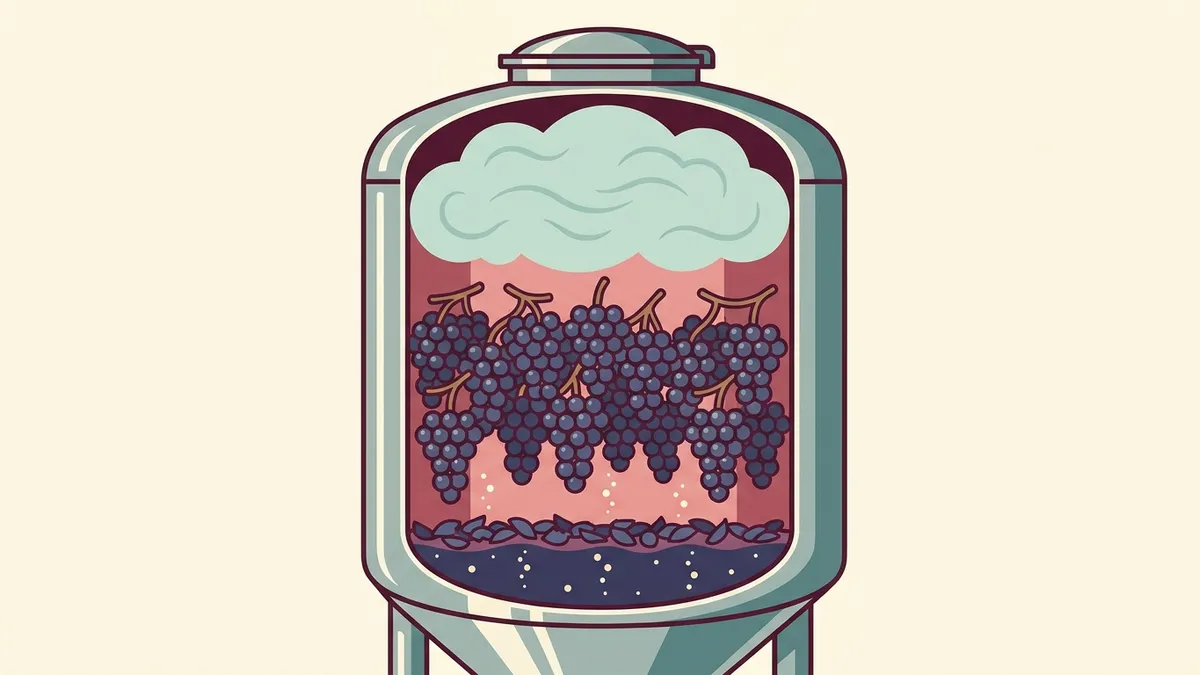
After a short time in the vat, the grapes are pressed and the yeast finishes the job. Nouveau ferments for just a few weeks before it is sold, and it is bottled only six to eight weeks after harvest. The step-by-step chemistry sits in the guide to carbonic maceration.
What Does Beaujolais Nouveau Taste Like?
Beaujolais Nouveau is light-bodied, low in tannin and fresh, with crushed red cherry and a banana smell from fermentation. Start with the feel: almost no grip on the gums, and acidity (the tartness that makes your mouth water) that keeps it juicy. One wine guide calls it about as close to white wine as a red wine can get.
Then the smell. The banana is not flavouring, it is esters (fruity-smelling compounds yeast and fermentation produce). Young whole-berry wines are full of them, and in Nouveau they come across as banana, fresh grape, fig and pear drop. Underneath sits fresh red cherry and raspberry, because Gamay is a thin-skinned grape picked for fresh fruit. The colour is the giveaway in the glass: bright purple with a magenta rim, because the wine has had no time to turn ruby.
Is Beaujolais Nouveau Good Wine?
A good Beaujolais Nouveau is a finished wine made for one job, tasting fresh, and it is judged on that. The common sneer that it is unfinished wine is wrong: it has fermented dry and been bottled like any other red, just without the months of ageing.
What separates a good one from a dull one is fruit and balance. A good Nouveau smells clearly of cherry as well as banana and feels juicy. A weak one smells only of candy and tastes thin and sour. If you want to know what Gamay can really do, buy a Nouveau and a cru from the same region and taste them side by side. The reputation hit the region took from cheap Nouveau is part of why crus are underpriced, a story told in the Beaujolais guide.
How Should You Serve Beaujolais Nouveau?
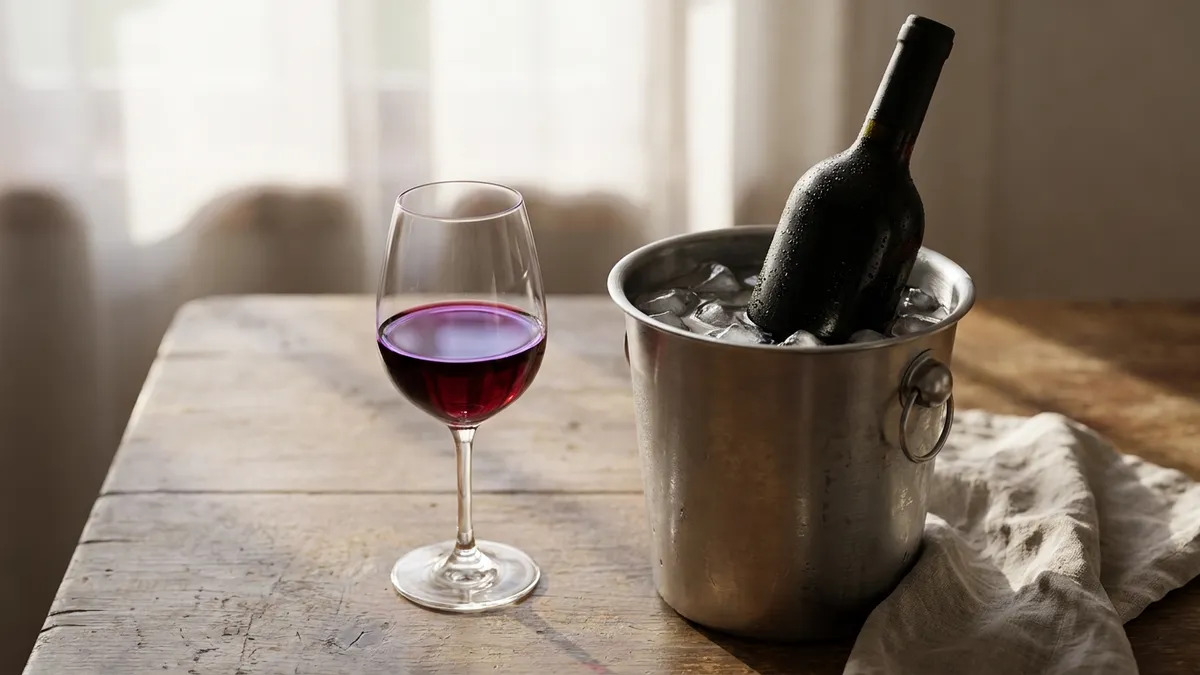
Serve it cool, at about 12°C, the temperature the Beaujolais wine board gives for both Nouveau wines. That is colder than most reds and a little warmer than a white straight from the fridge. Cool serving sharpens the fruit and keeps the alcohol from feeling warm, while too much cold mutes the cherry and banana.
If the bottle has been at room temperature, put it in the fridge for a short spell before opening, or use one of the methods in how to chill wine fast. If it tastes thin and sour, it is too cold: hold the glass by the bowl for a few minutes. An ordinary wine glass is enough. Other wines and their targets are listed in the wine serving temperature chart.
What Food Goes With Beaujolais Nouveau?
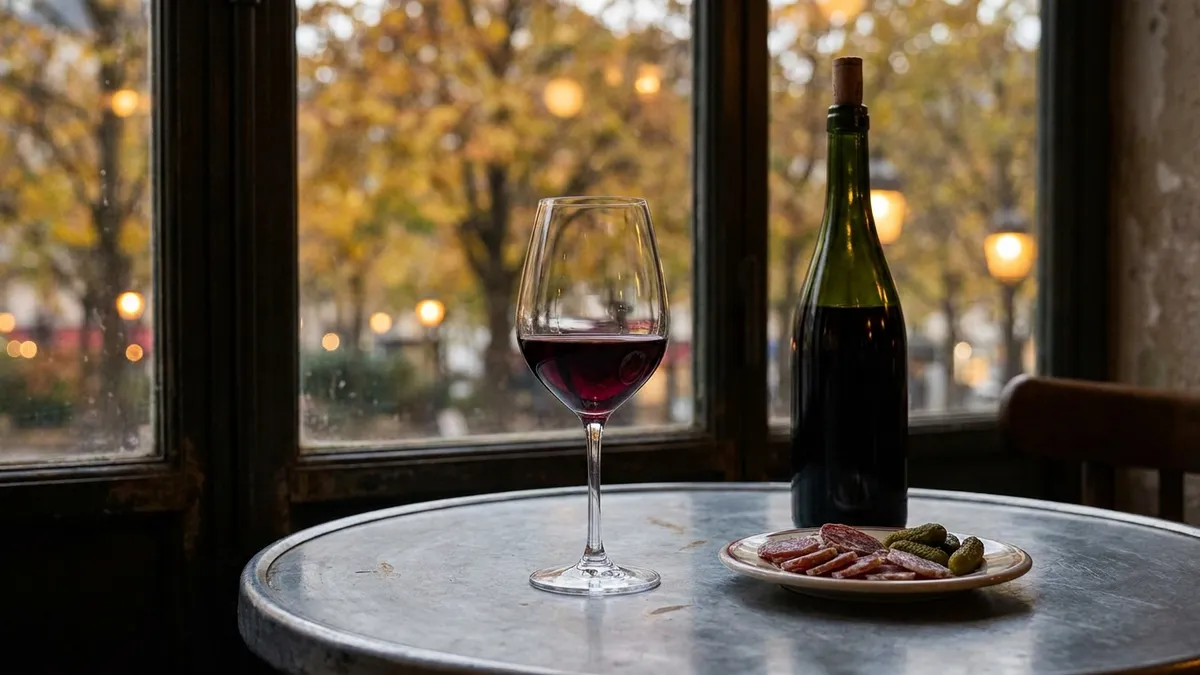
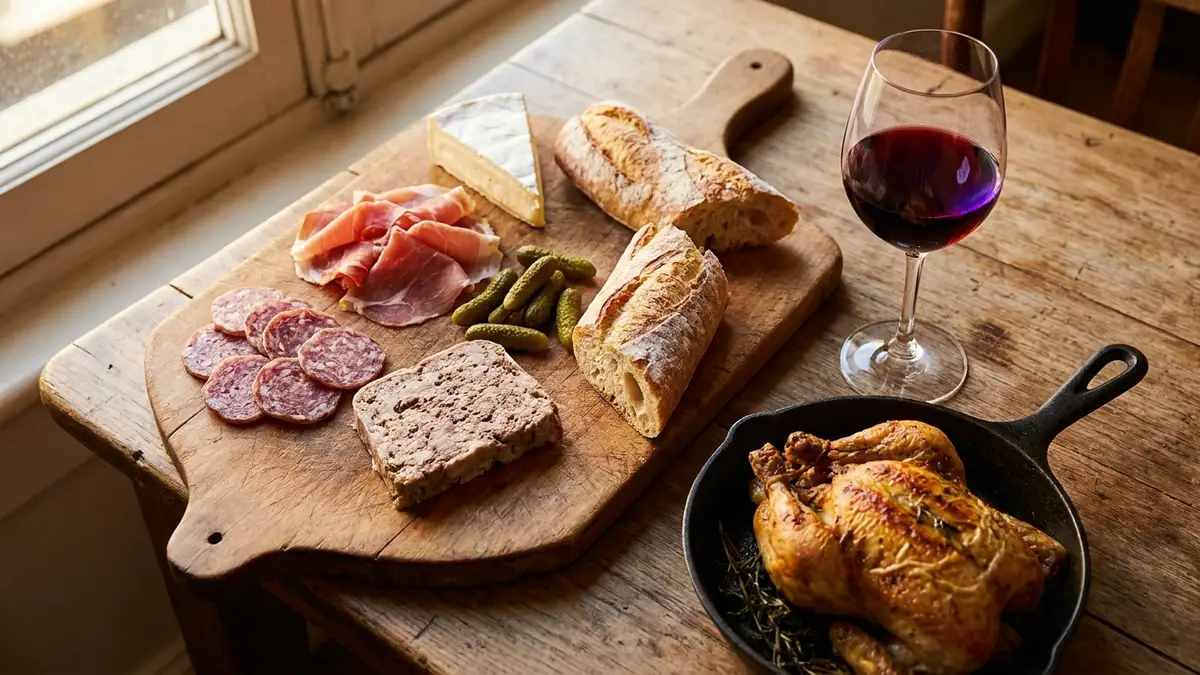
Salty, fatty, simple food goes best: charcuterie, pâté, roast chicken and soft cheese. The wine's acidity cuts through fat, so each sip leaves the mouth fresh for the next bite. With no tannin to clash, salt makes the fruit taste sweeter and rounder.
- Charcuterie and pâté: fat and salt, the classic Lyon bistro match.
- Roast chicken or turkey: light meat with crisp, salty skin, which is why Nouveau turns up on Thanksgiving tables a week after release.
- Soft cheese and baguette: creamy fat that the acidity cleans off your tongue.
- Pizza and burgers: fat and tomato sharpness, served chilled.
If the dish is a big, charred steak, pick a cru or a fuller red instead, because Nouveau has no tannin to stand up to it. If the food is chilli-hot, keep the wine at the cool end, since warmth makes heat burn more. The wider rules sit in wine and chicken pairing.
How Long Does Beaujolais Nouveau Last?
Drink it within a few months of release. The wine has almost no tannin to protect it, and its appeal is the banana and fresh cherry, which fade with time. A bottle bought on release day is at its best over the winter holidays.
If a bottle is still in the cupboard by spring, open it soon and expect less banana and a softer, quieter smell. How age changes wine more broadly is explained in tasting young vs aged wine.
Why Is Nouveau Released on One Day?
Because French rules fixed it, then changed it twice. When the Beaujolais appellation was created in 1937, its wine could only be sold officially after 15 December. In November 1951 the rules were relaxed, and the region's trade body set 15 November as the release date for young wine.
In 1985 France's appellation authority, the INAO, moved the release to the third Thursday of November, so the first weekend of drinking always follows it. A merchant-led marketing push turned that release into an event in cafés from Paris to Tokyo, under the line "Le Beaujolais Nouveau est arrivé." The scale is still large: in 2024, 14.3 million bottles were sold worldwide, 22% of everything the Beaujolais vineyards produced.
Light, fresh styles like this sit together in the wine styles hub. The Sommy app at sommy.wine has a bite-sized France course and an AI-guided tasting mode. Buy any young Beaujolais on the way home tonight, chill it, then photograph the label in Sommy before the first sip.
Sources
Frequently Asked Questions
When is Beaujolais Nouveau released?
Beaujolais Nouveau goes on sale at 00:01 on the third Thursday of November, under French law. The third Thursday has been the date since 1985, when France's appellation authority set it as a single release day. Before that the date was 15 November. A Thursday release leads straight into a weekend, which is when most of the first bottles get opened.
What grape is Beaujolais Nouveau made from?
Beaujolais Nouveau is made from Gamay, in full Gamay noir à jus blanc: a black-skinned grape with clear juice. It is the same grape used for all red Beaujolais, from basic bottles to the ten cru villages. The difference between Nouveau and a cru is how fast the wine is made and sold, not the grape.
Why does Beaujolais Nouveau taste like banana?
The banana smell comes from esters, fruity-smelling compounds made by fermentation. Young wines made from whole, uncrushed bunches are rich in them, and they are described as banana, grape, fig and pear drop. Nothing is added to the wine. The smell is strongest in the first weeks after bottling and fades over the following months.
Should Beaujolais Nouveau be chilled?
Yes. The Beaujolais wine board recommends serving it at 12°C, which is cooler than most reds and a little warmer than a white straight from the fridge. A short spell in the fridge brings a room-temperature bottle there. Served warm, it tastes flat and the alcohol shows; served too cold, the fruit disappears.
How long does Beaujolais Nouveau last?
Beaujolais Nouveau is meant to be drunk within a few months of its November release. It has almost no tannin to protect it and its appeal is fresh fruit, which fades with time. A bottle kept until the following summer is rarely ruined, but it will have lost the bright banana-and-cherry smell that is the reason to buy it.
Is Beaujolais Nouveau a good wine?
A good Beaujolais Nouveau is a well-made, finished wine with one job: tasting fresh and fruity in the weeks after harvest. Judge it on brightness, clean fruit and a light, juicy feel, not on depth or ageing potential. For a more serious Beaujolais made from the same grape, buy one of the ten crus.
What is the difference between Beaujolais Nouveau and Beaujolais-Villages Nouveau?
Both are released on the same November day and made the same quick way. Beaujolais-Villages Nouveau comes only from 38 villages in the northern part of the region, around the ten crus, while plain Beaujolais Nouveau can come from the wider appellation. The Villages version often has a little more depth of fruit.
Sommy Team
LinkedInFounder & Wine Educator
The Sommy Team is building the world's most approachable wine education app, helping beginners develop real tasting skills through structured courses and AI-guided practice.