Cru Beaujolais Guide: The 10 Villages and How They Taste

By the Sommy Team — AI-assisted, human-edited.
Updated Oct 9, 2026
Contents (9)
- What Is Cru Beaujolais, in One Paragraph?
- What Do the 10 Crus Taste Like?
- Which Cru Should You Buy First?
- Why Does Granite Make the Crus Taste Different?
- Which Crus Age, and Which Should You Drink Young?
- Does Cru Beaujolais Taste Like Burgundy?
- How Should You Serve Cru Beaujolais?
- How Do You Spot a Cru on the Label?
- Taste the Ladder Tonight
TL;DR
Cru Beaujolais is red Gamay from ten named villages on the granite hills of northern Beaujolais, labelled with the village name. Chiroubles and Fleurie are light and floral, Morgon and Moulin-à-Vent dark and firm. The firm crus age for years; serve every cru cool.
Cru Beaujolais is the Gamay worth taking seriously: red wine from ten hill villages in northern Beaujolais, sold under the village name. Three of those villages, Moulin-à-Vent, Morgon and Chénas, make wines that darken, firm up and age into something close to red Burgundy. Most of the rest are lighter and perfumed, best drunk young and cool.
What Is Cru Beaujolais, in One Paragraph?
Cru Beaujolais is the top tier of Beaujolais: red wine made almost entirely from Gamay in ten named villages in the hilly, granite north of the region. A cru (French for "growth", here a top-ranked village) is its own appellation (a protected place name with its own rules). Gamay makes up nearly 98% of all Beaujolais plantings. The crus sit above basic Beaujolais and Beaujolais-Villages, on steeper, poorer soils with a lower legal yield. That makes them deeper in colour and firmer than the everyday wines. The full region, from Nouveau to the crus, is mapped in our Beaujolais wine guide.
What Do the 10 Crus Taste Like?
They run from pale, perfumed and light (Chiroubles, Fleurie) to dark, firm and tannic (Morgon, Moulin-à-Vent). Two things change along that line. Body is the weight of the wine in your mouth, like skimmed milk against whole milk. Tannin is the drying grip on your gums; the guide to tannins shows how to feel it.
| Cru | Body | What it tastes like | Drink it with | Drink or keep |
|---|---|---|---|---|
| Chiroubles | Lightest | Raspberry and red cherry, high acidity, barely any grip | Salmon, salads, picnic food | Drink young |
| Fleurie | Light | Fresh cherry with rose and violet aromas | Grilled fish, goat cheese, roast vegetables | Drink young |
| Régnié | Light to medium | Juicy raspberry and red cherry | Charcuterie, burgers | Drink young |
| Brouilly | Light to medium | Ripe cherry and plum, soft | Roast chicken, pizza | Drink young |
| Saint-Amour | Light to medium | Ripe strawberry and cherry, easy | Pâté, pork, soft cheese | Drink young |
| Juliénas | Medium | Black cherry and plum with an earthy edge | Roast chicken, sausages, mushrooms | Drink or keep a few years |
| Côte de Brouilly | Medium | Riper cherry, firmer than Brouilly | Pork roast, roast chicken | Keep |
| Chénas | Medium to full | Cherry, plum, savoury and earthy with age | Duck, mushroom dishes | Keep |
| Morgon | Full for Gamay | Black cherry and plum, firm tannin | Duck, steak frites, game | Keep |
| Moulin-à-Vent | Fullest | Dark plum and black cherry, the most tannin | Game, beef stew, hard cheese | Keep longest |
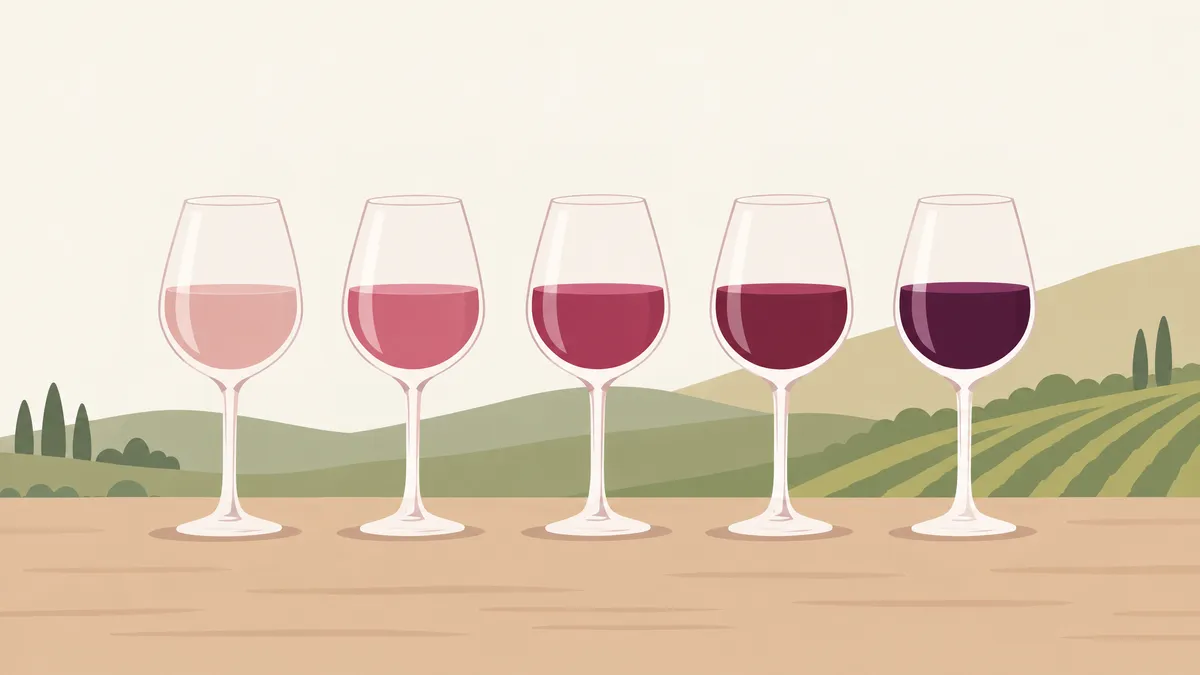
Producers and vintages shift a cru up or down a step. A ripe year turns Fleurie rounder; a cool one makes Morgon leaner. The order still holds well enough to shop by.
Which Cru Should You Buy First?
Start with the meal: light food gets a light cru, roasts and game get a firm one. If the plate is fish, salad or a picnic, buy Chiroubles or Fleurie. If it is roast chicken or a board of cured meats, buy Juliénas, Régnié or Saint-Amour.
If it is duck, mushrooms or game, or the bottle is going in a cupboard for five years, buy Morgon or Moulin-à-Vent. Both have the tannin to handle fat, and both come from a single village name you can find on the shelf.
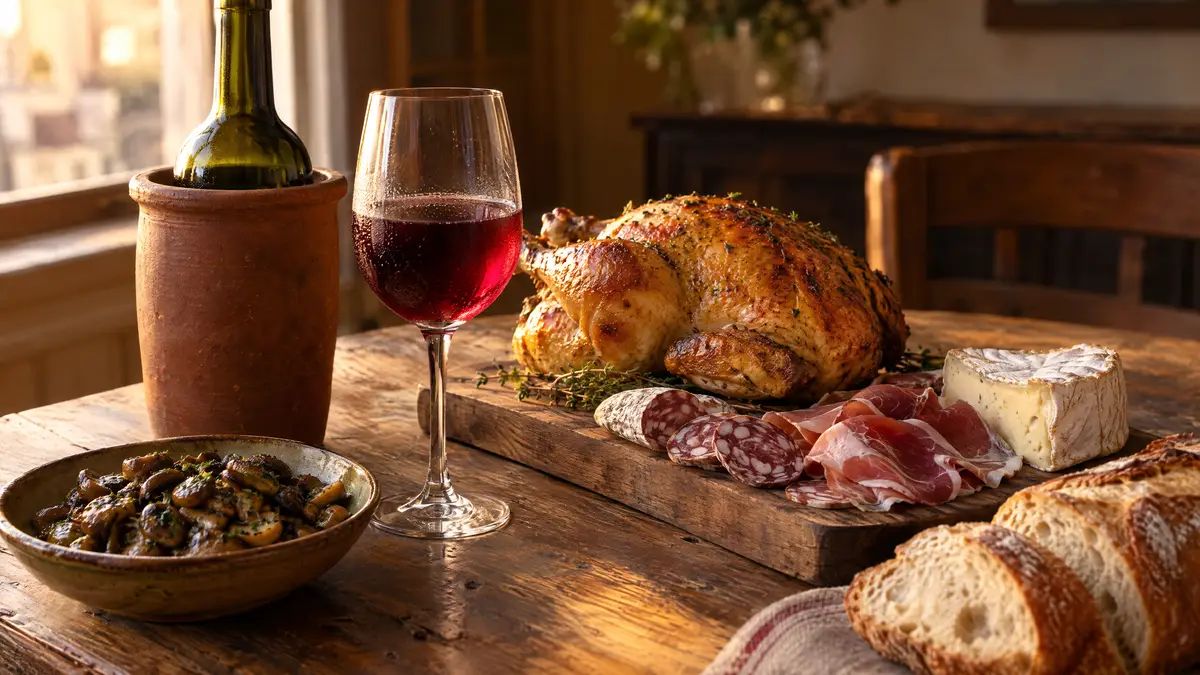
The middle crus are the safest single bottle for a mixed table, because they carry enough fruit for chicken and enough grip for salami. Our pairing notes for wine with chicken and wine with duck set out why fat and protein soften tannin.
Why Does Granite Make the Crus Taste Different?
Granite drains fast and holds few nutrients, so vines on the cru slopes struggle and give small, concentrated berries. Small berries carry more skin for each drop of juice, and the skin holds the colour and tannin. A Morgon poured beside a plain Beaujolais from the flat south shows it: the Morgon is visibly darker.
The north of Beaujolais is a run of rolling hills on granite and schist. The south is flatter, with sandstone and clay, and makes most of the plain Beaujolais. Granite soil is linked with powerful, deeply coloured Gamay.
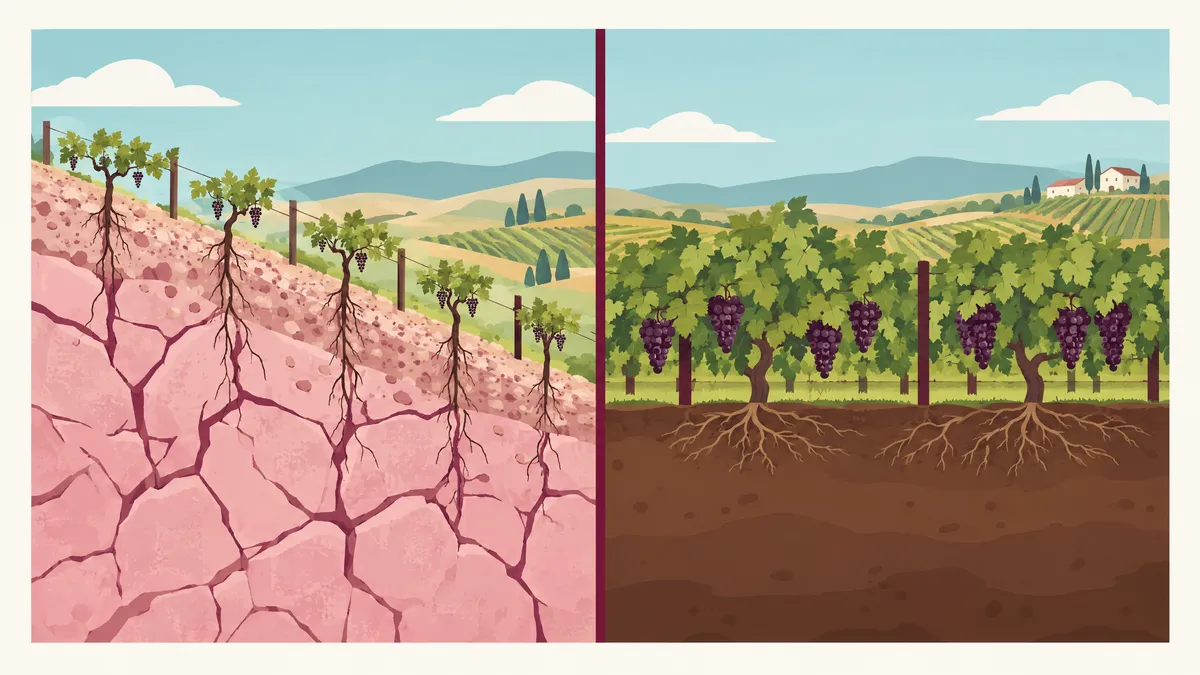
The law adds to the soil. Yield is measured in hl/ha (hectolitres of wine per hectare of vineyard). Basic Beaujolais may make up to 60 hl/ha; crus such as Morgon and Fleurie are capped at 56. Less wine from the same vineyard area means a little more colour, flavour and grip in each bottle, though the slopes do most of the work.
The soils also differ between crus, which is why they taste different from one another. Morgon is roughly half granite, with more than a third of its land on a rock locally called blue stone. In Moulin-à-Vent, the trade body credits the wine's intensity to pink granite carrying manganese. How soil type reaches the glass in other regions is covered in how soil affects wine taste.
Which Crus Age, and Which Should You Drink Young?
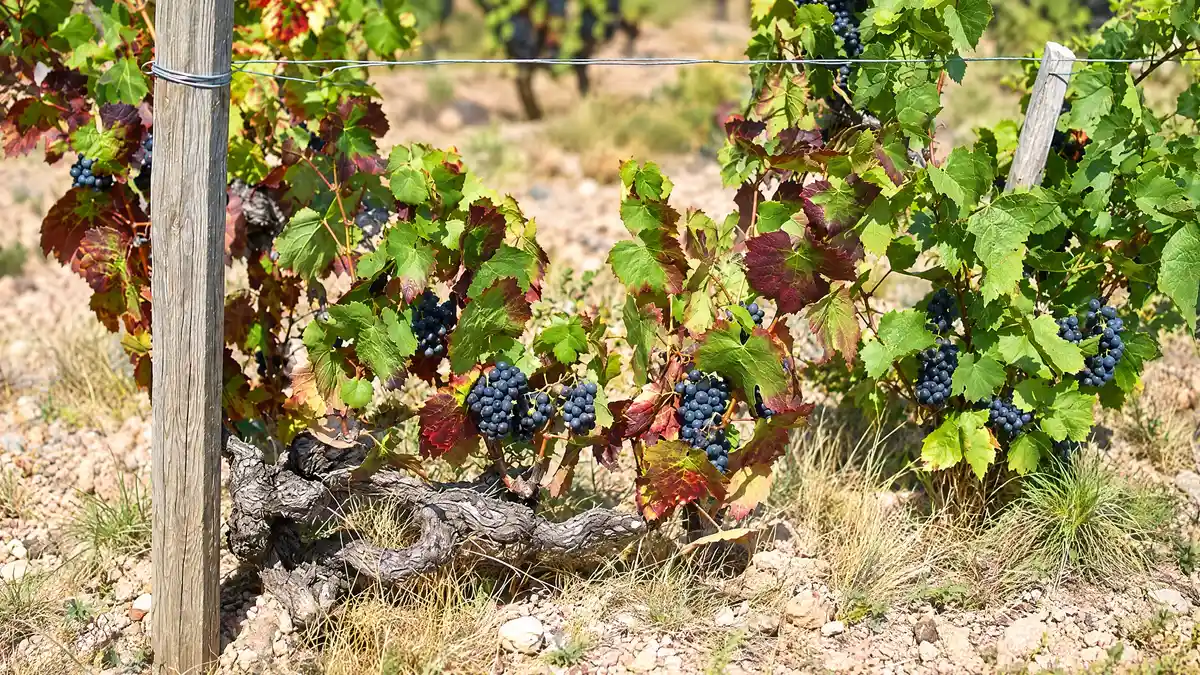
Moulin-à-Vent, Morgon, Chénas and Côte de Brouilly are the keepers; drink Chiroubles, Fleurie, Régnié and Brouilly within a few years. The firm four have the tannin and concentration to carry them through years in bottle. The light crus have low tannin, so their charm is fresh fruit and perfume, which fade first.
Moulin-à-Vent has the most body, tannin and ageing ability of the ten, and good bottles are often kept ten years or more. Côte de Brouilly, from the slopes of a hill inside the Brouilly area, is riper and more ageable than Brouilly itself.
With age, a firm cru changes. The fresh cherry darkens to dried cherry, and tertiary aromas (flavours from age, such as leather, mushroom and damp leaves) appear. If you want a bottle to keep five years or more, buy one of the four keepers from a ripe vintage. Open the first bottle at about five years, and if it still grips your gums hard, wait two more before the next. The wine aging guide explains how to store it.
Does Cru Beaujolais Taste Like Burgundy?
Some do, after ageing. A young cru tastes of Gamay: juicy cherry and plum, high acidity, often a peppery edge. After five years or more, Moulin-à-Vent, Morgon and Chénas pick up the earthy, savoury side that red Burgundy is known for. One guide calls Chénas "sometimes quite Burgundian".
Gamay is a separate grape from Pinot Noir, not a thinner version of it. Aged Morgon usually feels rounder and carries more plum than a Burgundy at the same age. Compare the two grapes in our Pinot Noir guide and the Burgundy wine guide.
If you want the Burgundy likeness, pick Moulin-à-Vent or Morgon with five or more years of age. If you want Gamay at its brightest, pick a young Fleurie.
How Should You Serve Cru Beaujolais?
Cool, and the lighter the cru, the colder. Light crus such as Chiroubles, Fleurie and Régnié taste fresher after about 20 minutes in the fridge. Morgon and Moulin-à-Vent need less, because cold makes tannin feel harder and hides their fruit.
If a young Morgon or Moulin-à-Vent tastes tight and grippy straight from the bottle, pour it into a jug or decanter an hour before dinner. The light crus need no air at all. The target temperatures for every style sit in our wine serving temperature chart.
How Do You Spot a Cru on the Label?
Look for the village name, because most cru labels leave out the word Beaujolais. If the label names one of the ten villages, the wine is a cru. If it says "Beaujolais-Villages", it is the middle tier, and plain "Beaujolais" is the base. Our guide to reading a wine label covers the other words on a French bottle.
From north to south the ten are Saint-Amour, Juliénas, Chénas, Moulin-à-Vent, Fleurie, Chiroubles, Morgon, Régnié, Brouilly and Côte de Brouilly. Régnié is the newest; it was promoted from Beaujolais-Villages to cru status in 1988.
A cru is not Beaujolais Nouveau. Nouveau is released on the third Thursday of November, weeks after harvest, and is usually made by carbonic maceration (whole bunches fermenting in a closed tank, the bottom third crushed by the weight above). That method is linked to the banana and bubblegum smells many people know. Cru growers aim for structure rather than speed, and the wines reach shops later. Beaujolais Nouveau explained and carbonic maceration explained cover the fast style. The grape itself is profiled in the Gamay wine guide, and other light reds sit in the wine styles hub.
Taste the Ladder Tonight
Buy one light cru and one firm one, say a Fleurie and a Morgon, and chill both for 20 minutes. Taste the Fleurie first, then the Morgon, and note the jump in colour and grip. In the Sommy app at sommy.wine, photograph each label in the AI-guided tasting mode and log the look, smell and taste of both glasses in your tasting journal. Then decide which one you would buy again for a roast chicken on Sunday.
Sources
Frequently Asked Questions
What are the 10 crus of Beaujolais?
From north to south they are Saint-Amour, Juliénas, Chénas, Moulin-à-Vent, Fleurie, Chiroubles, Morgon, Régnié, Brouilly and Côte de Brouilly. All ten sit in the hilly north of the region, where granite and schist soils dominate. Each is its own appellation and puts its village name on the label, usually without the word Beaujolais.
What is the difference between Beaujolais, Beaujolais-Villages and cru Beaujolais?
They are three tiers of the same Gamay. Plain Beaujolais comes mostly from the flatter south and may yield up to 60 hectolitres per hectare. Beaujolais-Villages comes from a defined set of hillier villages. The ten crus sit on the best granite slopes in the north, have a lower yield cap (56 hectolitres per hectare in Morgon and Fleurie) and make the most concentrated wines.
Is cru Beaujolais the same as Beaujolais Nouveau?
No. Nouveau is a quick, fruity wine released on the third Thursday of November, weeks after the harvest, and meant to be drunk within months. Cru Beaujolais comes from ten top villages, is released later, and the firmer crus can be kept for many years. Both are made from Gamay, but the vineyards and the winemaking aim are different.
Which cru Beaujolais ages best?
Moulin-à-Vent is the cru most often cellared, with good bottles kept ten years or more. Morgon, Chénas and Côte de Brouilly also age well thanks to their firmer tannin and concentration. Chiroubles, Fleurie, Régnié and Brouilly are at their best young, while their fruit and perfume are fresh, usually within a few years of the vintage.
Should cru Beaujolais be served chilled?
Yes, cool rather than cold. A light cru such as Chiroubles or Fleurie tastes fresher after about 20 minutes in the fridge. A firm Morgon or Moulin-à-Vent needs less chill, because cold makes tannin feel harder. Serving any cru at warm room temperature makes the alcohol stand out and the fruit taste flat.
Does cru Beaujolais taste like Burgundy?
Some crus can, after a few years in bottle. Aged Moulin-à-Vent, Morgon and Chénas lose their bright young fruit and pick up earthy, savoury flavours that remind many tasters of red Burgundy. They are still Gamay, a different grape from Pinot Noir, so expect more plum and cherry and a firmer, rounder feel.
What food goes with cru Beaujolais?
Match the cru to the weight of the plate. Light crus like Chiroubles and Fleurie go with salmon, salads and picnic food. Middle crus like Juliénas and Régnié suit roast chicken and charcuterie. Firm Morgon and Moulin-à-Vent stand up to duck, mushrooms and game, because their tannin needs fat and protein.
Sommy Team
LinkedInFounder & Wine Educator
The Sommy Team is building the world's most approachable wine education app, helping beginners develop real tasting skills through structured courses and AI-guided practice.