Wine with Mussels: Steamed, Grilled, and Fra Diavolo

By the Sommy Team — AI-assisted, human-edited.
Updated Oct 1, 2026
Contents (9)
- What Wine Goes Best With Mussels?
- How Do You Match Wine With Mussels by Sauce?
- What Wine Goes With Steamed Mussels in White Wine?
- What Wine Goes With Grilled or Baked Mussels?
- What Wine Goes With Spicy Mussels Fra Diavolo?
- What Wine Goes With Mussels in Cream, Curry or Thai Sauce?
- Can You Drink Red Wine, Rosé or Beer With Mussels?
- Which Wine Should You Cook Mussels With?
- How Should You Serve Wine With Mussels?
TL;DR
Choose wine for mussels by the sauce in the pot. Steamed in white wine, drink the same lean white, ideally Muscadet, Picpoul de Pinet or dry Riesling. Grilled or baked takes a fuller unoaked white. Cream and curry want Viognier or Pinot Gris, and spicy tomato wants chilled dry rosé.
Wine with mussels is easier to choose once you stop thinking about the mussel and look at the pot. The mussel itself tastes sweet, salty and mild, so the sauce decides the wine. Wine broth wants a lean white, cream or curry a rounder white, and tomato with chili a chilled rosé.
What Wine Goes Best With Mussels?
A crisp, dry, unoaked white with high acidity and modest alcohol goes best with mussels steamed in wine. Dry means no sugar you can taste. Acidity is the tartness that makes your mouth water, and it does the job a squeeze of lemon does on seafood.
The classic choices are Muscadet from the Loire, Picpoul de Pinet from the Languedoc and a dry Alsace Riesling. The simplest rule: drink the wine you cooked them in.
Grilled or baked mussels take a fuller unoaked white, cream and curry want Viognier or Pinot Gris, and spicy tomato wants a cold dry rosé. For the wider seafood picture, from oysters to salmon, see wine with seafood.
How Do You Match Wine With Mussels by Sauce?
Match the wine to the sauce, because the broth carries more flavour than the mussel does. Mussels can be smoked, boiled, steamed, roasted, barbecued or fried, and each method brings its own fat, salt or char. Steamed mussels need the lightest wine, while baked, creamy or curried ones need more weight.
| Mussel style | What the sauce brings | Wine style | Pick up |
|---|---|---|---|
| Steamed in white wine (marinière) | Butter, shallot, salty broth | Light, dry, high-acid white | Muscadet, Picpoul de Pinet, dry Riesling |
| Grilled or baked with garlic crumbs | Char, toasted bread, garlic butter | Medium-bodied unoaked white | Unoaked Chardonnay, Albariño |
| Fra diavolo (tomato and chili) | Tomato acid, chili heat | Chilled dry rosé or cool light red | Provence-style rosé, Gamay |
| Cream, saffron or curry | Fat, spice, soft sauce | Rounder, aromatic white | Viognier, Pinot Gris |
| Thai style (coconut, lime, coriander) | Lime, herbs, gentle heat | Crisp aromatic white | Grüner Veltliner, Sauvignon Blanc |
If the broth is clear and smells of wine, pour lean and light. If it is creamy or yellow with spice, go rounder. If it is red, go pink.
What Wine Goes With Steamed Mussels in White Wine?
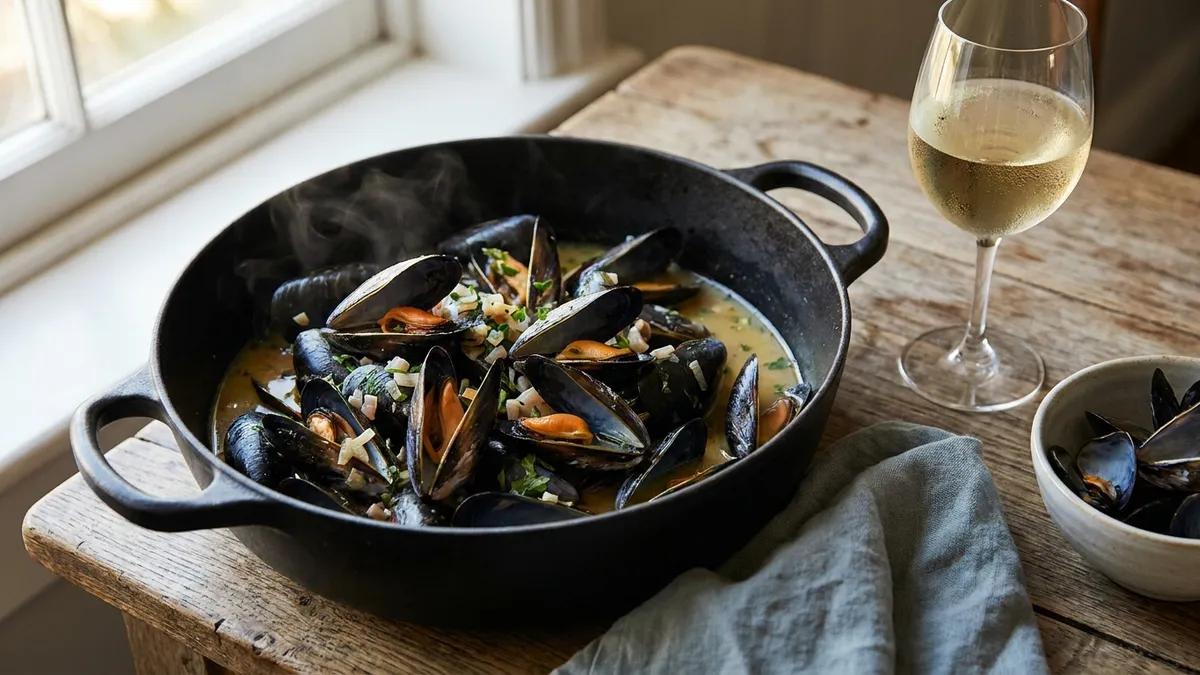
Drink the wine you cooked them in, as long as it is a lean, dry white like Muscadet. Moules marinière, the French bistro classic, is mussels steamed open in white wine with shallots, parsley and butter. A pairing writer puts it plainly: Muscadet in the pot, Muscadet in the glass, with Picpoul de Pinet as equally good and dry Alsace Riesling as another option.
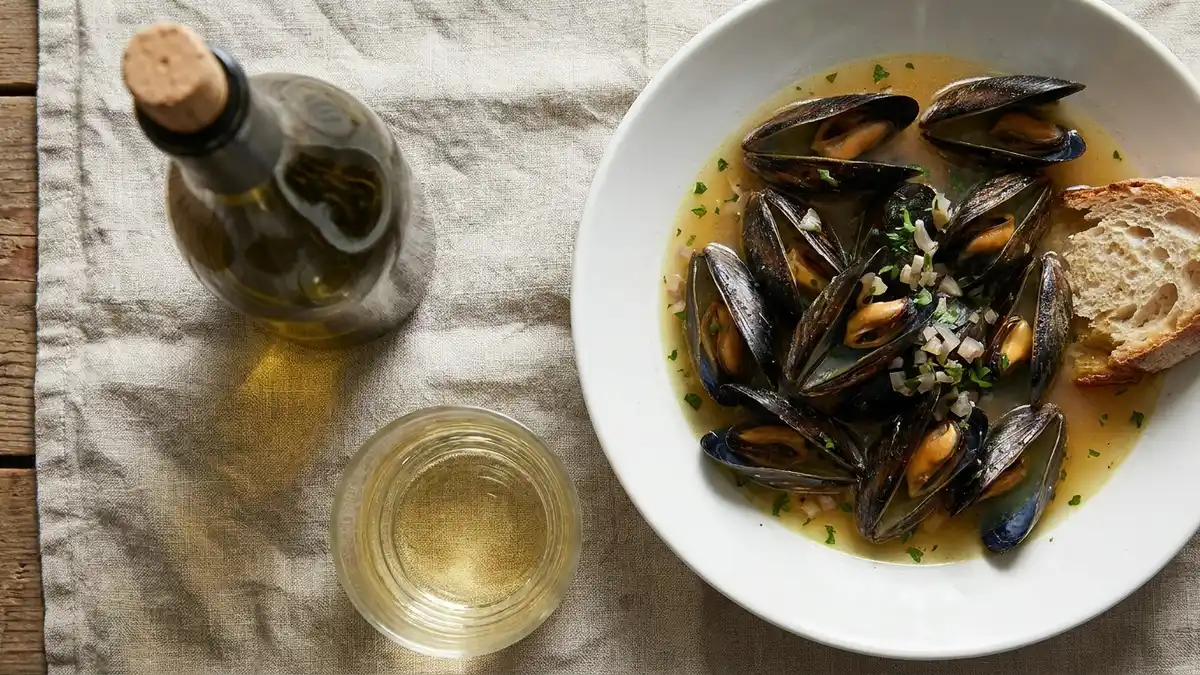
The fit is about salt and fat. The broth is salty from the mussel juice and rich from the butter. A high-acid white cuts through that butter so each spoonful tastes fresh, and the salt in the broth makes the wine taste fruitier.
Muscadet is made almost entirely from one grape, Melon de Bourgogne, grown near the Atlantic around Nantes. French rules cap its alcohol at 12% whenever sugar is added in the winery, so most bottles stay light enough to leave the mussel in front. More than three-quarters of all Muscadet comes from the Sèvre et Maine area, so that is the name you will see most often. The grape's story is in our Melon de Bourgogne and Muscadet guide.
What does "sur lie" on the label mean?
Sur lie means the wine rested on its lees (the spent yeast left after fermentation) through the winter after the harvest, and was bottled straight off them, no earlier than March. It is time on dead yeast, with no oak involved, and it adds a soft, bready texture without making the wine heavier. If the label says Muscadet Sèvre et Maine sur lie, expect a little more texture, which suits a broth with plenty of butter.
Picpoul de Pinet is the southern option: a sharp, lemony white from the Languedoc coast, made for shellfish. Our Picpoul de Pinet guide covers the region. Dry Riesling brings more lime and green apple; if you buy Alsace Riesling, check that it says "sec" or is described as dry, as explained in the Riesling guide.
What Wine Goes With Grilled or Baked Mussels?
Choose a white with a little more body (weight in the mouth, like whole milk next to skimmed) and no heavy oak. Unoaked Chardonnay and Albariño are good picks, because char and toasted breadcrumbs add weight that a very light Muscadet can feel thin beside.
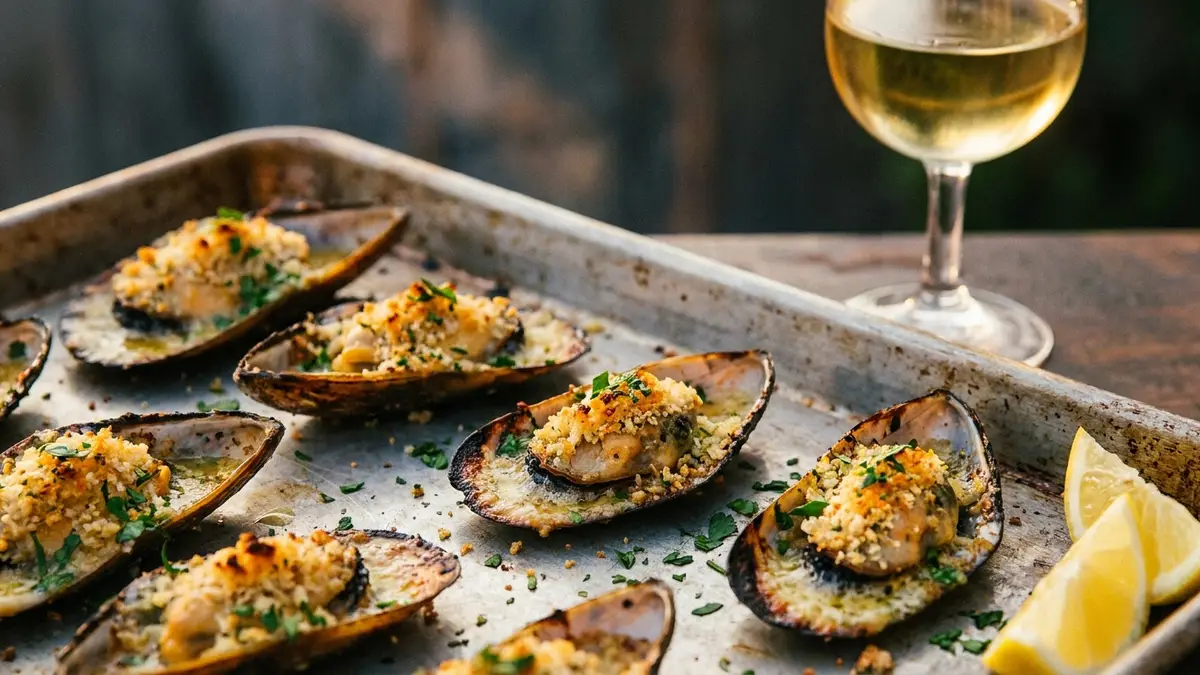
Oak means barrels that add vanilla, toast or butter flavours. A little is fine, but a heavily oaked white tastes sweet and woody next to garlic and lemon, and it buries the mussel. Albariño from Galicia, on Spain's shellfish-rich Atlantic coast, brings peach and lemon with a salty finish; see the Albariño guide. The Chardonnay guide explains how to spot an unoaked bottle.
If the topping has cheese or bacon, step up to unoaked Chardonnay. If it is only garlic, parsley and lemon, Picpoul or Albariño is enough.
What Wine Goes With Spicy Mussels Fra Diavolo?
A chilled dry rosé or a light, low-tannin red served cool works best with mussels fra diavolo, because tomato needs acidity and chili punishes alcohol. Fra diavolo, "brother devil" in Italian, is mussels in a tomato sauce with plenty of chili and garlic, often over linguine.
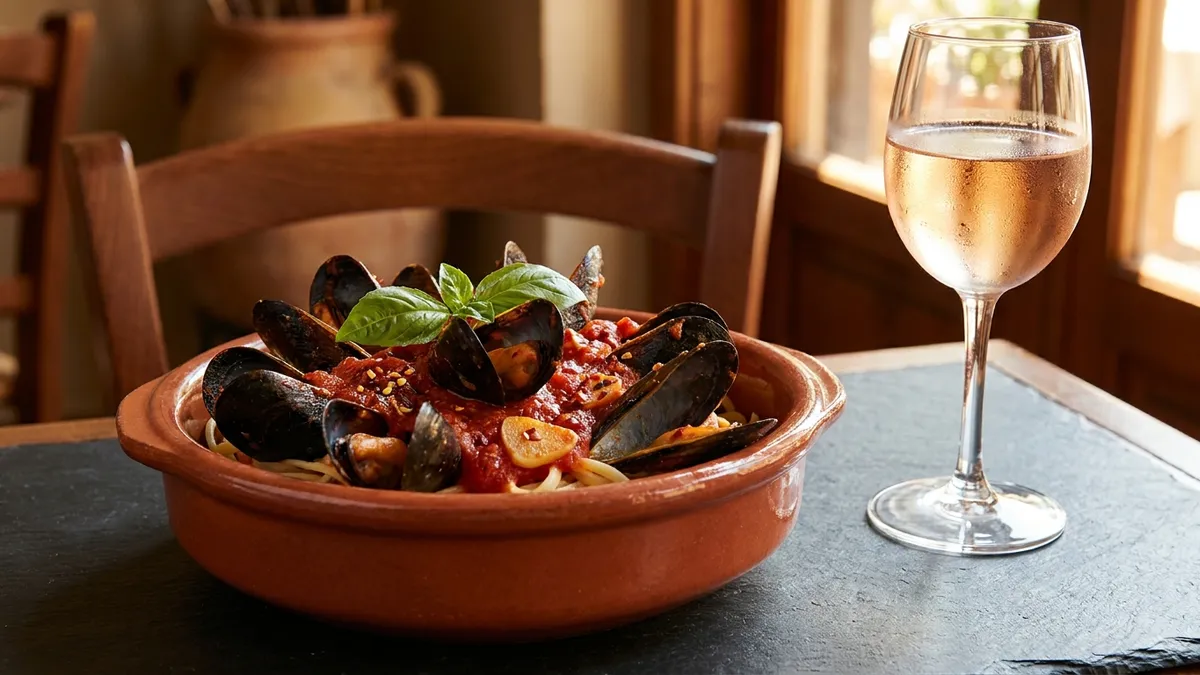
Tomato is high in acid, so a soft, low-acid white tastes flat and dull beside it. A dry rosé has the acidity to meet the sauce and enough red-berry fruit to stand next to garlic and chili. Alcohol makes chili burn harder, so a 14% wine turns a warm sauce into a hot one. Our guide to wine with spicy food covers the heat rule in full, and the rosé wine guide explains how the pale dry styles are made.
If the chili is fierce, pick the lowest-alcohol dry rosé on the shelf. If the sauce is mild and tomato-led, a cool Gamay works too; the next section explains why that red gets a pass.
What Wine Goes With Mussels in Cream, Curry or Thai Sauce?
Move to a rounder white. Viognier or Pinot Gris suits cream and saffron, and Grüner Veltliner or Sauvignon Blanc suits coconut and lime. Cream and curry coat the mouth, so a very light, sharp white tastes thin and sour beside them.
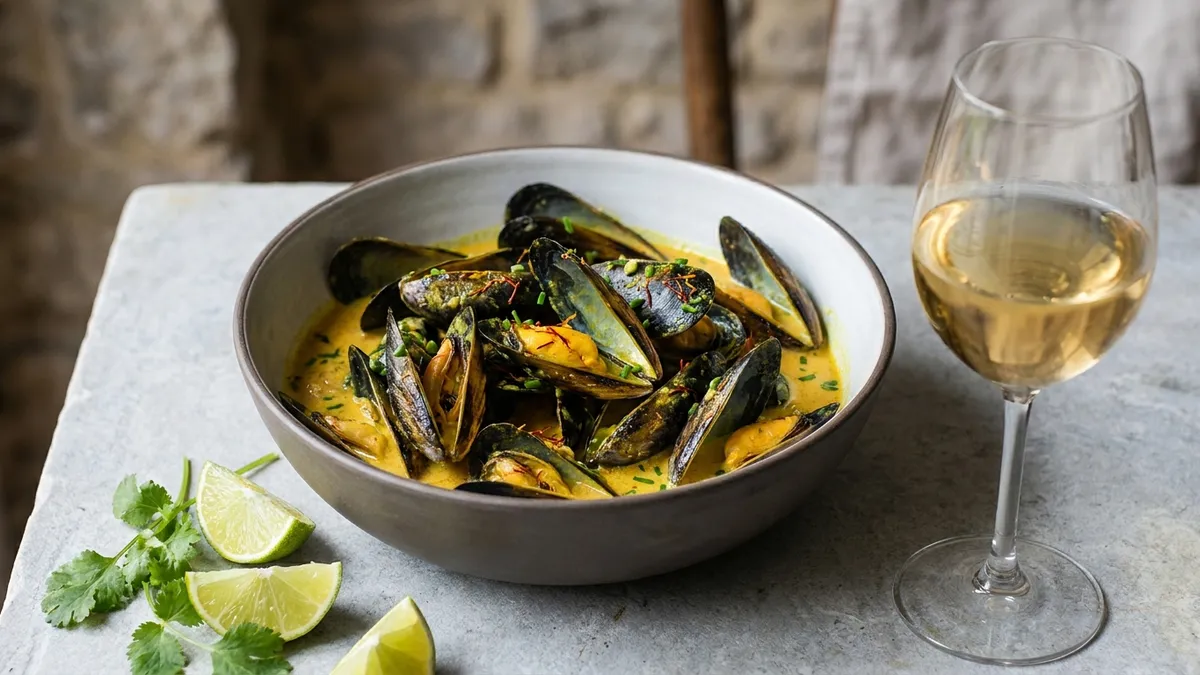
Viognier smells of apricot and peach and has a fuller, softer feel, so it meets a saffron cream sauce at the same weight; see the Viognier guide. Pinot Gris from Alsace is similar in weight with pear and a touch of spice, and the Pinot Grigio vs Pinot Gris guide shows which label style to look for.
Thai-style mussels, cooked with coconut, lime and coriander, need crisp freshness more than weight. Published pairing advice names Grüner Veltliner, Pinot Gris and New Zealand Sauvignon Blanc. Grüner's white-pepper edge suits chili; the Grüner Veltliner guide and wine with Thai food go further.
If the sauce is coconut and lime, pick crisp and aromatic. If it is cream and saffron, pick rounder.
Can You Drink Red Wine, Rosé or Beer With Mussels?
Yes to all three, with limits. Rosé works almost everywhere, beer works best when it went into the pot, and red works only when it is light and the sauce is tomato. The deciding factor for red is tannin, and for beer it is what went into the broth.
Tannin (the drying grip on your gums, from grape skins) is the problem with red. Big, tannic reds next to seafood often leave a metallic, bitter taste, and they flatten the sweet mussel meat. Skip Cabernet Sauvignon, Syrah and Malbec. A Gamay, the grape of Beaujolais, has very little tannin and plenty of fresh cherry acidity, so served cool it can handle a tomato pot. The Gamay guide explains the style, and what are tannins explains the grip.
Dry rosé is the safe middle: acidity like a white, a little fruit like a red. It works with steamed, grilled and tomato mussels, and only struggles beside a heavy cream sauce.
Beer has a strong case. In Belgium mussels are often cooked with witbier, a cloudy wheat beer, and the same advice applies: drink the beer you cooked with. Witbier also suits Thai-style mussels, because its citrus and coriander notes echo the lime and herbs.
Which Wine Should You Cook Mussels With?
Cook with a dry white you would happily drink, then pour the rest of the bottle at the table. One cupful goes in the pot and the rest goes in the glasses, so the broth and the wine share the same acidity and flavours.
Price matters less than style. Pick a crisp, unoaked white: Muscadet, Picpoul de Pinet or Pinot Grigio all reduce cleanly into a bright broth. Avoid two styles. Heavily oaked whites turn woody and bitter when boiled down, and off-dry whites leave the sauce sugary. Avoid salted "cooking wine" from the vinegar aisle too, because the mussels already release plenty of salty juice.
If you would not drink it, do not cook with it. If the recipe calls for beer or cider, serve that beer or cider.
How Should You Serve Wine With Mussels?
Serve the white fridge-cold and open it before the mussels go in the pot, since they cook in minutes. Use a medium white wine glass, and keep the bottle in an ice bucket: a hot pot of mussels on the table warms everything near it.
If the bottle has stood out for 20 minutes, put it back in the ice. Exact ranges for whites, rosés and light reds are in our wine serving temperature chart.
Moules frites, mussels with fried potatoes, likely began on the Flemish coast, where mussels were cheap everyday food. The fries add fat and salt, which is one more reason to keep the wine high in acidity. For the same logic with raw shellfish, see wine with oysters, and for more pairing rules, the food pairing hub.
Sommy at sommy.wine has a bite-sized France course, plus an AI-guided tasting mode that starts from a photo of the label. Tonight: buy one bottle of Muscadet, cook your mussels with a cupful and drink the rest beside them.
Sources
Frequently Asked Questions
What wine goes best with mussels?
For classic mussels steamed in white wine, shallots and butter, a crisp, dry, unoaked white is the best match: Muscadet, Picpoul de Pinet or a dry Alsace Riesling. Their high acidity cuts the buttery broth and their light body leaves the sweet mussel meat in front. For cream, curry or tomato sauces, change the wine to suit the sauce instead.
Can you drink red wine with mussels?
Yes, but only a light, low-tannin red, and mainly with tomato sauces. Big, tannic reds with seafood can leave a metallic, bitter taste, so skip Cabernet and Syrah. A Gamay such as Beaujolais, served cool from the fridge, handles mussels fra diavolo because the tomato gives the red something to meet. With a white wine broth, stay with white.
What wine should I use to cook mussels?
Use a dry, unoaked white you would happily drink, such as Muscadet, Picpoul de Pinet or Pinot Grigio, then serve the rest of the bottle at the table. Avoid salted supermarket cooking wine, which makes the broth too salty, and avoid oaky or sweet whites, which make it taste heavy or sugary once reduced.
What wine goes with moules frites?
Moules frites, mussels with fried potatoes, likely began on the Flemish coast of Belgium, where mussels were a cheap everyday food. The mussels are usually cooked marinière style, so the white from the pot still works, and its high acidity also cuts the fat of the fries. A Belgian witbier is the other classic choice, especially if it went into the pot.
What wine goes with mussels in tomato sauce?
A chilled dry rosé is the safest choice for mussels in tomato sauce, because it has the acidity to meet the tomato and enough fruit to sit beside chili. If the sauce is mild and tomato-led, a light red such as Gamay served cool also works. Keep the alcohol moderate when the sauce is spicy, because alcohol makes chili burn hotter.
Is Muscadet or Sauvignon Blanc better with mussels?
Muscadet is the better fit for classic steamed mussels. It is lighter, saltier and less aromatic, usually at 12% alcohol or less, so it stays out of the way of a delicate broth. Sauvignon Blanc's stronger grassy and citrus aromas suit herb-heavy or Thai-style mussels with lime and coriander better than a plain butter and shallot broth.
Sommy Team
LinkedInFounder & Wine Educator
The Sommy Team is building the world's most approachable wine education app, helping beginners develop real tasting skills through structured courses and AI-guided practice.