20 Fun Wine Tasting Theme Ideas for Your Next Get-Together
By the Sommy Team — AI-assisted, human-edited.
Updated Apr 29, 2026
Contents (12)
TL;DR
Twenty wine tasting theme ideas grouped into five categories — beginner-friendly, compare-and-contrast, travel and geography, seasonal and holiday, and advanced. Each theme lists suggested grapes, bottle count, format, and the one thing guests should learn. Pick one theme, hold every other variable steady, and the difference in the glass becomes obvious.
TLDR
Twenty wine tasting theme ideas grouped into five categories — beginner-friendly, compare-and-contrast, travel and geography, seasonal and holiday, and advanced. Each theme lists suggested grapes, bottle count, format, and the one thing guests should learn. Pick one theme, hold every other variable steady, and the difference in the glass becomes obvious.
Why Themes Make a Tasting Work
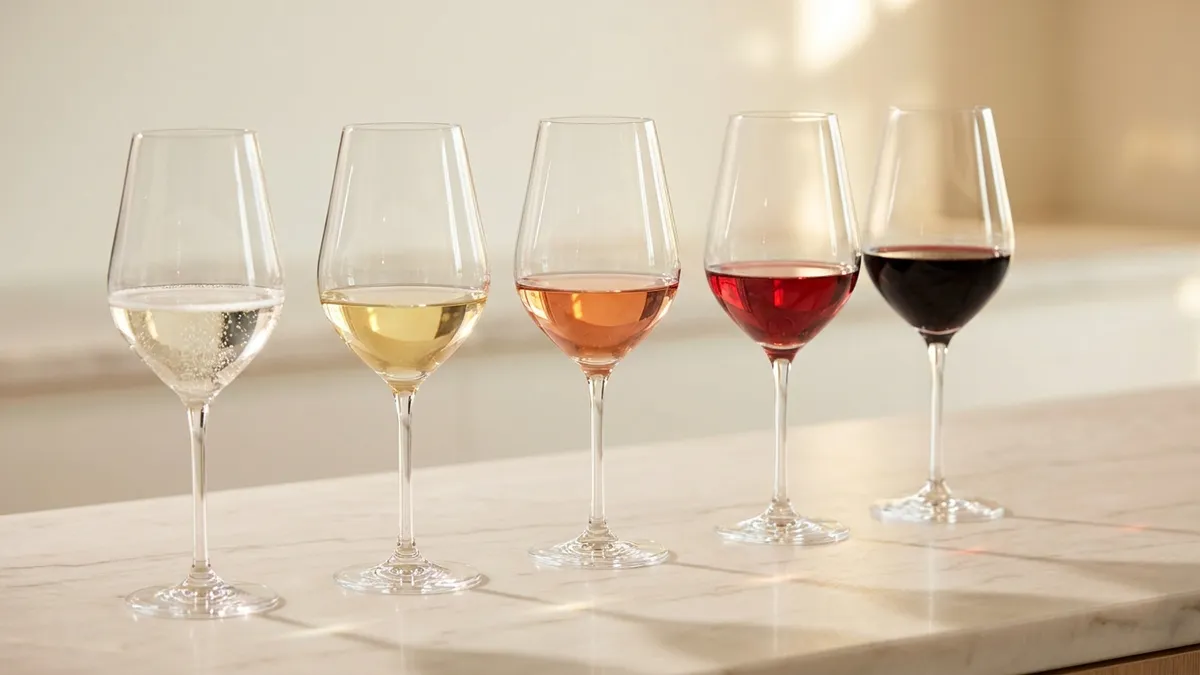
A good wine tasting theme does one job — it constrains a single variable so the difference in the glass becomes visible. Same grape, four regions. Same region, four vintages. Same method, four countries. Hold everything else steady and the comparison teaches itself.
The most popular wine tasting theme ideas all rely on this principle. Same Grape Two Regions shows climate at work. Old World versus New World shows philosophy. A vertical shows time. A horizontal shows house style. A sparkling showdown shows method. The format does not need to be clever — it needs to be tight. Four bottles, one variable, identical glasses, a clear pouring order. The wines do the teaching once the theme has done the editing.
Quick check
One question on what you just read
Your flight is four Pinot Noirs from four regions. What will it show you?
Tap an answer to see how you did.
How to Use This List
Each theme below includes:
- Concept — the variable being held constant and the variable being explored
- Suggested grapes or regions — three to six options, no producers
- Bottle count — usually four; sometimes three or six
- Format — blind, label-up, or partial-blind
- Learning goal — the one thing guests should walk away with
For setup mechanics — pour sizes, temperatures, glassware, food — see our companion wine tasting party guide. This article is the menu of themes; that one is the host's playbook.
Beginner-Friendly Themes
Start here if your guests are new to structured tasting. The comparisons are dramatic, the categories are familiar, and the learning is immediate.
1. Same Grape Two Regions
Concept: take one grape and pour it from two clearly different climates side by side. The single best entry-level theme because the contrast is unmistakable.
- Suggested grapes: Pinot Noir, Sauvignon Blanc, Chardonnay, Syrah
- Bottle count: 2 (one of each region)
- Format: blind, reveal halfway
- Learning goal: climate shapes a grape more than most beginners realize
2. Pinot Noir Around the World
A four-region tour of the world's most place-sensitive red grape. Burgundy gives earthy red fruit, Oregon gives mid-weight cherry, California gives ripe and silky, and New Zealand gives bright high-toned strawberry.
- Regions: Burgundy, Oregon, California, New Zealand
- Bottle count: 4
- Format: blind, reveal at end
- Learning goal: understand the Pinot Noir grape across four climates
3. Rosé Spectrum
Pour four rosés from palest pink to deep coral. Provence-style at one end, Spanish or Italian at the other. The visual progression alone is striking.
- Styles: Provence Provençal, Tavel, Spanish Rosado, Italian Rosato
- Bottle count: 4
- Format: label-up
- Learning goal: rosé is a spectrum of colors and styles, not a single category — see our rosé wine guide
4. Sparkling Method Showdown
Champagne, Prosecco, Cava, and English sparkling, all poured cold and in identical flutes or tulips. Method is the variable; grape and region change with it.
- Styles: Champagne (traditional method), Cava (traditional method, Spain), Prosecco (tank method), English sparkling
- Bottle count: 4
- Format: blind in numbered flutes
- Learning goal: method matters more than people realize — see our sparkling wine types breakdown
Compare-and-Contrast Themes
These themes pin two opposing variables against each other. They produce the loudest "aha" moments and the best dinner-party conversation.
5. Old World vs New World
The classic philosophical pairing. Two wines from each side, same grape across all four. Old World leans earth, restraint, and acidity. New World leans fruit, ripeness, and oak.
- Pairing example: Bordeaux Cabernet vs Napa Cabernet, plus Burgundy Chardonnay vs Sonoma Chardonnay
- Bottle count: 4
- Format: blind
- Learning goal: distinguish the two stylistic poles — our new world vs old world tasting style guide goes deeper
6. Cabernet vs Merlot
Two of Bordeaux's flagship grapes side by side. Cabernet is structured and tannic; Merlot is plush and rounder. Pair from the same region first, then from different regions.
- Bottle count: 4 (two of each)
- Format: label-up first round, blind second
- Learning goal: tell the two grapes apart — see Cabernet Sauvignon vs Merlot
7. Chardonnay Oaked vs Unoaked
The single most divisive white grape, presented as a fork in the road. Two unoaked from cool climates (Chablis, Australia's cool zones) and two oaked from warm climates (Sonoma, Australia's warm zones).
- Bottle count: 4
- Format: blind
- Learning goal: oak treatment changes a wine more than the grape does
8. Champagne vs Prosecco vs Cava
Three sparkling styles, three methods, three countries. The most direct lesson in why "sparkling wine" is a category, not a style.
- Bottle count: 3 (or 4 with a fourth method like English)
- Format: blind in numbered flutes
- Learning goal: read our Champagne vs Prosecco vs Cava breakdown
9. Sauvignon Blanc Three Ways
Loire Sancerre, Marlborough New Zealand, and a Napa or South African version. The same grape under three different suns. Crisp mineral, pungent passionfruit, and rounder ripe-fruit styles.
- Bottle count: 3
- Format: blind
- Learning goal: how climate intensifies pyrazine and tropical aromatics
Travel and Geography Themes
Use a tasting to take guests somewhere they have not been. These themes work especially well for groups who like to travel — every glass is a postcard.
10. Around Italy in Four Glasses
A tour from north to south. Each wine represents one corner of the country and a different grape tradition.
- Regions: Piemonte (Nebbiolo or Barbera), Veneto (Valpolicella or Soave), Toscana (Sangiovese), Sicily (Nero d'Avola or Frappato)
- Bottle count: 4
- Format: label-up with a printed map
- Learning goal: Italy is a continent of wine, not a country — pair with our Italian wine guide
11. Spanish Reds Across Regions
Tempranillo from Rioja, Garnacha from Aragón or Priorat, Monastrell from Jumilla, and a Mencía from Bierzo. Four grapes, four landscapes, one country.
- Bottle count: 4
- Format: blind
- Learning goal: Spain is not just Tempranillo — see our Spanish wine regions guide
12. French Regional Tour
One white and one red from each of three classic regions — Burgundy, Loire, and Rhône. Six bottles total, served in pairs.
- Bottle count: 6 (three pairs)
- Format: label-up, paired flights
- Learning goal: French regional identity by wine region
13. South of the Equator
Four wines from the southern hemisphere — Argentina, Chile, South Africa, Australia or New Zealand. Same grape across all four if you can manage it (Syrah works well), or the signature grape of each.
- Bottle count: 4
- Format: blind country-guess
- Learning goal: southern-hemisphere style ranges as wide as the northern, drawing on the Australian, New Zealand, South African, and Argentine traditions
14. Volcanic Wines
Wines grown on volcanic soils across three continents. The shared mineral signature is the variable; everything else changes.
- Regions: Etna (Sicily), Santorini (Greece), Tokaj (Hungary), Willamette Valley (Oregon, basalt)
- Bottle count: 4
- Format: blind, terroir-focused
- Learning goal: terroir is real and tasteable — pairs with our terroir explainer
Seasonal and Holiday Themes
Themed tastings that match the calendar. Use these when the wine should fit the moment as well as the lesson.
15. Summer Whites and Rosés
Six light, crisp, cold wines for warm weather. Albariño, Vermentino, dry Riesling, Provence rosé, Picpoul, and an unoaked Chardonnay.
- Bottle count: 6 (small pours)
- Format: progressive, lightest first
- Learning goal: the range of summer wine extends well past Pinot Grigio
16. Thanksgiving Flight
Wines that work with turkey, stuffing, and a long table. A dry Riesling, a Beaujolais Cru, a Pinot Noir, and a Zinfandel. Each plays well with the meal.
- Bottle count: 4
- Format: paired with the meal — see wine with Thanksgiving
- Learning goal: medium-bodied red and aromatic white are the safest pairings for a complex spread
17. Holiday Sparkling and Sweet
A festive opener and a festive closer. Two sparkling wines (one dry, one off-dry) and two sweet wines (a late-harvest Riesling and a tawny Port). Bookend the meal.
- Bottle count: 4
- Format: two-act, sparkling first and sweet last
- Learning goal: sweet wine deserves the same attention as dry — see our dessert wine guide
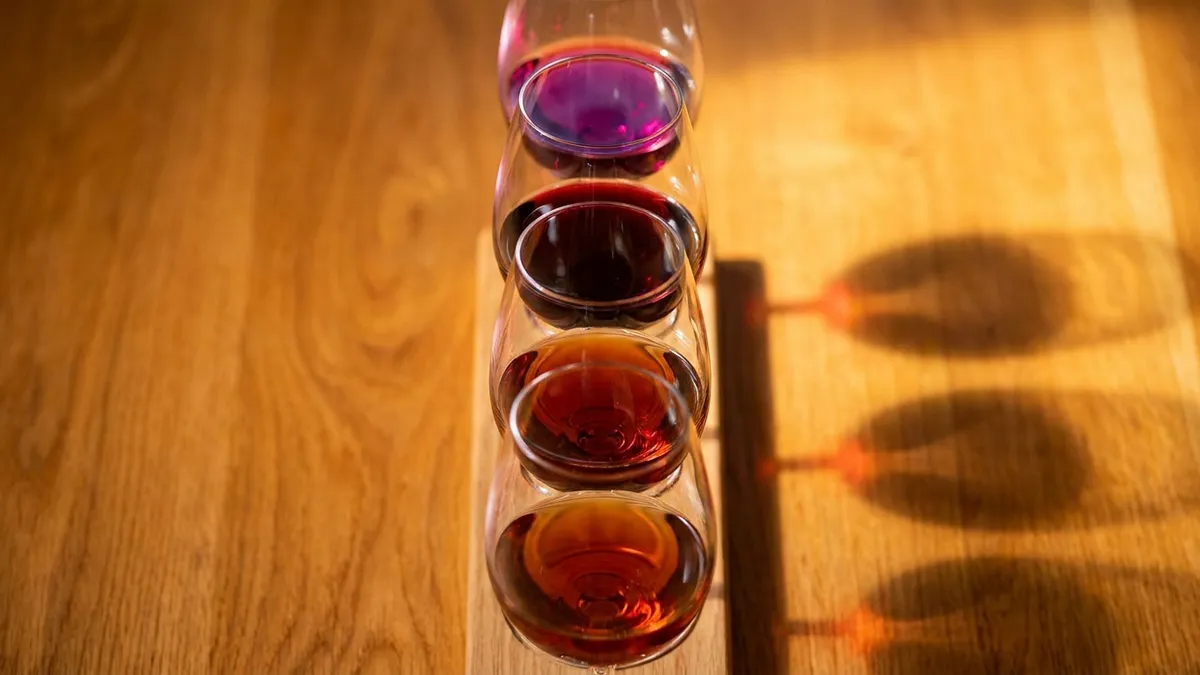
18. Winter Bold Reds
Four full-bodied reds for cold months. Cabernet, Syrah, Malbec, and Nebbiolo. Pour with a slow-cooked dish or a hard cheese plate.
- Bottle count: 4
- Format: label-up, fullest body last
- Learning goal: tannin and body across four flagship grapes
Advanced Themes
Save these for tasters who already know the basics. The variables are subtler and the differences smaller — but the lessons go further.
19. Vertical Tasting
Same wine, four vintages. The most direct way to see how time changes a wine. A Bordeaux blend or a structured Italian red is the best subject.
- Suggested grapes: Cabernet-based Bordeaux, Sangiovese (Brunello or Chianti Classico), Nebbiolo (Barolo or Barbaresco)
- Bottle count: 4 vintages from the same producer
- Format: blind by vintage, reveal at end
- Learning goal: the arc of aging — see our vertical wine tasting deep-dive and tasting young vs aged wine primer
20. Regional Vintage Horizontal
Same vintage, same region, four producers. The opposite of a vertical — vintage stays constant, producer becomes the variable. Reveals house style and winemaking philosophy.
- Suggested regions: Châteauneuf-du-Pape, Barolo, Napa Cabernet, Côte de Beaune Chardonnay
- Bottle count: 4 producers
- Format: blind
- Learning goal: in a single appellation and vintage, four winemakers can produce four very different wines — read our horizontal wine tasting primer
Tannin Ladder Bonus
Four reds in ascending tannin — Pinot Noir, Sangiovese, Cabernet, Nebbiolo. The progression reveals what tannin actually feels like and how it interacts with body and acid, a perfect setup for our understanding tannins, acidity, and body primer. Pair with wine sweetness scale and blind wine tasting tips for two more variations once you have run the first twenty.
How to Pick the Right Theme for Your Group
A few quick filters to choose from the twenty:
- Mostly beginners? Start with theme 1, 2, or 4. Contrasts are loud, learning is fast.
- Mixed levels? Pick compare-and-contrast (5 through 9). Beginners catch the obvious differences; advanced tasters catch the subtle ones.
- Travelers? Pick a geography theme (10 through 14). Pour with a printed map.
- Holiday or season? Pick from 15 through 18. Match the wine to the moment.
- Experienced tasters? Run a vertical (19) or horizontal (20).
Beyond the theme, mechanics matter — identical stemmed glasses, two-ounce pours, the right serving temperature, and a clear order from light to heavy. Add printed tasting cards and a ranking at the end.
Sommelier note: a tight theme is more important than expensive bottles. Four entry-level wines under one clear theme will outperform four random pricey bottles every time.
Make the Notes Last Longer Than the Evening
The hardest part of a themed tasting is not the wine — it is remembering what you tasted a month later. Paper cards end up in a drawer; phone notes get lost.
The Sommy app's tasting journal logs each wine from a themed flight with grape, region, vintage, color, aroma, palate, and rank fields. Run a Pinot Noir Around the World tasting on Saturday and the four entries are there on Tuesday — searchable, comparable, and ready for the next time you stand in front of the Pinot shelf. For more on the language of tasting notes, see our wine tasting notes template and wine tasting vocabulary cheat sheet.
The Bottom Line
Twenty wine tasting theme ideas, one underlying principle. Hold one variable steady, change one other, and the wines teach themselves. Pick one theme — same grape two regions, an old world versus new world flight, a vertical, a sparkling showdown — and run it with four bottles, identical glasses, and a printed card per guest. Two hours, one clear lesson, and a roomful of guests who actually remember what they tasted.
FAQ
What is the easiest wine tasting theme for beginners?
Same grape, different places. Four Pinot Noirs from Burgundy, Oregon, California, and New Zealand is the classic beginner format because the comparison is dramatic and immediate. The grape stays constant so any difference comes from climate and winemaking. It teaches the grape and four regions in one ninety-minute sitting.
How many bottles should a themed tasting include?
Four bottles is the sweet spot for most themed tastings with four to eight guests. Two is a casual side-by-side. Six is the upper limit before palate fatigue sets in. Eight or more belongs to structured multi-hour events. Stick to four for a first themed tasting and add a welcome bottle as a fifth.
What is the difference between a vertical and a horizontal tasting?
A vertical tastes the same wine across multiple vintages. A horizontal tastes different producers from the same region and vintage. Verticals reveal aging and vintage variation. Horizontals reveal house style. Both hold most variables constant so one specific factor becomes the focus of the evening.
Can you do a themed tasting on a small budget?
Yes. Four bottles at fifteen dollars each is enough for a real themed tasting. The structure produces the learning, not the price. Same-grape and old-world-versus-new-world themes work especially well at the budget tier because regional differences read clearly even in entry-level wines from each place.
Should themed tastings always be blind?
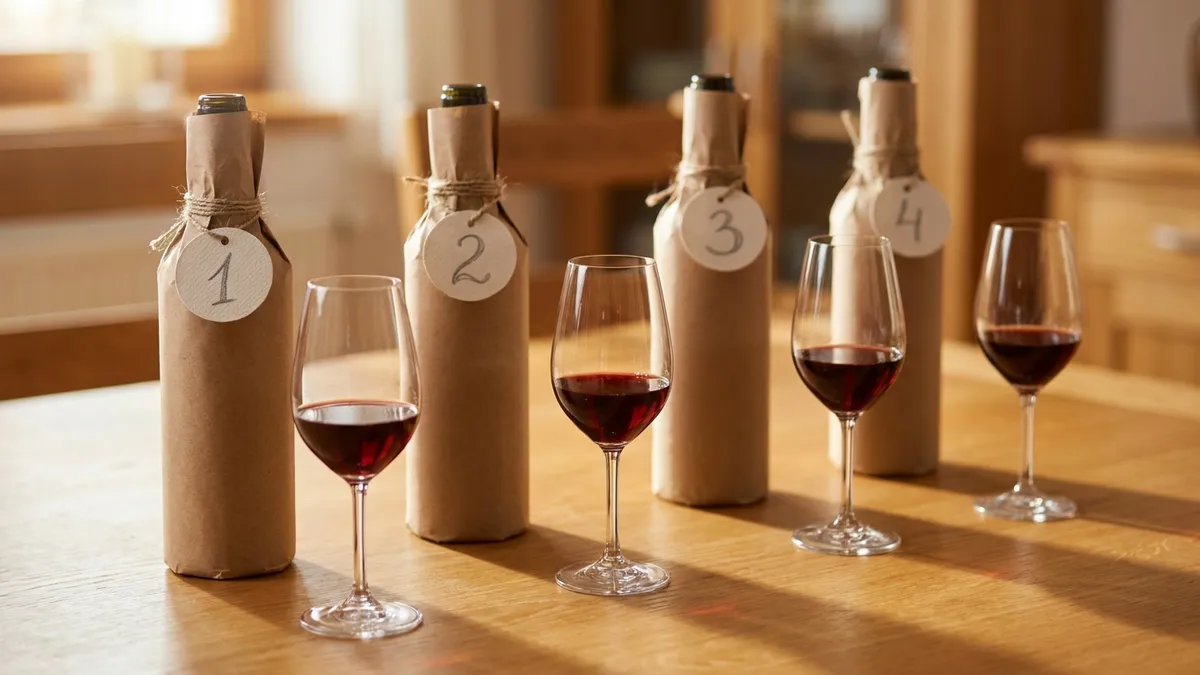
Blind is recommended but not required. Wrapping bottles in paper bags removes price and label bias and makes the comparison honest. For social tastings, label-up is fine. For learning-focused tastings, blind tells you what your palate actually thinks rather than what your expectations want.
What theme works best for a holiday gathering?
A sparkling method showdown is the classic holiday opener. For Thanksgiving, a Pinot Noir around the world flight pairs with the food. For winter, full-bodied reds from four regions or a port and dessert wine flight closes a long meal. Match the theme to the meal and the season for best results.
Frequently Asked Questions
What is the easiest wine tasting theme for beginners?
Same grape, different places. Four Pinot Noirs from Burgundy, Oregon, California, and New Zealand is the classic beginner format because the comparison is dramatic and immediate. The grape stays constant so any difference you taste comes from climate and winemaking. It teaches the grape and four regions in one ninety-minute sitting.
How many bottles should a themed tasting include?
Four bottles is the sweet spot for most themed tastings with four to eight guests. Two is a casual side-by-side. Six is the upper limit before palate fatigue sets in. Eight or more belongs to structured multi-hour events with spitting. Stick to four for a first themed tasting and add a welcome bottle as a fifth.
What is the difference between a vertical and a horizontal tasting?
A vertical tastes the same wine across multiple vintages — same producer, same vineyard, different years. A horizontal tastes different producers from the same region and vintage. Verticals reveal how a wine ages and how vintages differ. Horizontals reveal house style. Both hold most variables constant so one specific factor becomes the focus.
Can you do a themed tasting on a small budget?
Yes. Four bottles at fifteen dollars each is enough for a real themed tasting. The structure produces the learning, not the price. Same-grape and old-world-versus-new-world themes work especially well at the budget tier because regional differences read clearly even in entry-level wines from each place.
Should themed tastings always be blind?
Blind is recommended but not required. Wrapping bottles in paper bags and numbering them removes price and label bias and makes the comparison honest. Reveal at the end. For social tastings, label-up is fine and easier to discuss. For learning-focused tastings, blind tells you what your palate actually thinks.
What theme works best for a holiday gathering?
A sparkling method showdown is the classic holiday opener — Champagne, Prosecco, Cava, and an English sparkling poured side by side. For Thanksgiving, a Pinot Noir around the world flight pairs with the food. For winter, full-bodied reds from four regions or a port and dessert wine flight closes a long meal.
How do you keep a themed tasting from turning into casual drinking?
Pour two-ounce measures, use identical stemmed glasses, set out printed tasting cards, and give the flight a clear order from light to heavy. Cap at four to six wines and ninety minutes. Without structure, four bottles becomes a long cocktail hour within ten minutes — the theme is the structure.
Sommy Team
LinkedInFounder & Wine Educator
The Sommy Team is building the world's most approachable wine education app, helping beginners develop real tasting skills through structured courses and AI-guided practice.