What Is Wine Finish? Length, Persistence, and What It Tells You

By the Sommy Team — AI-assisted, human-edited.
Updated Apr 29, 2026
Contents (13)
- The Part of Tasting That Tells You Everything
- What Is Wine Finish, in 90 Seconds
- Finish, Length, Persistence, Aftertaste — Same Window
- The WSET Wine Finish Scale
- What Creates Wine Finish: The Chemistry
- Reading the Finish: A Second-by-Second Guide
- Common Finish Descriptors and What They Mean
- Finish Across Wine Styles
- How to Read Wine Finish: A Six-Step Method
- Why Beginner Palates Miss the Finish
- Long Finish vs Alcohol Burn: The Critical Distinction
- A Practical At-Home Finish Test
- Train the Skill, One Glass at a Time
TL;DR
Wine finish is the lingering taste, sensation, and impression after you swallow. The WSET scale runs from short under five seconds to very long beyond forty-five. Long finish requires concentration, balance, and complexity, which is why it correlates with quality. Tannin, acid, glycerol, and aromatic compounds all contribute to the duration.
The Part of Tasting That Tells You Everything
Most casual drinkers stop tasting the moment they swallow. The glass goes down, the conversation moves on, and the next sip arrives within seconds. Sommeliers do the opposite. They go quiet, sit still, and wait. They are reading the wine finish — the lingering taste, sensation, and impression that remains after the wine has left the mouth.
The finish is also called length, persistence, or aftertaste. Whatever the term, it points to the same window of attention: the seconds between swallow and silence, when the wine is still telling you about itself even though the liquid is gone. This window is where most quality information hides, and it is the part of tasting that beginners almost always skip.
This guide covers exactly what wine finish means, how to read it on the WSET scale from short to very long, the chemistry that creates persistence, what it actually feels like across different wine styles, and a clean training method for noticing it on every glass you pour.
What Is Wine Finish, in 90 Seconds
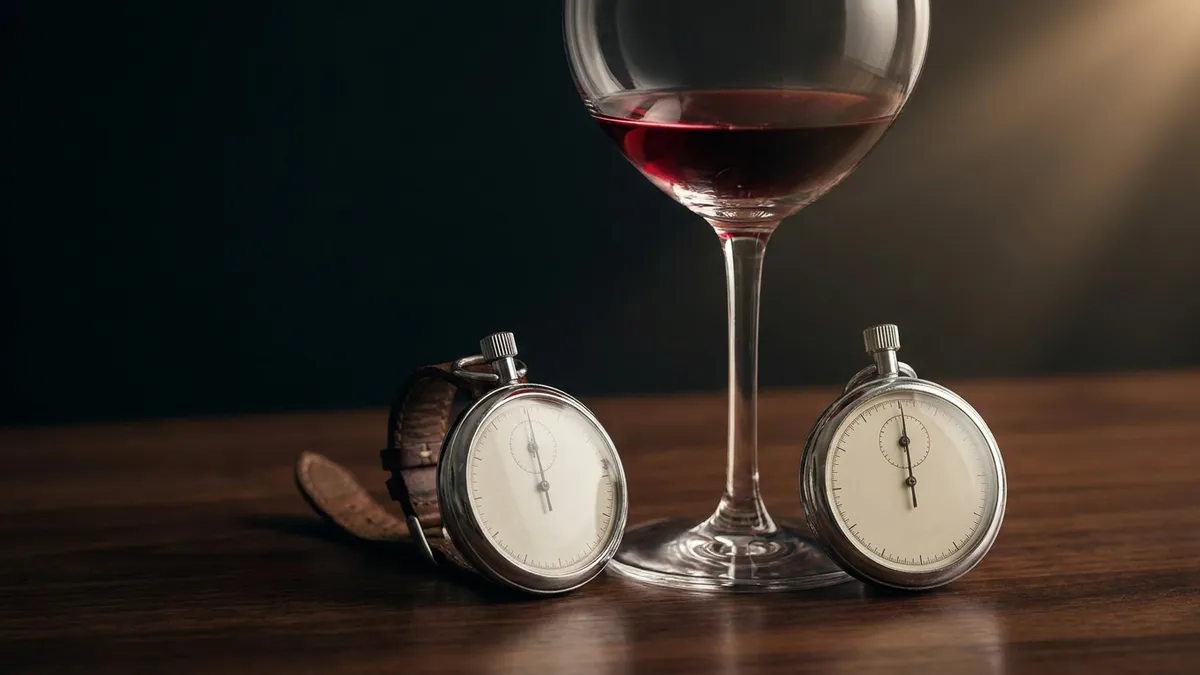
Wine finish is the lingering taste, sensation, and impression that remains after you swallow or spit a sip of wine. It is also called length, persistence, or aftertaste. The WSET scale runs in six tiers — short under five seconds, medium-minus five to ten, medium ten to fifteen, medium-plus fifteen to twenty-five, long twenty-five to forty-five, and very long beyond forty-five seconds. Long finish correlates with quality because it requires concentration, balance, and complexity — the three traits that demand low yields, careful winemaking, and time. Tannins, acidity, glycerol, alcohol, and aromatic compounds all contribute. To read it, swallow, breathe slowly through the mouth, count steady seconds, and note what remains last. Skip the first sip and time the third for a calibrated reading.
Finish, Length, Persistence, Aftertaste — Same Window
Wine vocabulary loves overlap, and finish is a prime example. Four words point at roughly the same thing:
- Finish — the most common term; the full post-swallow experience
- Length — the duration component, often measured in seconds
- Persistence — flavor that continues registering on the palate
- Aftertaste — what remains last, often associated with structural residue
In casual use the four terms are interchangeable. In formal tasting structures they describe slightly different facets. For a deeper breakdown of how length specifically is measured in seconds, the what is wine length guide covers the caudalie unit. The wine finish meaning explainer offers another angle on the same window.
The WSET Wine Finish Scale
The Wine and Spirit Education Trust uses a six-tier scale that maps cleanly onto seconds. It is the cleanest framework for putting numbers on a slippery sensation, and the one used in formal tasting exams worldwide.
- Short — under 5 seconds; most flavor disappears quickly
- Medium-minus — 5 to 10 seconds; brief but noticeable
- Medium — 10 to 15 seconds; the everyday baseline for well-made wine
- Medium-plus — 15 to 25 seconds; clear signal of quality
- Long — 25 to 45 seconds; serious wines, often with evolution
- Very long — beyond 45 seconds; rare, legendary, or aged-greats territory
Most everyday bottles you drink at home land in the medium tier. A reasonable mid-range wine with a few minutes of air will deliver medium-plus. Long and very long are not common — they require concentration and balance that show up in the price tag. A young Vinho Verde might read short. A serious aged Barolo can sustain very long with new aromas still arriving past the half-minute mark.
What Creates Wine Finish: The Chemistry
Finish is not magic. It is a measurable consequence of what is dissolved in the wine and how those compounds release on the palate over time. Five contributors do most of the work.
Tannins
Tannins — the drying, gripping sensation found in red wines, mostly from grape skins, seeds, and oak — bind to proteins in saliva and create a persistent textural imprint on the gums and tongue. That imprint takes time to fade. Long-finishing reds usually carry well-integrated tannin that lingers without becoming harsh.
Acidity
Acidity — the bright, mouth-watering tartness in wine — keeps the salivary glands working long after swallowing. That sustained salivation extends the perception of flavor. Acidity also acts as a carrier, lifting other compounds across the palate. Crisp whites with high acidity can deliver surprisingly long finishes for their weight.
Glycerol and Alcohol
Glycerol — a viscous, slightly sweet alcohol byproduct of fermentation — coats the palate and slows the rate at which other compounds are cleared. Alcohol itself contributes warmth that lingers, although excessive alcohol perception reads as heat rather than length.
Aromatic Compounds
After swallowing, volatile aromatic molecules continue to evaporate from the warm tissues at the back of the mouth and rise through the nasopharynx to the olfactory receptors. This is retro-nasal smell, and it is where most of the actual flavor in finish comes from. The retronasal smell wine guide covers why through-the-throat aromas drive most of perceived taste.
Phenolic Structure
Polymerized polyphenols — the long-chain compounds built up over time and especially during aging — hold flavor and structure together longer than free, simple phenols. Aged wines often show longer finish than their younger counterparts because of this slow polymerization process.
When all five elements work in proportion, the finish is long, evolving, and balanced. When one dominates — usually alcohol or harsh tannin — the finish reads as hot or grippy rather than long.
Reading the Finish: A Second-by-Second Guide
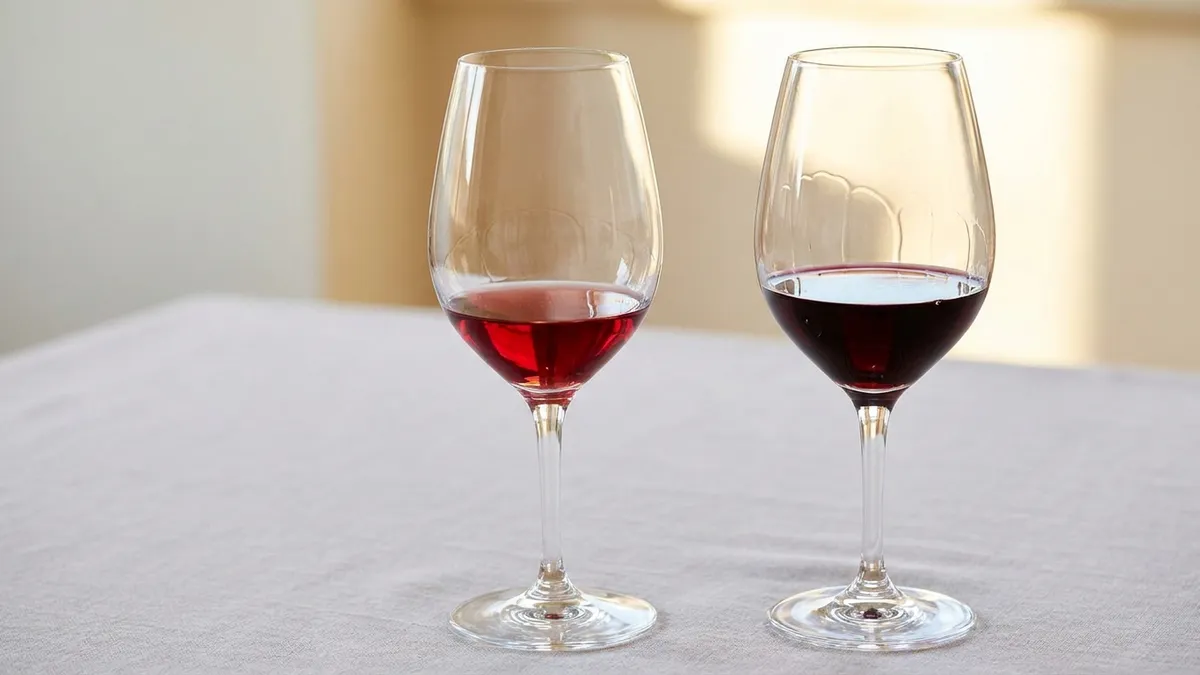
When you sit still after a sip, the finish is not flat. It evolves in phases, and trained tasters listen for the transitions.
- Seconds 0 to 5 — peak flavor; the wine is still echoing the palate impression of the sip itself
- Seconds 5 to 15 — secondary phase; new notes emerge that were masked during the active sip, often spice, mineral, or oak nuance
- Seconds 15 to 30 — base phase; primary fruit recedes, leaving structural residue — tannin grip, acid lift, alcohol warmth
- Seconds 30 plus — true finish; only the most concentrated wines still register here, usually with quiet evolution rather than fresh notes
Counting alone is not the goal. The richer measurement is what changes across the count. A wine that starts with red cherry, transitions to clove and graphite at twelve seconds, then settles into a quiet mineral edge at twenty is showing complexity. A wine that reads the same flavor for the whole window — even a long one — is loud rather than complex.
Common Finish Descriptors and What They Mean
Tasting notes use a stable vocabulary for finish. Knowing the words sharpens the read.
- Clean — no off-flavors, simple and graceful departure
- Long — persists 25 seconds or more
- Lingering — extends with subtle evolution rather than a flat hold
- Drying — tannin-driven; makes the mouth pucker after swallowing
- Bitter — sometimes from extended phenolic, sometimes from imbalance
- Hot — alcohol perception dominates; a sign of imbalance
- Crisp — acid-driven, refreshing, palate-cleansing
- Mouth-watering — high-acid styles that keep saliva flowing
- Elegant — balanced, harmonious, no single component leading
- Rustic — drying or coarse grip, common in traditional reds
The wine tasting vocabulary cheat sheet catalogs more terms with definitions if a tasting note word ever stops you mid-sentence.
Finish Across Wine Styles
Finish expectations are style-relative. A short finish on a refreshing white is appropriate. A short finish on a premium aged red is a problem. Calibrate the read against the style.
- Light white (Pinot Grigio, Vinho Verde) — 5 to 10 seconds; quick, clean
- Aromatic white (Riesling, Gewürztraminer) — 10 to 20 seconds; aromatic carry
- Oaked Chardonnay — 15 to 25 seconds; weight from oak and lees
- Rosé — 5 to 15 seconds; fresh by design
- Light red (Beaujolais, fresh Pinot Noir) — 10 to 20 seconds; transparent persistence
- Medium red (Sangiovese, Tempranillo Crianza) — 15 to 25 seconds; structural baseline
- Bold red (Cabernet Sauvignon, Syrah) — 20 to 40 seconds; tannin-driven length
- Aged Bordeaux or Barolo — 30 to 60-plus seconds; tertiary evolution
- Dessert wine (Sauternes, ice wine) — 30 to 60 seconds; sugar holds flavor
- Tawny Port — 20 to 40 seconds; oxidative warmth carries
The Cabernet Sauvignon vs Merlot guide covers why Cab tends toward grippier, longer finishes than Merlot's plusher tail. The Bordeaux blend grapes overview explains how blending shapes the structure that drives finish length.
How to Read Wine Finish: A Six-Step Method
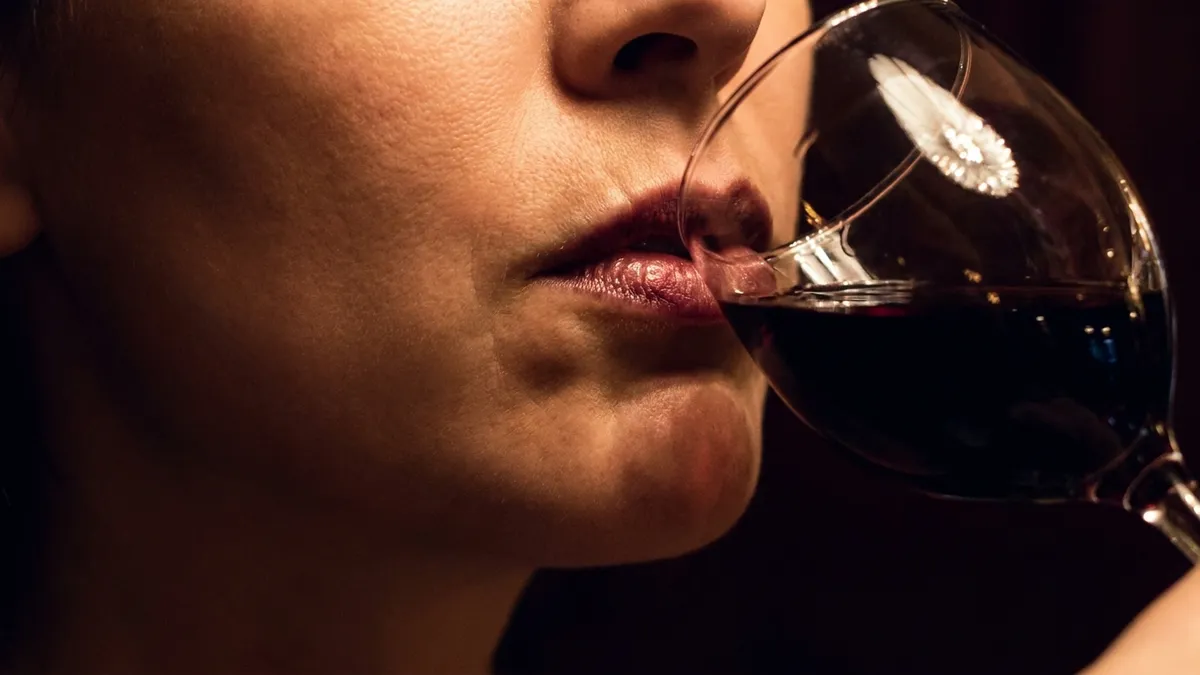
The technique is unfussy. Treat it like a kitchen-timer ritual rather than a guess.
- Warm the wine to its proper temperature. Cold mutes aromatics and shortens the perceived finish. Whites should be 8 to 12°C, reds 14 to 18°C.
- Take a real sip. Hold the wine on the palate for three or four seconds so retro-nasal aromas develop.
- Swallow or spit cleanly. Do not breathe in sharply afterward, and do not drink water — either move clears the palate.
- Begin a steady silent count. "One-thousand-one, one-thousand-two." Match the rhythm of a clock, not a heartbeat.
- Stop when the flavor is genuinely gone. Not when it shifts. When wine character is no longer detectable, the count ends.
- Note the length and what changed across it. "Twenty seconds. Cherry fades at six, clove at twelve, mineral edge at sixteen, soft warmth to the end." The number is half the value. The evolution is the rest.
Skip the first sip when you can. The first sip on a fresh palate often reads artificially long. The third or fourth sip gives a calibrated number.
For more on building structured tasting habits, the how to taste wine like a sommelier walkthrough covers the broader sensory routine that wraps around the finish count, and the how to describe wine guide helps put the evolving notes into clear words.
Why Beginner Palates Miss the Finish
Finish awareness is rarely missing because the wine is wrong. It is usually missing because the conditions are. A few common habits quietly erase the read.
- Eating with the wine — food coats the palate and overwrites the finish window
- Drinking quickly — back-to-back sips truncate the previous finish
- Talking through the swallow — the larynx and tongue clear the palate
- Lack of attention — most beginners simply do not pause; the finish is real but unread
- Cold serving temperature — cold reds and over-chilled whites can read short by 30 to 50 percent
- Palate fatigue — late in a tasting, every wine reads shorter than it really is
The fix is structural rather than mystical: pour the wine at the right temperature, sip without interruption, swallow, breathe slow, count, and write the number down. Within ten bottles of practice the calibration becomes automatic.
The common wine tasting mistakes guide covers more habits worth breaking, and the develop your wine palate roadmap offers a longer training arc.

Long Finish vs Alcohol Burn: The Critical Distinction
Beginners often confuse the two, which leads to over-rating high-alcohol wines as long and under-rating subtler classics as short. The distinction is about quality of persistence.
A long finish evolves. Notes shift across the seconds. New aromas keep arriving. The wine feels balanced — none of acid, tannin, or alcohol bullies the others off the palate. The duration is real flavor, not just heat.
Alcohol burn does not evolve. It is harsh, single-note, often bitter or sharp at the back of the throat. The sensation lingers, but nothing else does. If a wine feels hot rather than long, that is an imbalance, not persistence.
The check is simple: at fifteen seconds, can you still describe specific flavors, or only warmth? Specific flavors mean long finish. Only warmth means hot finish. They feel similar in the moment and very different on the tasting note.
A Practical At-Home Finish Test
The fastest way to internalize the WSET scale is a side-by-side contrast. Pick same-grape wines from very different price tiers and time both.
- Buy a 15-dollar bottle and a 40-dollar bottle of the same grape
- Pour both blind in identical glasses, labels hidden
- Sip each in turn, swallow, breathe slow, and count
- Write the length and note what evolved across the seconds
The price-quality correlation almost always shows in finish length more than in any other single dimension. Aroma can be similar across tiers. Flavor on the palate can be similar. The finish is where the gap opens cleanly. Even a beginner palate can usually see a six-second versus twenty-second contrast within a few sips. The how to compare two wines guide walks through the side-by-side method in more detail.
Train the Skill, One Glass at a Time
Finish awareness is a discipline skill, not a talent. The technique is trivial — count after swallowing — and the calibration builds quickly. After about ten timed bottles, the difference between a five-second wine and a twenty-five-second one becomes obvious without conscious counting. The numbers turn into a sense.
The Sommy app builds finish counting into a structured tasting flow. After each sip, the journal prompts you to log a length estimate alongside aromas, structure, and overall impression — so you can track persistence across hundreds of wines and watch your palate sharpen over time. The app's AI guidance also flags when a length read seems off-pattern for a wine's style, which calibrates the scale faster than self-assessment alone.
For the broader vocabulary that wraps around the finish read, the wine glossary at /learn/glossary/ catalogs the structural terms that appear in tasting notes. Visit sommy.wine to start measuring every glass you drink. A little regular practice turns finish evaluation into automatic second-nature reflex — and once it is automatic, the difference between a forgettable bottle and a memorable one becomes a number you can read in real time.
The finish is the tail of the wine. Notice it. It tells you more about quality than the label or the price ever will.
Frequently Asked Questions
What does wine finish mean in plain language?
Wine finish is everything you continue to taste, feel, and notice after you swallow or spit a sip of wine. It includes the lingering flavors, the way the structure fades, and any warmth, drying grip, or evolving aromas that remain. Finish is also called length, persistence, or aftertaste, and it is the single most honest quality signal in the glass.
How long should a good wine finish last?
It depends on style. Crisp light whites are designed for finishes of five to ten seconds. Medium reds run fifteen to twenty-five. Bold reds and aged classics push past thirty, sometimes well beyond forty-five. The benchmark is style-relative. A short finish on a fresh rosé is appropriate. A short finish on a premium Cabernet is a quality red flag.
What is the WSET wine finish scale?
The WSET tasting scale uses six tiers. Short finishes fade in under five seconds. Medium-minus runs five to ten. Medium covers ten to fifteen. Medium-plus reaches fifteen to twenty-five. Long stretches twenty-five to forty-five. Very long extends beyond forty-five seconds, which is rare and usually reserved for legendary or aged wines with exceptional concentration and balance.
What creates a long wine finish?
Four main factors drive finish length. Tannins create a drying grip that persists on the gums and tongue. Acidity triggers ongoing salivation and a bright lift. Glycerol and alcohol leave a viscous warmth. Aromatic compounds continue to evaporate from the mucosa, reaching the nose retro-nasally. Long finish needs balance among all four. Otherwise it reads as harsh rather than persistent.
Is a long finish the same as alcohol burn?
No. A long, balanced finish is complex and evolving, with multiple flavor layers shifting over the seconds. Alcohol burn is harsh, single-note, and often bitter or sharp. If a wine feels hot rather than long, that is an imbalance, not persistence. Trained tasters separate the two by paying attention to whether new flavors keep appearing or whether only heat remains.
How do I train myself to notice wine finish?
Sip the wine, hold it for a few seconds, swallow or spit, then go silent and breathe slowly through the mouth. Count steady seconds until the flavor genuinely disappears, not when it merely changes. Note what remains last, whether it is acid, tannin, fruit, or mineral. Most beginners miss finish because they drink quickly, talk through it, or eat alongside it.
Why does wine finish correlate with quality?
Long finish requires concentration, balance, and complexity, which are the three traits that make a wine difficult and expensive to produce. Concentration comes from low yields. Balance comes from careful winemaking. Complexity comes from good fruit and time. When all three align, the seconds keep going and new layers keep arriving. Length is the structural fingerprint of effort.
Can a cheap wine have a long finish?
Sometimes, but rarely. Long finish almost always tracks with concentration and extract, both of which cost money to produce. Some grape varieties — Tempranillo, Nebbiolo, and Sangiovese among them — can deliver surprising persistence at lower price points. The reliable rule is that pouring two same-grape wines side by side at twelve dollars and forty dollars exposes the gap clearly.
Sommy Team
LinkedInFounder & Wine Educator
The Sommy Team is building the world's most approachable wine education app, helping beginners develop real tasting skills through structured courses and AI-guided practice.