What Does "Jammy" Mean in Wine Tasting?

By the Sommy Team — AI-assisted, human-edited.
Updated Apr 29, 2026
Contents (10)
- TLDR
- What Jammy Wine Means, in 100 Words
- Defining Jammy Precisely
- What Causes Jammy Character in Wine
- Where Jammy Wine Shows Up
- Why Tasters Love or Critique Jammy Wine
- Jammy vs Old World Dried Fruit — Different Mechanism
- How to Train Your Palate on Jammy Character
- Pairing Implications for Jammy Wines
- Putting It All Together
TL;DR
Jammy in wine describes cooked-down, syrupy, overripe black-fruit character — blackberry preserves, blueberry compote, fig, prune. It comes from very high grape ripeness, high alcohol, and low acid, not from added sugar. Common in warm-climate Zinfandel, Australian Shiraz, Argentine Malbec, and Napa Cabernet, jammy wines split tasters between lush appreciation and classical critique.
TLDR
Jammy in wine describes cooked-down, syrupy, overripe black-fruit character — blackberry preserves, blueberry compote, fig, prune. It comes from very high grape ripeness, high alcohol, and low acid, not from added sugar. Common in warm-climate Zinfandel, Australian Shiraz, Argentine Malbec, and Napa Cabernet, jammy wines split tasters between lush appreciation and classical critique.
What Jammy Wine Means, in 100 Words
Jammy wine is a tasting note for cooked-down, syrupy, overripe black-fruit character — blackberry jam, blueberry compote, prune, fig, dried cherry. The cause is very high grape ripeness, sometimes with berries starting to raisin on the vine. Jammy in wine is not the same as sweet. Residual sugar is often near zero. The lush impression comes from concentrated fruit esters, high alcohol, and low acidity working together. The style shows up most often in warm-climate Zinfandel, Australian Shiraz, Argentine Malbec, Napa Valley Cabernet, and late-harvest Grenache. Some palates love it. Classical tasters often critique it as lacking restraint.
Defining Jammy Precisely
The word jammy gets thrown around loosely on shelf talkers and in casual reviews, but it has a specific sensory meaning that separates it from neighboring terms.
Jammy vs Juicy
A juicy wine reads as fresh and pure — like biting into a ripe summer berry that still drips with moisture. The fruit aromas suggest something you could eat off the vine. Juicy is a moderate-climate signature. You will hear it used for Beaujolais, fresh Pinot Noir, light Chianti, or cool-climate Syrah.
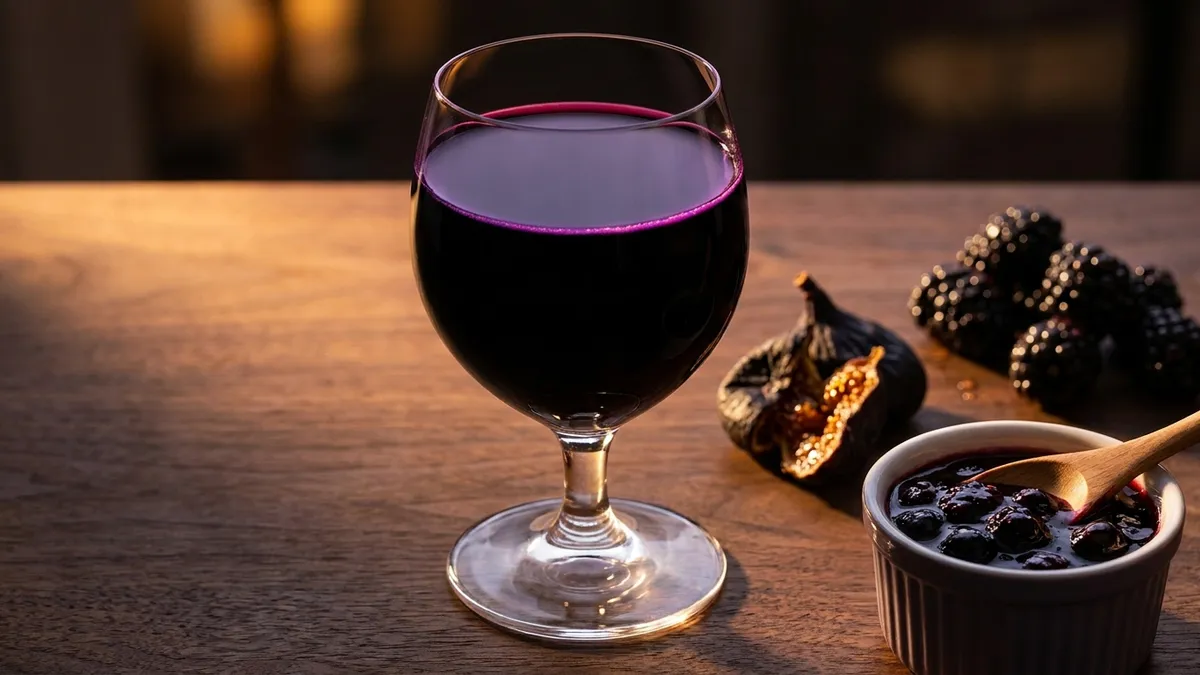
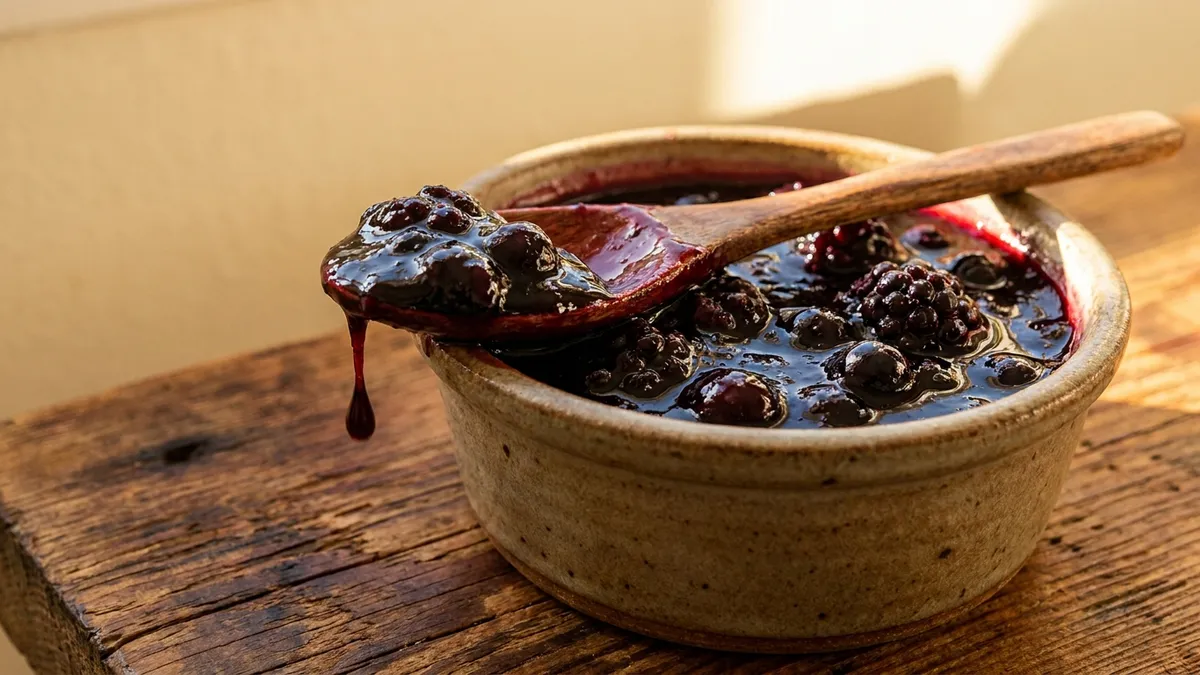
A jammy wine has moved past juicy. The fruit no longer reads as fresh. It reads as cooked, reduced, and concentrated — closer to a spoon dragged through a saucepan of simmering preserves than a berry off the vine.
Jammy vs Ripe
Ripe sits one tier below jammy. Ripe fruit is plump and slightly cooked but still recognizable as the original fruit — baked black cherry, ripe blackberry, stewed plum. Ripe fruit dominates warm-climate moderate sites like Napa Cabernet and southern Rhône Grenache.
Jammy pushes further. The berries hung longer, sugar climbed higher, water evaporated, and the aromas slid from baked-fresh into preserve-and-dried-fruit territory. The full ripeness spectrum is covered in our guide to ripe vs green fruit character in wine.
Jammy vs Sweet
This is the confusion that trips up most beginners. Jammy is not the same as sweet.
A wine is sweet when it carries measurable residual sugar after fermentation. A wine is jammy when its aromas and fruit profile recall preserves. Most jammy wines are technically dry — residual sugar of one or two grams per liter, well below human detection threshold for a red wine with body and tannin to balance it.
The lush impression a jammy wine leaves on the palate is a sensory illusion built from three ingredients:
- Concentrated fruit esters — the same compounds that make actual jam smell intense
- High alcohol — usually 14 to 16 percent, which adds viscous body and a soft warming feel
- Low acidity — removes the sharpness that would otherwise cut the fruit
For a deeper look at why dry wines can taste sweet, see what does dry wine mean — the same illusion sits at the heart of many "sweet but dry" reds.
What Causes Jammy Character in Wine
Jammy fruit is a climate-and-timing story before it is a grape story.
Heat and Sun Exposure
Warm-to-hot growing seasons drive sugar accumulation in the berry past the point where the fruit still reads as fresh. Once a vineyard sees enough sun and heat, the fruit aromas tip into cooked territory. The same grape grown in a cool site rarely produces a jammy wine, even from a producer who chases lush styles.
Extended Hang Time
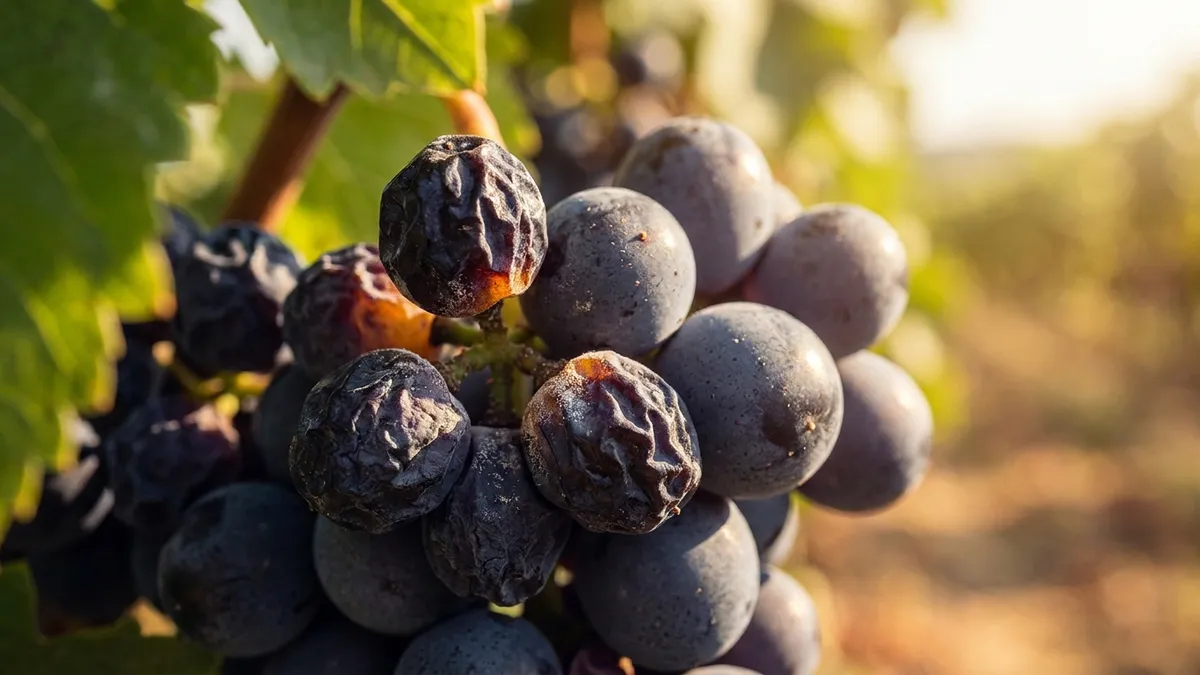
Some producers deliberately delay harvest to push ripeness further. The technique is sometimes called "extended hang time" or late harvest — leaving fruit on the vine past traditional picking windows so sugar climbs and a portion of the berries begin to dehydrate.
The dehydrated berries — sometimes called passito style in Italy — concentrate fruit and produce raisin and fig notes alongside fresher black fruit. The result is denser, lusher, and almost always jammy.
Near-Raisining on the Vine
In the hottest sites, individual berries shrivel like raisins while others stay plump. When all of those berries go into the press together, the wine inherits a dried-fruit signature on top of the fresh-fruit base. Prune, fig, and date show up in the glass even though the producer made no dessert wine.
Low Acidity
Acid drops as the grape ripens. Warm sites accelerate the drop. By the time the fruit is ripe enough to read as jammy, total acidity is usually low. Low acid reinforces the lush, soft, "sweet" sensation even when sugar is absent. Our guide to what is wine acidity covers why acid is the structural counterweight to ripe fruit.
High Alcohol
Sugar in the grape becomes alcohol after fermentation. Very ripe grapes produce wines often above 14.5 percent alcohol, sometimes climbing past 16 percent. High alcohol adds viscosity, body, and a soft warming impression that compounds the jammy effect.
Where Jammy Wine Shows Up
Certain styles produce jammy character almost by signature. Others rarely do.
Warm-Climate Zinfandel
California Zinfandel, especially from Lodi, Paso Robles, and parts of the Sierra Foothills, is the textbook jammy red. Blackberry jam, blueberry compote, raisin, baking spice — all wrapped in 15 percent alcohol and soft acid. The full grape profile is covered in our Zinfandel wine guide.
Australian Shiraz
Barossa Valley and McLaren Vale Shiraz lean firmly into jammy territory. Black plum jam, fig, blueberry preserves, mocha, and sweet vanilla oak define the modern Australian style. Cool-climate Australian Syrah from Yarra Valley or Tasmania reads completely differently — peppery, fresh, restrained — which highlights how much climate drives the jam, not the grape itself. The contrast between styles is covered in Syrah vs Shiraz.
Argentine Malbec
Mendoza Malbec from lower-altitude sites produces lush, dark, fig-and-blueberry-jam wines. High-altitude Mendoza sites like Uco Valley produce fresher, more floral Malbec — proof again that climate, not just the grape, decides whether jam shows up. The full picture is in our Malbec wine guide.
Late-Harvest Grenache
Grenache ripens to very high sugar levels and is often blended into rich, fig-and-strawberry-jam reds in the southern Rhône, Spain, and warm parts of Australia. Even in Châteauneuf-du-Pape from a hot vintage, jammy character can dominate.
Napa Valley Cabernet Sauvignon
Modern warm-vintage Napa Cabernet often crosses into jammy territory — black currant jam, plum compote, and dried cherry alongside the variety's classic structure. Some producers chase the lush style on purpose. Others fight it with earlier harvests and cooler hillside sites.
Why Tasters Love or Critique Jammy Wine
The same wine can earn a 95-point review from one critic and a dismissive shrug from another. The split is cultural as much as sensory.
The American Appreciation Camp
In the United States, particularly in casual tasting and supermarket categories, jammy wines are often the default favorite. The style is generous, immediate, and approachable. Beginners who find tannic, herbal, or austere wines off-putting often gravitate to lush jammy reds first. The style also pairs beautifully with American food culture — barbecue, burgers, smoked meats, and bold spice.
The Wine Spectator and Wine Advocate scoring systems have historically rewarded riper styles, partly reflecting reviewer preferences and partly reflecting reader demand. The 100-point scale is covered in wine scoring on the 100 point scale.
The Classical Critique Camp
Old-world critics, sommeliers trained in European traditions, and many natural wine drinkers often push back on jammy character. The critiques tend to follow predictable lines:
- The wine is one-note — heavy fruit with no other layers
- The high alcohol burns the palate and competes with food
- Low acidity makes the wine feel heavy after one glass
- The style does not age well — fruit fades and structural support is missing
- Restraint and freshness are virtues, not flaws
For a deeper look at the cultural divide, see new world vs old world tasting style — jammy character is one of the central battlegrounds in that argument.
Quality Within the Style
Neither camp is wrong. Within the jammy category there are wines of remarkable craft and wines that are simply soupy. The difference comes down to whether structural elements keep the jam in balance:
- Acidity high enough to refresh the palate between sips
- Tannin grippy enough to provide a backbone
- Length on the finish — covered in what is wine length — that lets the fruit fade gracefully
- Complexity beyond the fruit — savory, spicy, earthy notes that add dimension
A balanced jammy wine can be a thrill. An unbalanced one is fatiguing after half a glass.
Jammy vs Old World Dried Fruit — Different Mechanism
Some old-world wines also smell of dried fruit — fig, prune, raisin — but the cause is different. In aged Bordeaux, mature Rioja, or developed Barolo, those dried-fruit notes come from tertiary aromas that develop with bottle age, not from heat or extended hang time at harvest.
The mechanism matters because the supporting structure is different too. Aged old-world wines that show fig and prune still have firm acidity and integrated tannin underneath. The wine has evolved, not over-ripened. The full story of how aromas evolve over time is in our guide to primary, secondary, and tertiary aromas and tasting young vs aged wine.
A young Australian Shiraz with fig and prune got there through heat. A 25-year-old Bordeaux with the same descriptors got there through time. The wines taste nothing alike on the palate, even when the descriptor list overlaps on paper.
How to Train Your Palate on Jammy Character
Recognizing jammy character is a sensory skill that gets sharper with paired tastings.
Build a Reference Shelf
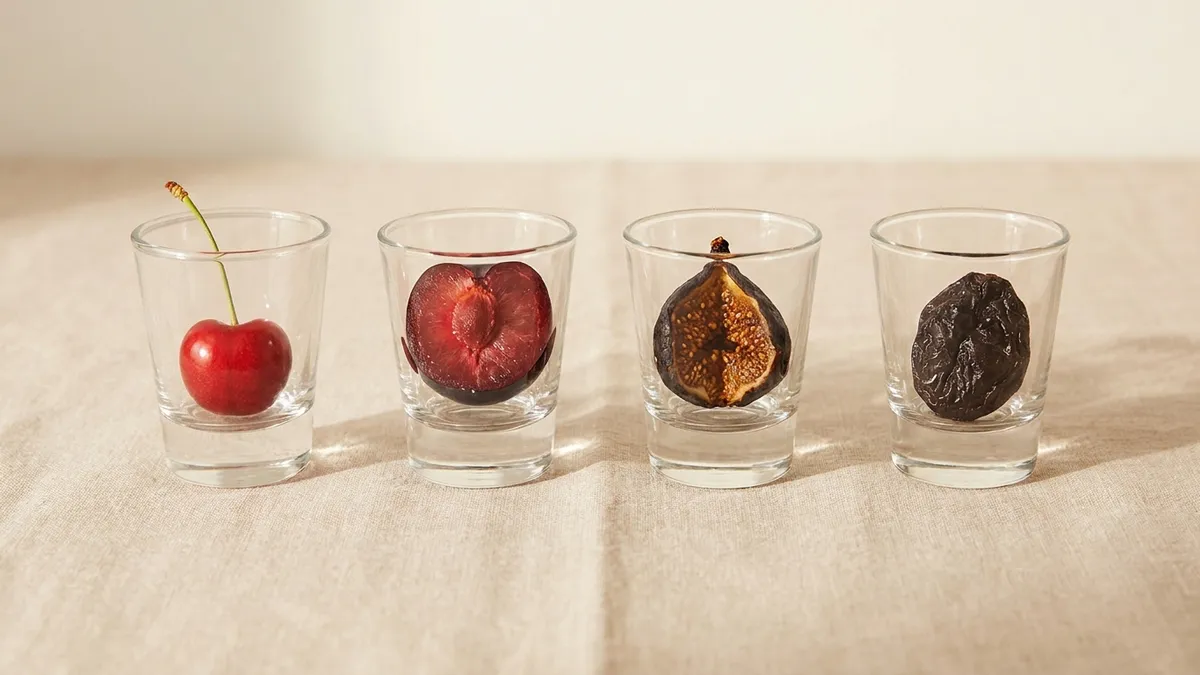
Pick up these items at a grocery store and smell them back to back:
- Fresh blackberries — the fresh-fruit reference
- A jar of high-quality blackberry preserves — the textbook jammy reference
- A handful of dried figs — the over-ripe reference
- A few prunes — the warm-climate signature
- A piece of dark chocolate — often appears alongside jammy fruit in oaked reds
Smell each one with your eyes closed. Memorize the gap between fresh blackberry and blackberry jam. That gap is the gap between a fresh-fruited Pinot Noir and a jammy Zinfandel.
Taste Side by Side
The fastest way to lock in the jammy descriptor is a paired tasting. Useful pairings:
- A Burgundy Pinot Noir next to a Lodi Zinfandel — fresh vs jammy
- A Rhône Syrah next to a Barossa Shiraz — peppery vs jammy
- A high-altitude Mendoza Malbec next to a low-altitude Mendoza Malbec — floral vs jammy
- A Loire Cabernet Franc next to a Napa Cabernet from a hot vintage — green vs jammy
For more on how to structure these comparisons, see how to compare two wines and horizontal wine tasting.
Use the Sommy App for Guided Practice
The Sommy app at https://sommy.wine/ walks beginners through structured tastings that flag fruit ripeness on the four-tier ladder. Logging your bottles over time surfaces patterns — which jammy regions you reach for, which classical styles you prefer, where your palate is sharpest. Combined with the AI-guided tasting flow, the descriptor stops feeling abstract and becomes a useful filter for picking your next bottle.
For a fuller practice routine, see how we recommend you develop your wine palate over time. Ripeness recognition slots neatly into that broader tasting skill set, and the Sommy app's olfactory reference kit covers the broader aroma library beyond the jam-and-fig axis.
Pairing Implications for Jammy Wines
Jammy reds need bold, assertive food. The dense fruit and high alcohol overwhelm anything delicate.
Reliable pairings:
- Smoked brisket, pulled pork, ribs, and other slow-cooked barbecue
- Grilled lamb chops with rosemary
- Beef short ribs braised in red wine
- Spicy sausages and chorizo
- Aged sharp cheddar, smoked Gouda, blue cheese
- Burgers loaded with bold toppings — bacon, blue cheese, caramelized onion
Pairings to avoid:
- Delicate white fish or raw seafood
- Vegetable-forward dishes without strong umami support
- Light pasta with cream sauces
- Anything herbal or vegetal — the jam will steamroll the dish
The general principle: match weight to weight. A 15 percent alcohol jammy Shiraz needs food with comparable density. The full pairing logic is in our wine food pairing guide.
Putting It All Together
Jammy character is a clear sensory signal. Once you can spot it, the glass starts telling you about climate before you reach the back label. Cooked-down preserves and dried fruit point to a warm site or a late harvest. Fresh, juicy fruit points to moderate climate or earlier picking. Both styles can be excellent — they just answer different questions for different drinkers.
The next time the word "jammy" shows up on a shelf talker, you will know exactly what the writer means and whether the bottle is what you actually want. And if you want to keep building the underlying tasting vocabulary, the Sommy app covers the full descriptor library through structured courses and AI-guided practice — the jam-versus-fresh distinction is one of dozens of tasting axes the app trains your palate on over time.
Frequently Asked Questions
What does jammy mean in wine?
Jammy is a tasting term for wine aromas and flavors that recall cooked-down fruit preserves — blackberry jam, blueberry compote, fig, prune, dried cherry. The grape was harvested very ripe, sometimes with berries starting to raisin on the vine. The wine reads as syrupy and lush even when it contains almost no residual sugar, because the impression comes from concentrated fruit esters, high alcohol, and low acidity rather than sweetness.
Is jammy wine sweet?
Most jammy wines are technically dry, with residual sugar near zero. The sweet impression is a sensory illusion. Very ripe grapes carry intense fruit esters that smell like preserves, high alcohol coats the tongue with a soft viscous feel, and low acidity removes the sharpness that would normally cut through. Together those three signals trick the palate into reading sweetness even though no sugar remains after fermentation.
What grapes produce jammy wines?
Warm-climate Zinfandel, Australian Shiraz, Argentine Malbec, late-harvest Grenache, and ripe Napa Valley Cabernet Sauvignon are the classic jammy reds. These varieties tolerate high heat, ripen unevenly with some berries dehydrating on the vine, and produce dense, sweet-fruited wines. Cool-climate versions of the same grapes show fresh, peppery, or mineral character instead of jam, so the style is driven by climate rather than the grape alone.
Is jammy wine high quality?
Jammy character does not signal quality on its own. Many drinkers love the lush, sweet-fruited style and pay premium prices for it. Classical tasters often critique the same wines as one-note, overripe, or lacking restraint. Quality at this end of the ripeness spectrum depends on whether acidity, tannin, and length keep the jam in balance or whether the wine collapses into flabby sweetness without structural support.
What is the difference between jammy and ripe in wine?
Ripe fruit reads as plump but still recognizable as the original fruit — baked black cherry, ripe blackberry, stewed plum. Jammy fruit pushes one tier further into preserve and dried-fruit territory — blackberry jam, fig, raisin, prune. The grape sat on the vine longer, sugar climbed higher, and water evaporated from the berry. Ripe is the moderate-warm sweet spot. Jammy is the warm-to-hot extreme.
What food pairs with jammy wines?
Jammy reds need bold, assertive food to keep up. Barbecue, grilled lamb, slow-braised short ribs, smoked brisket, pulled pork, spicy sausages, and aged cheddar all work. Spice handles the lushness well — the fruit-forward style flatters dishes that would overwhelm lighter reds. Avoid delicate seafood, vegetable-forward plates, or anything herbal — the jam will steamroll the dish.
Why do critics sometimes dislike jammy wines?
Classical European wine criticism prizes restraint, freshness, and food-friendliness. Jammy wines often run high on alcohol — sometimes 15 percent or more — with low acidity and dense fruit, which makes them less versatile at the table and less compatible with the freshness ideal of many old-world traditions. Critics from that school describe jammy wines as overripe, soupy, or hot, even when American or Australian audiences praise the same bottles.
How do I tell if a wine is jammy?
Smell first. If the aromas read as cooked or preserved fruit — blackberry jam, blueberry compote, fig, prune — rather than fresh fruit, the wine is heading into jammy territory. Then taste. A viscous, syrupy mouthfeel with soft acidity and warming alcohol confirms it. Cool-climate wines almost never present this profile, so origin on the back label is also a strong clue before you even pour.
Sommy Team
LinkedInFounder & Wine Educator
The Sommy Team is building the world's most approachable wine education app, helping beginners develop real tasting skills through structured courses and AI-guided practice.