The 100-Point Wine Scale: How to Score Wine Yourself

By the Sommy Team — AI-assisted, human-edited.
Updated Apr 29, 2026
Contents (11)
- TLDR
- The 100-Point Wine Scale, in One Paragraph
- Where the 100-Point Wine Scale Came From
- How the Rubric Works
- Tier Breaks
- What the Scale Is Good At
- What the Scale Is Bad At
- How to Score Wine Yourself With the 100-Point Rubric
- A Healthier Personal Alternative — the 1-to-10 Scale
- When to Trust a Score and When to Ignore It
- The Bottom Line
TL;DR
The 100-point wine scale starts at 50 and adds points for color, aroma, flavor, and balance. It emerged from American wine criticism in the 1980s and now sets prices, shelf placement, and shopper trust. The rubric is structured but subjective — and a personal 1-10 scale is more useful for everyday drinking.
TLDR
The 100-point wine scale starts at 50 and adds points for color, aroma, flavor, and balance. It emerged from American wine criticism in the 1980s and now sets prices, shelf placement, and shopper trust. The rubric is structured but subjective — and a personal 1-10 scale is more useful for everyday drinking.
The 100-Point Wine Scale, in One Paragraph
The 100-point wine scale is a quality-rating framework where every drinkable wine starts at 50 and earns points for color (about 5), aroma (about 15), flavor (about 20), and structure or balance (about 10), with the exact split varying by publication. American critic Robert Parker popularized the format in the late 1970s and the major English-speaking publications adopted similar variants. Tier breaks are roughly 95 to 100 classic, 90 to 94 outstanding, 85 to 89 very good, 80 to 84 good but unmemorable, and below 80 flawed or faulty. Anything under 80 is rarely published, which compresses real-world scores into a 20-point band. The system is influential, structured, and unavoidable — but it is also subjective, prone to inflation, and biased toward the rubric of the taster issuing it.
Where the 100-Point Wine Scale Came From
Before the late 1970s, most serious wine criticism used a 20-point scale. The European tradition — Decanter, Jancis Robinson, and most academic wine programs — still leans on it.
Then Robert Parker, an American lawyer turned wine critic, launched a newsletter that scored wines on a 100-point system. He felt the 20-point model was too tight at the top, too unfamiliar to American shoppers, and too easily fudged into half-points and quarter-points. That single editorial decision reshaped the global wine trade.
The 100-point format borrowed directly from the United States academic grading model. Anything below 50 is failing. 70 is passing. 90 is excellent. 95 and up is exceptional. American readers already understood the shape of that ladder, so a 92-point wine instantly read as high quality the way a 92 percent on a school report did.
Within a decade, most major publications writing for English-speaking audiences had converged on the format. Today, every mainstream English-language wine magazine and influential critic publishes on a 100-point scale, with each one applying their own internal rubric.
The European 20-point world has not disappeared — Jancis Robinson still uses it, and most professional buyers trained through the systematic approach to tasting are comfortable in either format. But the 100-point scale dominates retail shelves, restaurant lists, and wine club marketing.
How the Rubric Works
Most 100-point critics break the score into rough component allocations. The exact numbers vary by publication, but the spirit is consistent.
The 50-point baseline
Every drinkable wine starts at 50. This is the part most beginners miss. The scale is not zero to 100 — it is 50 to 100, with the bottom half reserved for wines so flawed they would not be published anyway.
Color: about 5 points
Visual evaluation is fast. The taster looks for clarity (no haze or unintended sediment), intensity (appropriate to the grape and age), and rim variation (does the color tell a coherent story). Five points is not much, but a wine with obvious oxidation or unexpected browning loses real ground here.
A deeper look at what the eye picks up lives in our wine appearance guide and wine color meaning explainers.
Aroma: about 15 points
The nose carries serious weight. A great taster is asking three questions:
- Is the wine clean? Free of cork taint, oxidation, sulfur, or volatile acidity.
- Is it intense enough? Quiet wines lose points unless quietness is the style.
- Is it complex? A single-note nose scores lower than one that develops in the glass.
This is the section where primary, secondary, and tertiary aromas start to matter. Younger wines win on freshness; older wines win on layered development.
Flavor: about 20 points
The palate is the heaviest section. Critics assess intensity, the way flavor maps to the nose, the structure of acid and tannin, the alcohol balance, and the finish (how long the wine's flavor lasts after swallowing). A wine with an interesting nose and a hollow palate loses ground fast here.
If finish length is unfamiliar territory, our wine length guide and wine finish meaning walk through what to feel for.
Structure and balance: about 10 points
This is the hardest section to score consistently. Balance asks whether any single element drowns out the others. A wine with screaming acidity, jammy fruit, or aggressive oak loses balance points even if every individual component is high quality. Our wine balance explained piece covers what balance actually feels like.
The remaining points cover overall typicity — does this wine taste like what it is supposed to be — and the intangible quality of "ageability," meaning whether the wine has the bones to develop in the cellar.
Tier Breaks
The numbers translate to a familiar quality ladder:
- 95 to 100 — Classic. World-class example of its style. Reference quality. Maybe 1 to 2 percent of wines published.
- 90 to 94 — Outstanding. Superior character, strong typicity, no faults. Roughly 15 to 25 percent of published reviews at most major publications.
- 85 to 89 — Very good. A solid everyday wine with no obvious weaknesses. The bulk of published wines fall here.
- 80 to 84 — Good. Acceptable, no faults, but unmemorable. Often the floor for published scores.
- Below 80 — Flawed or faulty. Rarely seen in published reviews because flawed wines get rejected before print.
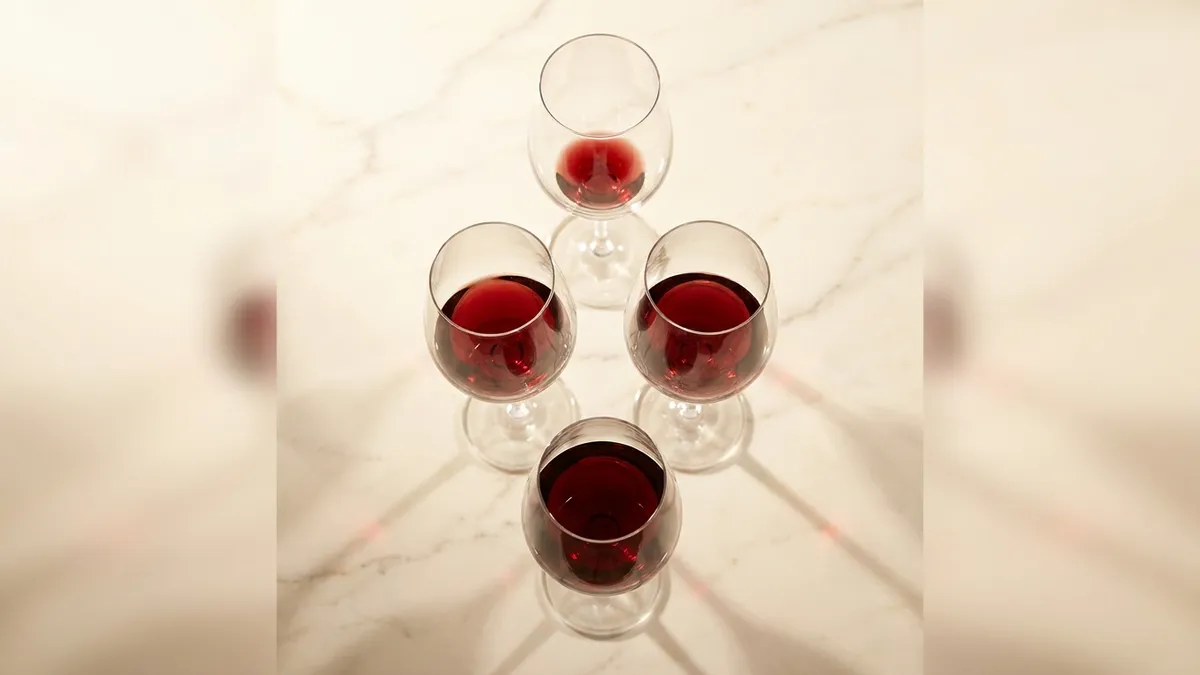
The compression at the bottom is not accidental. Published critics are reviewing wines submitted for review, and producers do not submit wines they expect to fail. The result is that the working range of the 100-point scale is more like 80 to 100, and the meaningful differences live in the top 20 points.
A four-point gap is roughly the smallest meaningful difference between competent tasters. A 91 and a 92 are essentially the same wine, scored on different days by different palates. A 95 and an 88 are clearly different wines.
What the Scale Is Good At
Score-skeptics get loud quickly, but the 100-point system has real strengths.
It compresses a complex evaluation into a single number. That is genuinely useful for shoppers comparing thousands of bottles in the same retail aisle.
It is loosely standardized across publications. Two different critics scoring the same wine 92 are not saying identical things, but their numbers sit within a recognizable range.
It anchors the trade. Distributors, importers, and retailers use scores to negotiate price, allocation, and shelf space. The whole modern wine economy is built around them.
It teaches structure. Reading a 95-point review forces a beginner to think about what specifically made the wine score high — a tighter framework than "this is a good wine."
What the Scale Is Bad At
The criticisms are also real, and a beginner should know them before treating any score as gospel.
Subjectivity
The rubric is structured. The application is not. Two critics with the same rubric will disagree on the same wine, sometimes by 4 or 5 points. That is normal panel variance, not a flaw — but a single critic's score is one person's verdict.
Score inflation
The average published score has crept upward for decades. Wines that would have scored 87 in 1990 routinely score 91 today. Causes are debated: better winemaking, less competitive critics, commercial pressure from producers and distributors. The effect is real. A 90 today is not what a 90 was thirty years ago.
Palate bias and Parkerization
The most influential American critics in the 1990s rewarded ripe, concentrated, oaky red wines. Producers chasing their attention shifted toward those styles. The trend was widespread enough to earn a name — Parkerization — and it visibly changed the global wine map for a generation. Modern critics are more diverse stylistically, but score-chasing still happens.
The category problem
A 92-point Sauternes and a 92-point Sancerre are not in the same competition. Each score reflects how well the wine delivers its category, not a universal quality ranking. A reader treating "92" as a flat ranking misses the most important context — the appellation and style the wine was scored within.

How to Score Wine Yourself With the 100-Point Rubric
Applying the 100-point structure at home is a useful exercise even if you never publish a score. The point is to slow down and think about each component.
A simplified at-home version:
- Start at 50.
- Add up to 5 for color and clarity.
- Add up to 15 for nose — clean, intense, complex.
- Add up to 20 for palate — intensity, balance, finish.
- Add up to 10 for overall harmony and category typicity.
That gets you to a maximum of 100. If the wine has a fault — corked, oxidized, volatile — drop straight into the 70s regardless of the other sections.
Try this with three wines side by side and your scores will start tracking with published reviews more closely than you would expect, especially if you taste blind. Our blind wine tasting tips and how to taste wine guides cover the technique that supports the scoring.
The structure does what it is meant to do — it forces deliberate attention to each component, which is the actual skill. The number at the end is almost a side effect.
A Healthier Personal Alternative — the 1-to-10 Scale
For everyday drinking, the 100-point scale is overbuilt. You are not negotiating distribution rights or writing for a magazine. You are deciding whether to buy this bottle again.
A simple personal 1-to-10 scale works better for that purpose:
- 1-2 — Would not drink again, even free.
- 3-4 — Acceptable in the right context, would not seek out.
- 5-6 — Pleasant, no notes, would happily drink at a friend's house.
- 7-8 — Strong wine, would buy by the bottle.
- 9-10 — Memorable, would buy by the case or open it for a celebration.
That is it. No rubric, no point allocations, no pretending you can tell a 91 from an 89.
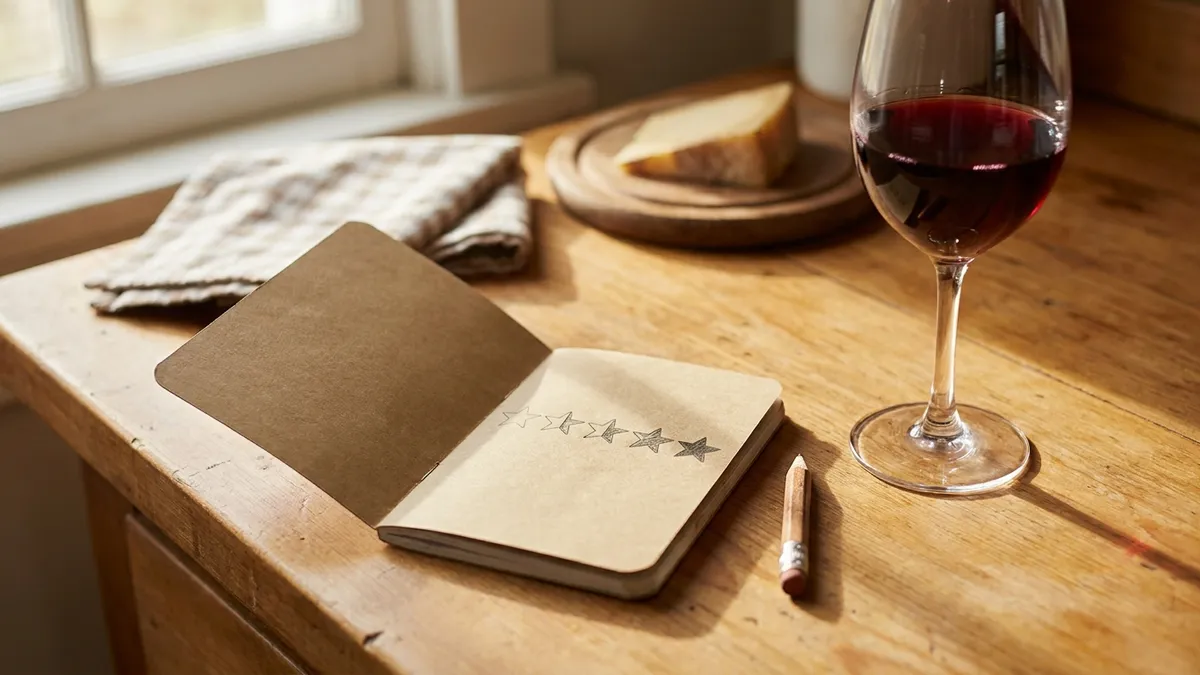
The 1-to-10 scale also avoids the trap of comparing wines across categories. A clean weeknight Vinho Verde and a benchmark Burgundy are not in the same conversation. Both can score a 9 on a personal scale, because both nailed the job they were built for.
If you keep a running list of personal scores in a wine tasting journal for a few months, patterns emerge. You discover you are a sucker for high-acid whites, or that you score Tempranillo higher than Cabernet on average, or that your favorite everyday wines all sit between 5 and 8. That is more useful for buying decisions than any published 100-point score, because it is calibrated to your palate, not someone else's rubric.
The Sommy app's tasting flow encodes this exact approach — appearance, nose, palate, finish, and an overall personal score — so every wine you log gets the same structured treatment without forcing you to invent the rubric from scratch. Learn more about how the Sommy Wine Coach helps beginners practice the structure without the snobbery.
Sommelier note: A published score tells you how a wine compares to its category in a critic's mouth. A personal score tells you how it compares to what you actually drink. Only one of those is useful at the wine shop on a Tuesday.
When to Trust a Score and When to Ignore It
A practical filter for using published 100-point scores well:
- Trust them as a category-quality filter. A 92-point Chardonnay is unlikely to be flawed.
- Trust them within a single publication. A 91 and a 94 from the same critic are comparable.
- Distrust them across publications and across decades. Inflation and palate bias make cross-comparison unreliable.
- Distrust them as a taste recommendation. A high score does not mean you will personally enjoy the wine.
Use scores like restaurant stars: a useful signal that the place is competent, not a guarantee you will love the meal.
The Bottom Line
The 100-point wine scale is structured, influential, and imperfect. It emerged from American wine criticism in the 1980s, became the dominant English-speaking framework, and now sets prices and shelf placement across the wine trade. The rubric — color, aroma, flavor, structure — is real and worth understanding, even if you never publish a single score.
For everyday drinking, a personal 1-to-10 scale beats the 100-point rubric. It costs nothing, calibrates to your palate, and tells you what you actually need to know — would you buy this bottle again. Use the 100-point system to read reviews, and your own scale to remember what you liked.
Frequently Asked Questions
Why does the 100-point wine scale start at 50?
Every drinkable wine gets a free 50 points just for being wine. The scoring then climbs through color, aroma, flavor, and balance. The design echoes the United States school grading system, where anything below 50 is treated as failing. In practice, almost no published score falls below 80, so the usable range is roughly 80 to 100.
Who invented the 100-point wine scale?
American critic Robert Parker popularized it in his newsletter in the late 1970s and 1980s. The format borrowed from the academic 100-point grading model, which felt more familiar to American shoppers than the European 20-point system used by Decanter and other British publications at the time. Most English-speaking outlets converged on it within a decade.
What does a 90-point wine actually mean?
A 90-point wine sits in the outstanding tier. The panel or critic agreed it shows clear character, strong balance, and no faults. It does not mean the wine is universally loved. A 90-point Riesling and a 90-point Cabernet are saying the wine excels within its own category, not that they would taste similar in a blind flight.
Is a 95-point wine ten times better than an 85-point wine?
No. The scale is not linear. Below 80 is rarely used, so the working range is compressed into a 20-point band. A four-point gap is the smallest meaningful difference between competent tasters. A 95 and an 85 are clearly different wines in quality, but they are not separated by a tenfold experience gap.
Why are 100-point wine scores controversial?
The main complaints are subjectivity, inflation, and palate bias. Different critics reward different styles, and the average published score has crept upward for decades. A bold, oaky red may score higher with a critic trained on those styles than an elegant, restrained one of equal quality. The score reflects the rubric and the taster, not pure quality.
How can I score wine at home without becoming a critic?
Use a simple personal one-to-ten scale based on whether you would drink the wine again. One means never. Five means fine. Ten means you would buy a case. Skip the rubric mindset for everyday drinking. The point is to remember what you liked and why, not to issue verdicts that match a magazine within a point.
Do producers really change wine to chase higher scores?
Yes, sometimes. The phenomenon is called Parkerization. Some producers shifted toward riper, oakier, more concentrated styles in the 1990s and 2000s because those wines historically scored higher in influential publications. The trend has eased as critics have diversified and consumer taste has shifted, but the influence of high scores on pricing and distribution is still significant.
Sommy Team
LinkedInFounder & Wine Educator
The Sommy Team is building the world's most approachable wine education app, helping beginners develop real tasting skills through structured courses and AI-guided practice.