Volcanic Wine Explained: How Volcanic Soil Shapes Flavor

By the Sommy Team — AI-assisted, human-edited.
Updated Oct 1, 2026
Contents (9)
- What Is Volcanic Wine, in One Paragraph?
- What Does Volcanic Wine Taste Like?
- Which Regions Make Volcanic Wine?
- How Do You Choose and Serve a Volcanic Wine?
- Can You Taste the Rock in Volcanic Wine?
- How Does Volcanic Soil Form?
- Are All Volcanic Soils the Same?
- Why Are So Many Volcanic Vines Ungrafted?
- How Can You Taste the Volcanic Difference Tonight?
TL;DR
Volcanic wine comes from vines rooted in weathered lava, ash and pumice, which cover about 0.7% of the world's soils. Geologists find no proven way for the rock itself to flavour wine. The soil works through the vine instead: loose, low-clay ground keeps yields low and phylloxera out, so many old vines still grow on their own roots.
Volcanic wine grows in soil made from lava, ash and pumice, and the rock adds no flavour you can drink. What it does is shape the vine: loose, poor ground keeps yields small and a root-eating pest out. The classic volcanic wines, from Etna and Santorini, taste tart and salty, and Santorini's vines still grow on their own roots.
What Is Volcanic Wine, in One Paragraph?
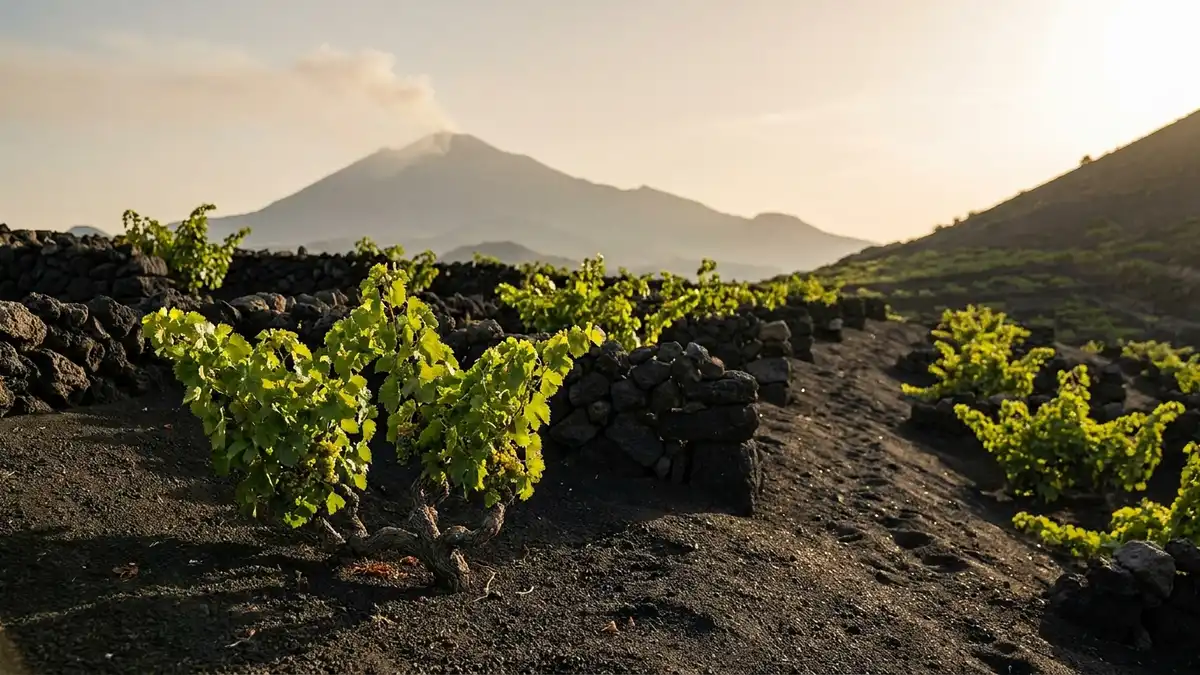
Volcanic wine is wine from vines rooted in soil formed from eruptions: hard lava rock, compacted ash, pumice and loose black cinders. Volcanic soils cover only about 0.7% of the world's land. The famous examples are Etna in Sicily (red Nerello Mascalese and white Carricante), Santorini in Greece (white Assyrtiko), Lanzarote in the Canary Islands (Malvasia) and Pico in the Azores. Geologists find no proven way for rock to flavour wine directly. The soil works through the vine instead, and through altitude, wind and sea air. The result is usually a dry wine with high acidity, a lean body and a salty or smoky finish.
What Does Volcanic Wine Taste Like?
Expect high acidity first. Most volcanic wines are tart, lean to medium in body, and finish with a salty or smoky impression instead of sweet, ripe fruit. Acidity is the tartness that makes your mouth water; body is the wine's weight, like skimmed milk against whole.
Santorini Assyrtiko is the clearest example. It smells of lemon and lime peel and stays sharp even though it averages about 13.5% alcohol, because the grape holds its acid in heat. Etna Bianco, made mostly from Carricante, is lighter and smells of green apple and lemon.
Etna Rosso, from Nerello Mascalese, is the red to know. It looks pale, almost like Pinot Noir, and smells of sour cherry and dried herbs, with firm tannin and the same mouth-watering finish. Cool air from vineyards high on the mountain keeps the acid up.
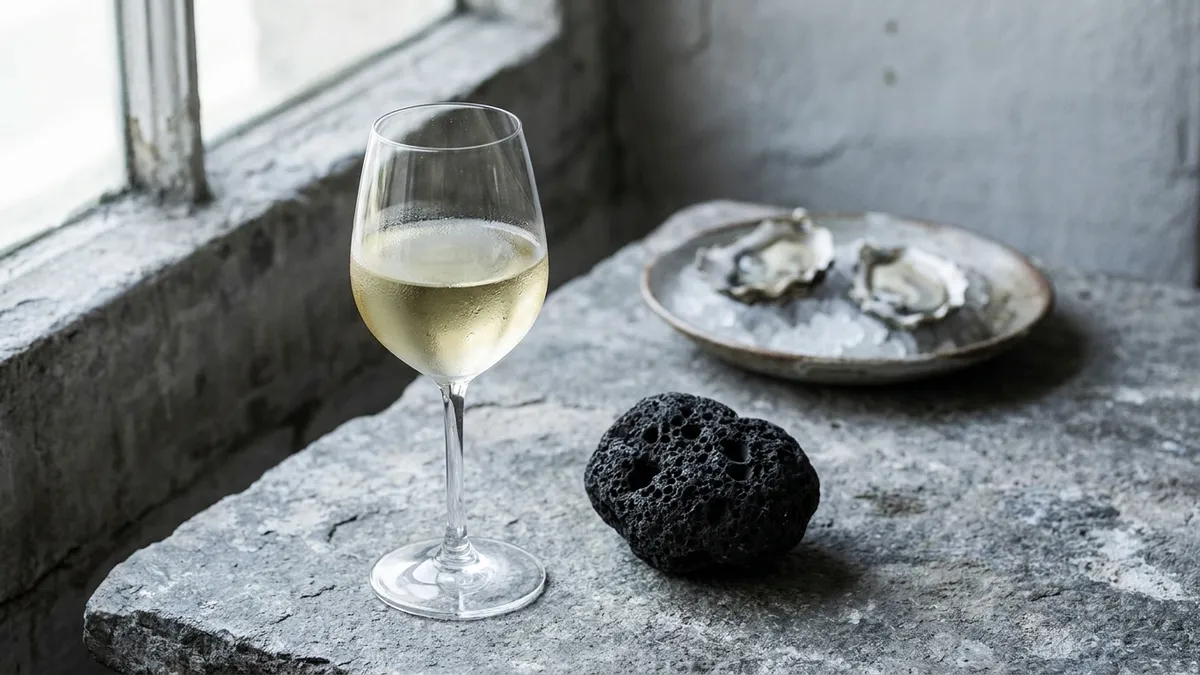
The salty edge is real enough to notice, and you will meet it again in Assyrtiko and Nerello Mascalese.
Which Regions Make Volcanic Wine?
The best-known volcanic wines come from Mount Etna in Sicily and the Greek island of Santorini, with the Canary Islands and the Azores close behind. All four are islands or island mountains, so wind and sea air shape the vineyards as much as the soil does, and growers build walls, pits or baskets to protect their vines.
| Region | Main grapes | Volcanic soil | Try it if you like |
|---|---|---|---|
| Etna, Sicily (Italy) | Nerello Mascalese (red), Carricante (white) | Broken-down lava, ash and sand, 400 to 1,100 m up | Pinot Noir, or tart whites with roast fish |
| Santorini (Greece) | Assyrtiko | Ash and pumice with almost no clay | Sauvignon Blanc or Chablis with oysters and grilled fish |
| Lanzarote, Canary Islands (Spain) | Malvasia | Black ash and cinders, vines planted in pits | Aromatic dry whites with fried seafood |
| Pico, Azores (Portugal) | Verdelho | Black basalt, vines inside stone walls | Salty, citrusy whites with shellfish |
Etna became Sicily's first DOC (a protected place name with production rules) in 1968, so the words "Etna Rosso" and "Etna Bianco" carry legal weight. Etna Rosso must be at least 80% Nerello Mascalese, and Etna Bianco at least 60% Carricante. Our Sicily wine guide places Etna beside the island's warmer lowland reds.
Lanzarote shows how far growers go. Eruptions between 1730 and 1736 buried a quarter of the island in lava and ash. Farmers then dug pits 4 to 5 metres wide and 2 to 3 metres deep through the black ash. Each holds one vine, ringed by a low stone wall against the wind. The Canary Islands wine guide covers the other islands. On Pico, vines grow in thousands of small plots called currais, walled with black basalt against wind and salt spray, inscribed as a UNESCO World Heritage Site in 2004.
How Do You Choose and Serve a Volcanic Wine?
Choose by the place name on the label, then by the grape. "Volcanic" alone is a marketing word with no rules behind it, while "Etna", "Santorini" or "Lanzarote" tells you the soil, the grape and the style. Start with whichever region matches a wine you already enjoy, using the table's last column.
If the label says Etna Bianco, expect Carricante; if it says Etna Rosso, expect Nerello Mascalese. If you see Santorini on a white, it is almost certainly Assyrtiko. If you want the salty, tart style at its plainest, buy the youngest white on the shelf rather than an oaked or aged one, since oak adds vanilla and toast that cover it.
Serve the whites cold, straight from the fridge, and Etna Rosso slightly cool, about 30 minutes in the fridge. With salty seafood, fried food or anything dressed with lemon, pick a volcanic white: the acidity cuts the oil and matches the citrus. Wine with oysters is the classic test. With grilled meat, mushrooms or tomato sauce, pick Etna Rosso, whose tannin needs protein and fat.
Can You Taste the Rock in Volcanic Wine?
No proven link exists between the rock and any taste of stone in the glass. Geologists writing for the European Geosciences Union point out that rock minerals are "often not soluble in water and tasteless, so they cannot play a role in the wine flavour." A vine takes up only nutrients dissolved in water.
So the popular story is wrong: you are not tasting rock. The sensation tasters label minerality is real enough, usually a salty, chalky or flinty impression with no fruit attached, but it has better explanations. High acidity makes a wine feel stony and dry. Winemaking choices, such as no oak and little air contact, keep fruit flavours quiet so the tart, salty edge stands out.
For shopping, read "volcanic" on a label as a clue to high acidity and freshness. Our explainer on what wine minerality means goes further into the science, and how soil affects wine taste compares volcanic ground with limestone, slate and clay.
How Does Volcanic Soil Form?
Volcanic soil starts as tephra, the ash, pumice and rock fragments an eruption throws into the air. Once it settles, rain, plants and time break it down in a process called andosolization. The result is soil full of glassy, non-crystal particles and organic matter.
Mature volcanic soil has unusual habits. It holds water and phosphate well, weighs little for its volume, crumbles easily and keeps a loose, stable structure that roots push through without effort. Those traits are why volcanic soils, at just 0.7% of the world's land, can support more than 10% of its people.
Age matters for wine. Santorini's ground is the debris of an eruption dated to roughly 1600 BC: ash and rock that is still loose and poor after more than three thousand years. Etna's soil comes from many lava flows of different ages, so two vineyards a few hundred metres apart can sit on very different ground.
Are All Volcanic Soils the Same?
No. Volcanic soils range from hard black rock to loose pale gravel, and they behave very differently for a vine: some hold water and nutrients, others let both run straight through. Four types come up on wine labels and in region guides:
- Basalt: dark, dense lava rock. Pico's walled plots sit on it.
- Tuff: rock made of compacted ash, soft enough to dig and often pale.
- Pumice: light, frothy volcanic glass full of air holes, so porous it floats.
- Ash and lapilli: loose fine particles and pebble-sized cinders, the black ground of Lanzarote.
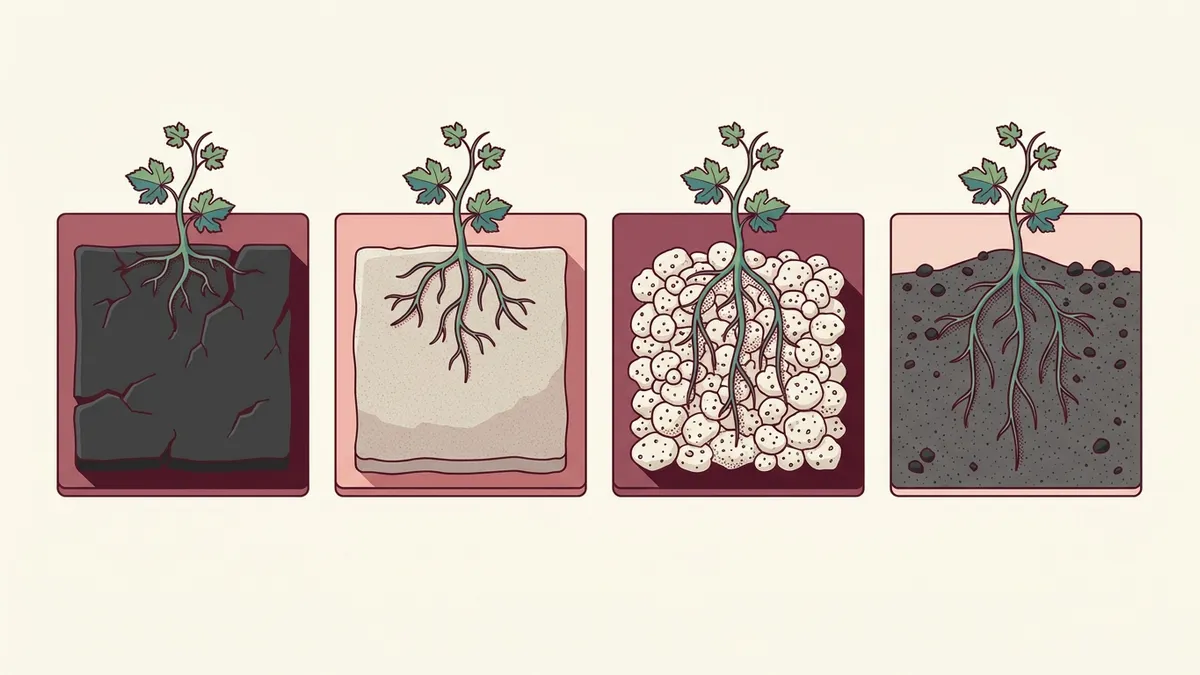
The common claim that volcanic soil always drains fast is half true. Young, coarse tephra like Santorini's pumice and ash drains fast and gives vines little to feed on, so yields stay tiny. Weathered volcanic soil does the opposite and holds water well. So two volcanic vineyards can have very different terroir (the full set of conditions a vine grows in: soil, slope, sun, wind).
Why Are So Many Volcanic Vines Ungrafted?
Because phylloxera, the root louse that wiped out most of Europe's vineyards in the late 1800s, struggles in sandy soil with little clay, and young volcanic soil is often exactly that. The louse prefers clay soils, which crack as they dry and let it travel between roots.
Everywhere else, growers saved their vineyards by grafting: joining a European grape variety onto a rootstock, the root of a pest-resistant American vine. Most of the world's vines still grow this way. Where the soil kept phylloxera out, vines stayed own-rooted, growing on their original roots. Santorini is the famous case: its vines have never needed American roots.
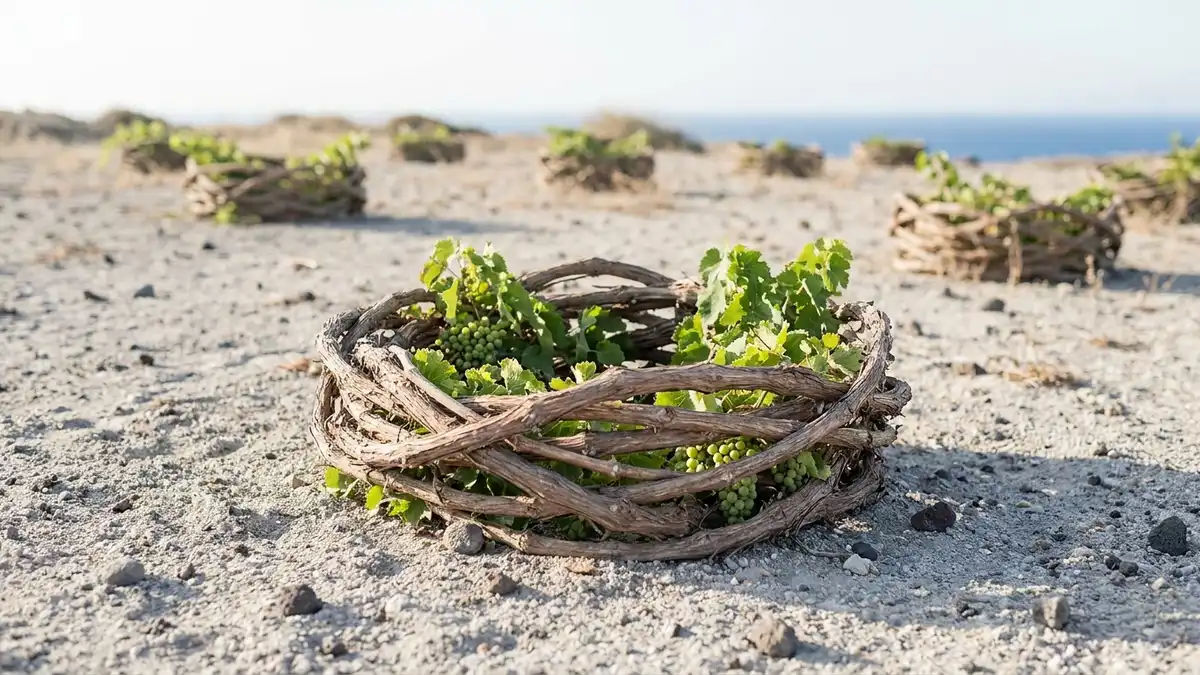
Santorini adds one more trick. Its roughly 1,200 hectares of vines are trained into low baskets called kouloura, with the grapes ripening inside the ring, where the leaves shield them from strong winds and harsh sun. Our Santorini wine guide explains how the island farms with little rain.
How Can You Taste the Volcanic Difference Tonight?
Put a volcanic white next to a white from ordinary soil and taste them side by side. The contrast teaches more than any description, because acidity and the salty finish are easiest to notice by comparison. Use the method from how to taste white wine.
More styles shaped by place and method sit together in the wine styles hub. The Sommy app has bite-sized courses, including Italy and Wine 101, and an AI-guided tasting mode. Tonight, buy one Santorini or Etna white, chill it for two hours, photograph the label, then pour and taste it beside any other white you have open.
Sources
Frequently Asked Questions
What is volcanic wine?
Volcanic wine is wine made from grapes grown in soil formed from lava, ash, pumice and other material thrown out by eruptions. It is a soil category, not a grape or a legal style. The best-known examples come from Mount Etna in Sicily, the Greek island of Santorini, Lanzarote in the Canary Islands and Pico in the Azores.
Does volcanic soil make wine taste different?
Yes, but indirectly. The rock minerals are mostly insoluble and tasteless, so the vine cannot pass a rock flavour into the grape. Volcanic soil changes how the vine grows: loose, poor ground keeps yields low, and many volcanic vineyards sit at altitude or by the sea. Those conditions give the tart, lean, salty-tasting wines the regions are known for.
What does volcanic wine taste like?
Most volcanic wines taste tart and lean, with a salty or smoky impression on the finish. Santorini Assyrtiko smells of lemon and lime peel and feels firm despite averaging about 13.5% alcohol. Etna reds from Nerello Mascalese are pale, with sour cherry and dried herbs. The shared thread is high acidity rather than one particular aroma.
Is minerality in wine real?
The word describes something tasters really notice, often a salty, chalky or flinty impression. What is not proven is the common explanation that vines suck up minerals and pass on their taste. Geologists point out that most rock minerals are insoluble and tasteless. High acidity and winemaking choices are better explanations for the sensation.
Why are Santorini vines ungrafted?
Phylloxera, the root louse that destroyed most of Europe's vineyards in the late 1800s, prefers clay soils, which crack and let it reach the roots. Young volcanic soils made of ash, pumice and sand hold little clay, so the louse struggles. Santorini never needed grafting, and its vines still grow on their own original roots.
Which wine regions have volcanic soil?
Mount Etna in Sicily and Santorini in Greece are the classics. Lanzarote in the Canary Islands grows Malvasia in pits dug into black ash, and Pico in the Azores grows vines inside walls of black basalt, a UNESCO World Heritage Site since 2004. Many other regions have volcanic patches within mixed soils.
Sommy Team
LinkedInFounder & Wine Educator
The Sommy Team is building the world's most approachable wine education app, helping beginners develop real tasting skills through structured courses and AI-guided practice.