Sicily Wine Guide: Etna, Nero d'Avola, and Volcanic Terroir

By the Sommy Team — AI-assisted, human-edited.
Updated Jun 17, 2026
Contents (10)
- What Is Sicilian Wine?
- Where Sicily Sits and Why Its Terroir Is Unique
- Mount Etna: Sicily's Volcanic Heart
- Nero d'Avola: The Island's Flagship Red
- Frappato and Cerasuolo di Vittoria
- Sicily's White Grapes: Grillo, Catarratto, and Inzolia
- Marsala: Sicily's Historic Fortified Wine
- The Sicily Wine Guide to the Classification System
- How a Beginner Should Start with Sicilian Wine
- Why Sicily Rewards a Curious Beginner
TL;DR
Sicily is a warm Mediterranean island making two very different wines: rich, sun-soaked Nero d'Avola reds from the lowlands, and elegant, mineral wines from the volcanic slopes of Mount Etna. This sicily wine guide covers the island's signature grapes, key zones, and the best way for a beginner to start.
What Is Sicilian Wine?
This sicily wine guide begins with a single idea that unlocks the whole island: Sicily is not one wine region but two personalities living side by side. On the sun-baked lowlands it makes generous, fruit-forward reds led by Nero d'Avola, the island's flagship dark grape. On the cool, ash-black slopes of Mount Etna, an active volcano, it makes pale, mineral, high-acid wines from Nerello Mascalese and the white Carricante that taste closer to Burgundy than to the warm south. Add bright Frappato, the Cerasuolo di Vittoria blend, crisp whites from Grillo and Catarratto, and historic fortified Marsala, and you have the most varied wine island in the Mediterranean. Learn the heat-versus-altitude split, and the rest of Sicily falls into place.
Where Sicily Sits and Why Its Terroir Is Unique
Sicily is the largest island in the Mediterranean Sea, lying off the toe of Italy's mainland and closer to North Africa than to Rome. That position gives it a warm, dry, sun-drenched climate with long growing seasons and very little disease pressure — conditions that ripen grapes with ease and once made the island a vast source of cheap bulk wine.
What turned Sicily into a quality region is everything that counters the heat. Cooling sea breezes sweep the coasts, altitude lifts vineyards into cooler air, and the island's geology is remarkably varied: limestone, clay, sand, and the dark volcanic soils of Etna all sit within a short drive of one another.
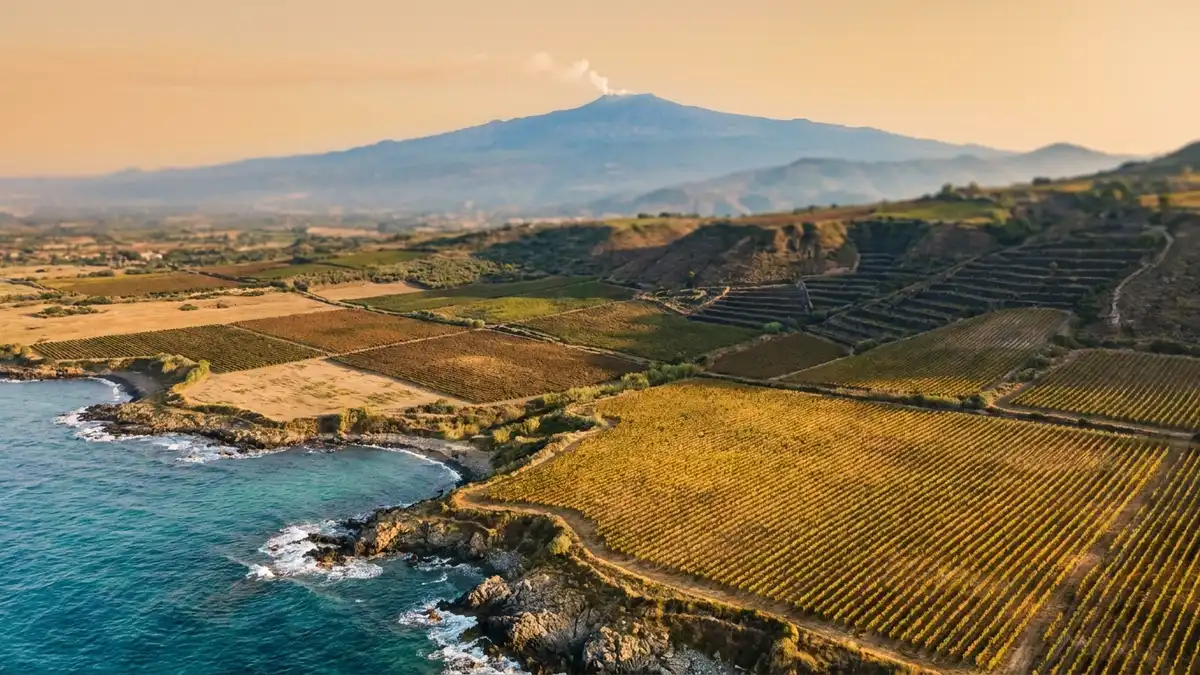
The result is terroir — the full set of natural conditions where grapes grow, from soil to climate to elevation — with extraordinary range for a single island. A grape grown on a hot coastal plain and the same grape grown 700 metres up a volcano become two different wines. Holding that contrast in mind is the key to reading any Sicilian bottle.
The Role of Old Bush Vines
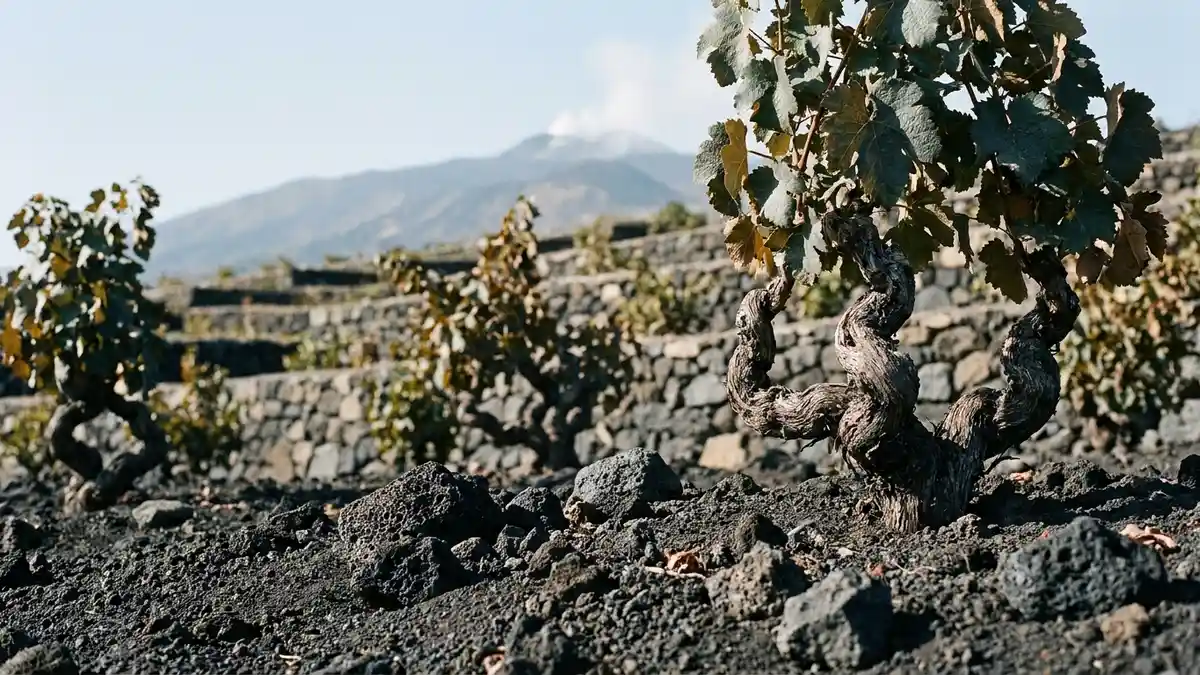
One detail sets Sicily apart from much of modern Europe: the survival of old bush vines, trained low to the ground in the traditional alberello (little tree) system rather than on wires. These gnarled, free-standing vines, some over a century old, shade their own fruit from fierce sun and dig deep for water in dry soils.
On Etna especially, plots of ungrafted, pre-phylloxera bush vines still produce tiny yields of concentrated grapes. They are a living link to old Sicily and a big part of why the island's best wines have such depth.
Mount Etna: Sicily's Volcanic Heart
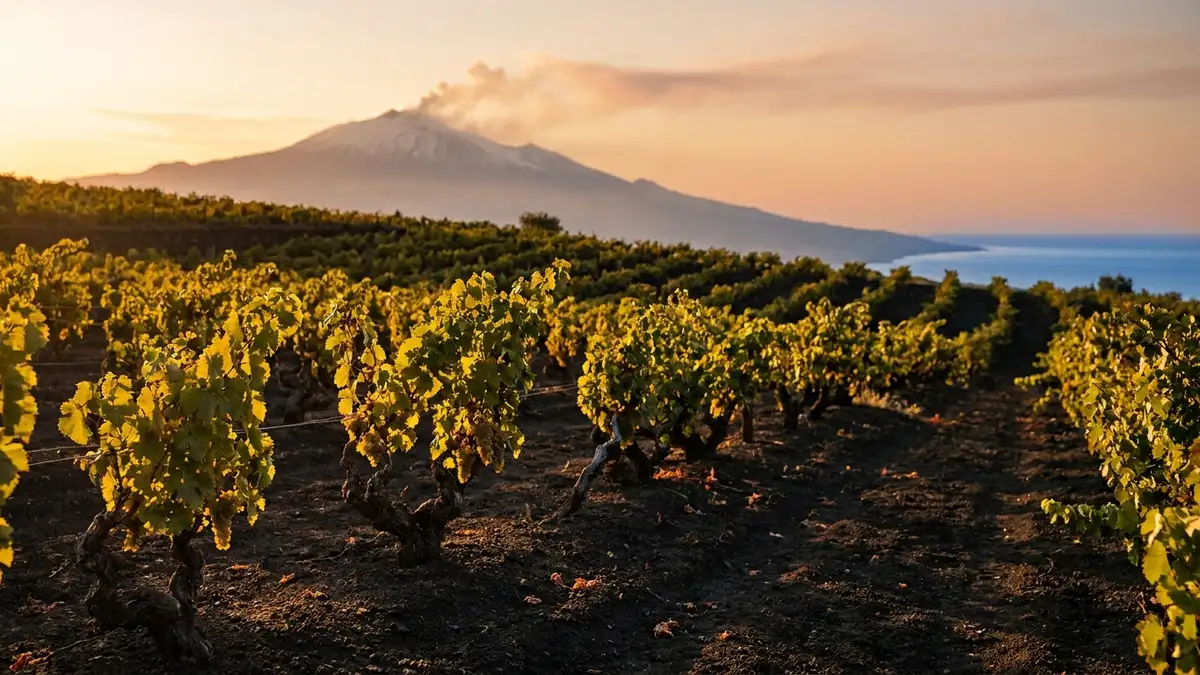
No part of the island has reshaped Sicily's reputation more than Etna, Europe's largest active volcano on the east coast. Vineyards climb its slopes from around 400 metres up to 1,000 metres and beyond, making them some of the highest in Italy. At that altitude the air is cool, the day-to-night temperature swing is wide, and the wines keep a freshness almost unheard of this far south.
The soils are pure drama: black volcanic ash, pumice, and lava that drain fast and carry a mineral signature straight into the glass. Etna's growers also obsess over the contrada — a named, single-vineyard parcel with its own elevation, exposure, and lava flow. Much like Burgundy's climats, each contrada gives a recognisably different wine, and the best bottles name the parcel on the label.
On Etna, the same grape tastes like a different wine every few hundred metres up the mountain. Altitude is the winemaker.
Etna's Red Grapes: Nerello Mascalese and Nerello Cappuccio
Etna red, labelled Etna Rosso, is built on two grapes. The star is Nerello Mascalese, a late-ripening variety that makes pale, perfumed, high-acid reds with fine tannins and a savoury, smoky edge. Comparisons to Pinot Noir and Nebbiolo are common, and deserved — this is one of Italy's most elegant reds. To go deeper on this single variety, see our dedicated Nerello Mascalese guide.
The supporting grape is Nerello Cappuccio, softer and rounder, adding colour and fleshy fruit to the blend. Typical aromas for an Etna Rosso: red cherry, dried herbs, orange peel, ash, and crushed stone. Body: light-to-medium (2-3/5) · Acidity: high (4-5/5) · Tannins: medium, fine-grained (3/5).
If the idea of a high-altitude volcanic red appeals, Sicily is not alone in this style. The Canary Islands grow their own volcanic red, covered in our Listán Negro wine guide — a fascinating parallel in how lava soils shape flavour.
Etna's White Grape: Carricante
Etna also makes a serious white from Carricante, grown high on the volcano's eastern and southern faces. Etna Bianco is crisp, citrus-driven, and distinctly saline, with green apple, lemon, and a flinty mineral streak. Unusually for a white from the deep south, the best examples age for a decade or more, gaining honeyed, waxy complexity.
Nero d'Avola: The Island's Flagship Red
Away from the volcano, Sicily's calling card is Nero d'Avola, named for the town of Avola in the island's southeast. It is the most widely planted red grape on the island and the one most likely to be in your glass when a bottle simply says "Sicilia Rosso."
Nero d'Avola thrives in the heat. It makes deep, inky, full-bodied reds with ripe black cherry and plum fruit, a hint of liquorice and pepper, soft-to-medium tannins, and a warm, sun-ripened generosity. Typical aromas: black cherry, plum, blackberry, liquorice, dried herbs, black pepper. Body: full (4-5/5) · Acidity: medium (3/5) · Tannins: medium, ripe (3/5).
There is real range within the grape. Grown on hot plains it can be jammy and soft; grown on cooler, higher, limestone-rich sites it gains structure, acidity, and ageing potential. The grape is so central to the island that we give it its own deep dive in the Nero d'Avola wine guide, with food pairings and styles in detail.
Nero d'Avola is also a textbook example of why learning Italy's native grapes pays off. The country is full of distinctive local varieties most beginners never meet — a theme we explore in indigenous grapes worth trying.
Frappato and Cerasuolo di Vittoria
If Nero d'Avola is Sicily's muscle, Frappato is its grace. This pale, fragrant red from the island's southeast makes light-bodied, floral wines bursting with fresh strawberry and red cherry, gentle tannins, and a juicy, almost weightless feel. Served slightly chilled, it is one of the most refreshing reds Italy makes.
The two grapes come together in Cerasuolo di Vittoria, Sicily's only DOCG — the top rung of Italy's quality-wine ladder. The blend marries Nero d'Avola's body and dark fruit with Frappato's perfume and lift, producing a medium-bodied red that is both serious and drinkable.
- Nero d'Avola — Body: full · Fruit: black cherry, plum · Tannins: medium-ripe · Role: power and depth
- Frappato — Body: light · Fruit: strawberry, red cherry · Tannins: low · Role: perfume and freshness
- Cerasuolo di Vittoria — Body: medium · Fruit: red and black cherry · Tannins: medium · Role: the balanced blend of the two
That single side-by-side tells the story of southeastern Sicily in three lines. The Sommy app turns exactly this kind of comparison into a guided tasting, so you can feel the difference between power and perfume in your own glass.
Sicily's White Grapes: Grillo, Catarratto, and Inzolia
Sicily is increasingly known for fresh, characterful whites, most grown in the warmer west of the island. Three native grapes lead the way, each with its own personality.
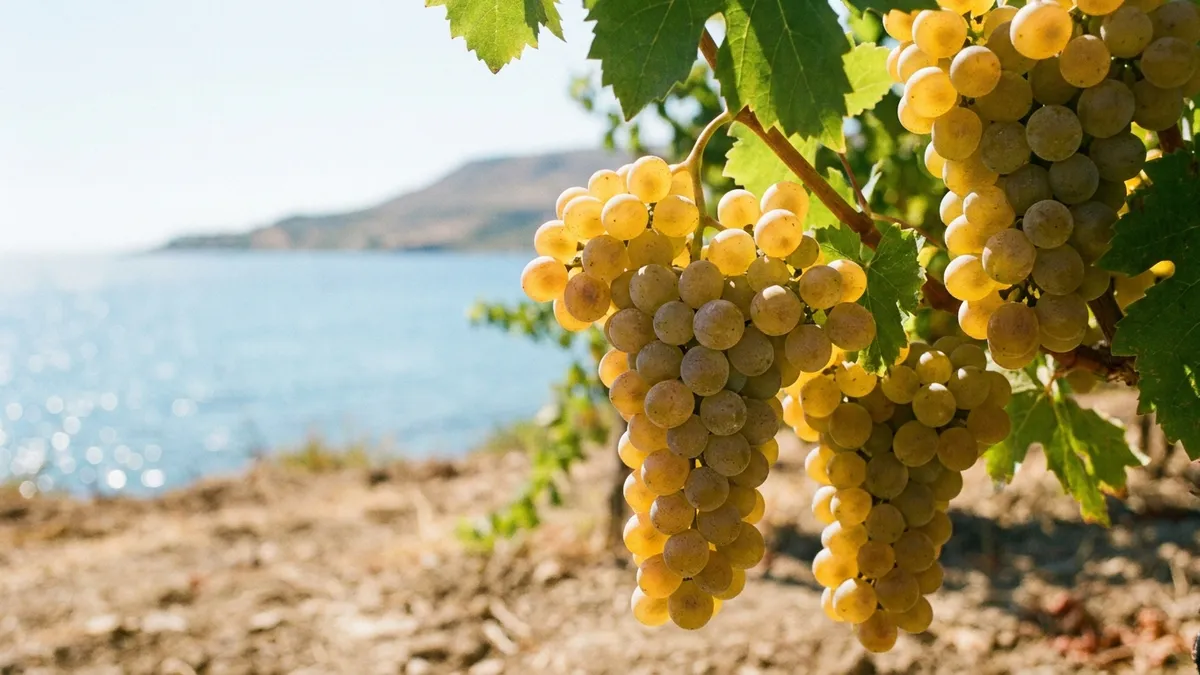
- Grillo — The quality benchmark. Ripe and citrusy with notes of grapefruit, white peach, and a saline tang, sometimes with a herbal lift. It holds acidity well in the heat and is also the backbone of the best Marsala.
- Catarratto — The island's most-planted white grape and historically its workhorse. At its best it is fresh, lemony, and lightly herbal, with green apple and almond notes. Long used for bulk wine, it is now making bright, modern bottlings.
- Inzolia (also called Ansonica) — Softer and rounder, with nutty, herbal, and stone-fruit character and a gentle, low-acid feel. It adds texture to white blends and makes easy, aromatic stand-alone wines.
These three, together with Etna's Carricante, give Sicily a white range from crisp and saline to round and nutty. For beginners, a single-varietal Grillo is the clearest place to meet the island's white style.
Marsala: Sicily's Historic Fortified Wine
No sicily wine guide is complete without Marsala, the fortified wine from the western port city of the same name. Fortification means adding grape spirit to raise the alcohol and, in sweeter styles, to preserve residual sugar. Made mainly from Grillo, Catarratto, and Inzolia, Marsala once ranked among the most celebrated wines in the world.
Marsala spans a wide spectrum, classified by colour, sweetness, and ageing:
- By colour — Oro (gold) and Ambra (amber) from white grapes, plus rarer Rubino (ruby) from red grapes.
- By sweetness — Secco (dry), Semisecco (off-dry), and Dolce (sweet).
- By ageing — From Fine (around one year) up through Superiore, Superiore Riserva, Vergine, and Vergine Stravecchio, which can age for decades.
Most people meet Marsala in the kitchen, simmered into sauces, but a fine dry Vergine is a genuine sipping wine — nutty, caramelised, and full of dried fig and walnut. It is a reminder that Sicily's wine history runs deep and far beyond table wine.
The Sicily Wine Guide to the Classification System
Italian wine law ranks bottles by origin and rules, and Sicily uses the full ladder. Knowing the abbreviations helps you read any label:
- DOCG — The top tier, Denominazione di Origine Controllata e Garantita. Sicily has just one: Cerasuolo di Vittoria.
- DOC — Denominazione di Origine Controllata, a controlled regional wine with defined rules. Etna, Marsala, and many others sit here.
- DOC Sicilia — A broad island-wide DOC that covers much of the quality Nero d'Avola and Grillo you will find, giving wide labelling flexibility under a Sicilian banner.
- IGT / IGP — Indicazione Geografica Tipica, the most flexible category, used for everything from honest everyday bottles to ambitious wines that break the stricter rules.
A higher tier signals tighter rules and usually a more specific place, but in Sicily an ambitious IGP wine can easily outshine a basic DOC. For the wider Italian picture, our Italian wine guide lays out how these tiers work across every region.
How a Beginner Should Start with Sicilian Wine
The fastest way to understand Sicily is to taste its two personalities back to back. You do not need rare bottles or a big budget — just a deliberate order and a little attention to what changes. Here is a practical path:
- Meet the flagship first. Open a straightforward Nero d'Avola and note the warmth: ripe dark fruit, soft tannins, full body. This is the sun-soaked lowland style of the island.
- Climb the volcano. Next, pour an Etna Rosso from Nerello Mascalese. Same island, but pale, perfumed, high in acidity, and mineral. Tasting it right after Nero d'Avola makes the altitude effect obvious.
- Add a fresh white. A crisp Grillo shows Sicily's bright, citrusy white side. Compare it later with a saline Etna Bianco from Carricante to feel coast versus volcano.
- Try the perfume and the blend. A light, chilled Frappato and a Cerasuolo di Vittoria round out the southeast and show how blending balances power with grace.
- Finish with history. If you can find one, sip a dry Marsala Vergine to taste Sicily's fortified tradition.
As you taste, build the habit of noting colour, acidity, body, and the savoury, sun-ripened character that runs through the island. Our guide to how to taste wine gives you the step-by-step method, and our overview of the noble grapes every learner should know provides the wider context for where Sicily's natives fit.
Sommy turns these comparisons into short, guided exercises — naming the aromas, scoring the structure, and building the vocabulary to describe what you sense. You can start practising free at sommy.wine, then bring the method to your next bottle of Etna or Nero d'Avola.
Why Sicily Rewards a Curious Beginner
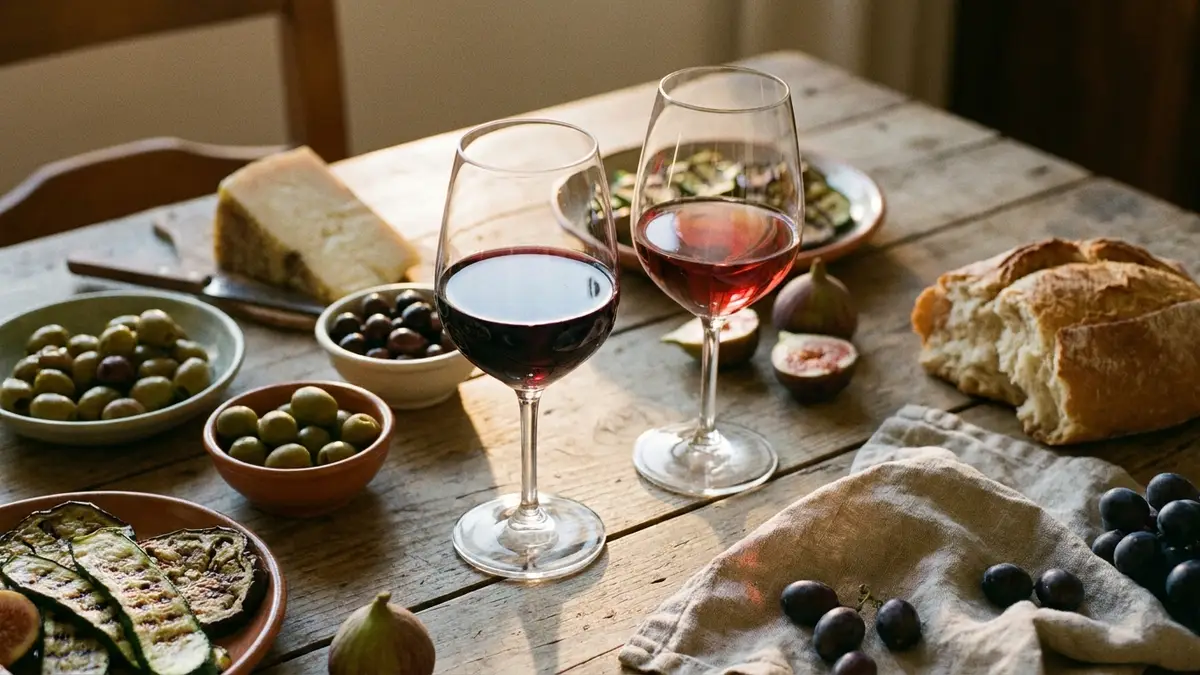
Few wine regions pack as much variety into one place as Sicily. The same island gives you a powerhouse red and a delicate volcanic one, fresh saline whites and a centuries-old fortified wine, all grown under the same Mediterranean sun. That contrast makes it one of the best classrooms in wine for learning how climate, altitude, and soil change what ends up in the glass.
Start with the two reds, add a white, and let the island teach you the difference between ripeness and freshness one bottle at a time. The Sommy app is built to make that habit stick — turning each glass into a short, guided lesson so the next Sicilian wine you open is a little clearer than the last.
Sources
Frequently Asked Questions
What is Sicily's most famous wine?
Nero d'Avola is the island's flagship dark red and its most widely planted grape. It makes deep, full-bodied wines with black cherry and plum fruit, soft tannins, and a warm, sun-ripened character. Etna's elegant red from Nerello Mascalese is the other star, prized by collectors for its lighter, more mineral, almost Burgundian style.
Where is Sicily and what is its climate like?
Sicily is the largest island in the Mediterranean Sea, off the toe of Italy's boot. Its climate is warm, sunny, and dry, with hot summers cooled by sea breezes and, on Mount Etna, by altitude. This long, reliable growing season ripens grapes easily, while elevation and volcanic soils add the freshness and minerality that balance the heat.
What does Etna wine taste like?
Etna reds from Nerello Mascalese are pale, perfumed, and high in acidity, with red cherry, dried herb, and a smoky, mineral edge from volcanic ash soils. They feel lighter and more elegant than most southern Italian reds. Etna whites from Carricante are crisp, citrus-driven, and saline, with a flinty character and real ageing potential.
What is the difference between Nero d'Avola and Frappato?
Nero d'Avola is deep, full-bodied, and powerful, with dark plum and black cherry fruit and firmer structure. Frappato is the opposite — pale, light, floral, and fragrant, with bright red berry fruit and gentle tannins. The two are blended together to make Cerasuolo di Vittoria, Sicily's only DOCG, which balances Nero d'Avola's body with Frappato's perfume.
What white grapes does Sicily grow?
Sicily's main white grapes are Grillo, Catarratto, Inzolia, and, on Etna, Carricante. Grillo gives ripe, citrusy, sometimes saline whites and is the backbone of quality Marsala. Catarratto is the island's most-planted white, fresh and lemony. Inzolia adds nutty, herbal notes, while Carricante makes the island's most mineral, age-worthy white from volcanic slopes.
What is Marsala wine?
Marsala is a fortified wine from western Sicily, made mainly from Grillo, Catarratto, and Inzolia. Spirit is added to raise the alcohol, and styles range from dry to sweet and from gold to deep amber. Once world-famous, it is best known today for cooking, but fine dry Marsala is a serious sipping wine with nutty, caramel, and dried-fruit flavours.
Where should a beginner start with Sicilian wine?
Start with a straightforward Nero d'Avola to meet the island's warm, fruity red style, then try an Etna Rosso to feel how altitude and volcanic soil bring elegance to the same island. Add a crisp Grillo white and, if you can, a Cerasuolo di Vittoria. Tasting these side by side shows Sicily's full range quickly.
Sommy Team
LinkedInFounder & Wine Educator
The Sommy Team is building the world's most approachable wine education app, helping beginners develop real tasting skills through structured courses and AI-guided practice.