Nero d'Avola: Sicily's Bold Native Red

By the Sommy Team — AI-assisted, human-edited.
Updated Apr 29, 2026
Contents (11)
- What Is Nero d'Avola Wine?
- Nero d'Avola, in 100 Words
- Nero d'Avola Tasting Notes and Flavor Profile
- A Brief History of Nero d'Avola
- Sicilian Regional Profiles
- Cerasuolo di Vittoria DOCG: Sicily's Only DOCG
- Nero d'Avola vs Nerello Mascalese: Two Sicilies
- The Modern Lighter Style
- How to Pair Nero d'Avola with Food
- Serving Nero d'Avola
- Building Your Nero d'Avola Tasting Skills
TL;DR
Nero d'Avola is Sicily's most-planted indigenous red grape and the island's flagship variety. It produces deeply colored, full-bodied wines with ripe black cherry, plum, Mediterranean herbs, pepper, and chocolate. Styles range from easy IGT Sicilia to serious Cerasuolo di Vittoria DOCG and oaked Vittoria reds, with strong food-pairing range.
What Is Nero d'Avola Wine?
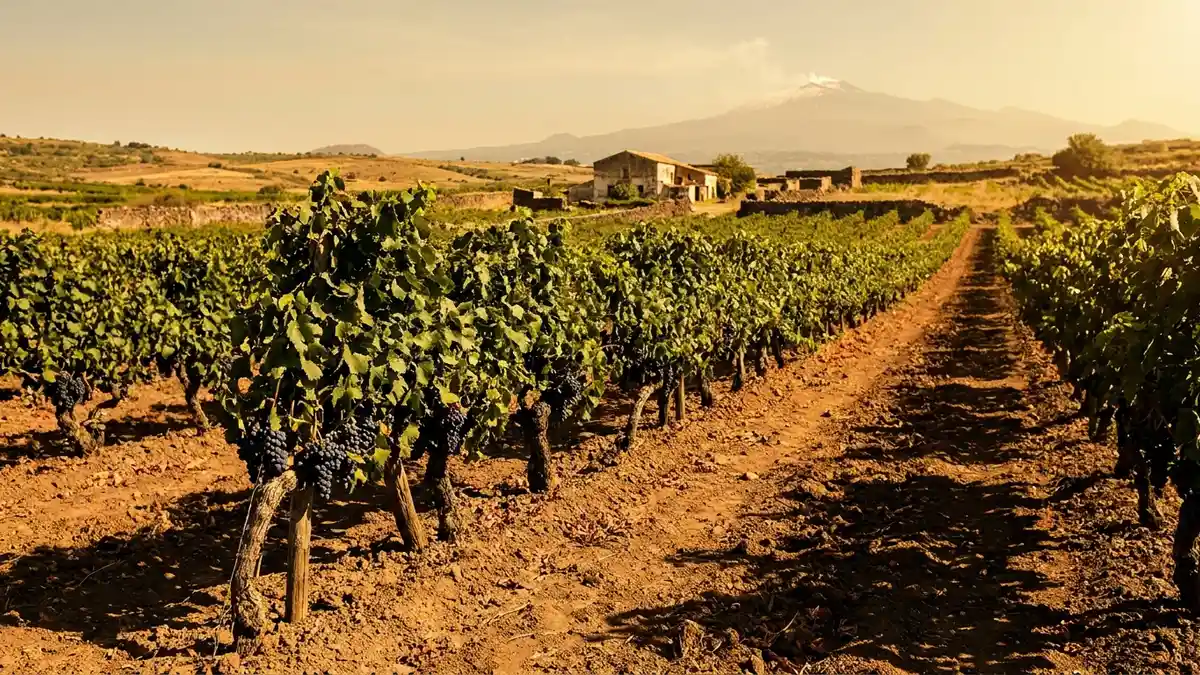
Nero d'Avola is Sicily's most-planted indigenous red grape and the island's flagship variety. The name translates literally as "the black of Avola" — a reference to the seaside town of Avola in southeastern Sicily where the grape has been grown for centuries. With roughly 15,000 hectares under vine across the island, nero d avola wine accounts for the lion's share of Sicilian red production and a large chunk of the island's total wine output.
Sicily sits closer to North Africa than to Rome, and the climate shows it. Long, hot, dry summers, intense sunshine, and warm sea breezes shape a wine that is sun-soaked and generous: ripe black cherry, plum, Mediterranean herbs, black pepper, and a finishing note of dark chocolate. In the glass it pours a deep ruby-purple, almost opaque in concentrated examples, with full body and 13 to 14 percent alcohol.
What makes the grape exciting today is its range. The same variety produces everything from easy-drinking IGT Sicilia bottlings — the kind of wine you reach for on a Tuesday with pizza — to age-worthy single-vineyard reds and a starring role in Cerasuolo di Vittoria DOCG, the only DOCG in Sicily. Once dismissed as a workhorse blender, Nero d'Avola has become one of Italy's most rewarding native grapes to explore.
Nero d'Avola, in 100 Words
Nero d'Avola is Sicily's most-planted indigenous red grape, the island's flagship variety. The profile: deep ruby-purple color, medium-high tannin, ripe black cherry and plum fruit, Mediterranean herbs, black pepper and dark chocolate on the finish, 13 to 14 percent alcohol, full body. Volcanic and clay-limestone soils plus a hot Mediterranean climate force extended hang time. Stylistically the grape ranges from easy-drinking IGT Sicilia to serious Cerasuolo di Vittoria DOCG (Nero d'Avola plus Frappato) and oaked Eloro and Vittoria. Often called "Sicily's Syrah" for its weight and spice. Pairs with grilled lamb, eggplant parmigiana, and hard cheese.
Nero d'Avola Tasting Notes and Flavor Profile
Once you have tasted a few examples side by side, Nero d'Avola becomes easy to recognize. The grape has a distinctive sun-baked signature that sets it apart from northern Italian reds like Sangiovese or Nebbiolo.
Core Characteristics
- Fruit — ripe black cherry (the calling card), Damson plum, blackberry, blueberry compote, sometimes dried fig in older bottlings
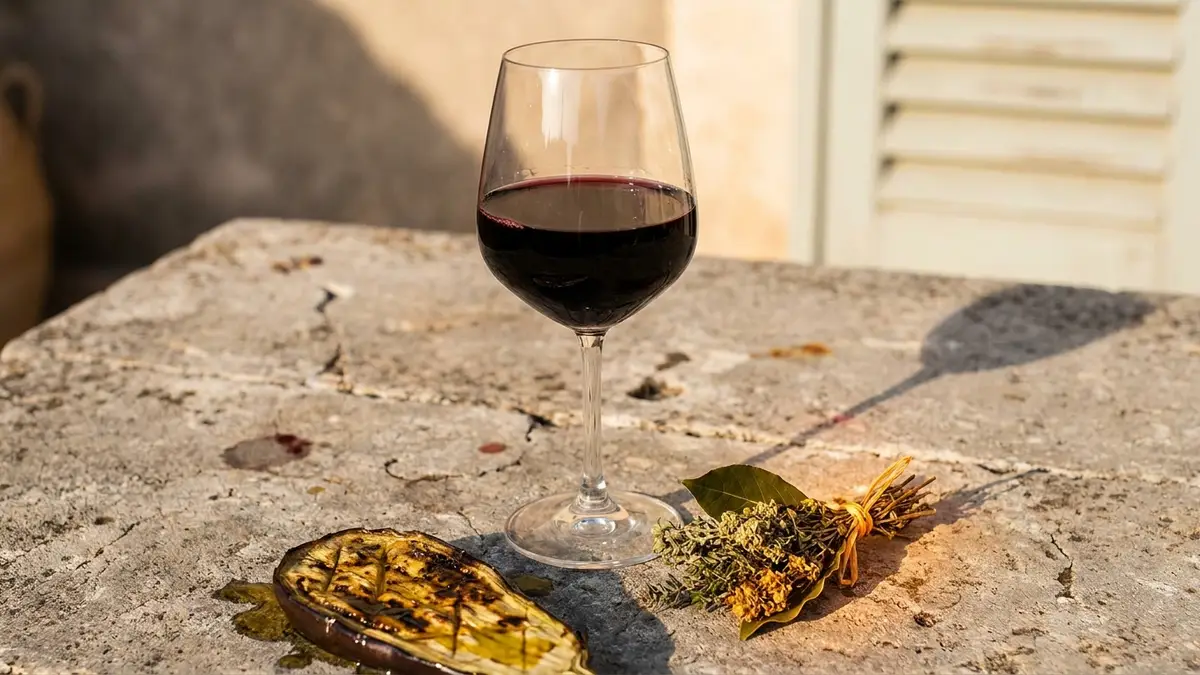
- Herbal/savory — wild rosemary, thyme, dried oregano, bay leaf — the so-called "Mediterranean garrigue" character
- Spice and earth — black pepper, licorice, sweet baking spice, dark chocolate, a hint of tobacco
- Structure — medium-high tannins, moderate acidity, full body
- Alcohol — typically 13–14.5%, occasionally higher in warm vintages
The interplay of ripe black fruit and Mediterranean herbs is the grape's signature. That herbal lift is part of what makes the wine surprisingly food-friendly despite its weight — it cuts through richness in a way that pure fruit-forward reds cannot.
How Nero d'Avola Looks in the Glass
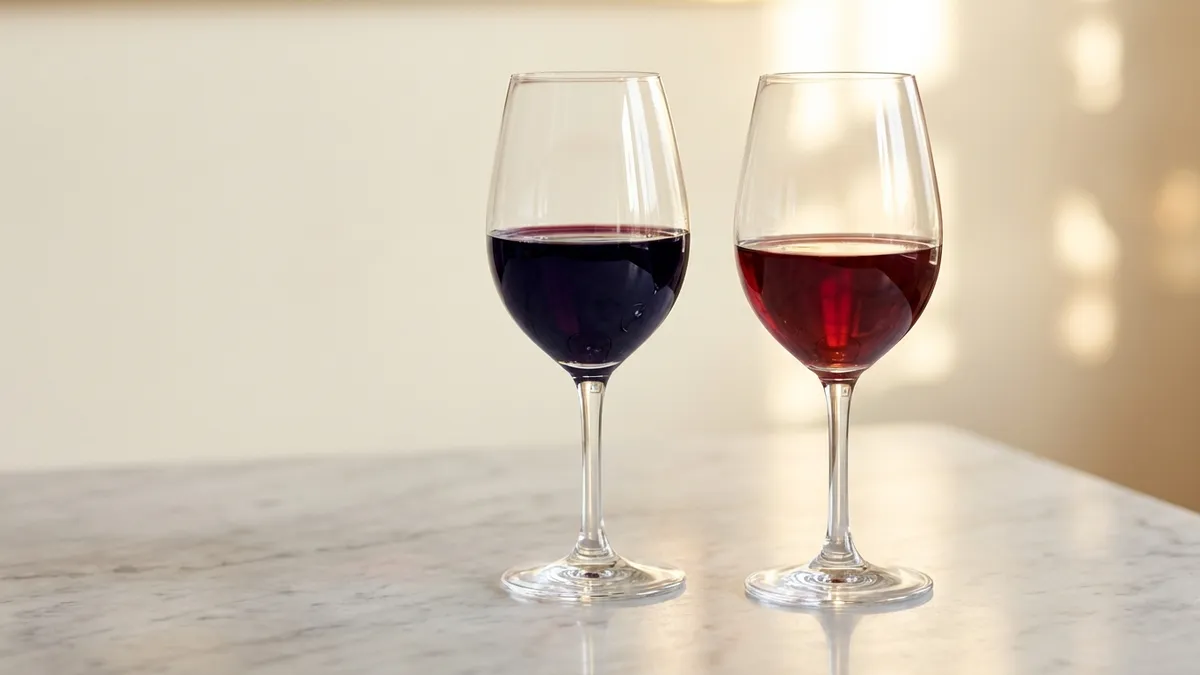
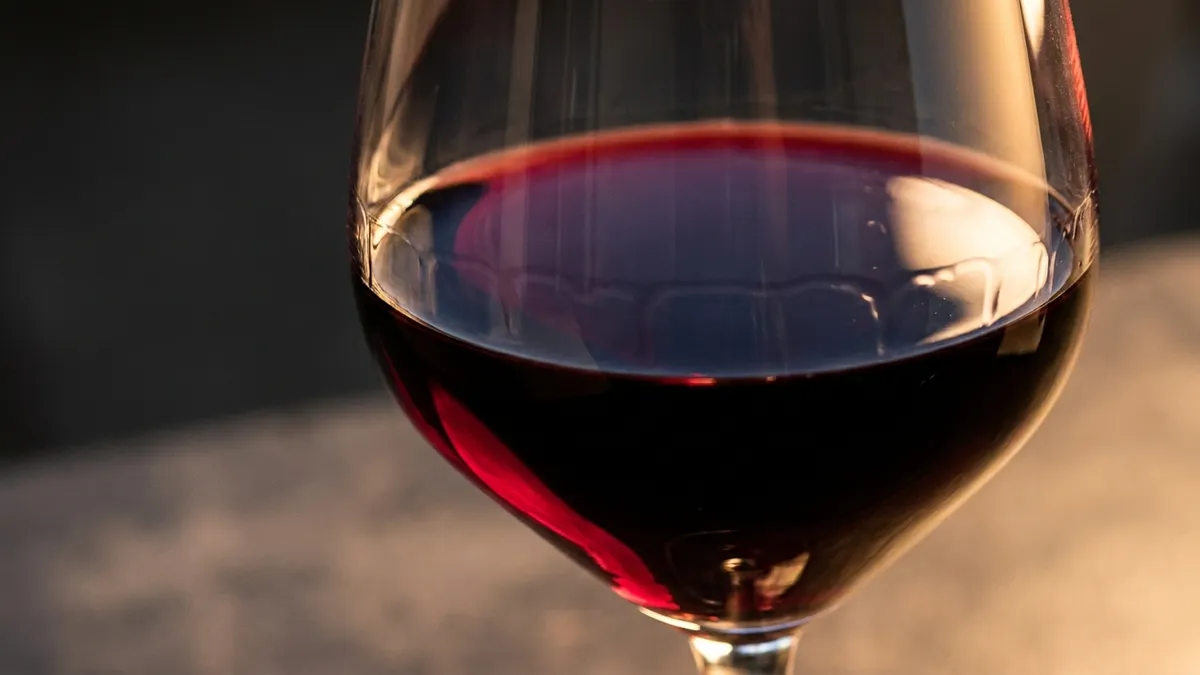
Nero d'Avola pours one of the deepest, most opaque colors in the Italian red lineup — a saturated ruby-purple in young wines that takes time to evolve. As the wine ages, the rim shifts toward garnet, picking up brick-red and brown tones. This deep, slow-evolving color is a useful clue during a wine color assessment and reflects the grape's thick skins and high anthocyanin content.
A Brief History of Nero d'Avola
Nero d'Avola has been grown in Sicily for centuries, long associated with the southeastern corner of the island around Avola, Pachino, and Noto. For most of the 20th century the grape was treated as a bulk red, shipped north in tankers to beef up thinner wines from elsewhere in Europe. Sicily had volume but little reputation.
That began to change in the 1990s. A new generation of Sicilian producers started bottling Nero d'Avola under their own labels, lowering yields, modernizing cellar practices, and putting the grape on the global wine map. By the 2000s, Nero d'Avola was a fashionable name on wine lists from London to New York. The early 2000s saw a wave of heavily extracted, oaked styles — sometimes too jammy and heavy. The pendulum has since swung back toward freshness.
Today the conversation is about restraint: lower alcohol, less new oak, earlier picking, and more attention to site. The result is wines that taste more like Sicily and less like a winemaker's manual.
Sicilian Regional Profiles
Sicily is a big island — roughly the size of Switzerland — and its terroir varies hugely from one corner to another. Where Nero d'Avola is grown matters as much as how it is made.
Vittoria and the Southeast Corner
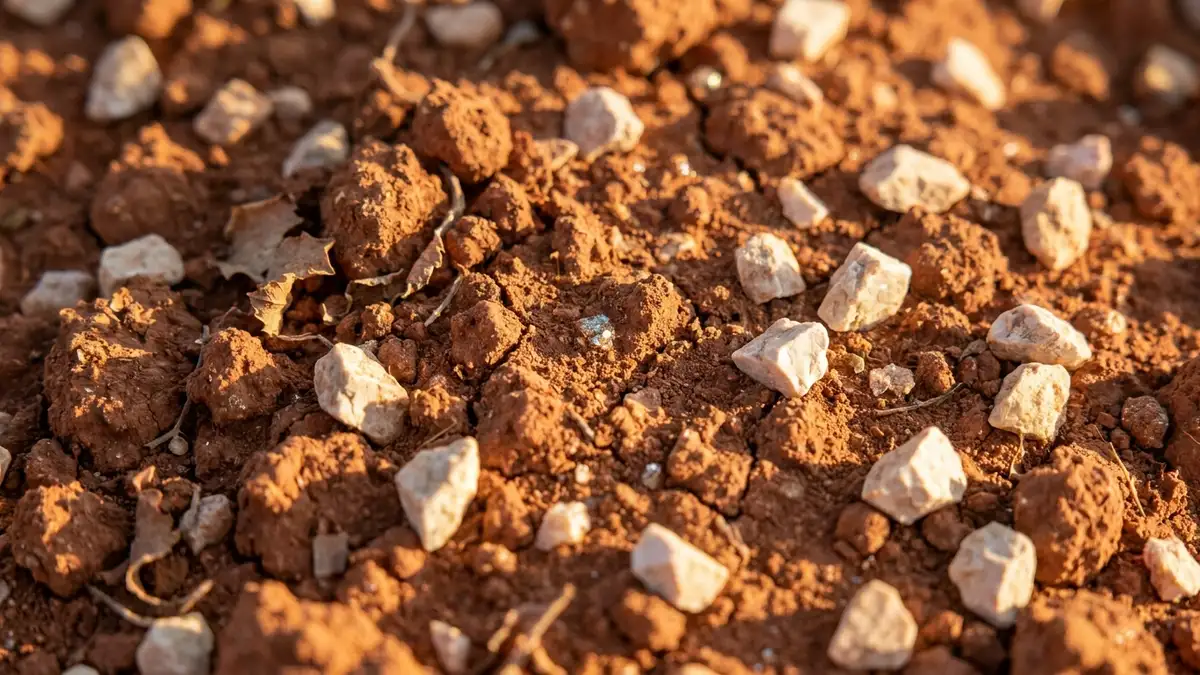
The historic stronghold of Nero d'Avola sits in the southeastern province of Ragusa, including the towns of Vittoria, Pachino, and Avola itself. Soils here are mostly clay and limestone with sandy patches near the coast, and the climate is hot and dry with strong sea breezes that moderate the daytime heat. The wines tend to be plush and ripe but with enough acidity to stay lively.
This area is also home to Cerasuolo di Vittoria DOCG, covered in detail below.
Eloro DOC
A smaller appellation along the southeastern coast around Noto. Eloro produces some of the most concentrated, structured Nero d'Avola in Sicily, often with extended barrel aging. The reds here lean darker and more brooding — black plum, leather, and balsamic notes — and reward 5 to 10 years in bottle.
Western Sicily
The western half of the island, around Marsala, Trapani, and Menfi, grows Nero d'Avola in larger volumes. The style here tends to be more approachable and fruit-forward, often blended with Cabernet Sauvignon, Syrah, or Merlot under the IGT Terre Siciliane or DOC Sicilia labels. This is where many of the everyday bottlings come from.
Higher-Altitude Sites
A growing number of producers are planting Nero d'Avola at altitude, sometimes up to 500 meters. Cooler nights preserve acidity and aromatic precision, producing wines with more freshness, finer tannins, and a lighter, more "Burgundian" feel. This trend is reshaping perceptions of the grape.
Cerasuolo di Vittoria DOCG: Sicily's Only DOCG
Cerasuolo di Vittoria earned DOCG status — Italy's highest wine classification — in 2005, making it the only DOCG in Sicily. The name cerasuolo means "cherry-colored," and the wines deliver on that promise: bright, fragrant, medium-bodied reds with vivid red and black cherry fruit.
The blend is regulated:
- 50–70% Nero d'Avola, providing structure, color, and dark fruit
- 30–50% Frappato, a lighter native Sicilian grape that adds floral lift, fresh strawberry, and lower tannin
- Made in the province of Ragusa, around Vittoria, Comiso, and Acate
- A Classico sub-zone covers the historic core with stricter rules
The pairing of Nero d'Avola's weight with Frappato's perfume produces something neither grape achieves alone — a wine that drinks like a slightly weightier Pinot Noir but with a Mediterranean herbal lift. For drinkers who find pure Nero d'Avola too heavy, Cerasuolo di Vittoria is often the gateway.
For more on appellation systems and what designations like DOCG actually guarantee, see what is appellation and what is terroir.
Nero d'Avola vs Nerello Mascalese: Two Sicilies
A common confusion: Sicily has more than one signature red grape. The most important contrast is between Nero d'Avola and Nerello Mascalese, the principal red grape of Mount Etna.
| Feature | Nero d'Avola | Nerello Mascalese | |---|---|---| | Where grown | Lowland southeast and west | Volcanic slopes of Mount Etna | | Soils | Clay-limestone, sand | Volcanic ash, basalt, lava | | Climate | Hot, dry Mediterranean | Cooler, high-altitude, wide diurnal swings | | Color | Deep ruby-purple, opaque | Pale ruby, translucent | | Body | Full | Light to medium | | Tannins | Medium-high, ripe | High, fine, mineral | | Flavor | Black cherry, herbs, pepper, chocolate | Red cherry, smoke, ash, dried rose | | Comparison | Sicily's Syrah | Sicily's Burgundy |
If Nero d'Avola is sun and stone, Nerello Mascalese is volcano and altitude. They share an island and almost nothing else. Tasting both side by side is one of the most illuminating exercises in Italian red wine — see the how to compare two wines guide for a structured approach.
The Modern Lighter Style
The 1990s and early 2000s saw Nero d'Avola producers push for richness and oak — late picking, long maceration, and 18 months in new French barriques produced wines that were dense, dark, and sometimes monolithic. The market loved them at first, then started looking elsewhere.
The contemporary wave moves the other way:
- Earlier picking to preserve acidity and aromatic detail
- Shorter maceration to soften extraction and avoid heavy tannin
- Larger old oak or stainless steel instead of new barriques
- Higher-altitude sites for naturally cooler fruit
- Lower alcohol targets — 12.5 to 13.5 percent rather than 14.5+
The result is a fresher, more transparent style that lets the grape's herbal, peppery character shine through. These wines often surprise drinkers who think of Nero d'Avola as a heavy, jammy red. For a primer on how stylistic choices change a wine's flavor, see oak flavors in wine tasting and the contrast between old world and new world tasting style.
How to Pair Nero d'Avola with Food
Nero d'Avola is one of the most food-friendly full-bodied reds you can buy. Its medium-high tannins handle protein, its herbal lift cuts richness, and its ripe fruit flatters tomato- and pepper-forward dishes.
Sicilian Classics
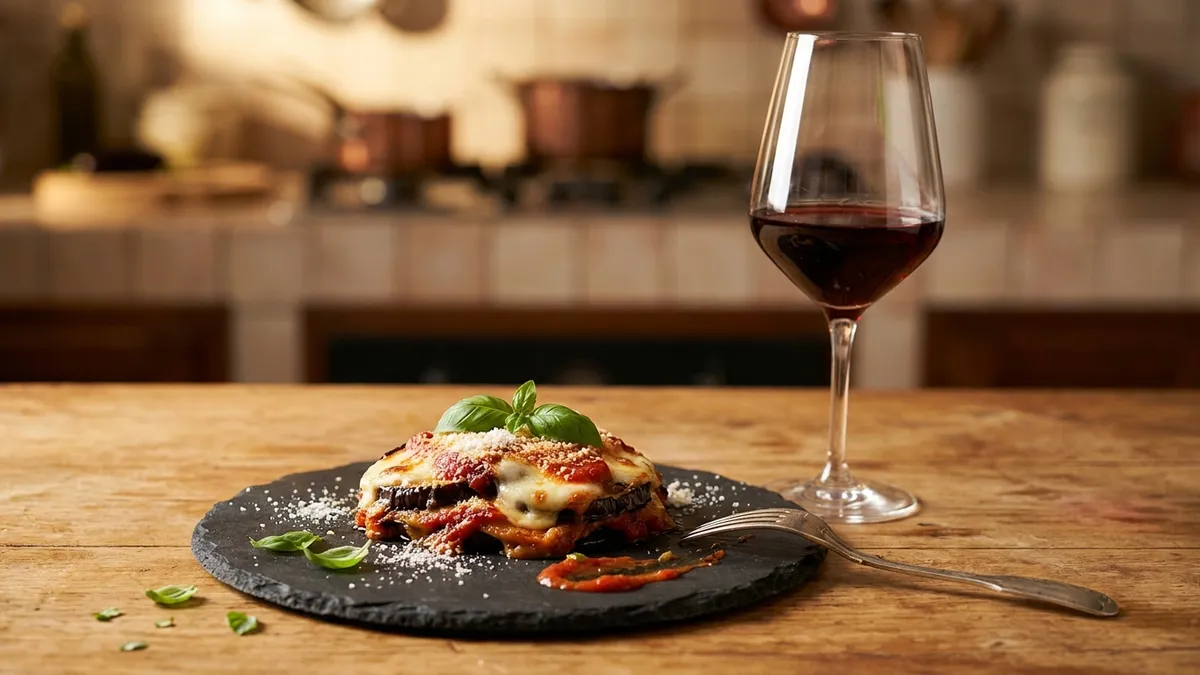
- Eggplant Parmigiana — layers of fried eggplant, tomato, and aged cheese. The wine's herbs echo the basil, its acidity meets the tomato, and its weight stands up to the cheese.
- Pasta alla Norma — eggplant, tomato, and salted ricotta. A textbook pairing.
- Caponata — sweet-and-sour eggplant relish. The wine's ripe fruit handles the sweetness.
- Sicilian sausages and pork roasts — the smoke and fat cut beautifully against Nero d'Avola's tannins.
Beyond Sicily
- Grilled lamb — chops, leg, or shoulder. The herbs in the wine and on the lamb mirror each other.
- Slow-braised beef — brasato, ossobuco, short ribs.
- Wood-fired pizza with sausage, salami, or anchovy.
- Hard sheep's milk cheeses like Pecorino Siciliano, aged Manchego, or Pecorino Toscano.
- Moroccan tagines — the warm spice and dried fruit profile finds a natural partner here.
What to Avoid
Delicate fish, light salads, and sushi will be steamrolled by Nero d'Avola's weight. For those, reach for a lighter style — see how to taste white wine for the cooler-climate alternatives. For more pairing principles, see the wine and food pairing guide.
Serving Nero d'Avola
Temperature
Serve Nero d'Avola at 16–18°C (60–65°F). Lighter, modern-style bottlings can take a slightly cooler 14–16°C to highlight their freshness. Big oaked Vittoria or Eloro versions benefit from the warmer end of the range to let the aromatics open. For more detail on red wine serving, the wine serving temperature chart covers full ranges.
Decanting
- Easy IGT Sicilia and DOC Sicilia — no decanting needed
- Cerasuolo di Vittoria DOCG — 15–30 minutes
- Oaked Vittoria and Eloro — 30–60 minutes for young bottles; older wines should be decanted gently for sediment
Aging Potential
- IGT Sicilia / DOC Sicilia: 2–4 years
- Cerasuolo di Vittoria DOCG: 3–7 years
- Oaked Vittoria or Eloro: 5–10 years
- Top single-vineyard Nero d'Avola: 10–15 years
Building Your Nero d'Avola Tasting Skills
Nero d'Avola is a great grape for learning to taste full-bodied warm-climate reds. The flavor markers — black cherry, plum, Mediterranean herbs, pepper, chocolate — are bold enough that beginners can pick them out without straining, and the textural contrast between tannin and ripe fruit is a useful early lesson in understanding tannins, acidity, and body.
Try a comparative flight: a basic IGT Sicilia next to a Cerasuolo di Vittoria DOCG next to an oaked Vittoria or Eloro. The progression — fruity and approachable, perfumed and balanced, structured and serious — teaches you more about the grape in 30 minutes than any tasting note can. Pay attention to the wine mouthfeel and how the tannins, body, and finish change at each level.
The Sommy app walks you through guided tasting exercises that train you to recognize exactly these kinds of differences — the sun-baked herbal lift, the ripeness-versus-freshness balance, and the way oak and altitude reshape a familiar grape. Once you can tell where a Sicilian red sits on that spectrum, the whole island opens up — and so does your confidence in any warm-climate red you meet next.
Frequently Asked Questions
What does Nero d'Avola taste like?
Nero d'Avola tastes of ripe black cherry, plum, and blackberry, with secondary notes of Mediterranean herbs (rosemary, thyme), black pepper, licorice, and dark chocolate. It is full-bodied with medium-high tannins, moderate acidity, and 13 to 14 percent alcohol. Sun-soaked Sicilian fruit gives it a generous, warm character that earned it the nickname Sicily's Syrah.
Where is Nero d'Avola grown?
Nero d'Avola is grown almost exclusively in Sicily, where it is the most-planted red grape with around 15,000 hectares under vine. It thrives in the hot, dry south and southeast of the island, especially around the towns of Vittoria, Pachino, Noto, and Avola — the seaside town that gave the grape its name.
Is Nero d'Avola a dry wine?
Yes, Nero d'Avola is a dry red wine with no significant residual sugar. Its ripe black fruit and warm-climate character can give the impression of sweetness, but the wine itself is dry. The natural ripeness simply means the fruit flavors are jammier and more generous than cool-climate reds like Pinot Noir or Nebbiolo.
What food pairs best with Nero d'Avola?
Nero d'Avola is a versatile food wine. It pairs beautifully with grilled lamb, sausages, and pork, as well as Sicilian classics like eggplant Parmigiana, pasta alla Norma, and caponata. It also matches hard sheep's milk cheeses, wood-fired pizza with cured meats, and slow-braised beef stews.
What is the difference between Nero d'Avola and Nerello Mascalese?
They are distinct Sicilian grapes from different parts of the island. Nero d'Avola grows in the hot southeast lowlands and produces deep, full-bodied, fruit-forward reds. Nerello Mascalese grows on the volcanic slopes of Mount Etna and produces lighter-bodied, more transparent wines with smoky minerality, often compared to Pinot Noir or Nebbiolo.
What is Cerasuolo di Vittoria?
Cerasuolo di Vittoria is the only DOCG (Italy's highest wine classification) in Sicily. It is a blend of 50 to 70 percent Nero d'Avola with 30 to 50 percent Frappato, made in the southeastern province of Ragusa. The result is a fragrant, medium-bodied red with bright cherry fruit and a lighter touch than pure Nero d'Avola.
How long can Nero d'Avola age?
It depends on the style. Easy-drinking IGT Sicilia bottlings are best within 2 to 4 years of release. Oaked Vittoria and Eloro versions can age 5 to 10 years. Top single-vineyard Nero d'Avola from cooler sites or higher altitudes can develop beautifully for 10 to 15 years, gaining leather, dried fig, and tobacco notes.
Is Nero d'Avola similar to Syrah?
There are clear stylistic parallels. Both are full-bodied, deeply colored reds with black fruit, pepper, and herbal notes that come from sun-baked Mediterranean climates. Nero d'Avola is often called Sicily's Syrah for this reason. The differences lie in detail: Nero d'Avola tends to be a touch softer in tannin and more focused on plum and chocolate, while Syrah leans into smoked meat, violet, and cracked pepper.
Sommy Team
LinkedInFounder & Wine Educator
The Sommy Team is building the world's most approachable wine education app, helping beginners develop real tasting skills through structured courses and AI-guided practice.