Rosé Champagne: Blend vs Saignée, Side by Side (Taste, Food)

By the Sommy Team — AI-assisted, human-edited.
Updated Oct 29, 2026
Contents (10)
- What Is Rosé Champagne, in One Paragraph?
- Blended, Saignée or Blanc de Noirs: Which Should You Buy?
- How Is Rosé Champagne Made by Blending?
- What Is Rosé de Saignée?
- What Does Rosé Champagne Taste Like?
- Is Rosé Champagne Sweet?
- What Food Goes With Rosé Champagne?
- How Should You Serve Rosé Champagne?
- How Long Is Rosé Champagne Aged?
- Why Can Champagne Blend Red and White When Most Other Rosé Cannot?
TL;DR
Rosé Champagne gets its colour by blending in roughly 5 to 20% still red Champagne wine before the second fermentation, or by soaking black grapes on their skins for a few hours. Blending is far more common. Most bottles are Brut, under 12 grams of sugar per litre. Serve at 7 to 9 °C with salmon, ham or tuna.
Rosé Champagne is pink because the house either blends in a little still red wine before the bubbles form, or lets the juice sit on black-grape skins for a few hours. The word on the label tells you which, and that predicts how deep, fruity and firm the wine will taste.
What Is Rosé Champagne, in One Paragraph?
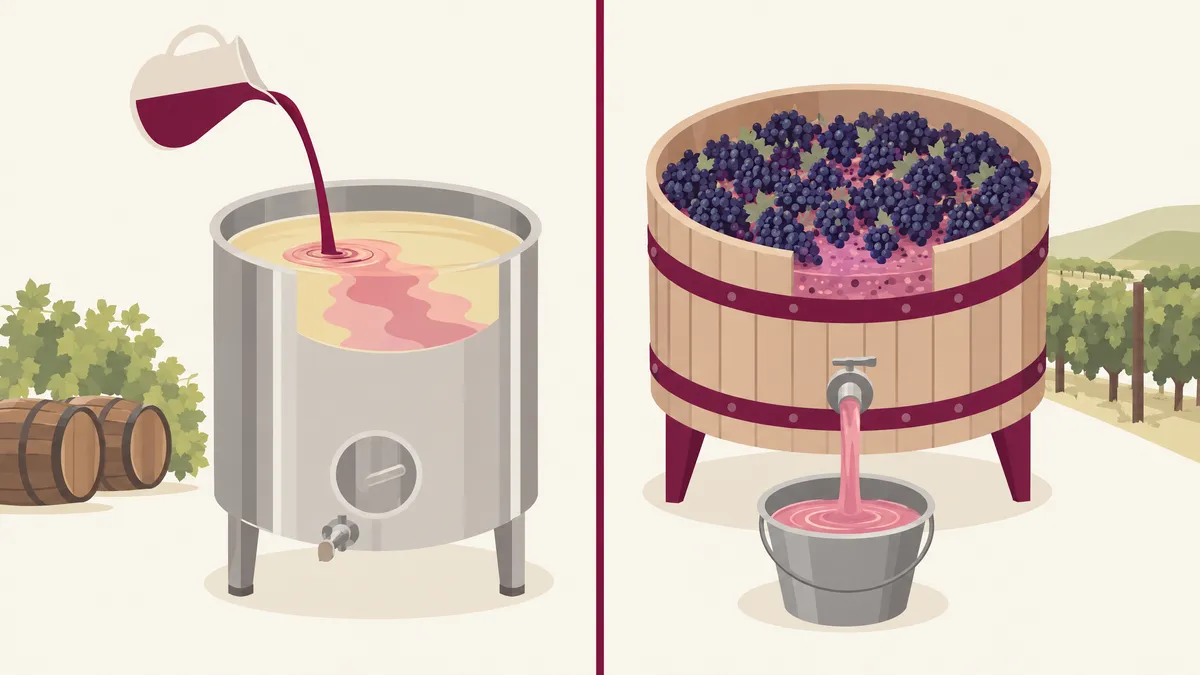
Rosé Champagne is pink sparkling wine from the Champagne region of France, made by the same traditional method (a second fermentation inside the bottle) as white Champagne. It comes from the region's main grapes: Chardonnay, Pinot Noir and Meunier. The colour is added on purpose in one of two ways, by blending or by the saignée method. Blending adds roughly 5 to 20% still red wine to a white base. Saignée leaves black grapes on their skins for a few hours, sometimes 48 or more. Most bottles are Brut, with under 12 grams of sugar per litre. Champagne exported 20 million bottles of rosé in 2021.
Blended, Saignée or Blanc de Noirs: Which Should You Buy?
Read the style word. Plain "Rosé" is usually blended, "Rosé de Saignée" is coloured by the skins, and blanc de noirs is a white wine pressed from black grapes. Blanc de noirs belongs here because it is the Champagne most often mistaken for rosé, and it is not pink on purpose.
| Style | Where the colour comes from | Colour | Taste | Pick it when |
|---|---|---|---|---|
| Rosé (blended) | 5 to 20% still red wine added to a white base | Pale salmon to pink, steady from year to year | Fresh strawberry and raspberry, crisp, light grip | You want an aperitif or a wine for smoked salmon and canapés |
| Rosé de Saignée | Black grapes left on their skins for hours, sometimes 48 or more | Deeper pink to raspberry, varies by year | Riper red berries, more body, a little tannin | The meal has duck, lamb, tuna or rich cheese |
| Blanc de noirs | None on purpose: black grapes pressed quickly | Gold, sometimes a faint copper tint | Apple, bread, red-fruit hints, broad and round | You want a fuller white sparkling wine for roast chicken or mushrooms |
If the label says only "Rosé", expect a blended wine that tastes much like the house's white Brut with berries added. If it says "Rosé de Saignée", expect more colour and grip, and save it for the table. The blanc de noirs guide covers the white style, and the blanc de blancs guide covers its Chardonnay-only opposite.

Quick check
One question on what you just read
A Champagne label says "Rosé de Saignée". Where did its pink colour come from?
Tap an answer to see how you did.
How Is Rosé Champagne Made by Blending?
The house blends a small share of still red wine, usually 5 to 20%, into its white base wine before the second fermentation. This step is called assemblage (French for blending). VinePair puts the typical red share at about 15%.
The red must qualify as Coteaux Champenois, the appellation for still wine made in Champagne, so it comes from the same region as the white.
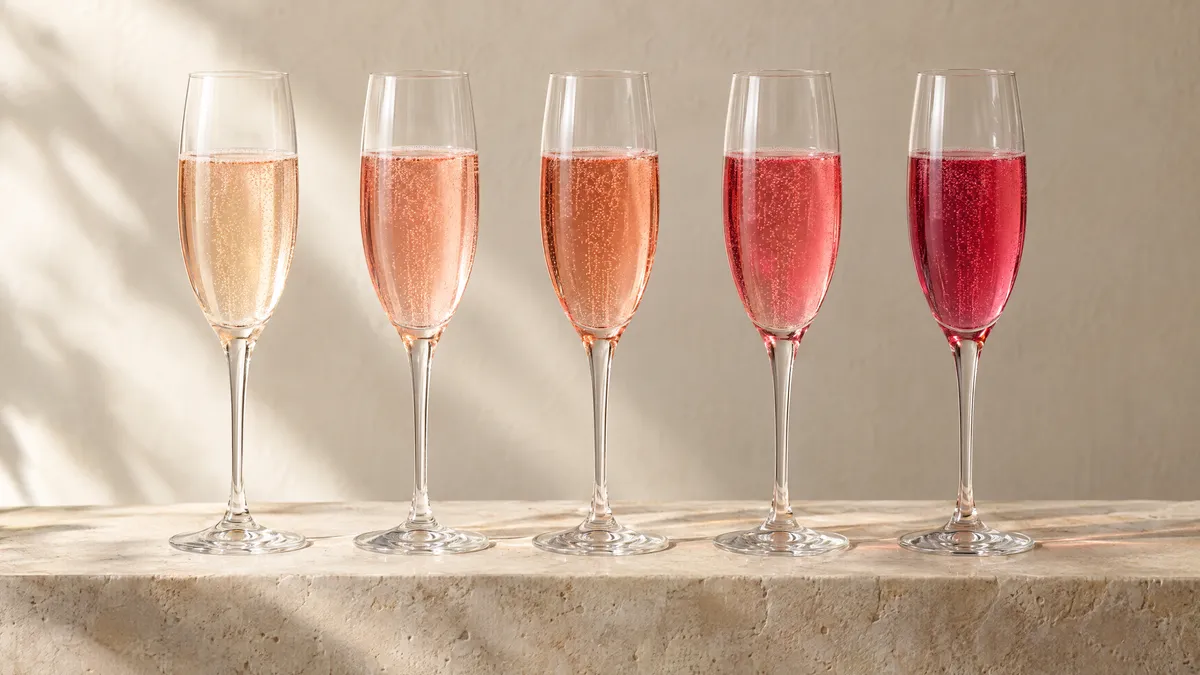
Blending is not a shortcut. It is by far the most common way rosé Champagne is made, and it gives the cellar control. The red wine is tasted and measured before it goes in, so the house can match last year's colour and flavour closely in its non-vintage rosé.
After blending, the wine is bottled with yeast and sugar and goes through the same steps as white Champagne. The méthode champenoise explainer walks through each stage. The red wine shows up twice in the glass: as pink colour, and as strawberry and raspberry that the white base does not have. Pinot Noir is the usual red, and the Pinot Noir guide shows where that berry character comes from.
What Is Rosé de Saignée?
Rosé de saignée gets its colour from the grape skins. Black grapes soak in their own juice for a few hours, sometimes 48 or more, before the pink juice is run off and fermented. Saignée means "bleeding" in French, after the pink juice drawn from the vat. That soak is called maceration (skin contact before or during fermentation).
The skins hold the colour and the tannin, so time sets the style. A short soak gives a pale, delicate wine. A long one gives deep raspberry pink, riper fruit and a light drying grip on the gums that a blended rosé rarely has. Wine Spectator notes the contact is minimal, usually only a few hours, so even the deepest saignée is far from a red wine.
The catch is consistency. Each harvest brings different skins, so the colour and weight of a saignée rosé vary more from year to year than a blend. Fewer houses make it. Some labels say "Rosé de Saignée" because the style is a selling point, but others just say "Rosé". The rosé wine guide shows how still rosé uses the same skin-contact idea.
What Does Rosé Champagne Taste Like?
Rosé Champagne tastes like white Champagne with red berries added. It has the same high acidity (the tartness that makes your mouth water), the same fine, persistent bubbles and usually the same dry finish. On top of that come strawberry, raspberry and red currant from the black grapes.
The berries change with method. In a young blended rosé they smell fresh, like strawberries just washed, because the red wine was made to keep its fruit. A saignée rosé tastes of riper raspberry and a little cherry, since the long soak pulled more from the skins. Time on the lees (the spent yeast left in the bottle after the second fermentation) adds a bread-crust or brioche smell under the fruit in both.
A deeper rosé feels slightly fuller and leaves a faint dry grip at the back of the mouth. That small grip is why rosé handles red meat better than a white Champagne. The how to taste sparkling wine guide sets out the order for reading bubbles, acidity and finish.
Is Rosé Champagne Sweet?
Usually not. Most rosé Champagne is Brut, with under 12 grams of sugar per litre, and the pink colour has nothing to do with sweetness. Sweetness comes from the dosage (the small dose of sugar added after the yeast is removed), and the label word tells you how much went in:
- Extra Brut: 0 to 6 grams per litre. Very dry.
- Brut: under 12 grams. The standard, dry to the taste.
- Extra Dry: 12 to 17 grams. Just off-dry, despite the name.
- Sec: 17 to 32 grams. Noticeably sweet.
- Demi-sec: 32 to 50 grams. Sweet, made for dessert.
- Doux: 50 grams or more. Rare and very sweet.
A Brut rosé can seem sweeter than it is because strawberry and raspberry read as sweet to the nose. If the bottle is for dessert, buy Demi-sec; for anything savoury, buy Brut or Extra Brut. The wine sweetness scale puts these words beside still wines.
What Food Goes With Rosé Champagne?
Rosé Champagne goes with salty, fatty and pink-fleshed food: smoked salmon, cured ham, tuna and duck. Its acidity and bubbles cut through fat and salt. The red berry fruit stands up to richer flavours that would flatten a light white Champagne.
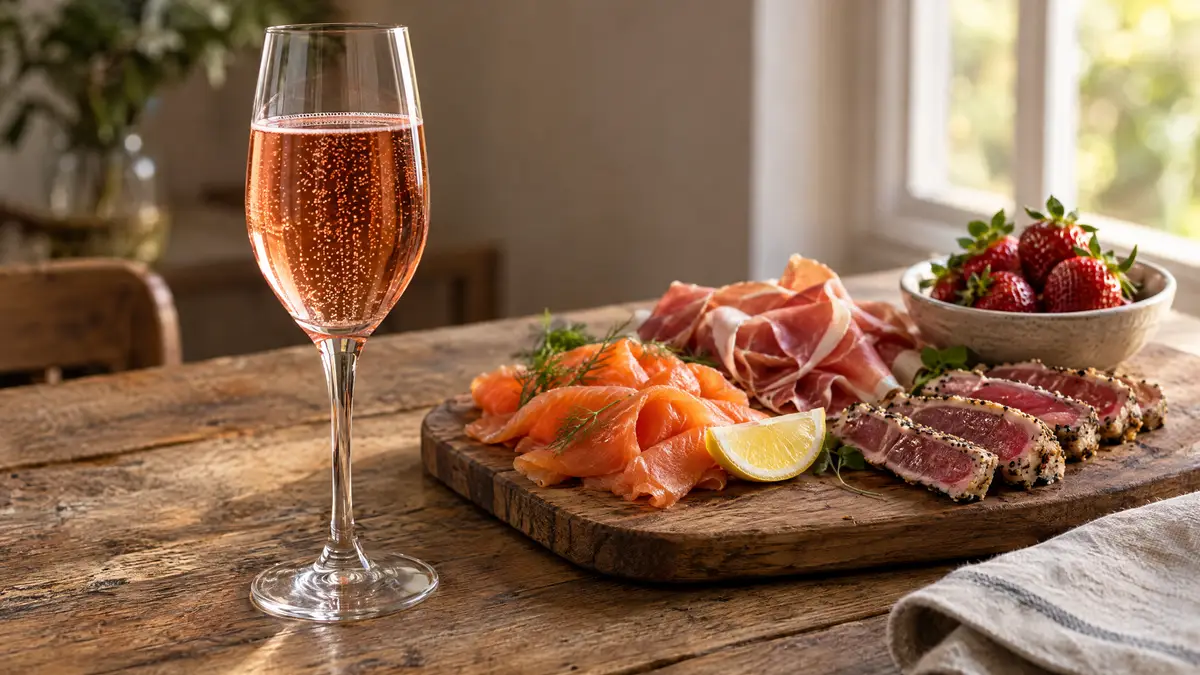
- Smoked salmon and gravlax: the fat and smoke soften the acidity, and the salt brings the berry fruit forward. The wine with salmon guide covers cooked salmon too.
- Cured ham and charcuterie: salt and fat are what bubbles handle best, and a blended Brut rosé is enough.
- Seared tuna and sushi: the meaty fish needs the extra weight of a deeper rosé, and its pink flesh matches the berry fruit.
- Roast duck and lamb: fat and red meat need the grip of a saignée rosé. A blended rosé tastes thin beside them.
- Strawberries and berry desserts: only with Demi-sec. Sugar in the food makes a dry wine taste sour and thin.
How Should You Serve Rosé Champagne?
Serve it at 7 to 9 °C, open it gently and pour it into a tulip or white-wine glass. Colder than that, the berry aromas go quiet. Warmer, the wine foams over when you pour. The wine serving temperature chart places it beside other sparkling and still wines.
The bottle holds about 6 bar of pressure, so keep a hand on the cork and twist the bottle slowly. The how to open sparkling wine guide shows the hand position. A wider tulip glass shows more of the strawberry smell than a narrow flute, and the wine glass guide explains why bowl shape matters. If you only have flutes, fill them halfway so there is room above the wine to smell it.
How Long Is Rosé Champagne Aged?
Non-vintage rosé must spend at least 15 months in bottle before release, and vintage rosé at least three years. Non-vintage means a blend of several harvests, made to taste the same every year. The vintage vs non-vintage guide explains how each is labelled.
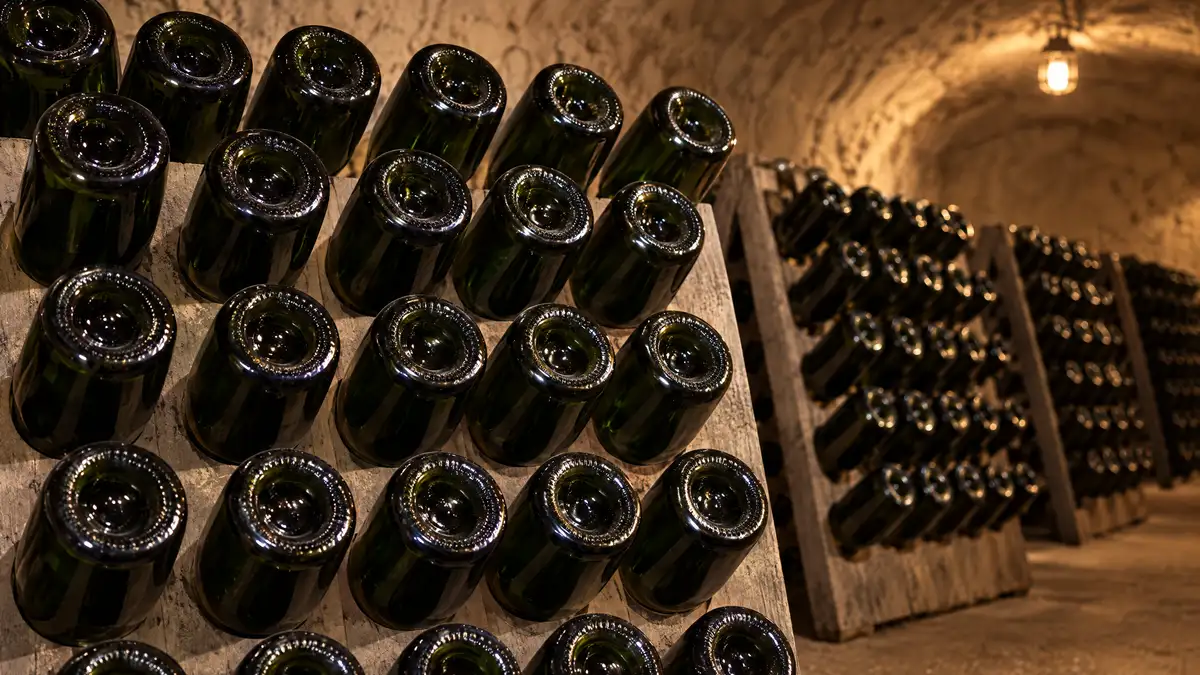
Non-vintage rosé is sold ready to drink and tastes best while the berry fruit is fresh. Vintage rosé is made to keep. With years in bottle its strawberry turns toward dried berries, and the colour drifts from pink toward copper. If you want fresh fruit, drink a non-vintage rosé within a few years of buying it; if you want toast and dried fruit, buy vintage.
Why Can Champagne Blend Red and White When Most Other Rosé Cannot?
Because EU rules ban blending basic red and white wine into rosé, but exempt the base blend of a sparkling wine. Article 8 of EU Regulation 2019/934 says a blend of white and red wine without a protected name "cannot produce a rosé wine". The same article excludes blends intended for a sparkling-wine cuvée (the base wine before the bubbles).
So most still rosé in Europe takes its colour from the skins, while Champagne may use either route. On a Champagne label, the word "Rosé" alone usually means blended. The Champagne region guide sets out the region's other styles, and the wine styles hub places rosé among them.
Sommy at sommy.wine has bite-sized wine courses, including a France course, and a tasting mode that walks you through look, smell and taste. Chill a Brut rosé to 7 to 9 °C tonight and pour it beside a slice of smoked salmon. Then photograph the label in the app and log whether you find strawberry or raspberry first.
Sources
Frequently Asked Questions
Is rosé Champagne just red and white wine mixed together?
Usually, yes, and it is legal and deliberate. Most houses blend roughly 5 to 20% still red wine from Champagne into a white base wine before the second fermentation. The red must qualify as Coteaux Champenois, the region's still-wine appellation. The other method, saignée, colours the juice by leaving black grapes on their skins for a few hours, sometimes 48 or more.
What is the difference between rosé Champagne and blanc de noirs?
Both can be made from black grapes, but blanc de noirs aims to be white. Its grapes are pressed quickly so the juice picks up almost no colour, and any faint copper tint is a side effect. Rosé Champagne is pink on purpose, from blended red wine or from hours of skin contact, so it is deeper in colour and tastes more of red berries.
Is rosé Champagne sweeter than regular Champagne?
No. Sweetness comes from the dosage, the small dose of sugar added after the yeast is removed, not from the colour. Most rosé Champagne is Brut, with under 12 grams of sugar per litre, the same as most white Champagne. Red berry aromas can make it seem sweeter. For a sweeter bottle, look for Demi-sec on the label.
What temperature should rosé Champagne be served at?
Serve it at 7 to 9 °C, which is a few hours in the fridge or a spell in a bucket of ice and water. Colder than that, the strawberry and raspberry aromas go quiet. Warmer, the bubbles foam up fast when you pour and the wine tastes flat sooner. A deeper saignée rosé served with food can sit at the top of that range.
How long can you keep rosé Champagne?
Non-vintage rosé is released ready to drink and keeps its fresh berry fruit best within a few years of purchase. It has already spent at least 15 months in the bottle in the producer's cellar. Vintage rosé spends at least three years there and is made to develop further, with the fruit drifting from fresh strawberry toward dried berries and toast.
What food goes with rosé Champagne?
Salty, fatty and pink-fleshed food. Smoked salmon, cured ham, seared tuna and roast duck all work, because the high acidity and bubbles cut fat and salt while the red berry fruit meets richer flavours. A deeper saignée rosé handles duck and lamb best. With strawberries or dessert, choose a Demi-sec, since a dry Brut tastes sour beside sugar.
Sommy Team
LinkedInFounder & Wine Educator
The Sommy Team is building the world's most approachable wine education app, helping beginners develop real tasting skills through structured courses and AI-guided practice.