Wine with Salmon: Grilled, Smoked, Baked and Raw Pairings

By the Sommy Team — AI-assisted, human-edited.
Updated Oct 1, 2026
Contents (9)
- Wine With Salmon, in One Paragraph
- Which Wine Goes With Each Salmon Dish?
- Can You Drink Red Wine With Salmon?
- What Wine Goes With Grilled or Seared Salmon?
- What Wine Goes With Baked or Creamy Salmon?
- What Wine Goes With Smoked Salmon?
- What Wine Goes With Raw Salmon and Gravlax?
- Does the Sauce Matter More Than the Fish?
- Which One Bottle Should You Buy, and How Cold?
TL;DR
Salmon is rich and oily, so it needs a wine with high acidity and little tannin. Grilled salmon takes a light red such as Pinot Noir, creamy or buttery salmon a Chardonnay, smoked salmon a dry sparkling wine, and raw salmon a crisp Grüner Veltliner or dry rosé.
Wine with salmon works best when the wine has high acidity and little tannin, because salmon is a fatty fish. Colour matters less than most people expect. How the fish is cooked, what sauce sits on it and how salty or smoky it is decide whether the glass should hold Chardonnay, Pinot Noir, rosé or sparkling wine.
Wine With Salmon, in One Paragraph
The best wine with salmon has high acidity (the tartness that makes your mouth water) and low tannin (the drying grip on your gums). Acidity cuts through the oil in the fish; heavy tannin clashes with it. Within that rule, match the cooking. Grilled or seared salmon takes a light red such as Pinot Noir. Salmon baked with butter or cream takes a medium- to full-bodied Chardonnay, and baked with herbs a Sauvignon Blanc. Smoked salmon takes a dry sparkling wine. Raw salmon takes a crisp Grüner Veltliner or a dry rosé.
Which Wine Goes With Each Salmon Dish?
Read the plate in order: the cooking method first, then the sauce, then the salt and smoke. Each of the three changes how much fat, acid and salt the wine has to meet. Find the dish in the table, then pour from the third column and skip the fourth.
| Salmon dish | What drives the match | Pour this | Avoid |
|---|---|---|---|
| Grilled or seared | Char, crisp skin, firm flesh | Pinot Noir or Gamay, lightly chilled | Tannic reds such as Cabernet Sauvignon |
| Baked with lemon and herbs | Citrus and green herbs | Sauvignon Blanc | Heavily oaked whites |
| Baked or pan-fried in butter or cream | Fat from the sauce on top of fat in the fish | Medium- to full-bodied Chardonnay | Thin, very light whites |
| Cold-smoked slices or lox | Salt, smoke, silky texture | Dry sparkling wine | Big oaked whites and tannic reds |
| Hot-smoked flakes | Cooked, firmer flesh, smoke | Dry rosé or lightly oaked Chardonnay | Tannic reds |
| Sashimi, tartare or poke | Raw fat, soy, delicate flavour | Grüner Veltliner, dry rosé or sparkling | Any tannic red |
| Teriyaki or soy glaze | Sweet-salty glaze | Pinot Noir or dry rosé | Dry, lean whites that taste sour beside sugar |
If the fish is charred, pour a light red. If it sits in cream, pour Chardonnay. If it is salty or smoked, pour bubbles. The same acid-first logic runs through the wider wine with seafood guide.
Can You Drink Red Wine With Salmon?
Yes, if the red is light and low in tannin, like Pinot Noir or Gamay. The old rule that fish always takes white wine is wrong for salmon; the problem is tannin and iron, not colour. Salmon has enough fat and flavour to stand up to a light red, which white fish such as cod does not.
Tannin is the first issue. A heavy Cabernet Sauvignon or Syrah dries the mouth and can taste bitter beside fish. The explainer on what tannins are shows how to feel that grip on your gums.
Iron is the second. In a 2009 study, researchers rated the fishy aftertaste of different wines drunk with dried scallop. The aftertaste rose with the iron content of the wine. Adding iron to a model wine made it worse, and binding the iron in a red wine reduced it. Later work by some of the same team described iron as a key cause of the fishy taste in wine and seafood pairings.
The study tested scallop only, so it does not prove the effect for every salmon dinner. It does explain why some reds taste metallic with fish while others do not.
What Wine Goes With Grilled or Seared Salmon?
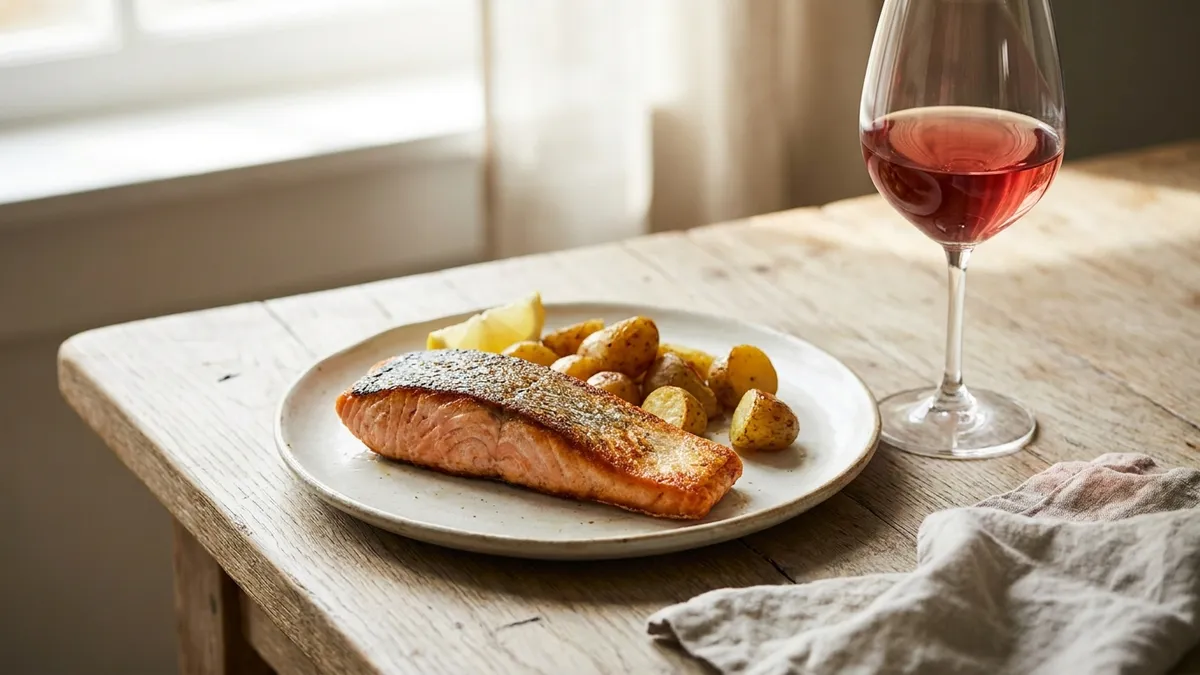
Grilled or seared salmon is the one preparation where a light red is the first choice. Charring adds smoky, browned flavours, and those suit a lighter red like Pinot Noir. Pinot's acidity and cherry fruit cut through the buttery richness of the fish, and its thin skins give it little tannin.
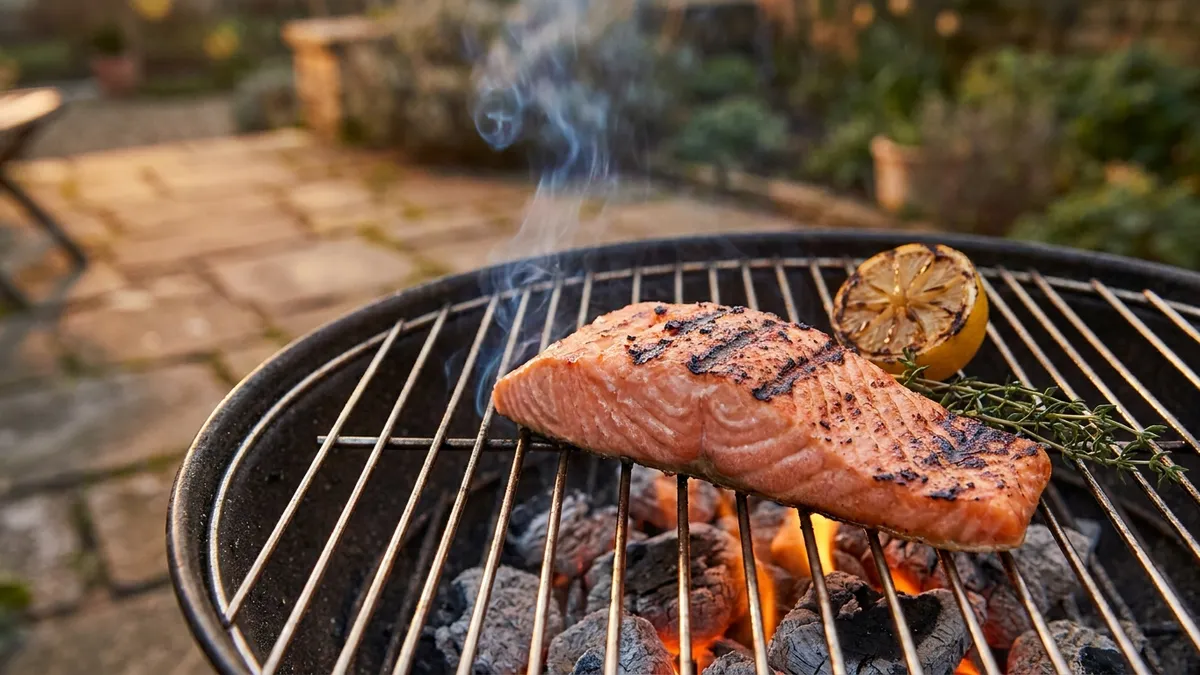
Cool-climate Pinot Noir is the style to look for. Riper, warm-climate versions taste of cherry jam and carry more alcohol, which can feel heavy with fish. The Pinot Noir guide explains how the regions differ. Gamay, the grape of Beaujolais, works the same way at a lower price; see the Gamay guide.
If the fish has a sticky glaze or a dark char, pour Pinot Noir or Gamay. If it is grilled with only lemon and herbs, a white like Sauvignon Blanc fits better, because the citrus will make a red taste thin.
What Wine Goes With Baked or Creamy Salmon?
Baked salmon follows its topping. Herbs and lemon call for Sauvignon Blanc; butter and cream call for a medium- to full-bodied Chardonnay. Salmon is already rich, and it is often served with cream or butter, so the wine needs enough body (weight in the mouth: skimmed milk versus whole) to keep up.
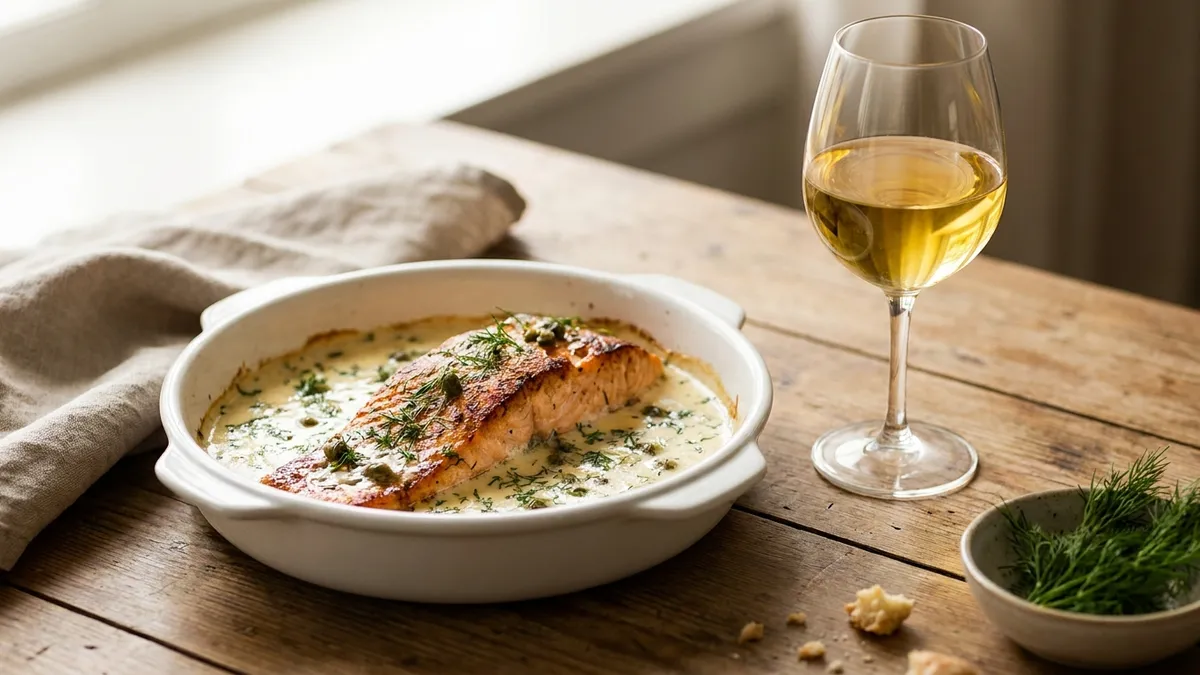
Sauvignon Blanc smells of grapefruit, cut grass and green herbs, because the grape keeps sharp acidity and green aromas when grown in cool places. Those aromas echo parsley, dill and lemon on the fish. The Sauvignon Blanc guide covers the main styles.
Chardonnay is the better answer once a sauce adds fat. A Chardonnay aged in oak (barrels that add vanilla, toast or spice) feels rounder and matches the weight of a cream sauce. Pick a style with some oak for butter and cream. Pick an unoaked one, such as most Chablis, for salmon with a lemon butter or a lighter crust. The Chardonnay guide explains how to tell the two apart on a label.
If the topping is green, choose Sauvignon Blanc. If it is butter or cream, choose a Chardonnay with some oak.
What Wine Goes With Smoked Salmon?
Sparkling wine is the safest pick for smoked salmon. Champagne, cava and Prosecco all work, because bubbles and high acidity scrub salt and oil from the tongue. Sources disagree beyond that: some lists favour Riesling or Chablis. Each list is describing a different product sold under the same name.
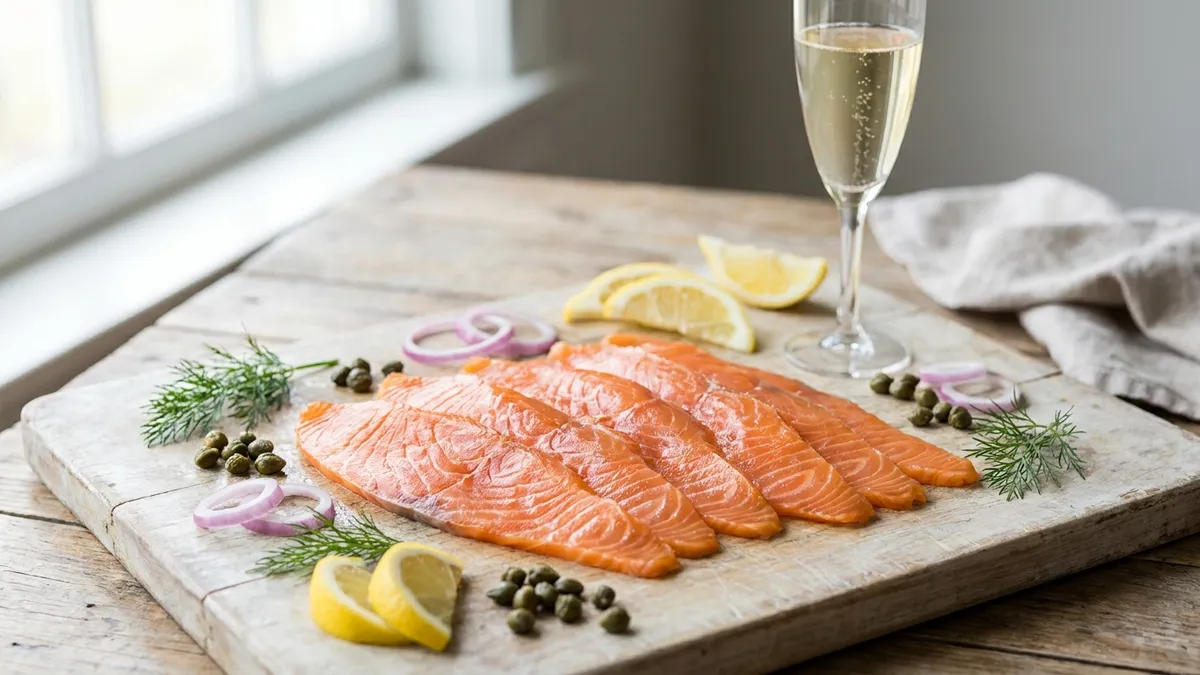
- Cold-smoked salmon is the most common kind, smoked below about 33°C (91°F), too cool to cook it. The fish stays raw-textured, silky and salty.
- Hot-smoked salmon is cooked by the smoke, so it is firmer, flakier and less moist.
- Nova is cured in a milder brine and then cold-smoked.
- Belly lox is dry-cured and not smoked at all, and it is very salty.
Salt is what changes the wine choice. Cold-smoked slices, Nova and lox are salty and silky, and dry sparkling wine handles them best; a crisp, unoaked white such as Chablis also works. Hot-smoked salmon eats like baked fish, so treat it that way: a dry rosé or a lightly oaked Chardonnay. Sparkling styles are compared in types of sparkling wine, and the brunch table in wine for brunch covers bagels and lox.
What Wine Goes With Raw Salmon and Gravlax?
Raw salmon wants a crisp, delicate white or a dry rosé. Grüner Veltliner, Austria's main white grape, has the acidity and a light peppery edge that suit sashimi. A dry rosé is a surprisingly good match with salmon sashimi. Sparkling wine also works with raw salmon, especially in sushi rolls and poke bowls.
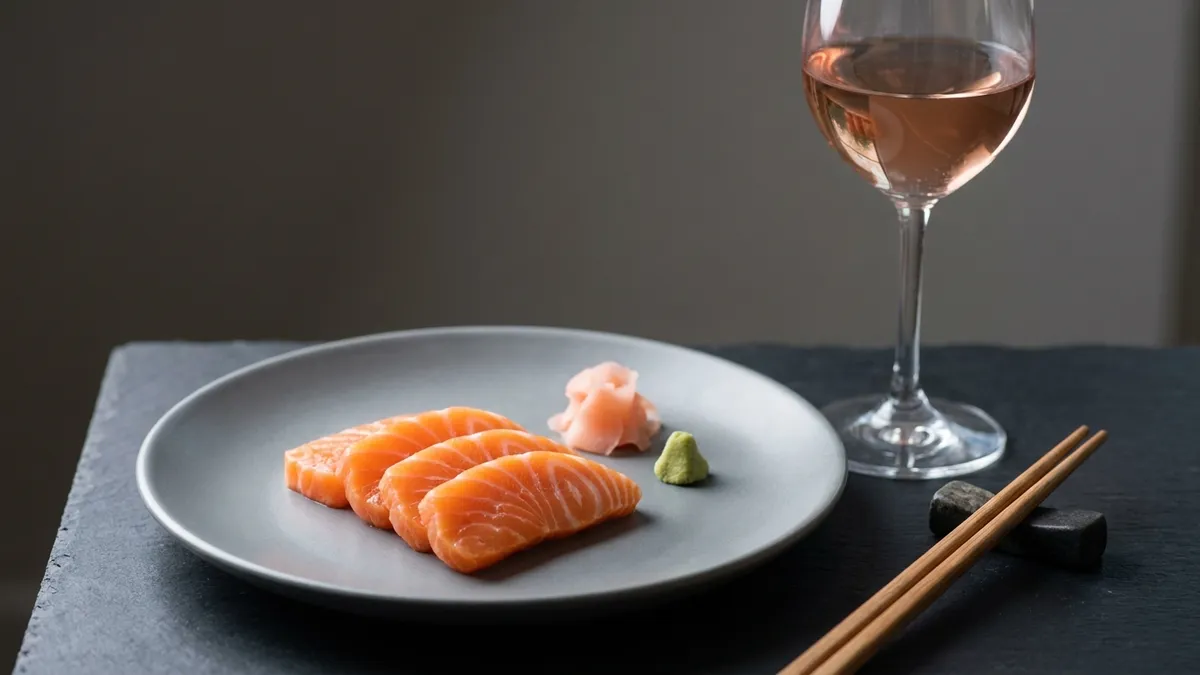
Choose a dry wine here (no sugar you can taste). Raw salmon is mild, so a fruity or oaky wine drowns it. The Grüner Veltliner guide and the rosé wine guide explain which labels run lean. For rolls with soy sauce and wasabi, the wine with sushi guide goes piece by piece.
Gravlax is raw salmon cured under a rub of dill, sugar and salt. The cure firms the flesh and adds a sweet-salty, herby layer. It is usually served with a sweet dill and mustard sauce, so pick a wine with acidity to match the salt and a little fruit for the sugar. If the plate is plain sashimi, pour Grüner Veltliner or dry rosé. If soy, wasabi or a sweet mustard sauce comes with it, pour dry sparkling wine.
Does the Sauce Matter More Than the Fish?
Often, yes. A sauce can move the pairing further than the salmon itself, because it adds the sugar, acid, salt or fat that the wine meets first. The fish stays the same oily base under every sauce, so pick the wine for whatever sits on top of it.
- Cream or butter sauce: adds fat, so pick a fuller Chardonnay.
- Lemon, lime or vinaigrette: adds acid, so the wine must be at least as tart, like Sauvignon Blanc, or it tastes flat.
- Teriyaki or honey-soy glaze: adds sugar and salt, so pick a fruity Pinot Noir or dry rosé.
- Capers, red onion and cream cheese: add salt and sharpness, so pick dry sparkling wine.
- Chilli or spicy mayo: adds heat, so keep alcohol low and pick an off-dry Riesling or a rosé.
The general version of this rule, match the sauce rather than the protein, sits in the wine pairing rules and in the food pairing hub.
Which One Bottle Should You Buy, and How Cold?
If you can buy only one bottle, buy a dry sparkling wine or a dry rosé. Both have the acidity salmon needs, no heavy tannin, and enough fruit to handle a glaze. Look for "Brut" on a sparkling label, which means dry.
Serve whites, rosés and sparkling wines straight from the fridge. Give Pinot Noir or Gamay about 20 minutes in the fridge before dinner. Cooler wine tastes fresher and less alcoholic, which keeps the acidity in front. The wine serving temperature chart gives exact ranges by style.
Sommy's bite-sized courses, from Wine 101 to France and California, teach the acidity and tannin that make these choices work. Get the app at sommy.wine. Pour a white and a light red beside one salmon fillet tonight, photograph each label in the app, and log which glass you reach for twice.
Sources
- Tamura T. et al. (2009), Iron is an essential cause of fishy aftertaste formation in wine and seafood pairing, Journal of Agricultural and Food Chemistry
- Matching Food & Wine: Wine with salmon, 10 ways to serve salmon and the wines to pair with them
- Taste of Home: The best wine pairings with salmon
- Wikipedia: Smoked salmon
- Wikipedia: Lox
- FAO: Hot smoking of fish, definitions
Frequently Asked Questions
What wine goes best with salmon?
A wine with high acidity and low tannin. The best style depends on the dish: Pinot Noir for grilled or seared salmon, Chardonnay for salmon in butter or cream, Sauvignon Blanc for baked salmon with herbs, dry sparkling wine for smoked salmon, and a crisp Grüner Veltliner or dry rosé for sashimi. If you can buy only one bottle, a dry sparkling wine covers the most ground.
Can you drink red wine with salmon?
Yes, if the red is light and low in tannin, such as Pinot Noir or Gamay. Salmon is fatty enough to handle a little grip. Heavy, tannic reds are the risky ones: they dry the mouth, and a 2009 study linked iron in wine to the fishy aftertaste some people notice with seafood. That study used scallop, not salmon, so treat it as a likely cause.
What wine goes with smoked salmon?
A dry sparkling wine such as Champagne, cava or Prosecco is the safest pick. The bubbles and high acidity cut through salt and oil. Very salty belly lox also takes a crisp, unoaked white. Hot-smoked salmon, which is cooked and flaky, behaves more like baked salmon and suits a dry rosé or a lightly oaked Chardonnay.
Does Chardonnay go with salmon?
Yes, especially when the salmon is baked or pan-fried in butter or served with a cream sauce. A medium- to full-bodied Chardonnay matches the weight of the fish and sauce, while its acidity keeps the fat in check. With raw salmon or a sharp citrus dressing, choose an unoaked, leaner Chardonnay such as Chablis instead.
What wine goes with salmon sashimi or sushi?
A crisp, delicate white or a dry rosé. Grüner Veltliner and pale dry rosé both suit raw salmon, and dry sparkling wine works well with salmon rolls and poke bowls. Keep tannic reds away from raw fish. If soy sauce and wasabi are on the plate, sparkling wine handles the salt best.
Should the wine be chilled for salmon?
Yes. Whites, rosés and sparkling wines should be served cold, and a light red like Pinot Noir or Gamay tastes better with salmon after about 20 minutes in the fridge. Cooler wine tastes fresher and less alcoholic, which keeps the focus on acidity, the quality that cuts through the fish's oil.
Sommy Team
LinkedInFounder & Wine Educator
The Sommy Team is building the world's most approachable wine education app, helping beginners develop real tasting skills through structured courses and AI-guided practice.