Wine with Sushi: Pairing Sashimi, Nigiri, and Rolls

By the Sommy Team — AI-assisted, human-edited.
Updated Jul 23, 2026
Contents (12)
- Why Wine with Sushi Deserves Its Own Playbook
- What Wine Goes with Sushi, in One Paragraph
- Why Pairing Wine with Sushi Is Harder Than Regular Seafood
- The Rules That Actually Work
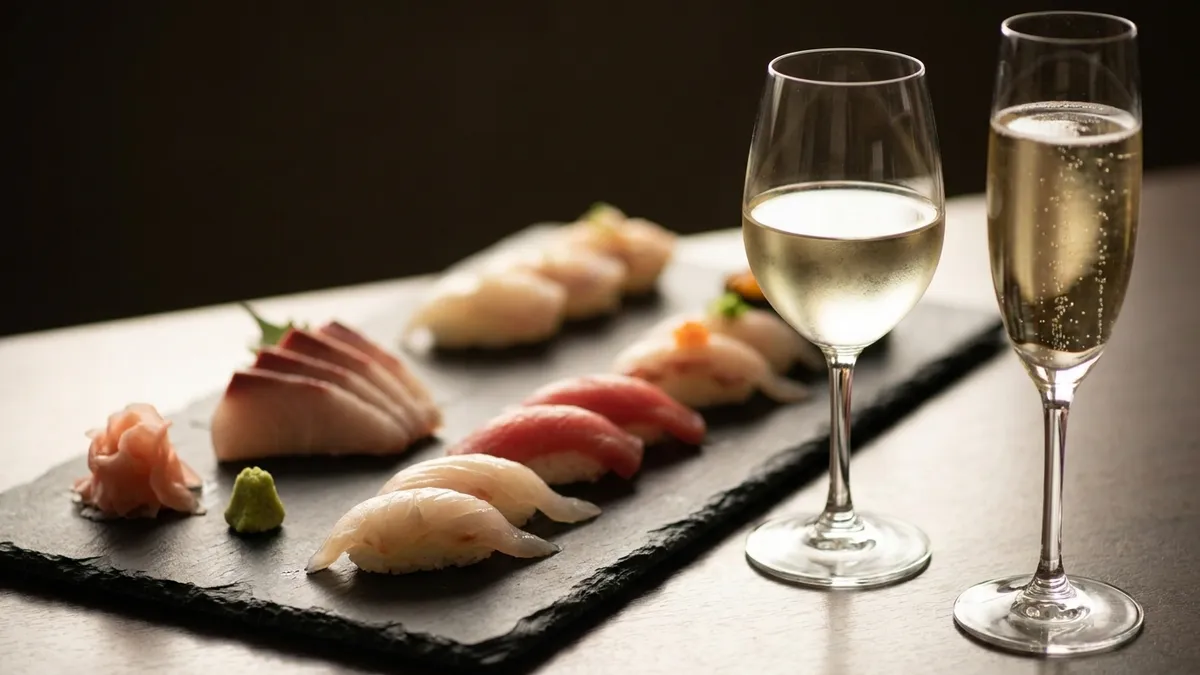
- Sparkling Wine: The Reliable Default
- Dry Riesling and Other Aromatic Whites
- Rosé, and the Case for a Light Red
- A Sushi-and-Wine Pairing Cheat Sheet
- Pairing by Sushi Type: Nigiri, Sashimi, and Rolls
- The Condiments Are the Real Test: Soy, Wasabi, and Ginger
- What About Sake — and Japanese Wine?
- Building Your Sushi-Night Wine Kit
TL;DR
Pairing wine with sushi means working around four things at once: delicate raw fish, vinegared rice, salty soy sauce, and fiery wasabi. High-acid, low-oak, low-tannin wines win. Sparkling wine is the safe default, dry Riesling and Grüner Veltliner handle sashimi, and a dry rosé bridges richer rolls and tuna nigiri.
Why Wine with Sushi Deserves Its Own Playbook
Pairing wine with sushi is one of the trickier tasks in food and wine, and it is not the same problem as pairing wine with a plate of grilled fish. A single piece of nigiri can combine raw fish, vinegared rice, salty soy sauce, hot wasabi, and pickled ginger — five distinct flavors and textures in one bite. Get the wine wrong and it turns metallic or bitter; get it right and each sip resets your palate for the next piece. This guide breaks down exactly which styles work, which to avoid, and how to match the wine to the sushi in front of you.
What Wine Goes with Sushi, in One Paragraph
For most sushi, reach for a bone-dry sparkling wine — Champagne, Cava, or Prosecco — because the bubbles and high acidity cleanse your palate between bites and never clash with the raw fish. Among still wines, dry Riesling and Grüner Veltliner are the top choices: both are high in acidity, low in alcohol, and free of oak. For leaner sashimi, go even lighter with Chablis or Muscadet. For richer rolls, fatty tuna, or anything with a sweet glaze, step up to an off-dry Riesling or a dry rosé. Avoid oak, tannin, and high alcohol every time — those three are what wreck a wine with sushi.
Why Pairing Wine with Sushi Is Harder Than Regular Seafood
A dedicated wine and seafood pairing guide covers grilled, poached, and fried fish, where the cooking method and sauce lead the pairing. Sushi is different because the fish is usually raw, and it arrives surrounded by three strong-flavored companions that most seafood dishes never involve. Each one changes what your wine has to do.
- Raw fish is delicate and lean. There is no browning, no butter, no char to give the wine something to grab. A powerful wine simply flattens the fish.
- Vinegared rice is acidic. Sushi rice (shari) is seasoned with rice vinegar, so the base of every piece already carries bright acidity. Your wine needs equal or higher acidity to keep pace, or it will taste flat and flabby beside the rice.
- Soy sauce is salty and full of umami. Umami — the savory "fifth taste" found in soy, seaweed, and aged fish — makes tannic and high-alcohol wines taste harder and more bitter than they would on their own.
- Wasabi brings heat. Wasabi's sharp, volatile burn amplifies the impression of alcohol and can scorch a dry, high-proof wine.
There is also a genuine chemical reason to avoid red wine. Research led by Takayuki Tamura and colleagues, published in the Journal of Agricultural and Food Chemistry, identified iron in wine as the key trigger for the unpleasant "fishy aftertaste" that forms when wine meets seafood. The more iron and tannin a wine carries, the worse the clash — which is why reds, and especially tannic reds, are risky with raw fish.
The Rules That Actually Work
Strip away the mystique and sushi pairing follows four repeatable principles. Master these and you can pair almost any piece without a chart.
- Acidity is your best friend. High-acid wines mirror the vinegared rice and slice through oily fish. This is the single most important trait — more than color, more than grape.
- Keep alcohol low. Wines around 11 to 12.5 percent stay refreshing against wasabi and soy; a 15 percent wine tastes hot and heavy.
- No oak. Toasty, buttery oak flavors bury delicate raw fish and clash with soy. Reach for unoaked, "stainless-steel" styles.
- No tannin. Tannin plus raw fish equals that metallic aftertaste. This is why white and sparkling wines dominate, and why the rare red exception must be very low in tannin.
Weight matters too. The wine trade, including the WSET (Wine & Spirit Education Trust) approach to pairing, teaches matching the intensity of the wine to the intensity of the dish. Sushi is light and precise, so the wine should be too. If you can taste the wine more than the fish, the wine is too big.
Sparkling Wine: The Reliable Default
If you remember one rule, make it this: when in doubt, pour bubbles. Sparkling wine is the most forgiving sushi partner because it brings three assets at once — high acidity, a palate-scrubbing texture from the bubbles, and a clean, neutral flavor that never competes with the fish.
- Champagne — dry, mineral, and precise, with fine bubbles. A blanc de blancs (100 percent Chardonnay) is especially good with delicate sashimi and white-fish nigiri.
- Cava — Spain's traditional-method sparkler offers similar crispness at a friendlier price, making it an easy everyday sushi wine.
- Prosecco — softer and fruitier, often faintly off-dry, which flatters spicier rolls and sweet-glazed pieces.
If you want to understand the real differences before you choose, our comparison of Champagne, Prosecco, and Cava breaks down how each is made and how that shapes the taste. For the full family — including crémant and pét-nat — see the guide to sparkling wine types.

Dry Riesling and Other Aromatic Whites
When you want a still wine, look to the high-acid, unoaked whites. These have the backbone to stand up to vinegared rice and the aromatic lift to complement the fish rather than smother it.
- Dry Riesling — arguably the best still wine for sushi. Its electric acidity handles oily fish and rice, while off-dry versions carry just enough sweetness to soften wasabi. Learn what to look for in the Riesling wine guide.
- Grüner Veltliner — an Austrian white with a signature white-pepper, herbal edge that bridges beautifully to wasabi and ginger. The Grüner Veltliner guide explains why it is a sommelier favorite for Asian food.
- Albariño — bright, saline, and coastal, echoing the sea in raw fish. See the Albariño wine guide for its style.
- Muscadet and Chablis — bone-dry, mineral, low-fruit whites that all but disappear behind the fish, leaving only freshness. Ideal for the purest sashimi.
The reason acidity matters so much here is worth understanding in its own right — our explainer on what wine acidity is shows why a high-acid wine tastes refreshing against food while a low-acid one tastes tired.
Rosé, and the Case for a Light Red
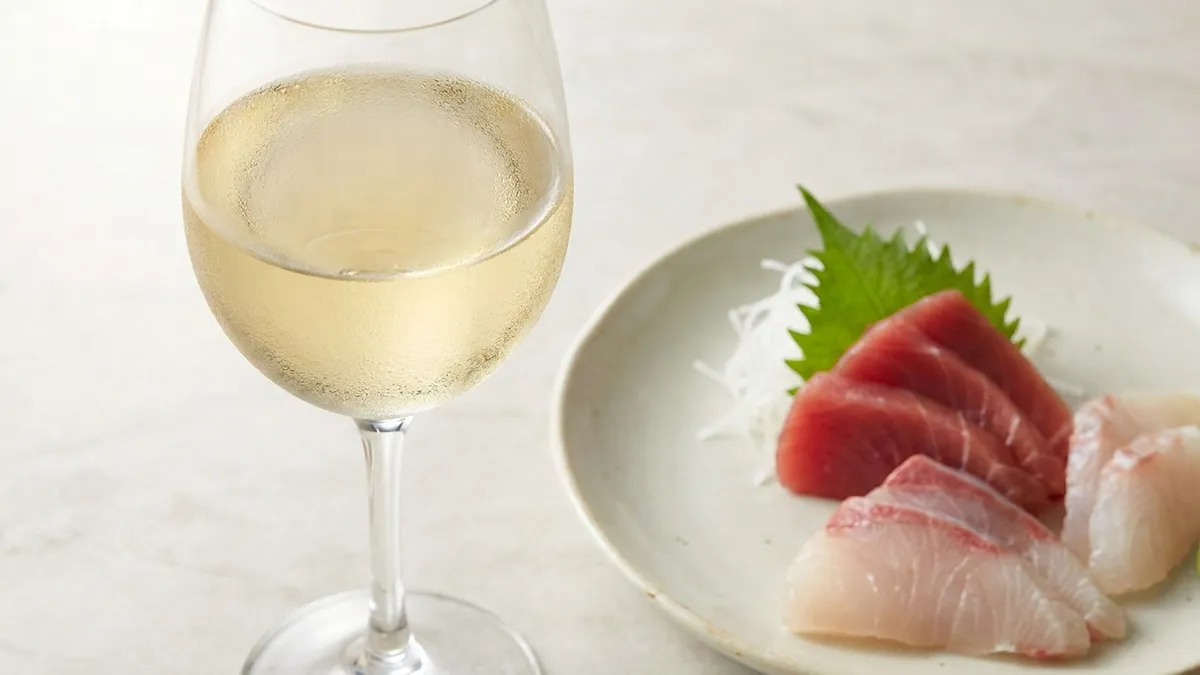
Dry rosé is an underrated sushi wine. A pale, crisp rosé — think Provence-style — has the acidity of a white with a whisper of red-fruit character that flatters fattier fish and spicier rolls. It is especially good with salmon, tuna, and anything carrying a spicy mayo. The rosé wine guide covers how dryness and color affect the style.
Red wine is the exception, not the rule, but it is not entirely forbidden. Fatty, meaty fish like tuna and salmon carry enough richness to buffer a small amount of tannin. If you want red, the move is a light, low-tannin bottle served slightly chilled:
- Gamay (the grape of Beaujolais) — juicy, bright, and nearly tannin-free, especially with a light chill.
- Cool-climate Pinot Noir — silky and red-fruited, a classic partner for seared or fatty tuna and salmon nigiri.
Serving these reds cool is not optional — it tightens the fruit and freshens the wine so it behaves more like a heavier rosé. Our wine serving temperature chart gives the exact ranges. Skip tannic heavyweights such as Cabernet Sauvignon and Syrah entirely; they will taste metallic against every piece of raw fish on the plate.
A Sushi-and-Wine Pairing Cheat Sheet
Different sushi calls for different wines. This table maps the most common orders to a reliable style, from the leanest sashimi to the richest glazed roll.
| Sushi or dish | Why it is tricky | Best wine style |
|---|---|---|
| Sashimi (raw fish, no rice) | Leanest and most delicate | Blanc de blancs Champagne, Chablis, Muscadet |
| White-fish nigiri | Subtle, clean, easily overpowered | Dry Riesling, Grüner Veltliner, brut sparkling |
| Salmon or tuna nigiri | Fatty and rich | Dry rosé, chilled Gamay or Pinot Noir |
| Spicy tuna or spicy mayo rolls | Heat plus creamy richness | Off-dry Riesling, Prosecco |
| Eel (unagi) with sweet glaze | Sweet, savory, umami-heavy | Off-dry Riesling, softer Prosecco |
| Tempura or fried rolls | Oil and crunch | Champagne, Cava, crisp Albariño |
Pairing by Sushi Type: Nigiri, Sashimi, and Rolls
Beyond individual fish, the form of the sushi shapes the pairing.
Sashimi is pure fish with no rice, so it is the most exposed. The wine touches the fish directly, which means any oak, tannin, or heavy fruit shows immediately. Go as light and mineral as possible — this is Chablis, Muscadet, or blanc de blancs territory.
Nigiri adds a small bed of vinegared rice under the fish, so acidity in the wine becomes essential to match the shari. Dry Riesling, Grüner Veltliner, and brut sparkling all shine. The fattier the fish on top, the more a dry rosé or chilled light red comes into play.
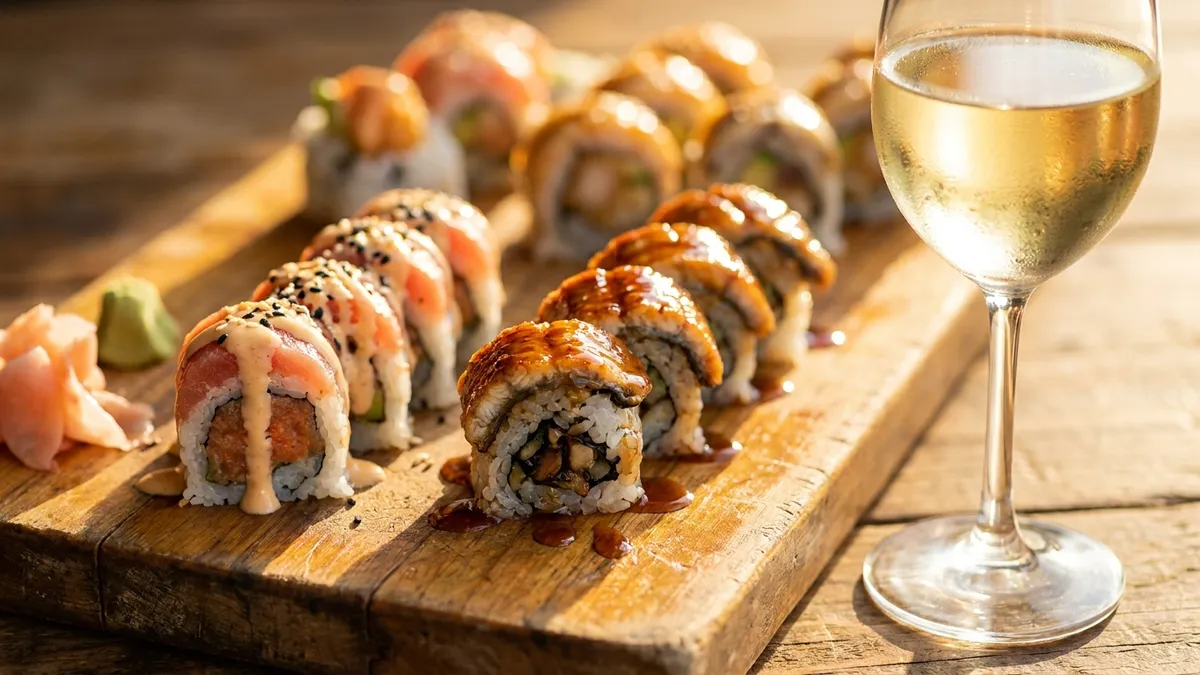
Maki rolls are the most variable. A cucumber roll is featherlight and wants the crispest white you have; a tempura or eel roll is rich, sometimes sweet, and often sauced, which pushes you toward an off-dry Riesling or a softer Prosecco. Match the wine to the heaviest, most flavorful element in the roll — usually the sauce.
This "match the strongest element" idea is the same principle behind our broader wine and food pairing guide: the sauce and seasoning frequently matter more than the protein itself.
The Condiments Are the Real Test: Soy, Wasabi, and Ginger
Most failed sushi pairings are not ruined by the fish — they are ruined by what you dip it in. Each condiment changes the equation.
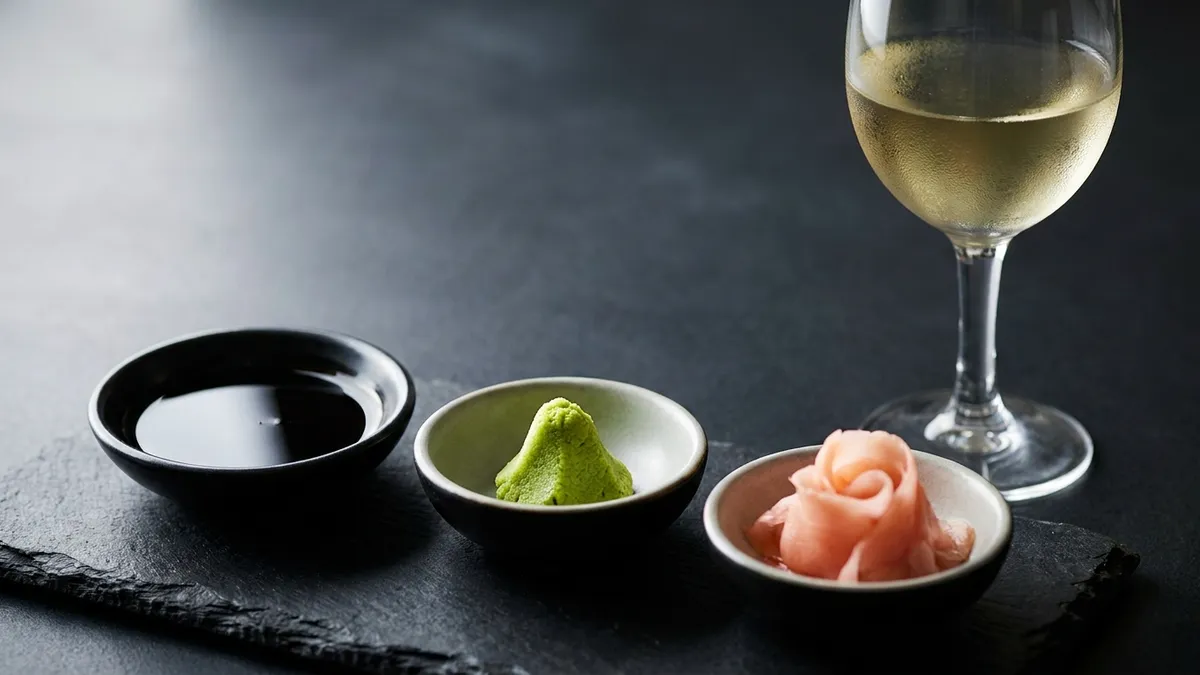
- Soy sauce is salty and loaded with umami. Salt actually softens the perception of acidity and makes fruit taste sweeter, which is good for wine — but umami hardens tannin and alcohol, making bold wines taste bitter. The fix is a high-acid, low-alcohol, low-tannin wine, which is exactly the sushi template. Our piece on savory and umami flavors in wine explains this interaction in depth.
- Wasabi is about heat, and heat behaves like spice. As covered in our guide to pairing wine with spicy food, a touch of sweetness cools the burn while high alcohol fans it. This is why an off-dry Riesling or a fruity Prosecco handles a wasabi-heavy bite better than a bone-dry, high-proof wine.
- Pickled ginger (gari) is a palate cleanser meant to be eaten between pieces, not with them. Its sharp, sweet-sour bite already resets your mouth — so let it, and take a sip of wine after the ginger rather than during a bite.
What About Sake — and Japanese Wine?
No sushi-pairing discussion is complete without acknowledging sake, the traditional Japanese rice brew served alongside sushi for centuries. Sake is low in acidity and has no tannin, so it never triggers the fishy-aftertaste clash that catches out red wine — which is precisely why it became the default. If you love sushi, sake is worth exploring as the benchmark that any wine pairing is quietly measured against.
Japan also makes still wine, and one grape is built for this table: Koshu, a pale, delicate, low-alcohol white grown around Mount Fuji. Its subtle, saline, almost weightless profile is a natural with raw fish. Our Japanese wine guide covers Koshu and why a quiet wine so often beats a loud one with sushi.
Building Your Sushi-Night Wine Kit
You do not need a cellar to nail sushi pairing — three bottles cover almost every order. Keep these on hand and you are ready for anything from delicate sashimi to a spicy roll.
- A brut sparkling wine (Champagne, Cava, or Prosecco) — the universal default that works with everything.
- A dry or off-dry Riesling — for nigiri, spicier rolls, and any bite with wasabi or a sweet glaze.
- A dry rosé — for fatty tuna, salmon, and richer, sauced rolls.
With those three styles chilled and ready, you can build a pairing for any sushi menu in seconds. The deeper skill — actually tasting why the acidity lifts the fish or the tannin clashes — is what makes it stick, and it is the exact thing the Sommy app is built to train. Start with the free how to taste wine framework, then practice on your own glass at sommy.wine until the pairings feel obvious.
Sushi rewards precision, and so does wine. Pour something bright, keep it light, mind the soy and wasabi, and the two will make each other better bite after bite.
Sources
Frequently Asked Questions
What wine goes with sushi?
The most reliable pairing is sparkling wine — Champagne, Cava, or Prosecco — because its bubbles and high acidity reset your palate between bites without fighting the fish. Dry Riesling and Grüner Veltliner are the best still-wine options, and a dry rosé handles richer rolls and tuna. The common thread is high acidity and no oak or tannin.
Is Champagne or Prosecco better with sushi?
Both work, and the difference is subtle. Champagne is drier and more mineral, with fine bubbles that suit delicate sashimi and nigiri. Prosecco is softer, fruitier, and often faintly off-dry, which flatters spicier rolls and anything with a sweet glaze. If you want one all-purpose bottle, a bone-dry brut of either style is the safe choice.
Can you drink red wine with sushi?
Mostly no, because tannin plus raw fish creates a metallic, fishy aftertaste. The exception is a light, low-tannin red served slightly chilled — a Gamay or a cool-climate Pinot Noir — with fattier fish like tuna or salmon nigiri. Skip anything tannic such as Cabernet Sauvignon or Syrah, which will clash with almost every piece on the plate.
What wine pairs with sashimi?
Sashimi is the leanest, purest form of raw fish, so it needs the lightest wines. Choose bone-dry, unoaked, high-acid whites: Chablis, Muscadet, Grüner Veltliner, or a delicate dry Riesling. Blanc de blancs Champagne also excels. Avoid oak, tannin, and heavy fruit — they all overpower the fish's subtle, clean flavor instead of framing it.
Does wine go with wasabi and soy sauce?
Yes, if you choose carefully. Wasabi's heat is tamed by a touch of sweetness, so an off-dry Riesling or Prosecco softens the burn. Soy sauce is salty and full of umami, which makes tannic or high-alcohol wines taste harsh. High-acid, low-alcohol whites and sparkling wines handle both condiments far better than a big, bold wine ever could.
Is Riesling good with sushi?
Riesling is one of the best still wines for sushi. Its naturally high acidity cuts through vinegared rice and oily fish, while a hint of residual sugar in off-dry styles calms wasabi heat and complements soy sauce. Dry Riesling suits sashimi and nigiri; off-dry Riesling shines with spicier rolls and anything carrying a sweet sauce.
Sommy Team
LinkedInFounder & Wine Educator
The Sommy Team is building the world's most approachable wine education app, helping beginners develop real tasting skills through structured courses and AI-guided practice.