Japanese Wine Guide: Koshu, Muscat Bailey A, and Beyond

By the Sommy Team — AI-assisted, human-edited.
Updated Jul 22, 2026
Contents (10)
- What Is Japanese Wine?
- A Grape That Traveled the Silk Road
- How Japan Built a Wine Industry in 150 Years
- The Grapes: Koshu, Muscat Bailey A, and Beyond
- Where Japanese Wine Grows: The Regions
- Why Rain Is the Enemy
- The "Japan Wine" Label You Should Look For
- What Japanese Wine Tastes Like
- Japanese Wine Guide: How a Beginner Should Start
- Japanese Wine in the Wider Wine World
TL;DR
Japan farms wine grapes across four main regions led by Yamanashi, which makes about 30% of the country's wine. Koshu is the signature pale, delicate white; Muscat Bailey A is the light red. Only about 5% of wine sold in Japan is real domestic-grape Japan Wine. This guide covers the grapes, regions, and where to start.
Japan makes wine that most drinkers have never tasted, in a country the world files under sake. This Japanese wine guide covers a small, precise industry built on very old grapes and a brutal climate: roughly 280 wineries, a signature white grape that crossed Asia on the Silk Road, and a national style that prizes delicacy and food-friendliness over power. The wines are quiet, low in alcohol, and built to sit beside a plate of raw fish rather than dominate it.
What Is Japanese Wine?
Japanese wine is delicate, low-alcohol wine grown in a rainy climate and built for the table. About 280 wineries operate across four main regions, led by Yamanashi Prefecture near Mount Fuji, which alone produces roughly 30% of the country's wine and holds about a third of its wineries. The signature grapes are Koshu, a pale pink-skinned white spanning some 480 hectares, and Muscat Bailey A, a soft red hybrid. Most important for a shopper, only wine made entirely from Japan-grown grapes may be labelled Japan Wine — a category that was just 15.8 million litres in 2017, about 5% of all wine sold in the country.
A Grape That Traveled the Silk Road
Koshu did not begin as a wine grape. Genetic work has shown it is mostly Vitis vinifera, the European wine species, with a small amount of wild East Asian vine in its parentage, and tradition holds that it reached the Koshu valley of Yamanashi more than 1,000 years ago along the trade routes that linked Asia to the Caucasus. For most of that history it was a fresh table grape, prized for its pale rose-tinted skins and eaten rather than pressed.
That long tenure makes Koshu a genuine indigenous variety rather than a modern import — the kind of survivor covered in our guide to indigenous grapes worth trying. It is thick-skinned, high in acid, and low in sugar, which made it durable as fruit but tricky as wine. Turning a delicate table grape into a serious dry white took the Japanese industry more than a century of patient work.
How Japan Built a Wine Industry in 150 Years
Modern Japanese winemaking is a Meiji-era project. Around 1874 the new government promoted grape wine as an economic strategy, and in 1877 two young men from the Koshu valley, Takano Masanari and Tsuchiya Ryuken, sailed to France to learn winemaking before returning to help found the Dainihon Yamanashi Wine Company — the first private winery in the country.
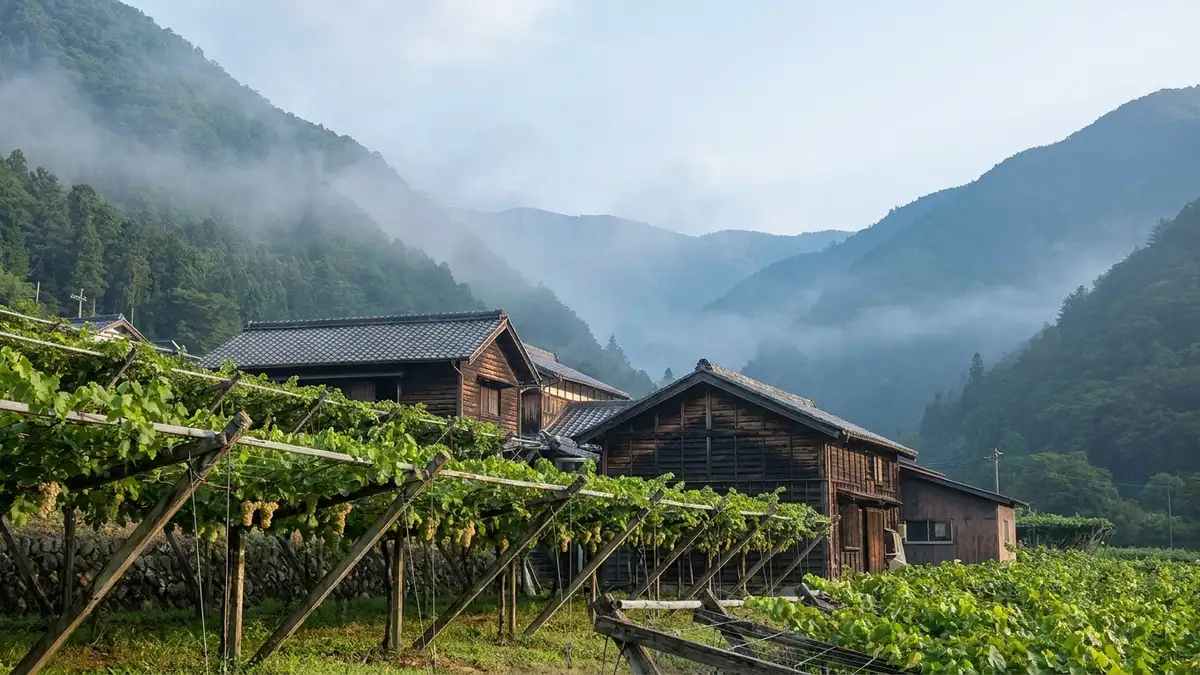
For a century the results were mostly sweet and rustic, and much of the "wine" made in Japan was actually blended from imported bulk juice. The quality turn came late — largely from the 1990s onward — as growers learned to ferment Koshu fully dry, control temperature, and treat their oldest asset as a fine-wine grape. A pivotal moment arrived in 2010, when a group of producers formed the Koshu of Japan project and began pouring dry Koshu at trade tastings in London, deliberately measuring the grape against the world's benchmark whites. That outward-facing confidence reset expectations for the entire category.
The Grapes: Koshu, Muscat Bailey A, and Beyond
Japan's vineyard is a mix of one ancient native white, one home-bred red, a large stock of North American table-grape hybrids, and a growing slice of international varieties.
Koshu
Koshu is the reason to pay attention. It makes a pale, light-bodied dry white with low alcohol — typically 11 to 12% — and a gentle profile: lemon, grapefruit pith, green apple, white peach, and a faint stony or saline note on the finish. The style is deliberately understated, closer to a restrained Muscadet than to an aromatic showpiece.
Typical Koshu aromas
Fruit
- Lemon
- Grapefruit
- Green Apple
- Pear
- Peach
Floral
- Honeysuckle
Earthy/Mineral
- Chalk
- Saline
Because the base wine can read as almost too quiet, winemakers reach for texture. Many age Koshu on its lees — the spent yeast cells left after fermentation — which adds a creamy weight and a light nutty depth without adding loud flavour. Others ferment or age a portion in oak, and a few make a skin-contact orange wine that leans into the grape's pink skins. The acidity is the constant: bright, clean, and food-shaped.
Muscat Bailey A
Muscat Bailey A is Japan's answer to a crowd-pleasing red. It was bred in the 1920s by Kawakami Zenbei — often called the grandfather of Japanese wine — by crossing an American Bailey vine with Muscat Hamburg, making it a hybrid (a cross between two different grape species). It covers roughly 150 hectares, mostly in Yamanashi.
The wine is soft, low in tannin (the drying, gripping sensation in reds), and full of candied strawberry, raspberry, and a bubblegum lift that can tip toward the "foxy" note common to American-parentage grapes. Think of it as a Japanese cousin to Beaujolais: light, juicy, best slightly chilled. As a hybrid it sits in the same family story as the hybrid grapes worth knowing elsewhere — bred for a specific climate rather than inherited from Europe.
The Supporting Cast
Beyond the two signatures, Japan grows a lot of North American table-grape hybrids — Concord and Niagara especially — which are more common in Nagano and often go into simpler, sweeter, grapey wines. International varieties are the growth story: Chardonnay and Merlot do well in Nagano's higher, drier vineyards, Pinot Noir and German grapes like Kerner thrive in cool Hokkaido, and Koshu's native Black Queen and Kai Noir add darker local reds to the blend sheet.
Where Japanese Wine Grows: The Regions
| Region | Location and climate | Key grapes | What it does best |
|---|---|---|---|
| Yamanashi | West of Tokyo, warm, humid, Koshu valley | Koshu, Muscat Bailey A | The heartland — about 30% of national output and delicate dry whites |
| Nagano | Inland highlands, ~500 m+, drier | Concord, Merlot, Chardonnay | Higher-altitude international varieties and structured reds |
| Hokkaido | Far north, cold continental | Pinot Noir, Kerner, German whites | Cool-climate aromatic whites and lighter reds |
| Yamagata | Northern Honshu, four-season climate | Delaware, Merlot, Chardonnay | An emerging quality region with a long grape history |
Yamanashi
Yamanashi is the engine. Sitting just west of Tokyo in the rain shadow of surrounding mountains, it holds about 90 wineries — the most of any prefecture — and produces close to a third of all Japanese wine. This is Koshu country: some 95% of the grape grows here, much of it around the historic Koshu valley. It was also the first region to earn a Geographical Indication (GI) — a legal origin label — in 2013, which restricts the Yamanashi name to wine grown, fermented, and bottled in the prefecture from a defined list of grapes.
Nagano
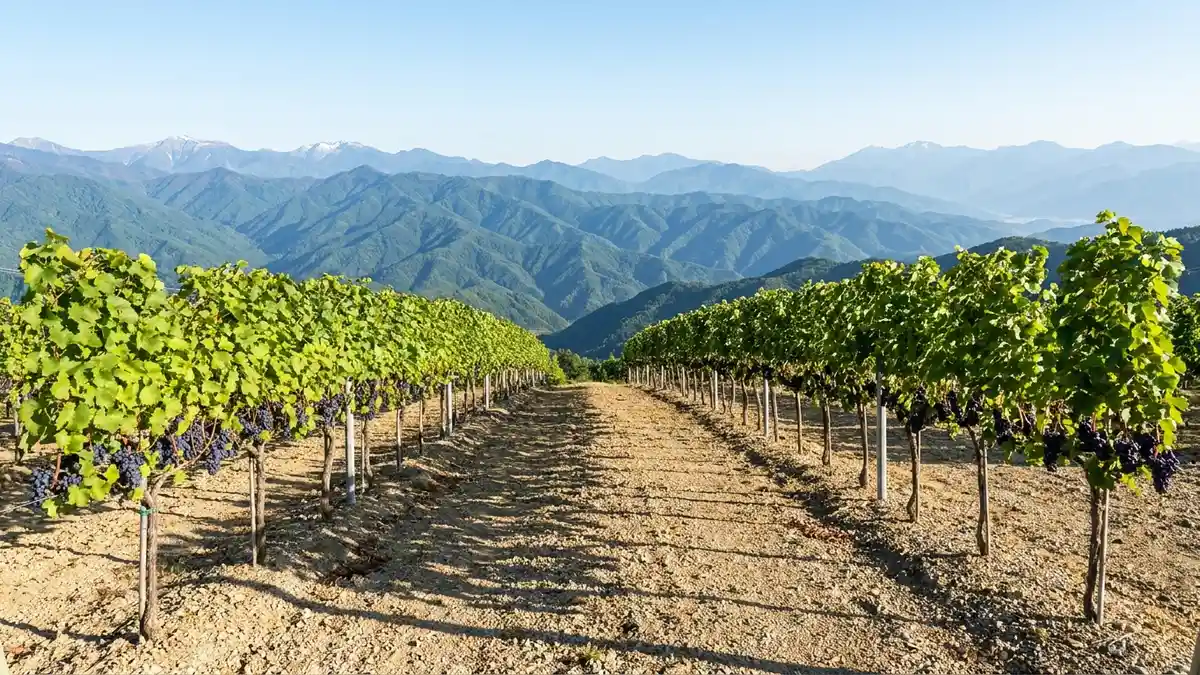
Nagano is the altitude play. Inland and mountainous, with most vineyards around 500 metres or higher, it gets less rain than Yamanashi and cools off sharply at night. That combination suits international grapes, and Nagano has become a source of serious Merlot, Chardonnay, and Cabernet, alongside the Concord that has long grown there. If you want to understand why the same grape behaves differently up a hill, our explainer on what terroir actually means uses exactly this kind of altitude effect.
Hokkaido and Yamagata
Hokkaido, Japan's northern island, is the cool-climate frontier. Its cold continental winters and long daylight favour aromatic German varieties — Kerner and Müller-Thurgau — and delicate Pinot Noir, giving wines with high natural acidity and real freshness. It became Japan's second GI region in 2018. Yamagata, in northern Honshu, has a long grape-growing history and a distinct four-season climate, and is increasingly bottled as a quality region in its own right. Others, including Nagano and Osaka, have since joined the GI system.
Why Rain Is the Enemy
Most warm-climate wine regions fight heat and drought. Japan fights water. The growing season overlaps with the summer rainy season and the autumn typhoon season, so humidity, fungal disease, and last-minute dilution threaten the crop nearly every year — the near-opposite of the sun-baked challenge in most Old World versus New World regions.
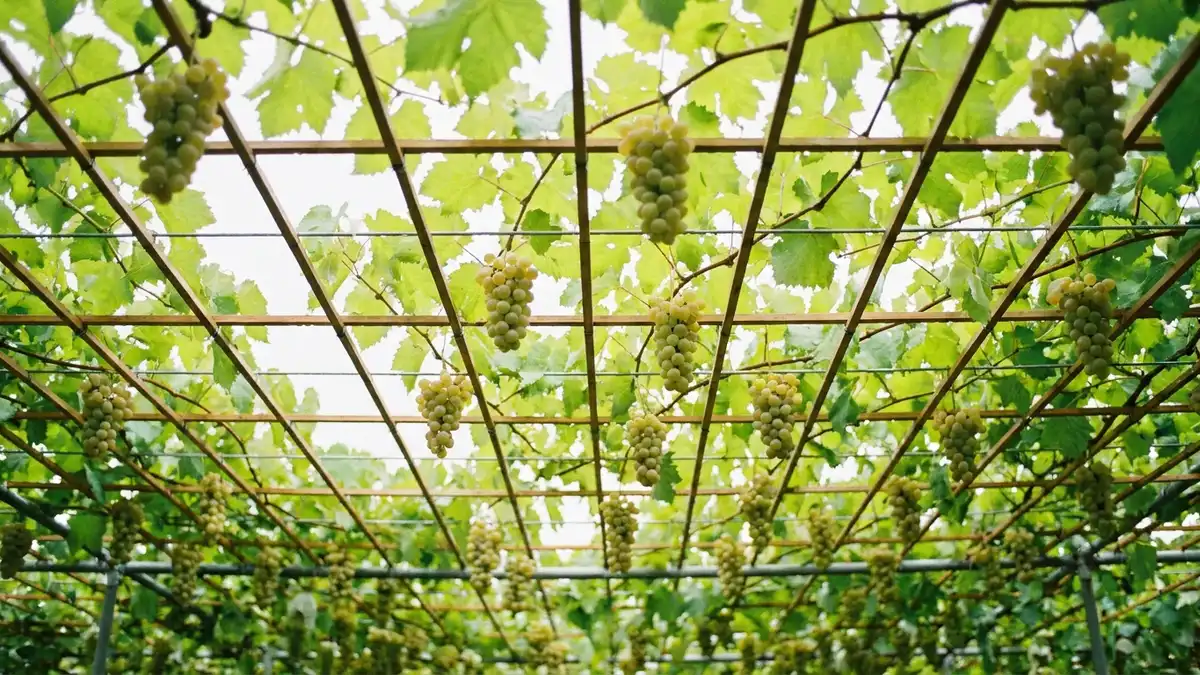
The signature response is architectural. Many vines are trained high on overhead pergolas — called tana — that lift the fruit and canopy into moving air, reducing the humidity and disease pressure that would build up on low, dense rows. Newer quality-focused vineyards increasingly use lower cordon training in the drier highland sites, where airflow is less of a problem, so you can often read a region's rainfall straight off how its vines are shaped.
The "Japan Wine" Label You Should Look For
This is the single most useful fact for a shopper. Until recently, wine made in Japan could contain imported bulk juice or concentrate and still carry Japanese branding. A labelling law enforced on 30 October 2018 fixed that: only wine made entirely from grapes grown in Japan may now be called Japan Wine (日本ワイン).
The scale is sobering. Domestic-grape Japan Wine was only about 15.8 million litres in 2017, roughly 5% of all the wine sold in the country. The rest is imported bottles or "domestically produced wine" made in Japan from foreign juice. Wine overall is a small share of Japanese drinking — around 3% of alcohol consumption, dwarfed by beer and sake — so real Japan Wine is a niche within a niche, which is exactly what makes finding it rewarding.
If a Japanese bottle does not say Japan Wine on the label, it may well be made from imported grapes. The three characters 日本ワイン are your guarantee of a genuinely local wine.
What Japanese Wine Tastes Like
The house style is delicacy. Koshu whites are pale, light-bodied, and low in alcohol, with citrus, green apple, white peach, and that faint saline or chalky lift — clean and quiet, built to refresh rather than impress. Lees-aged and oaked versions add a creamy, nutty texture but keep the understatement. Muscat Bailey A reds are soft and fruity, with strawberry and a candied top note, low tannin, and a gentle finish that rewards a slight chill.
Across both, the through-line is freshness and low weight. These are not wines that shout, and judging them against a dense Napa Cabernet misses the point entirely. They are calibrated for the table — specifically, for the delicate, umami-driven, subtly seasoned flavours of Japanese cooking.
Japanese Wine Guide: How a Beginner Should Start
Work through it in three steps, and taste with food wherever you can.
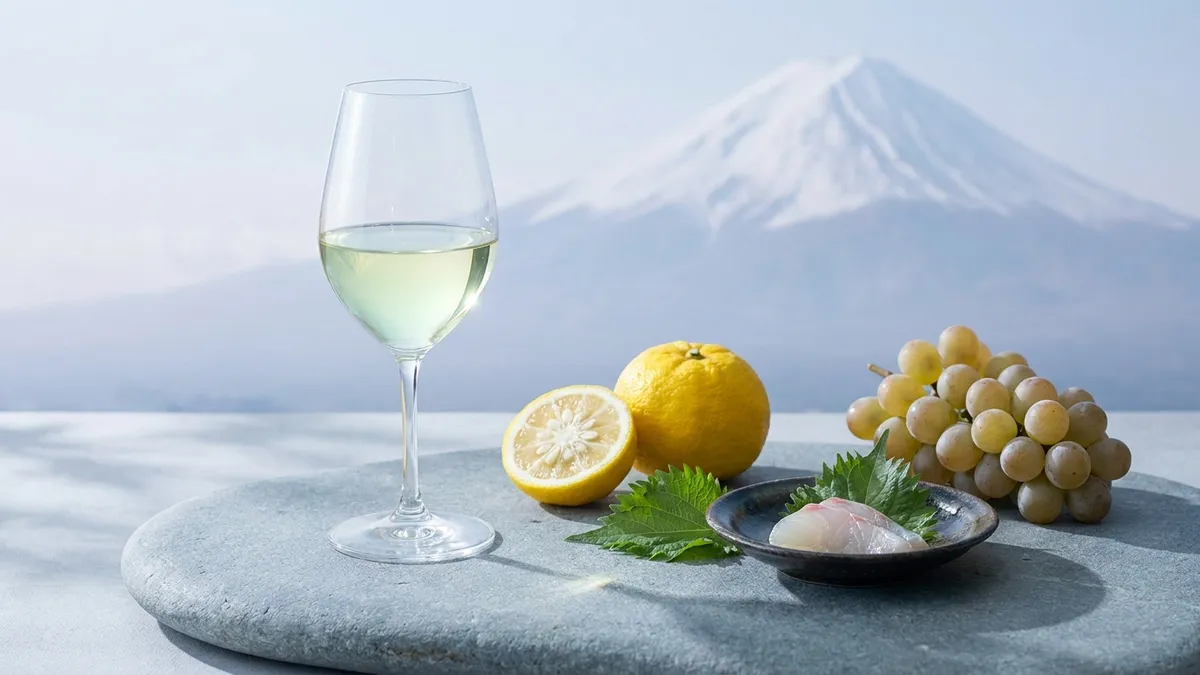
- Start with a dry Koshu from Yamanashi, served cold at 8 to 10°C — check our serving temperature chart if you are unsure. Drink it beside sushi, sashimi, or tempura. That pairing is the whole argument for the style in a single mouthful, and it shows why a low-alcohol, saline white beats a powerful one with delicate raw fish. Our guide to wine with seafood explains the mechanics.
- Try a Muscat Bailey A slightly chilled to meet Japan's light red side. Look for the candied strawberry fruit and the soft, tannin-light finish, and notice how different it is from a structured European red.
- Move to a Nagano Chardonnay or Merlot, or a Hokkaido Pinot Noir, to taste what the cooler highland regions do with international grapes. Comparing a Nagano Chardonnay against a warmer-climate one makes the altitude effect obvious.
Tasting two contrasting wines side by side is the fastest way to build real vocabulary, because the difference does the teaching. The Sommy app walks you through structured comparisons like these step by step, so you learn to name what you are tasting instead of guessing. If you are brand new to the process, start with how to taste wine and come back.
Japanese Wine in the Wider Wine World
Japan is one of the clearest lessons in wine you can drink, because it refuses the usual categories. It has an ancient native grape and a 150-year-old modern industry. It grows in a rainy, difficult climate yet aims for delicacy rather than power. And it treats wine as a partner to food rather than a centrepiece.
Its closest cousins are worth tasting alongside it. The delicate, high-acid, food-first philosophy echoes the indigenous white grapes of other emerging regions, and the ancient-roots-meets-modern-execution arc mirrors what is happening in places like Georgia and Greece. For a striking contrast on the same continent, our Chinese wine guide covers a neighbour that chose power over delicacy — structured Bordeaux-style reds grown in high desert rather than subtle whites built for the table. The reward for learning Japanese wine is not just a new region on your list — it is a working demonstration that restraint is a style choice, not a shortfall, and that lesson transfers to every subtle, low-alcohol wine you will ever pour. Sommy's regional courses build exactly that comparative instinct, one glass at a time.
Sources
- An Introduction to Japanese Wine — Club Oenologique, 2021
- Japan New Wine Labeling Standards Become Effective — USDA Foreign Agricultural Service, 2018
- Koshu (grape) — Wikipedia
- Value and Protection of Geographical Indications by the Japanese Wine Law — BIO Web of Conferences, OIV, 2019
Frequently Asked Questions
What is Japanese wine known for?
Japan is known for delicate, low-alcohol, food-friendly wines, especially those from Koshu, a pale-skinned white grape grown mostly in Yamanashi Prefecture near Mount Fuji. The house style is subtle rather than powerful: crisp whites with citrus and a saline edge that pair naturally with sushi and light Japanese cooking. Muscat Bailey A, a soft light red, is the second signature.
What is Koshu wine?
Koshu is Japan's flagship white grape, a pink-skinned variety that arrived along the Silk Road more than 1,000 years ago and was long eaten as a table grape. Today it makes dry, low-alcohol white wine with lemon, green apple, and a chalky, saline finish. Winemakers often age it on its lees to build texture. It covers roughly 480 hectares, about 95% of it in Yamanashi.
What grapes are used in Japanese wine?
The two signatures are Koshu, a delicate pink-skinned white, and Muscat Bailey A, a soft red hybrid bred in the 1920s. Concord and Niagara are widely grown, especially in Nagano. International varieties such as Chardonnay, Merlot, and Pinot Noir do well in the cooler, drier regions of Nagano and Hokkaido. Kerner and other German grapes thrive in Hokkaido's cold climate.
Does Japanese wine really only come from Japanese grapes?
Not most of it. Since October 2018, only wine made entirely from Japan-grown grapes can be labelled Japan Wine. That category is a small fraction of the total: domestic-grape production was about 15.8 million litres in 2017, roughly 5% of all wine sold in Japan. The rest is imported bottles or wine made in Japan from imported bulk juice and concentrate.
What does Koshu wine taste like?
Expect a pale, light-bodied dry white with low alcohol, around 11 to 12%, and gentle aromas: lemon, grapefruit pith, green apple, white peach, and a subtle stony or saline note. It is deliberately understated, closer to a restrained Muscadet or unoaked white than to an aromatic bomb. Lees-aged and barrel versions add texture and a nuttier depth without overwhelming the delicacy.
Why is Japanese wine so hard to grow?
Rain. Japan's growing season overlaps with heavy summer rainfall and the autumn typhoon season, so humidity, fungal disease, and dilution threaten the harvest every year. Growers respond by training vines high on overhead pergolas, called tana, to lift the fruit into airflow, and by favouring higher, drier, cooler sites in Nagano and Hokkaido where rain is less of a problem.
Where should a beginner start with Japanese wine?
Start with a dry Koshu from Yamanashi, served cold at 8 to 10°C alongside sushi, sashimi, or tempura — that pairing is the clearest demonstration of why the style exists. Next try a Muscat Bailey A slightly chilled to see Japan's light red side, then a Nagano Chardonnay or Merlot to taste what the cooler highland regions can do with international grapes.
Sommy Team
LinkedInFounder & Wine Educator
The Sommy Team is building the world's most approachable wine education app, helping beginners develop real tasting skills through structured courses and AI-guided practice.