Blanc de Noirs: White Wine from Black Grapes, Explained

By the Sommy Team — AI-assisted, human-edited.
Updated Oct 9, 2026
Contents (10)
- What Is Blanc de Noirs, in One Paragraph?
- What Does Blanc de Noirs Taste Like?
- Blanc de Noirs vs Blanc de Blancs vs Rosé: Which Should You Buy?
- Why Is Some Blanc de Noirs Pink or Copper?
- Is Blanc de Noirs Dry or Sweet?
- How Should You Serve and Pair Blanc de Noirs?
- How Is Blanc de Noirs Made?
- Which Grapes Go Into Blanc de Noirs?
- Is Blanc de Noirs Only Champagne?
- Try It Tonight
TL;DR
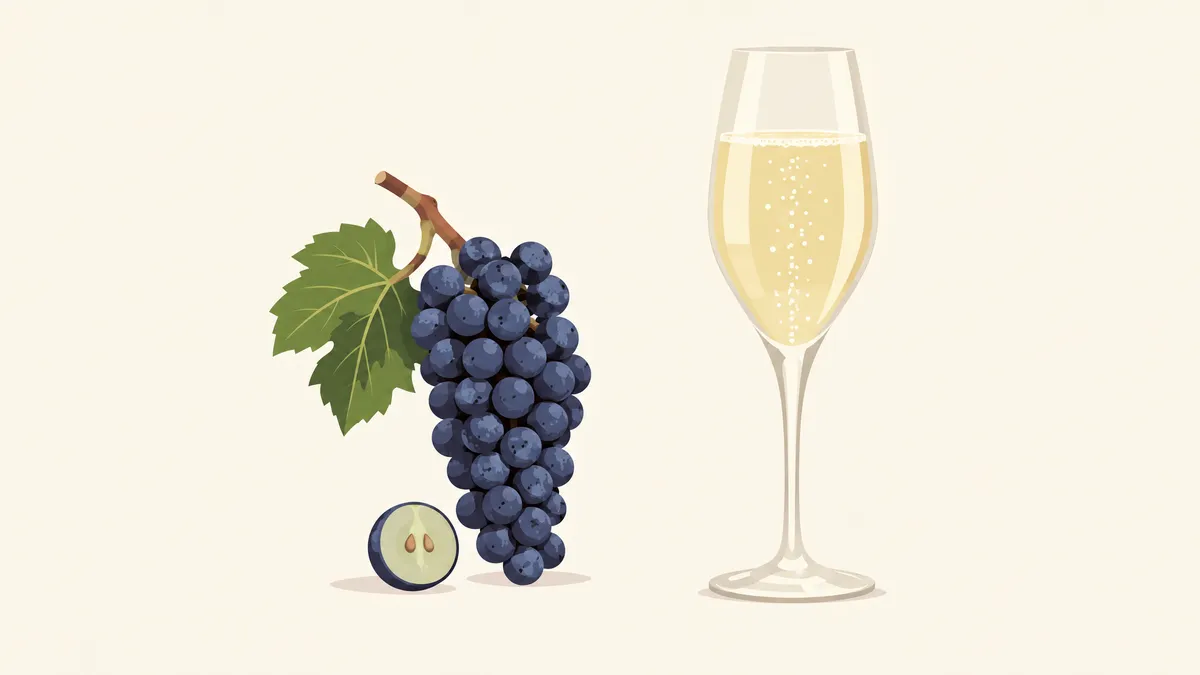
Blanc de noirs means white from blacks: a pale wine pressed from dark-skinned grapes before the skins can colour the juice. In Champagne it uses only Pinot Noir and Meunier. It tastes rounder and fuller than an all-Chardonnay blanc de blancs, may show a faint copper tint, and suits roast chicken, mushrooms and fried food.
Blanc de noirs is a pale wine pressed from black grapes, and in Champagne that means Pinot Noir and Meunier only. The juice leaves the dark skins before it ferments, so the wine stays gold. What the grapes keep is their weight: blanc de noirs drinks rounder and fuller than an all-Chardonnay sparkling wine.
What Is Blanc de Noirs, in One Paragraph?
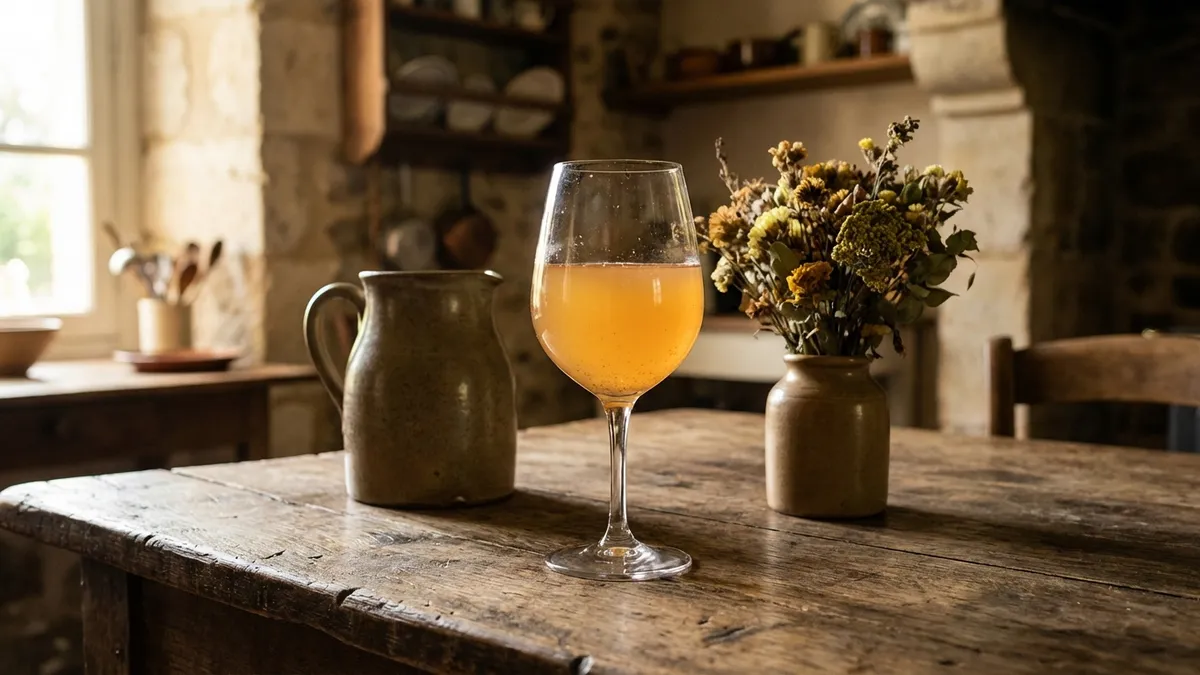
Blanc de noirs is French for "white from blacks": a white wine made only from dark-skinned grapes. Winemakers separate the juice from the skins before fermentation, so almost none of the skin colour reaches the wine. Most bottles are sparkling, and the best known are Champagnes made from Pinot Noir, Meunier or both. A typical blanc de noirs is pale straw to gold, sometimes with a faint copper or pink tint. It has more body than blanc de blancs, smells of red apple, pear or strawberry, and is usually labelled Brut, which means dry.
What Does Blanc de Noirs Taste Like?
Blanc de noirs tastes like a white sparkling wine with more weight. It feels rounder in the mouth than an all-Chardonnay wine, and it often smells of red apple and strawberry rather than lemon. There is no red-wine grip on your gums, because the skins that carry tannin were left behind in the press.
Start with body (the weight of a wine in your mouth, like skimmed versus whole milk). Pinot Noir and Meunier give a broader, softer wine than Chardonnay grown in the same chalk. The acidity (the tartness that makes your mouth water) is still high, because Champagne is a cool region with a mean annual temperature of about 10°C. It sits under more fruit.
The aromas usually come in three groups:
- Red apple and pear, ripe rather than green, from the black grapes' softer fruit.
- Strawberry or raspberry, faint and fresh, most often in wines with a lot of Pinot Noir.
- Bread crust, brioche or toast, from months of ageing on spent yeast in the bottle.
Older bottles add nuttier, baked-apple notes as the fresh fruit fades. Our guide on how to taste sparkling wine covers how to find each layer through the bubbles.
Blanc de Noirs vs Blanc de Blancs vs Rosé: Which Should You Buy?
Read the grapes on the label. White grapes only means blanc de blancs, black grapes only means blanc de noirs, and a pink colour made on purpose means rosé. A plain Brut with no style word is usually a blend of all three Champagne grapes.
Rosé Champagne gets its colour in one of two ways. The more common is assemblage (blending a small amount of still red wine into the sparkling base). The other is saignée (leaving the juice on the dark skins for a short time before pressing it off). Blanc de noirs does neither.
| Style | Grapes | Skin contact | Colour | Taste | Pick it when |
|---|---|---|---|---|---|
| Blanc de blancs | White only (Chardonnay in Champagne) | None | Pale lemon to gold | Lean, lemon, chalky, sharp acidity | Oysters, raw fish, lemony dishes, an aperitif |
| Blanc de noirs | Black only (Pinot Noir, Meunier) | As little as possible | Straw to gold, sometimes faint copper | Rounder, fuller, red apple, strawberry | Roast chicken, pork, mushrooms, fried food |
| Rosé | Black grapes, often with white | Short maceration, or red wine blended in | Salmon to pink | Strawberry, raspberry, a little more grip | Salmon, tuna, charcuterie, berry desserts |
| Classic Brut blend | Usually all three | None | Pale gold | Between the two whites | When you want one bottle for everything |
If the dish has fat, mushrooms or roast poultry, buy blanc de noirs. If it is raw shellfish or something lemony, buy blanc de blancs. If the table wants a visibly pink wine with strawberry fruit, buy rosé. The rosé wine guide covers still rosé made the same ways.
Why Is Some Blanc de Noirs Pink or Copper?
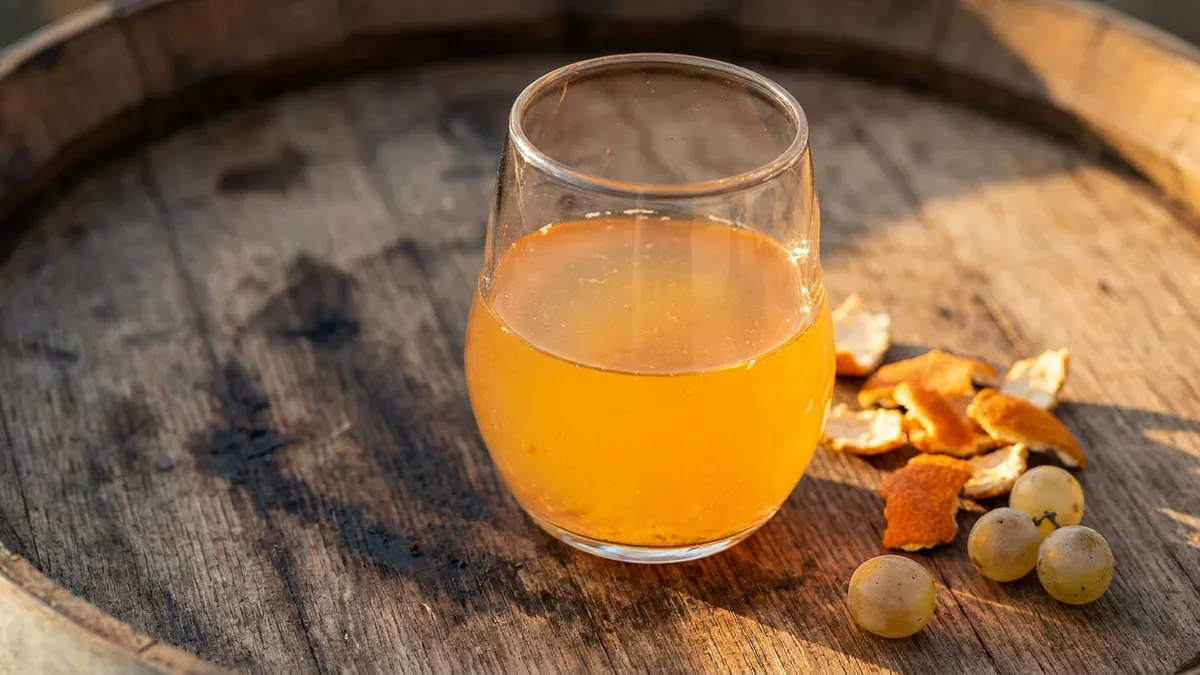
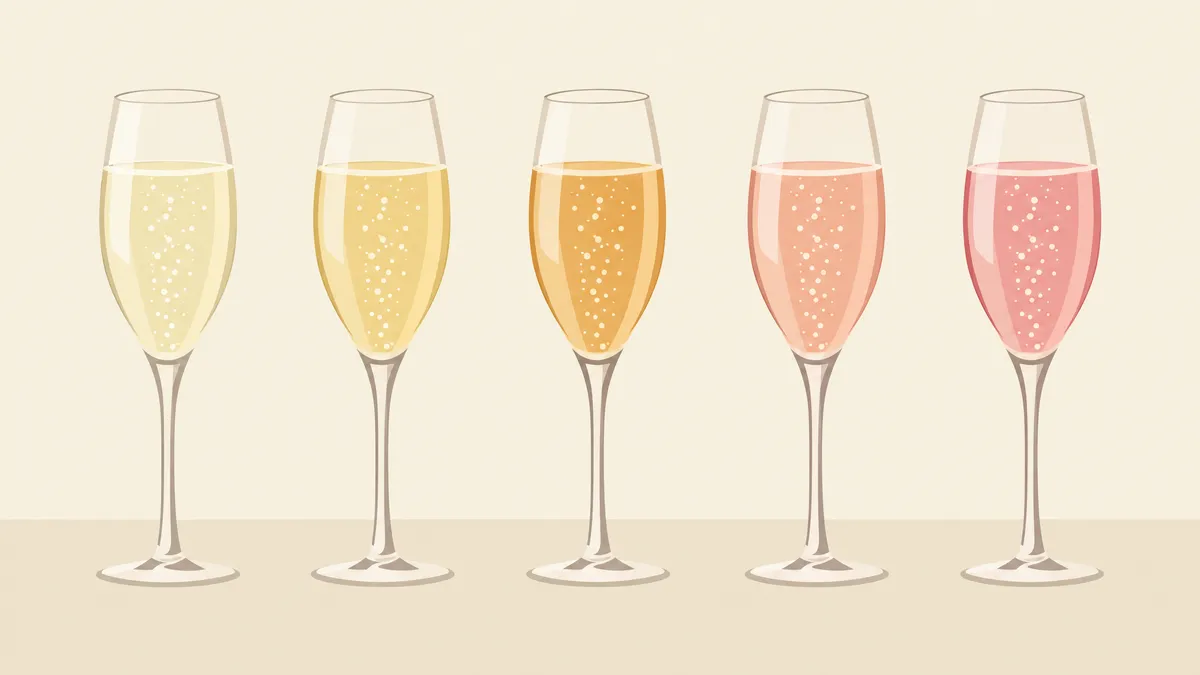
Because a little pigment slips out of the skins during pressing, and the gentler the press, the less gets through. That tint is a side effect of pressing dark grapes, not rosé by another name. Wine Spectator notes that blanc de noirs can have a pale pink hue.
The colour of a black grape sits in its skin. As McGill University's Office for Science and Society explains, pressed grape juice is white whatever the variety. Juice left in contact with dark skins picks up anthocyanins (the red and purple pigments in grape skins) and changes colour. The white wine from red grapes explainer walks through this from vine to glass.
Pinot Noir helps. It has thin skins and lower levels of anthocyanin than most other classic black grapes, so even a pressing that takes a little colour leaves the juice pale. A blanc de noirs that looks gold with a copper glint at the edge is normal. One that looks plainly salmon-pink has had more skin contact than the style usually aims for.
Is Blanc de Noirs Dry or Sweet?
Most blanc de noirs is dry, and the label word tells you exactly how dry. Champagne makers add a small dose of sugar, the dosage, just before the final cork. Brut means less than 12 grams of sugar per litre, and Extra Brut less than 6, both dry to the taste.
If the label says Brut or Extra Brut, expect a dry wine. If it says Demi-sec or Doux, expect sweetness, and save it for dessert. The wine sweetness scale puts these words next to still-wine terms, and what dry wine means explains why ripe fruit can taste sweet in a dry wine.
How Should You Serve and Pair Blanc de Noirs?
Serve it cold but not icy, in a white-wine glass rather than a narrow flute, and give it food with more body than oysters. Fridge-cold wine mutes the fruit, so take the bottle out ten minutes before pouring. The wine serving temperature chart gives the target range for sparkling wine.
A wider bowl lets the apple and bread aromas collect where you can smell them. If the bottle is a vintage or an older non-vintage, serve it a couple of degrees warmer than a young Brut, so the toast and nut notes come through. Open it slowly with the cork held under your thumb, as shown in how to open sparkling wine.
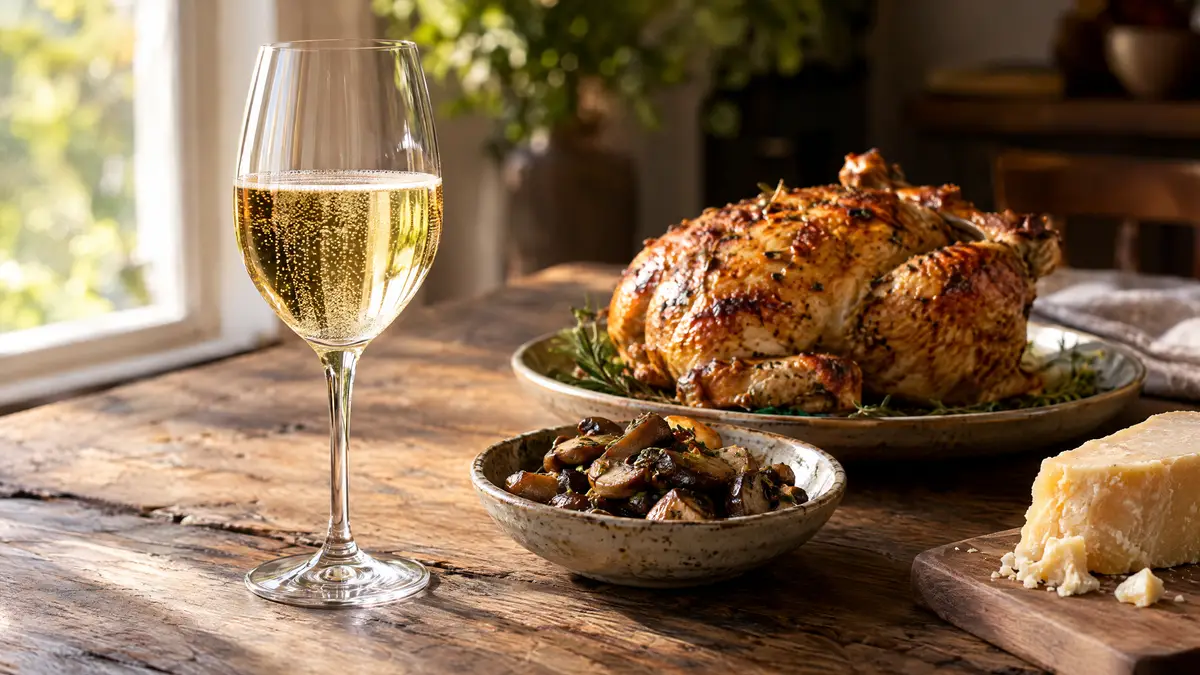
Match the wine to fat and savoury depth:
- Roast chicken or pork. The bubbles and acidity cut the fat in crisp skin, and the wine's body matches the meat.
- Mushrooms. Risotto, tarts and pan-fried mushrooms meet the savoury, bready side of the wine.
- Fried food. Tempura, fish and chips and fried chicken need acidity and bubbles to clear the oil. The fried food pairing guide explains why sparkling wine works best here.
- Aged hard cheese. Salty, nutty cheese meets the toast notes; the wine and cheese pairing guide has more.
If the dish is duck or something with a fruit sauce, pick a blanc de noirs that names Pinot Noir on the label, because it usually brings the most body. If the dish is lighter, such as a salad or white fish, a Meunier-led bottle or a blanc de blancs fits better.
How Is Blanc de Noirs Made?
Whole bunches of black grapes are pressed fast and gently, and the juice runs off the skins before it can ferment on them. In Champagne the still wine then gets its bubbles from a second fermentation in the bottle, the traditional method set out in méthode champenoise explained.
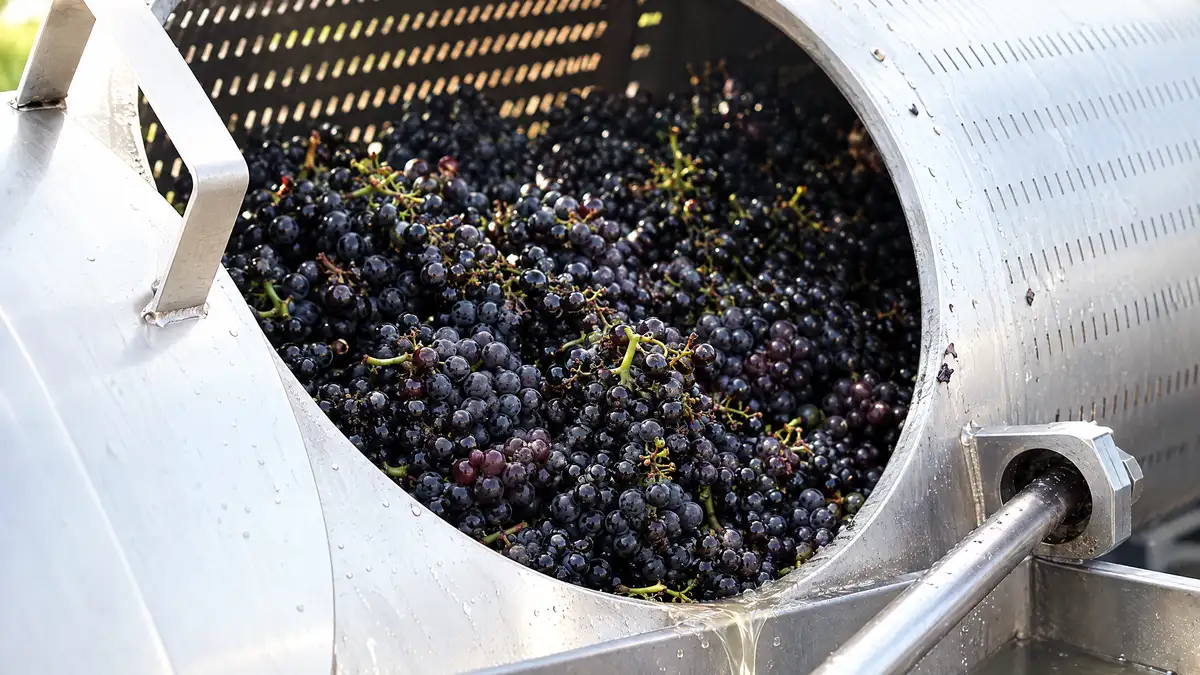
The press is where blanc de noirs is won or lost. Whole clusters, stems and all, let the juice drain through channels between the berries, which keeps contact with the skins short. The first juice out is the palest and the most delicate. Pressing harder takes more colour and more bitterness from the skins.
After the second fermentation the wine rests on the lees (the spent yeast left in the bottle), which adds the bread and brioche aromas. A non-vintage Champagne must mature for at least 15 months before release, and a vintage Champagne for at least three years. If you want more toast and nut in your blanc de noirs, look for a vintage date on the label.
Which Grapes Go Into Blanc de Noirs?
In Champagne, only Pinot Noir and Meunier, alone or together, from the seven grape varieties the region permits. The rare white Arbane and Petit Meslier are among those seven. Chardonnay is the main white grape, so it never appears in a blanc de noirs.
Pinot Noir gives structure, body and the strawberry edge. It dominates the vineyards of the Montagne de Reims, south of the city of Reims. The Pinot Noir guide covers the grape as a red wine.
Meunier gives softer, rounder, earlier-drinking wine with ripe apple fruit. It is the dominant grape of the Vallée de la Marne, west of Épernay.
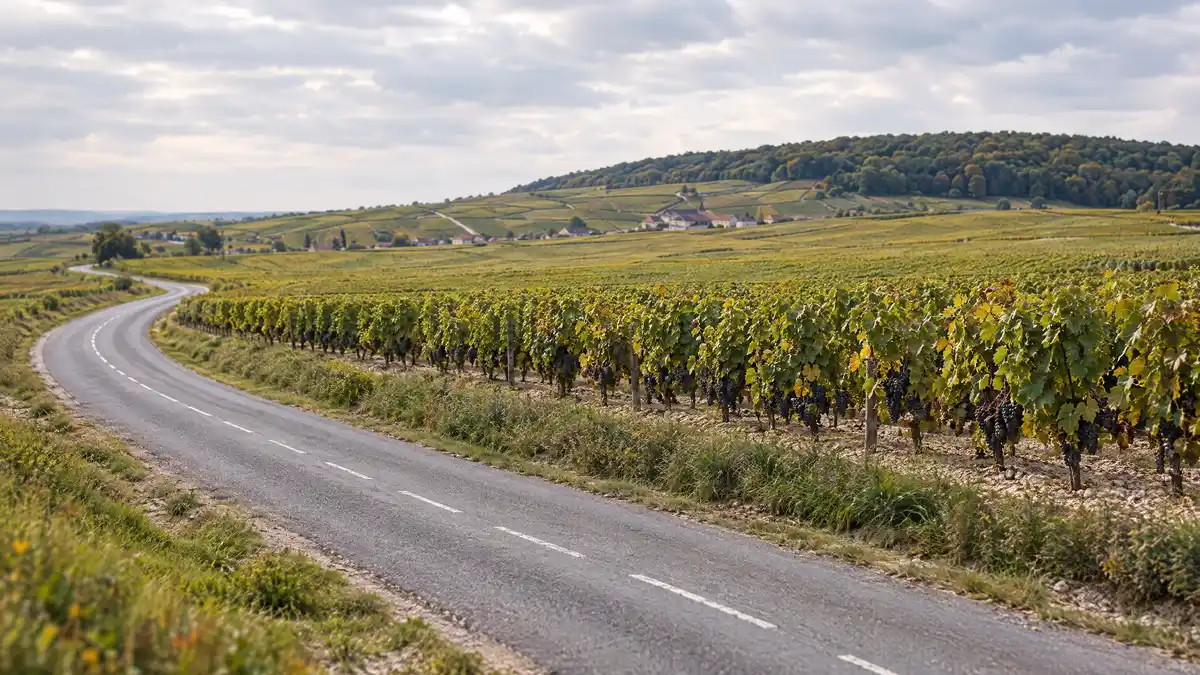
If the label names only Pinot Noir, expect a firmer wine that ages longer. If it names Meunier or gives no grape at all, expect a softer bottle to drink young. The Champagne region guide maps the sub-regions and the villages each grape calls home.
Is Blanc de Noirs Only Champagne?
No. The term only means white wine from black grapes, so any wine made that way can carry it. Champagne made it famous, and sparkling wines made by the same method in other regions use it too. A few producers also make still white wine from Pinot Noir.
Outside Champagne the grape rules differ, so read the back label for the variety. The wider family of fizz is laid out in sparkling wine types, and the wine styles hub places blanc de noirs among the other styles defined by how a wine is made.
Try It Tonight
Buy one bottle labelled blanc de noirs Brut and open it with roast chicken. Pour it into a white-wine glass, check the rim over white paper for copper, then smell for red apple before you sip. Photograph the label in the Sommy app and log the look, smell and taste in your tasting journal, so you can compare it with a blanc de blancs next time.
Sources
Frequently Asked Questions
Is blanc de noirs red or white wine?
It is a white wine. The grapes are black, but the juice inside almost every wine grape is pale. Winemakers press the grapes quickly and run the juice away from the skins before it ferments, so very little colour gets in. The result is pale gold, sometimes with a faint copper or pink tint, and it has no red-wine tannin.
What is the difference between blanc de noirs and blanc de blancs?
Blanc de blancs is made only from white grapes, almost always Chardonnay in Champagne, and tastes lean, lemony and sharp. Blanc de noirs is made only from black grapes, Pinot Noir and Meunier, and tastes rounder and fuller, often with red apple and strawberry. Pick blanc de blancs for oysters and lemony dishes, blanc de noirs for roast poultry and mushrooms.
Is blanc de noirs the same as rosé?
No. Rosé Champagne is pink on purpose, usually by blending in a little still red wine, or by leaving the juice on the skins for a short time. Blanc de noirs aims for a white wine. Any pink or copper shade it shows is a side effect of pressing dark grapes, and it is far paler than a rosé.
Is blanc de noirs dry or sweet?
Most blanc de noirs is dry. Sweetness comes from the dosage, the small amount of sugar added before the cork goes in, and the label tells you how much. Brut means less than 12 grams of sugar per litre and Extra Brut less than 6, both dry to the taste. Demi-sec and Doux are the sweet versions.
What grapes are used in blanc de noirs Champagne?
Only black grapes: Pinot Noir, Meunier, or a blend of the two. Pinot Noir gives more body and structure and dominates the Montagne de Reims. Meunier gives softer, fruitier wine and dominates the Vallée de la Marne. Chardonnay, the region's white grape, is never part of a blanc de noirs.
What food goes with blanc de noirs?
Its fuller body suits food with fat and savoury depth. Roast chicken, duck, pork, mushroom dishes, aged hard cheese and anything fried in a crisp batter all work. The bubbles and acidity cut through the fat while the weight of the wine matches the dish. Very delicate raw fish is better with a leaner blanc de blancs.
How long does blanc de noirs Champagne age before release?
Like every Champagne, a non-vintage blanc de noirs must mature for at least 15 months before release, and a vintage one for at least three years. Much of that time is spent on the lees, the spent yeast left from the second fermentation in the bottle, which adds bread and toast aromas. Many producers age longer than the minimum.
Sommy Team
LinkedInFounder & Wine Educator
The Sommy Team is building the world's most approachable wine education app, helping beginners develop real tasting skills through structured courses and AI-guided practice.