Red Blend Wine: Sweet or Dry? A Sugar Chart and Label Guide

By the Sommy Team — AI-assisted, human-edited.
Updated Nov 3, 2026
Contents (8)
- Is Red Blend Wine Sweet or Dry?
- What Grapes Are in a Red Blend?
- Why Do So Many US Red Blends Taste a Little Sweet?
- How Do You Read a Red Blend Label?
- How Can You Tell If a Red Blend Is Dry Before You Buy?
- Which Red Blend Should You Pick?
- Is a Red Blend Lower Quality Than a Single-Grape Wine?
- What Does Red Blend Taste Like, and What Food Goes With It?
TL;DR
Red blend is a US shelf name, not a legal style. Most are Zinfandel-led California reds, and some carry 12 g/L of sugar, three times the EU dry line, with nothing on the front label to warn you. A sugar figure on the tech sheet or a percentage list on the label is the surest guide.
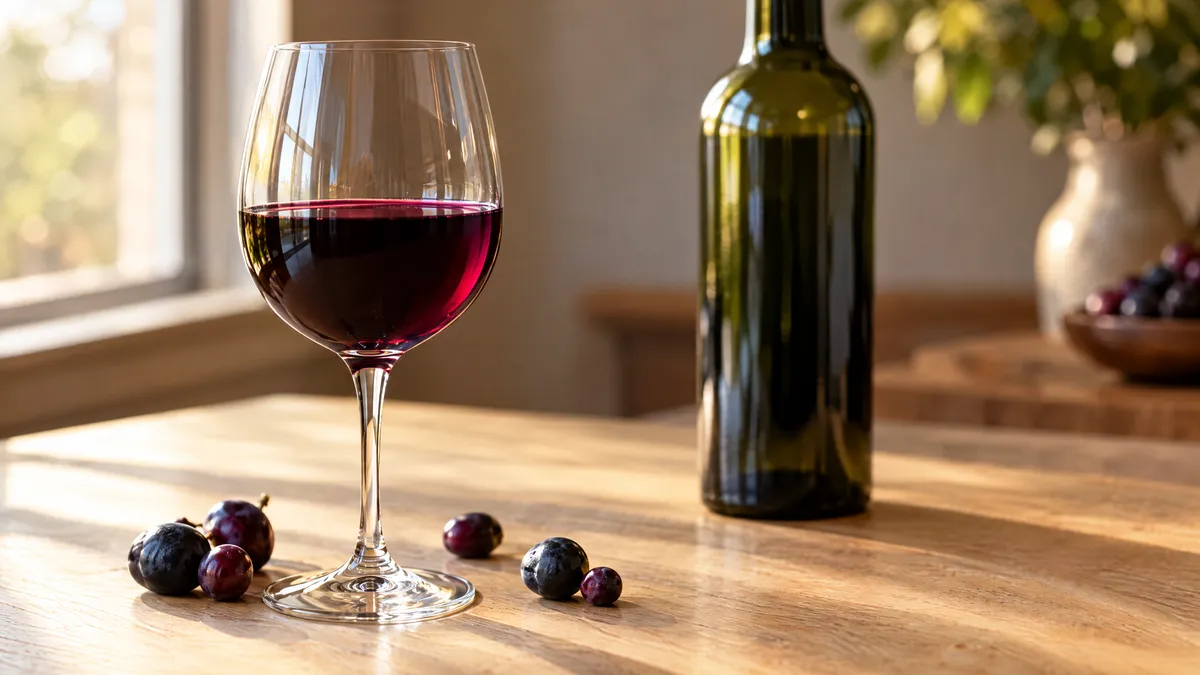
Red blend wine on a US shelf is a marketing name, not a legal style or a grape. Most bottles are ripe California reds led by Zinfandel. Many keep a few grams of sugar that you feel as softness rather than sweetness, and the label is not required to tell you how much.
Is Red Blend Wine Sweet or Dry?
Either, and the label rarely says which. In European wine law, a red with up to 4 grams of residual sugar (grape sugar left after fermentation) per litre is dry, or up to 9 grams if its acidity is high enough. One popular California red blend was reported at 12 grams per litre in its 2012 vintage.
That is three times the basic dry line, and its reviewer called it a sweet wine. Sweet on an EU label starts above 45 grams per litre, so true sweet reds are rare and usually say so on the front label.
| Sugar per litre | EU term | How it tastes in a red | Pick it if |
|---|---|---|---|
| Up to 4 g | Dry | No sweetness; tannin feels drying on the gums | You want grip with steak or lamb |
| 4 to 9 g | Still dry if acidity is high | Fruit seems riper and rounder, not sweet | You find dry reds harsh but dislike sugar |
| 9 to 12 g | Medium dry | Soft and plush, a faint sweetness on the tip of the tongue | You are pouring with barbecue sauce or chilli |
| 12 to 45 g | Medium | Clearly sweet, jam-like | You want a sweet red with spicy or sweet food |
| Over 45 g | Sweet | Dessert sweet | You are serving it with dessert or chocolate |
What Grapes Are in a Red Blend?
Usually Zinfandel, with Syrah, Cabernet Sauvignon, Merlot or Petite Sirah filling in. Wine Spectator, reviewing two value reds built for younger drinkers, found both "predominantly Zinfandel blended with large percentages of Syrah and Cabernet." Zinfandel brings ripe blackberry and high sugar at harvest, so the wine is soft and strong.
Syrah adds colour and a peppery, meaty depth. Cabernet adds firm tannin (the drying grip on your gums). Merlot fills the middle with plum and softer tannin. Petite Sirah adds near-black colour and more grip.
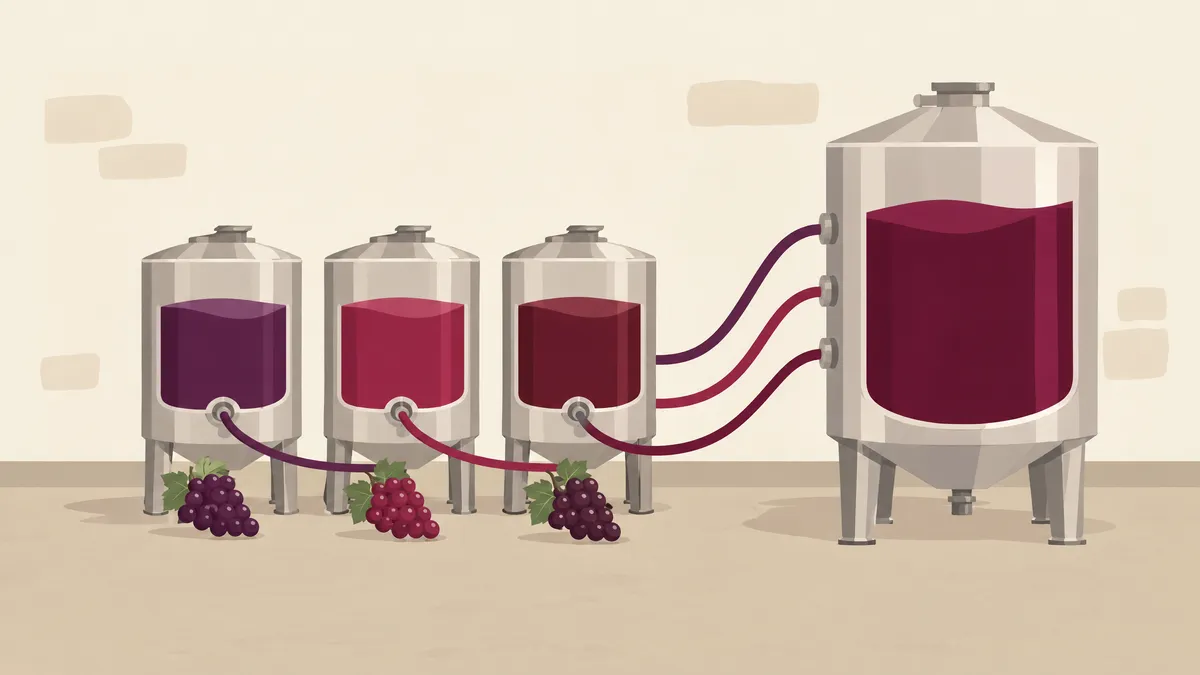
The recipe is not fixed, even inside one brand. The popular blend mentioned above was Zinfandel, Merlot and Petite Sirah in 2012, while earlier vintages had included Cabernet Sauvignon. Big brands blend for a house taste, so they swap grapes from year to year to keep that taste steady.
The famous European blends follow written rules instead. A Bordeaux red is built on Cabernet Sauvignon and Merlot, as set out in the Bordeaux blend grapes guide. The southern French mix of Grenache, Syrah and Mourvèdre is covered in Rhône blend grapes. Why winemakers blend at all is the subject of wine blends explained.

Quick check
One question on what you just read
A US bottle says only "Red Blend" on the front. What does that tell you about its sweetness?
Tap an answer to see how you did.
Why Do So Many US Red Blends Taste a Little Sweet?
Because a few grams of sugar soften tannin, and that softness sells. Wine Spectator described one value red as carrying "a touch more residual sugar than most dry reds, enough to make it approachable but not taste sweet." VinePair reported that many buyers dislike the "bone-dry mouthfeel" of a tannic red.
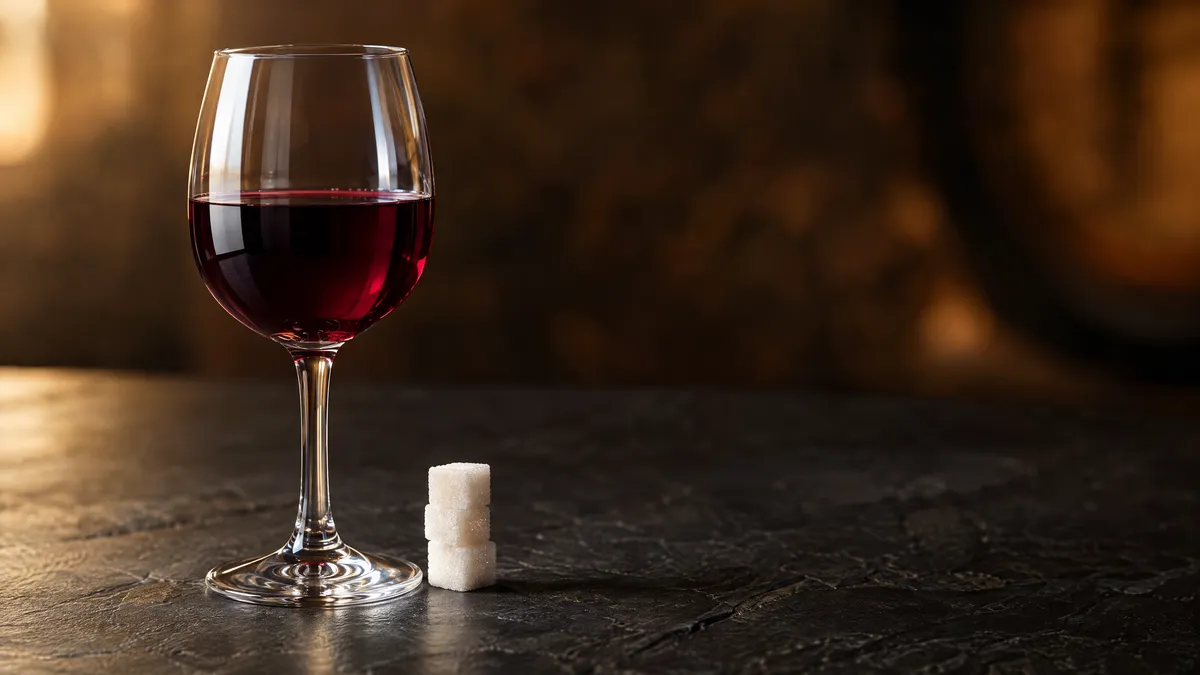
Your tongue is easy to fool here. Tannin and acidity (the tartness that makes your mouth water) both hide sugar, so a red can carry more sugar than it seems to. Ripe Zinfandel also pushes alcohol up, and alcohol tastes warm and slightly sweet on its own. Together these make the wine feel round and fruity, and most drinkers read that as low tannin and no burn. Fruity is not the same as sweet: a fully dry red can smell of jam, a trick explained in what jammy means in wine.
Sugar is easier to taste once you know where to look. The residual sugar tasting guide gives a front-of-tongue test, and the wine sweetness scale places red blends among every other style.
How Do You Read a Red Blend Label?
A red blend label promises less than a grape name does. Under US federal rules, a wine may carry a single grape name only if at least 75% of it comes from that grape. It must also show an appellation (a protected place name, such as California or Sonoma County).
A wine called "Red Blend" or "Red Wine" makes neither promise.
| On the label | What it guarantees | What to do |
|---|---|---|
| One grape, e.g. Zinfandel | At least 75% that grape, plus a place of origin | Expect that grape's style; check the sugar figure |
| Several grapes with percentages | Every grape listed, each share within 2% | Read the lead grape: Zinfandel first means ripe and soft |
| "Red Blend" or "Red Wine" only | No grape share and no sweetness promise | Look up the tech sheet before you buy |
| A wine region (an AVA) | At least 85% of the grapes from that area | Treat it as a sign the maker is selling a place |
If the label names several grapes, it must name all of them, with each share accurate to plus or minus 2%. A list like "52% Zinfandel, 30% Syrah, 18% Petite Sirah" is the full recipe. An AVA (American Viticultural Area, a defined US wine region such as Paso Robles) needs 85% of the grapes from inside its borders.
Sugar is the gap. The mandatory items on a US wine label are the brand, the class or type, the bottler's name and address, net contents, alcohol, a sulfite statement, the government health warning and a few ingredient disclosures. Sugar content is not among them. More on the fine print sits in the back label guide and the full walk-through in how to read a wine label.
How Can You Tell If a Red Blend Is Dry Before You Buy?
Look for a sugar figure first, then read the front-label words. The figure is rarely on the bottle, so search for the winery's tech sheet on your phone while you stand at the shelf. VinePair noted that the biggest red-blend brands give "no indication" on the bottle that the wine is sweet, so the clues are indirect.
- The tech sheet. Most wineries post one online with residual sugar in grams per litre. Under 4 is dry; over 9 will feel soft.
- Front-label words. Smooth, velvet, sweet, jammy, dark and rich usually signal a softer, sweeter style. Treat them as a hint to check against the tech sheet.
- The lead grape. A blend led by Zinfandel or Petite Sirah tends to be ripe and soft. One led by Cabernet Sauvignon tends to be firmer.
- A European place name. Bordeaux, Rioja and Côtes du Rhône reds are usually blends made in a dry style. The Côtes du Rhône guide covers one of the cheapest.
If the front label says velvet or sweet and no sugar figure exists anywhere, expect the soft style. If the tech sheet says under 4 grams per litre, it will drink as dry as a Cabernet.
Which Red Blend Should You Pick?
Pick by the meal and by who is drinking. The two ends of the shelf are a soft, Zinfandel-led California blend and a dry, Cabernet-led or European one, and most bottles lean clearly to one side.
- Pizza or burger night on a weeknight: a Zinfandel-led California blend, ripe and soft.
- A guest who finds red wine harsh: a soft blend whose tech sheet shows 5 to 10 g/L of sugar.
- Spicy takeaway: a soft blend at 14% alcohol or less, so the chilli does not burn.
- Steak with guests who like firm reds: a Cabernet-led blend, or a red Bordeaux.
- Learning what each grape does: a blend with percentages printed on the back label, tasted beside a single-grape bottle of its lead grape.
If you are buying blind with no tech sheet, a European blend from a named region is the safer bet for dry. A California bottle that says only "Red Blend" is the safer bet for soft.
Is a Red Blend Lower Quality Than a Single-Grape Wine?
No. Blending is a method, not a grade. Bordeaux, Rioja and Châteauneuf-du-Pape are usually blends. A Napa red that mixes Cabernet with Merlot can cost far more than a bottle labelled Cabernet alone. What the words "red blend" tell you is narrower: no grape reached 75%, or the winery chose not to name one.
The real difference is consistency. A big-brand blend aims to taste the same every year, so the grapes move around it. A single-grape wine from a named place changes with the weather of the vintage. If you want the same soft red every time, a brand blend delivers it. If you want to learn what a grape or region tastes like, buy a single-grape wine. The trade-offs are weighed in single varietal vs blend.
What Does Red Blend Taste Like, and What Food Goes With It?
Ripe, soft and medium to full in body (the weight in your mouth, like whole milk against skimmed). Expect blackberry and plum ripe to the point of jam, because warm California sun pushes grape sugar high. Oak barrels or oak chips often add vanilla.
Tannin is usually softer than in a Cabernet, because the leftover sugar and ripe fruit cushion it.
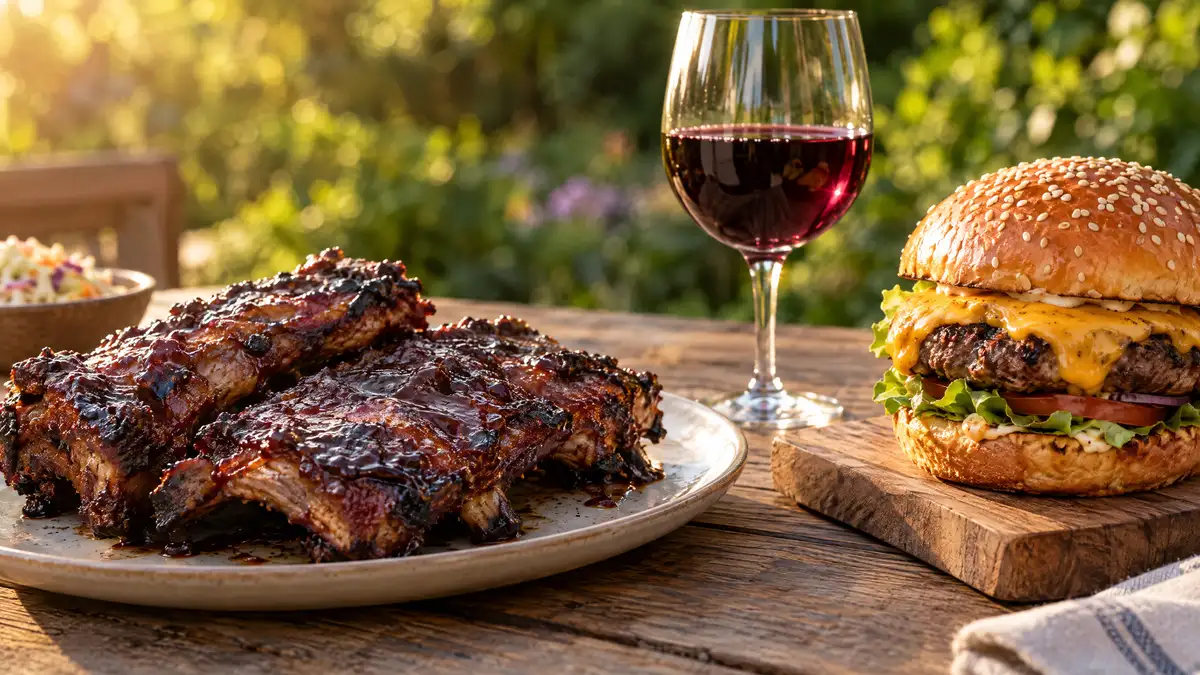
Pair by the sugar level:
- Sweet-smoky barbecue sauce and glazed ribs. Sugar in the sauce makes a dry wine taste thin and sour, so the soft blend wins. More options in wine with BBQ.
- Chilli and pepperoni pizza. A little sweetness calms chilli heat, though high alcohol makes it burn, so pick the lower-alcohol bottle. See wine with pizza.
- Tomato pasta and lasagne. Tomato acid makes a soft, low-acid red taste flat, so pick a brighter Rhône or Rioja blend. More in wine with pasta.
- Charred burgers and steak. Fat and protein soften tannin, so a dry, Cabernet-led blend fits best. The grill options are in wine with burgers.
If the blend is soft and a little sweet, pour it with sweet, smoky or spicy food. If it is dry and grippy, pour it with fatty, charred meat. Serve either at 15 to 18°C. A soft blend at warm room temperature tastes like jam and alcohol, so give it 20 minutes in the fridge first; the wine serving temperature chart has the rest.
More styles, from rosé to fortified wines, sit in the wine styles hub, and Sommy has bite-sized courses, including a California course. Tonight, turn a red blend around, find the lead grape on the back label, look up its sugar figure, then pour a glass and taste it at the tip of your tongue.
Sources
- 27 CFR Part 4: Labeling and advertising of wine, including 4.23 varietal labeling, 4.25 appellations and 4.32 mandatory label information (Cornell Law School LII)
- Wikipedia: Sweetness of wine
- Wine Spectator: Value reds built for millennials
- VinePair: What are sweet red blends?
- Reverse Wine Snob: Cupcake Vineyards Red Velvet review (grapes and residual sugar)
Frequently Asked Questions
Is red blend wine sweet?
Some are and some are not. Dry red wine sits at or under about 4 grams of sugar per litre. Many popular US red blends sit above that: one popular California blend was reported at 12 grams per litre, and its reviewer called it sweet. Tannin and acidity can make a smaller dose read as soft and round instead. Check the producer's tech sheet for the exact figure.
What grapes are in a red blend?
There is no fixed recipe. Value US red blends are usually led by Zinfandel, with large shares of Syrah and Cabernet Sauvignon, and often Merlot or Petite Sirah. The mix can change from one vintage to the next, so the same brand may drop or add a grape. If the label lists grape percentages, they must account for every grape in the wine.
Is red blend wine good quality?
It can be. Blending is a winemaking method, and many of the world's most famous reds, including Bordeaux, Rioja and Châteauneuf-du-Pape, are usually blends. What the term red blend tells you is that no single grape reached 75% of the wine, or that the winery chose not to name one. Quality depends on the grapes, the site and the winemaking, not on the word blend.
Is red blend sweeter than Cabernet Sauvignon?
Often, though not always. A wine labelled Cabernet Sauvignon is usually made fully dry, with firm tannin. Many big-brand red blends keep a few grams of sugar to soften that tannin. A dry red blend from a named region can be just as dry as Cabernet. The quickest check is the residual sugar figure on the winery's tech sheet.
What food goes with red blend wine?
Match the style. A soft, slightly sweet red blend goes with sweet-smoky barbecue sauce, glazed ribs, chilli and pepperoni pizza, because sugar in the food makes a dry wine taste thin. A dry, tannic blend goes with steak, lamb and charred burgers, where fat and protein soften the grip. Serve both a little cool, around 15 to 18°C.
Do red blends have to list their grapes on the label?
No. In the US a wine can be called simply red wine or red blend without naming any grape. If the label does name two or more grapes, it must list them all with the percentage of each, accurate to plus or minus 2%. A wine that names only one grape must contain at least 75% of it.
Sommy Team
LinkedInFounder & Wine Educator
The Sommy Team is building the world's most approachable wine education app, helping beginners develop real tasting skills through structured courses and AI-guided practice.